



How to Make Avocado Cilantro Lime Dressing 3 Ways
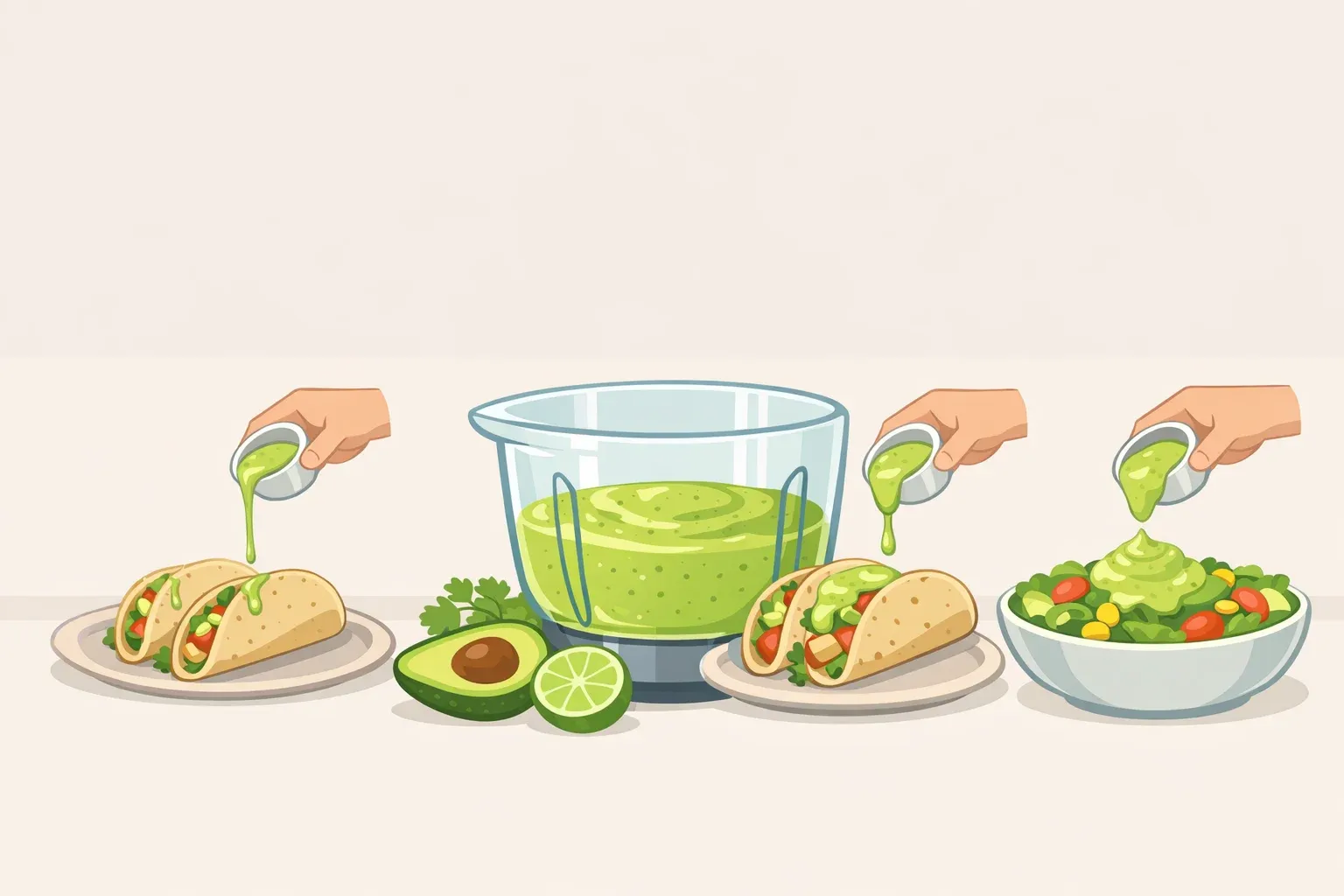
One batch of homemade avocado cilantro lime dressing solves three weeknight problems. Thick enough to hold on a chip or anchor a taco straight from the blender, it thins down in seconds into a pourable salad dressing or a loose drizzle for grain bowls. Fifteen minutes, six servings, vegan and gluten-free as written, per Urban Farmie.
This guide covers the full base recipe, a consistency guide for each use case, fixes for the most common problems, and storage guidance that makes this worth prepping on a Sunday.
The ingredient blueprint
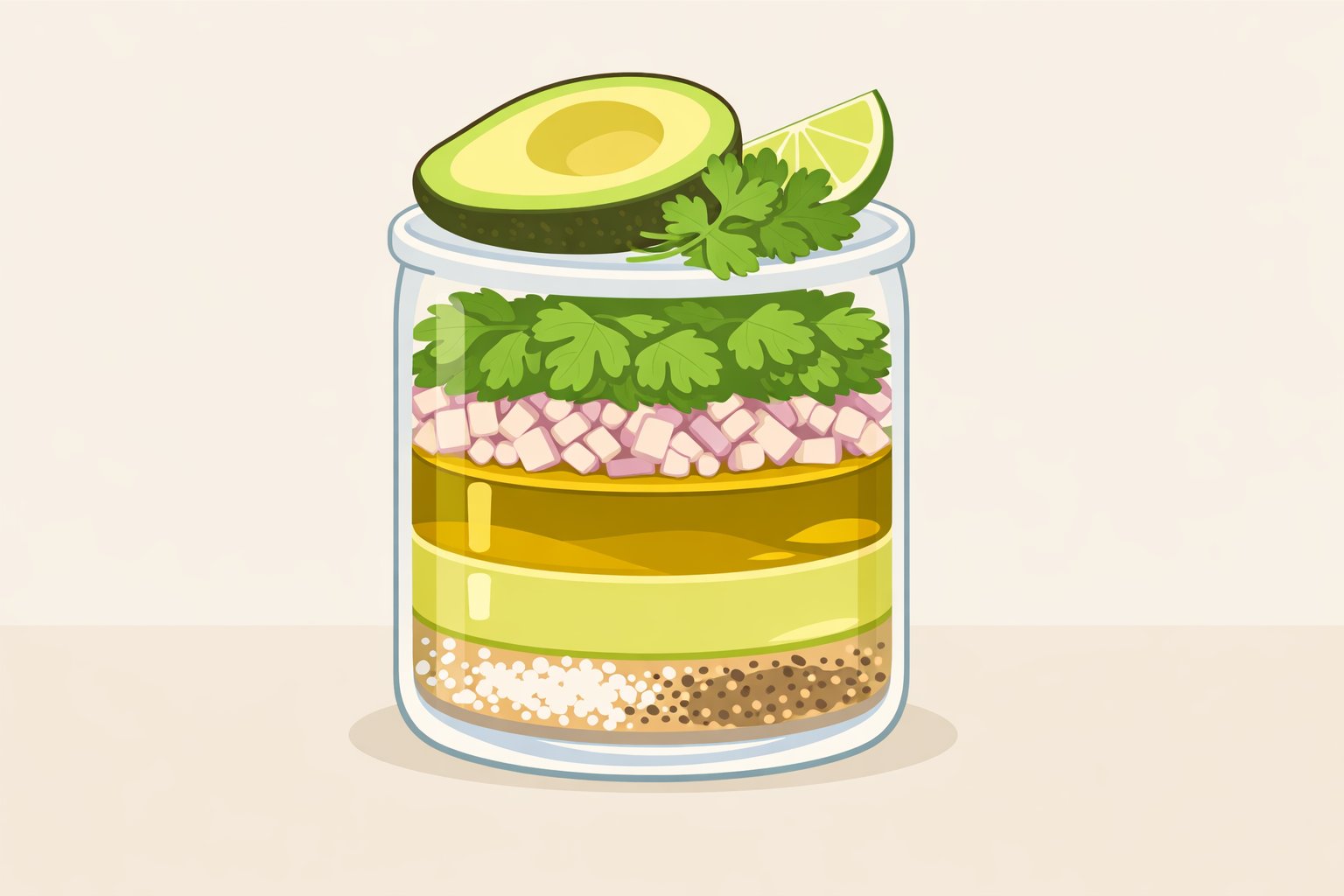
The recipe has five functional layers: creamy fat from avocado and vegan dairy, acid from lime juice, aromatics from garlic, herb from cilantro, and heat from jalapeño, with cumin and onion powder filling out the background. Knowing what each layer does makes the recipe repeatable without measuring every time.
Master recipe, 6 servings (Urban Farmie)
- 1 ripe avocado
- 3 garlic cloves
- 2 tablespoons chopped fresh cilantro
- 1 jalapeño (seeded for mild, unseeded for more heat)
- ¼ cup vegan sour cream
- ¼ cup vegan mayonnaise
- 2 tablespoons fresh lime juice
- ½ teaspoon cumin powder
- ½ teaspoon onion powder
- ½ teaspoon salt
- ¼ teaspoon black pepper
The vegan sour cream and mayo are the intended base, not substitutions. Together they build the thick, ranch-adjacent creaminess that makes this dressing hold on a chip. For a lighter result, Urban Farmie notes that vegan yogurt can replace the sour cream: same structure, less richness, slightly thinner finish.
A few ingredient notes before starting:
Avocado: The body and most of the fat. Ripe flesh only. Urban Farmie directs removing any darkened areas before blending.
Garlic: Three raw cloves. The recipe's upper limit before it takes over.
Jalapeño: Seeded versus unseeded produces meaningfully different results. This is a heat decision, not an optional garnish.
Vegan sour cream and mayo: Sour cream contributes tang; mayo contributes smoothness. The combination is what gives this dressing its spreadable body.
Cumin and onion powder: Background warmth. Start at the recipe quantities and taste before adding more.
Salt and pepper: These go in with everything else, but the real calibration happens after blending.
For contrast, the olive-oil version of this flavor profile half a cup of olive oil to a quarter cup of lime juice, no avocado pours like a vinaigrette and coats delicate salad greens without weighing them down. That version, which layers over arugula, grape tomatoes, tortilla chips, and sliced skirt steak, is a different tool built from the same flavor template. The avocado version is thicker, creamier, better suited to dipping and drizzling. Same core logic, different fat source, different job.
How to make avocado cilantro lime dressing for salads, tacos, and bowls
What you need before starting
A food processor or a blender. Either handles this without issue. A food processor gives slightly more texture control; a blender produces a marginally smoother result. The three ingredients where quality makes the most difference: the avocado, the lime juice, and the cilantro.
Steps
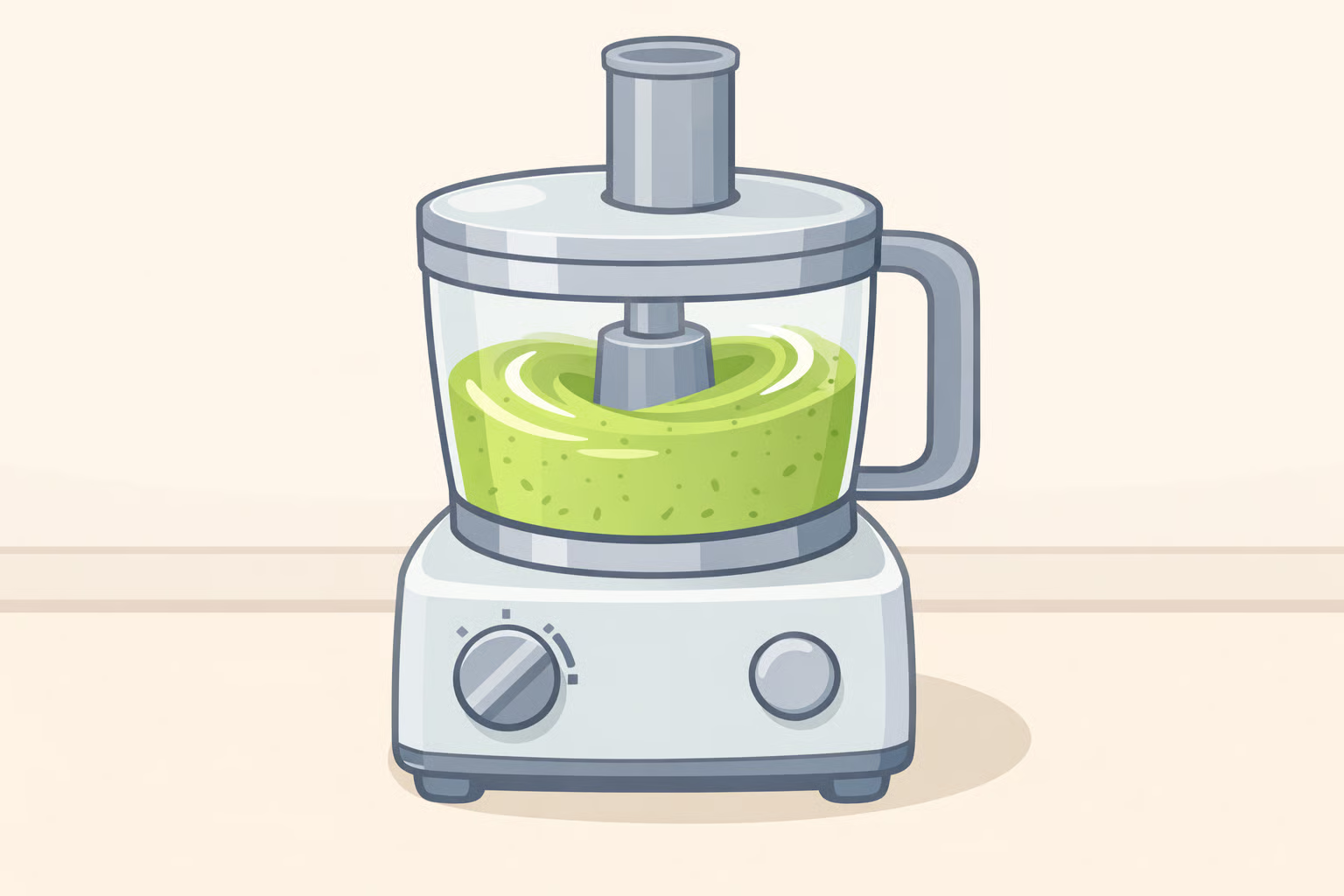
1. Prep the avocado. Halve and pit it, then scoop the flesh into the food processor bowl. Discard any brown areas. You want clean, pale-green flesh throughout.
2. Add the garlic and cilantro. Drop in the cloves and cilantro leaves. Pulse a few times to start breaking them down before everything processes together.
3. Add the jalapeño. Roughly chop it first. Remove seeds and membrane for mild heat; leave them in for a noticeable kick. Pulse a few more times to incorporate. Worth noting: jalapeño heat intensifies slightly after the dressing chills, so err on the conservative side if unsure.
4. Add the remaining ingredients. Pour in the sour cream, mayo, lime juice, cumin, onion powder, salt, and pepper. Run the processor until the mixture is fully smooth and evenly green. Scrape down the sides once if needed.
5. Taste before transferring. See the troubleshooting section below. Easier to adjust now than after chilling.
6. Chill before serving. Transfer to an airtight container and refrigerate for at least 30 minutes. Urban Farmie notes the rest time lets the flavors come together; the dressing is noticeably more cohesive after chilling than straight from the blender.
Consistency guide for creamy avocado cilantro lime dressing
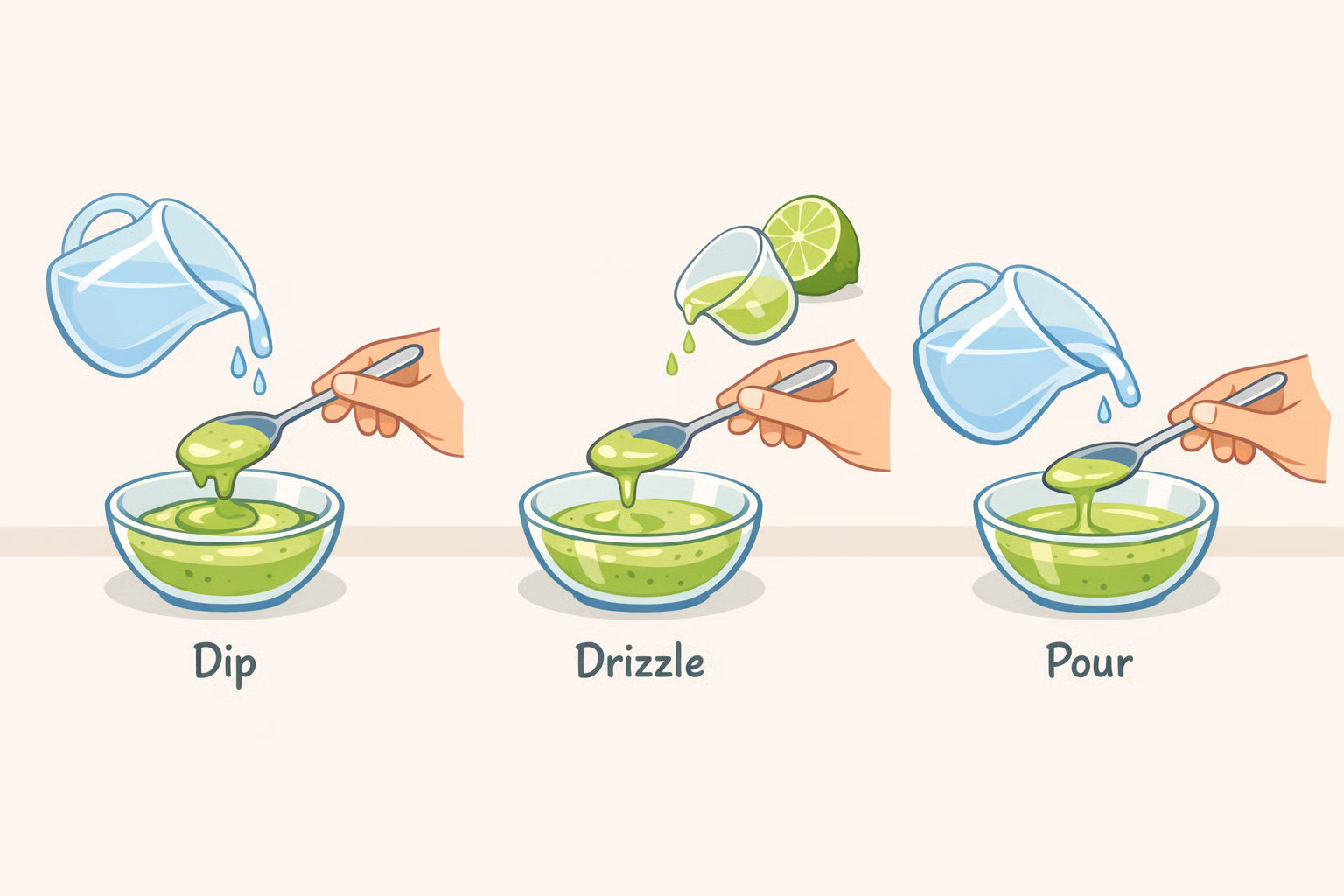
The base recipe produces a thick dressing that holds on a chip or anchors a taco without running. What you do from there depends on how you're using it.
Dip or taco topping: Use it exactly as blended. No adjustment needed.
Burrito bowl drizzle or wrap sauce: Stir in one tablespoon of water or extra lime juice and blend briefly. It should ribbon slowly off a spoon rather than clump.
Pourable salad dressing: Add two to three tablespoons of water or lime juice, one tablespoon at a time, blending between additions, until it pours freely but still coats a leaf without pooling at the bottom of the bowl.
Troubleshooting
Too thick: Add water or lime juice one tablespoon at a time and blend briefly. Don't reach for oil it shifts the flavor profile in the wrong direction.
Too sharp or sour: Add a small pinch of salt before reaching for anything else. Salt rounds out acidity. Taste again before adjusting further.
Too bland: Usually a salt issue rather than a lime issue. Add salt in small amounts and re-taste before adding more cilantro or lime.
Too garlicky: No clean fix after blending raw garlic sharpens as the dressing sits. Drop to two cloves on the next batch, or let the garlic sit in the lime juice for two minutes before blending to soften the edge.
Too spicy: Blend in an extra tablespoon of vegan sour cream or mayo. The additional fat brings the heat down without adding liquid volume.
Surface discoloration: Oxidation is normal with avocado-based dressings. See the storage section below.
Storage and one useful variation
Make-ahead and storage
Store the dressing sealed in an airtight container in the refrigerator. Urban Farmie puts the window at three to five days enough to make a Sunday prep session useful across the full week. For longer storage, the same source notes it can be frozen for one to two months, though texture may change after thawing. Treat freezing as a backup, not a routine.
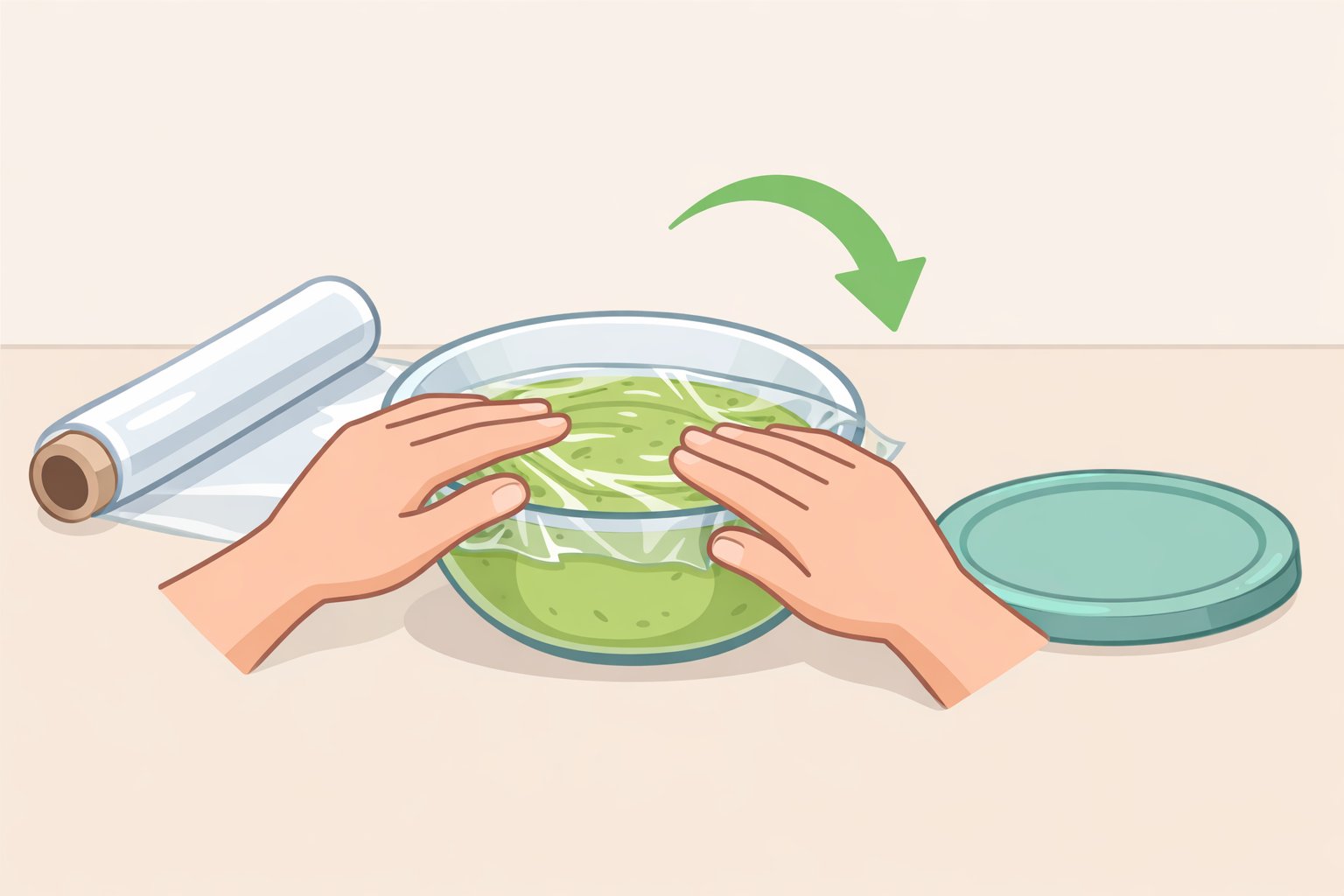
Surface oxidation is normal with any avocado-based dressing. Press a piece of plastic wrap directly against the surface before sealing the container to reduce air contact, and stir before serving.
A smoky variation
To move the flavor from bright jalapeño heat to something deeper, swap the jalapeño for one tablespoon of minced chipotle in adobo and add half a teaspoon of chili powder. Lake Lure Cottage Kitchen uses that same combination chipotle, cilantro, lime, and cumin as the base of a sour cream taco salad dressing, which points in the same flavor direction. The avocado base and method stay the same; the heat just shifts from fresh and green to earthy and smoky. Better suited to grilled chicken or charred corn than to a fresh vegetable salad.
Where to take it from here
Start with the thick version as a dip or taco sauce. No adjustment, immediate use. Once that batch is in the fridge, thin a portion and pour it over arugula, sliced steak, and tortilla chips to see how far the flavor travels across proteins and textures.
The consistency adjustments are what make this worth the prep. The base stays the same every time; what changes is how much you thin it and what you put it on. That single variable covers most weeknight use cases without making a second batch, per Urban Farmie.








Comments
Be the first, drop a comment!