



Atlantic Beach Pie Bars Recipe: The NC Classic Made Simple
By the end of this guide, you'll have a fully chilled slab of Atlantic Beach pie bars, sliced, topped, and ready to hand to a crowd, with nearly all the work done the day before. The Atlantic Beach pie bars recipe itself is pantry-simple: crushed Saltine crackers, sweetened condensed milk, citrus juice, sugar, and eggs, as Food & Wine frames it. What takes a little care is the technique around chilling and cutting.
Atlantic Beach pie traces to chef Bill Smith at Crook's Corner in Chapel Hill, North Carolina. Starting in 2011, Smith reworked the lemon pies he remembered from coastal seafood restaurants into a restaurant-serviceable dessert, swapping traditional meringue for whipped cream so the pie could hold through a dinner shift. As Food & Wine recounts, lines formed around the restaurant and the recipe spread nationally, making it arguably the most famous dessert the restaurant ever produced. Smith himself has said he never expected it to go viral.
Yield: 12 bars (3x4 grid) or 16 smaller bars (4x4). Decide before you make the first cut.
What you'll need: One sleeve of Saltine crackers, one 14-ounce can of sweetened condensed milk, 4 large egg yolks, fresh lemon and lime juice, unsalted butter, granulated sugar, kosher salt, and cold heavy cream. Equipment: an 8x8-inch square baking pan, two long sheets of parchment paper, a food processor or zip-top bag and rolling pin, a whisk, and a stand or hand mixer.
Timing: Active work runs under 30 minutes. Total time including baking and chilling is roughly 3 hours, per Loom & Sage. Overnight refrigeration is the safer call if you're bringing these somewhere.
Before you start: ingredient questions answered
Does the pan size matter? An 8x8-inch square pan is the right call here. It produces a slab thick enough to slice cleanly and hold its shape. A 9x13 would work if you scale up the recipe proportionally, but the filling layer will be thinner and the bake time will drop by several minutes.
How much citrus do you actually need? Plan on 2 medium lemons and 2 medium limes. That covers the ½ cup lemon juice and 2 tablespoons lime juice you need, plus zest for garnish. Zest everything before you juice it Southern Living flags this specifically because it's nearly impossible to zest a cut, squeezed citrus half. Don't skip the zest entirely; it's what makes the finished bars look finished.
Can you substitute anything? On the crust: graham crackers or shortbread don't carry the same saltiness, and that contrast between salty crust and sweet filling is what makes this dessert distinctive rather than generic, as Simply Recipes notes. On the filling: sweetened condensed milk is non-negotiable. Evaporated milk has a different sugar content and the custard won't set. On the topping: Southern Living notes that store-bought whipped topping works if you're short on time not the same texture, but it won't ruin the bars. On the citrus: all-lemon or all-lime works fine. Simply Recipes confirms either produces a good result. Use fresh juice; bottled lacks the brightness the filling depends on.
How to make Atlantic Beach pie bars with Saltine crust: step-by-step
Step 1: Set up your pan
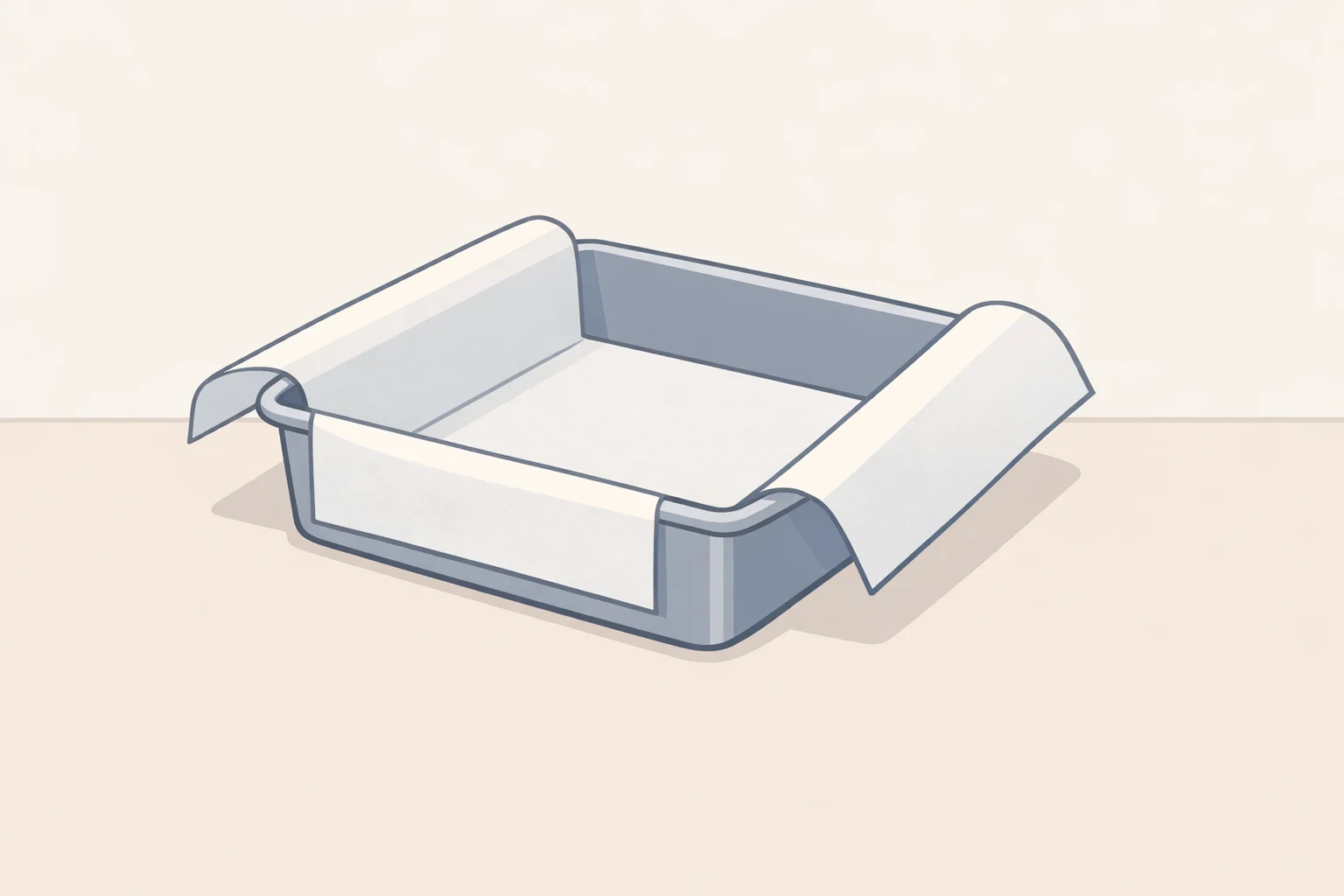
Preheat the oven to 350°F. Lightly coat an 8x8-inch baking pan with cooking spray. Lay two sheets of parchment paper across the pan perpendicular to each other, pressing them into the corners so roughly 2 inches overhang all four sides. That overhang is the sling you'll use to lift the entire slab out before cutting. Don't skip it. (The Kitchn)
Step 2: Make the Saltine crust
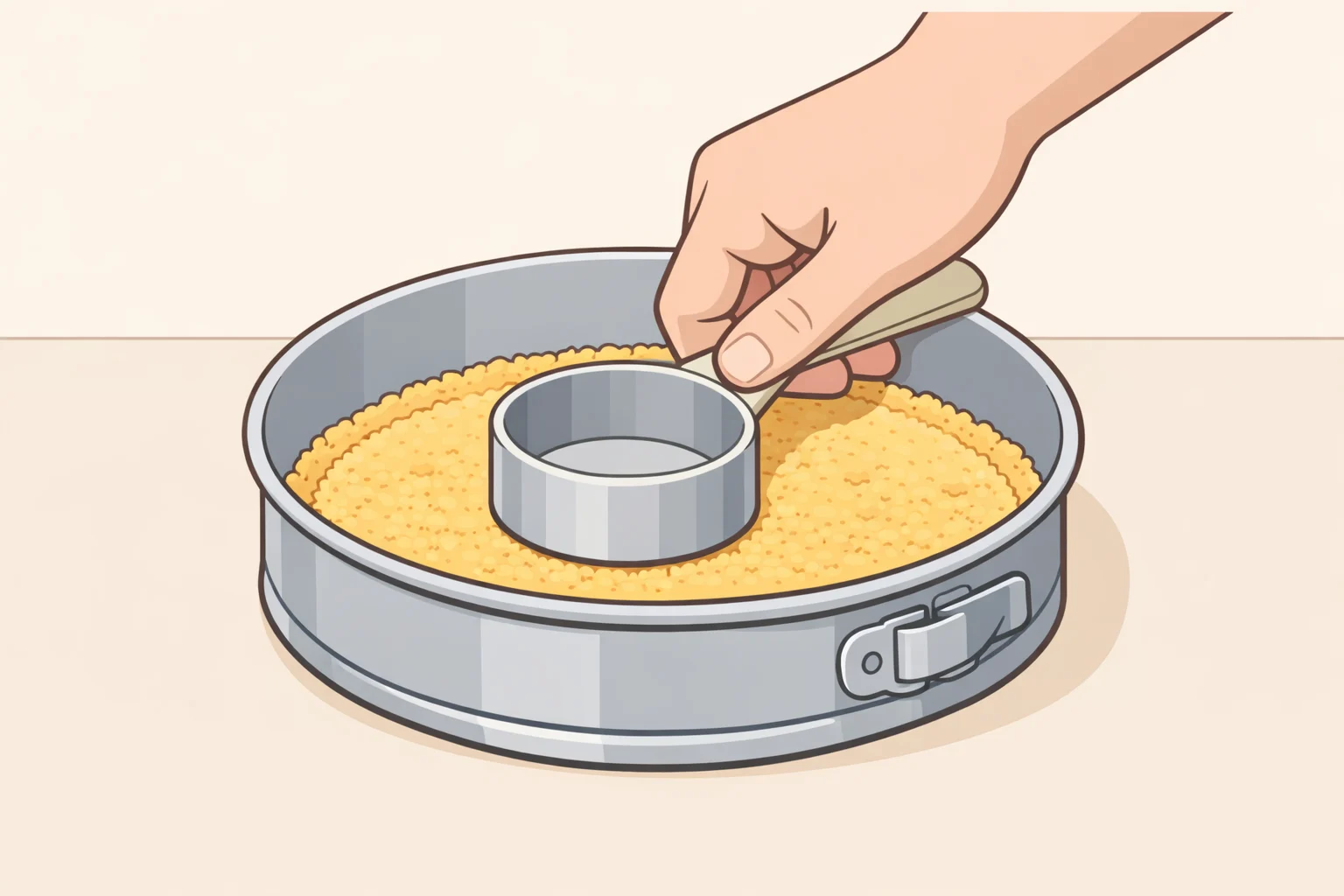
Crush one sleeve of Saltine crackers (35-37 crackers) into fine crumbs. A food processor takes about 30 seconds. Add 2 tablespoons granulated sugar and 6 tablespoons melted, cooled unsalted butter. Pulse or stir until the crumbs are evenly moistened; they should clump when pressed but not feel wet. Press the mixture firmly and evenly into the bottom of the pan using the flat base of a measuring cup. Pack hard.
Simply Recipes found in testing that reducing crackers and increasing butter relative to older formulas produces a crust that holds cleanly when sliced. The quantities here follow that principle. A crumbly crust almost always means too little butter or not enough pressure, not a problem with Saltines.
Some recipes, including Southern Living's, call for a 10-minute freeze before baking to help the crust hold its shape. In a square pan, the flat bottom does much of that structural work; if the crust looks loose before it goes in the oven, 10 minutes in the freezer is a reasonable precaution.
Step 3: Bake the crust
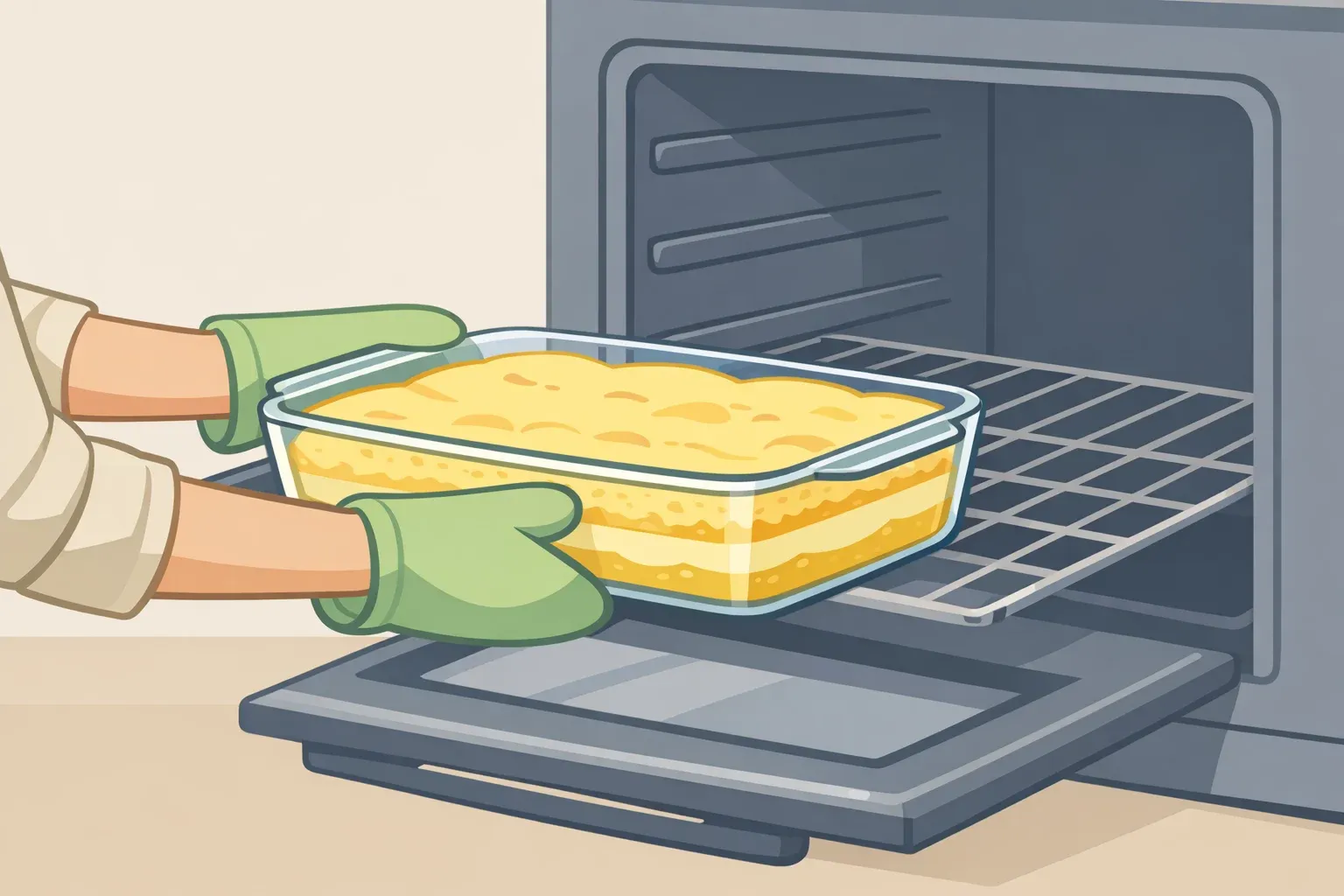
Bake until fragrant and just turning golden at the edges, about 15 minutes. Pull it and let it rest for 5-10 minutes. You want the crust still warm when the filling goes in, warm enough that the two layers bond during the second bake, but not so hot that the egg yolks begin to set on contact. (The Kitchn; Loom & Sage)
Step 4: Make the filling
Whisk together one 14-ounce can of sweetened condensed milk, 4 large egg yolks, ½ cup fresh lemon juice, 2 tablespoons fresh lime juice, and ¼ teaspoon kosher salt until smooth. Let the mixture stand 5 minutes to allow bubbles to rise, per Loom & Sage. That brief rest gives you a cleaner surface on the finished bar.
The condensed milk isn't just a sweetener here. Simply Recipes notes it tempers citrus acidity in a way curd doesn't, producing a custard that reads creamy and bright rather than sharp. That's why it can't be swapped.
Step 5: Pour and bake the filling
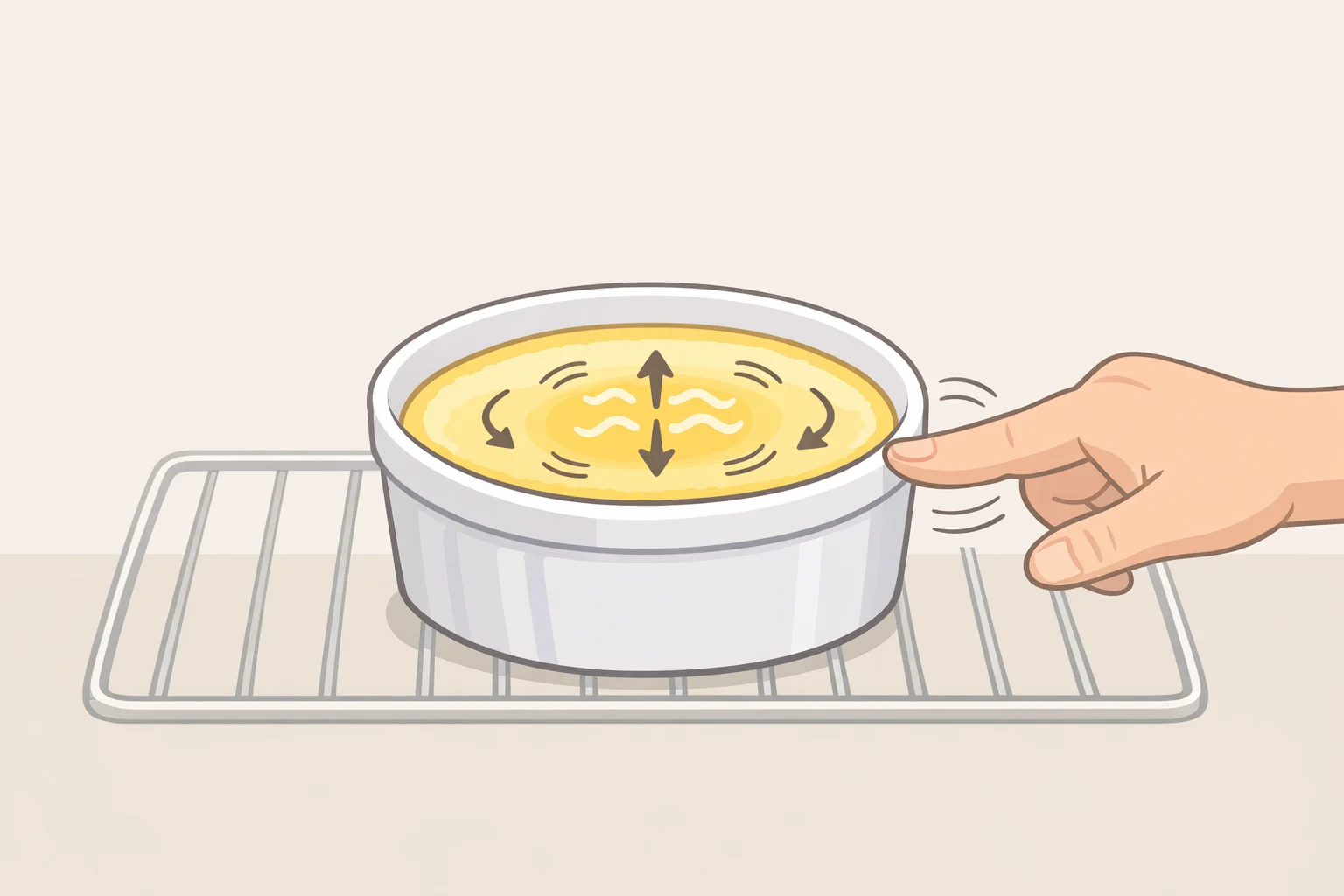
Pour the filling into the still-warm crust and smooth the surface. Bake until the edges are visibly set and the center wobbles when you nudge the pan, not liquid, just a lazy jiggle, like a cheesecake that's just barely done. Loom & Sage targets 12-14 minutes; The Kitchn allows a wider 10-20 minute range depending on oven variation. Use the visual test, not the clock. Once the custard overbakes, it's past the point of pleasant creaminess and there's no fixing it.
Cooling, cutting, and finishing
Step 6: Cool and chill fully
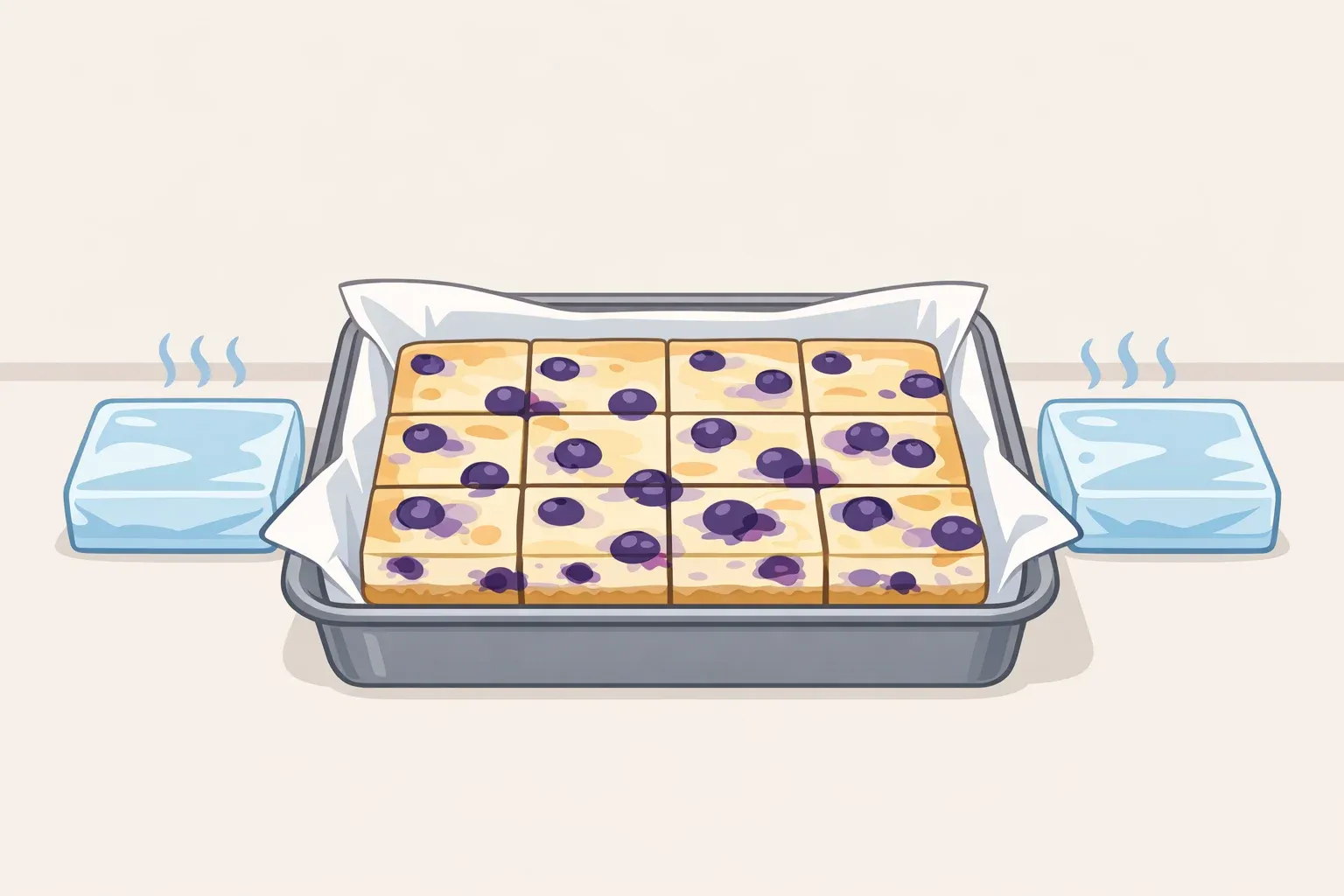
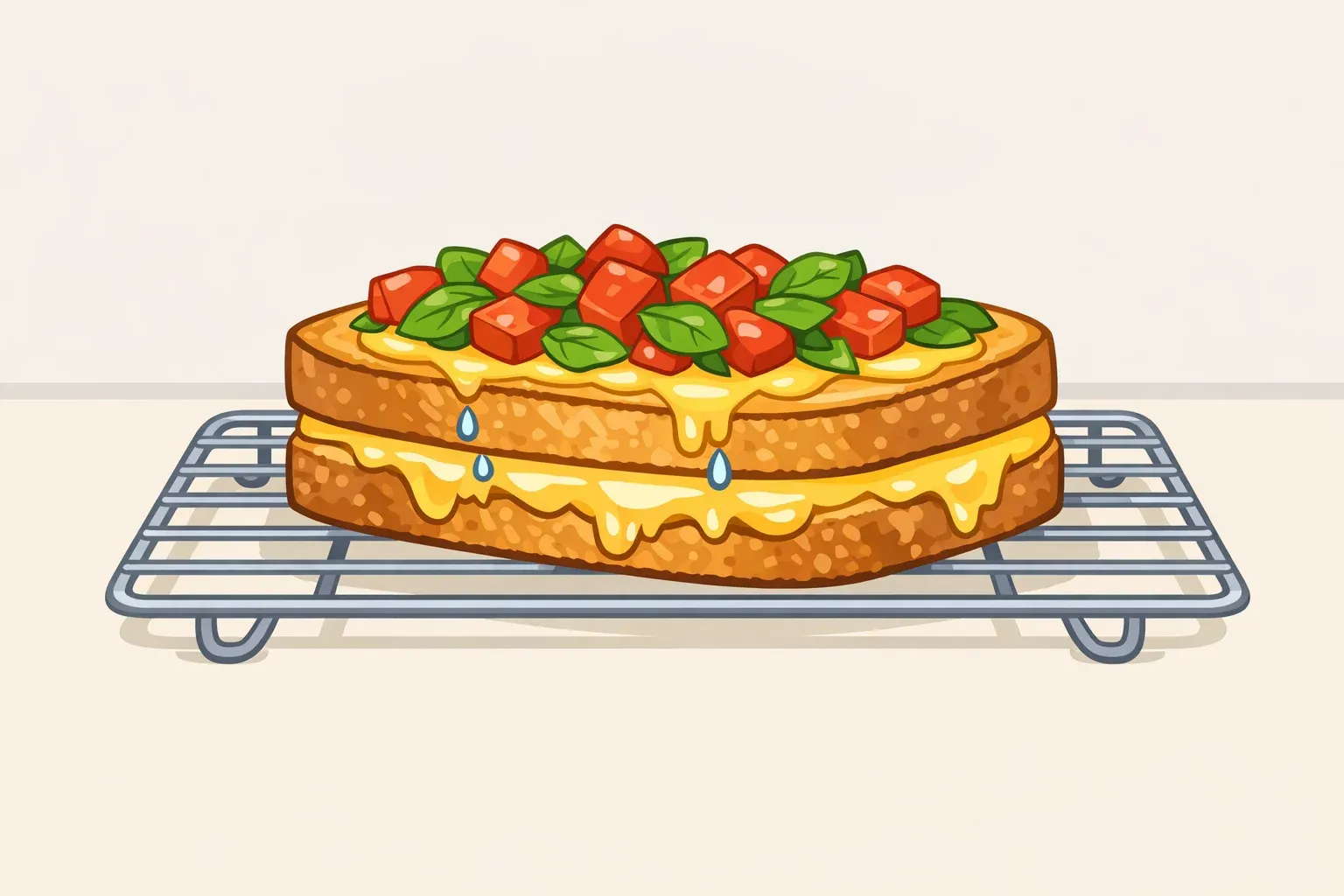
Transfer the pan to a wire rack. Cool at room temperature for at least 1 hour, then refrigerate, uncovered for the first 30 minutes to prevent condensation from pooling on the surface, covered after that, for a minimum of 2 hours total. Cutting too early is the single most common failure point: underset bars produce ragged, collapsing slices no matter how carefully you handle the knife. (Loom & Sage; The Kitchn)
Overnight is the more reliable option if you're serving the next day.
Step 7: Lift and cut
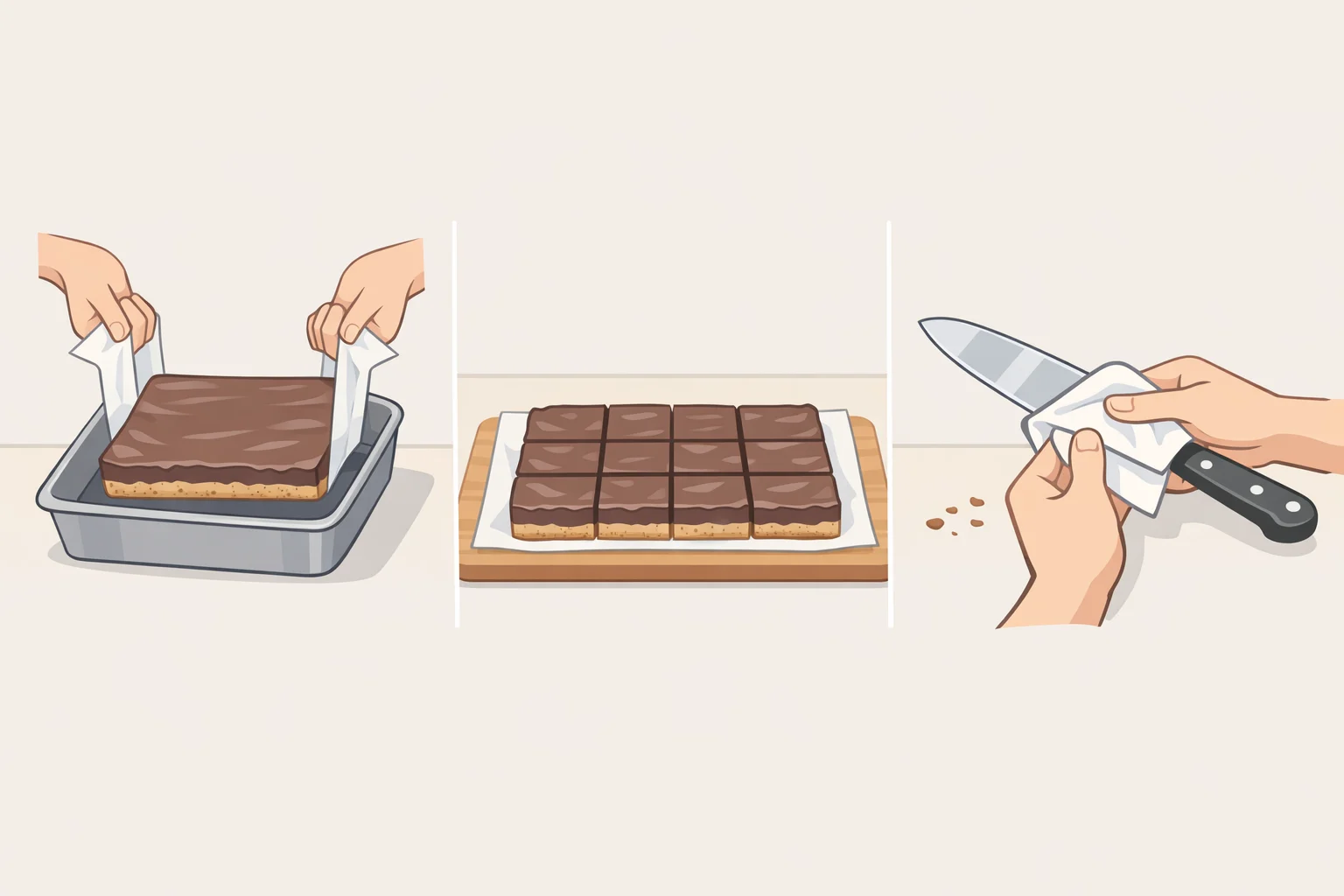
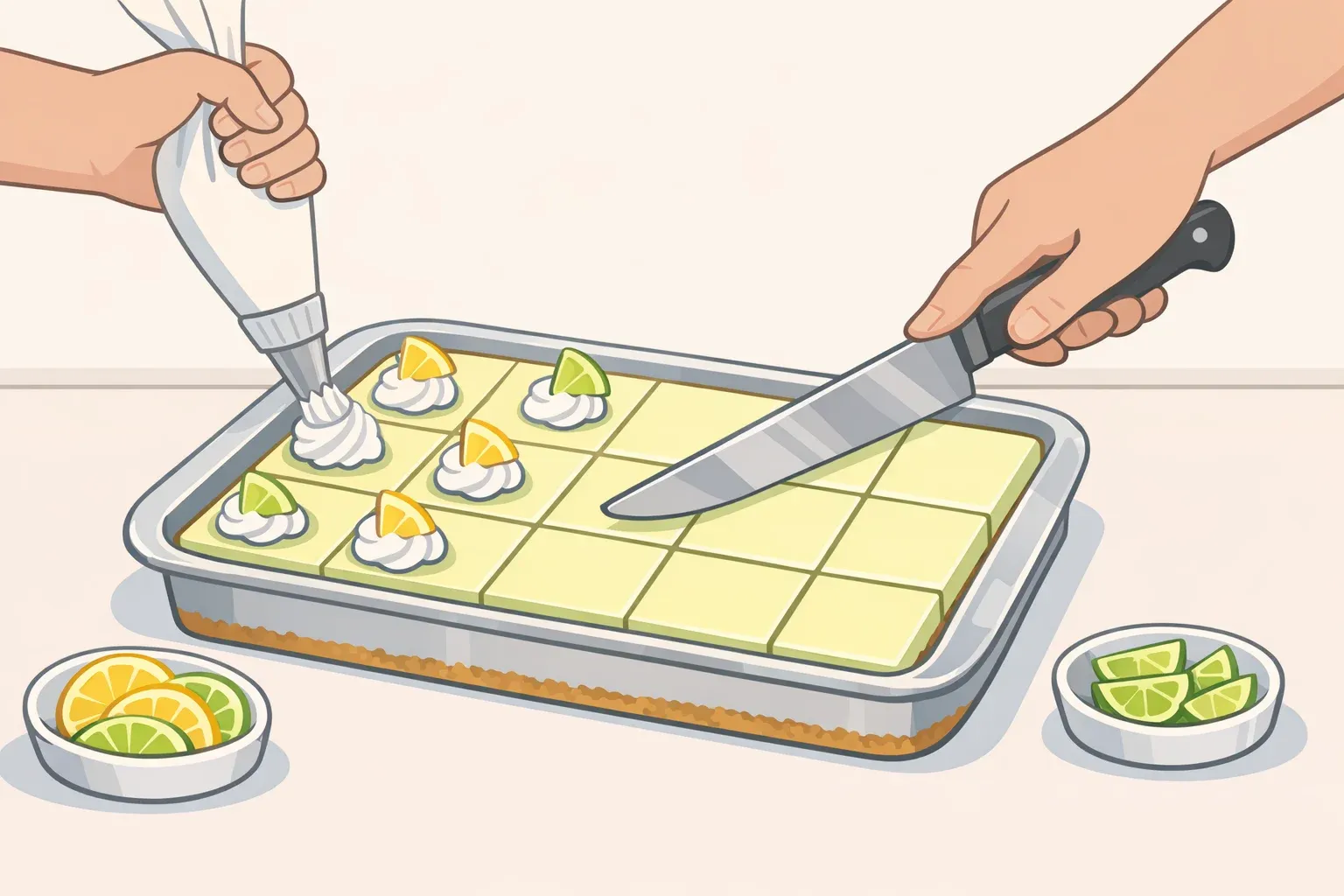
Grasp the overhanging parchment and lift the entire slab onto a cutting board. For clean cuts: dip your knife in hot water, wipe it completely dry, make one cut, wipe again, repeat. Custard residue drags across the next cut if you skip the wipe. Decide before you start whether you're cutting 12 bars (3x4) or 16 (4x4), then commit. (The Kitchn; Loom & Sage)
Step 8: Top and finish
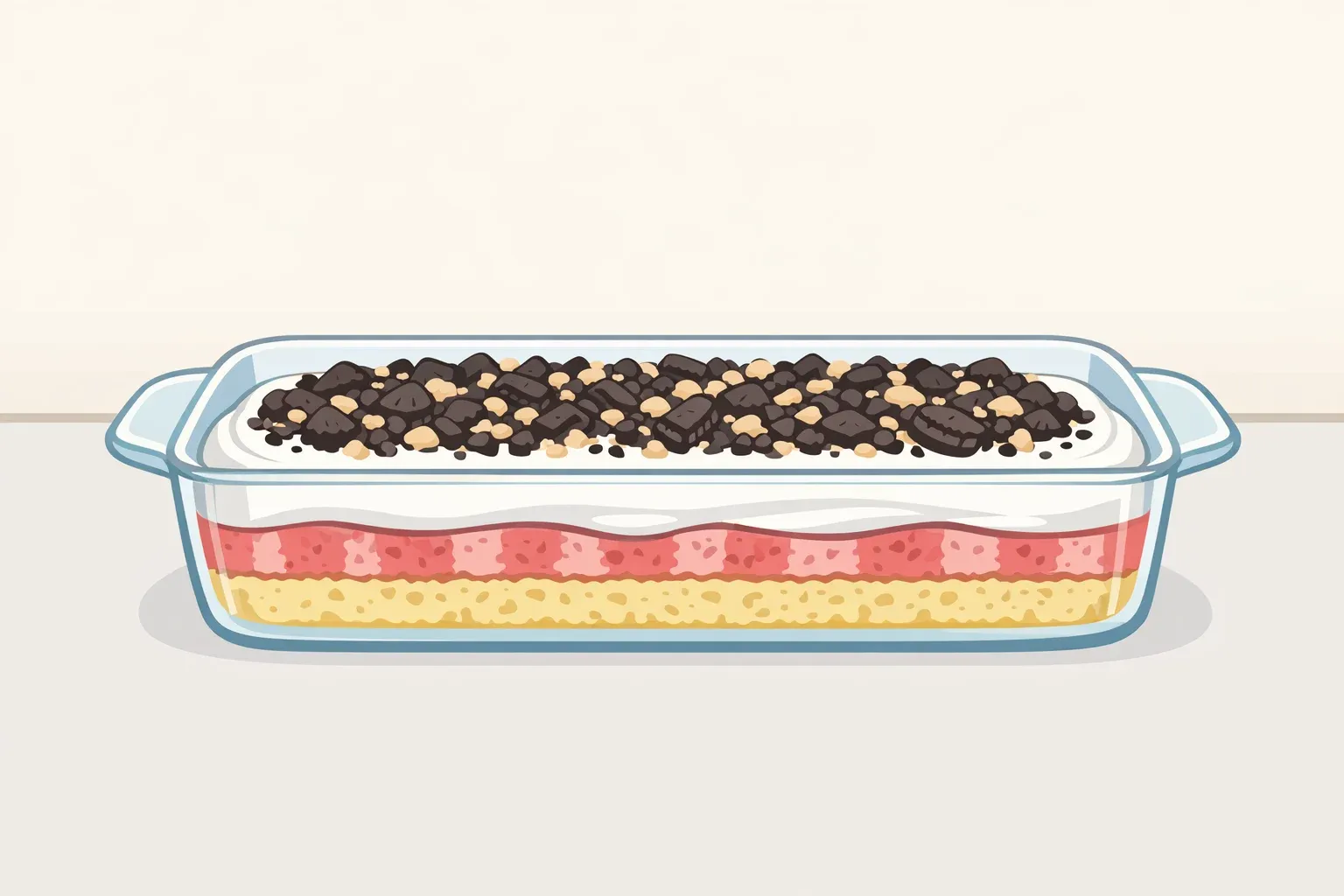
Beat ½ cup cold heavy cream with 2 tablespoons powdered sugar and ½ teaspoon vanilla to stiff peaks, starting on medium for 1 minute then increasing to high for about 2 more. Dollop or pipe onto each bar, add a pinch of flaky salt, and scatter the reserved citrus zest. Top within 6 hours of serving; whipped cream softens and weeps over time. Powdered sugar helps stabilize it slightly, per Loom & Sage.
Make-ahead plan: Bake and chill the bars the day before. Cut and arrange them the morning of the event. Top with cream and zest in the hour before serving. Nearly all the work is done in advance, which is the core crowd-serving advantage of the bar format over a whole pie.
Storage: Untopped bars keep refrigerated for 3-4 days. Loom & Sage gives 3 days; The Kitchn and Simply Recipes say up to 4. For longer storage, wrap the untopped slab tightly and freeze. The Kitchn gives a window of up to 3 months; Loom & Sage is more conservative at 1 month. Thaw overnight in the refrigerator before finishing with toppings.
Quick troubleshooting:
- Crumbly crust: Too little butter, or crumbs not packed firmly enough. Press harder.
- Runny center after chilling: Underbaked, or not chilled long enough. Two hours is a minimum; overnight is reliable.
- Messy cuts: Bars weren't cold enough, or the knife wasn't wiped between cuts. Both matter equally.
Where to take it next
Smith told Southern Living that absolutely anyone can make this pie, and the ingredient list backs that up. Run the base version a couple of times and you'll know exactly where your oven runs hot and how the jiggle test behaves in your kitchen.
From there, the sensible fork in the road is choosing your citrus ratio. All-lemon gives a brighter, more acidic result; all-lime pushes toward something closer to key lime pie; the split of mostly lemon with a splash of lime is the most rounded version. None of these is wrong.
To push the recipe further, Food & Wine developed a variation that adds tequila and ginger to the filling, then swaps the whipped cream for torched Swiss meringue made from the leftover egg whites. It's a worthwhile project once you've got the base down and understand what you're working with.



Comments
Be the first, drop a comment!