



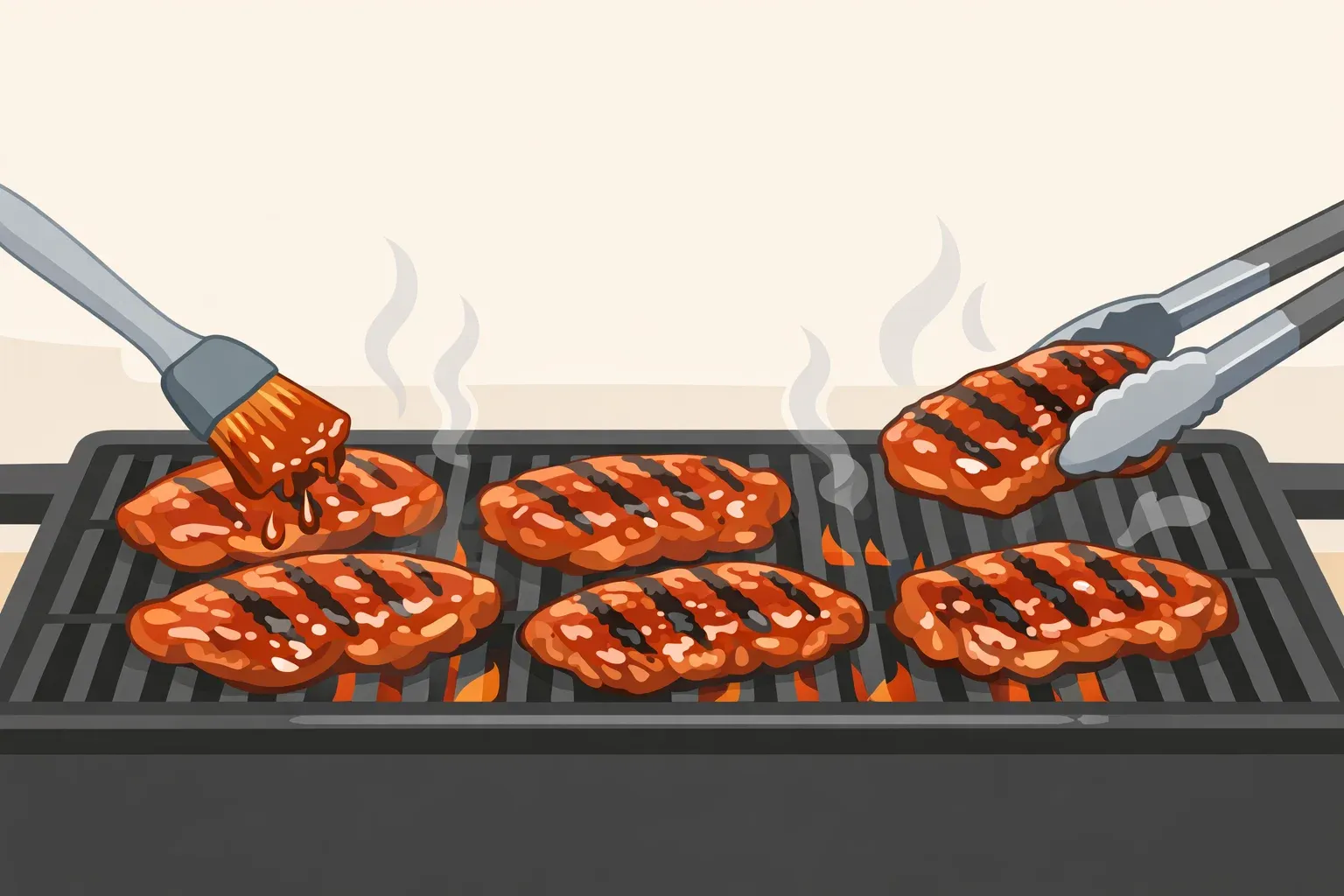
The most common failure in a Korean BBQ chicken recipe has nothing to do with flavor. It's timing. The same sugars that create that deep, lacquered char will scorch the outside of the chicken long before the inside reaches a safe temperature. That's a heat-management problem, not a seasoning one.
Korean BBQ chicken, sometimes written out as Korean barbecue chicken and often called dak bulgogi, layers soy sauce, gochujang, garlic, ginger, and usually grated Asian pear into a marinade that seasons the meat, tenderizes it, and sets up the caramelized crust that defines the dish. Gochujang itself is a fermented chili-soybean paste traditionally aged for months in outdoor ceramic pots, prized for a sweet-spicy-savory depth.
This guide covers the full method: building the marinade, choosing the right cut, timing the marination, and cooking the chicken so the glaze chars instead of blackens. A complete recipe follows below for anyone ready to just start cooking. Beyond a mixing bowl, tongs, and either a grill or a heavy skillet, the one tool worth keeping close is a meat thermometer. Arora's Recipe calls it the only way to guarantee safety and juiciness every time, which overstates it a little, but the instinct behind the claim holds up.
Building the Korean chicken marinade
The marinade runs on soy sauce, gochujang, brown sugar, rice vinegar, and toasted sesame oil, brightened with garlic, ginger, scallions, and grated Asian pear. Gochujang's heat varies noticeably by brand, so it's worth adding less than a recipe calls for at first and adjusting to taste once it's whisked in. The paste is meant to read as medium-spicy once balanced by the sugar and salt around it, not as a standalone chili hit.
Each ingredient is doing a specific job. Soy sauce supplies the salt that, in what Arora's Recipe calls osmotic infusion, draws ginger and garlic flavor into the meat instead of leaving it sitting on the surface. Gochujang is what turns a plain soy-garlic marinade into something closer to gochujang Korean BBQ chicken, adding a reddish-brown color and a savory heat that a spoonful of chili flake can't quite replicate. Toasted sesame oil, meanwhile, is a finishing aromatic rather than a base ingredient, there for its nutty fragrance rather than as the marinade's cooking fat.
Asian pear is a common traditional ingredient in this style of marinade, valued mainly for its sweetness. Arora's Recipe also credits an enzyme in the pear, calpain, with breaking down tough protein strands during marinating. That mechanism comes from the recipe's own explanation rather than an independently verified study, so it's worth treating as plausible rather than settled food science. Peeled apple works as a substitute in a pinch, grated the same way. Left unpeeled, the skin won't break down in the pan and leaves a stringy texture in the finished sauce, so peel it first.
The full recipe: Korean BBQ chicken marinade and method
This version scales to 2 pounds of chicken thighs for 4 servings, matching Arora's Recipe's batch size. For a bigger batch, Here Your Chef scales the same marinade up to 3 pounds of chicken for 4 to 6 servings, so double or adjust the ratios as needed for a crowd.
Ingredients
2 lbs boneless, skinless chicken thighs (or chicken breasts, trimming about 3 minutes off the cook time on each side)
Soy sauce, low-sodium if watching salt
Gochujang, starting light and adjusting to taste
Brown sugar
Rice vinegar
Toasted sesame oil
6 to 8 cloves garlic, minced
A 1-inch piece of ginger, grated
3 scallions, thinly sliced, plus extra for garnish
1 Asian pear (or 1 peeled apple), grated
Toasted sesame seeds, for garnish
Method
Whisk the soy sauce, gochujang, brown sugar, rice vinegar, sesame oil, garlic, ginger, scallions, and grated pear together in a large bowl until the sugar dissolves and the mixture looks glossy and reddish-brown, with no dry gochujang clumps left.
Spoon off about a quarter of the marinade into a separate container before any raw chicken touches the bowl. That reserved portion becomes the basting or finishing sauce later, no boiling required.
Add the chicken thighs to the remaining marinade, coating every piece and working it into the folds of the meat. Cover and refrigerate at least 1 hour, up to 8 hours for deeper flavor.
Lift the chicken out, letting excess marinade drip off, and cook using either the grill or skillet method below until a thermometer reads 165°F at the thickest part.
Rest 5 to 10 minutes before slicing.
Brush with the reserved marinade if using it, scatter scallions and sesame seeds over the top, and serve.
Choosing your cut: why thighs beat breasts
Boneless, skinless chicken thighs are the recommended choice here, and for a specific reason: their higher fat content buffers against high heat, which is what keeps the meat from drying out under a hard sear.
Breasts work as a substitute, but they need roughly 3 minutes less cook time, and skipping that adjustment is a real risk for drying them out. That's a genuine trade-off for anyone who prefers white meat, not a minor footnote.
Whichever cut ends up in the marinade, keep a thermometer within reach. Federal guidance sets the safe minimum for poultry at 165°F/74°C, and that's the number that actually matters for safety. Simply Recipes' grilling method pushes thighs and drumsticks further, to 170°F, specifically for a firmer bite, which is a texture preference layered on top of the safety minimum rather than a replacement for it. Clock time alone is unreliable here, especially with thighs of uneven thickness and a grill that runs hotter in some spots than others.
How long to marinate Korean BBQ chicken
One hour is the minimum, giving salt enough time to work into the muscle fibers. Two to eight hours is the window recommended for fuller flavor development. A marinade of under 30 minutes tends to leave the chicken bland; Arora's Recipe attributes this to the salt not having had enough time to penetrate the fibers yet.
Neither source pins down a scientifically tested stopping point where flavor gain gives way to a texture change. Treat 2 to 8 hours as a practical window built from kitchen testing, not a precisely calibrated one.
The marinade itself can be mixed up to three days ahead, and raw chicken can be frozen directly in it for up to three months, which turns marinating from a same-day task into genuine meal prep.
Cooking Korean grilled chicken thighs: grill or skillet, thermometer in hand
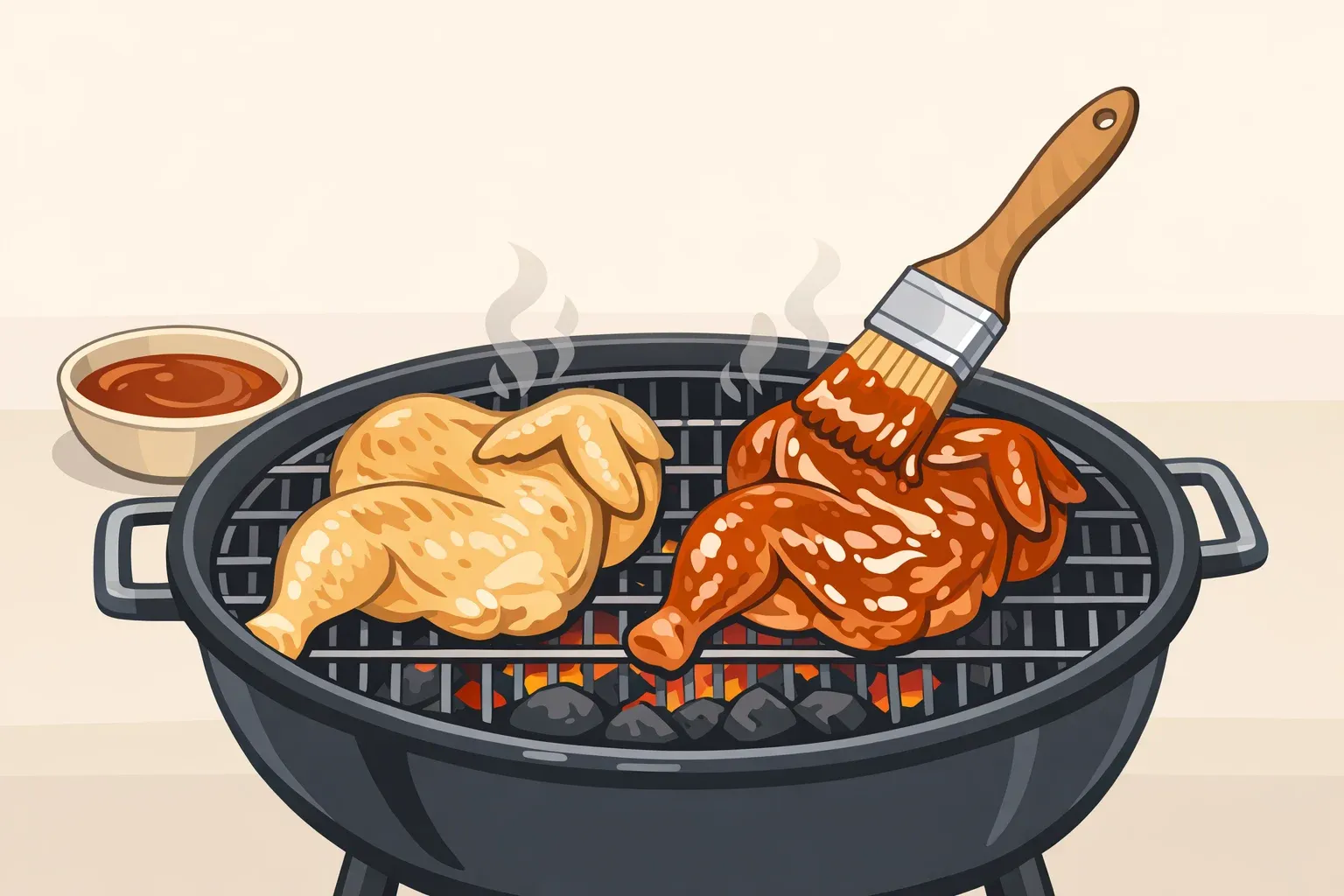
The marinade's sugar is exactly what makes this stage risky. Under high heat, it caramelizes into a smoky crust, and that same reaction is what scorches the outside before the inside has finished cooking.
On the grill: Preheat to 400-450°F. Lay the thighs directly over the flame, close the lid, and give the first side 5 to 7 minutes, just long enough to set real grill marks and a light char. Flip and give the second side the same treatment.
Start checking the thickest thigh with a thermometer once both sides are marked, since thickness and hot spots vary piece to piece and timing alone won't tell the whole story. Once a reading clears 165°F, it's done. If it's still short, slide the piece to the unheated side of the grill, close the lid, and let indirect heat finish the job, checking every few minutes rather than committing to a fixed block of time, until it clears 165°F, or 170°F if the goal is that firmer texture. The char sets the crust; the thermometer is what actually confirms the chicken is done.
Keep the grates clean, hot, and oiled before the chicken ever touches them. Here Your Chef calls this the C-H-O method, and it matters more with a sugary marinade than with plain chicken, since a rough or cool grate is exactly where sugar sticks and scorches.
In a skillet: Heat the pan over medium-high until a faint wisp of smoke rises off the surface, about 3 minutes. Cook the chicken 6 to 7 minutes on the first side. Arora's Recipe describes the edges as blackened with the sauce bubbling hard around the meat at this stage, though for a dish built around avoiding scorched flavor, that visual cue is worth watching closely rather than treating as the target. Flip and cook another 5 to 7 minutes, then check the thickest part with a thermometer for a 165°F reading.
If the glaze looks like it's turning black before the meat has firmed up, drop the heat immediately and add a tablespoon of water to the pan to create steam and slow the browning.
Once the chicken is off the heat, Arora's Recipe reduces the remaining pan sauce for about 2 minutes into a glaze. That timing is about texture, not a food-safety guarantee for a sauce that has touched raw chicken. The cleaner approach, and the one built into the recipe above, is setting aside a portion of the marinade before it ever meets raw meat and using that reserved portion for basting or a finishing drizzle instead.
Either way, let the chicken rest 5 to 10 minutes before slicing. The rest gives the juices a chance to settle and lets the last bit of carryover cooking happen without adding extra char.
Storage, leftovers, and a lower-sodium version
Cooked chicken keeps 3 to 4 days in the refrigerator in an airtight container. Get it there within 2 hours of cooking to stay food-safe. A gentle skillet reheat with a splash of water can help limit drying more than a microwave does.
Worth knowing before serving this regularly: one recipe estimates 1,145 mg of sodium per serving, about half the American Heart Association's suggested daily limit of 2,300 mg. This isn't an automatically light dish just because it's grilled chicken. Swapping in low-sodium soy sauce is the most direct fix, and by Arora's Recipe's own estimate it can cut sodium by up to 60 percent, down to roughly 458 mg per serving. Brands vary enough that the figure is best treated as a ballpark rather than a guarantee.
Where to take it from here
The same marinated thighs used above turn into skewers with almost no extra work: cut them into 1-inch chunks before marinating, then grill 3 to 4 minutes per side, checking with a thermometer the same way, since smaller pieces cook even faster and a stopwatch alone won't catch that.
Dak bulgogi also has a faster stovetop cousin. NYT Cooking published a version last year built around soju and maple syrup instead of gochujang and pear, aimed at getting the same sweet, caramelized flavor onto the table on a weeknight. Same char-then-finish instinct, a different pantry doing the work.






Comments
Be the first, drop a comment!