



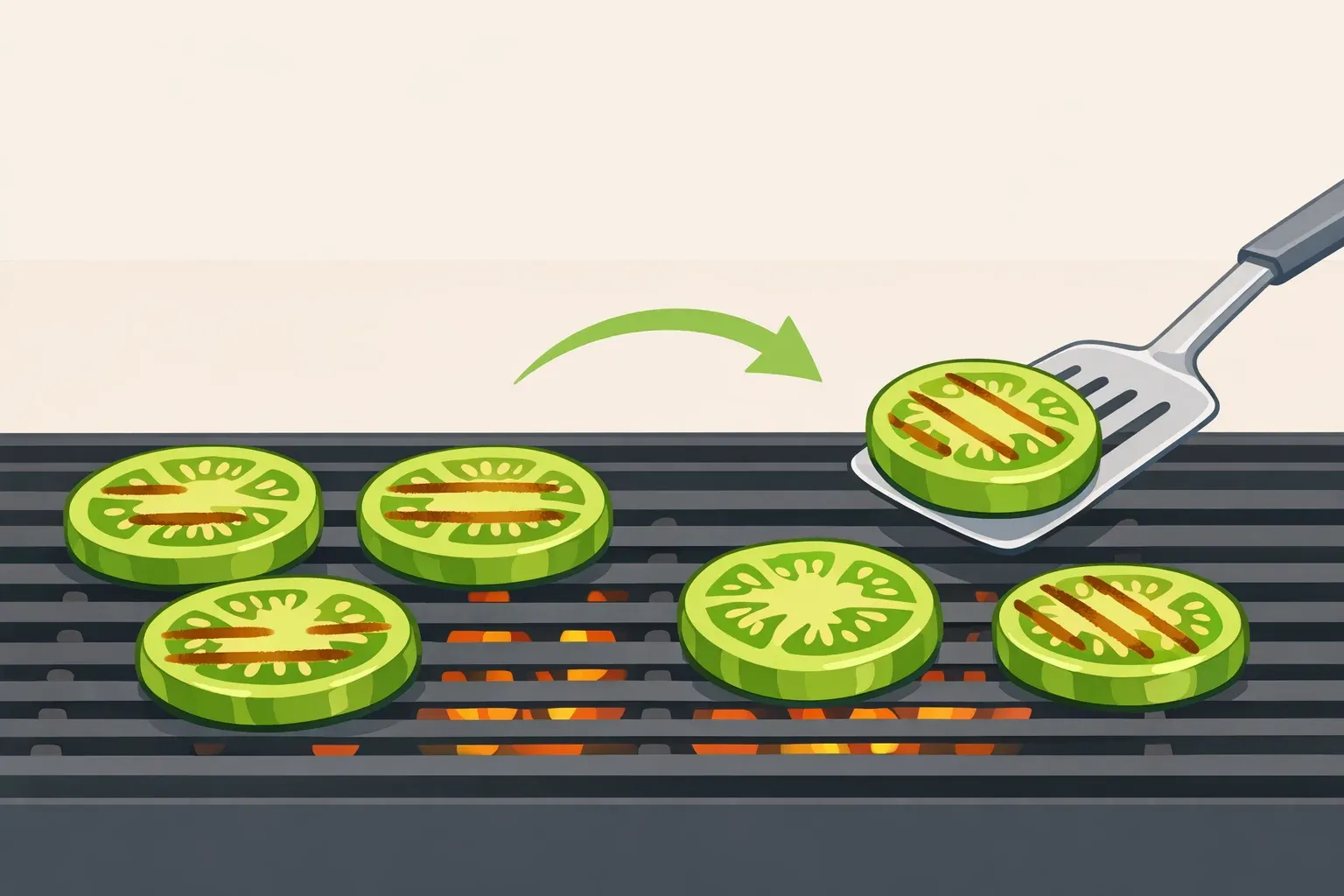
How to grill green tomatoes without sticking or falling apart
Grilled green tomatoes fail for predictable reasons. Get the tomato selection wrong and nothing downstream saves you. Slice too thin and the tomato tears on the flip. Skip the surface drying and the grate becomes a problem. Neglect the finish and the dish lands flat. This guide walks through each decision in sequence by the end, you'll know how to grill green tomatoes that come off the grate firm, charred at the edges, and still tart at the center.
One frame of reference before diving in: the classic fried preparation involves dredging, egg wash, a cornmeal-breadcrumb coating, oil at 375°F, and four to five batches in the skillet, totaling 55 minutes of total time, per Serious Eats. Grilling skips the entire production. That's the only comparison worth making here.
The target use case is chef Adrienne Cheatham's grilled green tomato salad, a composed summer side or light main that serves four to six. Knowing the end-state shapes every decision that follows.
Decision 1: Choose the best green tomatoes for grilling
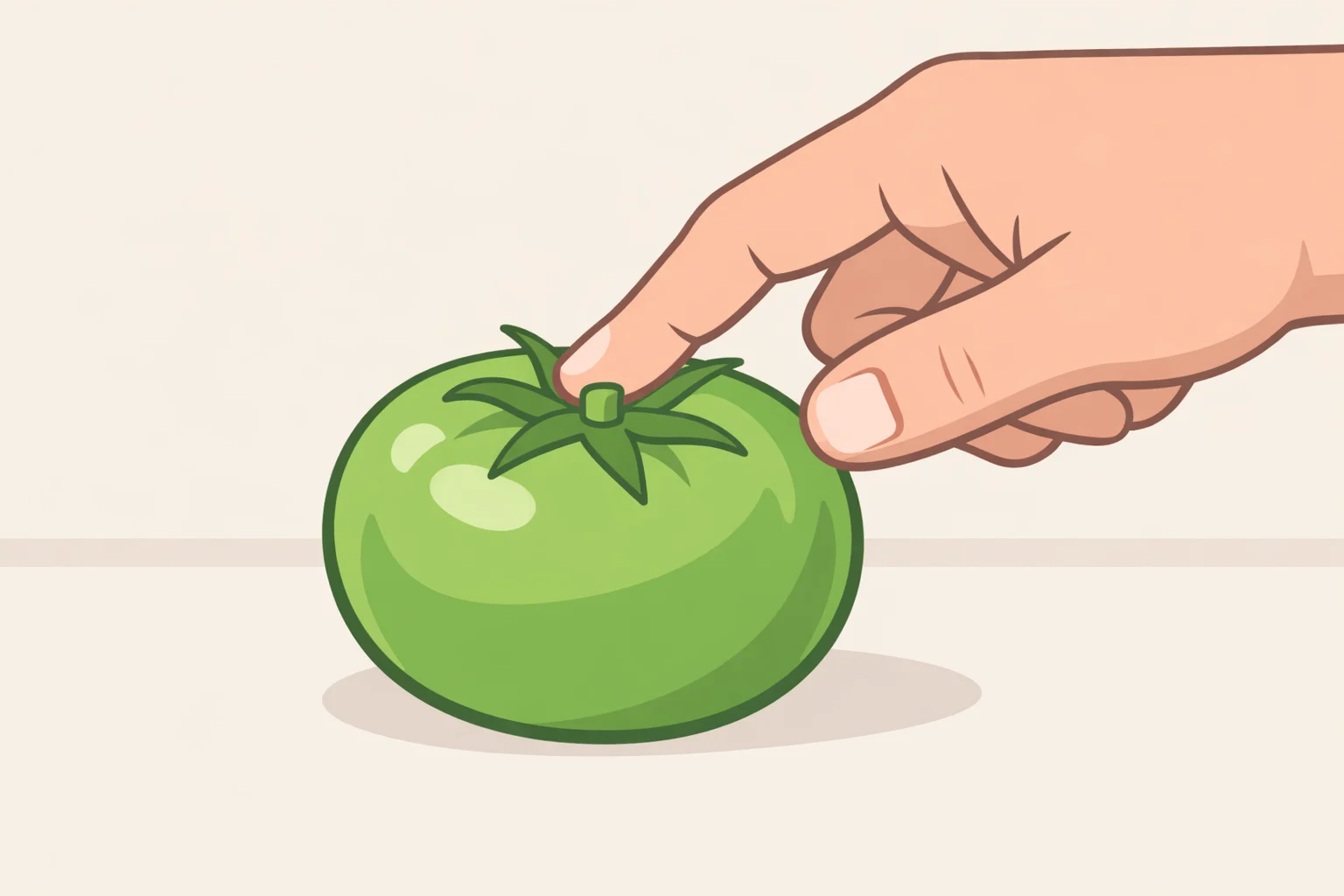
"Green tomato" describes a ripeness state, not a variety. The tomato you want is one that would eventually turn red, pulled before it got there. That distinction determines whether everything else works.
Two varieties to avoid. First, green-when-ripe types like Green Zebras: the Serious Eats fried green tomato recipe is explicit that these are the wrong starting point. They look right but are functionally ripe fruit that happens to be green. Second, those pale, firm supermarket tomatoes that never quite ripen on the counter. Despite appearances, Serious Eats notes they're already too ripe to work as a genuine green tomato. That finding comes from frying tests, but the underlying logic holds for the grill just the same.
Cheatham's recipe calls for four large green tomatoes with no caveats about variety, per Salt + Spine. Firm, dense, genuinely unripe fruit is taken as a given for the preparation to function.
Reliable sources are farmers markets, farm stands, and home gardens in late summer. A tomato that's right feels dense and heavy for its size with no give under firm finger pressure. Press near the stem end if the flesh yields at all, it's already too ripe. Can't find one that passes that test? Don't grill. Soft fruit produces a soft result, and no technique on the other side changes that.
Decision 2: Slice to 1/2 inch and dry the surface
Grilling and frying require opposite slicing strategies. The numbers are specific enough to matter.
For frying, Serious Eats testing found that slices thicker than 1/4 inch caused the coating to crack and separate thin cuts perform better in hot oil. For green tomatoes on the grill, Cheatham calls for 1/2-inch rounds, double the frying thickness. The reasoning here is inferential rather than from direct grill testing: a thicker slice can withstand direct heat without cooking through to mush and has enough structural integrity to flip without tearing. That logic holds even without a controlled experiment to confirm it.
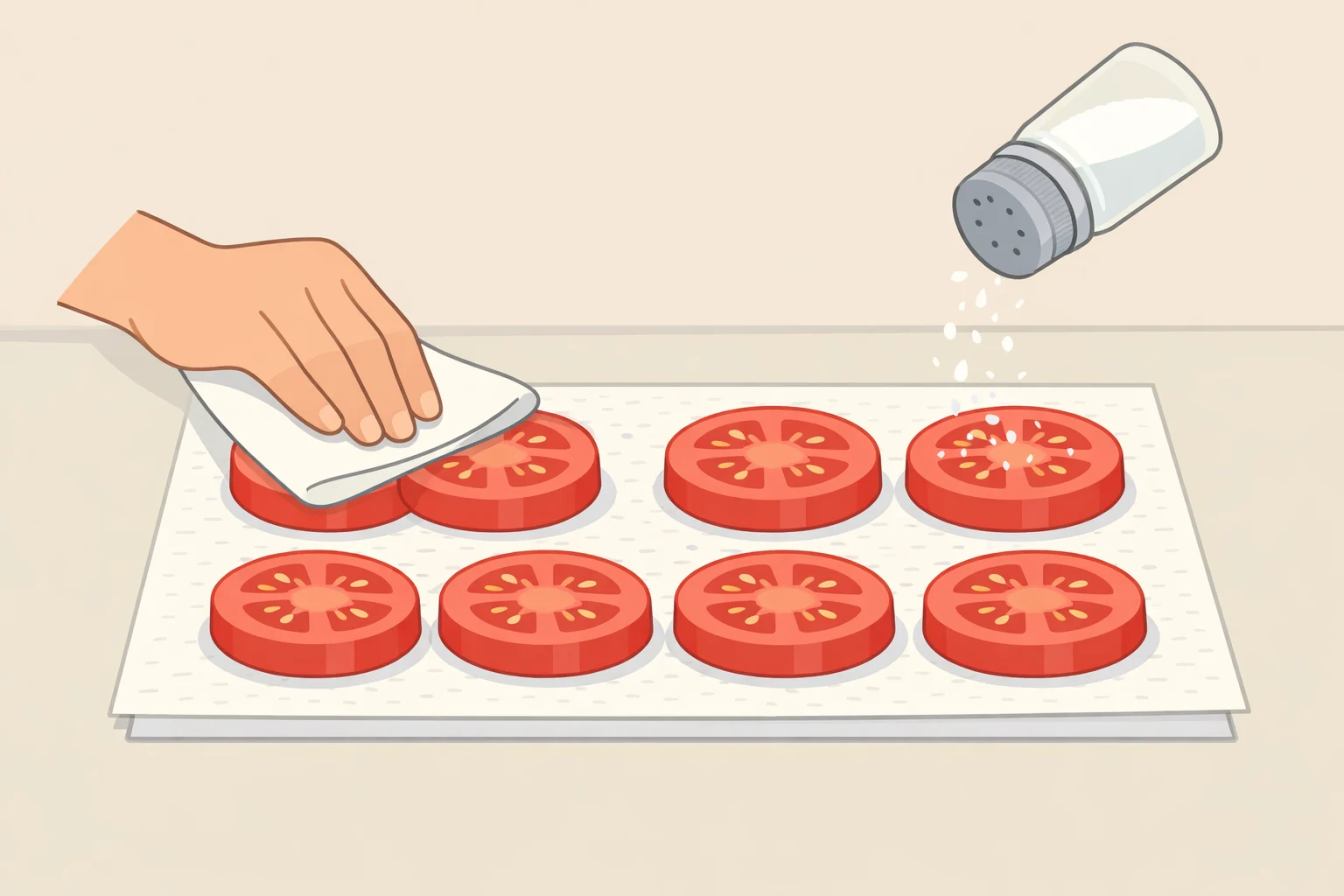
Dry each slice between paper towels before anything else. Cheatham includes this step explicitly, per Salt + Spine. Surface moisture on a hot grate creates steam, which fights browning and increases sticking. Lay slices flat, cover with another layer of paper towels, press gently, and let them sit while the grill heats it takes less time than the preheat.
One gotcha worth flagging: don't pre-salt. With genuinely unripe tomatoes, there's little surface moisture to draw out. Serious Eats found the same for thin-sliced fried versions pre-salting softens flesh without buying anything when the tomato is properly unripe. Salt after. Dry seasoning like Creole spice can go on before.
If tomatoes are tearing on the flip, the slice was too thin or the surface wasn't dry. Both problems start at this step.
Decision 3: How to handle green tomatoes on the grill without sticking
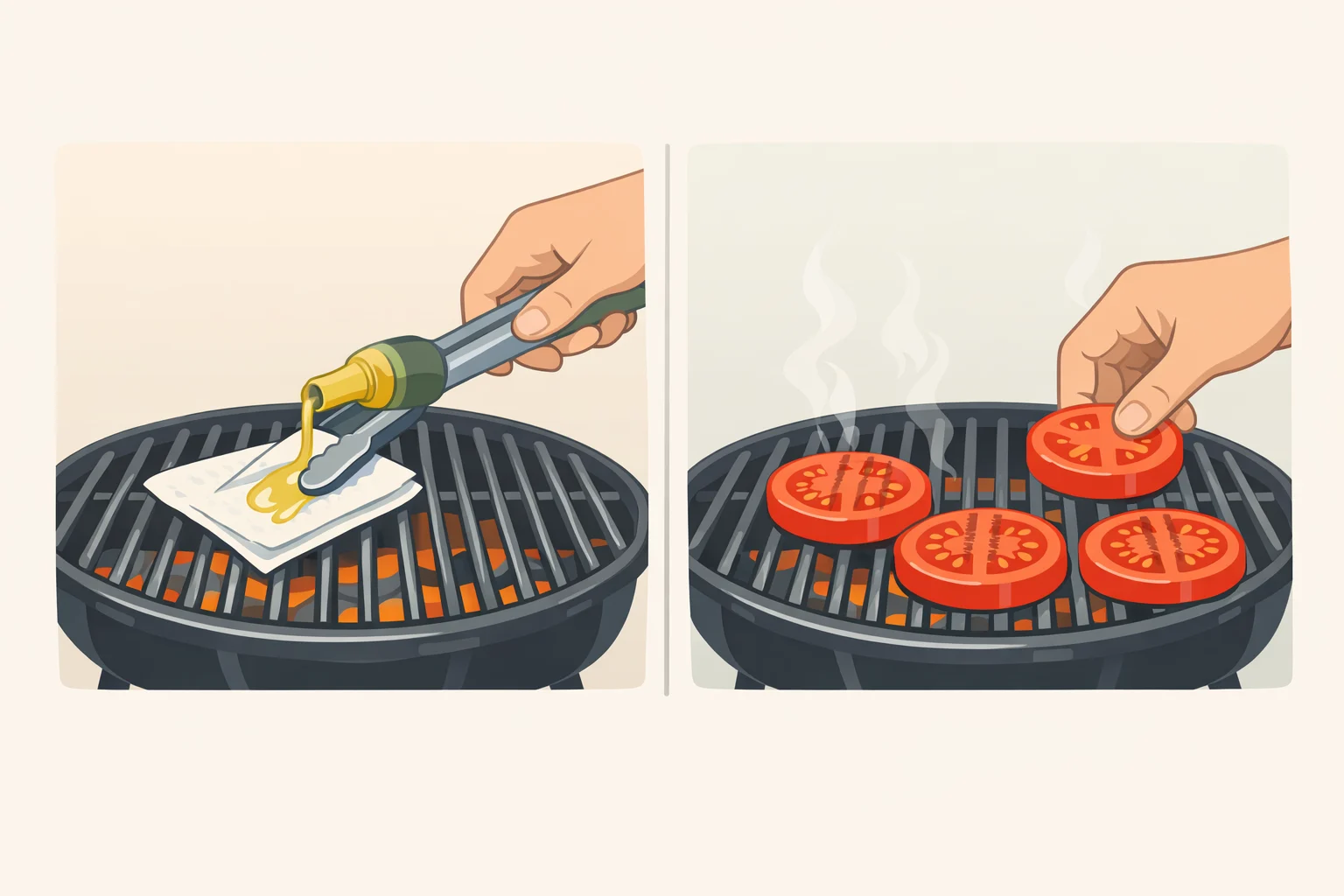
Even correctly selected, sliced, and dried tomatoes will stick and tear if the grate isn't ready. The sequence matters: oil the grate, preheat fully, oil the tomatoes, place the slices, then leave them alone until they release on their own.
Prepare the grate first. Cheatham's recipe specifies vegetable oil for greasing the grill surface before anything goes on, per Salt + Spine. A folded paper towel dipped in oil, wiped across the grates with tongs do this during the preheat. The grate needs to be genuinely hot before contact. A cold or warm grate sticks; a properly hot one sears and releases.
Oil and season the slices before they hit the grate. Cheatham uses roughly 1/4 cup of extra-virgin olive oil for four large tomatoes, per her recipe. Oil improves browning and carries seasoning into the flesh. Season the oiled slices with salt and, if working in the Southern green tomato tradition, Creole seasoning the flavor driver that Serious Eats applies to both the cornmeal coating and the rémoulade in the fried version.
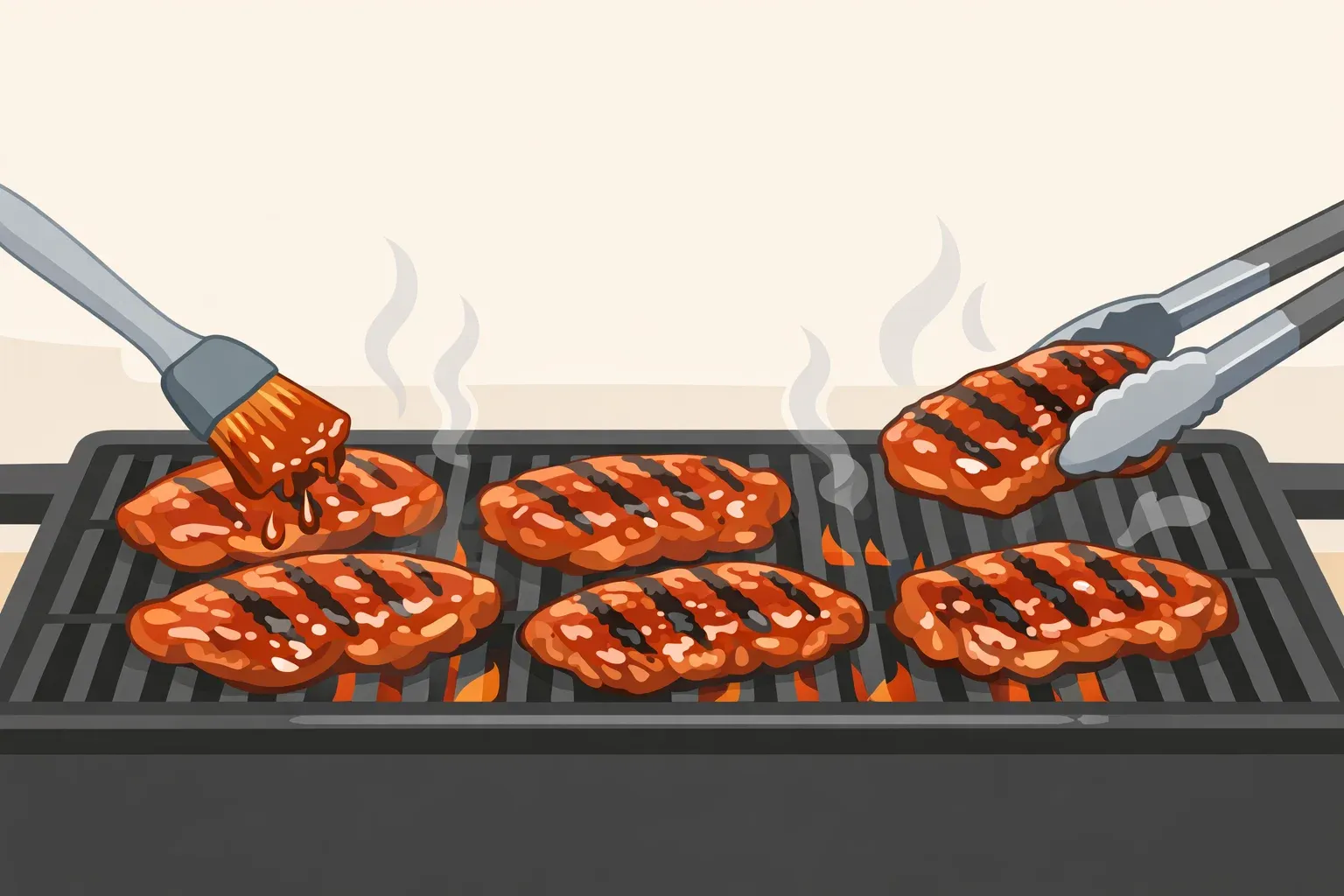
Place the slices and don't move them. A tomato ready to flip releases cleanly without resistance. If it sticks, wait a bit longer the grate lets go once a crust forms. No tested timing data exists in the source material for this preparation, so read cues rather than a clock. What to look for: visible char marks on the contact side, flesh that yields slightly to a gentle press without collapsing, edges beginning to soften while the center holds firm. The tomato should lift in one piece. Folding or tearing means it's either overcooked or wasn't fully dry going in.
Working indoors, a grill pan follows the same rules. Preheat fully, oil the pan, don't crowd the slices. A crowded surface steams instead of sears.
Decision 4: Finish with something tangy, something crunchy, something sharp
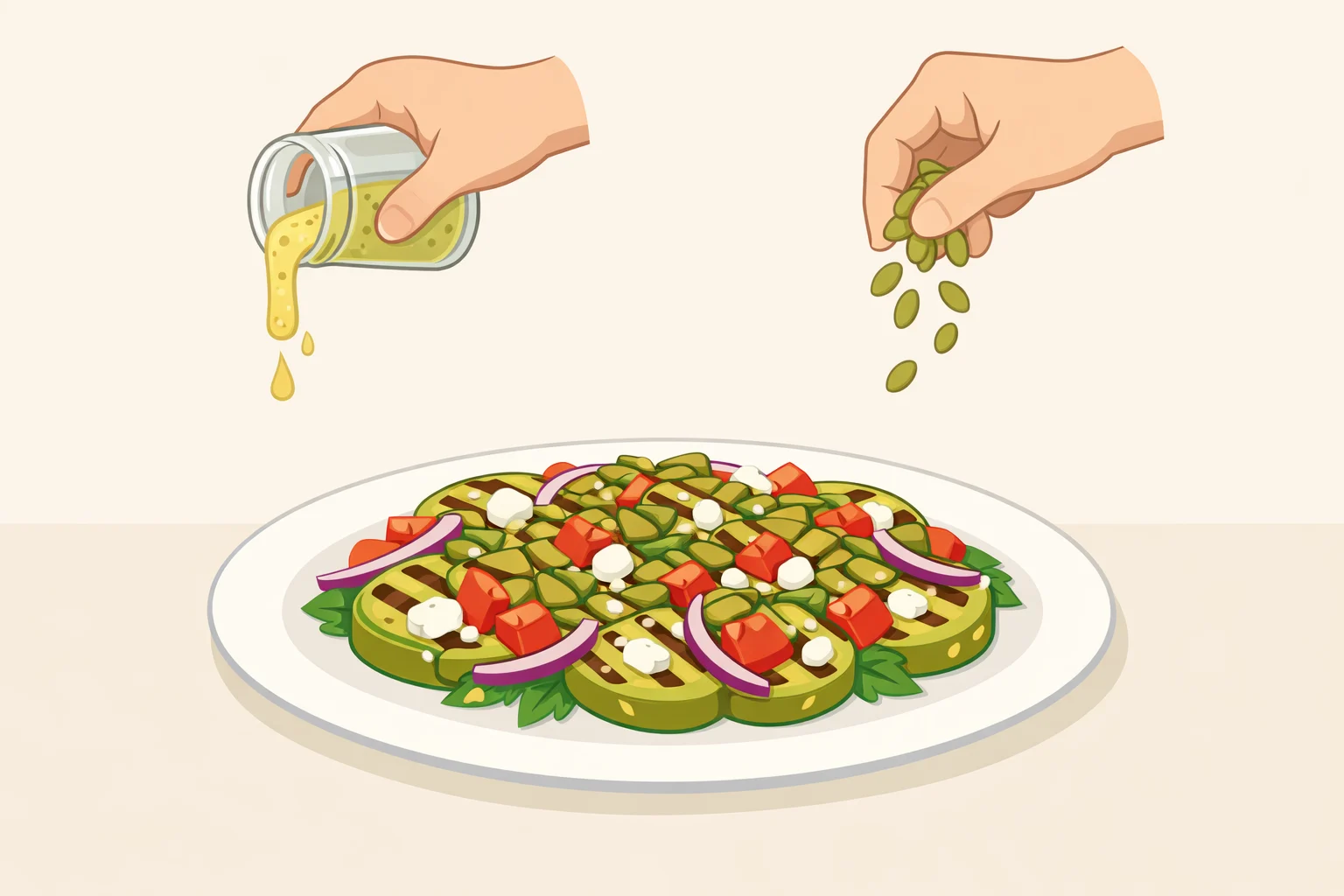
Grilled green tomatoes are mild and slightly tart on their own. The finish is structural, not decorative it's what separates a complete dish from an interesting ingredient that needs a home.
Serious Eats notes that green tomatoes are pretty mild, which is why the fried version layers Creole seasoning into the coating and builds a rémoulade from capers, hot sauce, Creole mustard, horseradish, and lemon. Those specific ingredients matter they show what "sharp" looks like in practice, not just in category.
Cheatham addresses the same mildness differently. She finishes with a buttermilk vinaigrette and toasted pepitas, the latter described explicitly as "an ode to Mexico." As she notes, history suggests cooking green tomatoes was passed on to Black Southerners by Indigenous Americans from Mexico, with green tomatoes sharing characteristics with tomatillos, which are also native to Mexico. Cheatham herself uses tentative language on the history, so it's worth carrying that forward but the pepitas are functional regardless of how the cultural lineage settles. The buttermilk dressing supplies acidity; the pepitas supply crunch.
The formula: something tangy (buttermilk dressing, yogurt sauce, sharp vinaigrette), something crunchy (pepitas, toasted breadcrumbs, chopped walnuts), something sharp (capers, pickled onion, fresh herbs, hot sauce, lemon). Any combination that hits all three works.
How you configure it depends on how you're serving:
- As a side dish: A simple vinaigrette and crispy capers. Clean and fast.
- As a salad: Buttermilk dressing and toasted pepitas, as Cheatham does it, for four to six people.
- As an appetizer: Lean into a rémoulade-style sauce capers, hot sauce, Creole mustard, horseradish, lemon and serve on a platter.
If the finished dish tastes flat, the tomatoes needed more acid in the dressing or more salt applied directly to the tomato before plating. A grilled green tomato is not a vehicle for subtlety.
Diagnosing what went wrong
Most failures are diagnosable before the plate hits the table.
Tomato stuck and tore on the flip. The surface wasn't dry enough, the grate wasn't hot enough at contact, or both. The crust that allows a clean release never formed. Extend the drying step and the preheat next time.
Slice collapsed or fell apart. Either the tomato was already too ripe at the market a problem locked in before the grill or the slice was cut thinner than 1/2 inch. Cheatham's recipe specifies that thickness. Treat it as a floor, not a guideline.
Dish tasted flat. The finish was too timid. If the dressing was sharp and the dish still fell flat, the tomatoes needed more salt applied directly before the vinaigrette went on.
Nail all four decisions and the result is a fast, confident summer dish with a short seasonal window. Late summer, before the first frost, is when genuinely unripe tomatoes turn up at farmers markets and in home gardens prime time to use this technique. For tested quantities and the full buttermilk vinaigrette, Cheatham's complete recipe at Salt + Spine is the right next stop.

Comments
Be the first, drop a comment!