



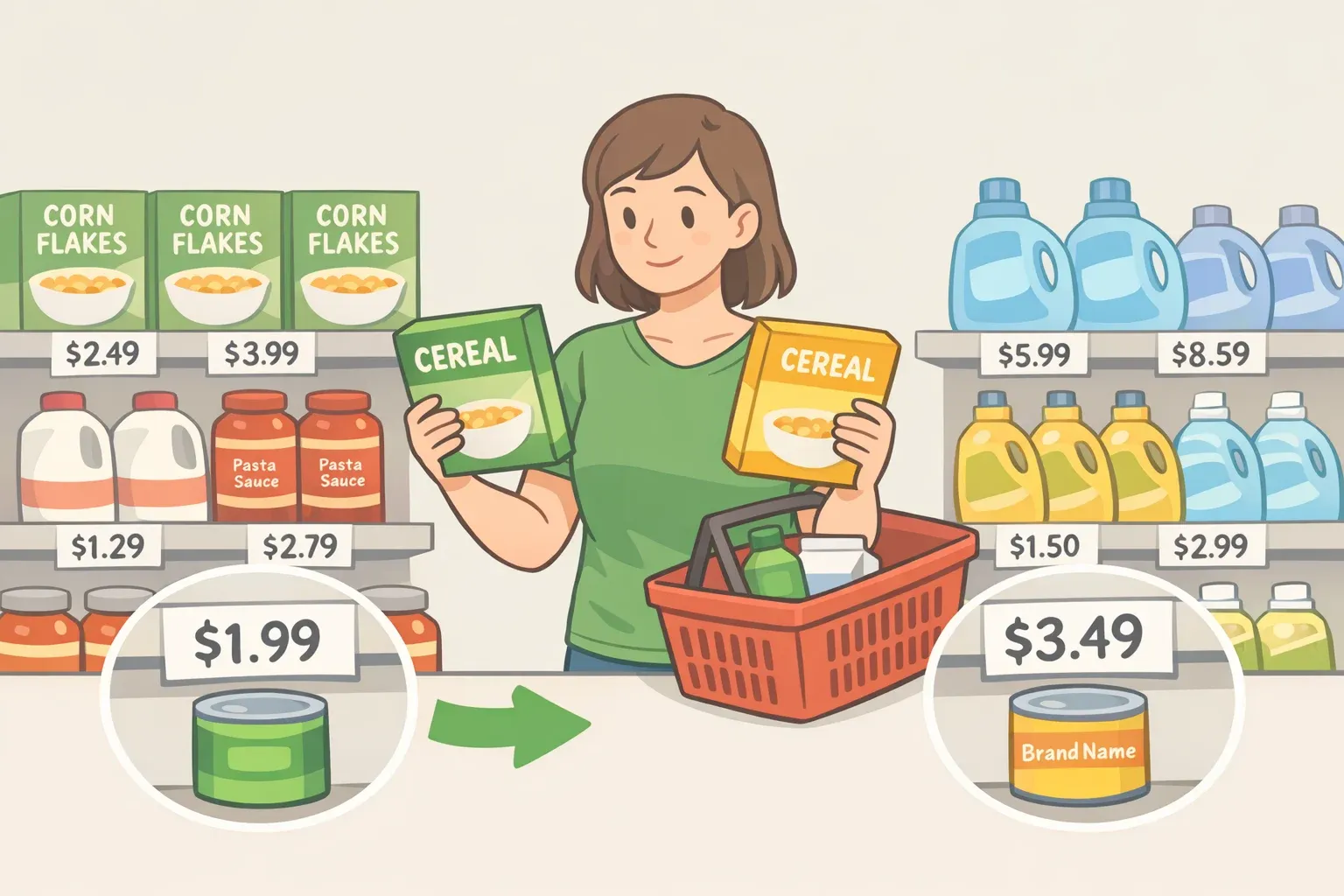
How to Save Money on Groceries: Smart Store-Brand Swaps
If you want to cut your grocery bill without overhauling how you shop, this guide walks you through exactly that: which categories deliver the biggest savings when you switch to store brands, how to verify you're getting a genuine deal, and a five-minute loyalty app setup that stacks discounts on top. Three steps. Repeatable every trip.
Browse r/personalfinance or r/frugal long enough and one recommendation surfaces constantly: don't replace everything in your cart, just swap the right things. The data supports it. As of March 2026, private-label products accounted for 24% of all U.S. grocery purchases, up from 17.7% at the end of 2021, and private-label dollar sales grew 3.3% last year versus 1.2% for national brands, according to Consumer Reports. Store-brand buying is no longer a fringe habit. It's mainstream.
What makes selective swapping work is that the savings are not spread evenly. Store brands typically run 25% to 30% cheaper than name brands across all categories, but in dairy, pantry staples, frozen foods, and breakfast cereals, the gap reaches 60% to 70% or more, per Consumer Reports and a NetCredit analysis published this month. Those are the aisles where the effort pays off.
A note on the figures: The NetCredit study compared 171 products at Walmart, Target, and Kroger using prices from a single Texas ZIP code, collected earlier this year, as ConsumerAffairs reported. The percentages are directional guides, not guarantees. Your local prices will differ, which is exactly why the unit-price check in Step 2 matters more than any statistic here.
Step 1: How to save money on groceries by targeting the right categories first
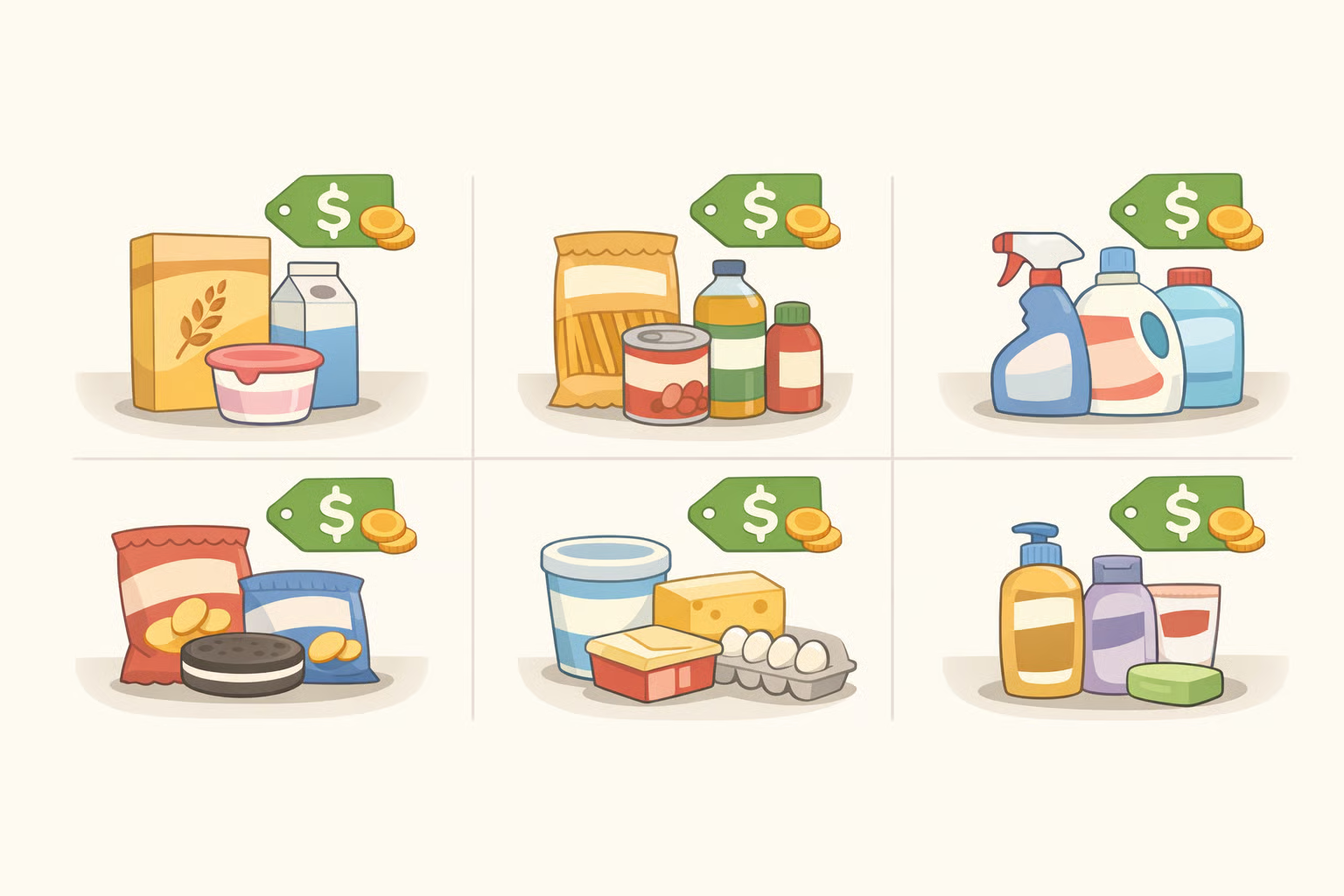
The savings are not evenly distributed. Most of the money is concentrated in a few aisles.
The NetCredit study found the steepest price gaps in frozen foods, beverages, dairy, pantry staples, and breakfast cereals, with some items priced more than 70% lower than their national-brand equivalents, per ConsumerAffairs. The research also highlighted these as categories where shoppers may not notice meaningful differences in taste or quality between branded and generic versions. That's the filter: where perceived difference is low, the price gap is worth capturing.
Here's where the data is most concrete, broken out by category:
- Dairy: Store-brand whole milk averaged roughly 61% cheaper than national equivalents. Private-label products already accounted for more than half of all U.S. dairy milk and cheese sales last year, according to Consumer Reports. Sliced cheese, cheddar, and cream cheese showed similarly steep gaps.
- Pantry staples: Store-brand ketchup ran approximately 67% cheaper than national versions; pasta and boxed mac and cheese each averaged around 49% less, per the NetCredit data.
- Breakfast cereal: Generic fruity loop cereals came in nearly 70% cheaper at Walmart; store-brand cornflakes and shredded wheat followed closely.
- Frozen foods: Store-brand ice cream sandwiches averaged 57% cheaper; frozen fries, burritos, and popsicles showed meaningful gaps. Private-label frozen vegetables made up roughly two-thirds of all U.S. sales last year for many households, these are low-differentiation staples, Consumer Reports notes.
- Beverages: Store-brand sports hydration drinks came in more than 74% cheaper than national equivalents; store-brand coffee averaged about 33% less.
The study's own conclusion is worth keeping in mind: consumers don't necessarily need to abandon all their preferred brands to benefit, per ConsumerAffairs. Selectively switching frequently purchased staples may reduce costs while still leaving room for the name-brand products that genuinely matter.
That last part is the part people skip. Some items are worth the premium. Hot sauce with a specific heat profile, a pasta sauce built around a particular recipe, a snack that's the point of the snack rather than a background ingredient those are defensible keeps. The sharper decision rule is this: swap when the item is an ingredient rather than the star of the dish; keep the brand when texture or flavor is the whole reason you're buying it. Weekly staples beat occasional treats as swap candidates every time, because that's where savings compound.
Review your last grocery receipt. Mark anything in dairy, pantry staples, frozen foods, or breakfast cereals that you buy most weeks. Those go on your candidate list.
Step 2: Check unit prices, then test one swap at a time
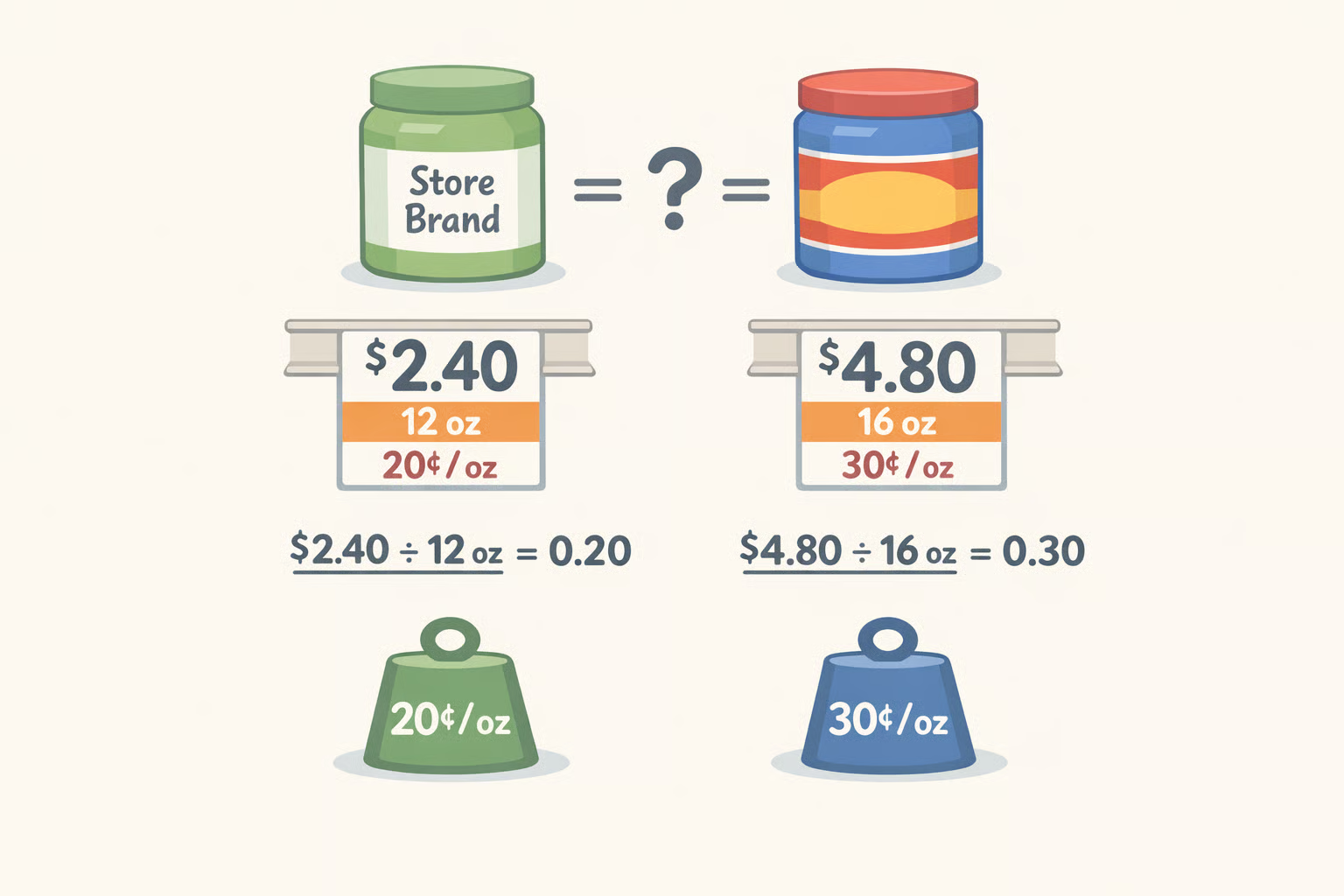
A cheaper sticker price isn't always a better deal. One extra step gets you to the real number.
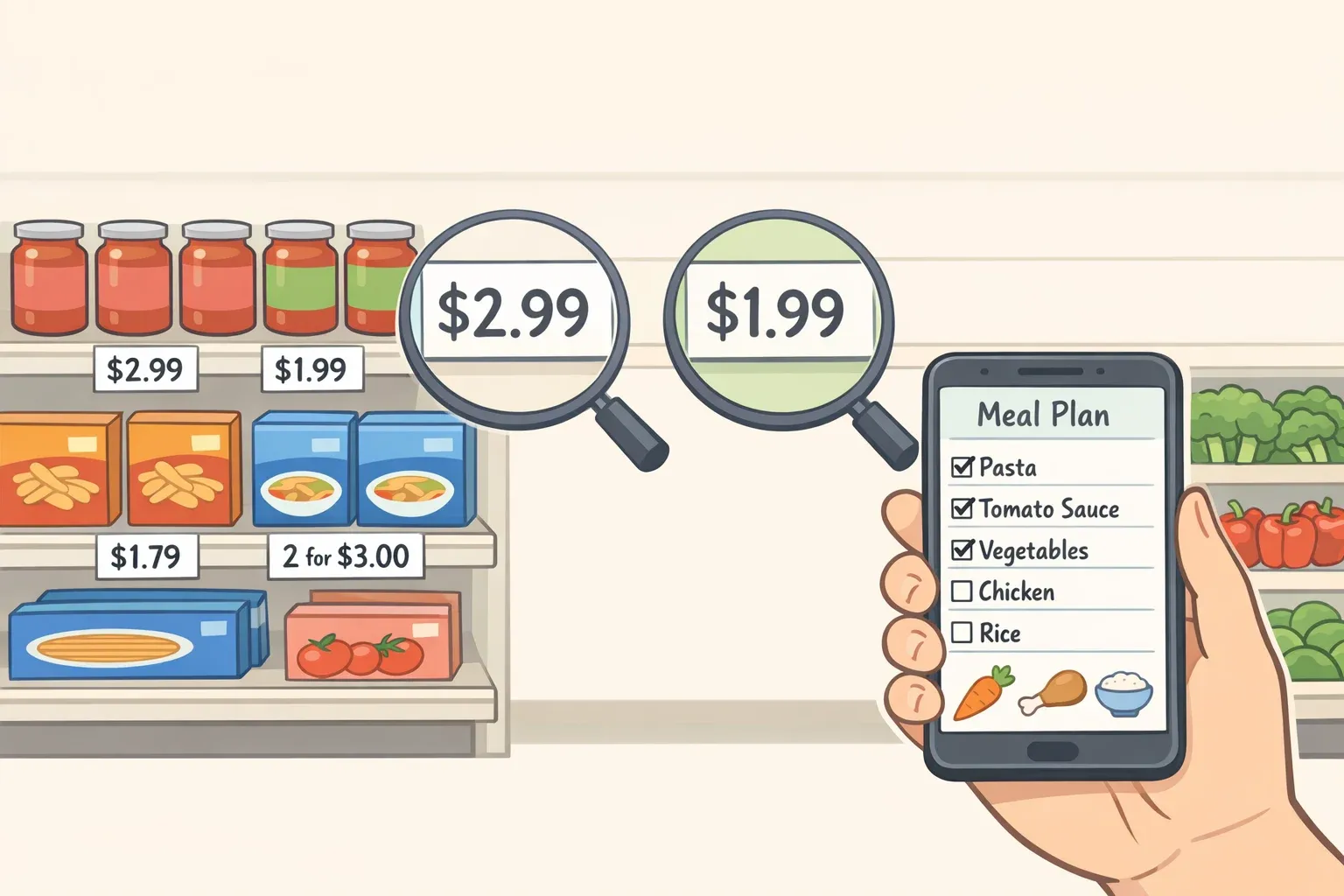
Before committing to any swap, compare unit prices price per ounce, per pound, or per count not the shelf sticker. The sticker comparison misleads because national brands have been quietly shrinking package sizes for years. Orange juice containers that once held 64 oz have dropped to 59, 52, and even 46 oz. Store-brand versions have largely held steady, and consumer advocate Edgar Dworsky, who tracks product labeling at Mouse Print, notes that retailers can now honestly advertise store-brand products as containing 25% more than a shrunken national-brand equivalent, even when the store brand costs less, per Consumer Reports. Unit price doesn't lie the way sticker price can.
Most shelf tags show unit price in small print. If it's not there, divide the shelf price by the weight or count on the package. That's the only math this strategy requires.
One gotcha worth knowing: end-cap displays and promotional signage mean a product paid for prime placement, not that it's actually on sale. A national brand featured at the end of an aisle may still cost more per unit than the store brand shelved two rows over. Promoted placement is a marketing signal, not a price signal, as Consumer Reports has noted.
Once unit price confirms the store brand is genuinely cheaper, run the quality test but test one or two items per trip, not your entire cart at once. Consumer Reports taste testers found Kroger ranch dressing rated above Hidden Valley at under half the cost per serving; Aldi Chef's Cupboard condensed chicken noodle soup outperformed Campbell's while costing nearly half as much, per Consumer Reports. Those are ten pantry items tested by one publication. They're useful as permission to experiment, not as a universal guarantee. Your own household's verdict is the only one that counts.
The decision sequence is short: Is this item in a high-savings category from Step 1? Does unit price confirm the store brand is cheaper per ounce or unit? Try it once. If your household approves, it joins the permanent swap list. If not, move on. The goal is a short, stable list you can shop on autopilot not a forced generic version of every item in the cart.
Step 3: Set up your store's loyalty app once, then let it run
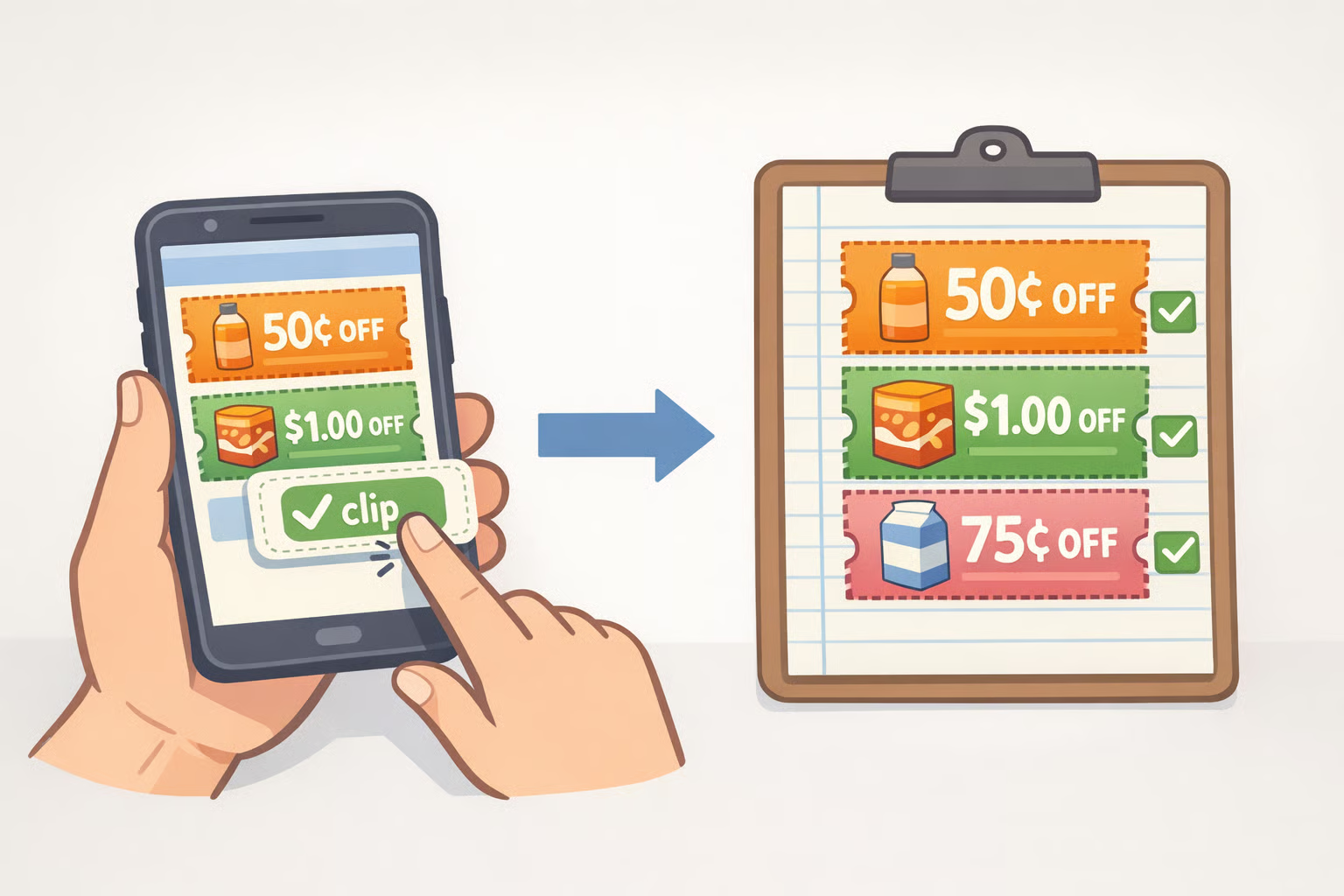
Five minutes before your next trip. Then it largely handles itself.
Signing up for a store's loyalty program is free and gives you access to coupons and deals that non-members don't see. Using the store's app may allow you to access electronic coupons and sale prices automatically, according to Consumer Reports. The setup: download your primary store's app, open the coupons or deals section, and clip anything that overlaps with your swap list. You're not changing what you buy to chase coupons. You're applying discounts to purchases you've already decided to make.
The value is in the layering. A store-brand ketchup already running 67% cheaper than the national version becomes cheaper still when a loyalty coupon applies. Retail analyst Burt Flickinger estimated that a family of four who shops sales consistently and buys store brands where practical could save up to $5,000 a year an upper-end figure for households that apply both habits together, cited by Consumer Reports.
This step is deliberately short. The swap list built in Steps 1 and 2 is the engine. The loyalty app is the multiplier. Don't let the app become the strategy.
Your first-trip checklist
The first trip is the experiment. Every trip after is the return on it.
- From your last receipt, identify five items you buy weekly in dairy, pantry staples, frozen foods, or breakfast cereals.
- In the store, check the unit price not the sticker price on the store-brand equivalent for each.
- Swap two or three this trip. Use them. Evaluate.
- Keep the ones that pass. Add two or three new candidates next trip.
- Before you go: spend five minutes clipping loyalty app coupons for anything on your list.
Once you know your household's keep, test, and swap items, grocery budgeting gets much less theatrical. You stop hunting for tricks and start buying from a list that already works.


Comments
Be the first, drop a comment!