



How to Shuck Corn Easily: Hand, Microwave, or Steam
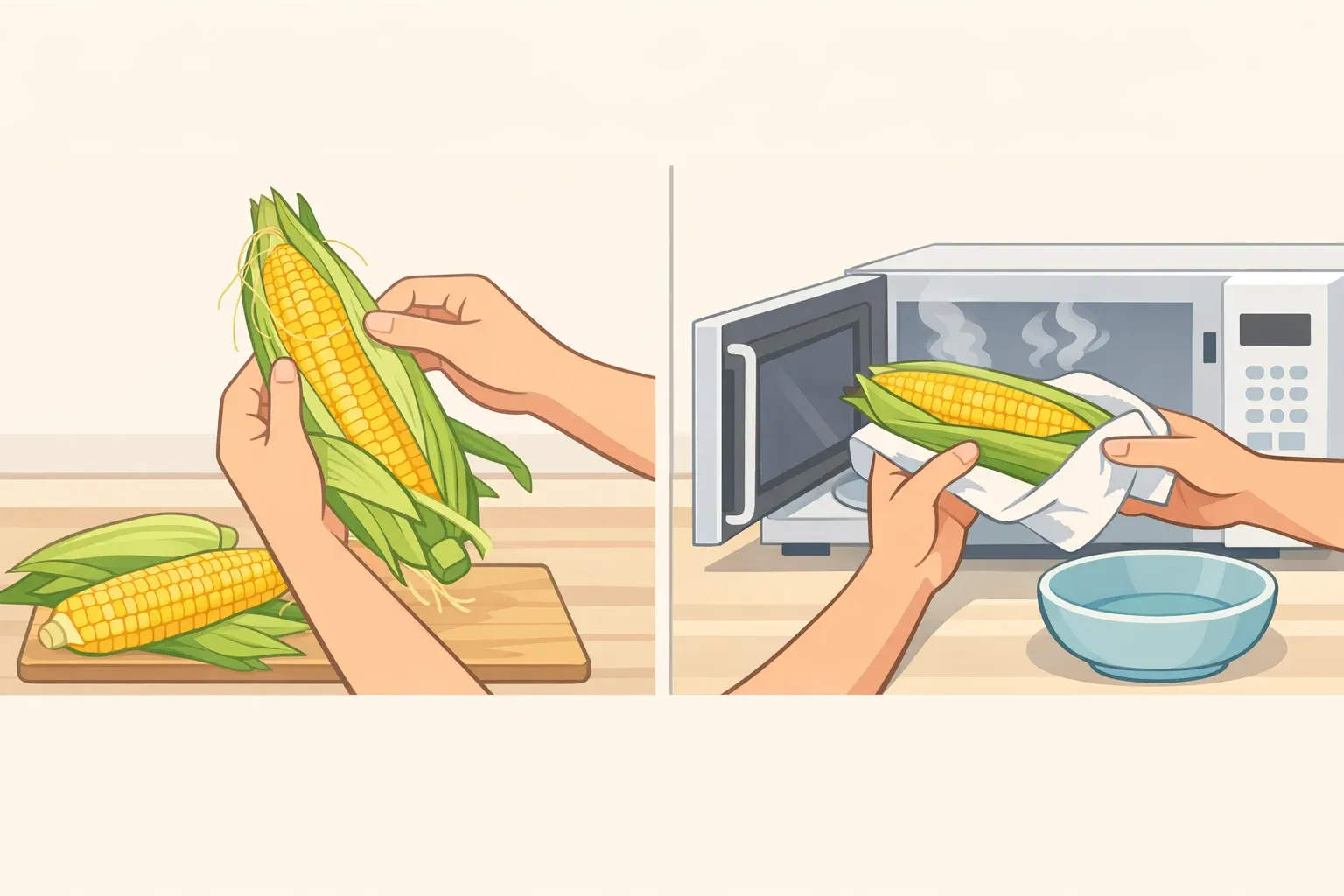
Peel the husk back by hand in two motions, pulling off as much silk as comes loose with it, then wipe the ear down with a slightly damp kitchen towel to catch what's left. In a side-by-side test of five shucking methods, run with two room-temperature ears per method and judged by the author and his wife, this hand-and-towel combination came out as the easiest and fastest overall (Food & Wine, last month). That's one careful home test, not a universal law of corn, but it lines up with basic kitchen logic: no equipment, no heat, no waiting around for anything to cool down.
The viral microwave trick everyone's seen online does work too. Heat an ear for a couple of minutes and the husk practically falls away. But it also partially cooks the kernels, which rules it out for raw dishes and adds the extra step of handling a hot cob (Food & Wine, last month). So how to shuck corn easily really comes down to what you're making and how many ears you're working through. This guide covers hand-peeling as the everyday default, the microwave trick for a quick single-ear fix, and steaming for anyone clearing a big batch at once.
Three ways to shuck corn, compared
- Hand-peel and towel: leaves the corn raw, works for any quantity, and needs the least gear and cleanup.
- Microwave: convenient for one or two ears you're eating soon, but it partially cooks the kernels and creates a real burn hazard when you pull the cob out.
- Steam: efficient for a large batch at once, but it also precooks the corn and is easy to overdo if you plan to char it further.
Use that as a starting point, then adjust based on how many ears you're dealing with and whether the corn needs to stay raw.
What you'll need before you start
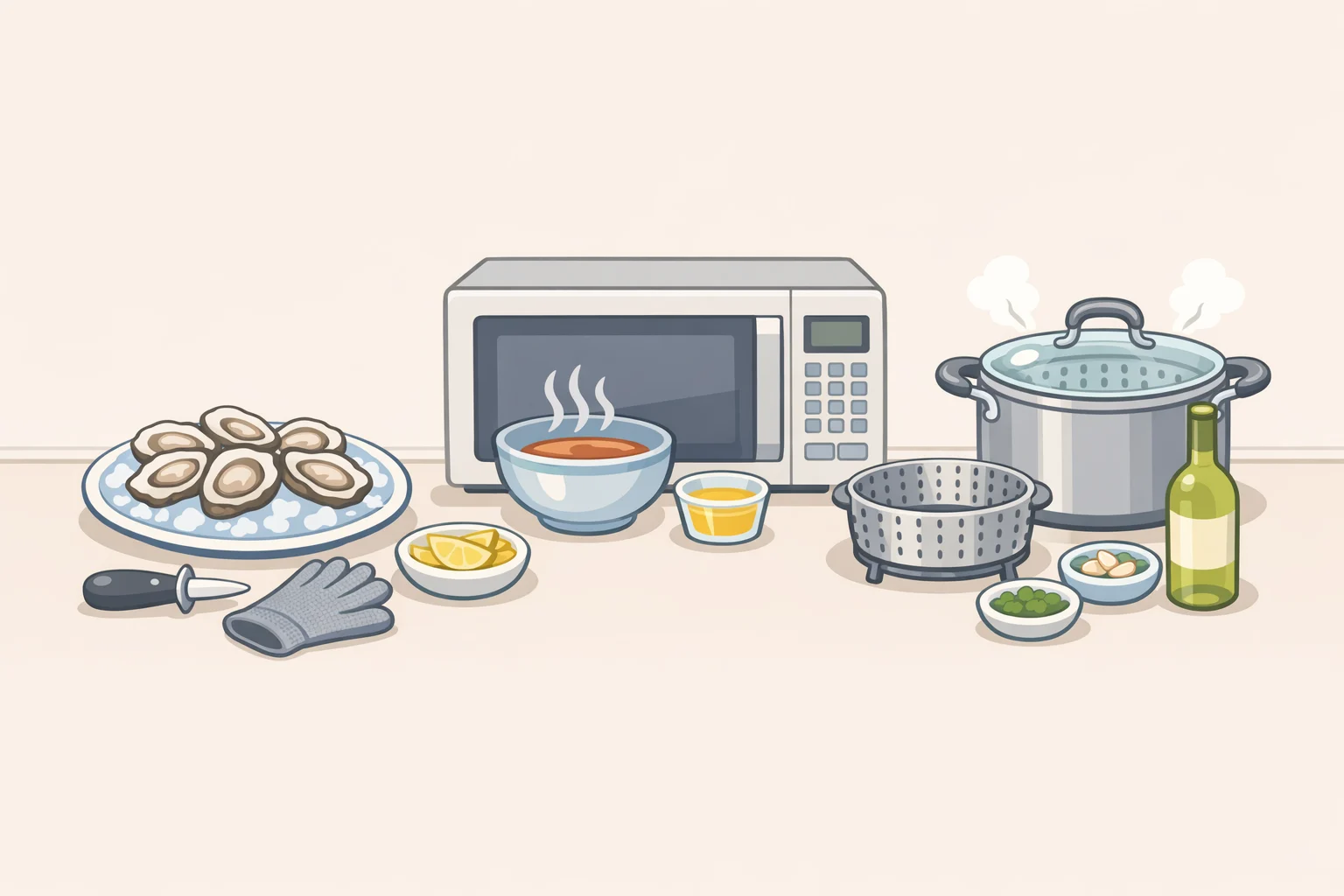
None of these methods call for special equipment, but each one leaves something different behind in your kitchen.
- Hand-peeling: just your hands and a slightly damp, not soaking wet, kitchen towel (Food & Wine, last month).
- Microwave method: a microwave-safe plate, a knife for trimming, and a towel or oven mitt for handling the hot cob.
- Steaming method: a steamer basket, a pot, and about an inch of water.
Hand-peeling needs the least of all this, since there's no cutting board covered in hot corn juice or a steamer basket to scrub afterward (Food & Wine, last month). A cook comfortable with the process can hand-peel about a dozen ears in a couple of minutes, while the microwave and steaming methods each run 2 to 4 minutes of heating before peeling even starts (Food & Wine, last month). For more than a couple of ears, hand-peeling is hard to beat on speed.
One safety note before you pick up a knife or pull anything hot out of an appliance: set the ear on a stable cutting board and keep your fingers clear of the blade when trimming. Once corn comes out of the microwave or steamer, use tongs, a towel, or an oven mitt, and give it real time to cool before touching it bare-handed. A minute of resting is a reasonable starting point, not a guarantee it's safe to grab.
How to shuck corn easily by hand
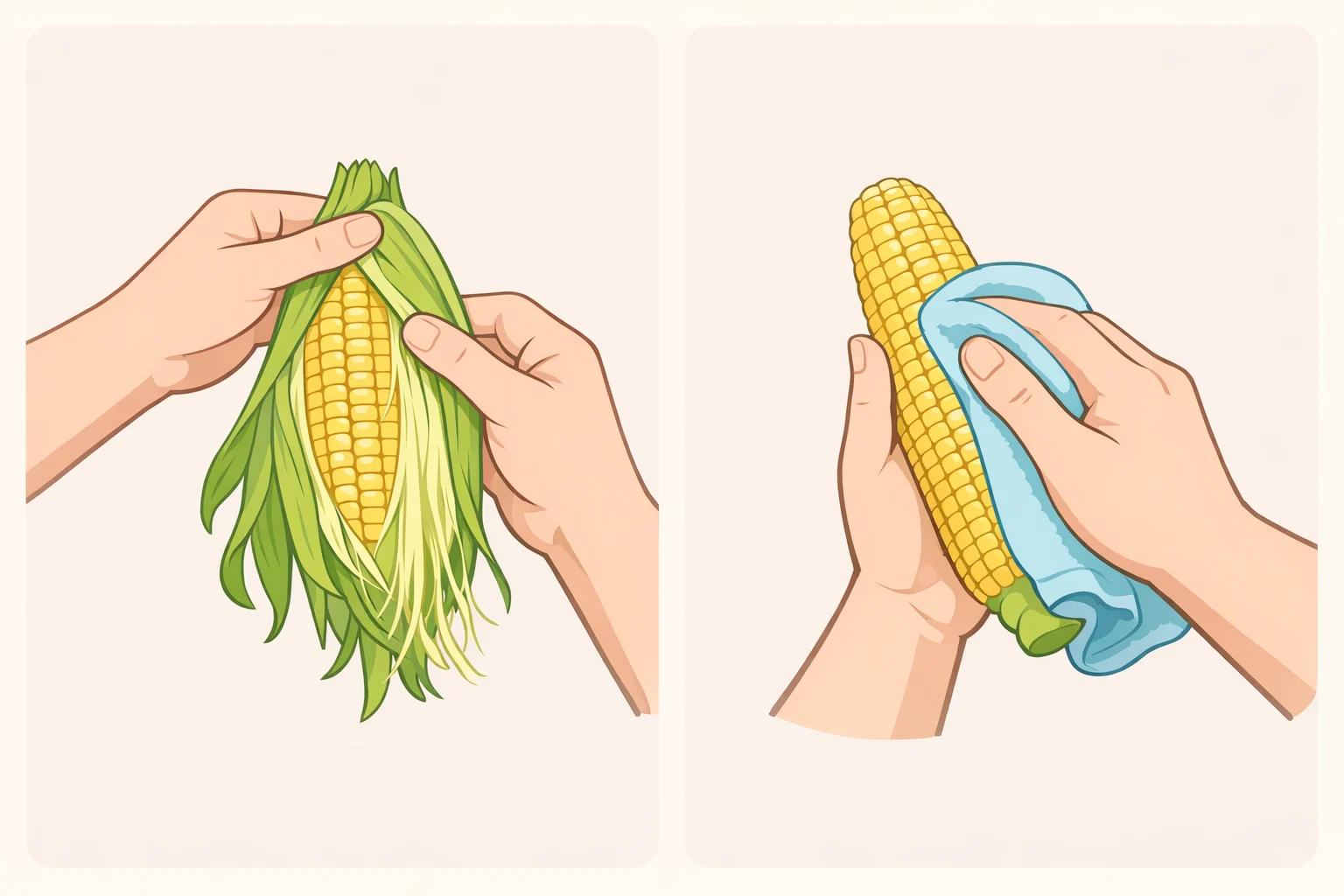
This is the method that won the side-by-side test above, and it's also the simplest to learn (Food & Wine, last month).
- Peel back the husk in two motions. Grab the leaves near the stem end and pull down toward the tip, then repeat on the opposite side to strip the rest away. Pull off as much silk as you can as it comes loose with the husk.
- Check the ear. Most of the silk should come off stuck to the husk. What's left will be a handful of fine strands clinging to the kernels, usually near the tip.
- Brush the ear with a slightly damp kitchen towel. Run the towel down the length of the cob in one or two passes. This is the step that actually finishes the job of how to remove corn silk, and it worked just as well in testing as the microwave trick, minus the heat (Food & Wine, last month).
- Look it over once more. The ear should be clean, raw, and ready for whatever's next, whether that's boiling, grilling, or cutting kernels off for a salad (Food & Wine, last month).
If a few strands still cling near the tip after the towel pass, a quick rinse under cold water loosens them, though the damp towel does the job just as well without running the tap (Food & Wine, last month).
To shuck corn without making a mess when you're working through several ears, set up a paper bag or a stack of paper towels to catch husks and silk as you go, and drop each cleaned ear straight into a strainer or large pot instead of setting it on the counter. That keeps loose silk from spreading and cuts cleanup down to folding up the bag when you're done (Food & Wine, last month).
The microwave corn-shucking trick, tested
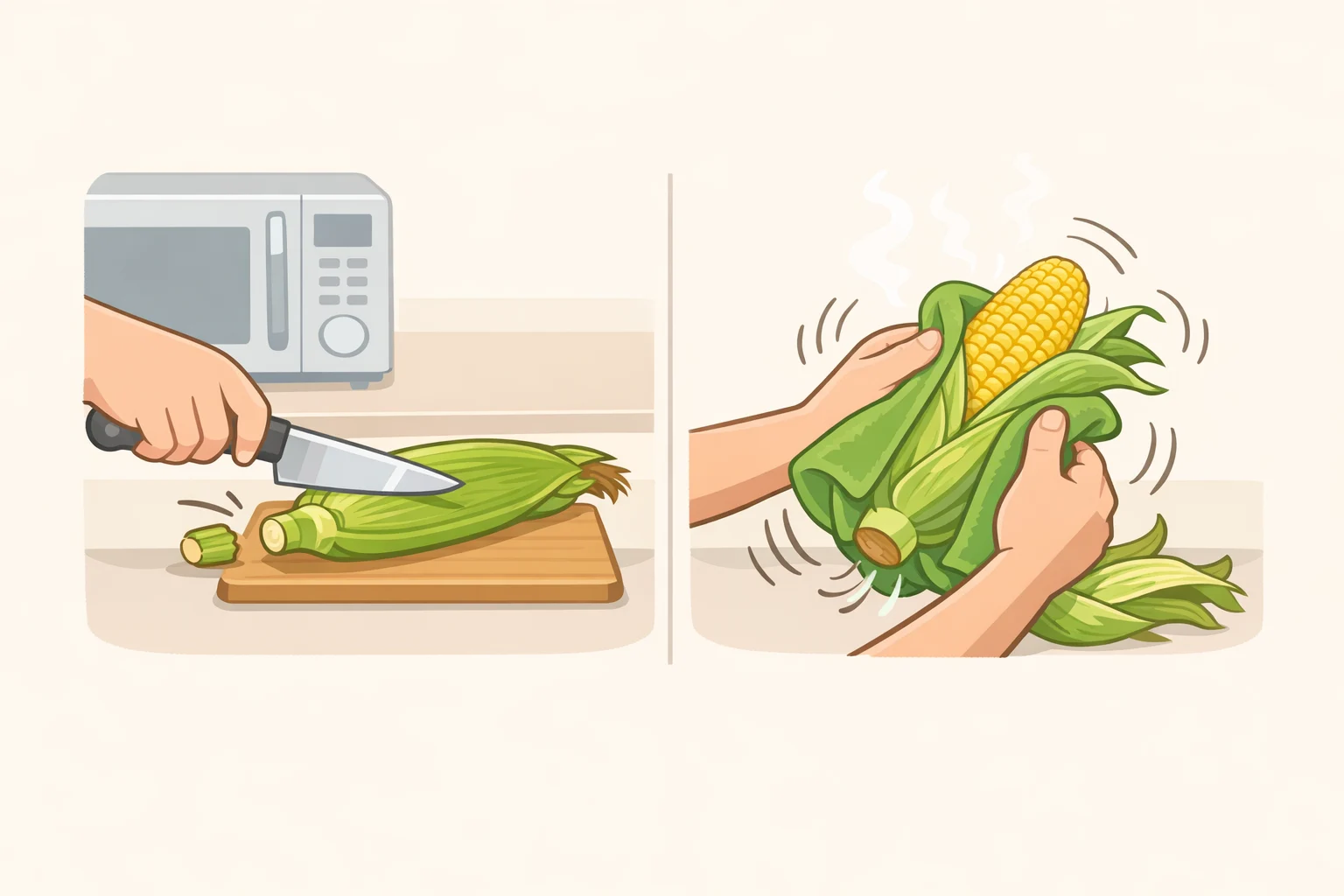
If you only need one or two ears and don't mind them coming out a little cooked, the microwave is a genuinely easy corn shucking trick. To avoid cutting through a hot cob afterward, use the trim-before-heating version described by The Kitchn about two years ago:
- Trim the stalk end. Set the ear on a cutting board and cut a couple of inches off the bottom while the husk is still fully intact. Keep your fingers well away from the blade.
- Microwave the ear. Set it on a microwave-safe plate and heat for 2 to 4 minutes. Three minutes was the right amount in one tester's own microwave, but wattage and the number of ears you're heating at once will shift that (Food & Wine, last month).
- Grab the uncut end with a towel and shake. Use a towel or oven mitt the moment you open the door, since the cob is hot well before it looks it. Steam trapped inside separates the cob from the husk, so the ear slides free on its own (The Kitchn).
The corn coming out of that microwave is very hot. This isn't a food-safety issue, but it is a real burn risk, so a towel or oven mitt isn't optional (N.C. Cooperative Extension, three years ago).
In one single-ear test, the cob came out looking completely clean after two minutes of heating. Broader testing across multiple methods found that none of them remove every last strand of silk, so expect the microwave to get you most of the way there rather than perfectly bare (The Kitchn; Food & Wine, last month).
A different version of this method, tested more recently, microwaves the ear whole, then cuts about 1½ inches off the hot cob afterward and squeezes the corn free through the opening. It works just as well, but it means cutting into a cob that just came out of the microwave. If you'd rather trim first and skip that entirely, the sequence above does the same job (Food & Wine, last month).
If the cob doesn't come loose after the first 2 minutes, don't jump straight to 4. Add time in 1-minute intervals instead, since how long it takes depends on your microwave's wattage and how many ears you're heating at once (The Kitchn; N.C. Cooperative Extension).
Keep in mind the heat partially cooks the kernels. That rules this method out for anything you want raw, like a salad or salsa; corn straight out of the microwave is corn you should plan to use in a cooked preparation, not save for later raw (Food & Wine, last month).
How to husk corn quickly in bulk by steaming
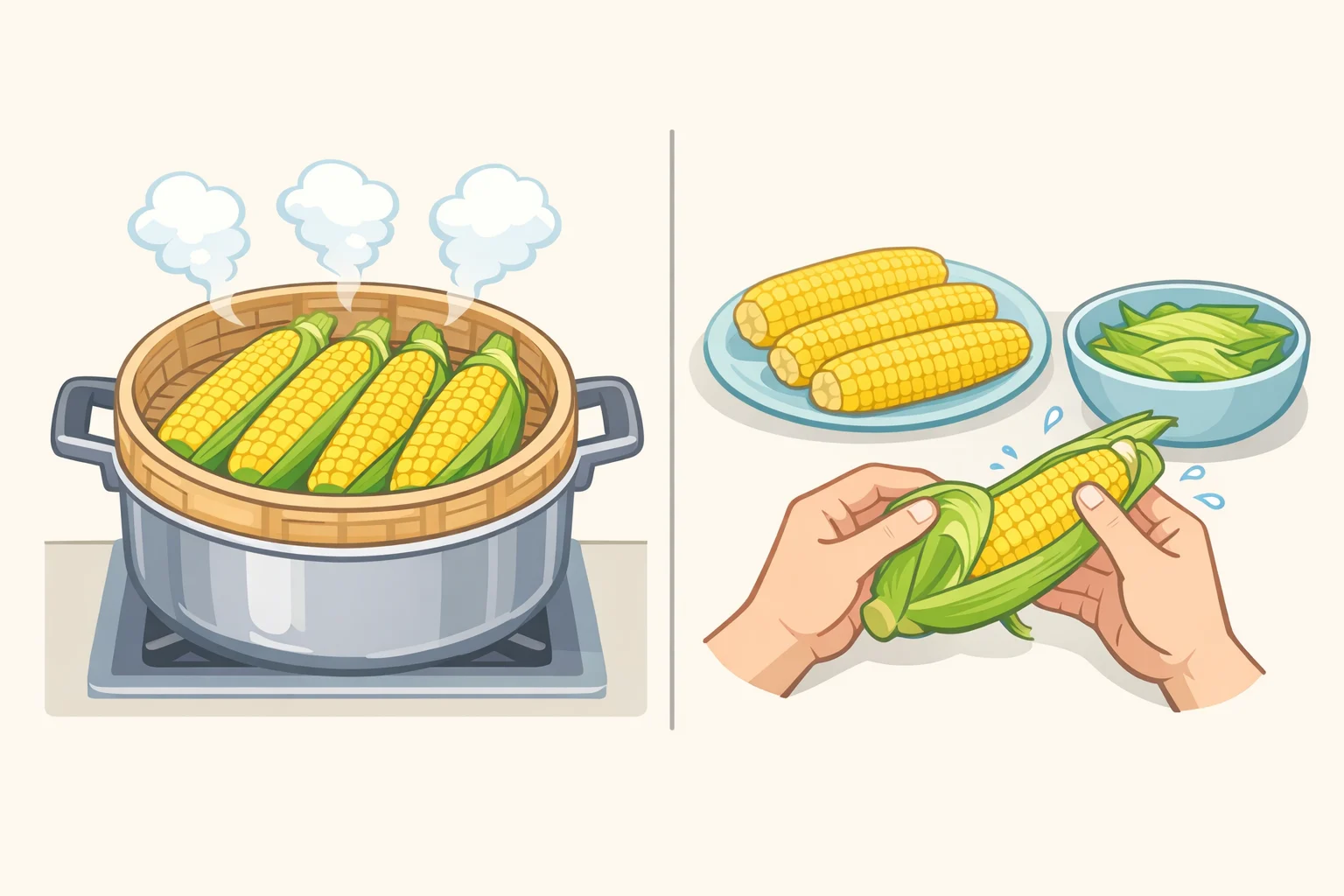
When you're working through a big pile of corn and don't mind it arriving partially cooked, steaming clears several ears at once with very little hands-on effort. As with the microwave, use tongs or a towel when the corn comes out of the basket, and let it cool past that first minute if it's still warm through a towel.
- Trim the ears to fit. Cut just enough off each end so the corn fits inside your steamer basket.
- Set up the steamer. Place the basket over about an inch of water, cover, and steam for 2 to 4 minutes. One test fit about eight ears into a standard steamer basket and found 3 minutes long enough to soften the husks and loosen the silk on all of them (Food & Wine, last month).
- Cool before handling. Lift the basket out with oven mitts and let the corn sit for about a minute, longer if it still feels hot through a towel.
- Trim again and peel. Cut another inch off the stem end, then peel back the husk and silk, and clear any leftover strands by hand or with a kitchen towel (Food & Wine, last month).
Like the microwave method, steamed corn comes out partially cooked, so it's off the table for raw recipes, and it's easier to overcook if you plan to char it further on the grill or in a skillet (Food & Wine, last month). Pull the basket at the first sign the husks have loosened rather than waiting the full four minutes, especially with a smaller batch.
This method earns its keep when you're clearing a large batch and a little precooking suits what you're making, not as a shortcut for one or two ears on a weeknight.
Troubleshooting common shucking problems
- Silk keeps clinging near the tip. Twist a corner of the damp towel and work it into the rows, or give the ear a quick rinse under cold water. Both work; the towel just uses less water (Food & Wine, last month).
- A microwaved ear won't slide free. Don't force it by yanking on the husk, since tearing it can drag uncooked husk fragments onto the kernels. Put it back in for another minute instead (The Kitchn).
- You want a drier ear for the grill. A damp towel lifts silk fine, but pat the corn dry with a second, dry towel before it goes over direct heat. Wet kernels steam instead of char.
- Steamed corn keeps overcooking. Check the husks at the 2-minute mark instead of waiting for the full 4, especially with a smaller batch, and pull the basket as soon as they've loosened and darkened slightly.
If you're freezing corn, shucking isn't the finish line
None of these shortcuts replace a proper blanch if you're freezing corn for later. The tested method assumes raw corn to start: husk it, remove the silk with whichever method above fits your batch, then boil for 7 to 11 minutes depending on the size of the ears before chilling it completely and freezing (N.C. Cooperative Extension, three years ago). If you've already microwaved or steamed the corn to shuck it, it's no longer raw, so that boiling time doesn't apply the same way. It's simpler to save the microwave and steamer for corn you're eating right away and stick with raw, hand-shucked ears for anything headed to the freezer.
Skipping a full blanch won't make the corn unsafe to eat, but it can leave off colors, textures, and flavor once it thaws (N.C. Cooperative Extension). Make sure the corn is completely cold before it goes into the freezer; that helps prevent a cobby taste later (N.C. Cooperative Extension).
Which method to reach for
Whichever method you used, give the ear a final once-over before it hits the pot, grill, or cutting board. A few stray silk strands near the tip are normal and easy to flick off by hand; a husk that's still mostly intact means it needs another pass, not a shortcut past it. Once the ear looks clean, it's ready to boil, grill, roast, or cut straight into a bowl.




Comments
Be the first, drop a comment!