



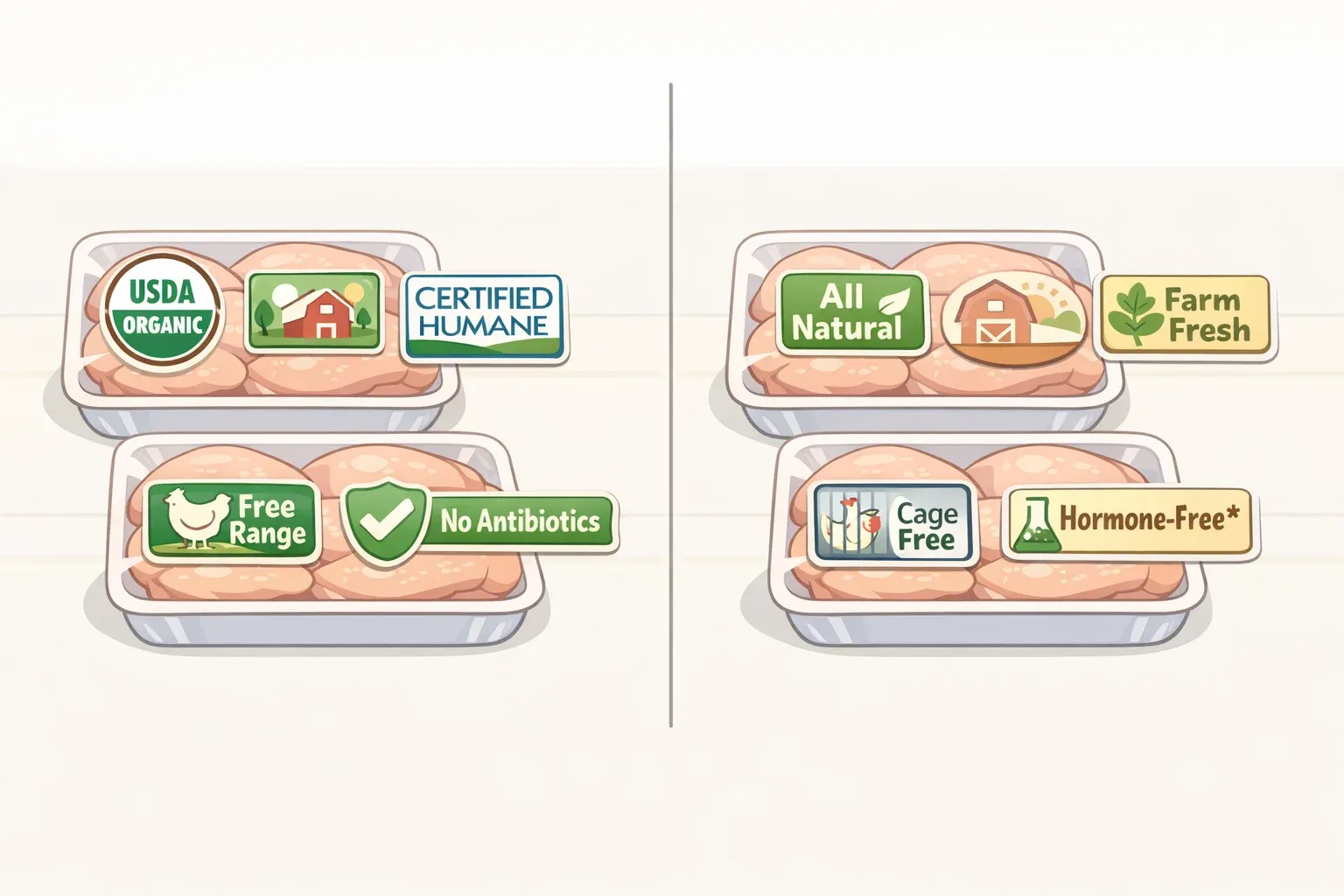
What Chicken Labels Mean: Which Claims Have Federal Definitions
Pick up two packages of chicken at the grocery store. One says "organic." The other says "free-range." One earned its label through a federally codified certification program with specific production rules; the other passed a case-by-case documentation review with no uniform standard behind it. Both probably cost more than the plain package next to them. Understanding that difference is the whole point when it comes to understanding what chicken labels mean.
This piece covers four things: what "organic" actually requires, what "Product of USA" now means under rules finalized in 2024, how welfare-adjacent claims like "free-range" and "pasture-raised" work within an approval system that deliberately stops short of uniform definitions, and what USDA's own sampling data reveals about the gap between an approved label and a verified one. Labels like "cage-free," "natural," and "humanely raised" get brief treatment near the end, enough to know where they stand.
One clarification up front: this ranks labels by definitional clarity and verification strength, not by taste, nutrition, animal welfare outcomes, or value. A label in the highest-confidence tier does not mean the chicken is better. It means the claim behind it is more tightly defined and more consistently enforceable.
The foundation: claims like "Raised Without Antibiotics" and "Free-Range" are formally classified by FSIS as "special statements and claims," a regulatory category requiring agency pre-approval before appearing on any product sold to consumers, unlike standard label elements that can be generically approved without agency review. Despite that oversight, FSIS has explicitly decided not to codify uniform federal definitions for animal-raising terms, meaning the same phrase can reflect meaningfully different production realities depending on the producer.
What chicken labels mean at a glance
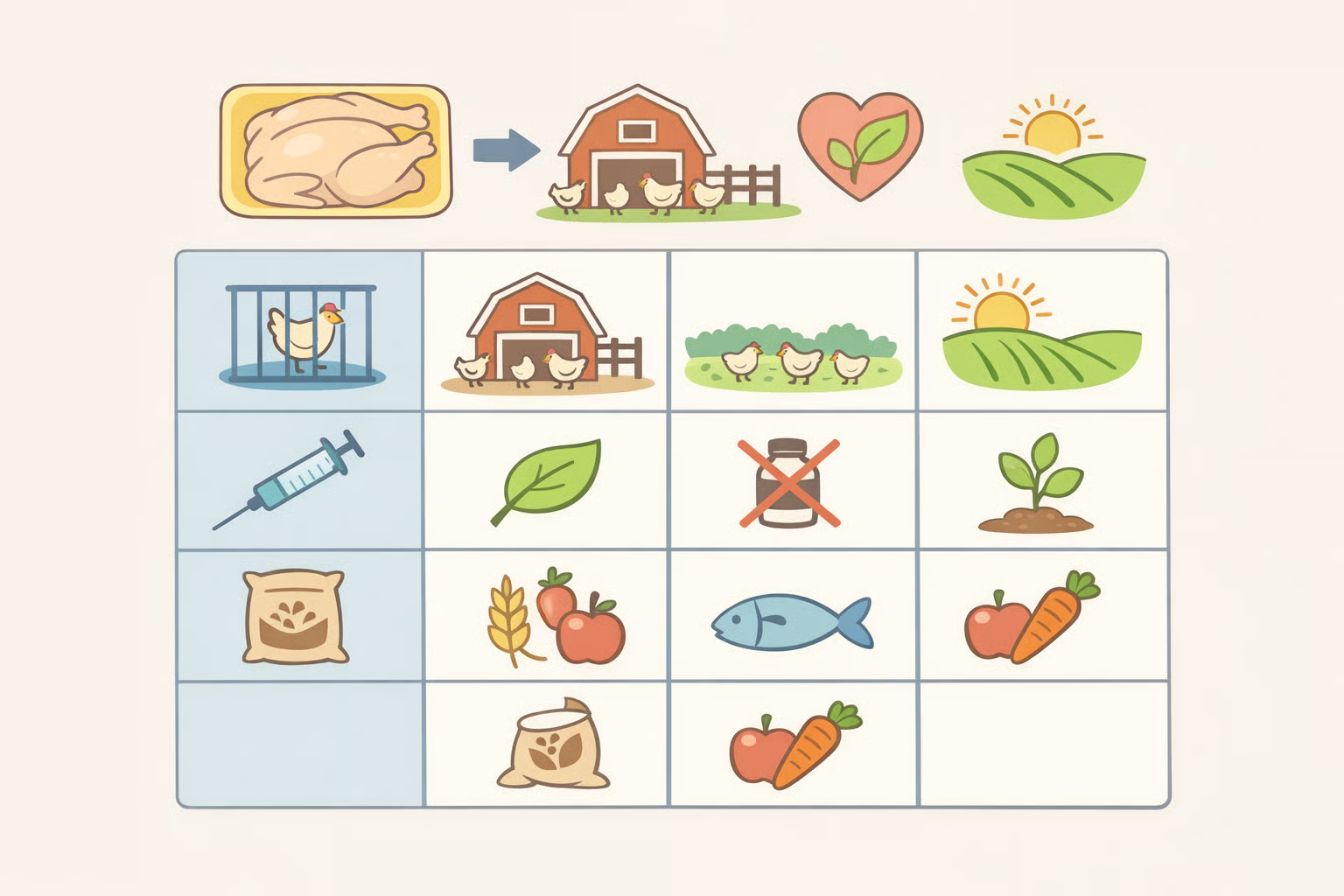
Before the regulatory detail, here is a quick decoder for the terms most likely to appear on packaging. Each entry reflects the fuller explanation in the sections below.
- Organic: Federally defined under the USDA's National Organic Program. Specific rules govern feed, medication, and outdoor access. Third-party certification required. Describes how the bird was raised, not the nutritional or safety outcome of the meat.
- Product of USA: Since a 2024 rule change, requires the animal to have been born, raised, slaughtered, and processed in the United States. One of the more rigorous origin claims on any food label.
- Free-range / Free-roaming / Pasture-raised / Meadow-raised: FSIS-approved claims with no uniform federal definition. Each producer submits documentation describing its own practices; FSIS evaluates for plausibility, not conformity to a shared standard.
- Raised Without Antibiotics / No Antibiotics Ever: Requires FSIS pre-approval and producer documentation. Government sampling found antibiotic residues in roughly 20% of cattle carrying this claim; a parallel chicken-specific sampling program is active.
- Cage-free: Approved claim, but broiler chickens raised for meat are almost never raised in cages regardless of labeling. More relevant to egg-laying hens.
- Natural: Under FSIS policy, this term on meat and poultry labels refers to post-slaughter handling specifically that the product is minimally processed and free from artificial ingredients. It says nothing about how the animal was raised.
- Humanely raised: Falls under the same "special statements and claims" category as other animal-raising claims; requires FSIS pre-approval and producer documentation. No federal definition exists. The substance of the claim depends entirely on whether a named third-party certifier is backing it, and what their published standards require.
Labels with federal definitions: organic and Product of USA
These two labels share a quality the claims in the next section lack: they map to specific, codified federal requirements rather than producer-submitted documentation reviewed on a case-by-case basis. They're a useful baseline for everything else.
What "organic" actually requires
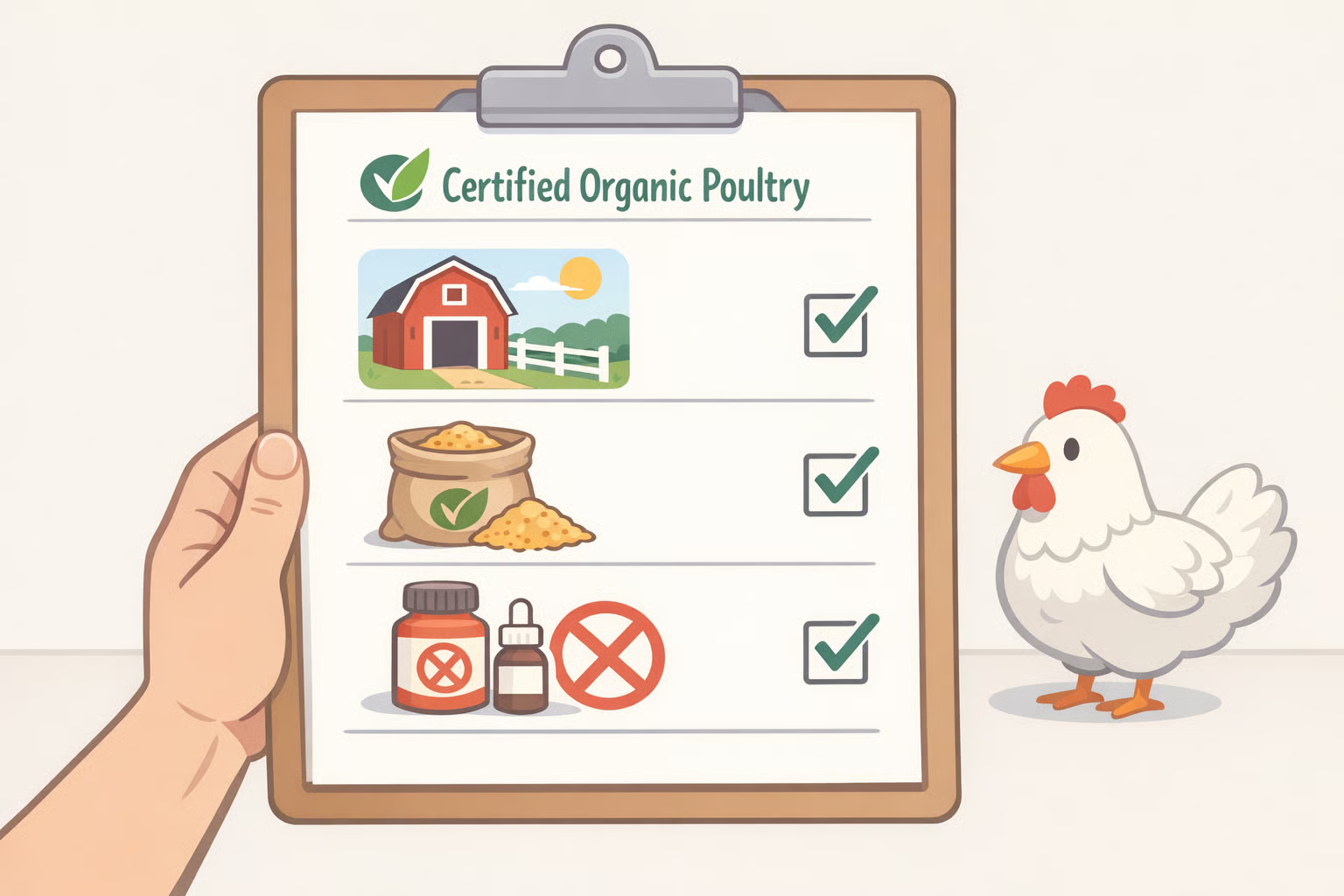
The USDA's National Organic Program sets out explicit production rules for certified organic poultry: no synthetic pesticides, antibiotics, or hormones; no mammalian byproducts in feed; feed must consist entirely of organic and non-GMO ingredients, according to a UGA CAES Field Report published last month. Housing rules require unrestricted outdoor access for exercise, fresh air, and sunlight, with exceptions only for inclement weather. Products meeting all NOP standards carry the round green organic seal; certification is handled by accredited third parties, and the seal means that verification has occurred.
The key caveat: organic is a production method designation. USDA explicitly distinguishes organic from conventional products based on how they are grown, handled, and processed, not on safety or nutritional outcomes, per the same UGA CAES Field Report. Paying the organic premium buys a defined set of farming practices, not a guarantee of superior nutrition or food safety.
What "Product of USA" now means
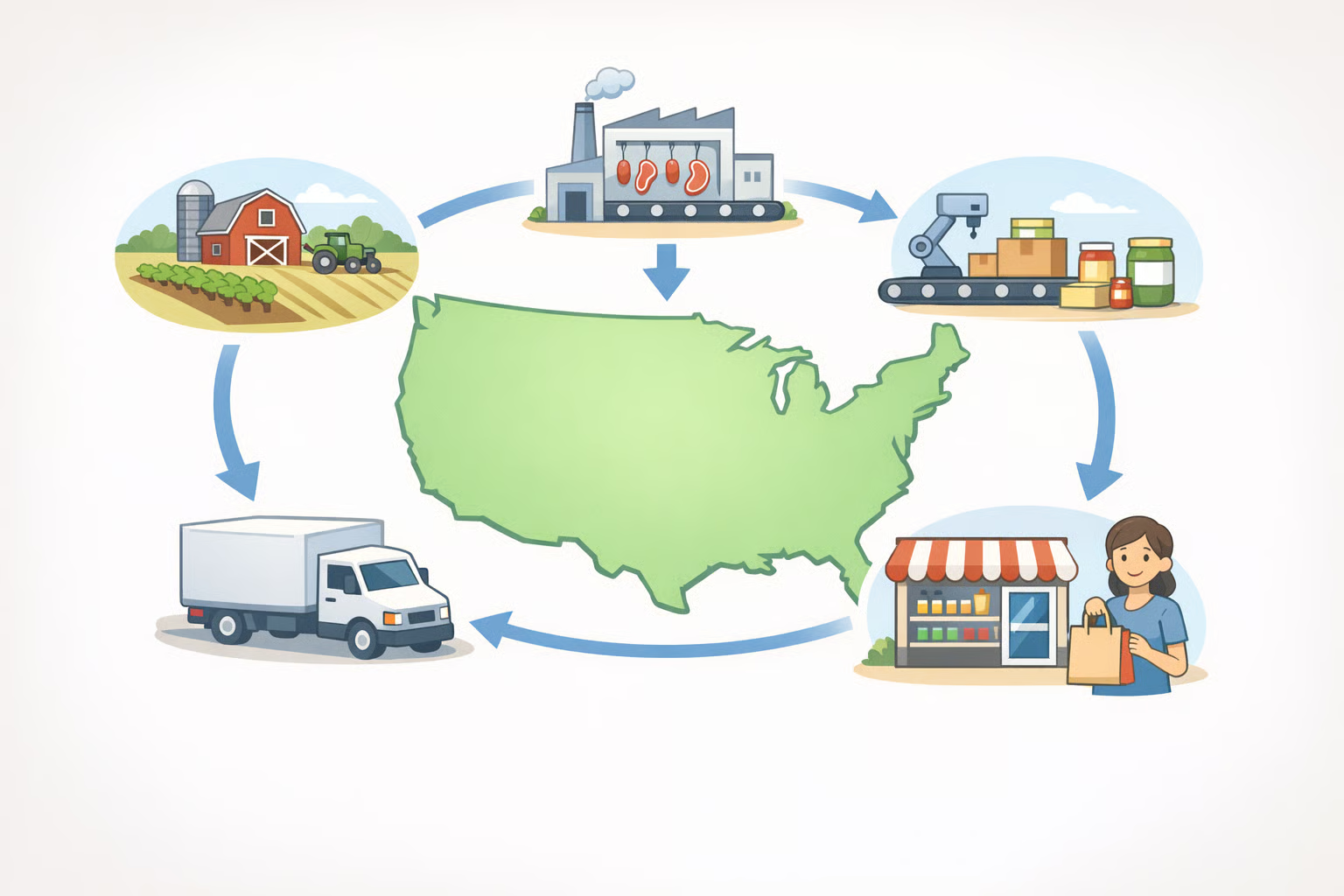
Until a 2024 rule change, domestic processing alone was enough to qualify chicken for a "Product of USA" label. Birds could be raised abroad, imported, cut and packaged here, and still carry the claim. The updated rule closed that loophole.
For single-ingredient products, "Product of USA" now requires the animal to have been born, raised, slaughtered, and processed in the United States, with "raised" defined specifically to mean the animal's full life from birth to slaughter, per the FSIS label approval guideline updated late last year. Standalone claims like "Processed in the United States" or "Produced in the United States" are not approved as origin labels, because they don't communicate the full supply chain picture. The rule extends to state-level imagery as well: pictures, logos, or geographic references depicting a specific U.S. state may only appear if the animal was born, raised, slaughtered, and processed in that state.
Consider what this means in practice. "Product of USA," an origin claim most shoppers treat as an afterthought, now has a more rigorous and verifiable federal definition than many of the welfare-adjacent claims that drive premium pricing. That's worth keeping in mind before moving to the next section.
Approved but not defined: how free-range, pasture-raised, and similar claims work
Claims like "Free-Range," "Pasture-Raised," "Cage-Free," and "Humanely Raised" occupy a different regulatory category. They require FSIS approval before appearing on packaging. But the agency has not established standardized definitions for what these terms must mean across all producers, which is the part most shoppers don't know.
How the approval process works, and where it stops
FSIS classifies animal-raising claims as "special statements and claims," a formal designation that triggers mandatory pre-approval review. A producer submits documentation describing its animal production protocol, and FSIS evaluates whether the documentation supports the claim, whether the claim is truthful and not misleading, and whether it's displayed clearly on the label, as the FSIS guideline published in September 2024 explains. Approval requires meeting all of those criteria. What it does not produce is a universal standard.
FSIS has explicitly decided not to codify specific definitions for animal-raising claims in its regulations. For poultry in particular, labels including "Free Range," "Free Roaming," "Pasture Raised," and "Meadow Raised" don't even require on-package definitions, though the producer must still submit supporting documentation to back the claim, per the same FSIS guideline. Think of it this way: "organic" is a standard producers must conform to. "Free-range" is a claim producers describe for their own operation, which FSIS then evaluates for plausibility. Two packages can both say "free-range" and describe materially different farm conditions, because what the term means in practice is defined by each producer's documentation, not a shared legal baseline.
What "natural," "cage-free," and "humanely raised" contribute
These labels exist in the same approved-but-not-uniformly-defined space, with some additional caveats worth noting.
"Natural" on meat and poultry labels refers to post-slaughter handling under FSIS policy, meaning the product is minimally processed and free from artificial ingredients. It describes what happened to the meat after slaughter, not how the animal was raised. "Cage-free" has more intuitive meaning for egg-laying hens than for broiler chickens, which are almost never raised in cages regardless of labeling. "Humanely raised" falls under the broader animal-raising claims category requiring FSIS pre-approval and producer documentation; it has no federal definition, and the substance depends entirely on which third-party certifier, if any, backed the claim and what their standards require. Without a certifier named on the label and standards published somewhere findable, none of these claims has a fixed meaning a consumer can actually look up.
Third-party certification: a meaningful signal, with a caveat
The updated FSIS guideline strongly encourages third-party certification for all animal-raising claims. Labels displaying a certifier's name, logo, and website do not need to define the claim on-package, provided the certifier publishes its standards clearly online, per a USDA press release from August 2024. An independent certifier can be a stronger signal than producer-only documentation, especially if the certifier publishes standards and uses audits or testing as a condition of certification.
Certifier rigor varies considerably, though. FSIS recommends that third-party organizations routinely audit, validate, and verify claims, and that they conduct actual testing for antibiotic claims, per the same FSIS guideline. Not every certifier meets that bar. Seeing a logo is a better signal than seeing nothing; the next step is looking up what that certifier's published standards actually require.
"Raised without antibiotics": the strongest evidence of what can go wrong
The approval-versus-definition gap is most consequential for claims consumers treat as health-relevant. None carries more weight in that regard than "Raised Without Antibiotics," and no label claim has been subjected to more government scrutiny or produced more concerning data.
What USDA's sampling found
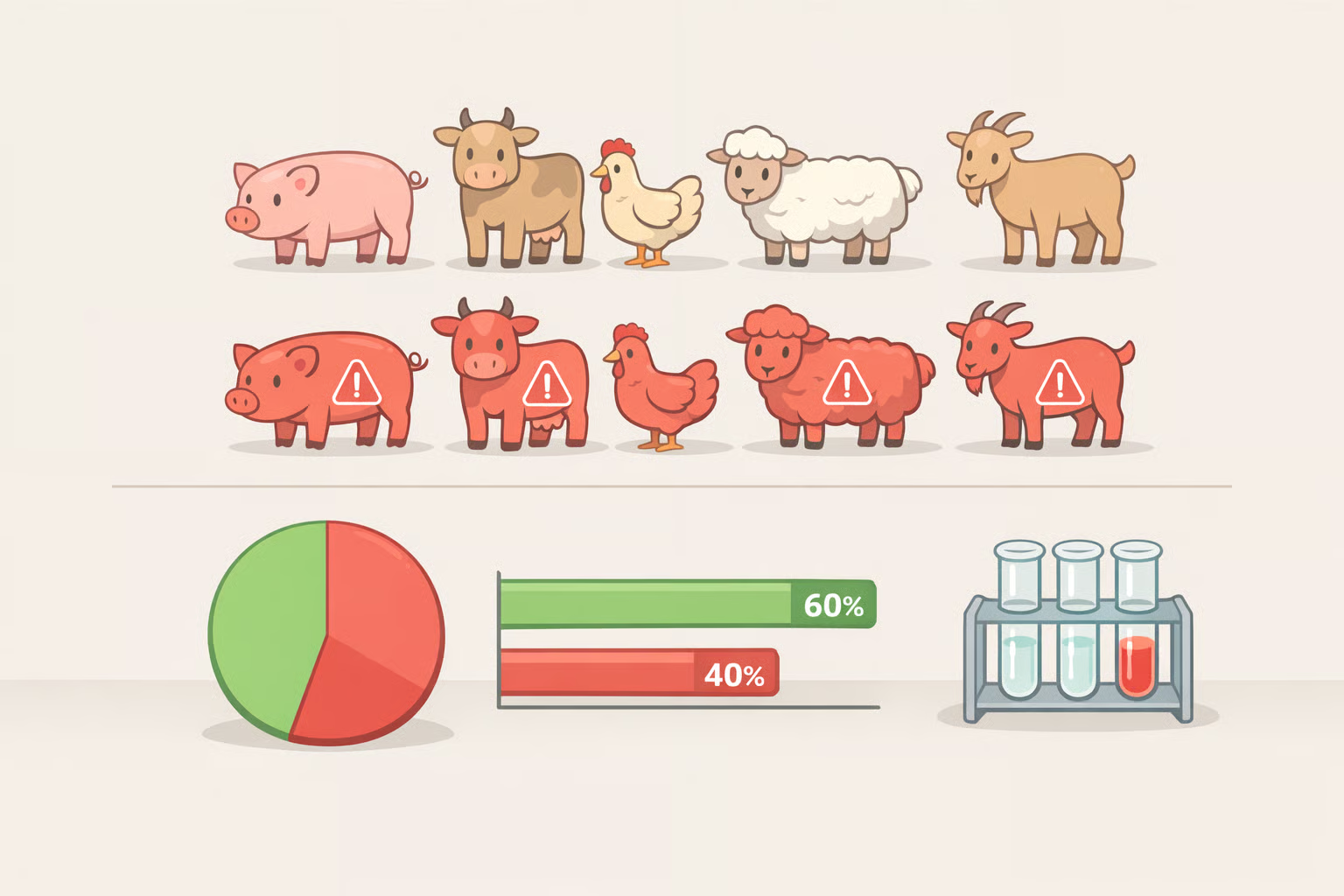
Concerns about antibiotic claims prompted USDA to announce a formal multi-step effort to strengthen claim substantiation in June 2023, as a USDA press release from that announcement details. As part of that effort, FSIS and USDA's Agricultural Research Service collected organ samples from cattle marketed as "Raised Without Antibiotics," testing for more than 180 veterinary drugs. The Federal Register notice, the primary regulatory document, reports that antibiotic residues turned up in 37 of 189 sampled animals, roughly 20% of the total, with 46 separate residue detections from 10 different drug types across those animals, per the FSIS guideline published in September 2024.
This sampling was conducted on cattle, not chicken. The chicken-specific relevance is real but should be stated precisely: FSIS already runs a parallel verification program sampling raw chicken parts labeled with antibiotic claims, testing packages for residues at the point of production, per the FSIS sampling directive updated in July 2024. The cattle findings provide the most concrete public evidence that the documentation-based approval system can produce gaps between what a label says and what testing reveals. That is precisely why FSIS tightened its guidance and why the system is under active scrutiny.
What enforcement actually looks like
When FSIS finds a discrepancy between a label claim and test results, the agency issues a formal letter to the establishment, copies the relevant inspection staff, and gives the producer 30 days to provide a written response documenting corrective actions, as the FSIS sampling directive outlines. If the response is inadequate, FSIS can schedule additional sampling, recommend a product recall, rescind the label approval, and block similar claims from that producer until it can demonstrate compliance.
The August 2024 guidance went further, stating explicitly that FSIS will pursue enforcement against establishments making false or misleading antibiotic claims and flagging potential expansion of random sampling programs and future rulemaking, per the USDA press release. The oversight exists. The sampling exists. The enforcement mechanism exists. The system is being strengthened precisely because relying on producer documentation alone has proven insufficient.
A practical hierarchy: what to do with this at the grocery store
What follows is a decision framework for the label-heavy chicken case. It ranks claims by definitional clarity and verification strength, not by quality, taste, nutrition, or animal welfare outcomes, which these labels do not reliably predict.
Three-tier framework
Tier 1 Federally defined, verifiable: "Organic" (NOP-certified, specific production rules, third-party certification required) and "Product of USA" under the 2024 rule (born, raised, slaughtered, and processed in the U.S.). These terms have the most precisely codified, consistently enforceable meanings. Paying a premium here buys a defined set of production standards; whether those standards matter to you is a separate question.
Tier 2 Approved with a named certifier: "Free-Range," "Pasture-Raised," "Raised Without Antibiotics," "Cage-Free," and similar claims when accompanied by a named, independent third-party certifier that publishes its standards online. The FSIS guidance explicitly treats this path as more strong than producer-only documentation, per the FSIS guideline. The trade-off: you need to look up what the certifier's standards actually require, because rigor varies.
Tier 3 Approved without independent verification: The same welfare-adjacent claims without any third-party badge, plus "natural," which describes post-slaughter processing rather than how the animal was raised. These labels passed a documentation review before appearing on a package; they aren't fraudulent by default. But they reflect a producer's self-description rather than a verified or uniform standard.
A simple decision rule for the aisle
- Does the label have a federal standard? ("Organic," "Product of USA") Highest definitional confidence.
- If not, does it carry a named third-party certifier with published standards? Look up those standards; this is your best available proxy.
- If neither: the claim is approved and not necessarily false, but it doesn't map to a definition you can look up. Factor in the price premium accordingly.
On the USDA inspection seal: every piece of chicken sold in U.S. commerce is subject to FSIS inspection requirements. That seal is a food safety verification, not a production method endorsement. It tells you the chicken met safety requirements at the time of processing. It says nothing about how the bird was raised or whether the marketing claims on the label were independently verified. Five wellness-adjacent labels on a package do not mean the product has passed five additional layers of scrutiny.
What to watch for next
Three things to carry out of this:
- "Organic" remains the most clearly defined production-method label, with specific NOP rules on feed, medication, and outdoor access, though it describes farming practices rather than nutritional or safety outcomes, as the UGA CAES Field Report makes clear.
- "Product of USA" now has a more rigorous federal definition than many welfare-adjacent claims that typically carry higher price premiums, thanks to the 2024 rule requiring animals to have been born, raised, slaughtered, and processed domestically, per the FSIS label approval guideline.
- FSIS has signaled that random sampling programs and formal rulemaking on animal-raising claims are under consideration, per the USDA press release from August 2024. If rulemaking proceeds, some of the Tier 2 and Tier 3 claims above could acquire uniform definitions for the first time.
The push toward third-party certification in FSIS's updated guidance reflects an implicit acknowledgment that documentation review alone has credibility limits. Until rules change, the most practical habit for shoppers weighing a price premium: check whether the label has a federal standard, and if not, whether a named certifier with published standards is backing the claim. That's where the actual definition lives, and finding it takes about thirty seconds with a phone.







Comments
Be the first, drop a comment!