



Is a Flat Top Grill Worth It: Honest Pros and Cons
A flat top grill is worth it if you cook a wide range of foods outdoors and regularly feed a group. It is not a replacement for a traditional grill if char flavor and smoke matter most to what you cook. That's the short answer. Everything else depends on which kind of cook you are.
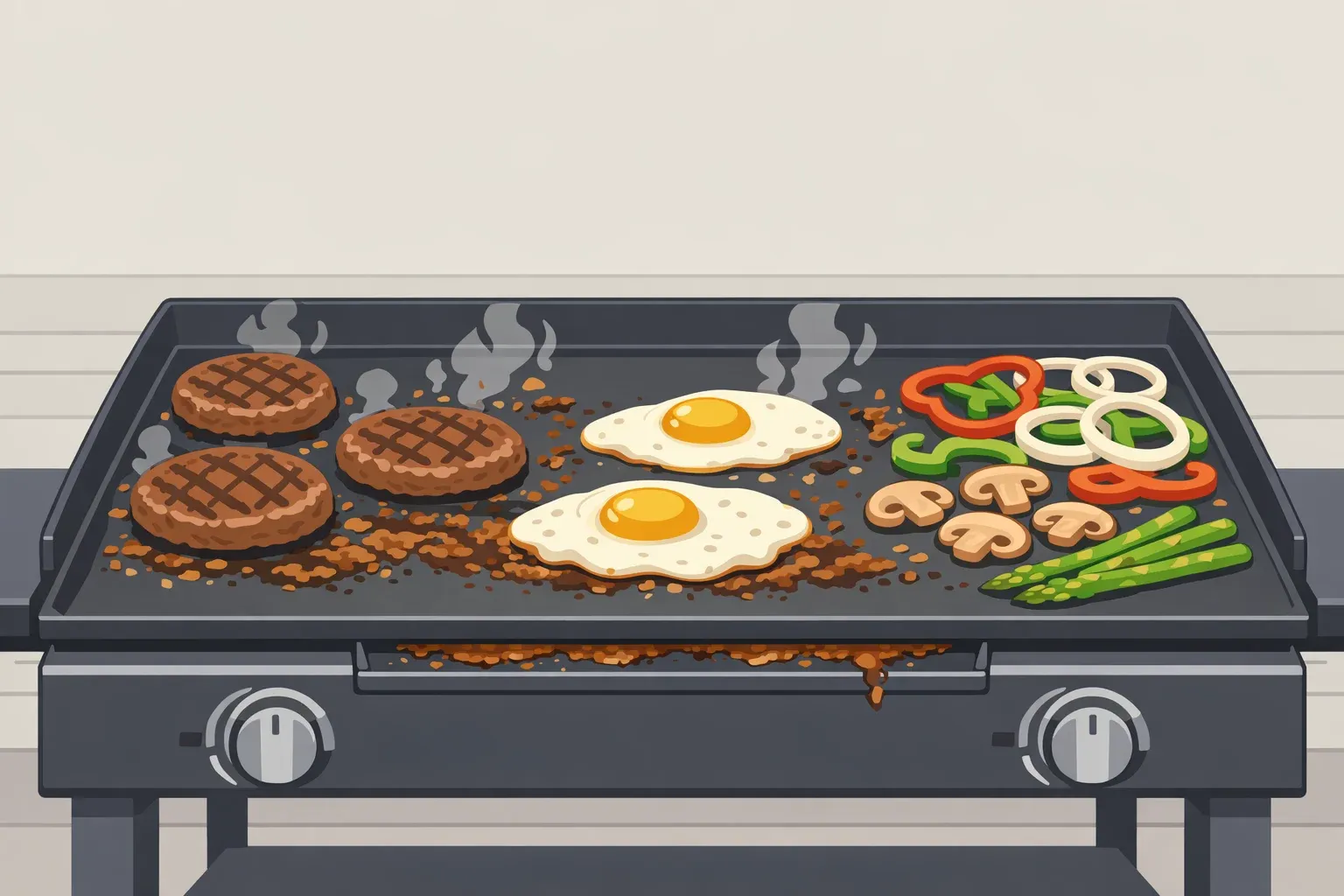
A flat top is a propane-powered outdoor cooker with a solid steel surface instead of open grates. Burners heat the metal, the metal heats the food. Unlike open-grate grills, a flat top cooks on that solid surface, so you get broad contact browning rather than the smoky effect that comes from drippings hitting flames or burners. The result is full Maillard browning golden crust, caramelized edges, sealed-in juices but no smoky character. Think of it like the difference between a diner griddle and a backyard grill: same outdoor setting, fundamentally different outcomes.
The "worth it" verdict comes down to three things: what you cook most often, whether you regularly cook for groups, and whether you'll treat surface maintenance as part of the deal.
Flat top grill pros and cons: the quick version
Before getting into the details, here's where the decision usually lands:
Worth buying if:
- You cook breakfast outdoors, or want to
- You regularly feed more than four people at once
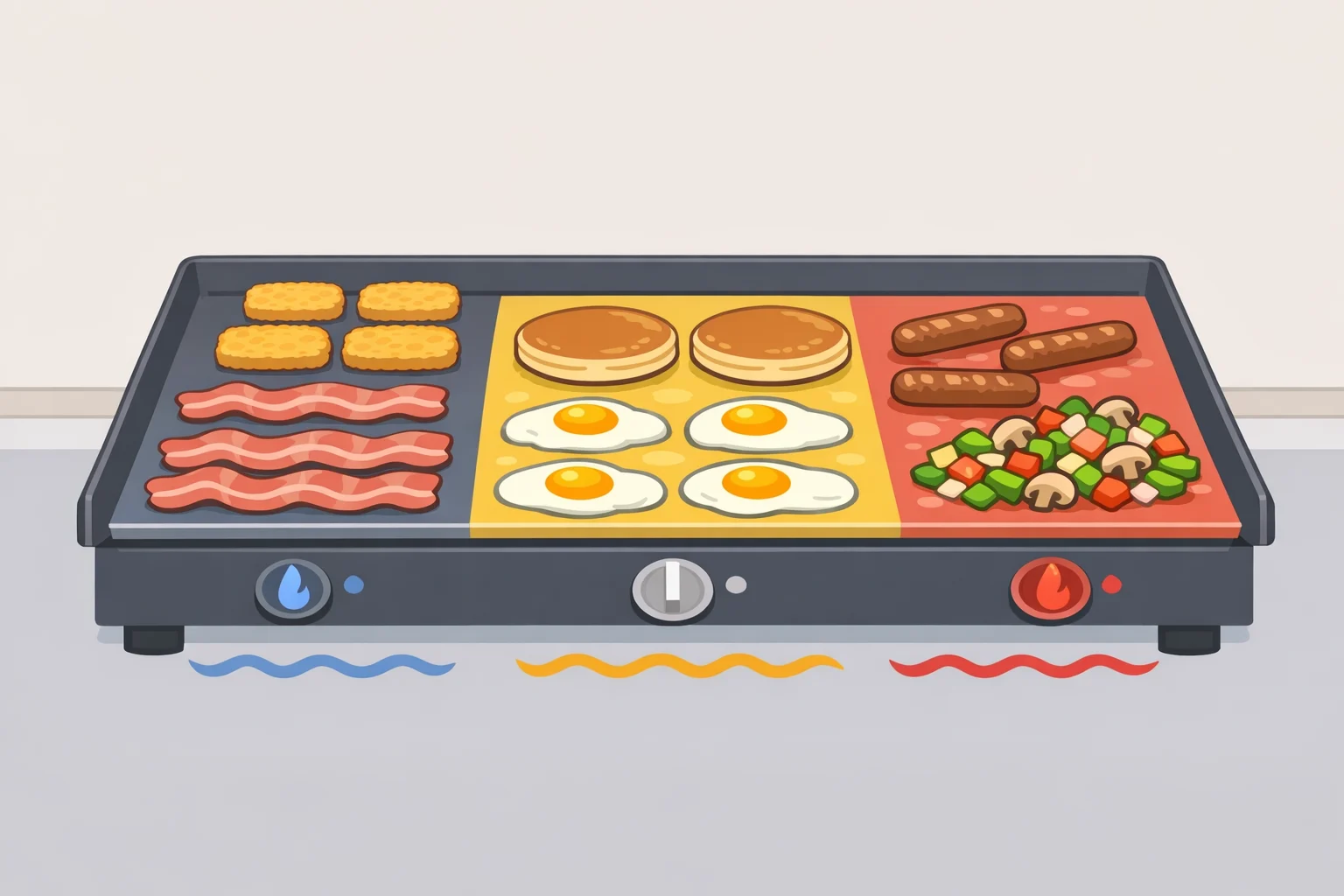
- You want to move between smash burgers, eggs, vegetables, and fish on the same surface without foil or accessories
Not worth buying if:
- Most of your outdoor cooking is thick steaks, bone-in chops, and anything where char flavor is the point
- You dislike or don't have time for surface maintenance
- You don't have a permanent outdoor footprint of at least four and a half feet wide
Middle-ground option: If you already own a traditional grill, a cast-iron griddle plate that sits on the grates gets you most of the flat-top cooking experience for a fraction of the cost. Traeger notes that nearly any grill can take a griddle plate accessory. It won't match the cooking area or zone flexibility of a dedicated unit, but it's a reasonable way to test whether the cooking style suits you before spending $400.
Flat top grill vs regular grill: the trade-off
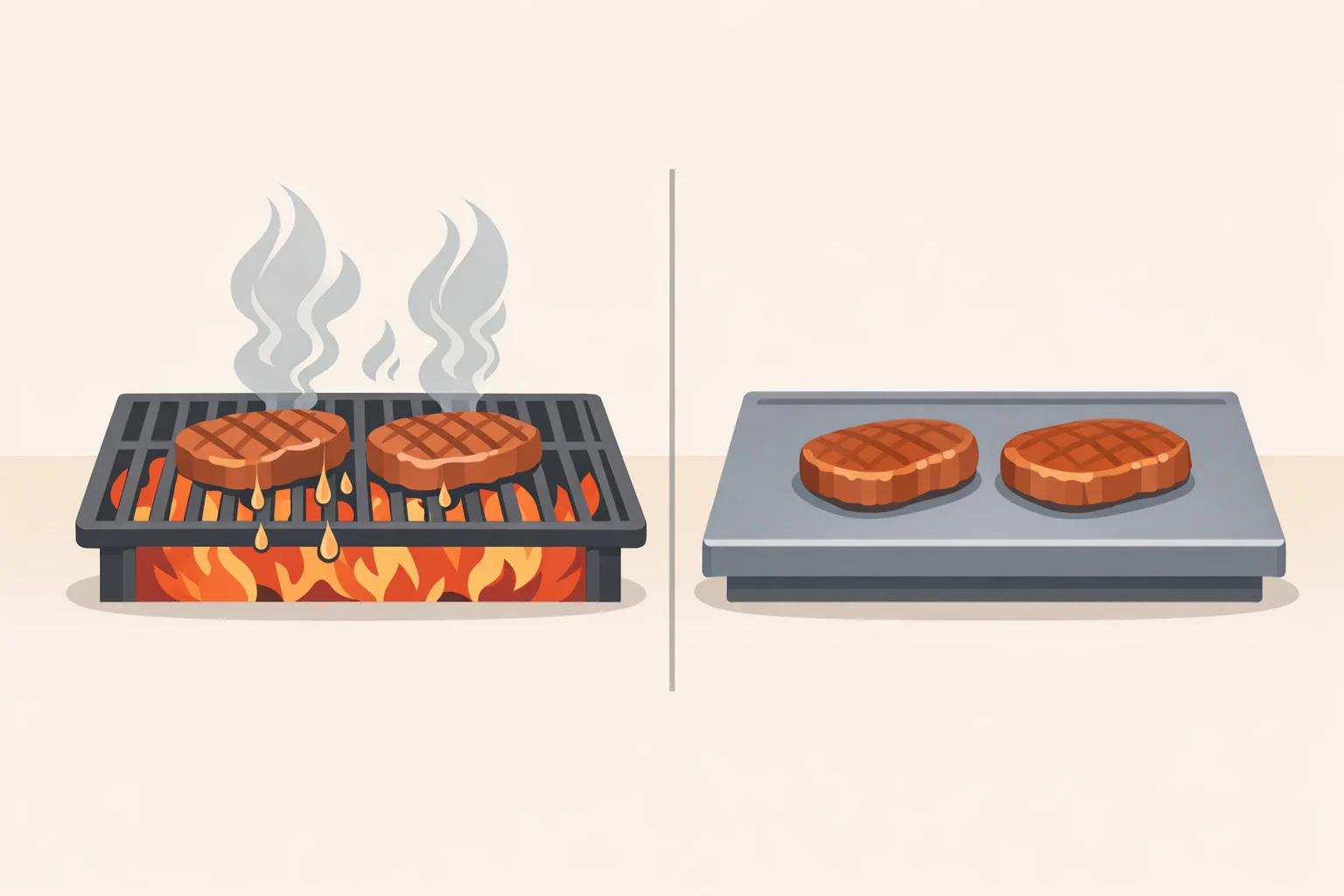
The defining difference between these two tools is flavor, not performance. Both reach serious temperatures the Traeger Flatrock tops out at 600°F and the Blackstone at 650°F, according to Traeger and Popular Mechanics testing. Raw heat isn't what separates them.
What separates them is surface design. A traditional grill's open grates let drippings fall onto the burner, generating smoke that infuses food as it cooks. A flat top's sealed surface prevents that. You get even browning, not smoke. Neither result is better they're different products of different physics, as XO Appliance points out. The mistake is treating one as a substitute for the other.
A flat top wins decisively on certain foods. Smash burgers are the clearest example full-contact searing on a flat surface produces a caramelized crust that grill grates can't replicate, and XO Appliance calls it better on a griddle "by a landslide." Eggs, pancakes, delicate fish, stir-fry vegetables, and fajitas either fall through grill grates or require foil workarounds; a flat top handles all of them without improvisation, per XO Appliance and Traeger. The solid surface also unlocks techniques a grill simply can't do frying, steaming, and sautéing alongside searing, all on the same cooktop, as CKitchen notes.
A traditional grill still wins for bone-in cuts, thick filets, and anything that needs genuine flame-char flavor and grill-mark presentation. Grills often exceed 40,000 BTUs and expose food directly to flame that combination is the right tool when char and smoke are what you're after, according to CKitchen and XO Appliance.
One thing worth knowing before you buy: "even heating" on a flat top is real, but it isn't perfectly uniform edge to edge. Popular Mechanics found during hands-on Blackstone testing that the center ran noticeably hotter than the edges. That turned out to be useful the cooler edges served as warming zones while the center handled high-heat searing but it's a more deliberate cooking experience than the flat surface might suggest. Expect to manage zones, not treat the whole surface as one consistent temperature.
When a flat top grill is genuinely worth the money
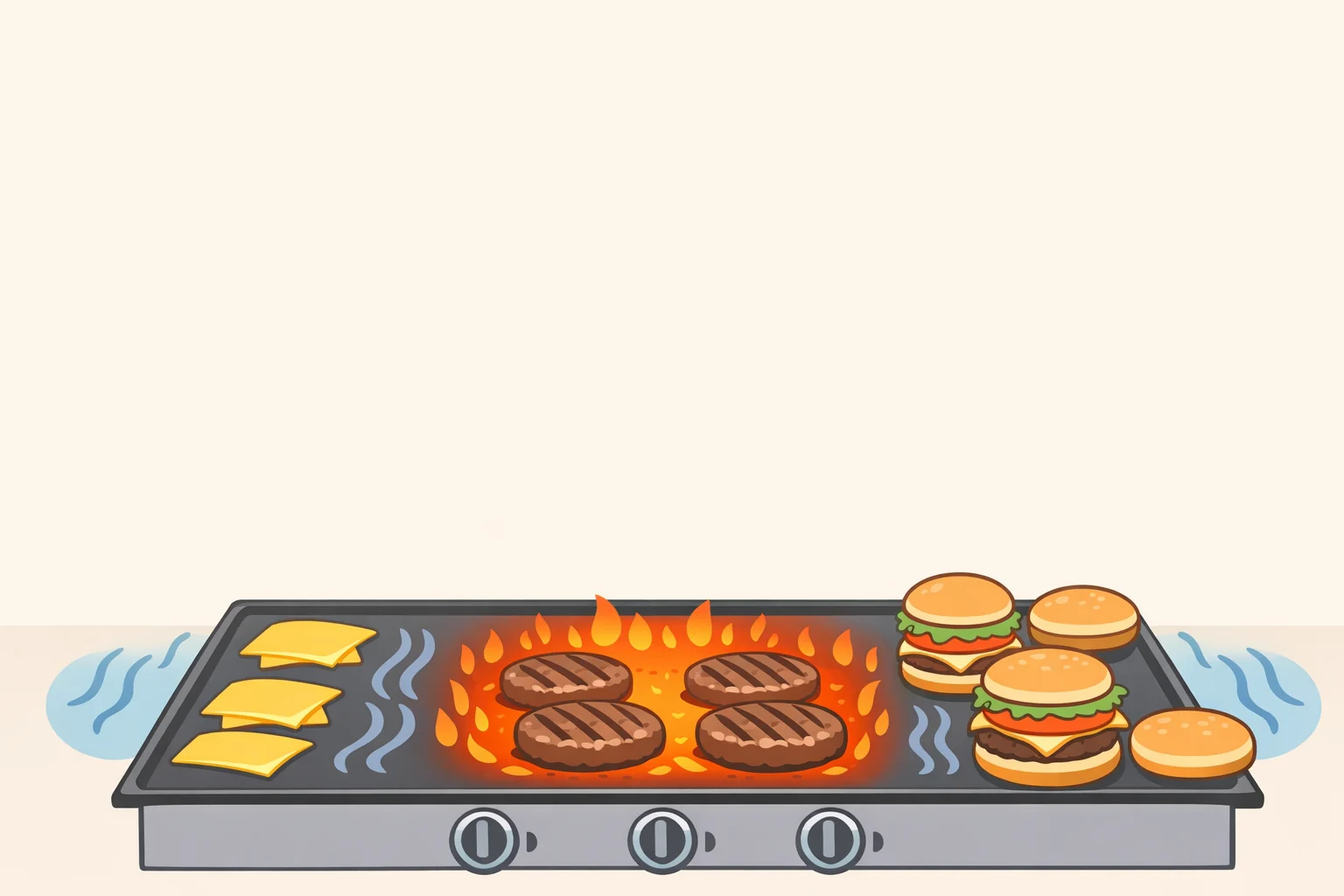
The strongest case for a flat top is mixed-meal cooking at scale. On a single surface, you can run bacon at one zone while holding toast warm at the edges, smash a batch of burgers while squash cooks gently off to the side. Without accessories, a regular grill is less flexible for foods like eggs, pancakes, and chopped vegetables, as Traeger explains.
Two scenarios make this concrete.
Weekend breakfast for six: Bacon, eggs, and pancakes on one surface simultaneously, with different heat zones handling each. No separate pans, no timing gymnastics. The flat top is the only outdoor cooker that handles this without compromise.
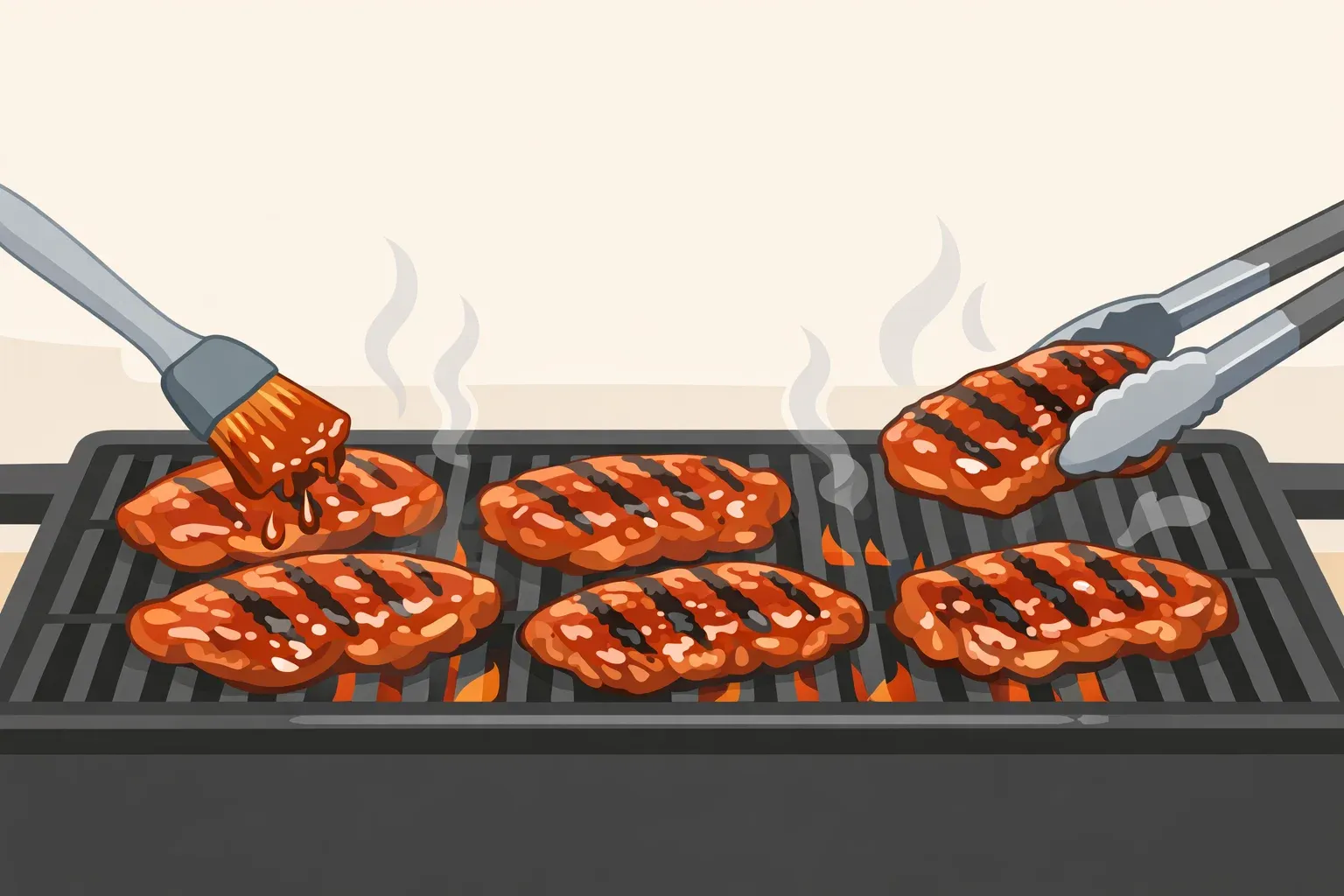
Backyard burger night: Smash a full batch of burgers on the hot center while onions caramelize off to one side and buns warm at the edge. The Traeger Flatrock's 594-square-inch surface fits 24 burgers at once, according to Traeger. Fewer batches means less time managing a queue.
Zone control is the feature that makes all of this work in practice, not just in theory. The private chef who assisted in Popular Mechanics testing called the Blackstone's zone control the standout feature: "It gave me two truly separate zones for cooking the different food I had going at the same time, and it worked great." That's harder to replicate on a single-zone traditional grill.
Cleanup is also faster than post-grill scrubbing. After nearly two hours of testing with burgers, chicken, and vegetables, Popular Mechanics reported cleanup took just a few minutes scrape debris toward the rear grease channel, wipe the surface. There are no charred grates involved.
What ownership actually requires
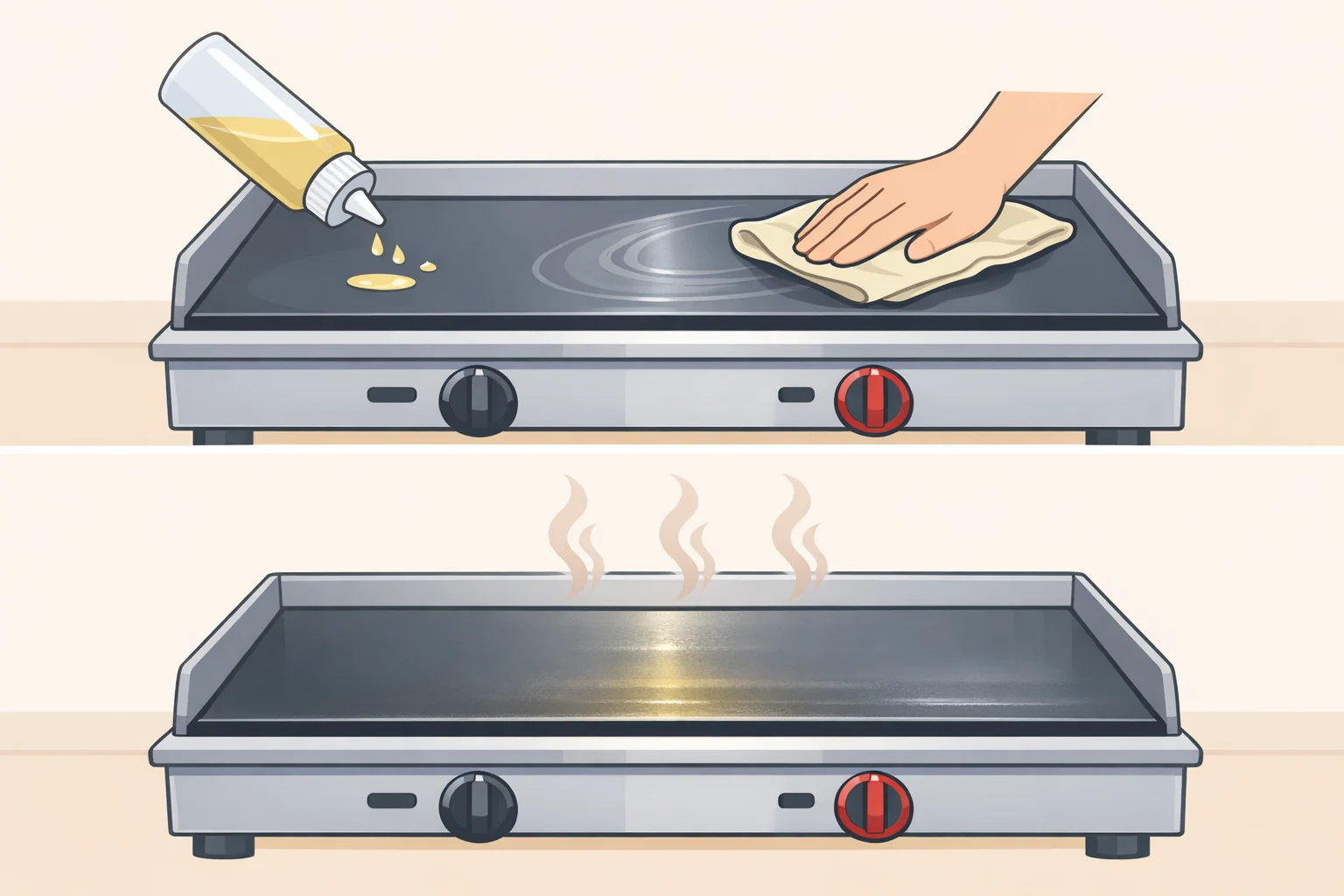
The surface needs a protective oil layer to prevent rust and sticking. Seasoning, to use the proper term, is a thin heat-bonded oil film not the residue left over after cooking, but an intentional layer applied and cured onto the metal. The most common mistake is applying too much. Grill Advantage explains it plainly: thick oil layers don't cure evenly they pool, trap food particles, and turn into carbon patches. What looks like extra protection actually causes sticking. The goal is a film so thin it's barely visible; if oil beads or streaks, there's still too much on the surface.
Daily upkeep is simple. After each cook, scrape debris toward the grease exit, wipe the surface down, and leave a thin protective oil film. A full reseason stripping back to bare metal and rebuilding from scratch is only necessary when food starts sticking despite normal upkeep, when the surface looks patchy or dull, or when rust spots appear near the edges, per Grill Advantage. It is not a routine task.
Setup matters more than most buyers expect. Grease that pools instead of draining and tools left sitting on the cooking surface both accelerate coating breakdown, according to Grill Advantage. The Blackstone's rear grease channel, fixed side shelves, and tool hooks address this directly in testing, Popular Mechanics found those features made prep and cleanup noticeably easier. the seasoning guidance from Grill Advantage is written for professional kitchens; the same principles apply at home, but the stakes are lower and the pace is slower.
There are also practical constraints that matter before you buy. Gas flat tops must be operated outdoors only and cannot be used under combustible overhangs or covered structures, per the Traeger Flatrock manual. The propane hose requires inspection before each use, and a leak test is required after connecting a new tank or following any period of non-use. Indoor storage is possible only with the propane tank disconnected and kept separately outdoors, not in a garage or enclosed area.
The Blackstone 28-inch with its fixed side shelves measures 53 inches wide, per Popular Mechanics. Those shelves don't fold down, so that 53 inches is the permanent outdoor footprint. Worth measuring before you order.
Who should buy one
If breakfast outdoors sounds appealing, or if feeding a crowd is a regular thing, or if cooking eggs and smash burgers and vegetables on the same surface without foil workarounds fits the way you actually cook, a flat top is worth it. The Blackstone 28-inch comes in around $399, and Popular Mechanics found it delivered solid value at that price across nearly two hours of varied testing.
If outdoor cooking mostly means thick steaks, bone-in chops, and char flavor, it isn't worth it and a griddle insert on an existing grill will cover most of what a flat top adds, for far less money. CKitchen and XO Appliance both frame it the same way: choose the tool that matches the food you actually cook.
One last thing worth knowing: most seasoning problems on flat tops are not equipment failures. Grill Advantage is direct about this the pattern is consistent, and most failures are operational rather than technical. Too much oil at once, tools sitting on the surface, grease pooling instead of draining. People who understand what the surface requires tend to have fewer problems. That's not a warning so much as a description of the learning curve. It's a short one.


Comments
Be the first, drop a comment!