



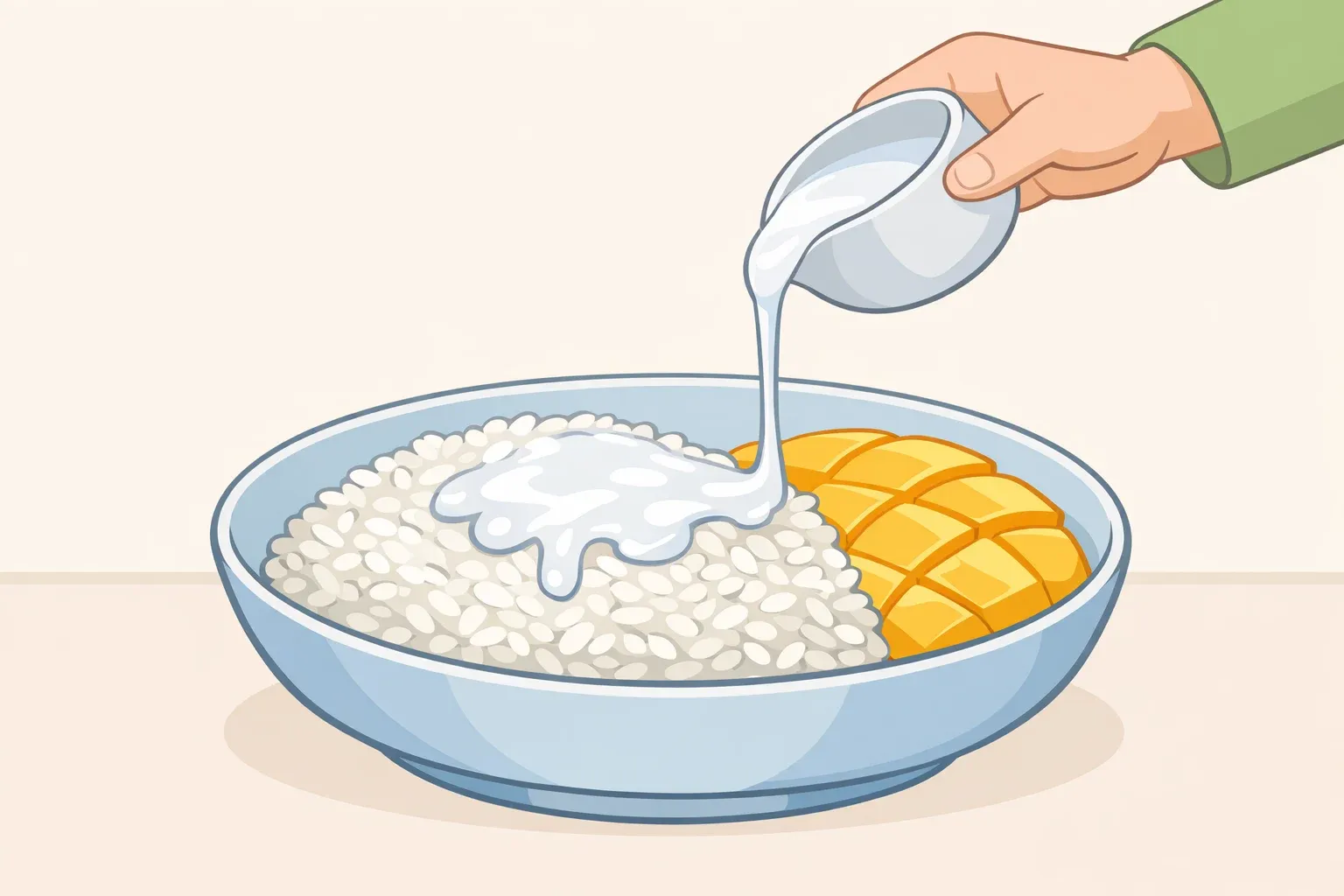
How to Make Mango Sticky Rice: Avoid Common Mistakes
This guide walks through how to make mango sticky rice that actually delivers on the dish's promise: coconut-soaked rice with a dense, chewy texture, ripe mango that earns its place on the plate, and a glossy sauce that pulls everything together. By the end, you'll also know exactly where home cooks go wrong and how to avoid the same traps.
The dish looks deceptively simple. Short ingredient list, no elaborate technique. Easy to underestimate. One recipe developer at Asian Foods Daily describes making it badly five times before getting it right gummy rice, split sauce, nothing close to the real thing.
Three variables determine whether it works: using true glutinous rice with no substitutions, soaking it long enough, and letting the rice rest in the coconut mixture before serving. Everything else adjusts. This guide is organized around that distinction critical versus flexible so you always know which category you're in.
Before you start:
- Yield: 3–4 servings (Joshua Weissman, Carlsbad Cravings)
- Key quantities: 2 cups glutinous rice (Asian Foods Daily), one 13.5 oz can full-fat coconut milk divided (Joshua Weissman), 2–3 ripe mangoes (Joshua Weissman, Carlsbad Cravings), sugar, salt, cornstarch
- Equipment: Steamer setup (pot, basket, cheesecloth) or rice cooker
- Active cook time: roughly 30–40 minutes (Veggie Anh, Joshua Weissman); total time including soaking ranges from 4 hours to overnight depending on how far ahead you plan (Asian Foods Daily, Carlsbad Cravings)
Mango timing: If you're buying at a typical grocery store, plan 3–5 days ahead. Joshua Weissman makes this explicit: supermarket mangoes arrive hard and green almost without exception. Counter time isn't optional. It's part of the recipe.
Section 1: Ingredients what you cannot substitute and what you can
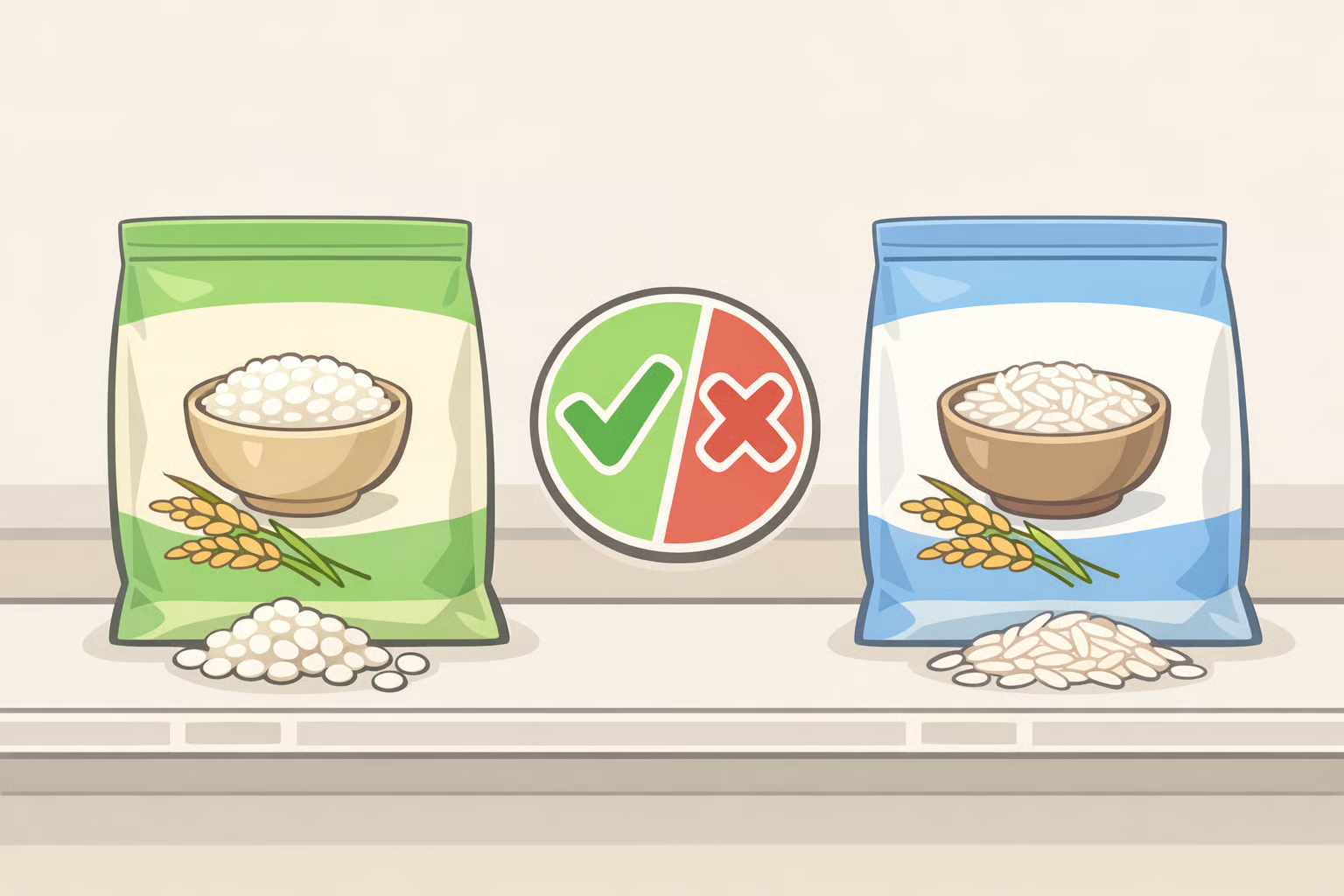
The most important decision happens at the grocery store, not at the stove. Get two ingredients wrong and no technique will save the dish.
The critical three: no workarounds
-
Glutinous rice. This is the non-negotiable. Regular jasmine, basmati, short-grain none have the starch structure to absorb coconut milk and develop the dense, mochi-like chew the dish depends on. Carlsbad Cravings states it plainly: only Thai sweet rice absorbs the coconut syrup correctly. Joshua Weissman and Asian Foods Daily both flag it as a hard stop. Find it at any Asian grocery labeled glutinous rice, sweet rice, or sticky rice they are the same thing, and despite the name, the variety contains no gluten.
-
Full-fat coconut milk. The richness of both the soaking mixture and the sauce comes from fat content. Light coconut milk produces a thin, watery result. Every source consulted Veggie Anh, Carlsbad Cravings, Joshua Weissman specifies full-fat, unsweetened. One standard 13–14 oz can splits between the soaking mixture and the drizzling sauce.
-
A ripe mango. In Thailand, the Nam Dok Mai variety is the benchmark sweet, smooth-textured, fiber-free, according to CNN Travel. Peak season there runs roughly March through May, when the fruit is naturally sweetest and most abundant. Outside Thailand, Ataulfo (also called honey or champagne mango) is the closest widely available equivalent, specifically recommended by Carlsbad Cravings. A ripe mango should show yellow or red coloring and yield slightly under gentle pressure. If only frozen is available, Asian Foods Daily acknowledges that thawed frozen mango is a serviceable fallback but fresh is noticeably better.
What flexes: the adjustable layer
Sugar type, aromatics, and toppings are all flexible without compromising the dish's identity. Palm sugar adds a mild caramel depth (Asian Foods Daily); granulated white sugar works fine. Pandan leaves or cracked cardamom pods can be steeped in the coconut mixture for fragrance Joshua Weissman explicitly labels cardamom "optional and not traditional." Salt is non-negotiable as an ingredient, but ordinary kosher or table salt is the right call; it creates the sweet-salty contrast that defines the sauce.
How to make mango sticky rice: the 3 steps that determine the outcome
Soak, steam, and rest. These aren't sequential suggestions they're the actual structure of the dish. Compress any of them and the texture suffers in a specific, predictable way.
Step 1: Soak longer than your instinct says
Rinse the rice in a fine-mesh sieve until the water runs mostly clear, then submerge it in cold water by at least two inches (Asian Foods Daily). The minimum across sources is 3–4 hours (Asian Foods Daily, Joshua Weissman); Carlsbad Cravings recommends at least 6 hours; Veggie Anh treats overnight as the default. The practical move: put the rice in water before bed. Under-soaked rice tends to cook less evenly and can turn gummy soaked rice cooks more predictably throughout, as Veggie Anh notes.
Step 2: Steam use visual and tactile cues, not just the clock
Drain the soaked rice thoroughly. Line a steamer basket with dampened cheesecloth, spread the rice in an even single layer, and fold the cloth over the top. Steam over simmering water. Time ranges vary across sources: Carlsbad Cravings gives 18–22 minutes, Asian Foods Daily 20–25 minutes, Joshua Weissman up to 30. Use two checks together: done rice looks shiny and translucent; white opaque centers mean 5 more minutes (Asian Foods Daily). Taste a grain it should be fully tender and chewy with no dry, crunchy center (Joshua Weissman). Check the water level in the pot mid-steam; running dry is a common and easily avoided failure (Joshua Weissman).
Rice cooker option: Veggie Anh uses a rice cooker after soaking drain, add a 1:1 ratio of water to rice, run a standard cycle. Active hands-on time drops to about 30 minutes. It's a legitimate home adaptation. Soak time stays the same.
Step 3: Rest the step most home cooks cut short
While the rice is still hot, warm half the coconut milk with sugar and salt until dissolved. Pour the mixture over the rice, stir gently to coat every grain, then cover and leave it at room temperature. Minimum rest: Carlsbad Cravings recommends 20 minutes; Asian Foods Daily 20–30 minutes; Joshua Weissman says at least 30 minutes and up to 3 hours. Serve too soon and the rice tastes like it's sitting in liquid rather than having absorbed it. This rest is where the texture is made.
When things go wrong:
- Gummy rice: Likely under-soaked. Next batch, extend the soak and taste the grain before pulling it from the steamer.
- White, opaque centers after the expected steam time: Keep going in 5-minute increments. The clock is a rough guide; texture is the real indicator (Asian Foods Daily).
- Sauce that splits: The Asian Foods Daily developer ran into this problem firsthand. Keep the coconut milk at a gentle simmer, not a rolling boil, and whisk the cornstarch slurry into the warm milk off heat before returning to low heat to finish.
Thai mango sticky rice recipe: sauce, toppings, and assembly
The second half of the coconut milk becomes the drizzling sauce. This is where the sweet-salty balance gets calibrated.
Making the sauce
Combine the remaining coconut milk with sugar and a pinch of salt in a small saucepan. Bring to a gentle simmer. Whisk together a small cornstarch slurry Joshua Weissman uses about half a teaspoon of cornstarch; Carlsbad Cravings uses 1.5 teaspoons for a thicker result mixed with a small amount of cold water, then stir it back into the warm coconut milk. Joshua Weissman targets a consistency like honey or maple syrup. Asian Foods Daily notes 3–4 minutes of steady stirring over medium heat is enough.
The sauce thickens further as it cools, so pull it earlier than you think. If it sets too thick, loosen with a small splash of water. It keeps refrigerated for up to a week (Asian Foods Daily) and can be made ahead.
Topping options pick one
The classic is toasted yellow mung beans, which CNN Travel and Carlsbad Cravings treat as the traditional finish. To prepare: simmer briefly in water, drain, dry well, then toast in a dry pan until golden and crisp. They store in an airtight container for up to a month (Carlsbad Cravings). If mung beans aren't available, toasted sesame seeds used by Joshua Weissman and Veggie Anh are a direct swap. Roasted coconut flakes work too. The function is identical in all three cases: textural contrast against the soft, rich rice.
Assembly
Scoop or pack the rested rice onto a plate. Fan the sliced mango alongside. Spoon the sauce over both generously. Add the topping. Serve warm or at room temperature not cold. Carlsbad Cravings is explicit: chilling the rice ruins the texture.
Leftovers and what to focus on next time
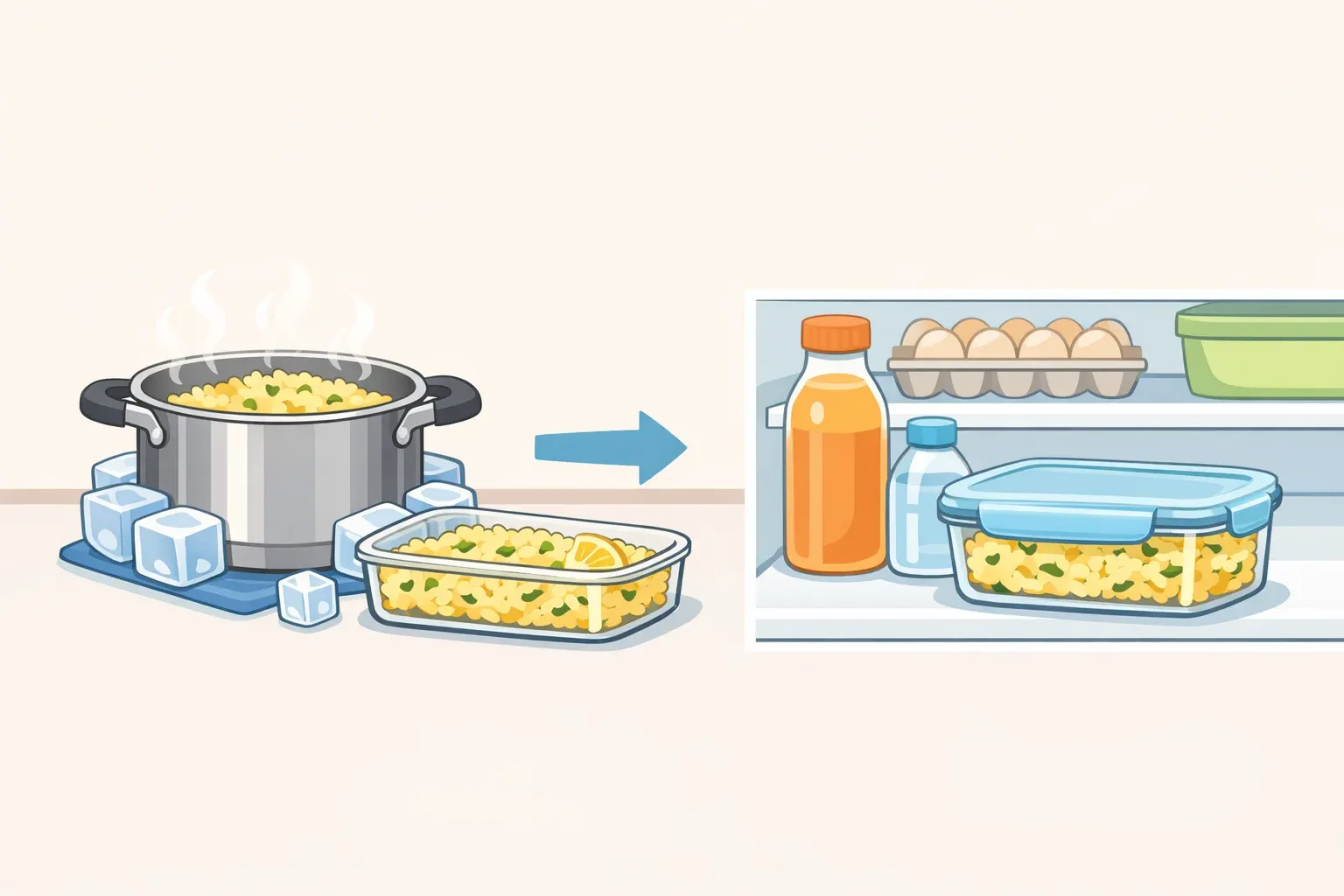
Cooked rice keeps for up to two days refrigerated in an airtight container (Asian Foods Daily, Carlsbad Cravings). Reheat by steaming for 5 minutes or microwaving under a damp paper towel for 30–45 seconds (Asian Foods Daily). Coconut sauce holds for a week in the fridge. The mango goes fresh slice it right before serving.
If the first batch worked and you want to push further, the variable worth testing is sourcing. Ataulfo versus standard Tommy Atkins mango will change the dish more than any topping choice. An overnight soak versus a 4-hour one will change the texture more than fine-tuning steam time. Start there. The differences are real and worth tasting, and the dish is forgiving enough to make the experiment worthwhile.





Comments
Be the first, drop a comment!