



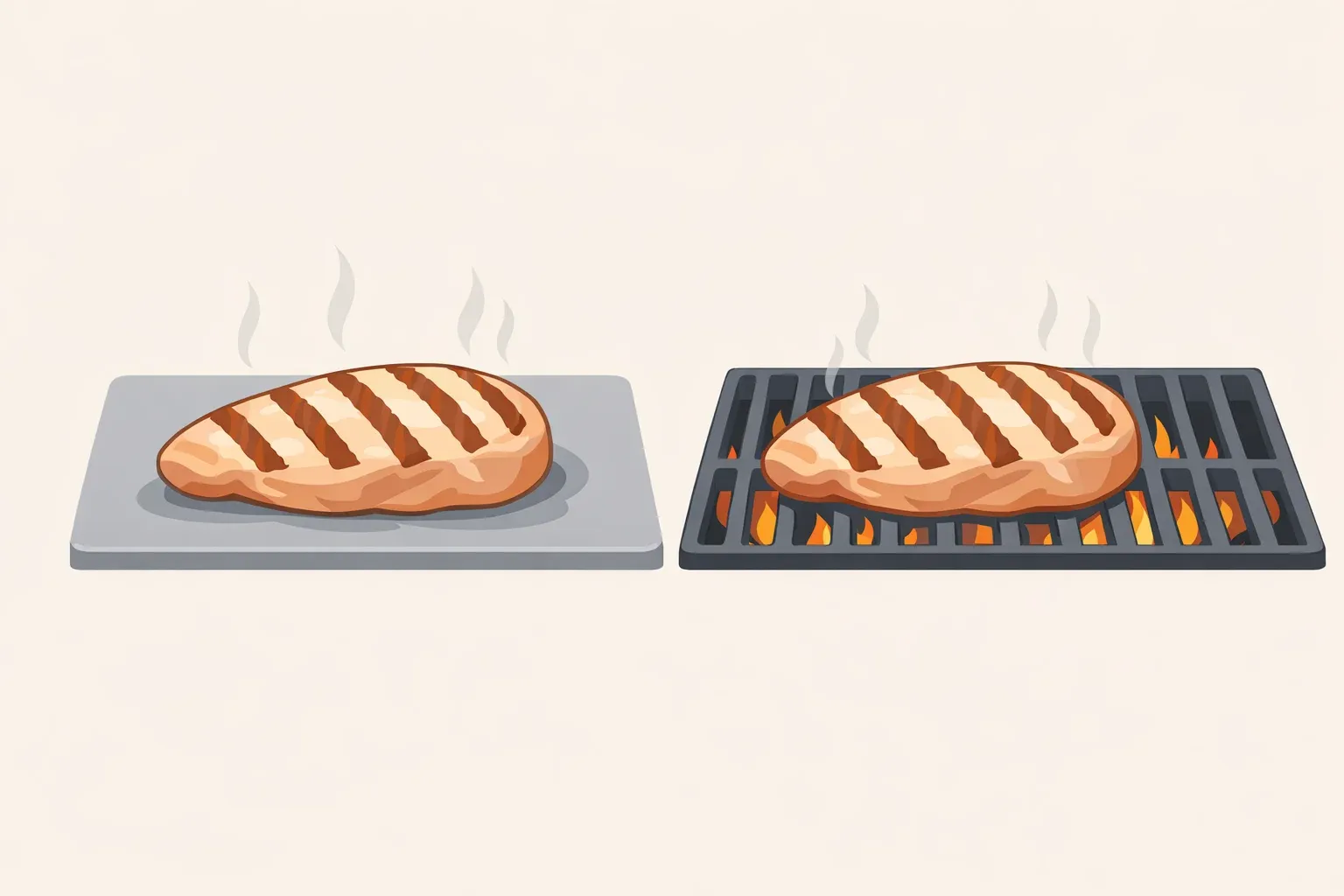
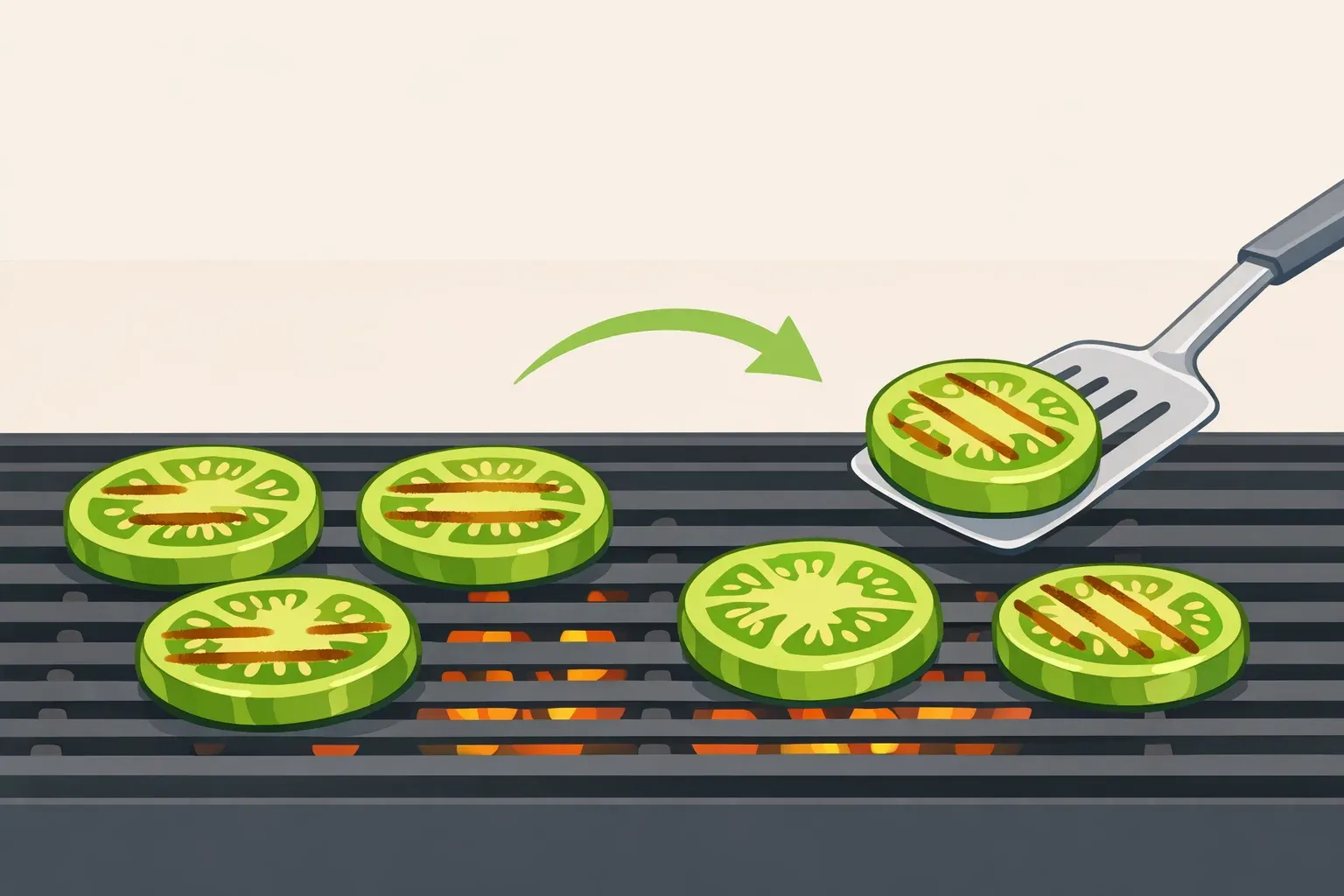
A dark, cross-hatched sear looks like proof of good grilling. It isn't quite that simple: those stripes only mark where metal bars touched the food, and AmazingRibs points out that this covers roughly a third of the surface, leaving the rest comparatively pale. That fact sits at the center of the flat top grill vs grates question, and it's worth understanding before spending money on either.
More total browned surface isn't automatically more flavorful, and that distinction matters more than the mechanics themselves. A flat top can build a more even Maillard crust across a piece of food, yet grates contribute char, smoke exposure, and the open-fire character many people associate with "grilled," regardless of how much surface actually browns. These are two different things a cook might want, not a contest with a single winner.
This is written for anyone with an existing grill weighing whether to add a flat-top attachment, griddle insert, or cast-iron plancha, not a restaurant buying equipment. The goal is a working framework for matching surface to food, plus what to check before buying an insert.
Two ways of cooking: what contact and open flame actually do differently
A griddle or flat top is a solid steel or cast-iron plate, typically half an inch to a full inch thick, heated from below and cooking by direct contact across its entire surface. Grates sit above burners or a flame source, so much of the food's surface faces hot air and radiant heat rather than metal. That split is the whole griddle vs grill grates comparison in miniature: one surface touches everything, the other touches only what rests directly on a bar.
Getting a dark, even crust through radiant or convective heat alone is nearly impossible before the center of the food overcooks. Conduction, meaning direct metal contact, is the only mechanism that reliably delivers it. That's the actual case for a flat top: not that grates can't brown food, but that contact brings more of the surface up to temperature at the same time, instead of leaving pale gaps between hot spots.
Neither surface fully substitutes for the other. A flat plate can't reproduce true grate marks or open-flame char, and grates struggle with batter, sauces, or anything that needs full, even contact. This section covers the contact-versus-open-flame trade-off specifically; fuel type, lid use, and airflow affect results independently of which surface is chosen, and those variables come up separately below.
What grill marks measure, and where more browning stops being the point
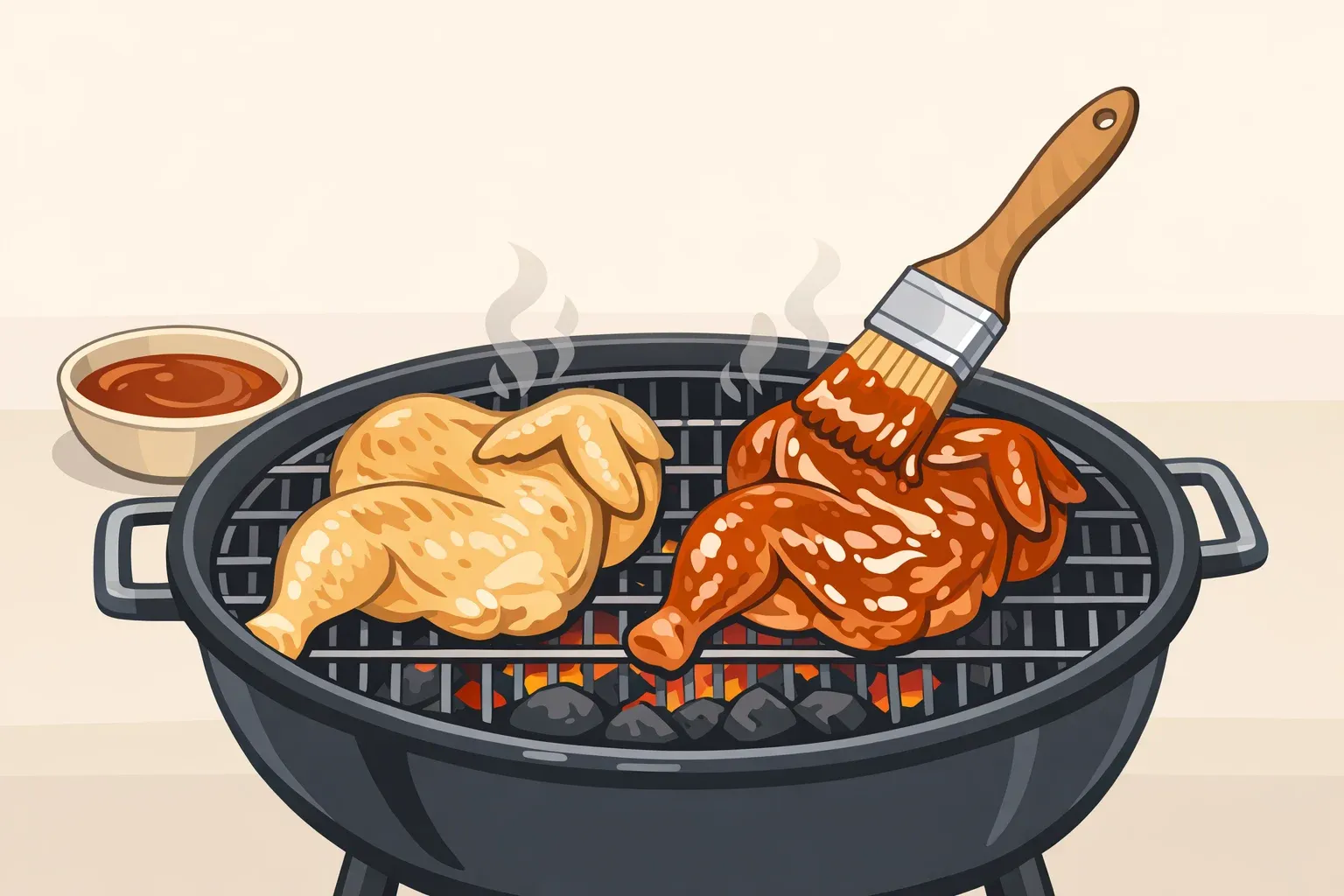
AmazingRibs makes a pointed argument here: cross-hatched marks show limited browning, not superior flavor. Its stated standard is an even, dark-brown crust across the whole surface rather than black stripes with pale meat in between.
The bigger obstacle to browning on either surface isn't the tool, it's moisture. Surface water holds food at 212°F until it evaporates, so nothing browns until the food is dry. Patting food dry, or dry-brining it uncovered in the fridge, matters more than which surface it eventually lands on.
There's also an upper limit worth respecting: sustained surface temperatures much above 500°F push browning toward scorching rather than deepening flavor. Treat that as a practical "browning, not blackening" guideline rather than a health verdict; the underlying research here doesn't support strong claims about specific compounds or risk levels.
One caveat matters for the flat-top-wins framing. A cast-iron flat surface does tend to beat grill grates for total crust coverage. Read that as a directional finding about browning coverage, not proof that flat-top food tastes better overall. The smoke, char, and flare-up flavor grates can add aren't captured by a browning measurement at all, and they don't come guaranteed: dripping fat can create genuine smoke flavor, or, if excessive, an acrid one.
What to cook on a flat top vs grill grates
Every pairing below is a tendency with a deciding condition, not a fixed rule. Whether food tends to stick, whether the grill has an indirect zone, whether a lid gets used, and how much smoke exposure someone actually wants all shift the answer. Rather than working through every possible food, it helps to sort by what the food needs: full contact, containment, or open-grate character.
Full-contact foods get their crust from touching hot metal everywhere, all at once. Smash burgers are the clearest case: full contact plus an immediate, firm press within the first 30 seconds builds crust before the meat's proteins set. One home cook on AmazingRibs' Pitmaster Club forum reported no noticeable difference between a dedicated griddle panel and the flat side of a reversible grate for this technique, a single forum post rather than a controlled test, but a useful illustration that contact is the mechanism, not any particular product.
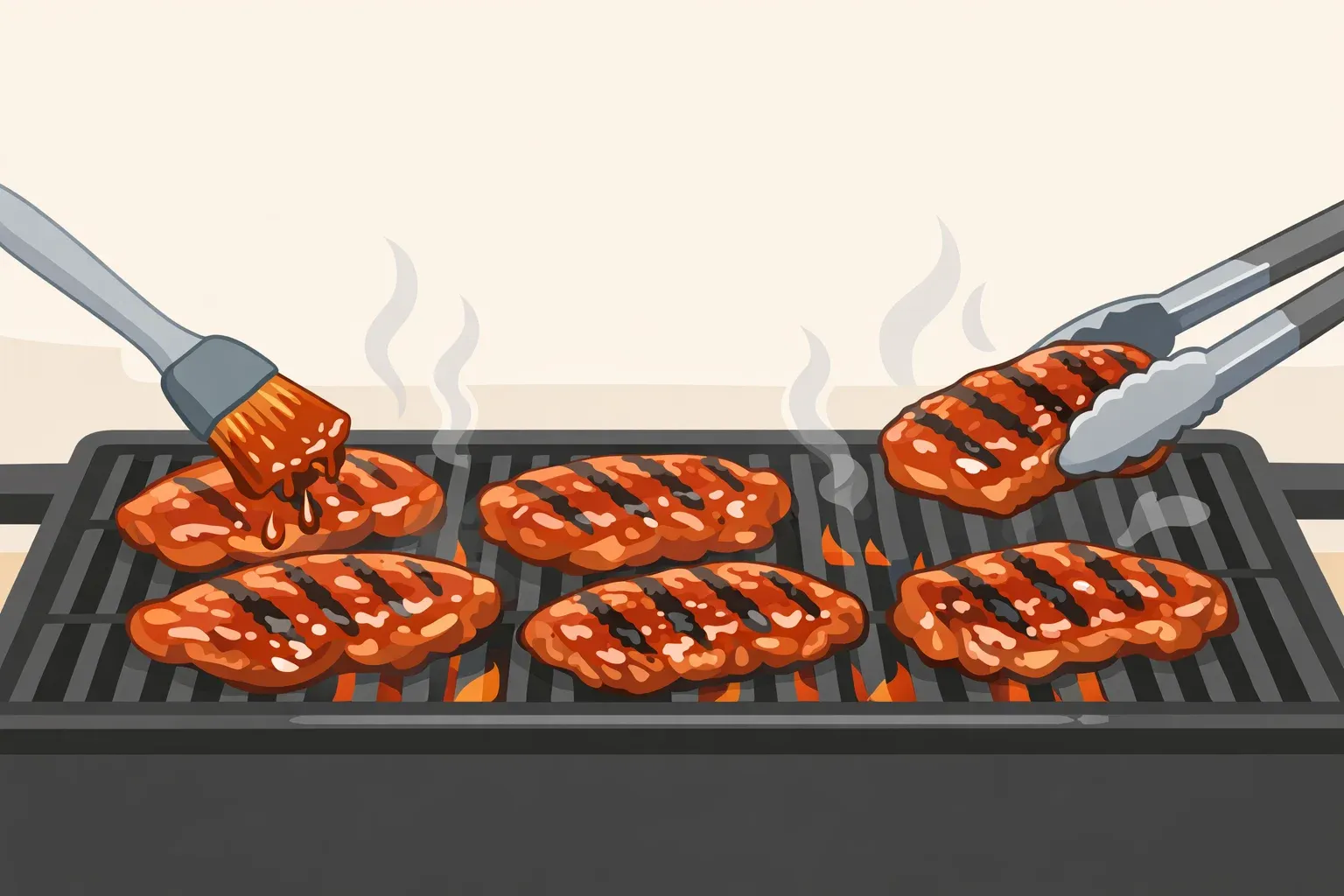
Glazed and sugared foods belong in the same category for a different reason: sugar browns and burns at a lower temperature than protein alone, so anything with a sweet glaze or marinade scorches faster and is easier to manage on a surface that heats evenly across its whole area.
Steak thickness decides more than the surface does. Thin cuts under an inch sear fine on either surface in roughly 90 seconds a side. Thick steaks at 1.5 inches or more do better with a reverse sear: cook indirectly at 225 to 275°F until the interior sits 10 to 15°F under target temperature, rest five minutes, then finish on maximum heat for 60 to 90 seconds per side. That method only works on a flat top if the setup actually has an indirect zone away from the hottest part of the plate.
Containment foods are the flat top's other clear win, for a plain structural reason: nothing falls through gaps. Chopped vegetables, fried rice, eggs, pancakes, and bacon are all easier to manage on a flat plate than over open bars, which matches why one Pitmaster Club member keeps griddle panels around specifically for sautéing small or loose ingredients.
Open-grate character is the category grates still own. Exposing food to radiant heat and airflow, rather than sealing it against solid metal, is the entire appeal of a charbroiler for kitchens chasing grilled aroma and visible marks. That advantage depends on the grate itself: thick, closely spaced bars can block smoke from reaching the meat at all, undercutting the reason for using a grate in the first place. If flavor and presentation are the priority for a given dish, keep the grates; if consistency and volume across many different items matter more, a flat surface wins out.
Before cooking on either surface, three habits matter more than which one is underneath the food: dry it thoroughly, since dry-brining uncovered in the fridge for 4 to 24 hours works either way; preheat 15 minutes with the lid closed on gas; and leave the food undisturbed for 2 to 3 minutes so a crust can form before flipping.
Adding a flat-top insert: what it changes, and what to check first
The mechanical shift is simple: on a flat insert, grease and food residue stay on one plane instead of coating bars and dripping into the firebox. On commercial-scale equipment, that difference can cut daily cleaning time by something like 10 to 25 minutes. That's a restaurant-kitchen figure, and it doesn't transfer directly to a backyard grill, but it points at the same underlying mechanism.
An insert isn't automatically equivalent to a dedicated griddle. Its thickness, material, and fit against the grill's heat source determine whether it actually holds and distributes heat evenly, which is part of why some manufacturers now build hybrid surfaces with both open and flat zones on a single unit.
Buying one changes more than what a grill can cook. It also eats into however much grate surface used to be exposed, changes how grease drains or fails to drain, and raises the question of whether the manufacturer's own specifications actually support running that combination.
Rather than borrowing thickness or clearance numbers from commercial kitchen equipment, check the insert's manual and the grill's manual for compatibility, load capacity, required clearances, and cleaning instructions before installing anything. Those documents, not general benchmarks pulled from restaurant-scale gear, are the only reliable source for what a specific grill and insert combination can actually handle.
Grates and flat inserts also get dirty in different ways. One home cook on AmazingRibs' Pitmaster Club forum described scrubbing grates at roughly 700°F with heat-rated gloves, while a flat griddle panel from the same setup washed clean in a sink like an ordinary skillet. That gap traces back to the same structural fact covered above: a flat surface has nowhere for residue to hide, and open bars do. Treat the anecdote as one person's routine, not manufacturer instructions, and follow the specific cleaning guidance in the grill and insert manuals instead.
What actually decides this
For most home cooks, the question isn't flat top grill or traditional grill in the abstract; it's which foods on the weekly rotation actually need which surface. Keep the grates if steaks, chops, and vegetables already make up most of what lands on the fire, and add a properly fitted plancha or removable insert only for foods that need full contact or containment: smash burgers, eggs, glazed items, stir-fried vegetables. A dedicated flat top only earns its keep once those foods outnumber everything else being cooked.
The more useful habit than picking a side is asking, dish by dish, whether the goal is an even crust or open-fire character, then choosing the surface that actually delivers it. Full contact produces the crust; open grates trade some of that evenness for smoke, char, and the flame itself. Anyone curious about the chemistry behind that crust can look further into Maillard-reaction research from The Grilling Science.


Comments
Be the first, drop a comment!