



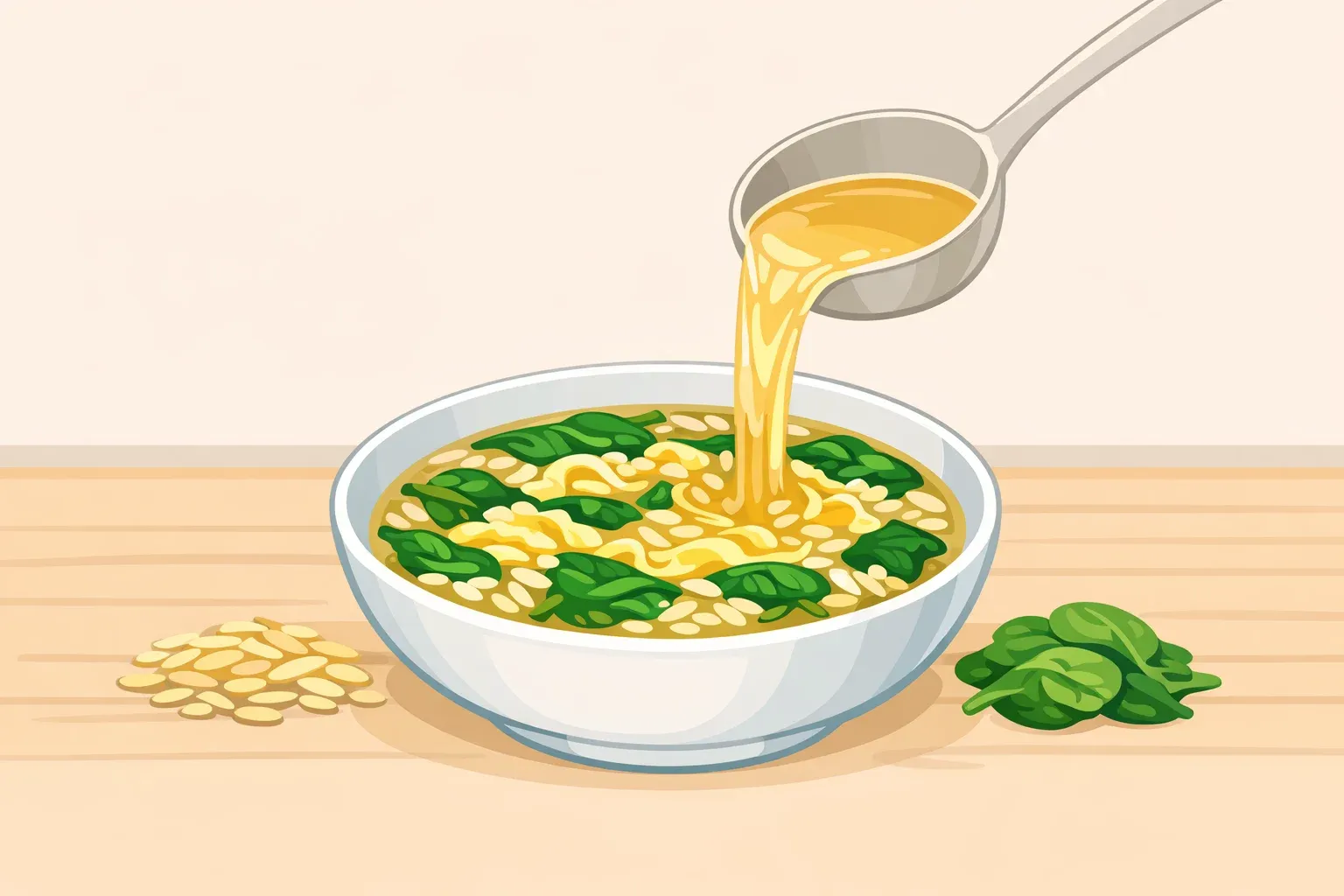
Stracciatella soup with spinach and orzo: a ratio-based guide
The difference between silky egg ribbons and a bowl of clumpy egg soup isn't a missing ingredient. Stracciatella brodo lives or dies on two things: the broth and the pour, according to the technique breakdown at ChefEdit (three months ago). Get those two variables right and stracciatella soup with spinach and orzo turns into one of the easiest, most satisfying dinners in the Italian repertoire.
Stracciatella alla Romana, the dish this recipe is built on, is a three-ingredient Roman classic: broth, eggs, and grated hard cheese (ChefEdit, three months ago). Active cooking time runs about 10 minutes across the recipes checked for this guide (ChefEdit, three months ago; JustRecipes, 4 months ago). Total time depends on the method: about 12 minutes for JustRecipes' leaner version, 15 minutes for ChefEdit's, and up to 30 minutes for the more involved version with lemon zest and semolina (JustRecipes, 4 months ago; ChefEdit, three months ago; Coley Cooks, 10 months ago).
This guide turns stracciatella alla Romana into a spinach orzo egg drop soup, using an exact ingredient ratio, one authoritative technique for forming ribbons instead of clumps, and clear rules for keeping the broth clear. The result is a light, four-serving dinner, not a starter-sized portion.
Italian egg drop soup with spinach and orzo, explained
The name comes from stracciare, meaning "to tear" or "to shred," describing the ragged threads that form when a whisked egg-and-cheese mixture hits hot broth (ChefEdit, three months ago). Picture torn rags floating in a clear broth, and the name makes immediate sense.
The word does double, even triple, duty in Italian kitchens, which trips people up. "Stracciatella" also names the creamy, shredded interior of burrata cheese, and it labels the chocolate-flecked gelato found at nearly every Italian gelateria (Taste of Home, in 2024). The soup version differs from Chinese egg drop soup in a specific way: it includes grated cheese and skips the cornstarch that gives the Chinese version its velvety thickness (Taste of Home, in 2024). Worth knowing, not worth dwelling on.
Regional Italian cooks have never treated the Roman formula as untouchable. Versions from Marche, Abruzzo, and Emilia-Romagna add breadcrumbs, semolina, or greens to the base, even while the Roman version itself stays lean (ChefEdit, three months ago). Spinach and orzo belong in that same spirit of practical adaptation. This isn't a claim to strict Roman tradition; it's a weeknight-friendly variation built on the same bones.
Ingredients and ratios for spinach-orzo stracciatella (serves 4)
This recipe makes four dinner-sized bowls, built as a light main course rather than a first-course starter. Below is the full list, split into the base ratio and what gets added for the spinach-and-orzo version.
The base ratio:
- 6 cups good-quality chicken broth (Coley Cooks, 10 months ago)
- 4 large eggs (Coley Cooks, 10 months ago)
- ½ cup grated Parmigiano-Reggiano cheese, plus extra for topping (Coley Cooks, 10 months ago)
- 1 tablespoon semolina flour, which adds a thickening so faint it's almost unnoticeable (Simple Italian Cooking, in 2024)
- 1 teaspoon lemon zest (Coley Cooks, 10 months ago)
- A pinch of freshly grated nutmeg (Coley Cooks, 10 months ago)
- Kosher salt and black pepper, to taste (Coley Cooks, 10 months ago)
Spinach and orzo add-ins:
- 2 to 3 handfuls baby spinach, chopped (Coley Cooks, 10 months ago)
- ¾ to 1 cup dry orzo, cooked separately, an editorial measure tested for this pairing since none of the cited recipes specify a quantity
Optional broth infusion:
- A leftover Parmigiano-Reggiano rind, simmered briefly for extra depth (ChefEdit, three months ago)
Plan on spooning about ⅓ to ½ cup of cooked orzo into each bowl before ladling the soup over it. That measure comes from testing this specific pairing, not from any single cited recipe.
This 4-eggs-to-6-cups ratio also matches Taste of Home's version, which lands at roughly two-thirds of an egg for every cup of broth. JustRecipes runs leaner on aromatics but richer on egg, closer to one whole egg per cup, which makes for a soup with less broth character and more solid egg mass (JustRecipes, 4 months ago; Taste of Home, in 2024). Orzo adds bulk and heartiness without needing extra egg. Keep the egg-to-broth ratio as written even after the pasta goes into the bowl.
On garlic: ChefEdit's technique notes draw a clear line at frying it into a soffritto, which pushes the soup toward a different dish entirely. A clove simmered whole in the broth during infusion stays within the format; skip the pan (ChefEdit, three months ago).
Broth quality decides more of the outcome than any other single choice. Homemade broth gives the richest result. If using commercial stock, ChefEdit recommends a low-sodium version, reduced slightly to concentrate the flavor and reinforced with a Parmigiano rind rather than bouillon cubes, which push the soup salty and metallic (ChefEdit, three months ago).
How to make stracciatella soup with spinach and orzo

The steps below use the bare-simmer, thin-stream method, the technique that consistently produces fine ribbons rather than clumps or an egg-soup omelet.
One method choice deserves a quick explanation before diving in: this recipe cooks the orzo in its own pot rather than directly in the broth. Taste of Home's version spoons the soup over cooked petite pasta like stelline or orzo for a heartier meal, and this recipe follows that same logic (Taste of Home, in 2024). Keeping the pasta separate keeps the broth clear and stops the orzo from continuing to swell and turn mushy in the fridge.
-
Cook the orzo separately, in its own pot of salted water, then drain and set it aside.
-
Infuse the broth, if time allows. Add a Parmigiano-Reggiano rind, bring to a simmer, then hold at a bare simmer for about 5 minutes before removing the rind and seasoning lightly with salt (ChefEdit, three months ago).
-
Whisk the egg mixture until fully uniform. Combine eggs, grated Parmigiano-Reggiano, and a pinch of nutmeg, then whisk until no streaks of egg white remain. Streaky whites cook into uneven sheets instead of fine ribbons (ChefEdit, three months ago).
-
Bring the broth to a bare simmer, not a boil. Look for small bubbles trembling at the edge of the pot rather than a rolling boil (ChefEdit, three months ago).
-
Stream in the eggs while stirring in one direction. Create a slow whirlpool in the broth, then pour the egg mixture in a thin stream over 20 to 30 seconds. Dumping it in all at once produces an omelet, not ribbons (ChefEdit, three months ago).
-
Hold for 30 to 45 seconds, then pull off heat. The egg should look pale yellow and ragged, never browned or firm (ChefEdit, three months ago).
-
Stir in the spinach only after the egg has set, letting it simmer gently for 1 to 2 minutes until wilted (Coley Cooks, 10 months ago).
-
Assemble in the bowl, not the pot. Spoon warm cooked orzo into bowls first, then ladle the soup over it. Finish with a light grating of Parmigiano, black pepper, or lemon zest (ChefEdit, three months ago).
Even with the ratio locked in, small execution mistakes can turn this chicken broth egg ribbon soup into something clumpier than intended:
| Problem | Likely cause | Fix |
|---|---|---|
| Large clumps or omelet-like bits | Eggs poured too fast or all at once | Use a thin 20-30 second stream while stirring (ChefEdit, three months ago) |
| Tough, rubbery egg | Broth boiling or egg cooked too long | Hold at a bare simmer; remove within 30-45 seconds (ChefEdit, three months ago) |
| Bland soup | Weak or low-quality broth | Use homemade broth, or reinforce store-bought stock with a Parmigiano rind (ChefEdit, three months ago) |
| Overly salty soup | Salted before accounting for cheese | Season broth lightly, adjust only after Parmigiano is added (ChefEdit, three months ago; JustRecipes, 4 months ago) |
Storing, reheating, and make-ahead options
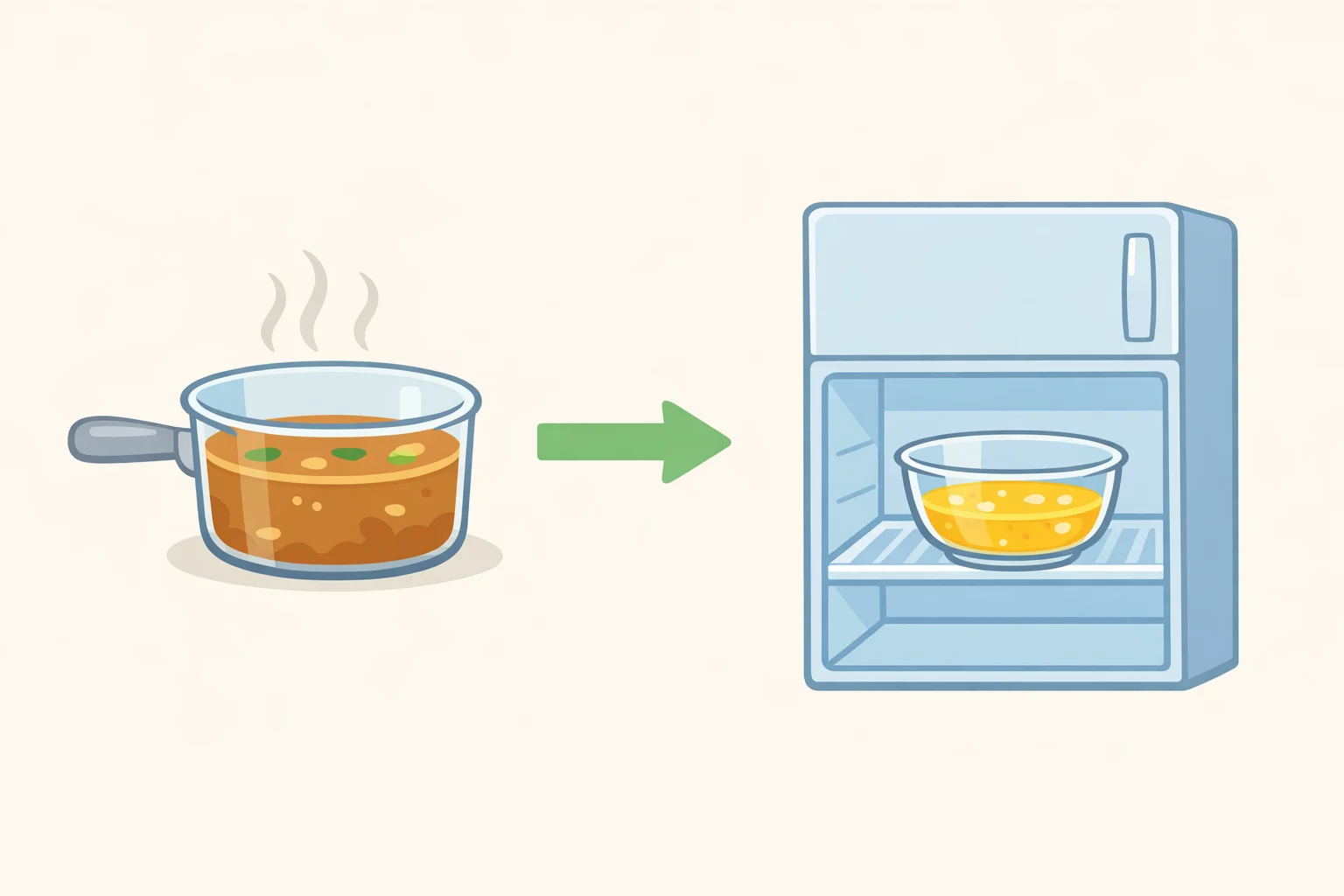
This is a cook-and-serve soup, not a batch meal. Egg strands can break down when reheated, so treat freshness as part of the recipe rather than an afterthought (Coley Cooks, 10 months ago).
Storage windows vary a bit by source. Coley Cooks caps leftovers at two days refrigerated, Taste of Home stretches that to four days, and Simple Italian Cooking notes the finished soup can also be frozen for up to six months if the fridge timeline doesn't work out (Coley Cooks, 10 months ago; Taste of Home, in 2024; Simple Italian Cooking, in 2024). Whichever window applies, reheat gently over low heat rather than bringing it back to a boil, which toughens the egg.
Store leftover orzo separately from the broth, too. Pasta left sitting in soup keeps absorbing liquid and turns soft, which undercuts the whole point of adding it in the first place.
For a lighter, first-course-sized portion closer to the traditional Roman presentation, drop the orzo and the spinach and serve just the broth, egg, and cheese. That three-ingredient base is the classic this whole dish is built from (ChefEdit, three months ago).
What to change, and what not to
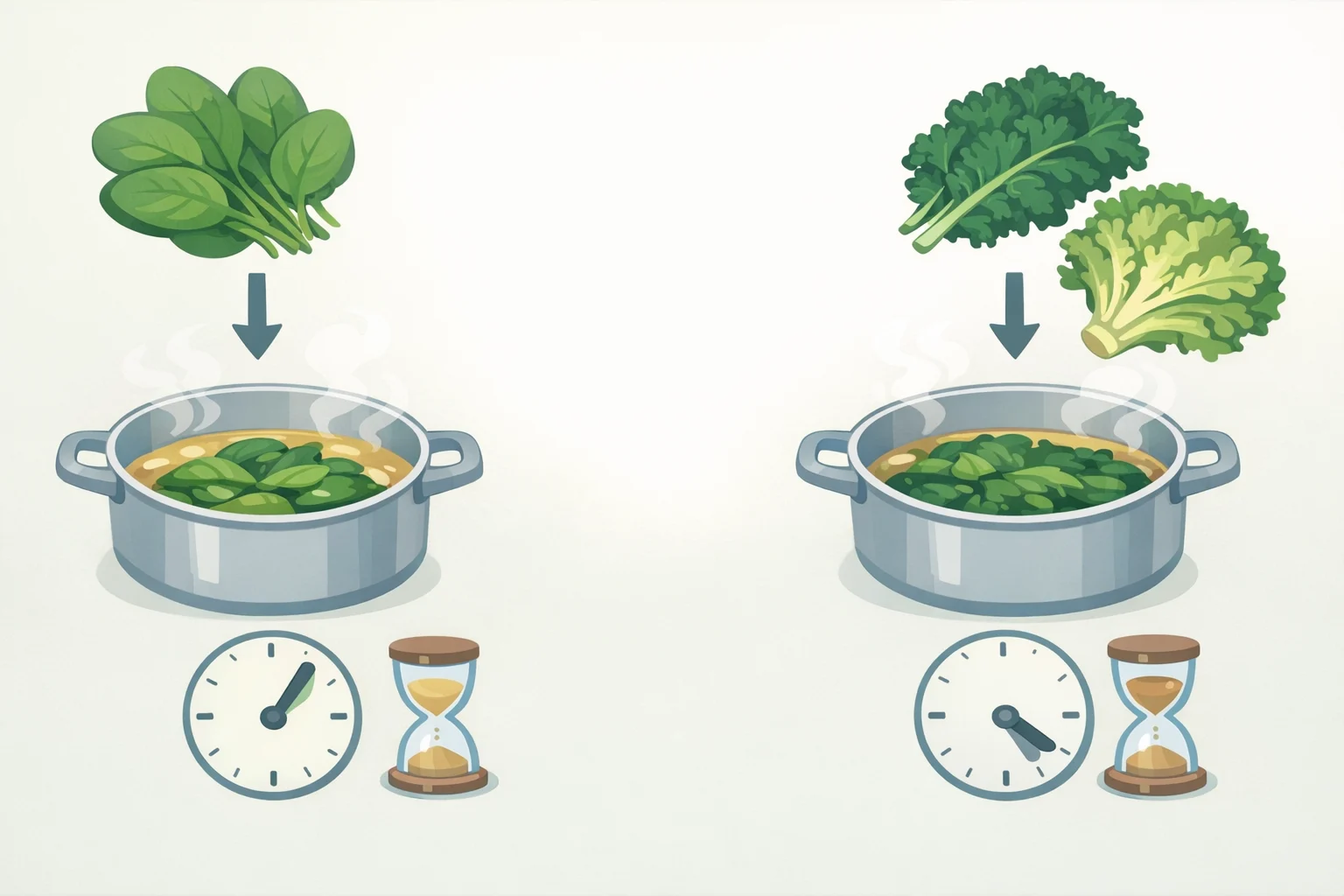
Once the ratio and technique are second nature, the greens are the easiest part to swap. Taste of Home suggests baby spinach or shredded Swiss chard, added just before the egg is broken into ribbons and left to wilt for a moment (Taste of Home, in 2024). Chard holds up a little longer in hot broth than spinach does, so give it slightly more time if using it as the stand-in.
Scaling the recipe keeps the same math: for every 6 cups of broth, use 4 eggs and about ½ cup of grated Parmigiano-Reggiano, then adjust orzo and greens to taste (Coley Cooks, 10 months ago). That ratio, not the specific vegetables, is what actually defines this soup and carries over cleanly to any variation.
This is a Roman classic reshaped into a weeknight dinner, and it's worth saying plainly: that's a deliberate adaptation, not a substitute for the traditional three-ingredient soup. Both versions have their place. This one just happens to fit a Tuesday night a little better.







Comments
Be the first, drop a comment!