



Best cocoa powder for chocolate cake: what actually affects texture
If your chocolate cake crumbles when you cut it rather than clinging to the fork, the fix is probably sitting in your refrigerator door. Full-fat mayonnaise, used as the fat base in a chocolate cake batter, produces what Serious Eats calls "cling-to-your-fork levels of moisture" an exceptionally fudgy crumb that stays tender rather than bouncy or dry.
This guide covers three decisions that determine whether that result actually happens: whether to use a dedicated mayo cake recipe or adapt an existing one, which cocoa powder to choose given your recipe's leavening chemistry, and whether adding coffee is worth it. The first decision drives texture. The other two either reinforce it or quietly undermine it.
Why mayonnaise matters more than cocoa if your problem is dryness
Mayonnaise in cake batter sounds like a novelty, but the technique has a century of practical history behind it. Cooks were making mayo-based chocolate cake at least as early as 1927, and the method became widespread during WWII rationing when eggs, dairy, and sugar were scarce, according to Serious Eats. It wasn't a shortcut; it was engineered to solve the same moisture problem this article addresses, just from a different angle.
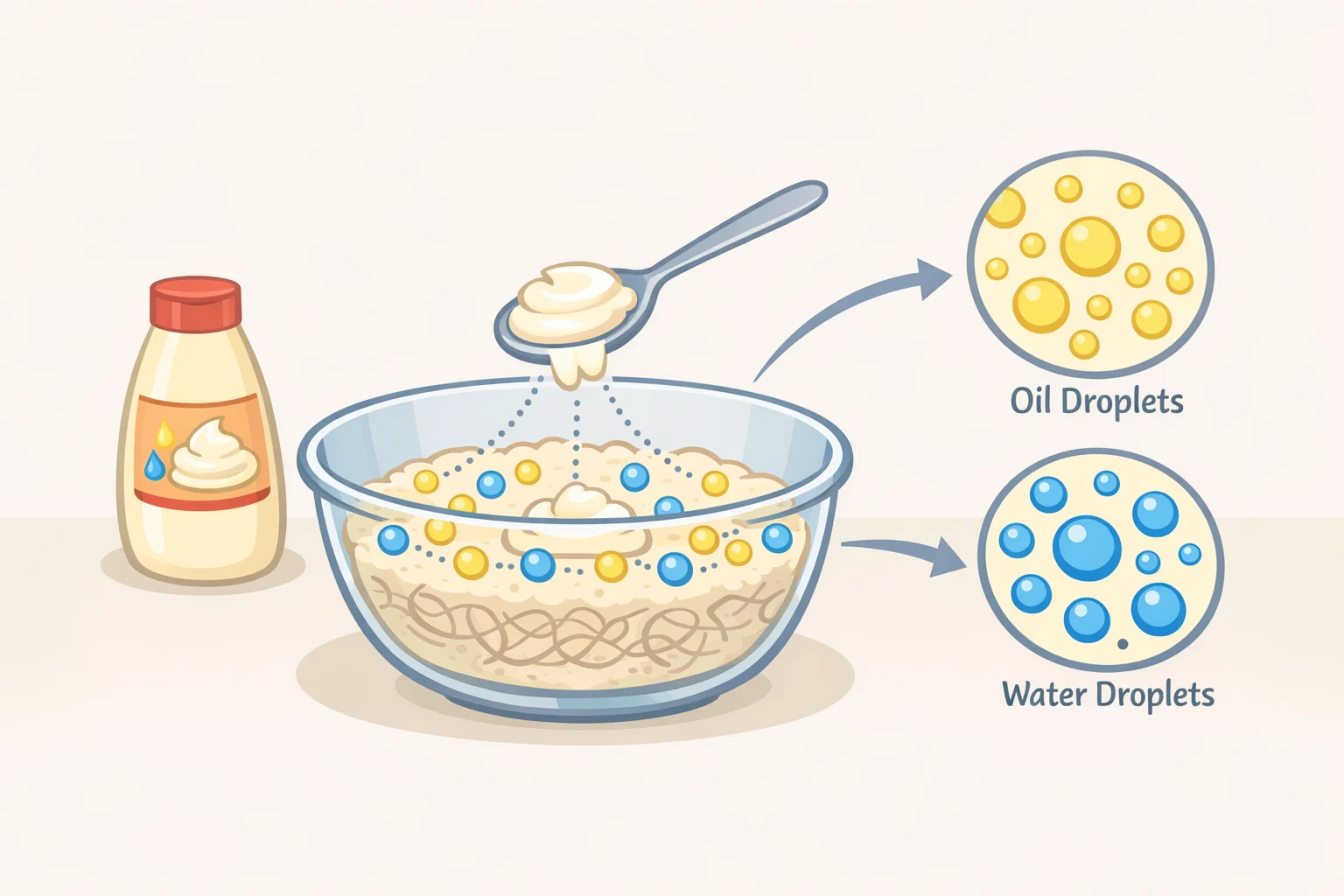
Mayonnaise is an emulsion of oil and water stabilized by lecithin from egg yolks. Folded into batter, it distributes fat and liquid more evenly than plain oil, coating flour particles before gluten can fully develop which is what produces a tender crumb rather than a bouncy or chewy one. Think of it as delivering fat and moisture together, pre-combined, in a way that butter or oil alone can't replicate as efficiently. The result, as Serious Eats tested, is an exceptionally fudgy cake with noticeable moisture retention.
The vinegar in standard mayo also functions as a leavening activator. That acidity works alongside natural cocoa's own acidity natural cocoa sits at a pH of roughly 5.2–5.6, per the American Society of Baking to activate baking soda and produce the carbon dioxide needed for a proper rise while keeping the crumb tender. That's why cocoa choice matters here: it's doing structural work alongside the mayo, not just contributing flavor.
Finished cake won't taste like mayonnaise. The flavors dissipate during baking; you shouldn't detect it at all.
Use a dedicated recipe, or adapt an existing one?
Easiest and most reliable: start with a recipe built around mayo from the start. The Serious Eats chocolate mayonnaise cake calls for 300g (1¼ cups) of mayo in a 9x13-inch cake that bakes in 35–38 minutes and serves 15. The leavening is calibrated for mayo's acidity, the liquid balance accounts for its water content, and the result is tested.
If you want to experiment with an existing recipe, replace the oil with mayo at equal volume but expect to retest the formula before committing it to an occasion. Mayo carries more water than oil, so the batter may be slightly looser than you're used to. Direct substitution ratios aren't well-established across all recipe types, so treat any adaptation as a trial run.
Don't add mayo on top of the oil a recipe already calls for. Replacing the fat is the point, not doubling it.
Use full-fat, plain mayonnaise. Standard supermarket brands like Hellmann's or Best Foods work well. Reduced-fat mayo has less of the oil that makes the emulsion effective, and heavily seasoned varieties will affect the final flavor in ways that plain mayo won't, as Serious Eats notes.
Natural vs Dutch-process cocoa for cake: which works better in fudgy batters?
The common assumption is that Dutch-process cocoa for chocolate cake produces a fudgier result than natural cocoa. For mayo-based, baking-soda recipes specifically, that's not reliably true and acting on it can work against the texture you're trying to build.
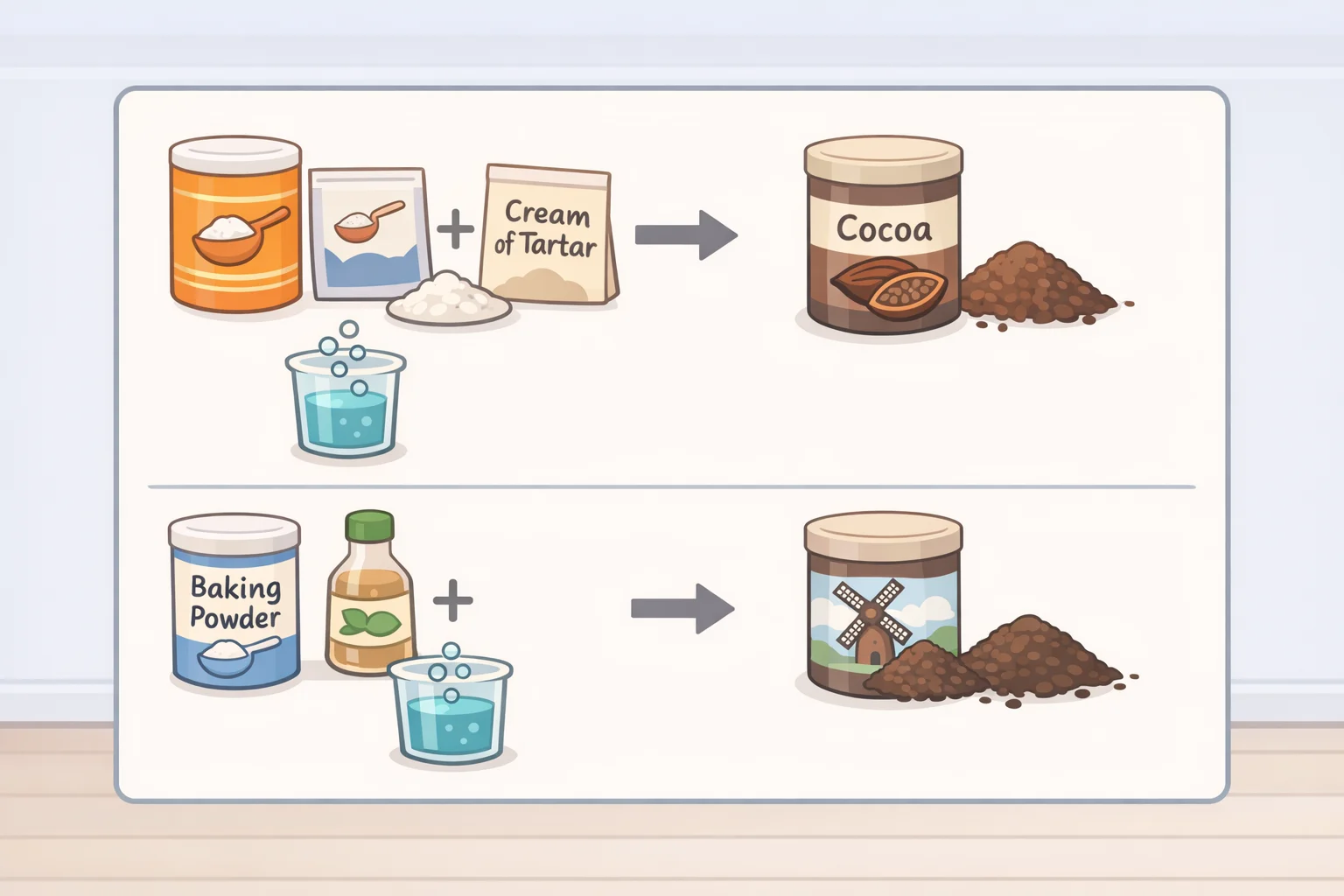
Natural cocoa has a pH of roughly 5–6; Dutch-process has been alkalized to pH 6.8–8, depending on the degree of processing, per Serious Eats testing published earlier this year. In recipes where cocoa is the primary acid source for baking soda, swapping in Dutch-process raises the batter's overall pH. That shift weakens gluten formation slightly, allowing gas bubbles to expand more before the cake sets, which produces a slightly looser, more open crumb not a denser one.
Side-by-side testing across four classic chocolate cake styles confirmed this directional pattern. A Texas sheet cake relying on baking soda with natural cocoa as the main acid developed a coarser, more fragile crumb when Dutch-process was substituted: larger bubbles, uneven distribution, a cake described as "almost too fragile." A German chocolate cake made with buttermilk showed less structural change because the buttermilk supplied enough acidity to compensate, though the Dutch version still edged toward slightly gummy in direct comparison. An egg-leavened génoise showed almost no structural difference at all; there, cocoa choice came down to flavor and color, Serious Eats found.
The principle holds consistently: the more a recipe depends on cocoa's acidity for leavening, the more a Dutch-process substitution shifts the structure.
Decision guide: which cocoa to use
| Recipe leavening | Best cocoa choice | Why |
|---|---|---|
| Baking soda only, no other acid | Natural cocoa | Cocoa must supply the acid; Dutch-process raises pH and can loosen crumb |
| Baking soda + acidic ingredient (buttermilk, vinegar, sour cream) | Either | Other acid covers leavening; cocoa becomes flavor and color preference |
| Baking powder only | Either; Dutch gives darker color and deeper, smoother flavor | Leavening is self-contained; cocoa acidity isn't needed |
| Egg-leavened (génoise, whipped eggs) | Either | Structure comes from eggs; cocoa swap won't affect rise |
For the mayo cake specifically, the tested recipe uses both baking soda and baking powder alongside natural cocoa, with the mayo's vinegar adding further acidity. Natural cocoa is doing structural work alongside the baking soda, and Dutch-process would reduce the acidity the formula depends on, per Serious Eats and Serious Eats.
For older or unspecified recipes that just list "cocoa powder," check the leavening. Baking soda with no other acidic ingredient is the clearest signal to use natural cocoa. Baking powder only means Dutch-process is safe and will produce a noticeably darker cake.
Cocoa substitutions won't ruin most cakes. Testing found the changes are directional crumb, color, and flavor shift, but failures are rare, Serious Eats concluded. If you're optimizing for fudgy and moist, though, the wrong cocoa is working against everything the mayo is trying to build.
Coffee as a flavor upgrade
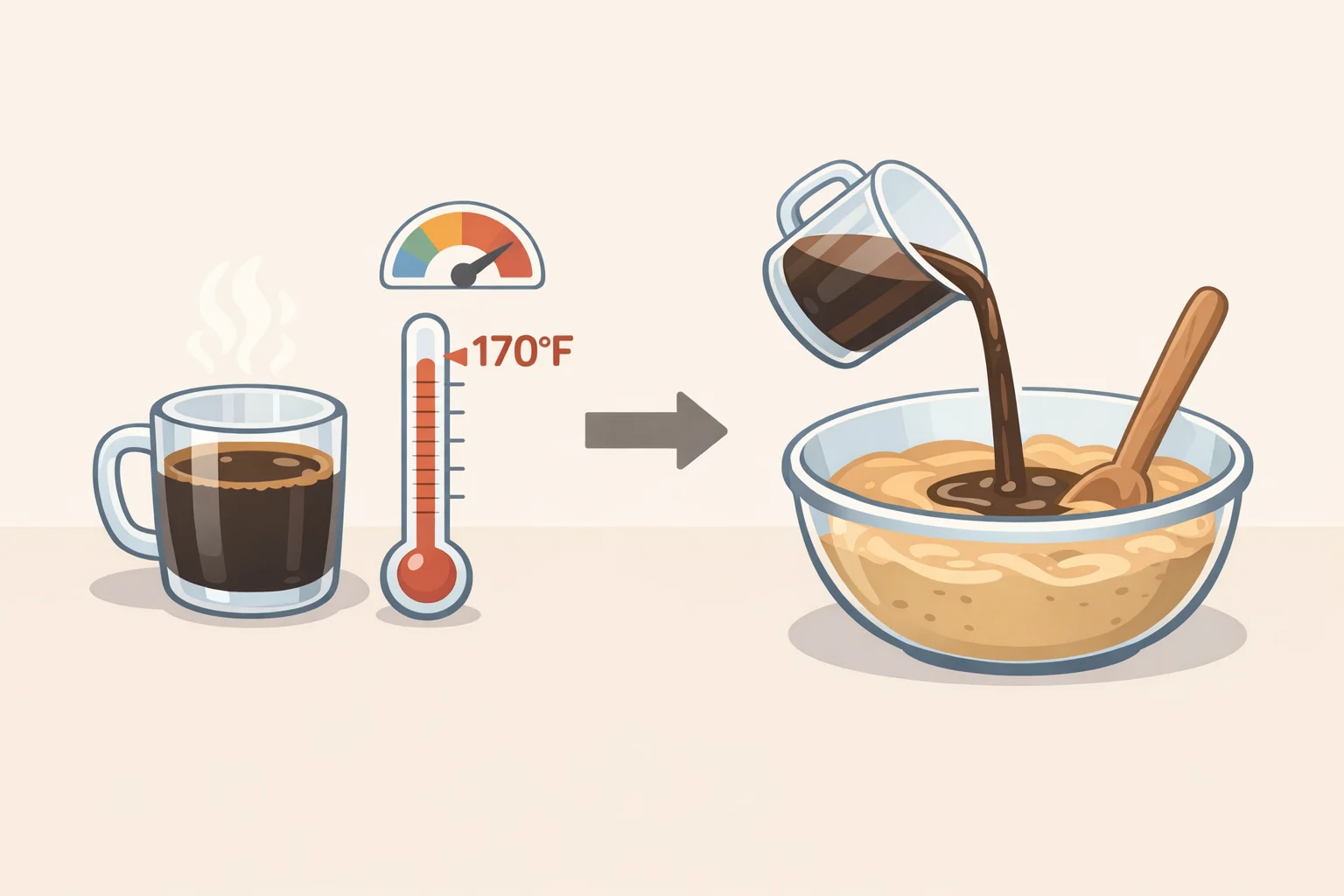
Replacing the water in a chocolate cake batter with strong black coffee deepens the bittersweet and fruity notes in the cocoa without making the cake taste like coffee. This holds across structurally different recipes confirmed in both the mayo cake and a separate Singaporean fudge cake, per Serious Eats and Serious Eats. Even double-strength coffee disappears into the chocolate.
Brew at roughly double your normal drinking strength. Let it cool to around 170°F (77°C) before adding it to the batter the tested mayo recipe specifies this temperature for that step. If caffeine is a concern, decaf should work similarly.
This is a flavor decision, not a structural one. Skip it if you don't have coffee on hand; the cake will be fine.
The decision framework
Texture first, cocoa second, coffee optional. That hierarchy matters because mayo changes the fundamental character of the crumb, cocoa choice mainly protects or redirects what mayo builds depending on leavening chemistry, and coffee operates entirely on flavor.
-
Start with full-fat plain mayo as the fat base. Use 300g (1¼ cups) in a dedicated mayo cake recipe for the most reliable result. If adapting an existing recipe, replace the oil with mayo at equal volume and plan to test the formula once before the occasion, per Serious Eats.
-
Match cocoa to leavening, not to the color you want. For baking-soda recipes where cocoa is the primary acid including any mayo cake built on that formula use natural cocoa at pH 5.2–5.6. Switching to Dutch-process in those recipes tends to loosen the crumb, working against the texture mayo builds. Save Dutch-process for baking-powder recipes or formulas already containing buttermilk, sour cream, or another acid, per Serious Eats.
-
Swap water for double-strength black coffee to intensify chocolate depth without adding a coffee flavor. Confirmed across two different Serious Eats recipes. Entirely optional.
None of these ingredients require a specialty store. If you only change one thing in your current recipe, change the fat system first not the cocoa tin.







Comments
Be the first, drop a comment!