



How to Store Potatoes Long Term So They Last Months
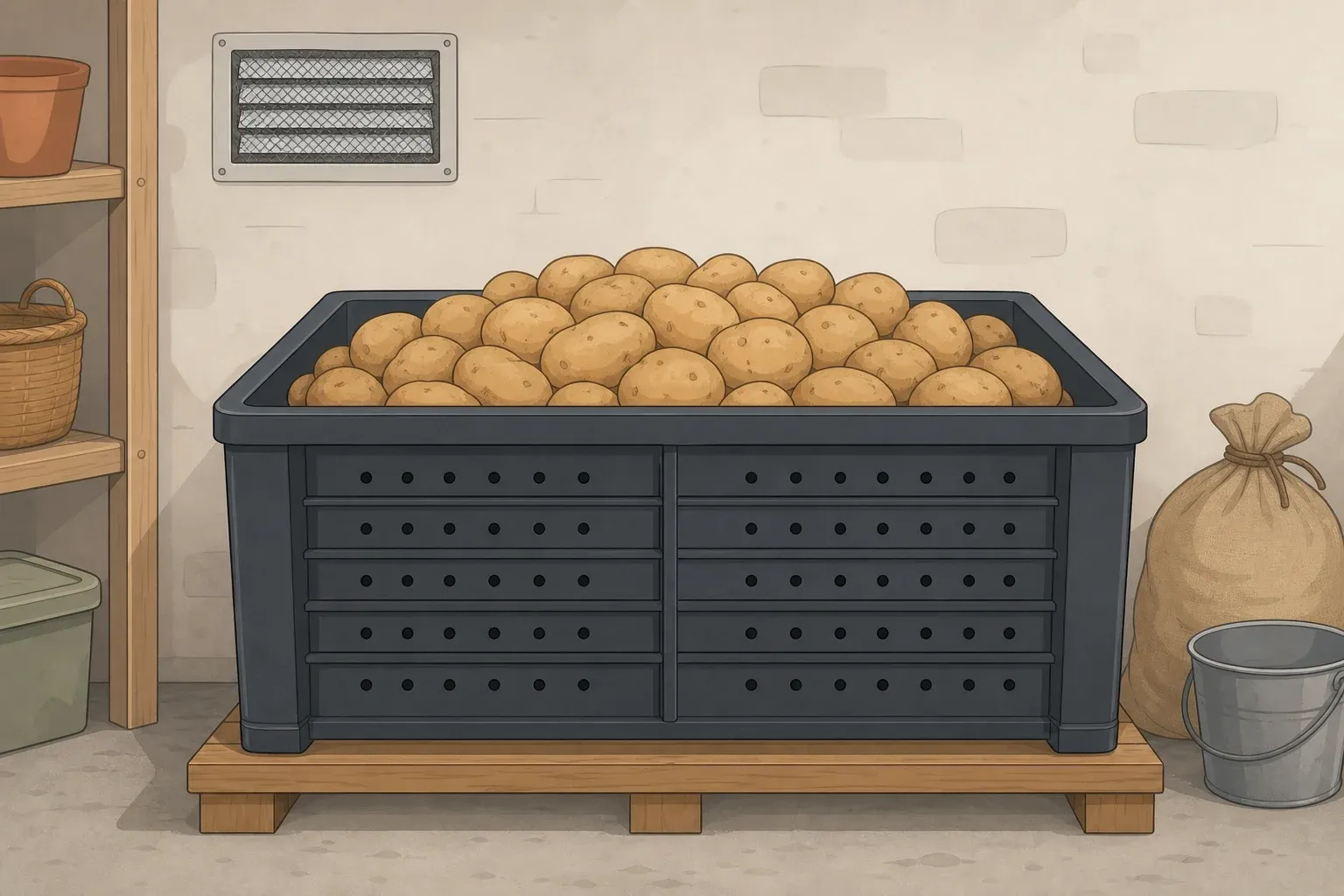
Storing potatoes long term comes down to controlling four conditions at the same time: temperature, darkness, humidity, and airflow. Hit a temperature around 45–50°F in a dark, well-ventilated spot, and potatoes can hold for three months or longer. Left at normal room temperature, they typically last about two weeks before softening or sprouting, according to Iowa State University Extension.
That three-month-plus window is a best case, and it depends on having a genuinely cool, humid space like a basement or root cellar. A dry hall closet, cabinet, or garage corner will still beat the kitchen counter by a wide margin, just without matching that timeline.
One thing to rule out before anything else: the refrigerator. Raw potatoes don't belong in there. Below 40°F, the starch in potatoes converts to sugar, which gives them an undesirable flavor, according to Michigan State University Extension. That same conversion also makes potatoes taste sweeter and turn noticeably darker when cooked, according to Iowa State University Extension. This guide sticks to pantry- and cellar-style storage, not cold storage.
Darkness matters for more than appearance, too. Light exposure triggers greening and the buildup of a natural toxin called solanine, and this guide covers exactly when a green patch is fine to trim away and when the whole potato needs to go in the trash.
What you'll need
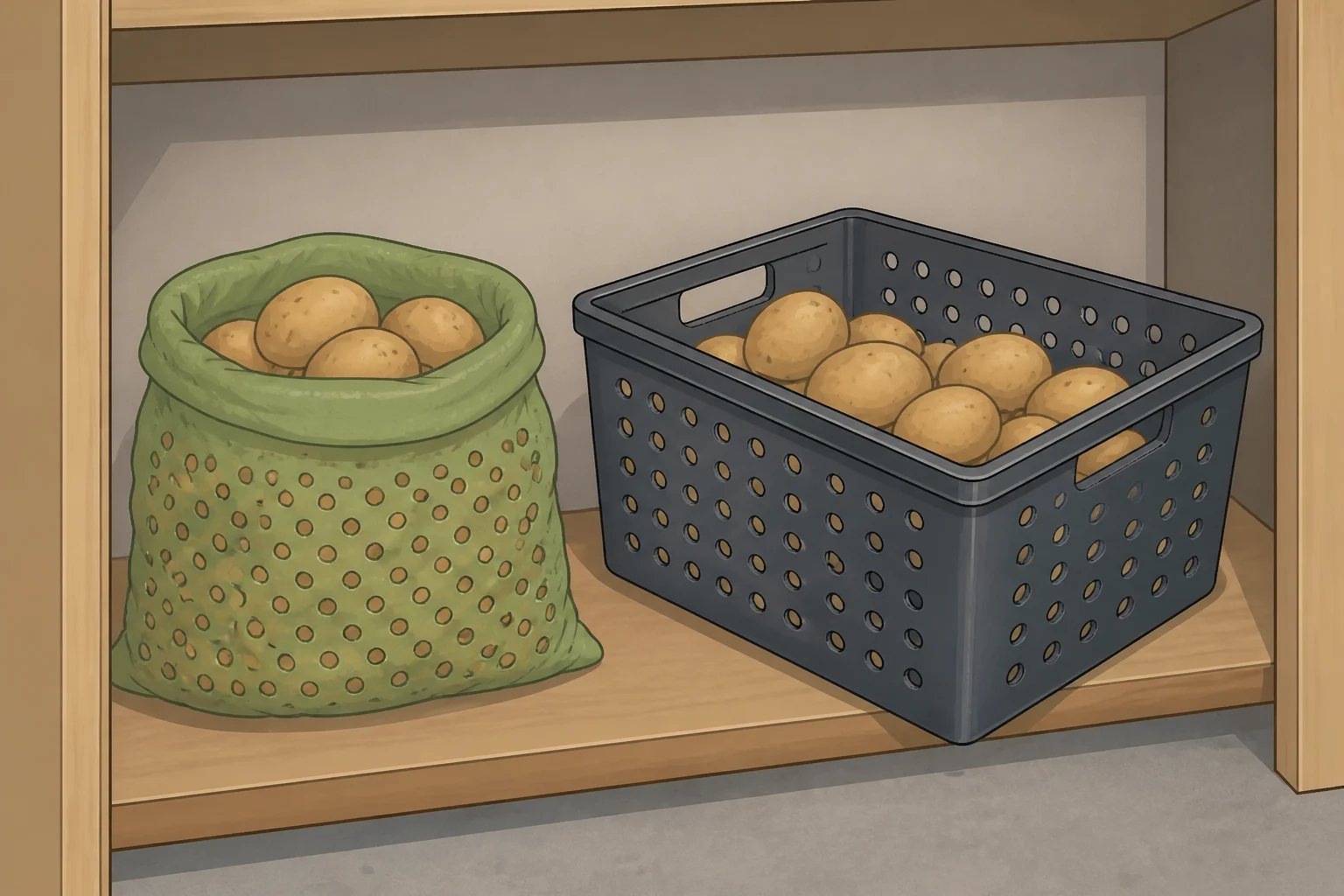
This is a setup-and-monitor task, not a project. No tools, no special skills, just the right container and the right spot.
- An opaque, ventilated container. A perforated plastic bag, paper bag, cardboard box with holes punched in it, or an open bin or basket all work. Never use a sealed, airtight container: trapped carbon dioxide that potatoes naturally give off speeds up decay instead of slowing it, according to University of Arkansas Extension.
- A cool, dark storage location. A basement, cellar, unheated closet, enclosed porch, or garage corner that stays above freezing all work. The closer to 45–50°F, the longer potatoes will hold, according to NDSU Agriculture.
- A thermometer (optional but useful). Most homes run 65–75°F, well above the target range for multi-month storage, according to University of Arkansas Extension. A cheap thermometer tells you whether a chosen spot is actually cool enough before you commit a whole batch of potatoes to it.
Skill level: beginner-friendly. There's no technique to master here, just a location and a container to get right.
Before you start: sort and prep your potatoes
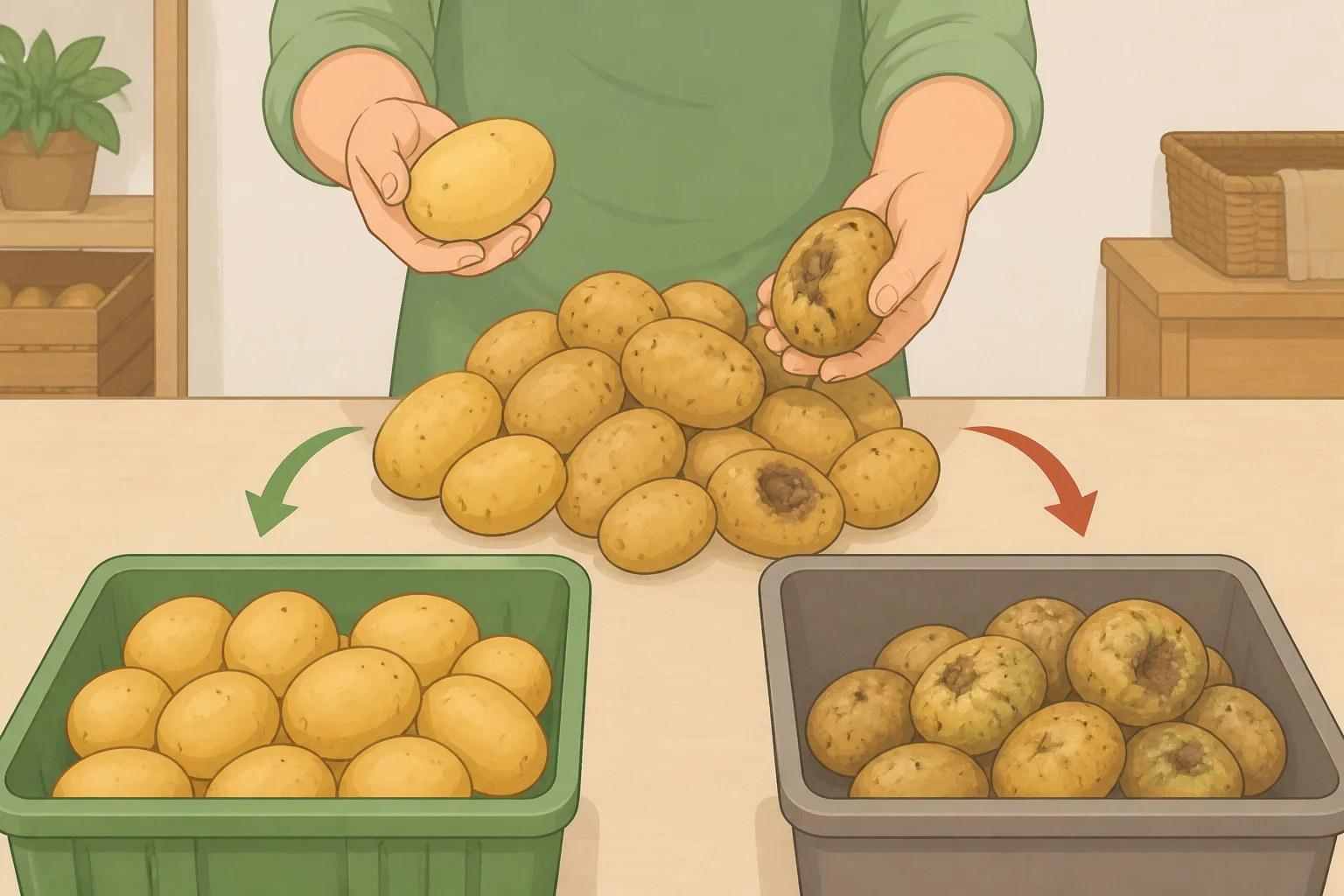
Long-term storage starts with what goes into it. A potato that's already bruised or damaged undercuts the whole effort, no matter how good the storage spot is.
Select only firm, dry, unblemished potatoes for the long haul. Bruises, cuts, or breaks in the skin increase moisture loss and give decay a place to start, according to CSU Extension. Set aside anything soft, cut, or starting to wrinkle and use it soon instead of storing it.
Sort before storing, not after problems show up. One decaying potato in a batch can spread rot to the rest of them, so it's worth a few minutes to go through the pile first, per CSU Extension.
Don't wash potatoes before storing them. Brush off loose dirt with a dry cloth or soft brush and save the rinse for right before cooking. Added surface moisture during storage promotes rot, according to Michigan State University Extension.
If you're storing homegrown potatoes, let them cure and dry out after harvest before boxing them up. Freshly dug potatoes carry more surface moisture than potatoes that have had time to dry down, so give them a few days in a dry, shaded spot before moving them into long-term storage.
One distinction worth keeping straight: "humid storage" refers to the air around the potatoes, not the potatoes themselves. They should go into storage dry on the outside even though the room or container benefits from some ambient moisture.
How to store potatoes long term: step-by-step
-
Pick the coolest dark space available in the home. A cellar or cool basement is the best option; use a thermometer to check how close the space actually runs to 45–50°F, per Iowa State University Extension. No basement? An unheated closet, enclosed porch, or garage corner that won't freeze is a workable substitute, though it likely won't match a cellar's humidity.
-
Check that the location is away from any heat source. Keep potatoes clear of the stove, dishwasher, refrigerator exhaust vent, and anywhere direct sunlight or cabinet lighting reaches them. Both heat and light speed up sprouting and greening, according to NDSU Agriculture.
-
Load the potatoes into a ventilated container. Use the perforated bag, paper bag, or open bin from the checklist above. Airflow keeps the carbon dioxide potatoes naturally release from building up and accelerating decay, per University of Arkansas Extension.
-
Keep potatoes away from onions, apples, and other fruit. Onions and apples give off ethylene gas, which triggers sprouting in potatoes. Potatoes' own moisture can turn stored onions brown and cause them to rot in return, according to Iowa State University Extension. Use separate bins even if both end up in the same room.
-
Don't chase high humidity with wet towels or misting. Most homes sit at 40–60% humidity, well under the 90–95% used in commercial cold storage, per University of Arkansas Extension. A cool basement may run more humid than a living space upstairs, but it still may not reach that ideal range, and trying to force it with standing water risks condensation and mold. In a dry closet or garage, focus on keeping things cool and dark rather than chasing humidity that isn't realistic indoors.
-
After setup, the potatoes should be resting in a loosely covered, breathable container, out of any light source, in the coolest stable spot available. If the space runs at typical room temperature (65–75°F), that setup is suited for short-term storage, days to a couple of weeks, not months. Buy accordingly rather than overstocking a spot that can't hold a cool temperature long term.
How to store potatoes in a pantry when you don't have a cellar
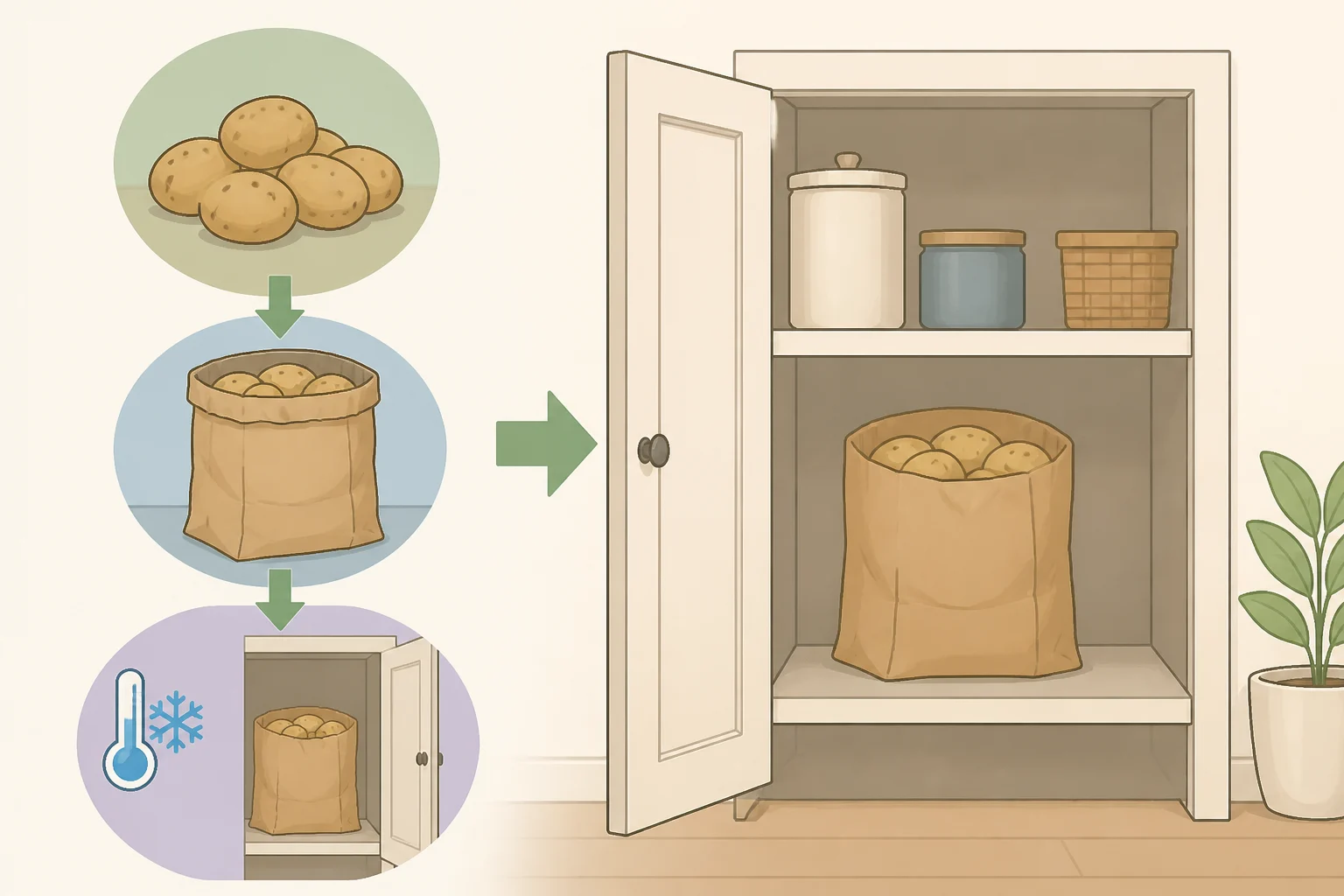
Not everyone has a basement or root cellar, and that's fine for potatoes that will get used within a couple of weeks. A pantry is perfectly safe for shorter-term storage, according to Michigan State University Extension, and Iowa State University Extension likewise notes that potatoes meant to be eaten soon can go straight into a cupboard or pantry in a paper bag. If a few potatoes just need to last a few days, pretty much anywhere cool and ventilated in the house works, including a cabinet or closet, according to University of Arkansas Extension.
A few adjustments make pantry storage work better:
- Still use a paper bag or perforated container, not a sealed one. The airflow rule doesn't change just because the location did.
- Pick the darkest, coolest cabinet available, ideally away from the stove, dishwasher, and refrigerator exhaust. NDSU Agriculture specifically calls out appliance heat as something to avoid.
- Buy only what will get used in a week or two. A pantry can't hold the 45–50°F range a cellar does, so it won't deliver the three-month results that cooler storage can. Treat it as short-term and shop more often instead of stockpiling a big sack.
- Check the bag more often than a cellar stash would need. Room-temperature storage moves toward softening and sprouting faster, so a pantry batch is worth a look every few days rather than a once-a-month glance.
Maintaining stored potatoes and handling sprouts or greening
Setting up the storage spot is most of the work, but the batch still needs periodic attention. Check it regularly, especially before cooking, and pull out anything soft, shriveled, or visibly decaying right away. One bad potato speeds up spoilage in the rest of the batch, according to CSU Extension.
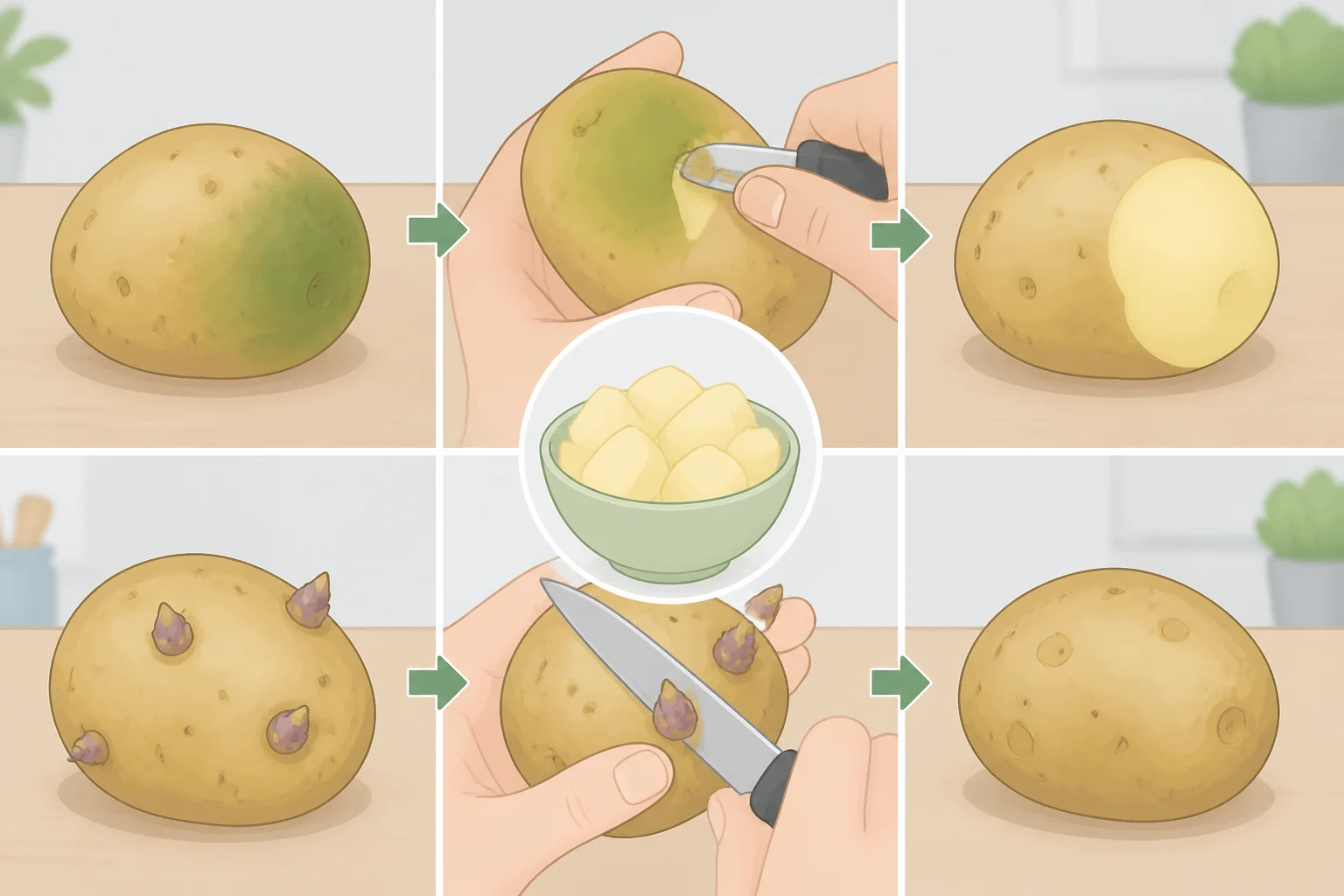
If green coloring shows up on a potato, that's chlorophyll from light exposure, and it signals that a natural toxin called solanine may be forming underneath, according to NDSU Agriculture. For a small, localized patch just under the skin, peel the green away generously, cutting out more than seems strictly necessary, and the rest of the potato is fine to cook, per University of Arkansas Extension.
Discard the potato instead if the green runs deep through the flesh, covers a large area, or there's any doubt about whether it's all been removed. NDSU Agriculture advises never eating tubers that are green beneath the skin, and University of Arkansas Extension's rule is just as direct: when in doubt, throw it out.
Sprouts are a separate issue from greening. Cut small sprouts off before cooking rather than eating them, since sprouts carry the highest concentration of solanine anywhere in the potato, according to NDSU Agriculture. Cutting off a sprout doesn't make a potato safe if it's also bitter, soft, or extensively green; that one still goes in the trash.
One mistake worth avoiding: moving potatoes to the fridge once they start sprouting or softening, as a kind of rescue move. Cold temperatures don't reverse that process. They just add the starch-to-sugar flavor change on top of whatever problem already started, per University of Arkansas Extension.
Using potatoes from storage
Work through the batch oldest-first. At each cooking session, reach for any potato that's started to wrinkle or soften before grabbing a firmer one, since those are losing quality fastest.
Keep the rest of the stash dark, dry, and ventilated, and pull out anything damaged the moment it's noticed rather than waiting for the next check. If the storage spot runs close to normal room temperature, buy in smaller batches instead of trying to stretch a large sack across months it was never going to support.
A potato that's shriveled, soft, bitter, or green through the flesh isn't worth saving with extra trimming or longer cooking. Toss it, keep the rest of the batch moving, and don't worry about hitting an exact humidity number on a hygrometer. Cool, dark, ventilated, and dry will outperform a kitchen counter or a sealed bag in the fridge every time.


Comments
Be the first, drop a comment!