



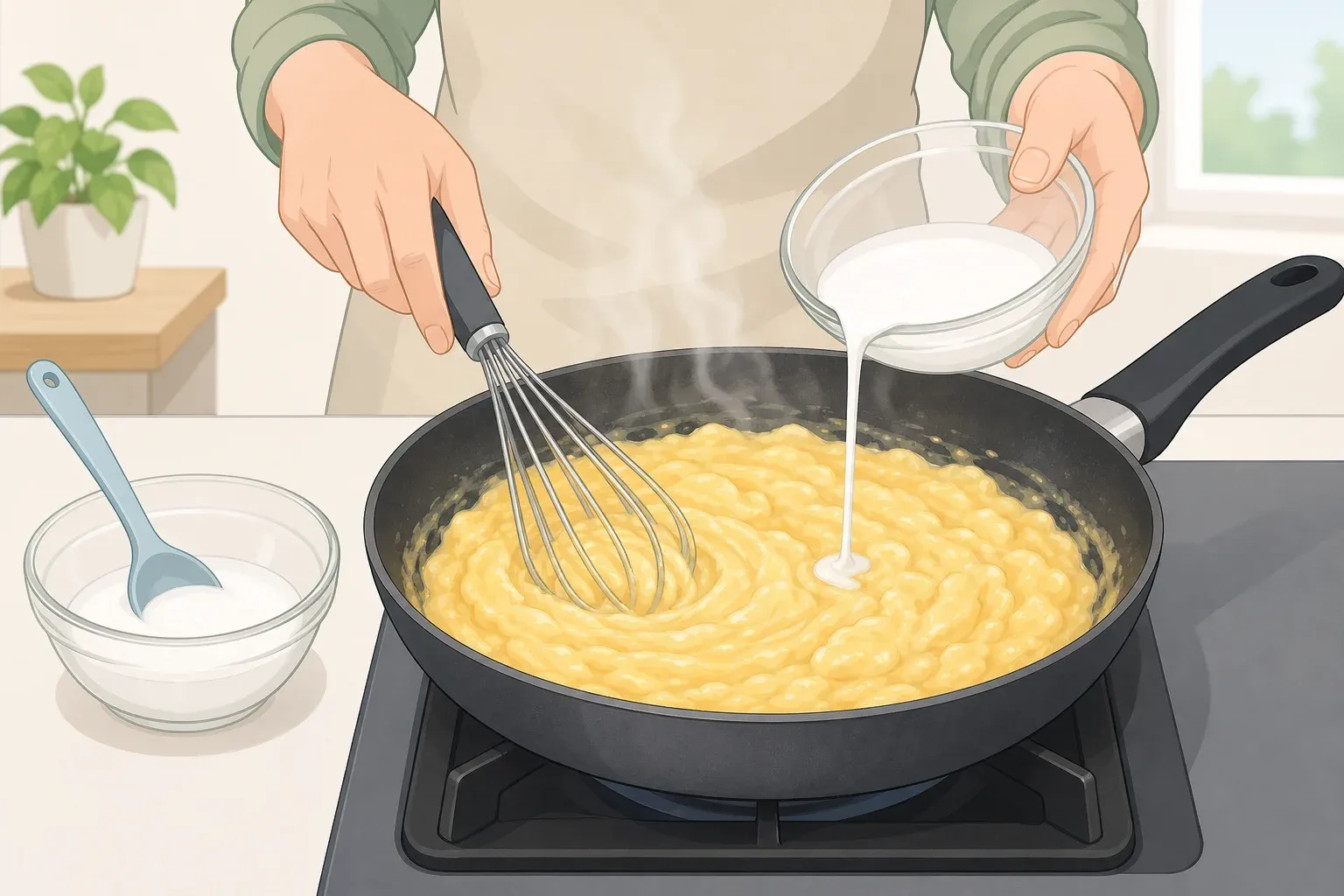
Cornstarch scrambled eggs: a tested potato-starch method
Cornstarch scrambled eggs are a familiar sight on the breakfast counters of Hong Kong's cha chaan tengs, where cooks serve thousands of plates a day and somehow keep every one tender and custardy, never rubbery, according to Serious Eats, which covered the technique two weeks ago. A slurry whisked into the eggs before cooking keeps the proteins from binding too fast, the outlet reports. This guide uses that idea as a starting point but leads with the tested version: potato or tapioca starch whisked into half-and-half, the exact combination the Serious Eats author uses at home to make creamy scrambled eggs. Cornstarch gets its own comparison further down for anyone who wants to stick with the traditional ingredient, but there's no tested ratio for it in the source material, so treat that section as a starting point for experimenting, not a dependable recipe.
The slurry works because of two things happening at once. Added liquid dilutes the egg proteins so they bond more slowly, and once that liquid hits heat, the starch granules gelatinize and physically trap water that would otherwise cook out of the curds, per Serious Eats.
That buys a wider window between just-set and overdone, not a guarantee against overcooking. The source behind this method says it's possible to leave the eggs in the pan an extra minute to butter toast or pour coffee without them turning rubbery. The steps below still flag exactly when to pull the pan off the heat, since that cushion only stretches so far.
What you'll need
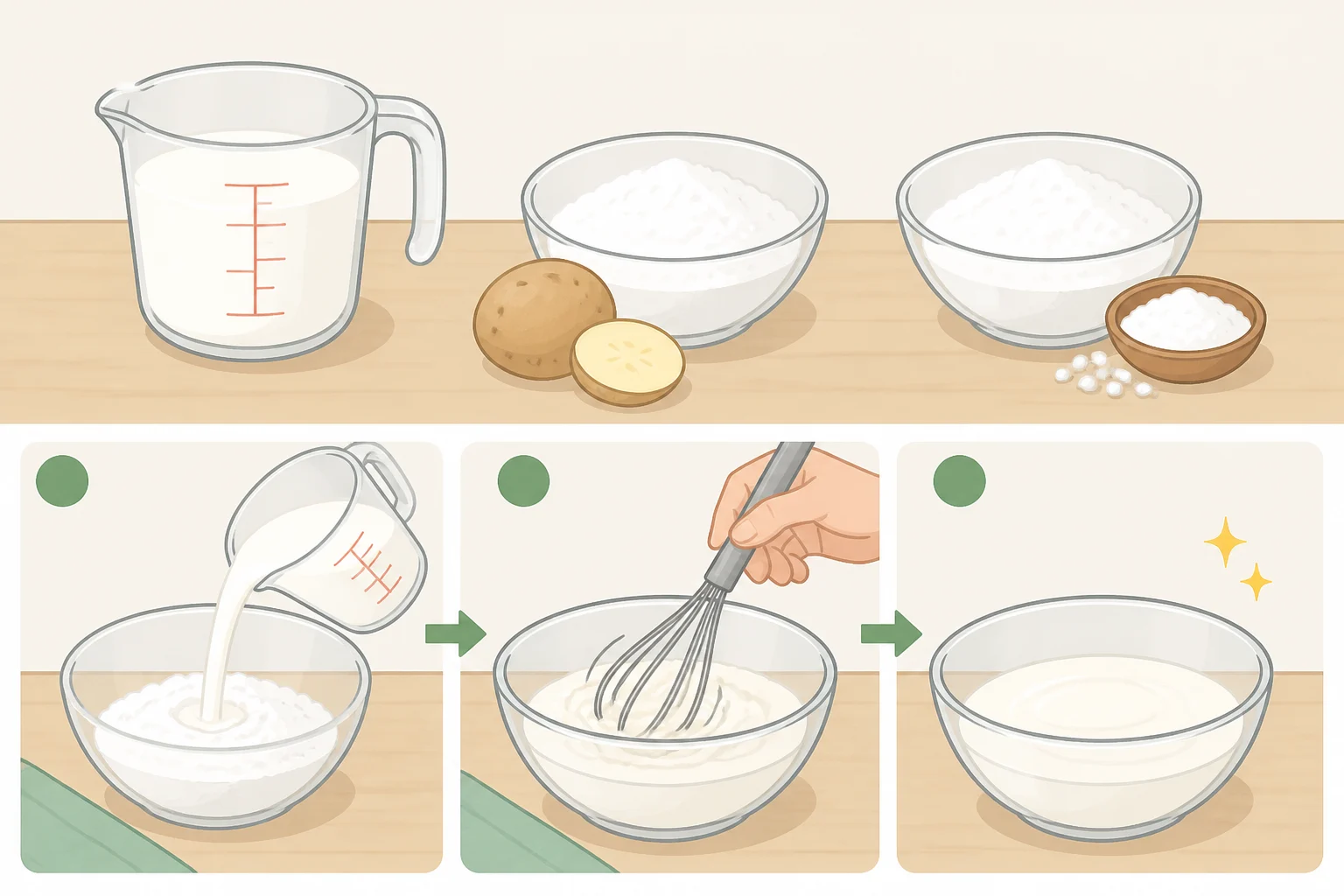
- 3 eggs
- 1/2 teaspoon potato or tapioca starch
- 2 tablespoons half-and-half
- about 1/4 teaspoon salt, or to taste
- butter, for the pan
This makes one hearty serving or two smaller ones. Start to finish takes about 5 minutes, and the technique is beginner-friendly. The only part that needs a careful hand is the slurry, which should be whisked until no lumps remain before it meets the eggs; clumped starch won't distribute evenly and leaves gummy streaks in the finished scramble.
Equipment: a small bowl and whisk for the slurry, a nonstick skillet, and a flexible spatula.
The ratio above, 1/2 teaspoon starch to 2 tablespoons half-and-half for 3 eggs, is exactly what the Serious Eats author uses in their own kitchen. Dairy fat does something starch alone can't: it coats the egg proteins, lowering the risk of a tough or rubbery set, an effect Allrecipes documented last year in milk- and cream-based scrambles. The starch slurry reinforces that fat-coating effect rather than replacing it.
If dairy is off the table, swap the half-and-half for 2 tablespoons water and keep the same 1/2 teaspoon starch. That exact pairing hasn't been tested, so go in with the right expectations. A comparable scramble made with water and no starch at all, 2 tablespoons water for 2 eggs, wept noticeably as it cooked and came out less rich than versions made with milk or cream, Food & Wine found in testing last year. Whether starch narrows that gap is a reasonable guess, not a tested result.
Salt: about 1/4 teaspoon whisked in before cooking, scaled up from the 1/8 teaspoon per 2 eggs used in comparable testing, so treat it as a starting point for taste rather than an exact figure. Salting before cooking keeps egg proteins from tightening too fast, Serious Eats noted earlier this year.
Butter: start with about 1 tablespoon in the pan. Chefs put the useful range at roughly 1/2 tablespoon to 2 teaspoons per egg, Allrecipes reports, which works out closer to 1.5 to 2 tablespoons for three eggs at the top end. Since this recipe already gets richness from half-and-half, starting lighter and adding more only if the eggs stick is the safer call.
Step-by-step method
-
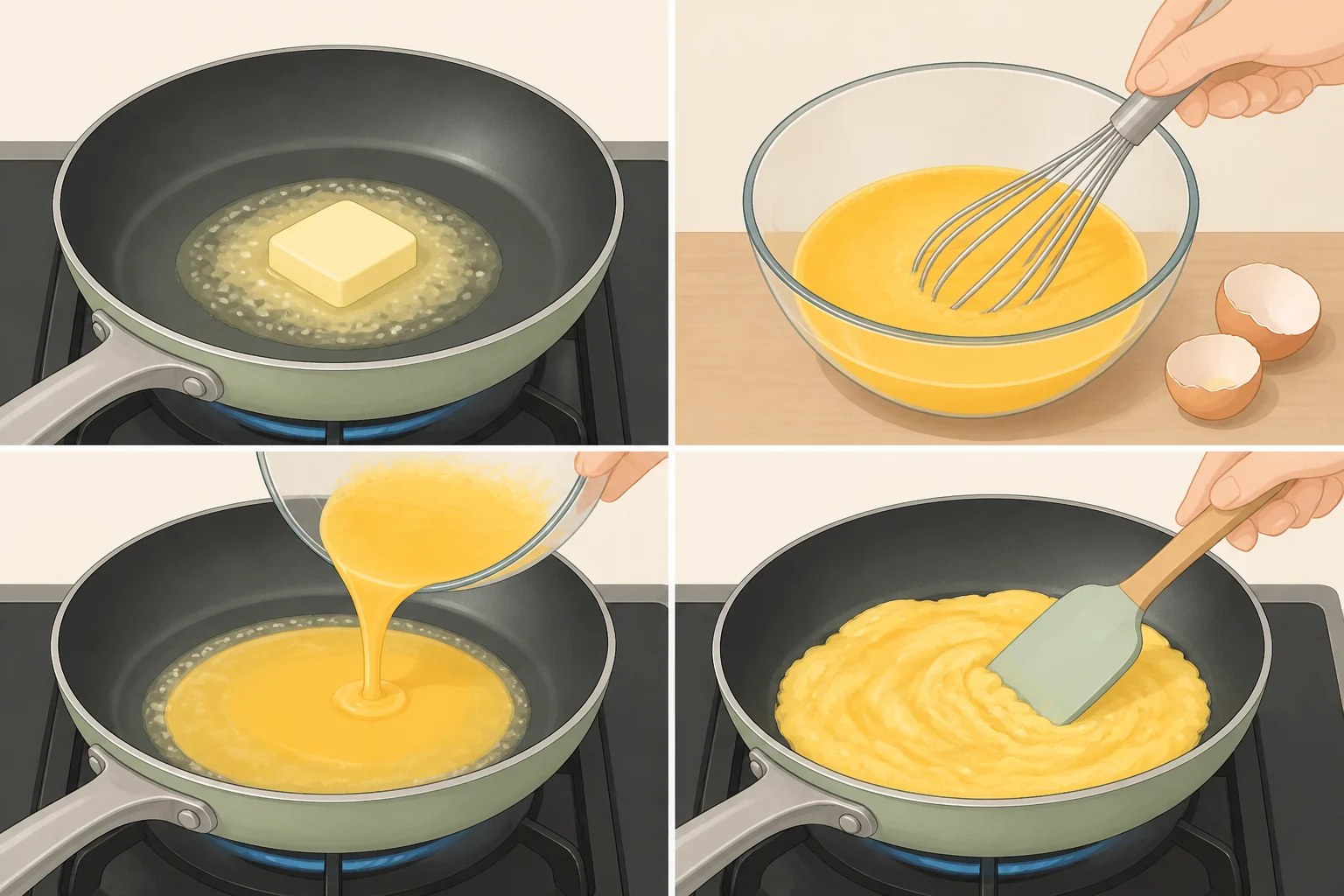
Whisk the slurry first, then combine it with the eggs. Mix the half-and-half and starch in a small bowl until smooth, then whisk that into the cracked eggs along with the salt until the mixture is one uniform color with no streaks of egg white visible.
-
Heat butter in a nonstick skillet over low heat. If the butter sizzles the instant it hits the pan, the heat is too high; pull it back and let the butter melt slowly, a cue Allrecipes flagged as a common mistake. Low heat with constant stirring produced the creamiest, most custard-like curds in side-by-side testing, taking about 2 minutes 40 seconds, Food & Wine reported last year. That timing comes from a milk-based test rather than this starch recipe, but the same low-and-slow principle applies here.
-
Pour in the eggs and start stirring immediately. Use gentle, sweeping motions so the curds stay small instead of letting any section of the pan set undisturbed, as chefs told Allrecipes.
-
Cook until no liquid egg remains, then check the texture. For most readers, the curds should be cohesive with no liquid pooling in the pan; they can still look glossy and moist without being runny. Scrambled eggs need to be cooked until firm throughout, with no visible liquid egg remaining, per American Egg Board guidelines. People who are pregnant, elderly, very young, or have certain medical conditions should cook the eggs further, until they look fully set rather than soft or glossy, since a wetter finish carries more risk for those groups. If the mixture still looks loose or watery, keep cooking; that's a doneness issue separate from how well the starch has gelatinized, which affects texture, not safety.
-
Pull the pan off the heat once curds are moist and shiny with no liquid pooling, then plate right away. Carryover heat finishes the job in the few seconds after the pan leaves the burner, so don't wait for the eggs to look fully dry before pulling them, Food & Wine found in testing last year.
Troubleshooting common mistakes
- Eggs sizzle the moment they hit the pan: the heat is too high. Lower it before the next batch, or drop to a gentler setting mid-cook if it's too late to start over.
- Curds come out large and firm instead of small and creamy: that usually means the pan was too hot or stirring started a beat late, based on Food & Wine and Allrecipes testing last year. Stir the second the eggs hit the butter next time.
- Eggs taste faintly starchy or feel a little gluey: use less starch next time. Don't try to fix the current batch by adding more liquid; that waters down flavor without solving the texture.
- Liquid is pooling in the pan as the eggs cook: if it's still raw egg, keep cooking. If the curds look set but watery liquid has separated out, pull the pan off the heat and expect a slightly less rich result; that's moisture separating from the curds, not a sign of an unsafe batch.
- The dairy-free version came out thin or watery: that can happen, and this water-and-starch variation hasn't been tested here the way the half-and-half version has.
- Actually want big, fluffy diner-style curds instead of creamy ones: this low-and-slow method trades away that result on purpose. A preheated pan over medium heat sets curds faster and bigger, per Food & Wine.
Cornstarch scrambled eggs vs. potato or tapioca starch
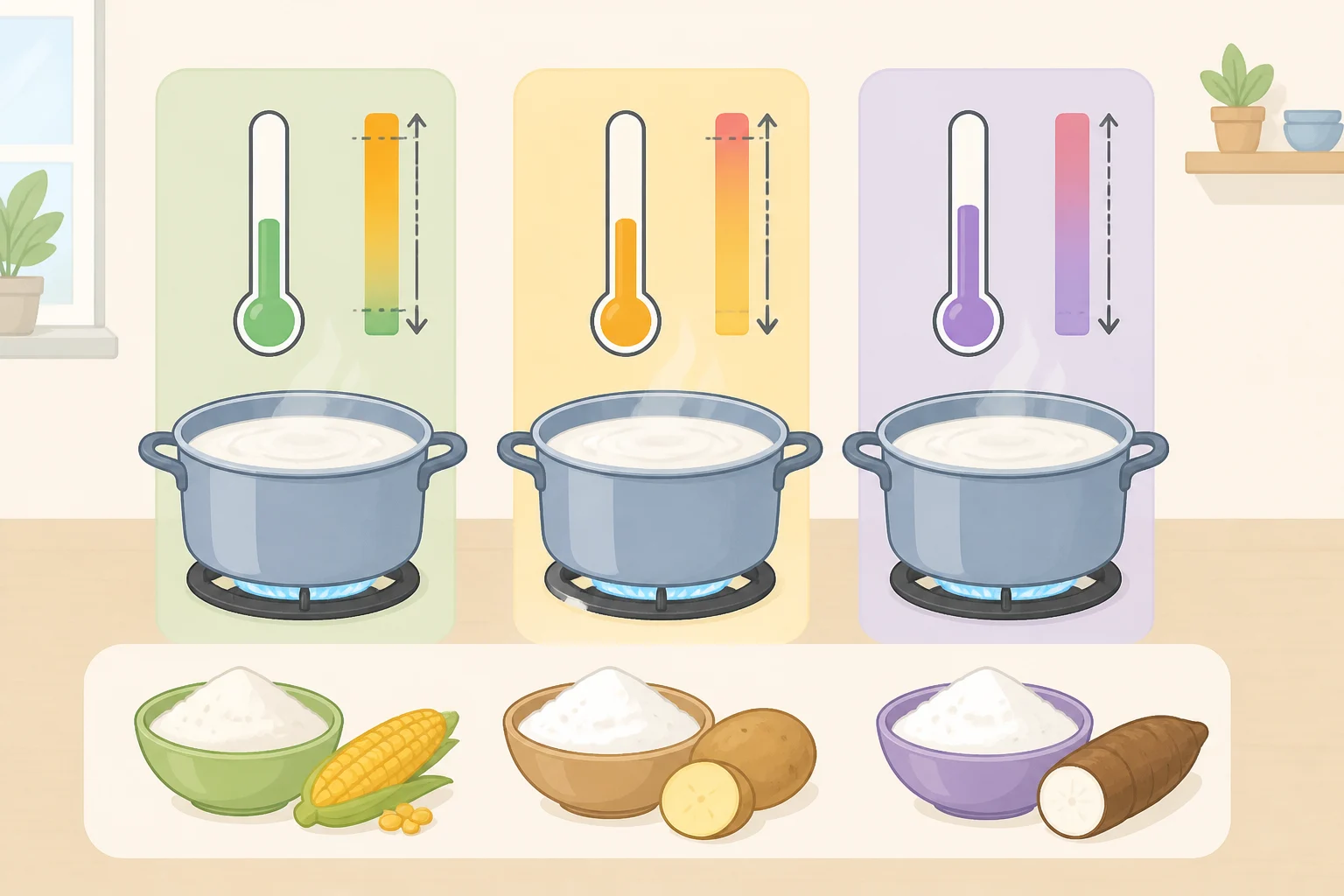
Potato or tapioca starch is the tested choice in this recipe, at 1/2 teaspoon per 3 eggs. The Serious Eats author says potato and tapioca starch produced silkier eggs in their own cooking, crediting the lower gelatinization temperature: tapioca starch gelatinizes around 138 to 149°F, potato starch around 140 to 149°F, and cornstarch runs higher, at 144 to 162°F, per Serious Eats. That's one cook's experience and explanation from their own kitchen, not a result tested across different stoves or brands.
Cornstarch is also a common choice in Hong Kong-style scrambled eggs, with many home cooks there using it as their everyday slurry starch, per Serious Eats. The source doesn't give a tested cornstarch ratio, though, so this guide doesn't treat the potato-starch measurement as a direct cornstarch substitution. Anyone who specifically wants cornstarch scrambled eggs can use this technique as a starting point and test a small batch, knowing the result is unverified. Because cornstarch gelatinizes at a higher temperature, it may need a bit more heat or time to thicken fully than the tested version does, but that's an inference from the temperature gap, not a tested outcome. Watch the pan rather than the clock, and expect to adjust on a second try.
Finish-line guidance
Serve the eggs the moment they come off the heat, while they're still warm and glossy. This texture isn't built for holding, and egg dishes shouldn't sit at room temperature longer than an hour, per American Egg Board guidelines.
Know the stop point: once the curds are cohesive and shiny with no liquid pooling in the pan, they're done for a soft, custardy result. Don't keep cooking for a drier texture if that's not the goal, and don't mistake glossy for underdone; as long as no liquid egg remains, it's cooked through.
If the water-based swap came out thinner than hoped, that's the known tradeoff of skipping dairy fat. A pat of butter stirred in at the end can add back some richness, a technique Allrecipes recommends for scrambled eggs generally, though it hasn't been tested specifically for this water-and-starch version. Try that before reaching for a different ratio entirely.


Comments
Be the first, drop a comment!