




The dense-looking froth on a good homemade butternut squash latte doesn't come from a steam wand. It comes from blending cooked squash straight into hot milk, where the squash fiber thickens the milk and helps it trap air as it's blended, producing a texture close to steamed milk without any espresso equipment. Stirring squash puree into coffee and whisking it afterward is a different move entirely, and it builds lighter surface bubbles instead of that dense feel.
This guide covers both approaches to a butternut squash latte recipe: a blended squash cream that makes enough for several drinks, and a faster single-serving version built around store-bought puree. Delish credits the real squash puree, not canned pumpkin, for a naturally sweet, velvety texture, and says the cardamom, allspice, and pinch of turmeric in its version give the drink more spice depth than a standard pumpkin blend. Butternut squash is also often the actual squash behind canned pumpkin puree, which is part of why it works so well as a fall butternut squash coffee drink in the first place.
Choose the butternut squash latte recipe that fits your morning
Both methods start from the same idea: squash, milk, spices, and coffee. What changes is texture, hands-on time, and equipment. Both are beginner-friendly, and neither requires any skill beyond simmering, straining, and blending or whisking.
Want dense, café-style foam and enough for the week? Make the blended squash cream. It takes about 35 minutes total, makes roughly a quart (4 to 6 drinks), and needs a high-speed or immersion blender.
Want one cup, fast? Make the single-serving puree version. It's ready in about 10 minutes with just a pot, a fine-mesh sieve, and a whisk or handheld frother, no blender required.
The reason the two drinks feel different comes down to what stays in the cup. In the blended method, the squash solids ride along through blending, so the fiber does the work of trapping air the way steamed milk does. In the quick method, those solids get strained out before frothing, so the foam comes from whisking air into plain spiced milk, a lighter, surface-level foam rather than a dense one. Neither beats the other; they're just built for different mornings.
Either method works with espresso, strongly brewed coffee, or regular drip. Serious Eats calls for espresso or strong coffee but notes that regular brewed coffee gives a lighter coffee flavor if that's what you're after. Girls Who Eat confirms both espresso shots and plain black coffee work too.
Method 1: Blend a homemade butternut squash latte for dense, café-style foam
Reach for this version when the dense, blended-in texture is the point. It's beginner-friendly, but it involves about 30 minutes of mostly hands-off simmering plus a hot-liquid blending step, so give it the full 35 minutes instead of rushing.
Before you start: this makes about a quart of hot liquid, so use a large saucepan with a few inches of headroom, and make sure whatever blender you use is rated for hot liquids.
What you'll need
1 lb. diced, peeled butternut squash
1 quart whole milk
1 cinnamon stick
1 star anise
1 tsp. ground ginger
6 cloves
2 cardamom pods
⅛ tsp. nutmeg
¼ cup maple syrup or sugar
Pinch of salt
Espresso or strong coffee, for serving
Makes about 1 quart (4 to 6 drinks). Total time runs roughly 35 minutes: 5 minutes to combine ingredients, about 30 minutes at a bare simmer, then a few minutes to blend and pour. A high-speed blender gives the smoothest, frothiest result, though an immersion blender works fine directly in the pot.
Steps
Combine the squash, milk, cinnamon stick, star anise, ginger, cloves, cardamom, nutmeg, maple syrup or sugar, and salt in a large saucepan. If fishing out whole spices later sounds like a hassle, tie them into a cheesecloth sachet or tea strainer first.
Bring to a simmer over medium heat, then lower the heat to maintain a bare simmer. Cook, stirring and scraping the bottom of the pot often, until the squash is very soft, about 30 minutes. A piece of squash should mash easily against the side of the pot with a spoon; if it resists, give it a few more minutes rather than blending it underdone.
Remove the sachet, or fish the loose whole spices out of the pot.
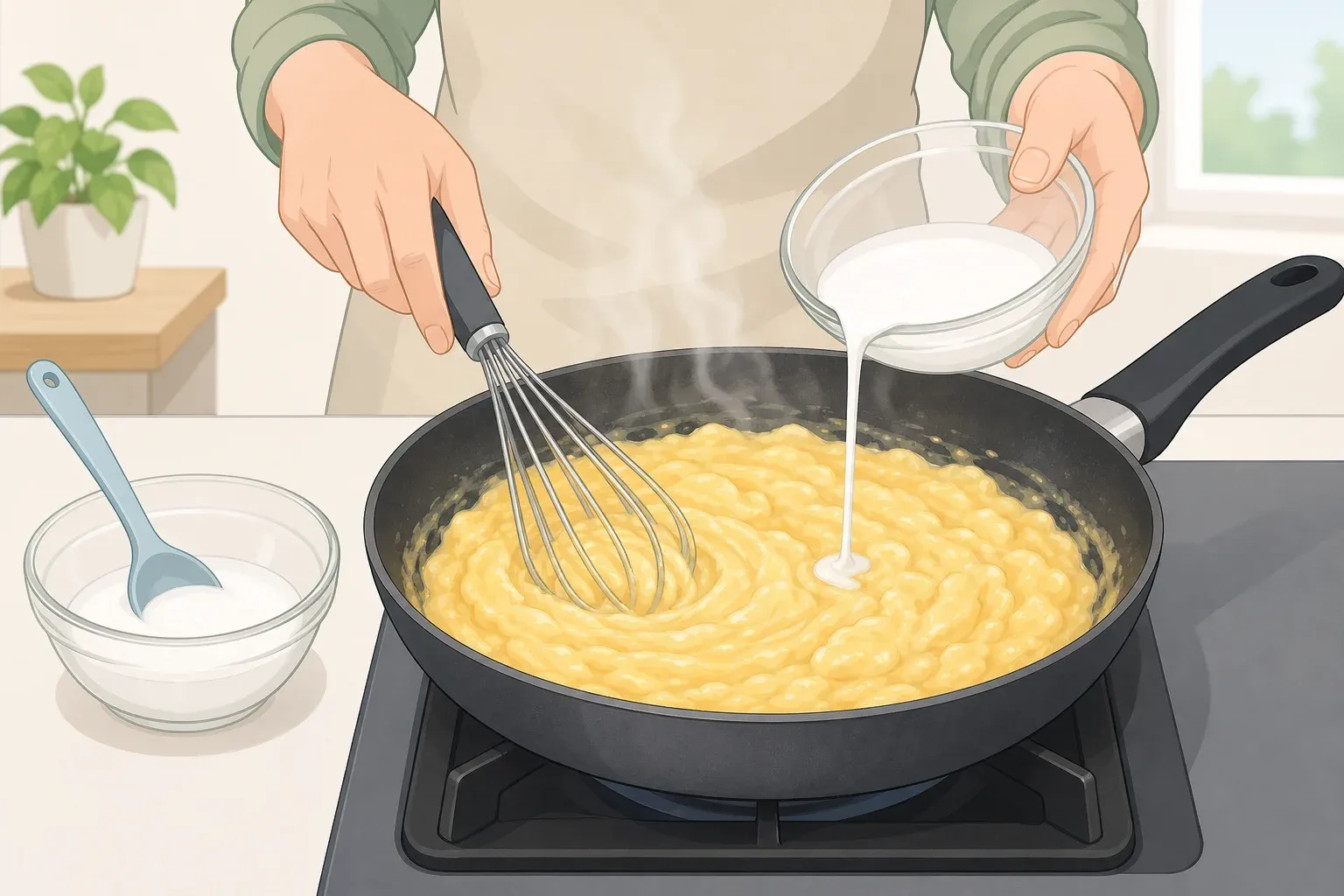
Blend until smooth and frothy. Use only a blender rated for hot liquids and follow its manual; never seal a standard blender container with hot liquid inside, since built-up steam can force the lid off. With an immersion blender, take the pot off the heat first and keep the blade fully submerged to cut down on splashing.
Pour about 1 oz. of espresso or strong coffee into a mug, then top it with 6 to 8 oz. of the hot squash cream for a butternut squash latte with espresso, or use regular brewed coffee for a milder cup.
Success looks like a visibly lifted, airy cream on top, not just a thick one. Small flecks of fiber will still show through since the solids stayed in for blending, and that's expected. It's also why this cream looks a little less glassy than Method 2's strained version.
Let any extra cream cool for a few minutes before covering it, rather than sealing it while it's still steaming, then refrigerate. It keeps up to 5 days; reheat a portion in a small saucepan and re-blend it before serving to bring the froth back.
Method 2: An easy butternut squash latte in 10 minutes
This version simmers puree with milk and spices, then strains the solids out before frothing, so expect a lighter surface foam than Method 1's dense cream. Use plain butternut squash puree here rather than a spiced pie filling, so the sugar and spice levels stay yours to adjust.
What you'll need
6 oz. whole milk
2 tbsp. store-bought butternut squash puree
1 cardamom pod
1 tsp. allspice berries
⅛ tsp. ground turmeric
1 tbsp. light brown sugar
Pinch of kosher salt
1½ oz. espresso or 2 oz. strong coffee
Cinnamon stick, for garnish
The published ingredient list calls for 6 ounces of whole milk. Delish's intro separately mentions steaming coconut milk with the squash puree, spices, and brown sugar for what it describes as a silky, lightly tropical spin. This guide follows the listed ingredients and treats coconut milk as an untested swap if you want to try it.
Makes 1 serving. Delish lists 10 minutes total, which already folds in the 5-minute steep after simmering rather than adding to it. You'll need a medium pot, a fine-mesh sieve, and a whisk or handheld frother.
Steps
In a medium pot over medium heat, bring the milk, cardamom, squash puree, brown sugar, and allspice to a simmer. Remove from heat and let it sit for 5 minutes.
Strain through a fine-mesh sieve into a small bowl and discard the solids. Strain until no spice fragments remain before moving on.
Froth with a whisk or handheld frother until the surface looks visibly foamy.
Pour the espresso or coffee into a mug, stir in the salt, top with the frothed milk, sprinkle with turmeric, and garnish with a cinnamon stick.
Taste before adding extra brown sugar. Start with the amount listed and adjust from there rather than doubling up right away.
Adjusting the spice mix for a butternut squash spice latte
Method 2's spice mix comes from a recipe approved by the Delish Test Kitchen, while Method 1's cardamom, star anise, ginger, cloves, and nutmeg mix is Serious Eats' own recipe formula. Neither is built to be swapped one-to-one for a pre-mixed pumpkin-pie spice blend. If you'd rather use a pumpkin-pie blend instead of measuring individual spices, treat it as an untested swap: use it in place of the recipe's spices, not on top of them, start with a small pinch, and taste before adding more.
Dairy-free version: Girls Who Eat skips the simmer-and-strain process entirely in favor of a no-strain assembly. Combine ¾ cup plant milk, ¼ cup frozen butternut squash (cooked, then pureed), and 1 tbsp. maple syrup with your coffee, topped with cinnamon if you like. Cook the frozen squash until it's soft enough to puree without lumps; the recipe doesn't specify a method or time, so judge by texture instead. Frothing performance varies by plant milk brand, and that variation hasn't been tested here, so treat it as something to try rather than a guaranteed result.
Adjustments and troubleshooting
Not frothy enough: For Method 1, blend longer or switch to a high-speed blender, which gives the frothiest result. For Method 2, extra whisking helps a little, but it won't reach the density of the blended version since the fiber's already strained out.
Gritty texture: Check the likely culprits: a whole spice that slipped past the sieve (Method 2), a spice that wasn't fished out before blending (Method 1), or puree that didn't fully break down. Look in the sieve or the bottom of the pot first, and strain or blend again if you find leftover bits.
Too sweet or not sweet enough: Adjust the brown sugar or maple syrup a teaspoon at a time and taste before adding more, rather than doubling up all at once.
Milk looks scorched or has a skin on top: The heat ran too high. Both recipes call for a bare simmer, not a rolling boil, and Method 1 needs frequent stirring and scraping of the pot bottom as it cooks. Lower the heat and stir more often next time.
No fresh squash on hand: Method 2 is already built around store-bought puree, so just use what the recipe calls for. For Method 1, canned puree hasn't been tested in place of diced fresh squash, so if you substitute it, start with a small batch and check the texture before committing a full quart of milk.
Finishing the cup
Drink the finished latte right away, while it's hot and the foam is freshest. If you made Method 1's larger batch, keep the extra refrigerated in a covered container, and when the craving hits again, reheat a portion gently in a small saucepan and re-blend it briefly to bring the froth back before pouring it over fresh espresso or coffee. Method 2 doesn't leave anything to store since it's built for one cup; simmer a fresh batch next time instead. Either way, pour the frothed milk over the coffee last rather than stirring it in, so more of that foam stays sitting on top for the first sip.












Comments
Be the first, drop a comment!