



Creamy pasta salad without mayo: the warm-pasta method that actually works
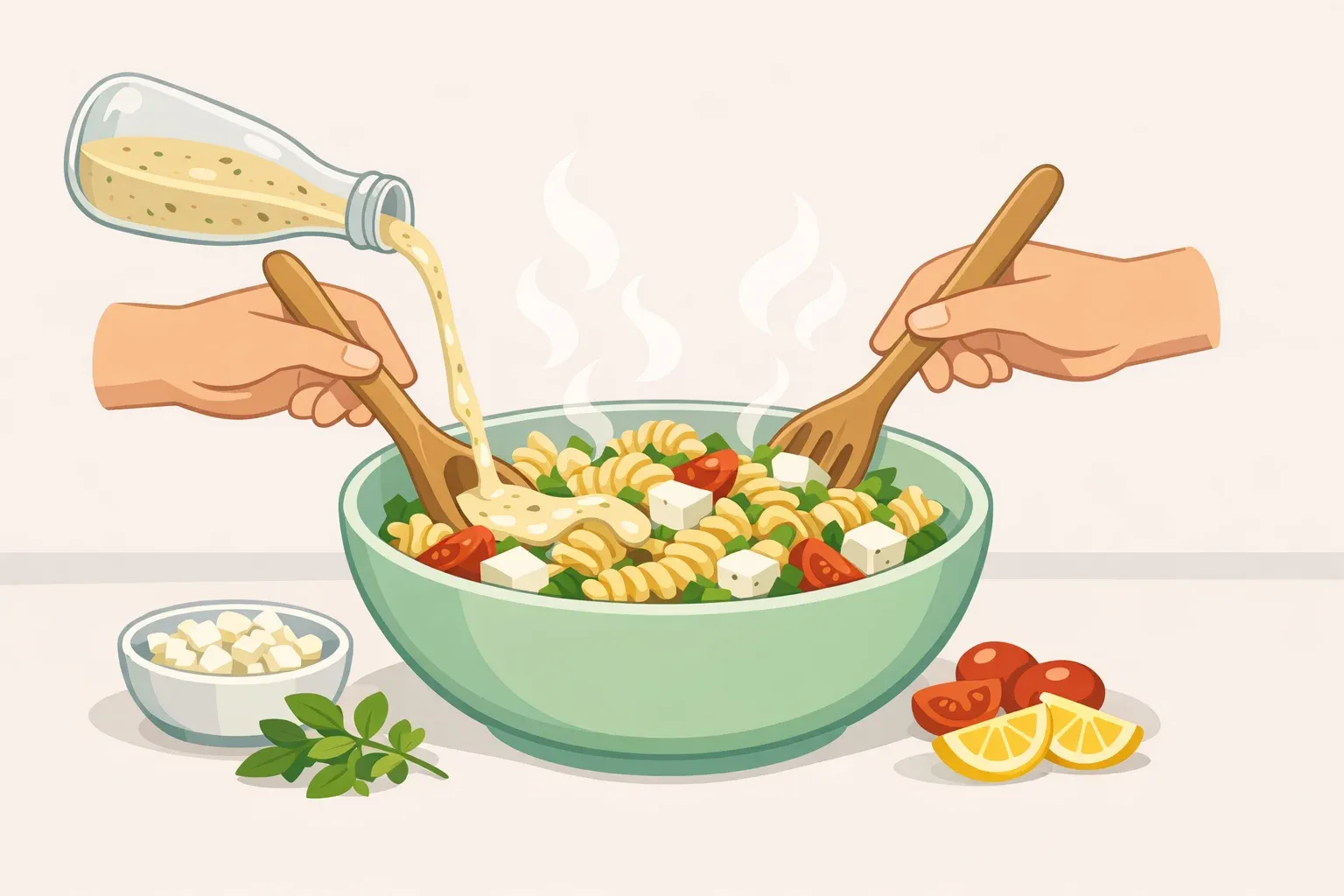
Making a creamy pasta salad without mayo starts with understanding why most versions fall flat. The dressing coats the outside of the noodles, then pools at the bottom of the bowl. Oily on the surface, bland in the middle, underwhelming cold. The fix is a single technique: toss the pasta with part of the dressing while it's still warm, so it absorbs flavor as it cools. No special equipment, no extra cost.
This guide covers the baseline method for a Greek pasta salad with feta, bright, briny, and fully seasoned throughout, plus two coating-style alternatives: a Greek yogurt-dill dressing and a blended avocado version. Each solves a different problem. The guide tells you which one fits your situation before you start cooking.
By the end, you'll have a salad that holds up for days and works equally well for lunch meal prep, a picnic, or a potluck.
Prerequisites: A large pot, rimmed baking sheet, and large mixing bowl. Budget 45 to 60 minutes including cooling and resting time. The avocado variation requires a blender; the yogurt variation requires a food processor or blender.
Step 1: Choose your dressing this determines everything else
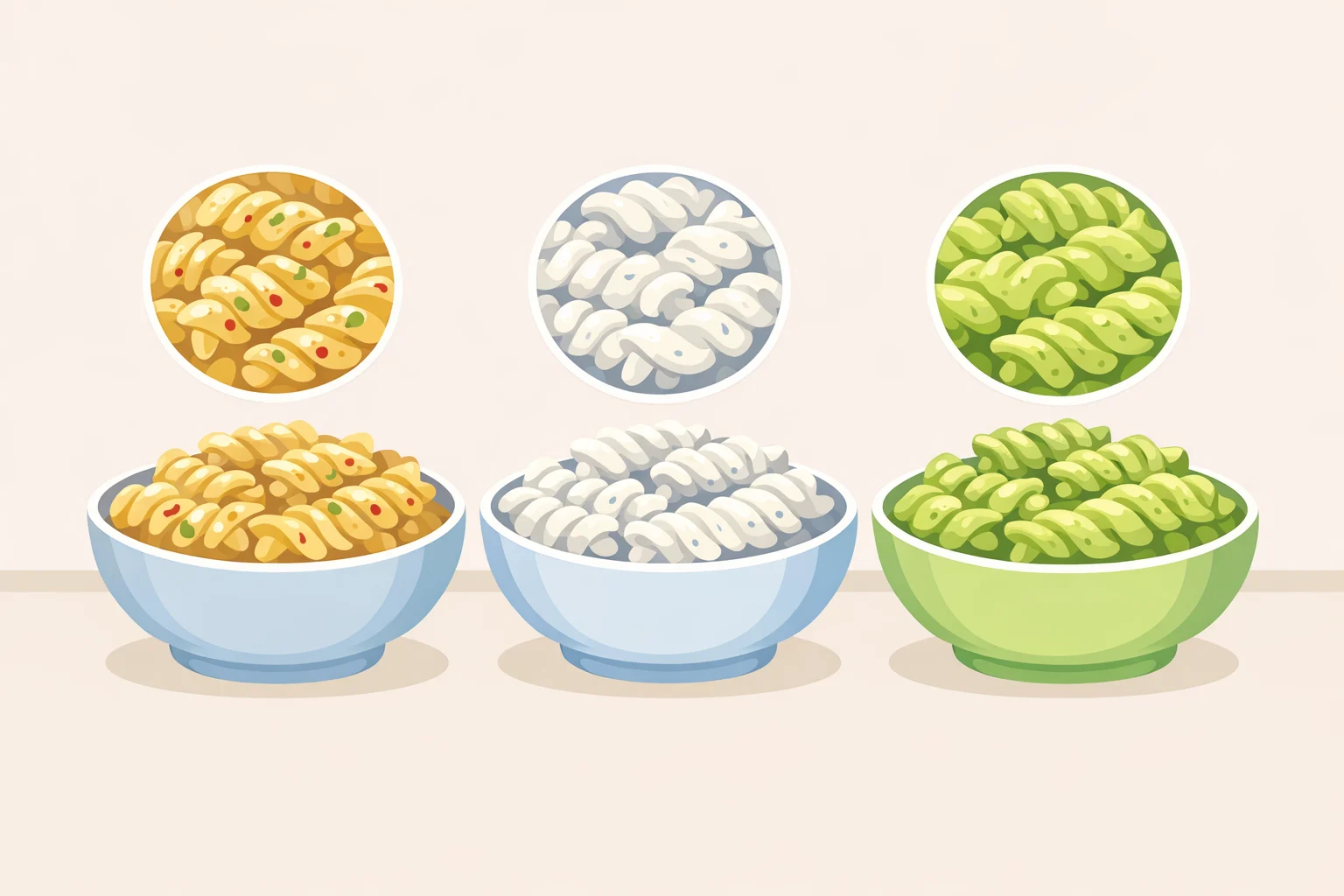
Make this decision before you boil water. The pasta technique, doneness, cooling method, timing, follows directly from what you're dressing it with. Absorbed dressings give deeper, distributed seasoning; coating dressings give more obvious creaminess on the surface. Different results, different use cases.
Vinaigrette + block feta is the baseline method in this guide. It produces rich, briny pockets of creaminess from the feta rather than a uniform coating, and it's the most forgiving to make ahead. Cook pasta past al dente; dress it warm.
Greek yogurt-dill dressing produces a tangier, coating-style creaminess closer to what a mayo dressing does. Use it when someone at the table genuinely dislikes vinaigrette-based salads. Cook pasta to al dente; rinse immediately.
Blended avocado dressing is fully vegan and produces the richest coating texture of the three. Use it when you need a dairy-free option, but plan around its short shelf life. Cook pasta to al dente; rinse immediately; blend the dressing the day of serving.
For all three methods, use short ridged or spiral pasta. The Plant Based School confirms that fusilli, rotini, and elbows trap dressing in their grooves more effectively than smooth shapes. Simply Recipes tested rotini as the strongest all-purpose choice and found that lentil-based rotini held its texture well after several hours in the refrigerator, worth noting for gluten-free cooks.
| Vinaigrette + feta | Yogurt-dill | Avocado | |
|---|---|---|---|
| Texture | Pockets of richness | Coating | Coating |
| Pasta handling | Warm, past al dente | Cold-rinsed, al dente | Cold-rinsed, al dente |
| Best use case | Potluck, meal prep, picnic | Make-ahead lunch, gathering | Vegan dinner, same-day serving |
| Storage | 4 days | 3 days | 2 days; never freeze |
Storage limits sourced from Serious Eats, The Plant Based School, and Salted Side respectively.
Step 2: How to make creamy pasta salad without mayo the baseline method
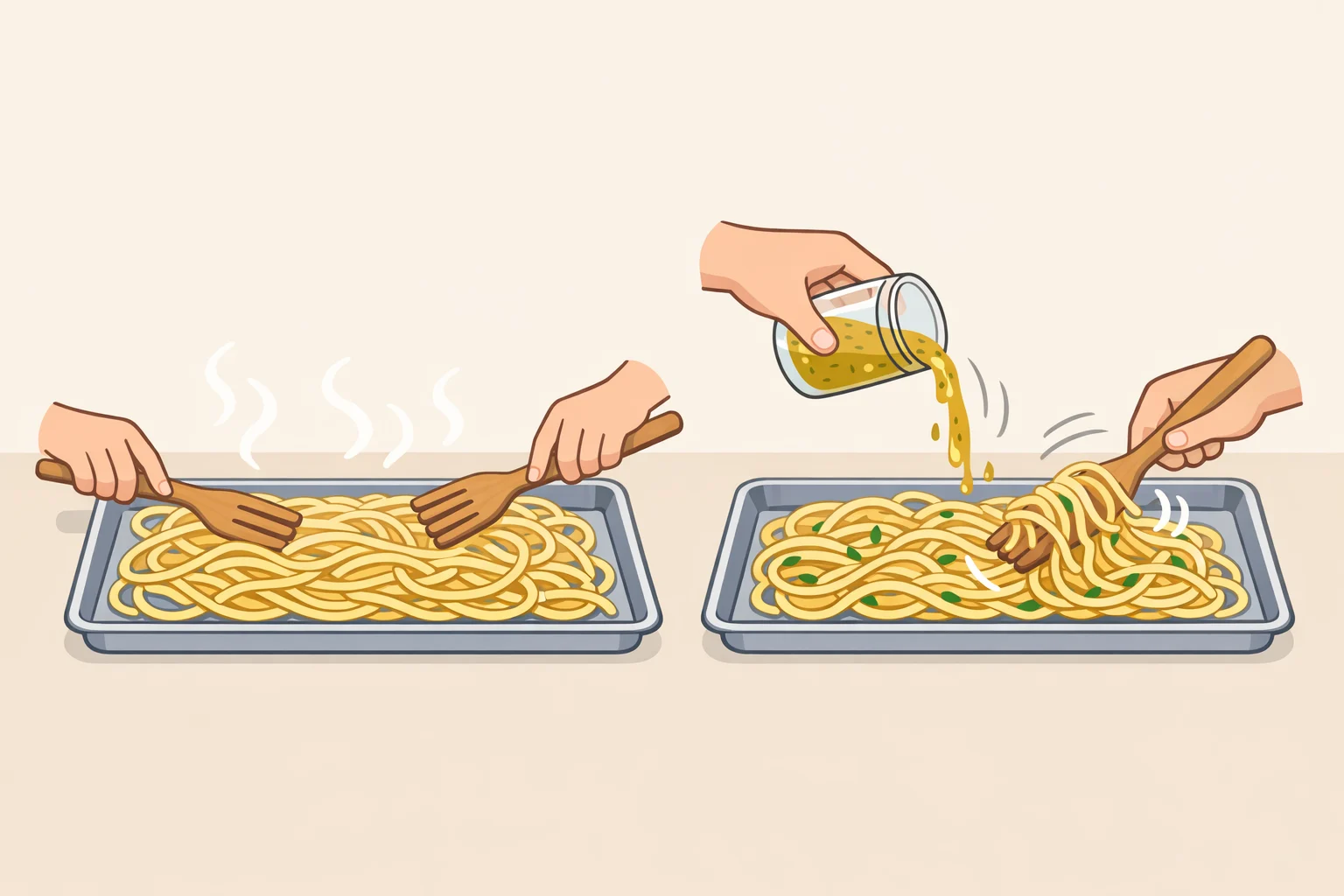
The vinaigrette comes together in about two minutes. Make it first, while the water heats, because the pasta needs to go straight from pot to sheet pan to dressing without delay.
1. Make the dressing. Whisk together ¾ cup extra-virgin olive oil, ¼ cup red wine vinegar, 3 tablespoons fresh lemon juice, 1 teaspoon Dijon mustard, ½ teaspoon honey, 1 grated garlic clove, 2 teaspoons dried oregano, 1½ teaspoons kosher salt, and 1 teaspoon black pepper until fully combined. The Dijon acts as an emulsifier, holding oil and acid together; without it, the dressing breaks and coats unevenly. This combination was developed by Serious Eats this month, and the dressing keeps up to four days refrigerated if you want to prep ahead.
Divide the dressing into two portions before using: roughly half for the warm pasta, the rest reserved for the assembled salad.
Gotcha: Hold that second portion back. The pasta absorbs aggressively as it cools, and again overnight. Dress everything at once and there's nothing left to refresh the finished salad the next-day version will taste noticeably dry.
2. Cook pasta past al dente. Salt the water heavily; this is the only opportunity to season the pasta itself. Cook 1 pound short pasta approximately 2 minutes beyond the package's al dente time, per Serious Eats. Slightly softer pasta is more porous and pulls in dressing as it cools; firm pasta repels it.
3. Dress the pasta warm. Drain and transfer to a rimmed baking sheet. Immediately toss with ½ cup of the prepared dressing. Spread flat and let cool about 15 minutes, per Serious Eats. The flat spread prevents clumping and maximizes surface contact; Butter & Baggage independently recommends this step for the same reason.
Gotcha: Do not rinse the pasta for this method. Rinsing removes the surface starch that helps dressing cling, and it cools the pasta before it can absorb anything.
Step 3: Prepare the vegetables
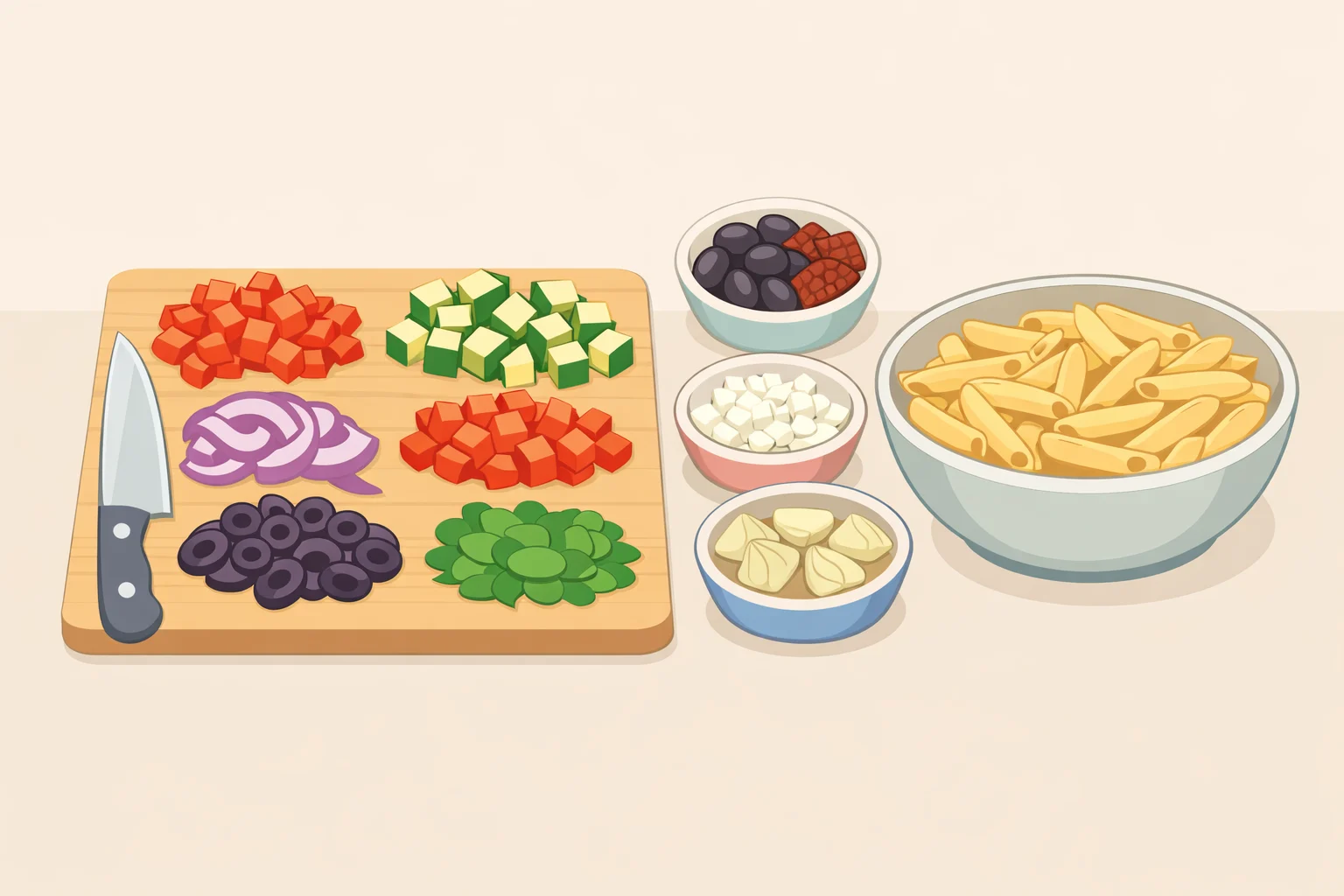
The Mediterranean ingredient set here isn't arbitrary. Tomatoes, cucumbers, olives, feta, lemon, and dill collectively deliver the acid, salt, brine, freshness, and richness that mayo would otherwise supply in a single ingredient. Strip out one or two and the flavor logic starts to unravel.
Core ingredients for the baseline:
- Cherry tomatoes, halved fresh acidity
- Persian cucumbers, chopped crunch and cooling contrast
- Mixed Greek olives, halved fat and brine
- Drained pepperoncini tartness and mild heat
- Pickled red onions sharpness that fresh onion doesn't provide as cleanly
- Block feta packed in brine, generously crumbled the primary source of richness; pre-crumbled feta is drier and chalkier, which undercuts the whole point
- Fresh dill the herb that ties the Mediterranean character together
Serious Eats uses all of the above. Simply Recipes adds red bell pepper for sweetness and soaks raw red onion in cold, lightly salted water for 10 minutes before adding it. That soak keeps the onion crisp while mellowing its bite; skip it and the onion can overwhelm everything else in the bowl.
Pat all vegetables dry before combining. Surface moisture dilutes the dressing progressively. It doesn't happen all at once, but the cumulative effect after refrigeration is noticeable. Thirty seconds with a paper towel handles it, per Butter & Baggage.
Step 4: Combine, rest, and taste
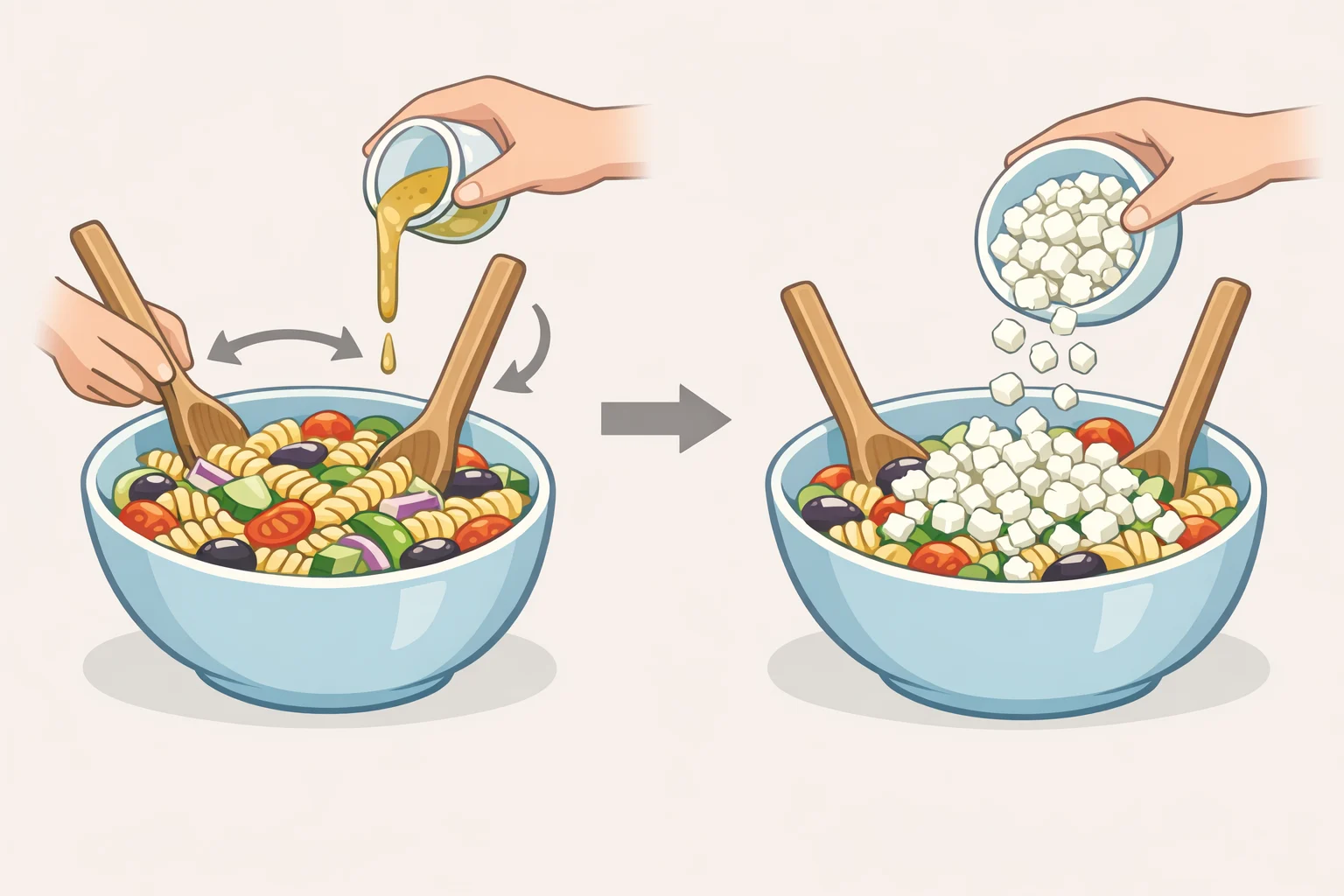
4. Assemble the salad. Transfer the cooled, dressed pasta from the sheet to a large bowl. Add the vegetables, olives, pepperoncini, pickled onions, and dill. Pour the reserved second portion of dressing over everything and toss. Fold the feta in last; added at the end, it stays in distinct crumbles rather than dissolving into the dressing.
5. Refrigerate for at least 30 minutes before serving. Serious Eats frames this rest as the step that lets the flavors meld. The salad eaten immediately tastes assembled; the salad after 30 minutes tastes made.
6. Taste and adjust. After resting: if it tastes flat, add a squeeze of fresh lemon. If it tastes sharp, add a small drizzle of olive oil. If the dressing has absorbed and the salad feels dry, reach for the reserved portion. Scatter fresh dill on top before serving.
The yogurt and avocado variations: mayo-free pasta salad with coating-style creaminess
Both alternatives use cooled, rinsed pasta, not warm, because thick dressings coat the surface rather than penetrating it. Warm pasta would thin them out and produce a watery result.
Yogurt-dill dressing is best for anyone who wants genuine creamy coating, make-ahead gatherings, or a table that dislikes vinaigrette.
Blend 16 oz plain Greek yogurt, ¼ cup olive oil, 1 tablespoon fresh dill, 1 tablespoon lemon juice, 3 minced garlic cloves, salt, and pepper until smooth. Refrigerate until use. Butter & Baggage uses this as its primary dressing and notes the salad gets better as it chills, up to 24 hours of refrigeration. The dressing distributes more evenly as it loosens in the cold. Keeps up to 3 days airtight, per The Plant Based School. Add artichoke hearts, sun-dried tomatoes, cucumbers, olives, and feta as the core add-ins.
Blended avocado dressing is best for vegan eaters, same-day serving, and anyone who wants richness without dairy.
Blend 2 ripe avocados, 7 oz water, 2 garlic cloves, 2 tablespoons prepared horseradish, 2 teaspoons fresh dill, 1 tablespoon lemon juice, salt, and pepper until smooth and pourable, 30 to 60 seconds, scraping down as needed, per Salted Side. Blend the day of serving. Keeps up to 2 days refrigerated; do not freeze, as avocado turns watery and grainy after thawing. For potlucks, transport the dressing in a jar and toss on arrival. A drained 14-ounce can of chickpeas adds substance without competing with the dressing.
Gotcha on horseradish: Add half first, blend, then taste before adding the rest. Heat levels vary significantly by brand. Dijon mustard is a clean substitute if you don't have it, per Salted Side.
These variations aren't limited to Mediterranean ingredients. The same technique, cooled pasta with a thick coating dressing, applies to any combination you want to build.
Make-ahead, storage, and serving
The night-before workflow (all three methods): Cook and cool the pasta, chop the vegetables, and make the vinaigrette or yogurt dressing. Store components separately. Simply Recipes specifically recommends this split-prep approach; it keeps vegetables from weeping into the pasta overnight and produces a fresher result at assembly. For the avocado version, hold off on blending the dressing until the day of serving.
Storage limits by method:
- Vinaigrette + feta: up to 4 days, airtight (Serious Eats)
- Yogurt-dill: up to 3 days, airtight (The Plant Based School)
- Avocado: up to 2 days; never freeze (Salted Side)
For outdoor serving: Oregon State University Extension advises refrigerating pasta salad within 2 hours of serving. Keep the bowl on ice if it's sitting out for any extended stretch.
Which method to use
The choice comes down to one practical question: when is the salad being eaten, and by whom?
For meal prep, the vinaigrette and feta version is the clear answer, four days of storage, no texture degradation, holds up outdoors. For same-day serving at a gathering where someone expects a creamy salad, the yogurt-dill version delivers that coating-style richness without mayo and improves the longer it sits. For a vegan table or a dinner where you want something richer and more unusual, the avocado version works well; just blend the dressing the day of and keep it cold until you're ready.
The warm-absorption principle extends beyond this recipe. Any grain salad dressed with a lean vinaigrette, farro, orzo, freekeh, benefits from the same technique. The base changes; the method doesn't.



Comments
Be the first, drop a comment!