



2 ingredient egg tortilla recipe: steps, tips, and troubleshooting
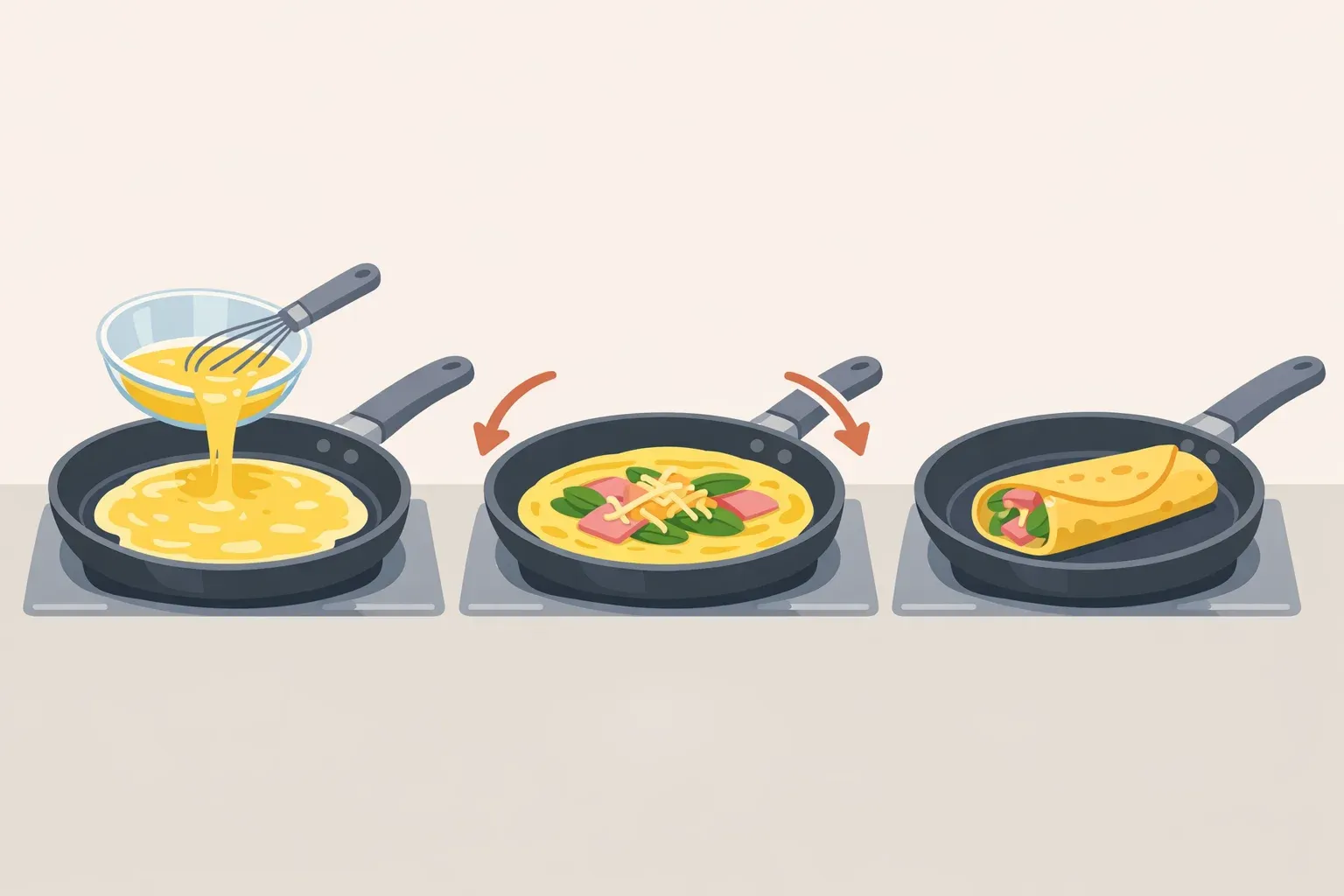
A 2 ingredient egg tortilla is exactly what it sounds like: two eggs, a little butter, and a hot nonstick pan. What comes out is a pliable egg sheet that folds around fillings without tearing. Not a flour tortilla substitute for every application, but a genuinely useful breakfast wrap when you understand what it can and can't do.
Two things determine whether this works. The eggs need to be whisked until fully uniform before they hit the pan, and heat needs to stay moderate throughout. Serious Eats specifies both in their egg preparation method: whisk until homogenous with no visible egg whites remaining, then cook in butter over medium heat in a nonstick skillet. Those principles transfer directly to the thin-sheet method. The rest, the spread, the timing cues, when to pull it off heat, comes from working the technique until the results are consistent.
Wet fillings will compromise it. Heavy fillings will split it. Once it cools, folding cleanly becomes difficult. Cook it, fill it, eat it.
Before you cook: what this easy egg tortilla recipe works for
You'll need:
- A nonstick skillet (a smaller pan is easier for beginners, more on this below)
- A rubber spatula
- A bowl for whisking
The two ingredients:
- 2 large eggs per tortilla
- Butter to coat the pan
Salt is optional. No cornstarch, no cream cheese, no additives needed for a first attempt.
What this wrap handles well:
- Shredded cheese, sliced avocado, a spoon of sour cream or guacamole, low-moisture fillings that stay put
- Thin slices of cooked meat
- A light fold, like a soft taco or a modest rolled wrap
What it doesn't handle:
- High-heat applications, pressing it on a griddle will destroy it
- Wet fillings, anything releasing liquid softens the wrap and causes tearing
- Heavy loads, overfilling is a reliable way to split the sheet at the fold
- Make-ahead use, structure degrades as it cools
Knowing this before you start eliminates most of the frustration people run into on a first attempt.
Step-by-step: making the 2 ingredient egg tortilla
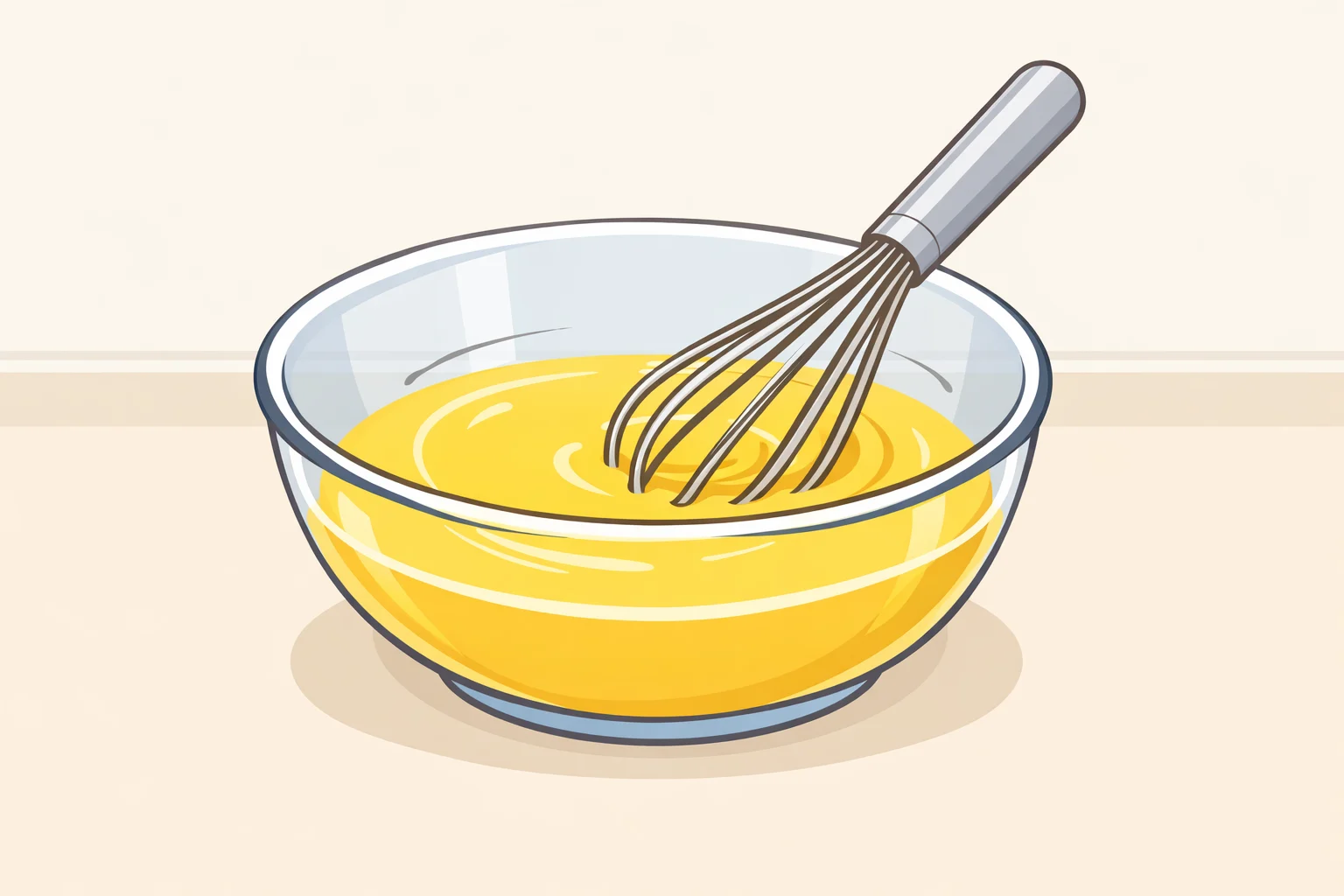
Step 1: Whisk the eggs until completely uniform.
Crack 2 large eggs into a bowl. Whisk briskly until the mixture is uniform, slightly foamy, and shows no streaks of white or separation between yolk and white. Serious Eats specifies this exact standard, no visible egg whites remaining, because under-whisked eggs produce an uneven mixture. In a thin sheet, that unevenness shows up as weak spots that tear when folded.
What you should see: A uniform, lightly foamy liquid with no visible texture variation.
Step 2: Heat the pan to medium and melt the butter fully.
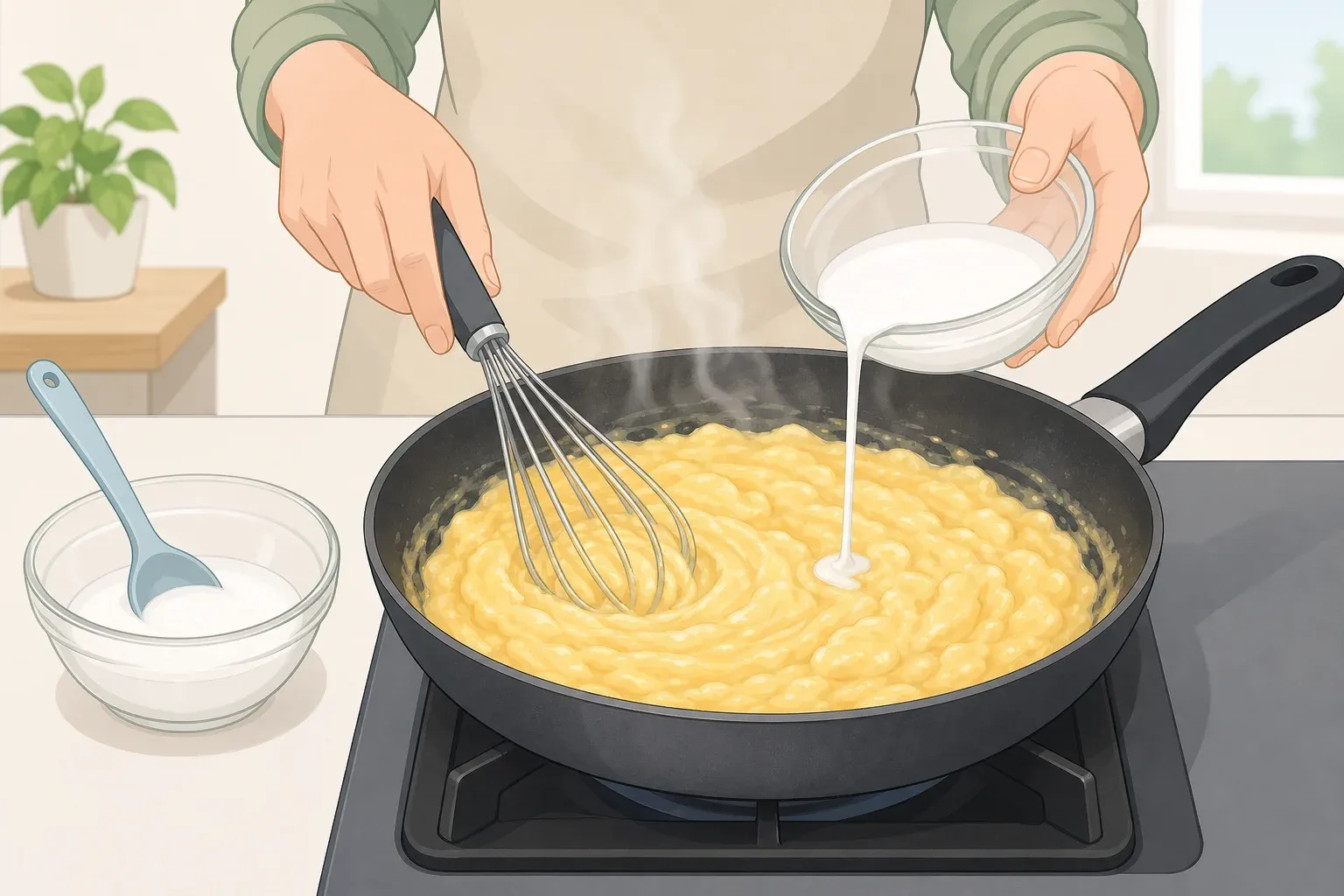
Set your nonstick skillet over medium heat. Add butter and wait until it melts completely and the foaming subsides. That foam-stopping point is your signal that the pan is ready. Don't rush it with higher heat.
Watch for this: A pan that's too hot sets the egg edges before the center has spread, giving you a disc with thick spots at the rim. Those areas crack when you fold. Medium heat isn't a preference, it's what keeps the egg pliable. Serious Eats melts butter over medium heat specifically to produce a soft, workable egg texture.
Step 3: Pour and spread immediately.
Pour the whisked eggs into the center of the pan. Use the back of a spoon or a quick wrist tilt to spread them into a thin, even circle. The edges begin to set fast, so move deliberately and push any thick spots outward toward the rim.
What you should see: A disc that fills most of the pan. Edges will begin to turn from glossy to matte within the first minute. The center will still look wet.
Step 4: Cook until just set, then stop.
Leave the egg sheet undisturbed and watch the surface transition from glossy to matte. A slightly glossy center is fine. Slide the spatula under one edge to check the bottom: pale gold is correct. Any browning means the heat is too high.
Pull it from the heat when the surface looks set. Do not flip. The top finishes from residual heat over the next several seconds off the burner.
Overcooking is where most attempts fail. Even a short stretch past done produces a stiff sheet that cracks the moment you try to fold it. Pull it earlier than instinct suggests.
Step 5: Fill and fold while the wrap is still warm.
Slide the egg sheet onto a flat surface. Add fillings to the center, leaving a border on each side and a wider border at the bottom. Serious Eats specifies roughly 2 inches of border on either side and 3 inches above and below when assembling fillings on a tortilla, and those proportions translate well here. Fold the sides in first, then roll from the bottom while keeping the sides tucked.
Serve immediately.
Texture control: pan size and heat
Pan size is the variable most people overlook. A smaller pan produces a thicker, sturdier wrap with more structural integrity. A larger pan spreads the same two eggs thinner, giving you more surface area but a more fragile sheet, especially at the edges. Start smaller and move up once the timing feels reliable.
The spread in Step 3 is the most consequential moment of the whole process. Uneven spreading creates uneven thickness: thick areas retain heat longer, overcook, and crack; thin areas at the rim tear under fold pressure. If the disc looks uneven after the first pour, push the thick spots out before the edges set.
Heat controls your working window. Medium heat gives you enough time to watch the surface and catch the right moment. Higher heat compresses that window sharply, the edges can brown before the center is ready. If that's happening, lower the heat on the next attempt rather than trying to work faster.
Troubleshooting: what went wrong and how to fix it
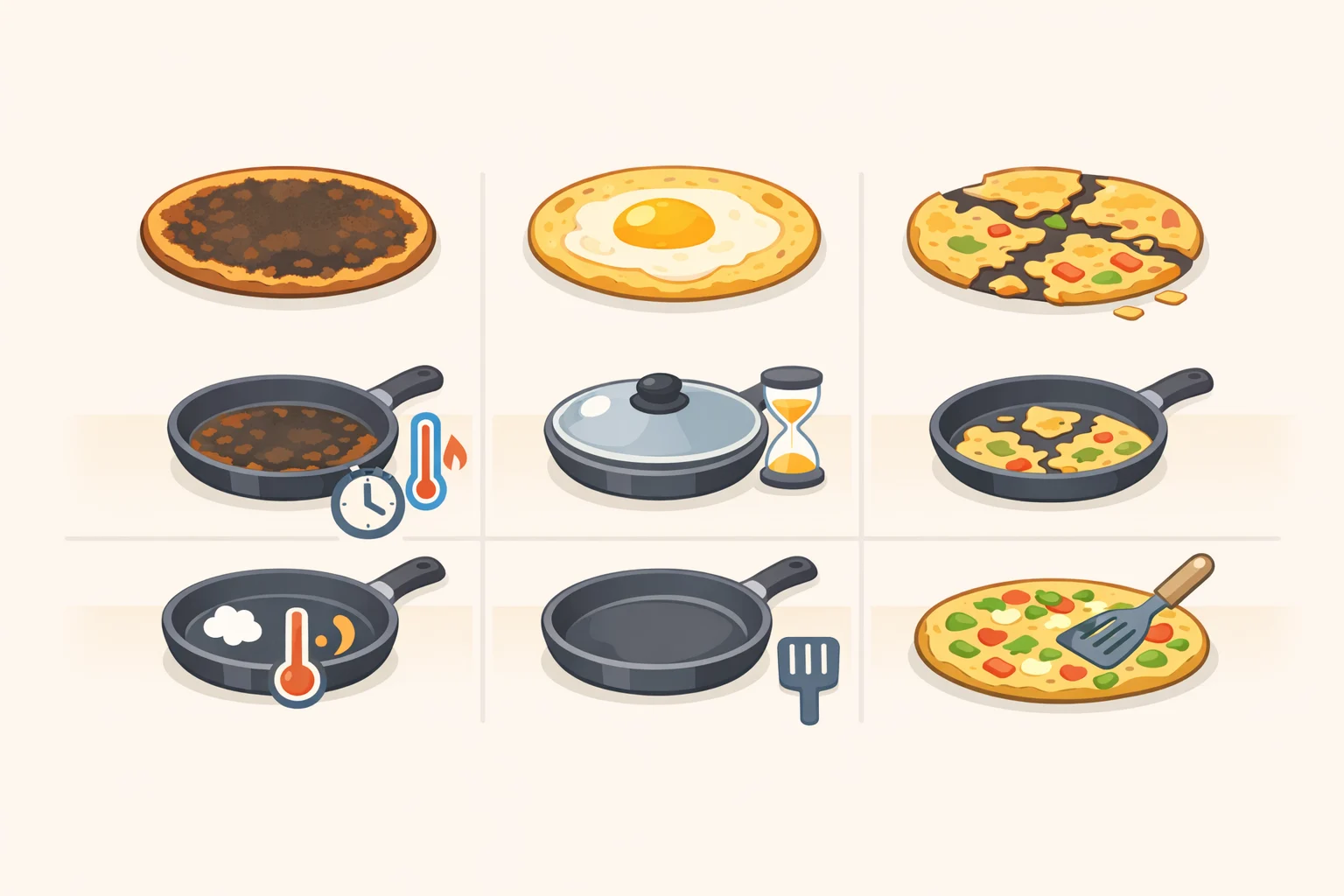
It tore when folding. Most likely cause: overcooked, overfilled, or both. A stiff wrap loses the flexibility to fold cleanly; too much filling creates pressure that splits the sheet. Pull it from the heat a little earlier and cut the filling volume.
It stuck to the pan. Either the nonstick surface is compromised (check for scratches or worn coating) or there wasn't enough fat to coat the full pan surface before the eggs went in. Add a bit more butter next time and make sure it covers the entire base before pouring.
The center was still wet when the edges were done. Heat too high, or the eggs weren't spread thinly enough. Lower the heat and spread more aggressively in Step 3. An even disc cooks evenly.
It cracked along a fold line. Either cooked too long, or it sat while the fillings were being prepared and lost its pliability. Have everything ready before the eggs hit the pan. Prep first, cook second.
The filling fell out. Too wet, too heavy, or positioned too close to the edges. Low-moisture fillings only. Leave the borders. Use less than feels generous.
Filling guidance: keep it light and dry
Two or three components is enough. The variable that matters most is moisture, anything releasing liquid will compromise the structure faster than any technique error.
Reliable fillings:
- Shredded cheddar, melts slightly from the warmth of the wrap
- Sliced avocado or a spoon of guacamole, dense enough to stay put; add just before folding
- A small spoon of sour cream spread across the center
- Thin slices of cooked bacon or ham
- Crispy diced potato, one of the better additions since it adds texture without contributing liquid
Avocado, sour cream, and guacamole work not because they're dry but because they're dense and low-moisture. Serious Eats uses all three in their breakfast burrito filling alongside bacon, cheddar, and crispy potatoes, and that combination translates well here.
What to avoid:
- Salsa, pico de gallo, or anything with significant liquid content
- Heavily dressed greens
- More filling than the center can comfortably hold without mounding
After the first attempt
If the wrap tore or cracked, two adjustments will fix most of it: less filling, and pulling the sheet off heat slightly earlier. The egg sheet needs slack to fold cleanly. Overfilling removes that slack.
If the bottom browned before the center set, the heat was too high. Drop it to medium and give the butter time to stop foaming before the eggs go in. That foam-stop is the actual ready signal.
If the center stayed wet while the edges cooked through, the spread in Step 3 wasn't even enough. Be more aggressive about pushing thick spots toward the rim. An uneven disc cooks unevenly, and there's no correcting it once the edges have set.
Get the heat and the spread right and the timing falls into place. Once the basic method is consistent, add crispy potato and a strip of bacon and you have something worth making on a weekday morning without giving it much thought.


Comments
Be the first, drop a comment!