



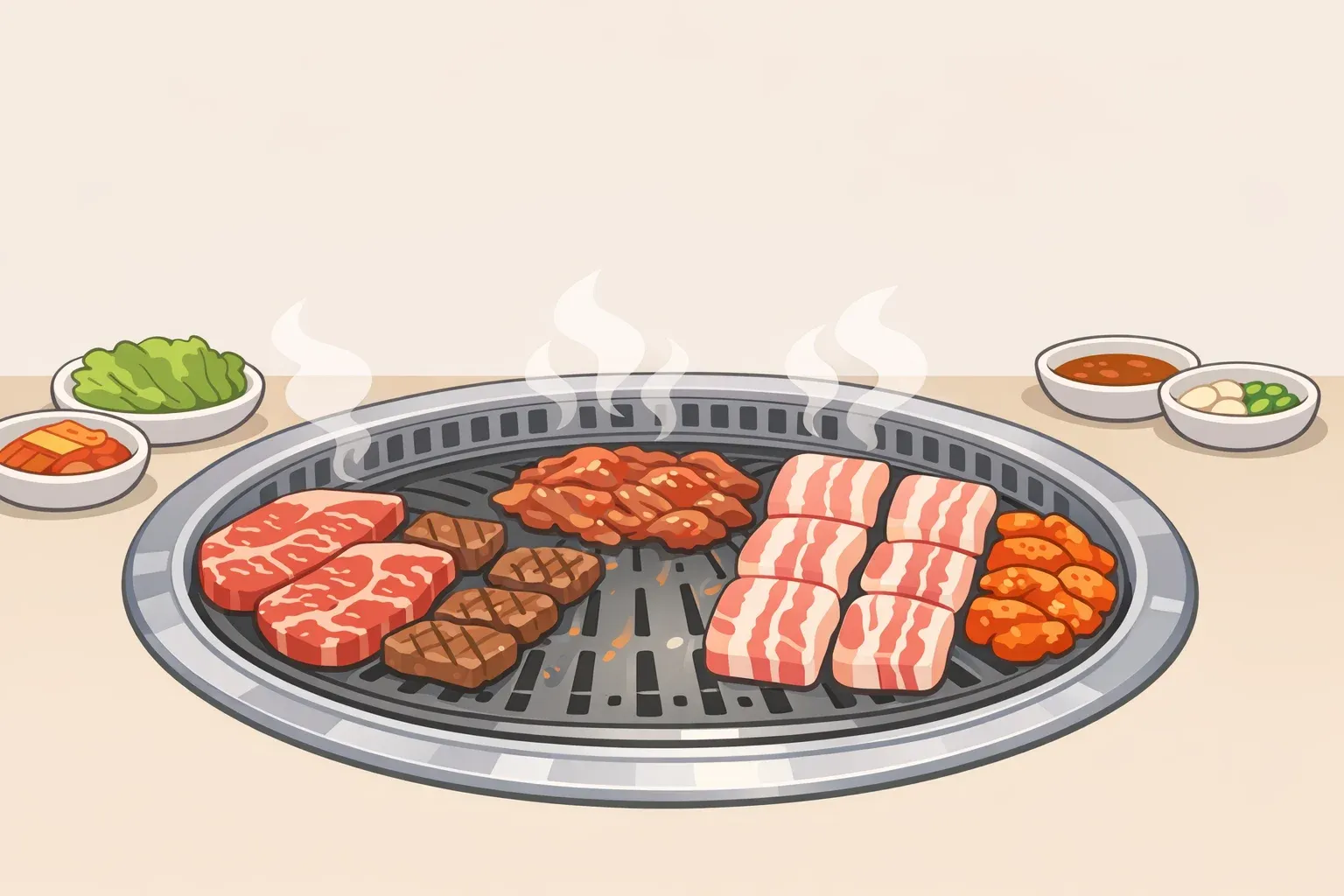
If there's a combo on the menu, order it. If not, start with brisket, move to outside skirt steak or boneless short rib, and finish with pork jowl or pork belly. That meat sequence comes from chef Samuel Kim of Baekjeong, whose Korean barbecue ordering advice was detailed by Business Insider in June 2026.
Kim's advice is strongest on the meat sequence, the table-completing sides, and a few items to question or skip. This guide keeps those recommendations practical instead of turning them into a universal rule for every Korean barbecue restaurant.
The best meat order for KBBQ
Kim's suggested Korean barbecue sequence moves from leaner cuts to richer, fattier ones. Beef comes first, pork comes later.
Start with brisket
Start with brisket if it is on the menu. Thin-sliced brisket cooks quickly, often within a minute or two, so diners can start eating almost immediately instead of waiting for thicker cuts to finish.
It is also a smart first cut because it is leaner than the pork options that usually come later. Beginning with a cleaner, lighter beef cut helps keep your palate ready for richer meat as the meal goes on.
If a restaurant does not list brisket, ask the server for the closest thin-sliced, quick-cooking beef option before moving on to heavier cuts.
Then order outside skirt or short rib
Next, scan the beef section for outside skirt steak. It does not appear on every menu, but it is worth ordering when it does. Outside skirt has a deep, savory flavor and a more tender texture than many diners expect from a skirt steak order.
The important detail is the word "outside." If the menu only says "skirt steak," ask which cut it is before ordering. Inside skirt and outside skirt share a name, but they do not cook the same way or have the same texture.
If outside skirt is not available, order boneless short rib instead. It is a reliable beef option and gives the meal a richer anchor before you move into pork.
Finish with pork jowl or pork belly
Do not treat pork as optional unless someone at the table does not eat it. One of the easiest ways to flatten a Korean barbecue meal is to order only beef and miss the final, fattier part of the sequence.
Pork belly is the familiar fallback. It is fatty, forgiving, and built for the grill. But if pork jowl appears on the menu, order that instead. Pork jowl has a rich texture that works especially well with a hot, fast cook, making it one of the more rewarding cuts to order when a restaurant offers it.
The simple KBBQ order
For a first visit, keep the order simple:
If there is a combo, start there.
If there is no combo, order brisket first.
If outside skirt steak is listed, order it; if not, order boneless short rib.
If pork jowl is listed, order it; if not, order pork belly.
Add a Korean pancake and jjigae if you are ordering for the table.
A combo is often the easiest move because it lets you sample a restaurant's strengths without building the whole order from scratch. If the combo includes a mix of beef and pork, it may already cover most of the sequence for you.
Round out the table with pancakes and jjigae
The meat sequence is the center of the order, but it should not be the whole order. Kim also recommends adding a Korean pancake and some kind of jjigae, or Korean stew, especially soybean paste stew or kimchi stew.
The practical reason is balance. A pancake gives the table another texture between rounds of grilled meat, while stew adds something hot, savory, and spoonable alongside the beef and pork. If you are ordering for a group, this is the simplest way to make the meal feel complete without adding more meat than the table can cook well.
If you drink alcohol, Kim also points to soju and beer as part of the Korean barbecue experience. This is optional: the ordering sequence still works without alcohol, but diners who do drink may see soju or beer recommended alongside the meal.
What to skip or question
The clearest skip advice is not about avoiding every unfamiliar cut. It is about knowing when a menu item does not fit the restaurant's strengths.
If a menu lists "skirt steak" without specifying which cut, ask before ordering. Inside skirt and outside skirt share a name, but they do not cook or eat the same way. If the restaurant only carries inside skirt, boneless short rib is a safer choice.
Kim also recommends skipping grilled or braised fish at a meat-focused Korean barbecue restaurant unless the restaurant is specifically known for that dish. The same caution applies to udon noodles, especially on very long menus that seem to cover too many cuisines at once.
Keep the grill hot
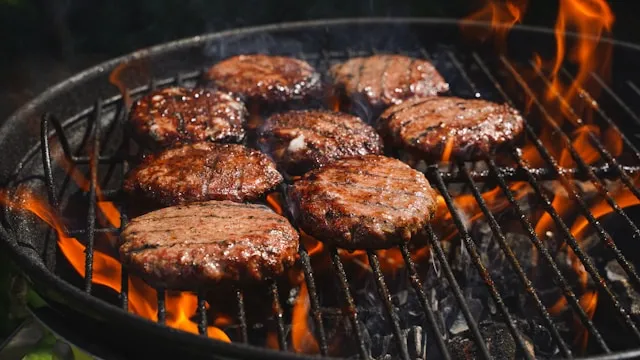
Ordering the right cuts only works if the grill is hot enough. If the heat is too low, the meat can turn gray and steamed instead of browned and seared.
The goal is golden-brown edges, not pale meat sitting on a lukewarm grill. A little char is not automatically a problem. Pulling back too early, or cooking over heat that never gets strong enough, is what can ruin even a good order.
This matters for every cut in the sequence, but especially for pork jowl and pork belly. Their fat needs real heat to render properly. Moderate heat can leave them chewy or dull instead of crisp-edged and rich.
Some Korean barbecue restaurants manage the grill for you, and some expect diners to cook more of the meal themselves. If a server is running the grill, watch what they do before jumping in. If you are cooking yourself, let the grates preheat before the first cut goes on.
How to eat banchan
The banchan usually arrives before the meat, which makes it easy to treat those small dishes as appetizers. That is not really how they work. Serious Eats explains that banchan are side dishes, not appetizers or condiments, and are meant to be eaten alongside the rest of the meal.
That matters at Korean barbecue because the sides help balance the meat. Kimchi, pickled vegetables, namul, and other banchan add acidity, crunch, heat, or freshness between bites of grilled beef and pork. Eating through them before the first cut hits the grill short-circuits the meal.
Use the banchan throughout the meal. Try different bites with different cuts. A fatty piece of pork belly with kimchi will not eat the same way as brisket with a lighter vegetable side, and that contrast is part of the point.
The same goes for ssam, or lettuce and perilla leaf wraps. Keep each wrap small enough to eat in one bite, with the meat, sauce, garlic, rice, and banchan in proportion. An overstuffed wrap is harder to eat and usually less balanced.
First-timer checklist
If there is a combo, start there. A good combo gives you a built-in tour of the restaurant's main cuts and saves you from overthinking the full menu.
Do not make the order beef-only unless the table has a reason to avoid pork. Pork belly and pork jowl are important parts of the meal, not afterthoughts.
Ask about skirt steak if the menu does not specify inside or outside skirt. If you cannot confirm the cut, choose boneless short rib instead.
Add a pancake and jjigae when ordering for the table. Those dishes make the meal feel fuller and more balanced without turning the order into a pile of extra meat.
Watch the grill color. Golden brown is the target. If the meat looks gray instead of seared, the heat is probably too low.
Eat the banchan with the meat, not before it. The goal is not just more meat; it is a better-balanced table.





Comments
Be the first, drop a comment!