



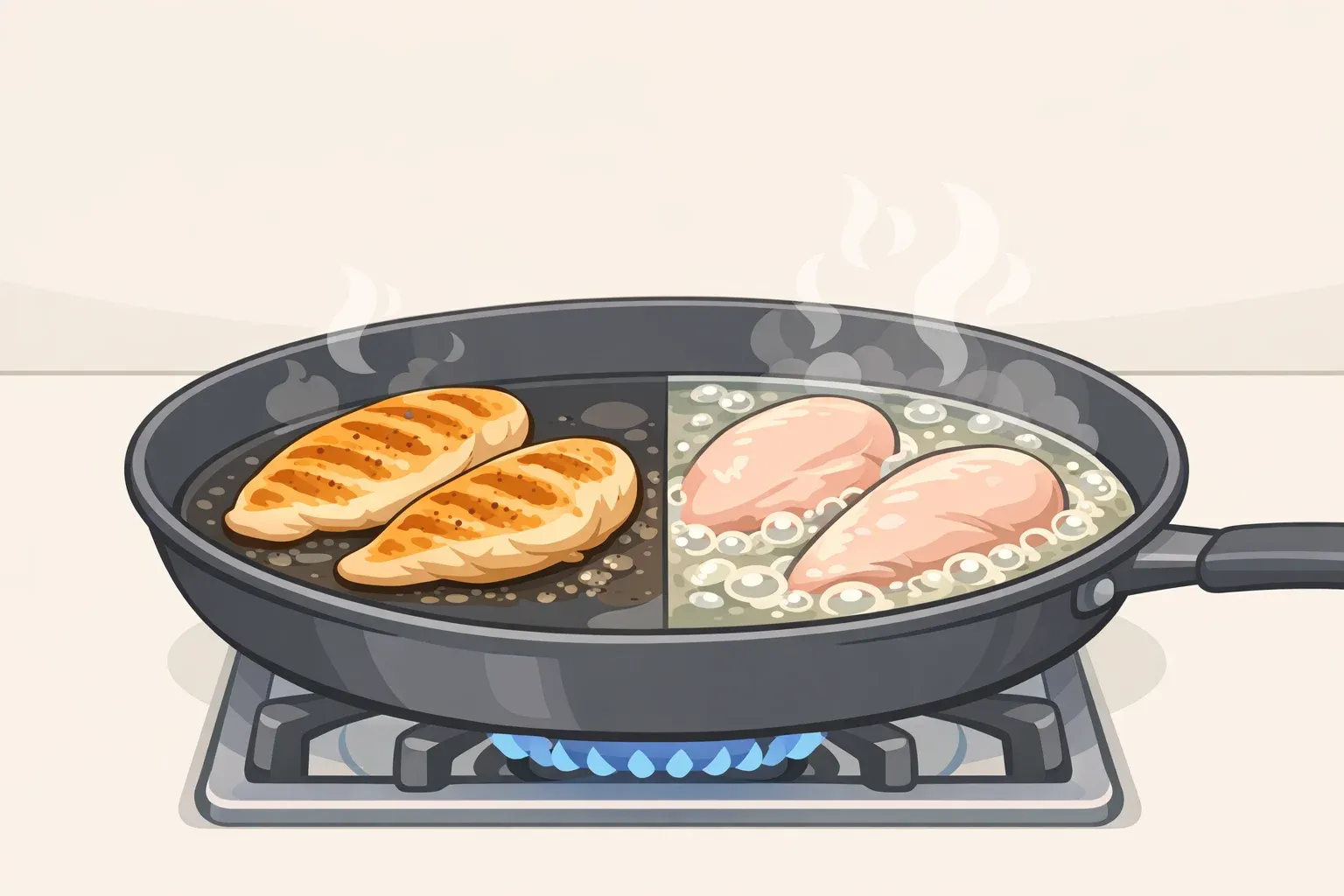
A 10-minute chicken marinade can make dinner taste better, but it will not magically tenderize the middle of a chicken breast.
For truly juicy chicken, the bigger factor is how you cook it. Gentle heat, even thickness, salt, and a short rest do more for tenderness than a quick acidic soak. Use a marinade for surface flavor, then choose one of two stovetop methods: a cold-start skillet when you want browning, or gentle poaching when you want the most forgiving meal-prep chicken.
What you need
This guide covers boneless, skinless chicken breasts. You'll need kosher salt, a skillet or saucepan, and an instant-read thermometer.
Food-safety note: USDA guidance lists 165°F as the safe minimum internal temperature for poultry. Some culinary sources use lower pull temperatures with carryover cooking, but that requires a reliable thermometer and careful timing. If you are cooking for young children, older adults, pregnant people, immunocompromised people, or anyone at higher risk, cook chicken to 165°F.
Without a thermometer, slice into the thickest part and check for opaque white meat with no translucent center. That method is less precise, so err on the side of cooking slightly longer.
Method 1: Cold-start skillet
Use this method when you want browned chicken for dinner. It works because the pan and chicken heat up together, which helps the outside brown while the inside cooks more gently. Serious Eats credits the juicier result to cold-start searing and frequent flipping.
What you'll need:
2 boneless, skinless chicken breasts
2 tablespoons neutral oil
Kosher salt and pepper
Optional: butter, smashed garlic, or fresh herbs
Steps:
Pound or butterfly very thick breasts. If a breast is more than about 1 inch thick, the thin end can dry out before the thick end finishes cooking.
Season both sides with salt and pepper. Brush the chicken with oil and place it in a cold, dry skillet.
Turn the heat to medium-high. Cook for 3 minutes, then flip and cook the second side for another 3 minutes.
Reduce the heat to medium and flip every 2 minutes until the chicken reaches your target temperature in the thickest part. For the most conservative food-safety target, cook to 165°F. If using a lower-temperature approach, do so only with an accurate thermometer and a proper rest.
Optional: In the last 2 minutes, add butter, garlic, or herbs and spoon the hot fat over the chicken.
Rest for 5 minutes before slicing.
Common mistake: Starting with a very hot pan. High initial heat can tighten the surface before the center is close to done, which is one reason chicken can look browned but eat dry.
Method 2: Gentle poaching
Use poaching when you want chicken for salads, sandwiches, noodle bowls, or meal prep. It will not brown, but it is forgiving and easy to slice or shred.
For two large boneless, skinless chicken breasts, use enough cold water or stock to cover the meat by about 1 inch, plus enough kosher salt to season the liquid well. Bon Appétit's poached chicken method uses 4 cups liquid with 3 tablespoons Diamond Crystal kosher salt, or 3½ teaspoons Morton kosher salt.
Steps:
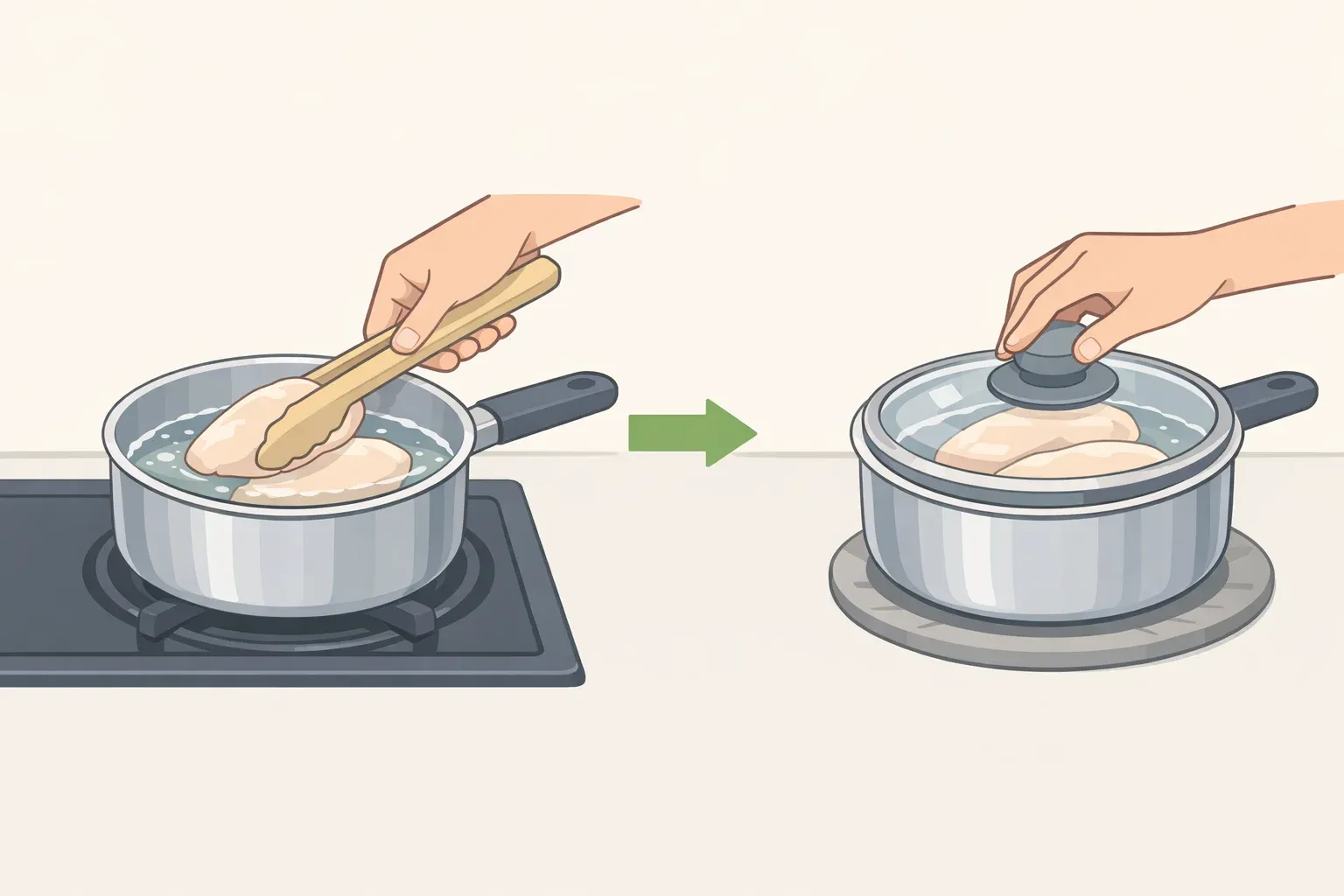
Place the chicken in a single layer in a saucepan. Add cold water or stock, salt, and any aromatics, such as garlic, bay leaf, peppercorns, or thyme.
Bring the liquid to a gentle simmer over medium heat. The moment you see a few bubbles breaking — not a rolling boil — flip the chicken, remove the pan from heat, and cover.
Check the thickest part after 5 minutes, then continue resting in the hot liquid as needed until the chicken reaches your target temperature. For USDA-style guidance, cook to 165°F. Some poaching methods use lower temperatures plus resting, but that depends on accurate temperature checking and carryover heat.
Rest for 5 minutes before slicing.
Common mistake: Letting the liquid boil hard. A rolling boil can make chicken stringy and dry.
Storage: Cool poached chicken promptly, refrigerate it in an airtight container, and use it within two days.
What a quick marinade can do
A quick marinade is still useful. It adds surface flavor, helps browning, and can make thin pieces taste better fast. Better Homes & Gardens notes that marinades can work in as little as 15 minutes for chicken, especially if the pieces are thin.
For quick surface flavor, mix:
2 tablespoons soy sauce or fish sauce
1 tablespoon neutral oil
1 tablespoon lemon juice or rice vinegar
1–2 minced garlic cloves
Coat the chicken and marinate it in the refrigerator for 30–60 minutes before cooking. Pat it dry before skillet cooking so the surface can brown. The soy sauce or fish sauce brings salt, which does most of the useful work. The acid and garlic mainly season the surface.
Acid-based marinades, such as lemon juice, vinegar, and wine, can improve surface flavor and texture. What they do not do is season the center quickly. For chicken breast, 30–60 minutes is usually enough for surface flavor; several hours in a strong acidic marinade can make the outside mealy without improving the middle.
Fresh pineapple and papaya are the exception because their enzymes can break down proteins. Use enzyme-heavy marinades briefly on thin cuts only; too long can turn the surface mushy. Canned pineapple and papaya will not work the same way because heat processing deactivates those enzymes.
Salt is the most useful marinade ingredient for juiciness because, given enough time, it seasons below the surface and helps chicken hold moisture. If you have time, salt the chicken up to a day ahead; even 30 minutes helps.
Food-safety reminder: Always marinate chicken in the refrigerator, not on the counter. Allrecipes also warns that marinade that has touched raw chicken should not be reused unless it is boiled before serving.
What to expect
Tender chicken comes down to heat management. A 10-minute marinade can add flavor, but it cannot replace even thickness, enough salt, gentle cooking, and a short rest.
Use the cold-start skillet method when you want browning. Use poaching for salads, sandwiches, noodle bowls, or meal prep. If your only goal is tenderness, start with the cooking method, not the marinade.


Comments
Be the first, drop a comment!