



By the end of this guide, you'll know whether TikTok's spoon-tap egg hack is worth using when you're hard-boiling eggs for sandwiches, deviled eggs, or meal prep. You'll also know what tapping a raw egg appears to do to the shell, what actually matters most for clean peeling, and when to skip the hack entirely.
The honest verdict: the spoon tap may provide a small benefit for some eggs, but it is not the main factor that determines whether a hard-boiled egg peels cleanly. The viral explanation says tapping the wide end of a raw egg separates the inner membrane from the shell before boiling. The more cautious read is that tapping may create a tiny fracture that lets some water work under the shell during cooking.
If the hack helps, it is probably because it gives the shell a head start on cracking, not because it magically fixes the membrane. Egg age, cooking method, and chilling still matter more.
First, choose the egg you actually want
If you're making sliced eggs for sandwiches, egg salad, or deviled eggs, start with hard-boiled eggs and focus on peelability. Slightly older eggs are usually easier to peel, and a gentle cooking method helps keep the whites from sticking tightly to the shell.
If you want a hot breakfast sandwich in under five minutes, skip hard-boiling altogether. A quick folded scramble or soft omelet-style egg is usually faster, easier to shape for bread, and avoids peeling entirely. For a richer sandwich, Serious Eats' Hong Kong-style egg sandwich adds a tapioca starch and half-and-half slurry to the eggs for a softer, creamier texture.
The rest of this guide focuses on the hard-boiled route.
What the spoon tap likely does
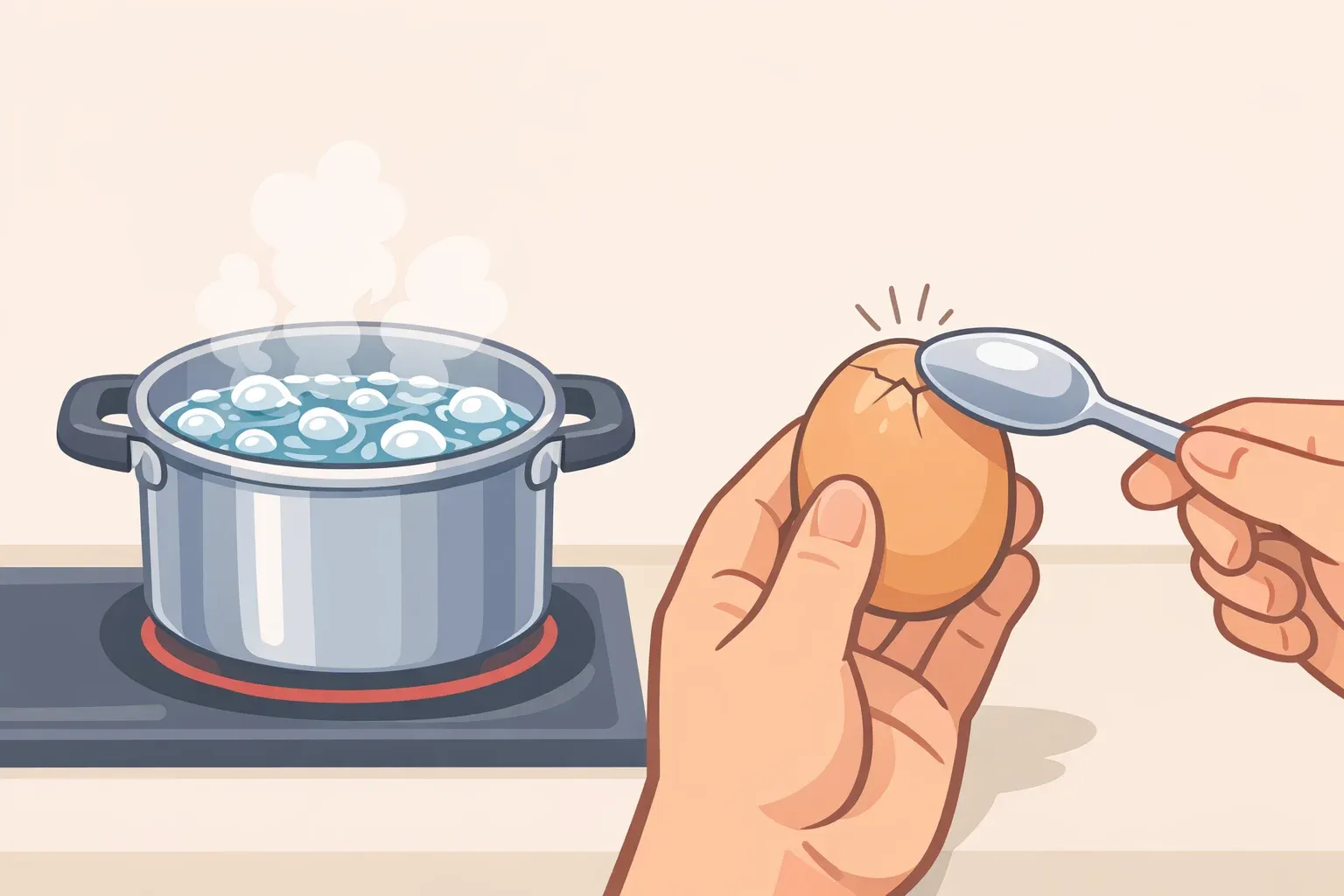
The spoon hack usually starts by holding a raw egg with the wide end facing up. You tap that wide end with the back of a spoon until the sound changes from sharp to dull, then boil the egg as usual. The claim is that this loosens the membrane before cooking, making the egg easier to peel.
That membrane claim is the part to treat carefully. I didn't find strong direct evidence that the tap cleanly separates the membrane before boiling. The more plausible explanation is simpler: the tap creates a small fracture. If water gets through that fracture during cooking, it may help loosen the shell enough to make peeling easier.
That does not make the hack useless, just modest. Think of the spoon tap as an optional extra step, not the reason your eggs peel well.
Food safety comes first
Food safety matters here because even eggs with clean, uncracked shells can contain Salmonella. The FDA's egg safety guidance says to keep eggs refrigerated, cook eggs until the yolks are firm, and cook foods containing eggs thoroughly. The FDA also says hard-cooked eggs should be used within one week after cooking.
That means the spoon hack should not be treated as a prep-ahead trick. Do not tap raw eggs hours or days before boiling. If you try it, tap only right before cooking, inspect the shell, and cook the egg fully.
There is also an important difference between a careful tap and a visibly cracked raw egg. Do not boil an egg in the shell if the shell separates, leaks, lifts, or opens into a visible gap. Crack that egg into a clean container instead, refrigerate it, and cook it thoroughly the same day.
If you are cooking for young children, older adults, pregnant people, or anyone with a weakened immune system, use the safest version: skip visibly cracked eggs, cook eggs until the yolks and whites are firm, and refrigerate hard-cooked eggs promptly. The FDA lists those groups as being at greater risk for severe illness from Salmonella.
What matters more than the spoon tap
1. Use slightly older eggs
Fresh eggs are harder to peel because the white clings more tightly to the inner membrane. As eggs age, the air pocket inside the shell grows and the egg white becomes less acidic, which can make the shell easier to remove.
That is why many hard-boiled egg guides recommend using eggs that have been in the refrigerator for several days rather than eggs bought that same day. In a Better Homes & Gardens test of a viral egg-peeling hack, the test kitchen noted that eggs that are 7 to 10 days old are generally easier to peel after cooking.
If you want a precise age check, look for the Julian date on the carton. It is the three-digit packing date, from 001 to 365. "Sell by," "best by," and "EXP" dates are store and quality markers, not the same thing as the packing date.
One caution: older does not mean unlimited. The FDA recommends storing eggs in their original carton in a refrigerator at 40°F or below and using them within three weeks for best quality.
2. Cook gently, then chill
A hard rolling boil can make hard-boiled eggs more frustrating to peel. It can also lead to rubbery whites and overcooked yolks. A gentler approach gives you more control.
For a basic hard-boiled method, place the eggs in cold water, bring the water to a boil, reduce the heat, simmer gently until cooked through, then move the eggs to an ice bath. The quick chill helps stop the cooking and can make peeling easier.
The exact timing depends on egg size, pan size, and how firmly cooked you want the yolk, but the priority is the same: avoid aggressive boiling, cool the eggs quickly, and refrigerate them within two hours. The FDA says cooked eggs and egg dishes should not be left out for more than two hours, or more than one hour when temperatures are above 90°F.
3. Treat the spoon tap as optional
Once you have slightly older eggs and a gentle cooking method, the spoon tap can be a small add-on.
Here's how to try it:
Start with a refrigerated raw egg and a metal spoon.
Hold the egg upright with the wide end facing up.
Tap the wide end gently with the back of the spoon a few times.
Stop before the shell visibly breaks.
Inspect the egg. If the shell is visibly cracked, leaking, lifting, or separated, do not boil it in the shell.
Cook the egg fully, chill it quickly, and peel from the wide end.
The wide end matters because that is where the air cell sits. Starting the peel there usually gives you the easiest entry point.
If you just want an egg sandwich
For sliced egg sandwiches or deviled eggs, use slightly older eggs, cook them gently, chill them quickly, and treat the spoon tap as optional. That sequence gives you the best chance of a clean peel.
For a hot breakfast sandwich right now, hard-boiling is the long way around. A folded scramble or soft omelet-style egg is faster and easier to fit onto toast, an English muffin, or a roll. If texture is the goal, that starch-slurry approach is a better route than boiling and peeling.
The spoon hack is not useless, but it is not a food-safety shortcut or a guaranteed peeling fix. If you try it, tap only right before cooking, inspect the shell carefully, cook the egg fully, and refrigerate hard-cooked eggs promptly. Egg age and cooking method still do most of the work; the tap belongs at the end of the list.

Comments
Be the first, drop a comment!