



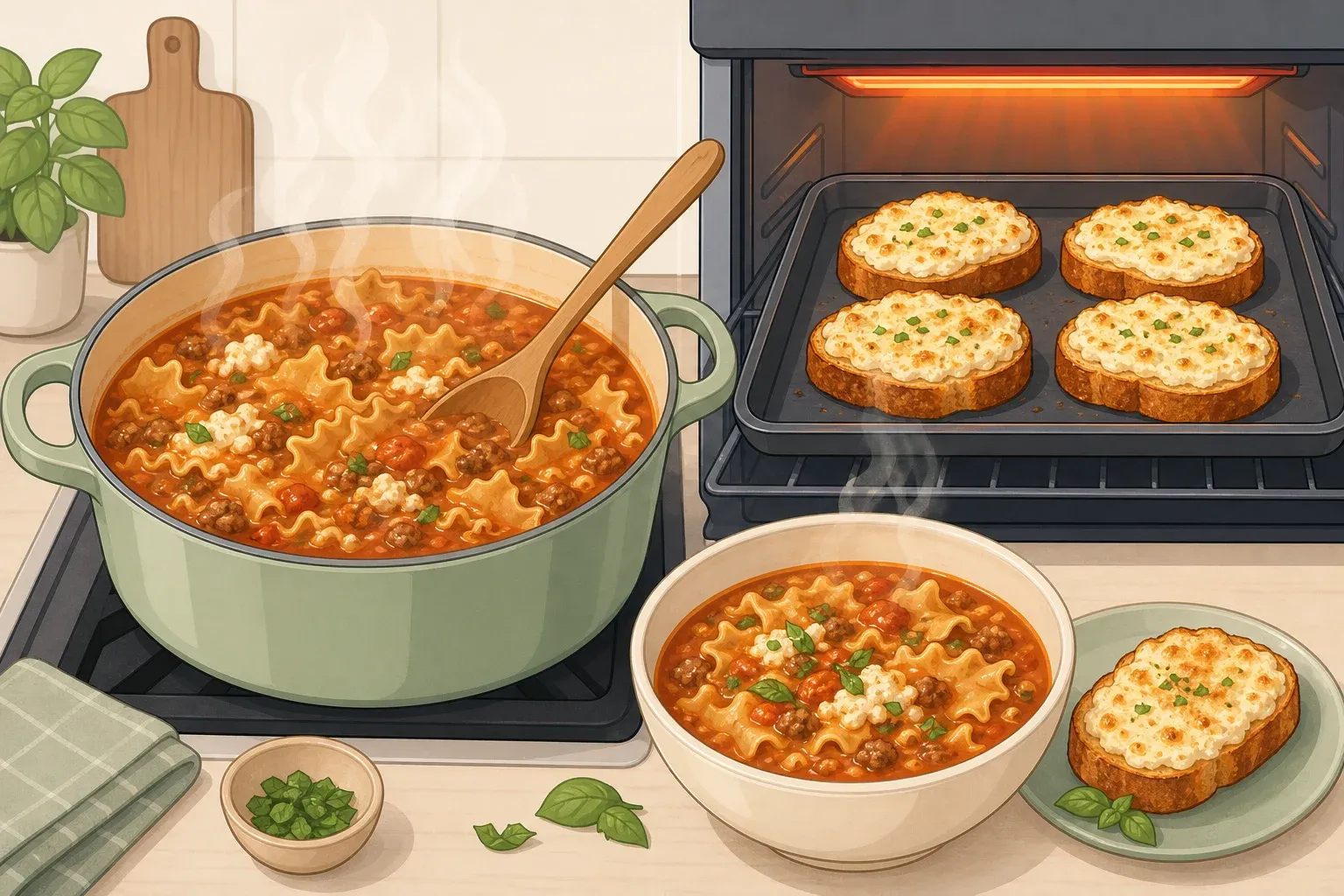
Easy Lasagna Soup With Ricotta Toasts: 45-Minute Recipe
The trick that makes this soup taste like real lasagna isn't a hidden ingredient. It's cooking broken lasagna noodles directly in the broth, where they shed starch and thicken the pot into something closer to a stew than a typical soup. Bon Appétit built its version around this exact technique, letting the pasta cook and thicken the broth at the same time, no roux or cream required.
This guide adapts that sausage-and-tomato base into an easy lasagna soup with ricotta toasts served on the side, rather than a dollop of ricotta stirred into the bowl the way Bon Appétit's original lasagna soup with ricotta cheese does. Its sausage, tomato paste, noodles, spinach, and ricotta give the soup the familiar lasagna profile, and this version keeps that same lineup, just splitting the ricotta off onto toast. Bon Appétit's soup reaches the table in about 40 minutes; adding a few minutes for broiling toasts alongside the simmer brings this version to roughly 45 minutes total, an estimate rather than a strict clock.
The soup itself cooks in one pot on the stovetop from start to finish. The toasts need a baking sheet and a broiler running at the same time, so plan on working both at once rather than treating them as separate cooking sessions.
What you'll need for easy lasagna soup with ricotta toasts
- Total time: about 45 minutes, an estimate built on Bon Appétit's 40-minute soup plus a few extra minutes to broil the toasts
- Yield: 4 servings of soup plus 4 toasts
- Equipment: a Dutch oven or other heavy pot, a rimmed baking sheet lined with foil or parchment, and a broiler
For the soup, matching Bon Appétit's ratios:
- 1 lb. Italian sausage (mild or hot, casings removed)
- 5 garlic cloves, thinly sliced
- One 4.5-oz. tube double-concentrated tomato paste
- 4 cups low-sodium chicken broth
- 4 cups water, added in two separate 2-cup additions
- 10 oz. dried lasagna noodles, broken into 2- to 3-inch pieces
- 5 oz. baby spinach
- Olive oil, salt, and pepper
The soup ingredients above skip the cup of ricotta Bon Appétit stirs into bowls at the end. That cheese goes toward this cheesy ricotta toast recipe instead. Here's what the toasts need:
- 4 slices crusty bread, cut about ¾ inch thick
- ½ cup ricotta
- ½ cup shredded mozzarella
- 2 tablespoons grated Parmesan
This is beginner-friendly stovetop cooking from start to finish. The one step that demands real attention rather than technique is broiling, since broilers work fast and unevenly and cheese can turn from golden to burnt with almost no warning.
Before you start
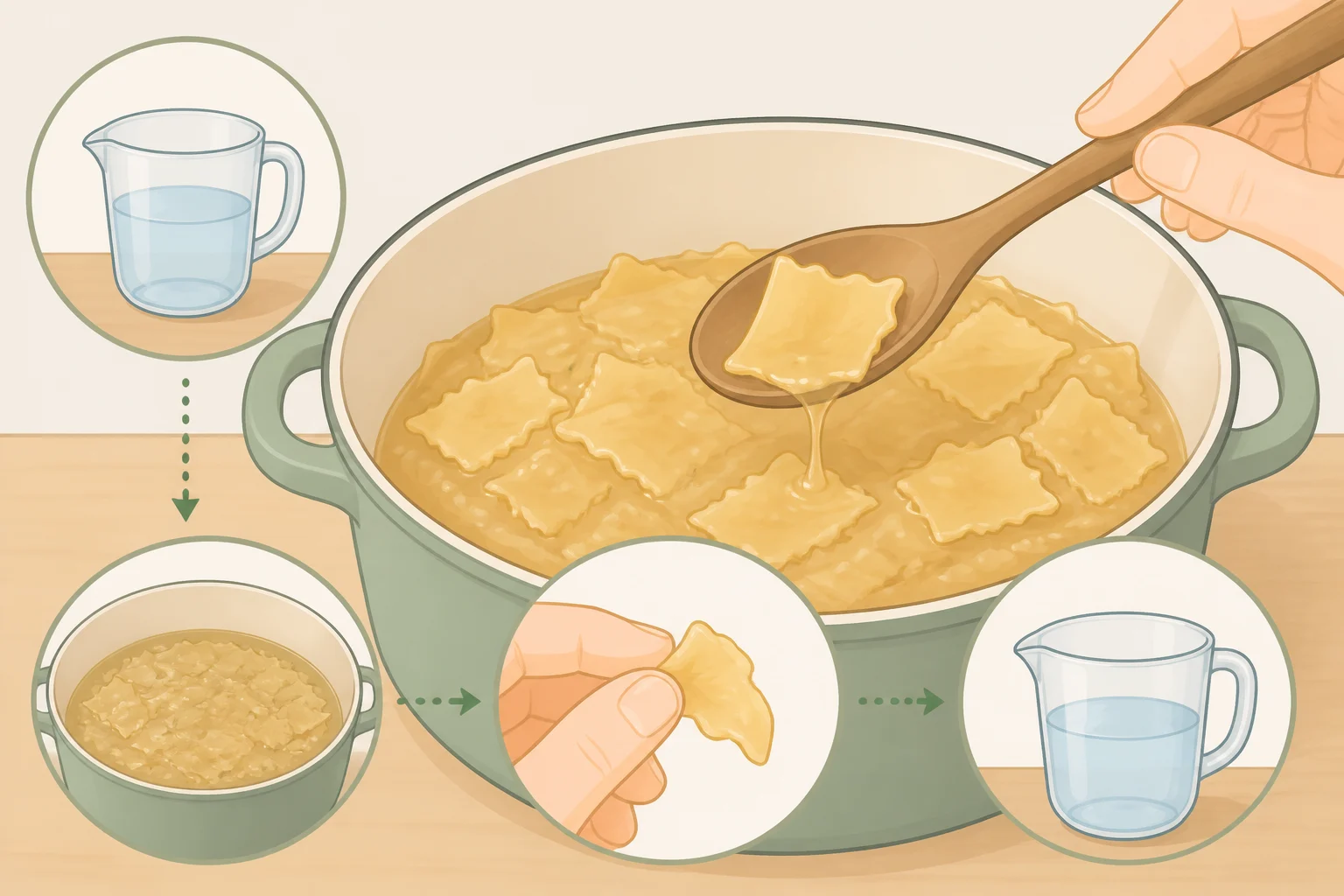
The noodles thicken the soup because they release starch as they cook directly in the broth, which is why the recipe splits the water into two additions instead of adding it all at once. The first 2 cups go in before the noodles hit the pot; the second 2 cups get stirred in only once the broth has visibly thickened around the cooking pasta. Bon Appétit Skip that second addition too early and the soup turns gluey instead of spoonable.
Keep the pot at a steady simmer while the noodles cook. Stir every minute or two so the pieces stay submerged and don't stick to the bottom, since broken noodles shed starch as they cook and that starch is what settles on the bottom of the pot if it isn't stirred loose.
Bon Appétit's method also returns the sausage to the pot only after the noodles have cooked and the second batch of water goes in, which keeps the meat from turning tough over the longer simmer. Bon Appétit That means the sausage comes out of the pot after browning and doesn't go back in until much later in the process.
Break the noodles before anything else goes into the pot. Snapping dry lasagna noodles over the sink, or inside a folded kitchen towel, keeps shards from scattering across the counter.
If any portion of this batch is headed for the freezer, make that decision before the noodles go in, not after. Stop once the sausage-tomato-broth base has finished simmering, cool the portion meant for the freezer, and store it without noodles. Add freshly cooked noodles only when reheating, since pasta that's already cooked into the base turns soft and pasty after a freeze-thaw cycle.
Step-by-step: make the one-pot lasagna soup
-
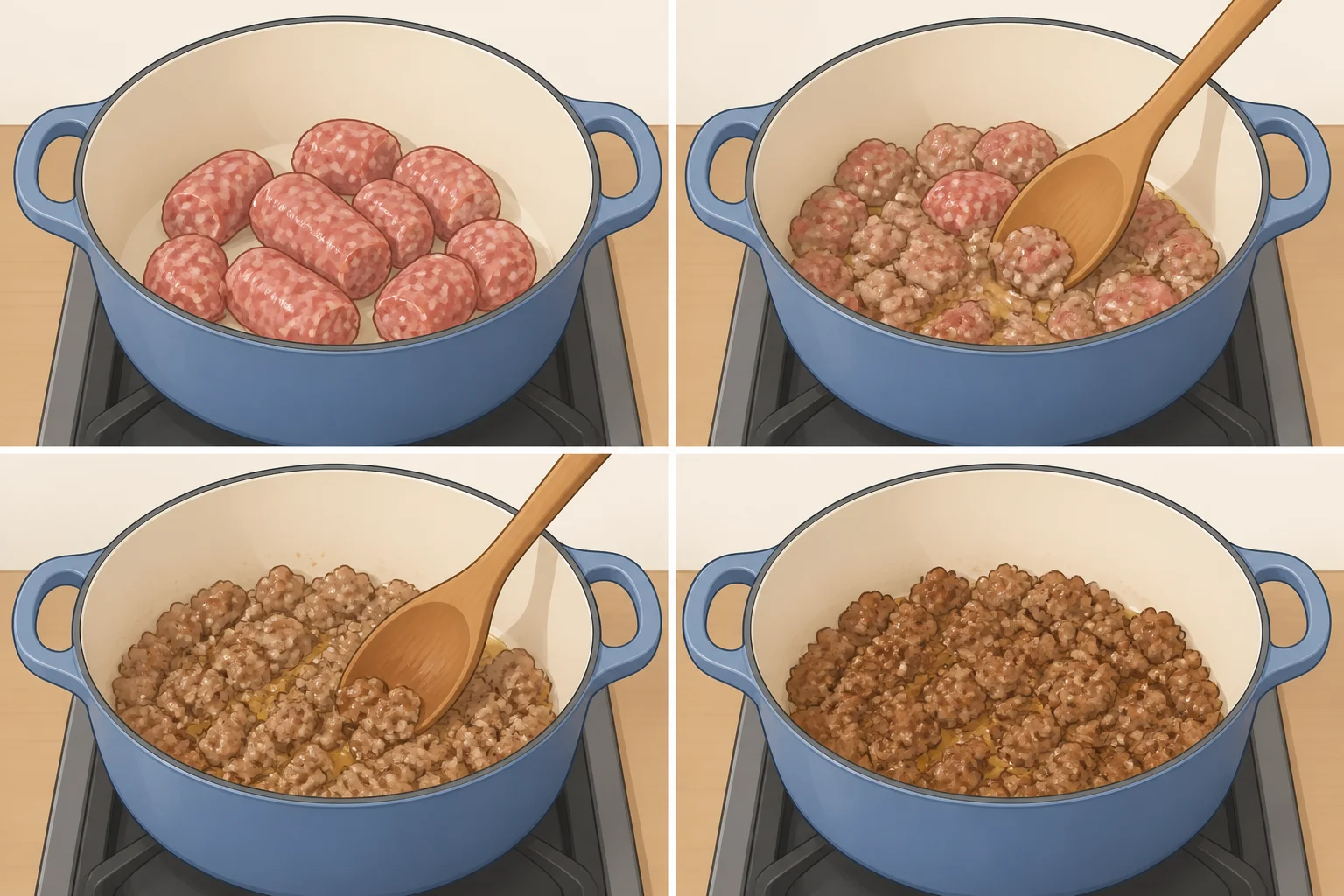
Heat 2 tablespoons olive oil in a Dutch oven or heavy pot over medium-high. Add the sausage and cook undisturbed for 3 minutes, then break it up and stir until browned through, another 3 to 4 minutes. Bon Appétit Transfer the sausage to a plate and set it aside, leaving the fat behind in the pot. If a lot of fat rendered out, spoon off the excess now; leaving about a tablespoon behind keeps the finished soup from tasting greasy, per How to Cooking's lasagna soup recipe. If the sausage rendered barely any fat at all, don't worry about it: the 2 tablespoons of olive oil already in the pot is enough to cook the garlic and tomato paste.
-
Add the garlic and the full tube of tomato paste to the fat left in the pot. Cook, stirring often, about 3 minutes, until the paste darkens slightly and smells toasted. Bon Appétit Browning the paste this way builds a deeply savory broth in far less time than a from-scratch sauce would need, according to Bon Appétit.
-
Pour in the broth and the first 2 cups of water, scraping up any browned bits stuck to the bottom of the pot. Bring to a simmer. Bon Appétit
-
Stir in the broken noodles and cook, stirring often, until very al dente, about 9 minutes. Bon Appétit Taste a piece near the end: it should still have a slight bite, since it keeps softening off the heat.
-
Stir in the second 2 cups of water once the broth has visibly thickened around the noodles, then return the browned sausage to the pot. Bon Appétit
-
Reduce the heat to low and cook just until the sausage is warmed through, about 5 minutes. Bon Appétit
-
Remove the pot from heat, stir in the spinach until wilted, and season with salt and pepper. Bon Appétit Taste before reaching for much salt: the sausage, broth, and the Parmesan going onto the toasts are all salty on their own, and it's easy to over-season a pot that already has a lot going on.
Success here looks like a soup that coats the back of a spoon and ladles cleanly, with noodle pieces suspended in a thick, tomato-red broth rather than floating in thin liquid. If it looks thin or watery at this point, the troubleshooting section below covers the fix.
How to make the cheesy ricotta toasts
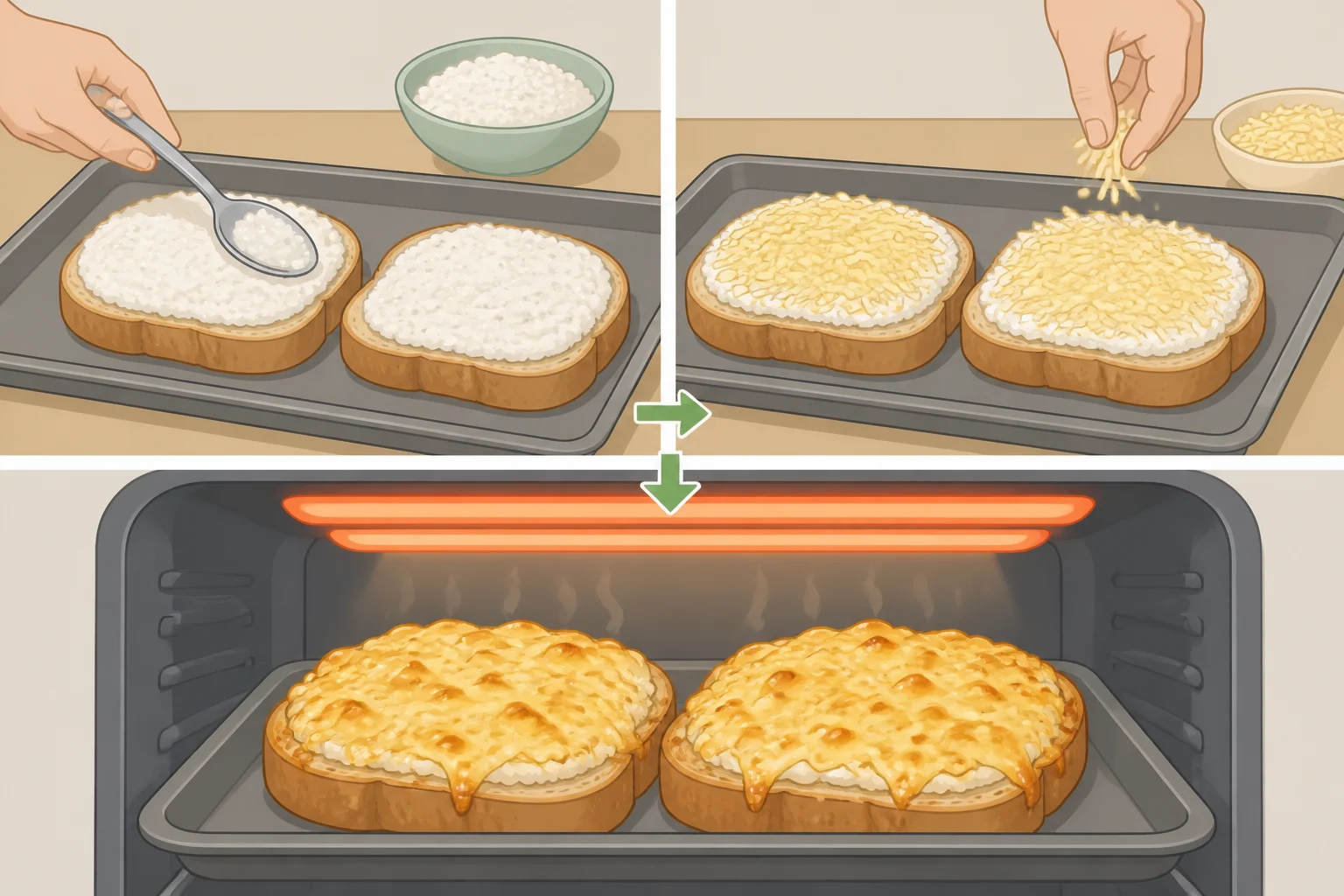
Bon Appétit's version finishes each bowl with a dollop of ricotta. Here, that ricotta goes onto bread and under the broiler instead, for a crisp, browned contrast to the soft noodles underneath.
-
Preheat the broiler while the soup simmers, positioning an oven rack close to the broiler element.
-
Toast the 4 bread slices lightly first, either under the broiler or in a toaster, until they're lightly crisp on both sides, so the bread has some structure before the toppings go on. Skipping this step leaves the bread soggy once the ricotta and cheese hit it.
-
Spread ½ cup ricotta across the 4 slices, season with salt, pepper, and a pinch of dried oregano if desired, then top with the mozzarella and Parmesan.
-
Broil, watching continuously, until the cheese bubbles and browns in spots. Broilers vary a lot from oven to oven, and cheese can go from golden to scorched fast, so stand at the oven door rather than stepping away.
No broiler in the kitchen, or one that runs too hot to trust? Baking on the top rack instead is an untested alternative here, so check on it well before you'd expect it to be done and rely on how the cheese looks rather than a set time.
Done right, the toasts come out with bubbling, browned cheese on top and bread that stays firm and crisp at the edges, not soggy underneath. Set one toast beside each bowl rather than dropping it into the soup; it only stays crisp if it isn't sitting in broth.
Troubleshooting: fixing texture as you go
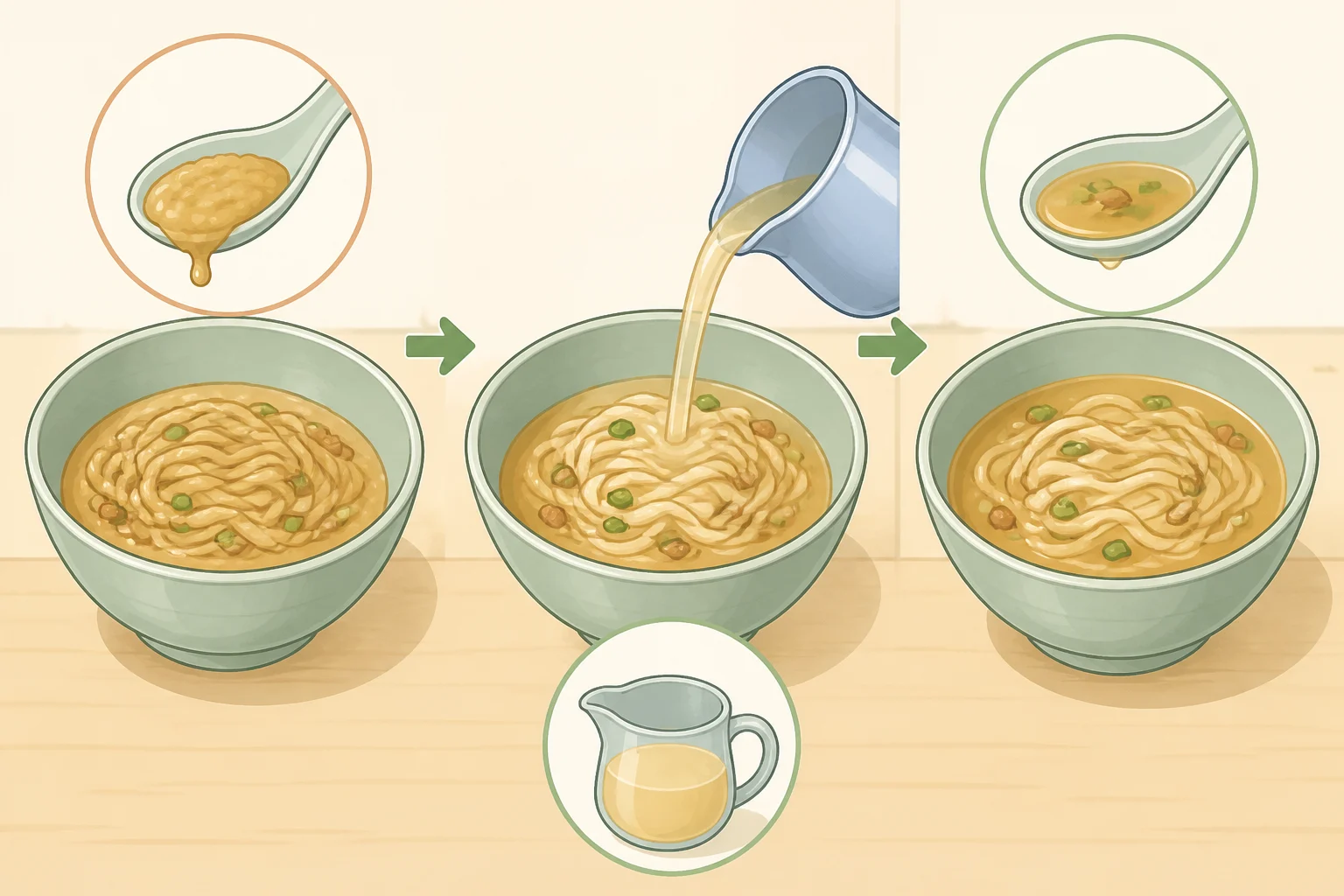
Too thick or pasty: if the soup mounds instead of settling when ladled, or the noodles look dry, stir in warm broth or water a ¼ cup at a time until it loosens back to a spoonable consistency.
Noodles sticking to the pot: if you feel resistance while stirring during the noodle stage, stir more frequently rather than scraping up any scorched bits stuck to the bottom, since those will taste burnt if mixed back into the soup.
Too thin or watery: let the soup simmer uncovered a few extra minutes, or press a few noodle pieces against the side of the pot to release more starch. Bon Appétit Starch release is what thickens the broth in the first place, so more contact time or more agitation both help.
Swapping in hot Italian sausage instead of sweet changes the heat level without changing timing or liquid amounts, since Bon Appétit's recipe calls for either. Bon Appétit An easy lasagna soup recipe built on broken noodles tends to keep thickening fast once it's off the heat, so don't panic if this one looks looser in the pot than it does in the bowl a few minutes later.
Serve, store, and reheat
Make the toasts fresh at serving time rather than trying to store them. Bread softens quickly once it sits near broth or spends time in the fridge, and there's no fixing that once it happens.
Cool the soup before it goes into the fridge rather than letting a hot pot sit on the counter. Ladle it into a couple of shallow containers instead of one deep pot; that lets it lose heat faster instead of staying warm for a long stretch. Once it's no longer steaming, cover and refrigerate it in an airtight container.
Expect the noodles to keep absorbing liquid overnight. The soup will be noticeably thicker the next day, so plan to thin it with broth or water when reheating.
How to Cooking's lasagna soup recipe keeps its own soup base in an airtight container for up to 4 days in the fridge, or freezes it for up to 3 months. That's this particular recipe's own storage guidance rather than a universal food-safety limit, so use it as a rough benchmark and use your own judgment if leftovers have been sitting longer than expected. For longer storage, freeze only the base portion set aside before noodles were added, following the make-ahead step covered earlier, and add fresh noodles when reheating.
Before serving reheated soup, take one last look at it. If it looks pasty or the noodles have gone soft and swollen, stir in extra broth or water over low heat until it loosens back to a stew-like consistency. Once the noodles in this soup overcook, there's no bringing that texture back by simmering longer; that's a sign to cook a fresh batch of noodles next time rather than stretch the same one.







Comments
Be the first, drop a comment!