



Pasta Granny trick for better spaghetti sauce, explained
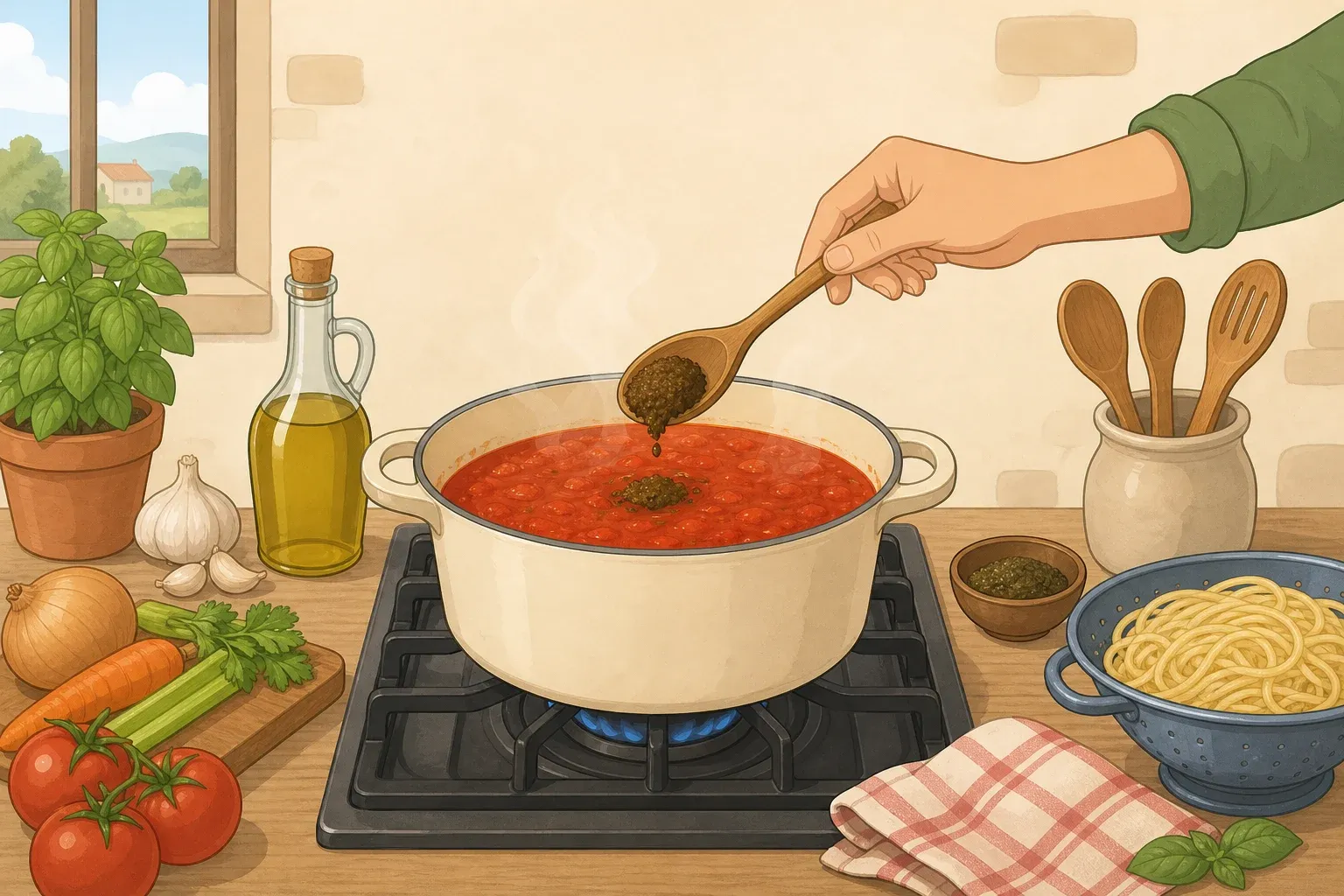
An 88-year-old home cook named Maria, featured by Pasta Grannies and from Cisternino, Italy, builds her tomato sauce around one unglamorous move: a spoonful of homemade vegetable stock concentrate she calls her "secret taste weapon." That's the Pasta Granny trick for better spaghetti sauce, a small addition that changes what a basic tomato sauce tastes like without changing how long it takes to cook.
Maria actually ladles her sauce over handmade orecchiette, not spaghetti. What follows is an adaptation of her flavor method for a weeknight spaghetti dinner, not a direct copy of her original recipe. Her sauce starts with 500 grams of fresh tomatoes and 300 milliliters of passata, seasoned with about a teaspoon of that concentrate instead of a heavy hand of salt, since the concentrate is already intensely salty (Pasta Grannies). Her own notes even admit cooks "can cheat if you like to make things faster" rather than always making the stock from scratch (Pasta Grannies), which is the shortcut this guide leans on: a store-bought stock cube or bouillon paste standing in for Maria's homemade batch.
That flavor boost is only half the dish. The other half is the technique that decides whether sauce actually clings to spaghetti or just pools at the bottom of the bowl: cooking the pasta slightly under, then letting it finish directly in the simmering sauce. America's Test Kitchen has tested this approach and found it's what lets sauce emulsify around the noodles instead of sitting on top of them. No food processor is needed for the shortcut version, and no long stock-making process either, though the homemade concentrate later in this guide takes about an hour if you want to try it the traditional way.
The Pasta Granny trick for better spaghetti sauce
Maria's own recipe notes call the stock concentrate "the real trick for adding the flavour" to her sauce, not just an extra seasoning stirred in at the end (Pasta Grannies). It's built from vegetables cooked down with a heavy amount of salt into a thick paste, so a small spoonful carries far more flavor than the same spoonful of plain salt would.
Maria's own orecchiette recipe is rated beginner-friendly, takes about 35 minutes, and serves 4 to 6 (Pasta Grannies). This spaghetti adaptation follows roughly that same sauce timeline, plus the separate time it takes to boil the pasta. The homemade stock concentrate, covered later, is its own 45- to 60-minute project and is best made ahead of whatever dinner you're actually cooking that night.
What you'll need
Maria's original recipe calls for 400 grams of orecchiette and serves 4 to 6 (Pasta Grannies). This version swaps in 1 pound of dried spaghetti as an editorial adaptation for a more common pantry quantity, not a matched substitution, so expect a slightly different yield than her original dish.
- Tomato base: 500g fresh tomatoes plus 300ml passata, Maria's ratio, or canned whole or crushed tomatoes if fresh ones aren't in season
- 1 medium onion
- 3-4 tablespoons extra virgin olive oil
- A few fresh basil leaves
- A vegetable bouillon paste or stock cube, as the stand-in for Maria's homemade concentrate
- 1 pound dried spaghetti
- Salt, added sparingly and only after tasting
- A wide skillet or saucepan, roomy enough to toss the spaghetti in sauce without the strands breaking, plus a large pot for boiling the pasta
Before you start: the salt math
Maria's homemade concentrate is 600 grams of salt to 1 kilogram of vegetables, an intense ratio that explains why her finished sauce only needs about a teaspoon of it (Pasta Grannies). She holds off on extra salt until after tasting, and this guide follows the same order. Commercial bouillon pastes and cubes aren't made to that exact ratio and vary in saltiness from brand to brand, so there's no reliable swap that matches hers precisely.
Use Maria's teaspoon as a starting reference, then check your product's own label and taste before adding more. Because the bouillon, the pasta cooking water, and any salty cheese finish all add sodium on top of each other, go lighter than usual when salting the pasta pot, and don't touch the final salt shaker until the pasta is tossed into the sauce.
How to use a stock cube in tomato sauce
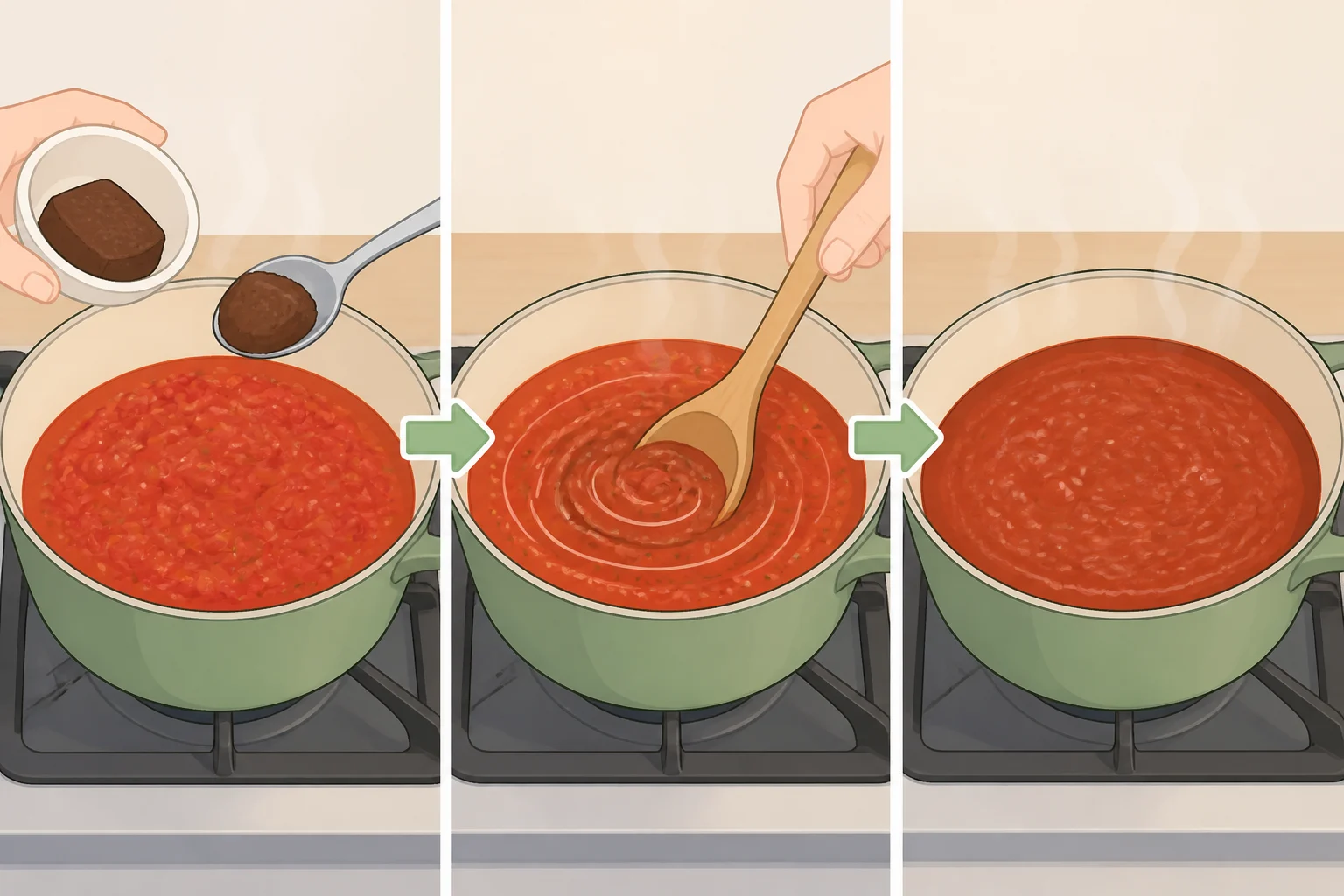
- Finely chop the onion and heat the olive oil in a saucepan over medium-low. Sweat the onion until it's soft and translucent, not browned, about 5 minutes (Pasta Grannies).
- Add the chopped tomatoes, or canned tomatoes, and cook about 10 minutes until they soften, then stir in the passata (Pasta Grannies).
- Stir in about a teaspoon of bouillon paste or crumbled stock cube, then simmer gently for 30 to 40 minutes, stirring occasionally, until the sauce turns thick and glossy (Pasta Grannies). Taste it around the 20-minute mark. This is how to add flavor to tomato pasta sauce without drowning it in salt: small additions, tasted each time, instead of dumping in the whole cube at once.
"Thick and glossy" means the sauce coats the back of a spoon and no longer looks watery when you drag a spoon through the center of the pan. If it still looks loose at the 30-minute mark, drop the heat slightly and let it run the full 40 minutes uncovered rather than raising the heat to rush it, which risks scorching the bottom.
Boil and finish the spaghetti
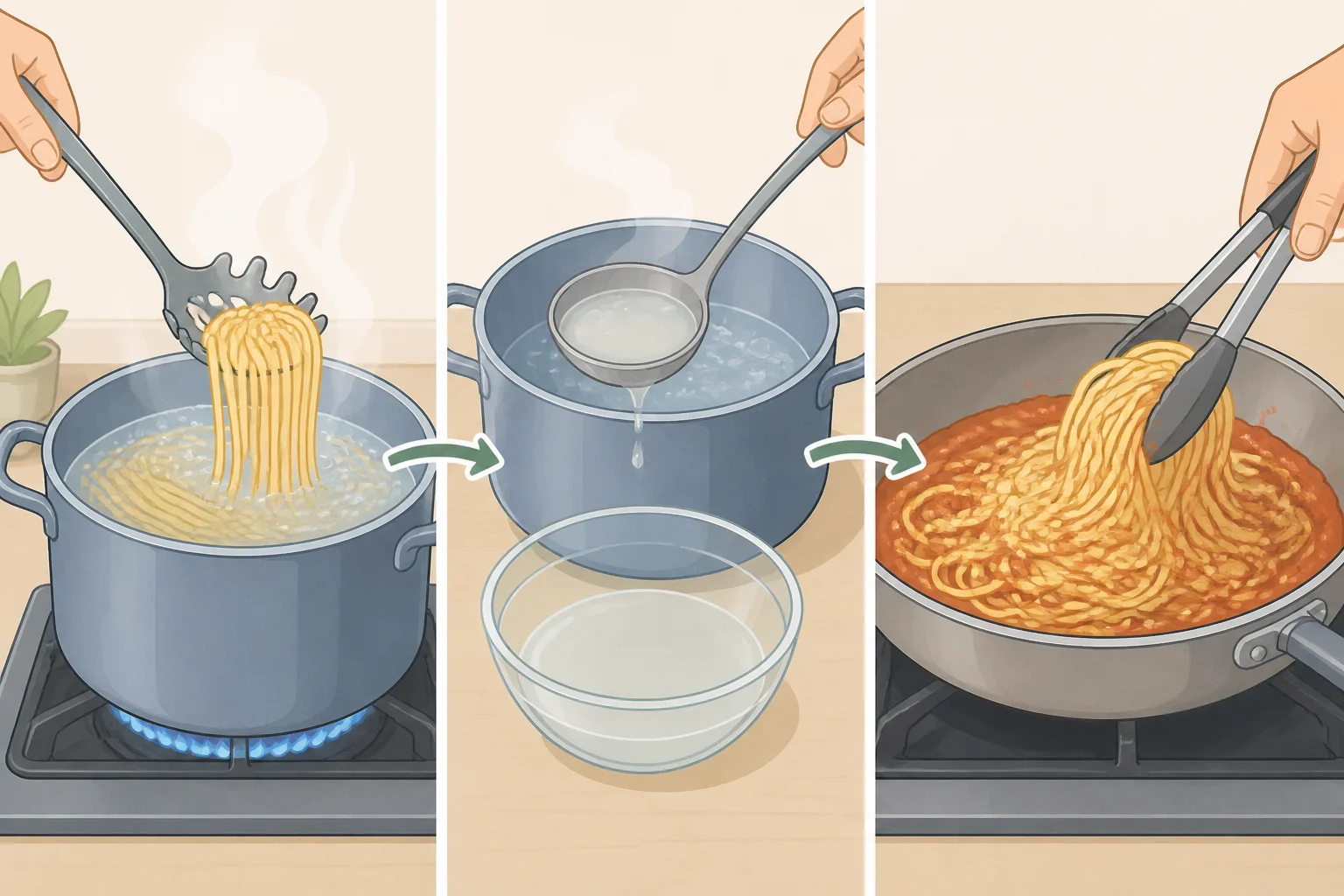
About 10 minutes before the sauce is ready, bring a large pot of lightly salted water to a boil. Skip the old habit of adding oil to the water. It floats on top instead of mixing in, so it won't stop sticking and only leaves a slick film that keeps sauce from clinging to the noodles later. Stirring the pasta during the first couple of minutes is what actually prevents clumping.
- Cook the spaghetti slightly less than the package's shortest suggested time, pulling it a minute or two early. Taste a strand near the end; it should still have a faint firm core at the center, not the full give of fully cooked pasta.
- Scoop out a cup of the starchy cooking water before draining, then drain the pasta and transfer it straight into the pan of simmering sauce (America's Test Kitchen).
- Toss everything together over medium-low heat for 1 to 2 minutes, adding small splashes of the reserved pasta water as needed, until the noodles finish cooking and the sauce visibly tightens around each strand (America's Test Kitchen).
- Taste once more before any final salt, then finish with torn basil leaves.
The pasta finishes cooking in the sauce, absorbing flavor while releasing starch that binds the oil and tomato into one cohesive coating instead of a thin sauce the noodles just sit in, a process Italian cooks call mantecatura, or mantecare (America's Test Kitchen).
Done right, the sauce should look glossy and grip every strand rather than collect in a puddle at the bottom of the bowl.
Fresh vs. canned tomatoes
If fresh tomatoes aren't in season, canned whole or crushed tomatoes can stand in for the fresh portion of the recipe. Since canned tomatoes are already soft, they'll likely need less than the 10 minutes Maria's recipe gives raw tomatoes to collapse, though this substitution is an adaptation this guide is making rather than something covered directly in her recipe. Watch the pot instead of setting a fixed timer, and move on once the tomatoes have broken down into the sauce.
Make Maria's homemade concentrate
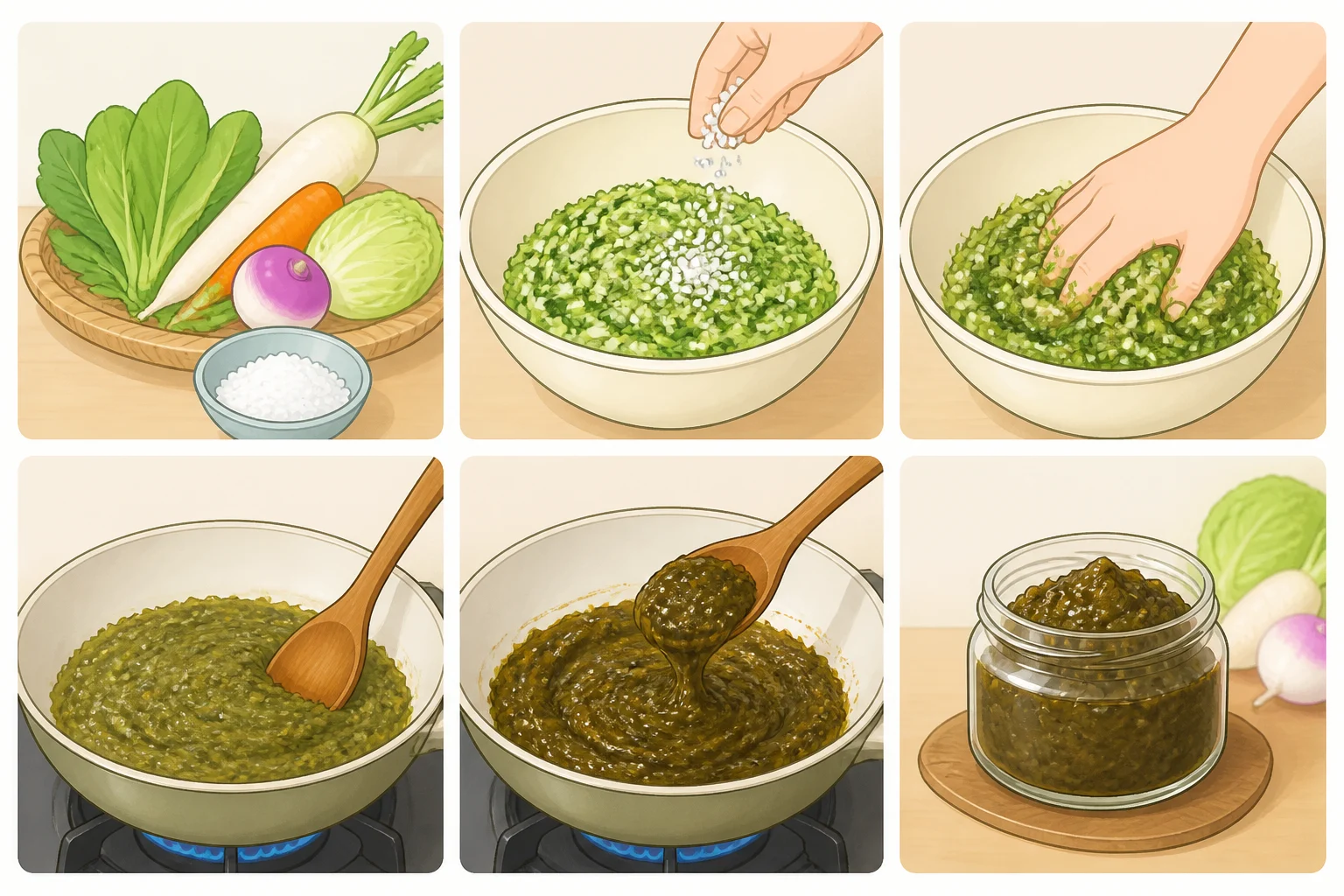
For readers who want to try Maria's actual concentrate instead of a store-bought shortcut, it's made by processing 1 kilogram of mixed vegetables, such as celery, carrot, onion, parsley, and tomato, with 600 grams of coarse salt and 2 to 3 tablespoons of olive oil into a coarse paste (Pasta Grannies). Cook that paste uncovered in a wide pan over very low heat for 45 to 60 minutes, stirring often, until it's thick, glossy, and no liquid remains in the pan (Pasta Grannies). Keep the heat low throughout; a paste this dense scorches fast once most of the liquid cooks off, so check it every few minutes toward the end rather than walking away.
Let the finished paste cool completely before storing. It keeps 3 to 4 months refrigerated in a sealed jar, or can be frozen in ice cube trays for future batches (Pasta Grannies). This is a weekend project rather than a same-night step, so plan to make a batch when there's time to let it simmer undisturbed.
Maria tops her orecchiette with grated salted ricotta or cacio ricotta (Pasta Grannies). For spaghetti, a grated hard salty cheese like pecorino is a workable stand-in, though it's an adaptation rather than part of her documented recipe. Add it after tasting the sauce, since cheese brings its own sodium to a dish already carrying salt from the stock cube.
Troubleshooting: if the sauce turns out flat or greasy
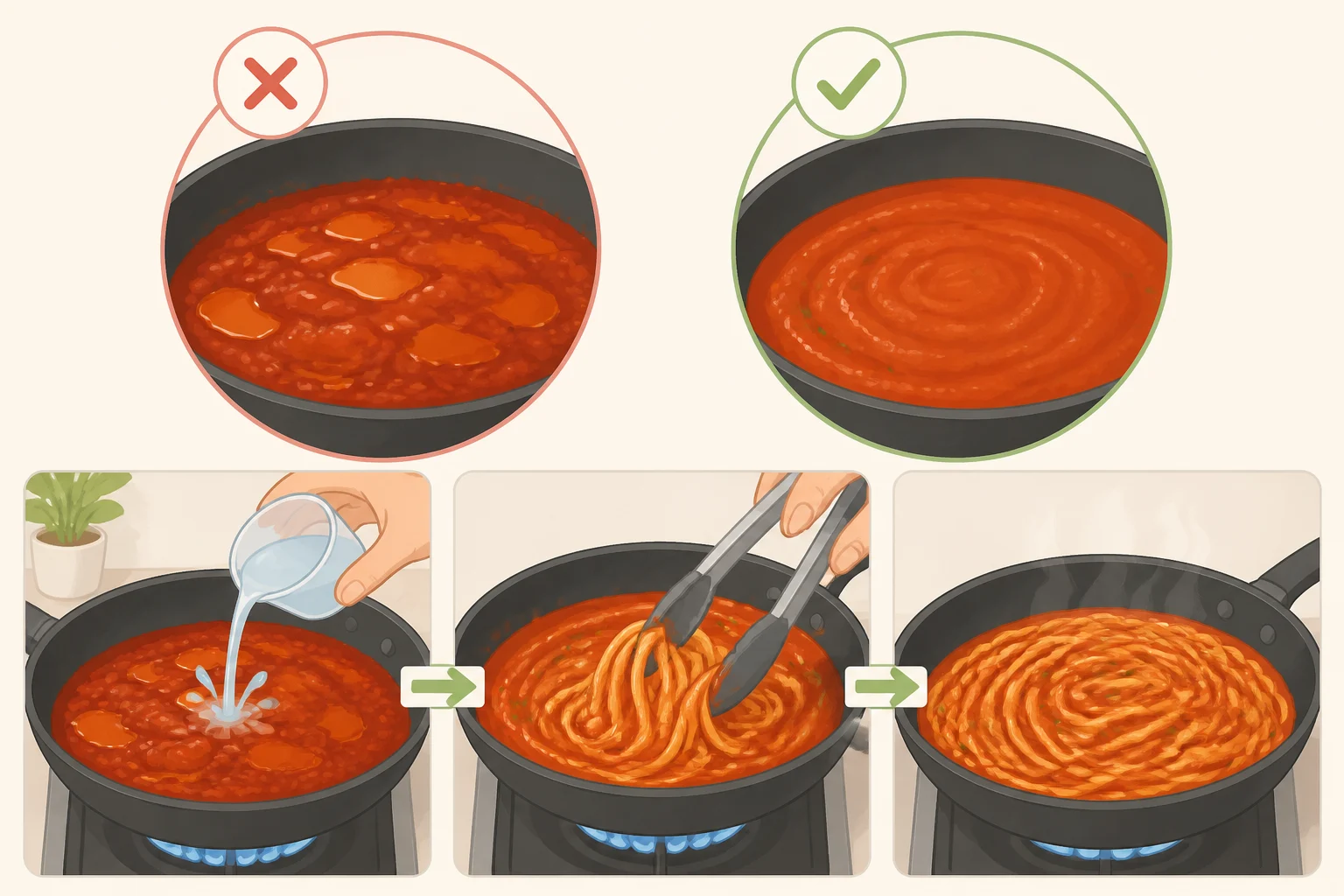
A sauce that tastes flat usually needs a little more bouillon, added a small amount at a time, tasted, and stopped as soon as it's balanced, rather than a spoonful of plain salt. That lines up with how Maria describes her own concentrate: the real trick for flavor, not just another source of salt (Pasta Grannies).
If the finished sauce looks greasy or separated instead of coating the noodles, that's a sign there wasn't enough starchy pasta water in the mix; too little water and the sauce breaks, too much and it turns thin and watery (America's Test Kitchen). Add another splash and keep tossing over low heat if it looks greasy, or keep tossing a bit longer without adding more liquid if it looks thin and loose, so the extra water cooks off.
Once the sauce coats the pasta evenly and tastes balanced, stop adjusting. Both Maria's homemade concentrate and store-bought bouillon are potent enough that more rarely helps and can push the dish too salty to pull back from.
Serve the spaghetti right away while the sauce is still glossy and warm. If there's leftover sauce, refrigerate it in a sealed container. Any leftover homemade concentrate holds for 3 to 4 months in the fridge, or can go into ice cube trays in the freezer for the next time a sauce needs that same extra depth (Pasta Grannies).





Comments
Be the first, drop a comment!