



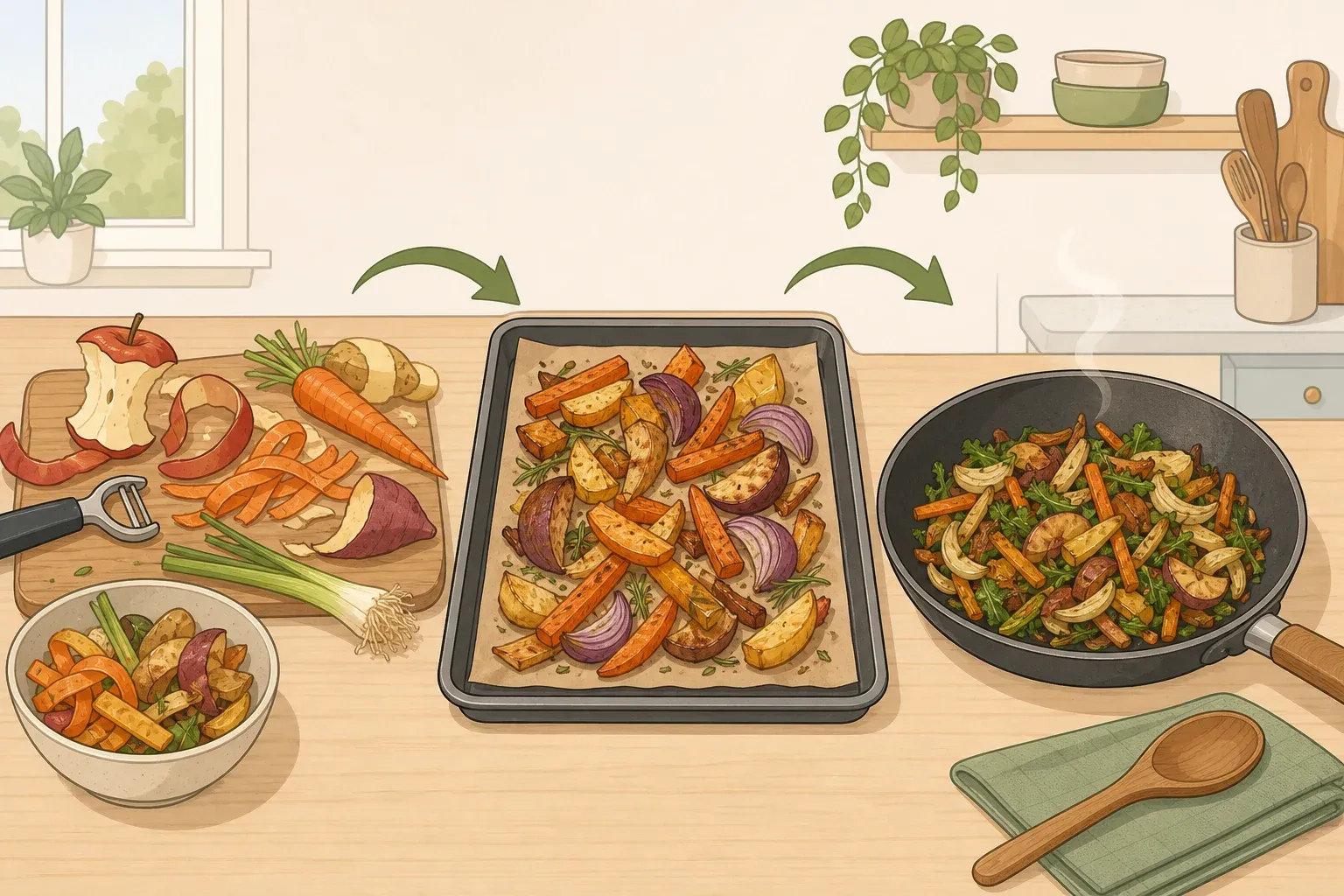
How to Eat More Fibre With Fruit and Vegetable Peels: 3 Tips
King's College London researchers tested fibre levels in 12 common fruits and vegetables and found that the high-fibre parts of fruits and vegetables, the skins, seeds, and stalks usually scraped into the compost, contained more fibre than the parts people actually eat, in 10 of the 12 cases, New Scientist reports. This guide covers how to eat more fibre with fruit and vegetable peels using three of the easiest scraps to start with: butternut squash skin and seeds, broccoli stems, and watermelon rind.
That comparison measured fibre in the separated plant parts themselves, not how much ends up on a finished plate, so it's a density difference rather than a promised gain from one meal. Butternut squash shows the pattern most clearly: skin and seeds, measured together, carry 9.25 grams of fibre per 100 grams, against 2 grams per 100 grams in the flesh alone, according to the same report. The method itself is simple: leave edible skins on before roasting, cook stems instead of binning them, and turn tough rinds into something worth eating with a quick sauté. None of it needs special equipment, and it's meant to sit alongside a diet already built around vegetables, whole grains, and legumes, not replace it.
What you'll need
Cooking with vegetable peels and scraps doesn't call for much gear: a vegetable peeler, a sharp knife, a baking sheet, and a pan wide enough to sauté vegetables cover everything below. A box grater speeds up the broccoli stem slaw, but a sharp knife cut into thin matchsticks, or a food processor's grating disk, does the same job. Any wide skillet, cast iron pan, or wok works for the watermelon rind if a dedicated sauté pan isn't on hand.
All three methods are beginner-friendly. None require advanced knife skills or specialty equipment. Make all three in one sitting if the goal is to taste-test the whole set, or spread them across separate meals instead; nothing here needs to happen at once.
Not everything in a trim pile belongs here. Woody stem ends, hard pits, and papery skins like onion and garlic peels are fibrous too, but they sit outside what this method covers.
Which edible fruit and vegetable skins are worth saving
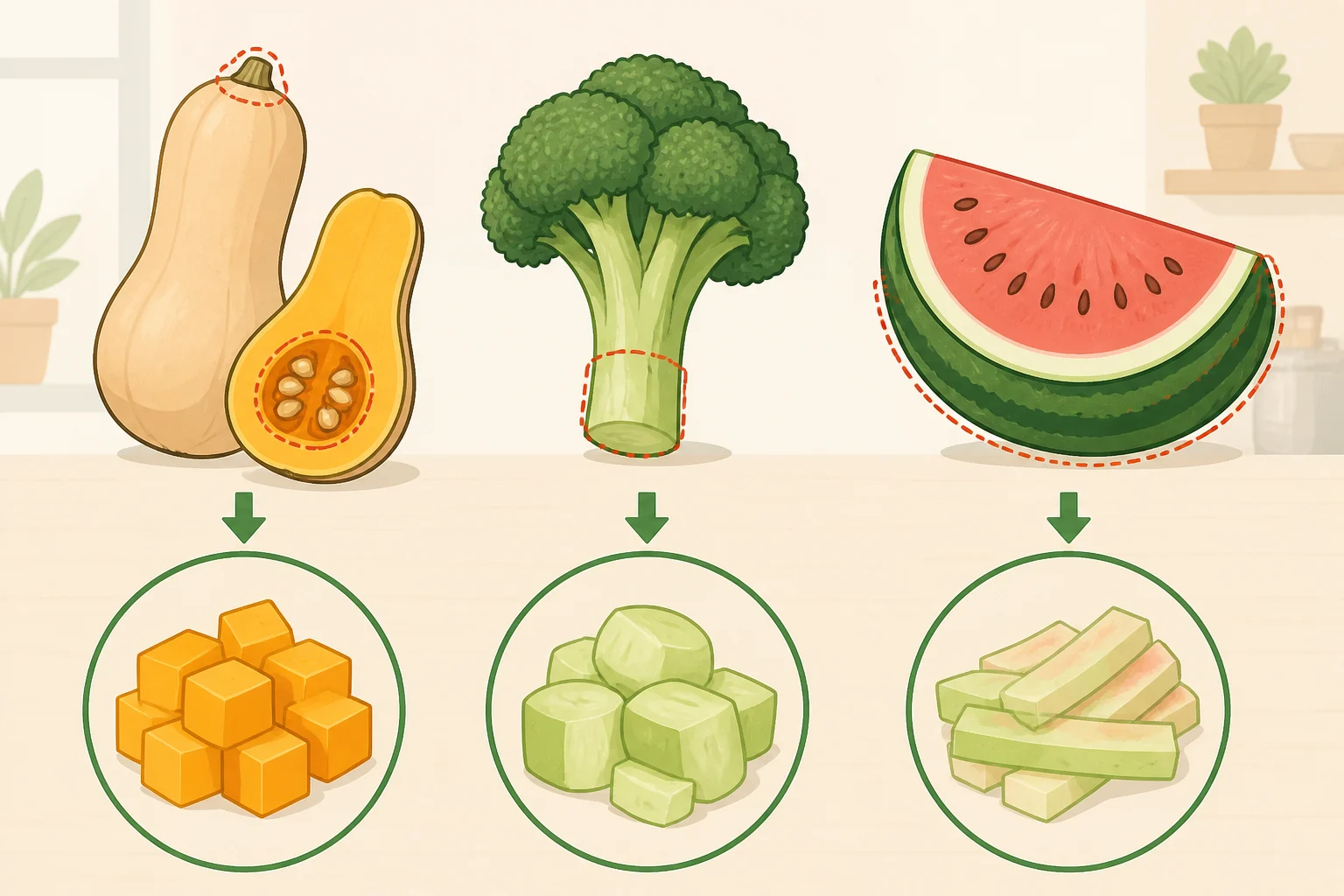
- Butternut squash: scrub the skin clean before cooking, the same as any vegetable eaten with the peel on. Cook the skin and seeds together once scrubbed, and set aside any seeds that look shriveled, dark, or moldy; those are better composted than roasted.
- Broccoli: the inner stem is good to use once the fibrous outer layer is peeled away. Cut off the dry, woody base first and send that straight to the compost.
- Watermelon: the white rind between the red flesh and the green skin is the part to cook with. The green exterior is left out of this guide because it can remain unpleasantly tough even after cooking.
These three fall into categories the King's College London team actually measured: skins, seeds, and stalks. New Scientist reports the pattern held across most of the produce tested, not that every item showed an identical result, so treat it as a general rule rather than a guarantee for every fruit or vegetable in the kitchen. The same study also tested kiwi fruit and bell pepper, among others, which points to other produce worth trying once these three feel routine.
Why cooking beats eating these parts raw
Texture is the real obstacle here, not edibility. New Scientist reports that the research team found these parts tough to chew raw and suggests blending, grating, or roasting them instead. Cooking doesn't change how much fibre is packed into a scrap; it changes whether anyone actually wants to eat it, which is the real barrier in most kitchens. That's the logic behind root-to-tip eating for fibre: the fibre is already there, waiting on a cooking method that makes it worth eating, though not every peel or stalk in a produce drawer is a good candidate.
King's College London's canteen put a version of this into practice in May 2025, serving a West African peanut stew built from a whole butternut squash, kale stalks, and leek tops, alongside a watermelon salad made with pickled rind, per the same report. The three methods below aren't that exact menu; they're standard kitchen techniques adapted for the same categories of scrap, using tools most kitchens already have.
How to eat more fibre with fruit and vegetable peels: three easy methods
1. Roast squash skin and seeds
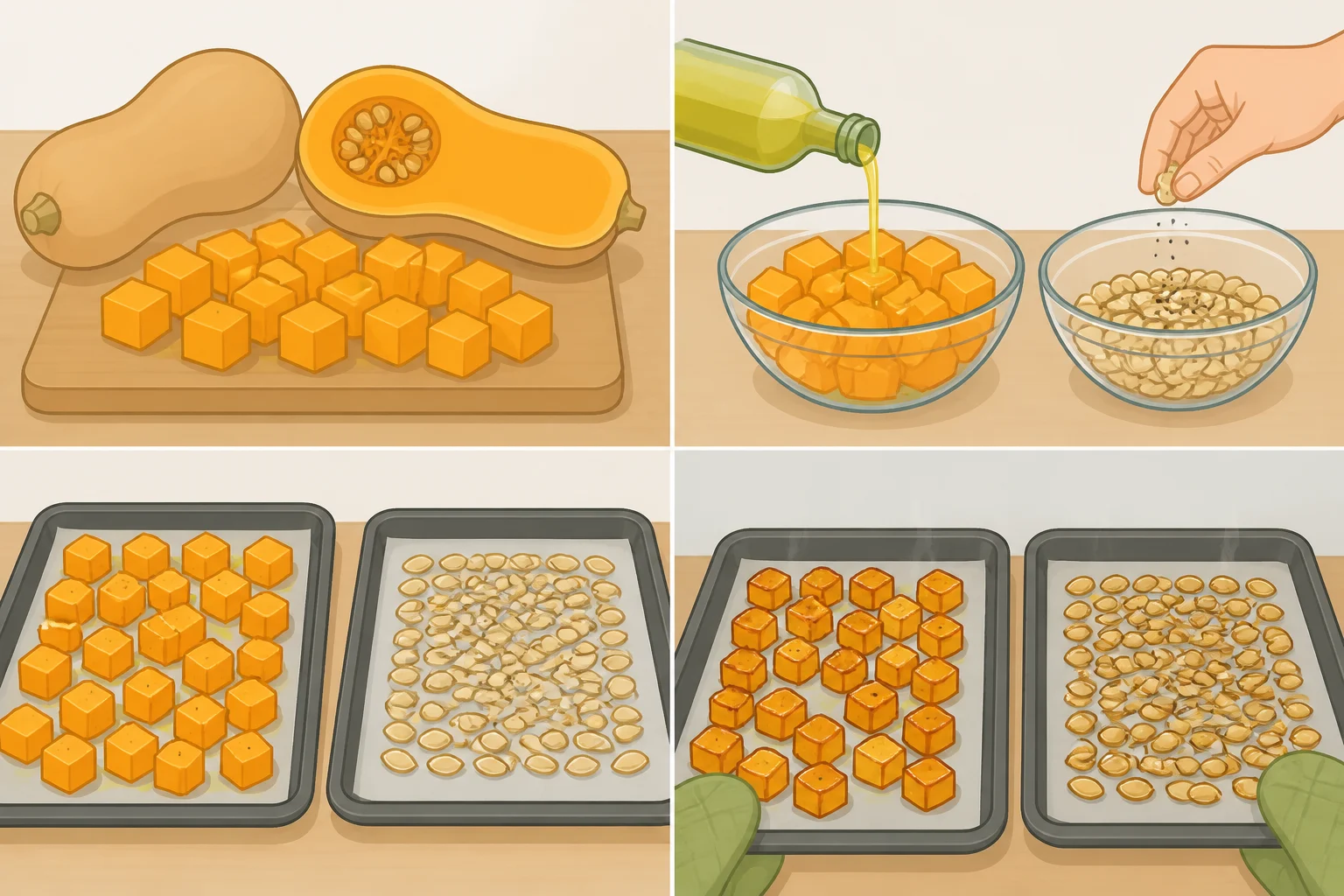
- Scrub the squash skin clean, then cut the whole squash, skin on, into roughly 1-inch cubes.
- Toss the cubes with oil, spread them in a single layer on a baking sheet, and roast at 425°F until the edges caramelize and a fork slides in easily, about 25 to 30 minutes, flipping once halfway through.
- About 10 minutes after the cubes go in, scoop out the seeds, rinse off the stringy pulp, and pat them dry. Set aside any that look shriveled, dark, or moldy and compost them.
- Toss the remaining seeds with oil and a little salt and roast on a separate sheet at 300°F until dry and lightly browned, about 20 to 25 minutes. Keep the seeds apart from the cubes; they're thinner and burn fast at the higher temperature the cubes need.
- Pull the skin when it's fork-tender, not chewy, and the seeds when they're dry and lightly browned rather than soft.
One squash makes enough roasted cubes and skin for a side dish for two to four people, plus a small bowl of seeds to use as a topping over the next few days. Serve the cubes and skin the way you'd serve any roasted vegetable: alongside roast chicken, folded into a grain bowl with rice or farro, or tossed into a warm salad with greens. Scatter the seeds over soup, oatmeal, or a green salad for crunch.
If the skin is still tough after a full roast, that's a texture problem, not a spoilage one; cut the next batch smaller and give it a few extra minutes rather than stretching this one out indefinitely. Compost a batch instead if it smells sour, looks slimy, or shows any mold, which points to spoilage rather than undercooking. Refrigerate leftover skin and seeds in separate sealed containers and eat them within a few days; if they lose some crispness after reheating, that's just the vegetable softening with time, not a sign anything's wrong.
2. Peel and cook broccoli stems
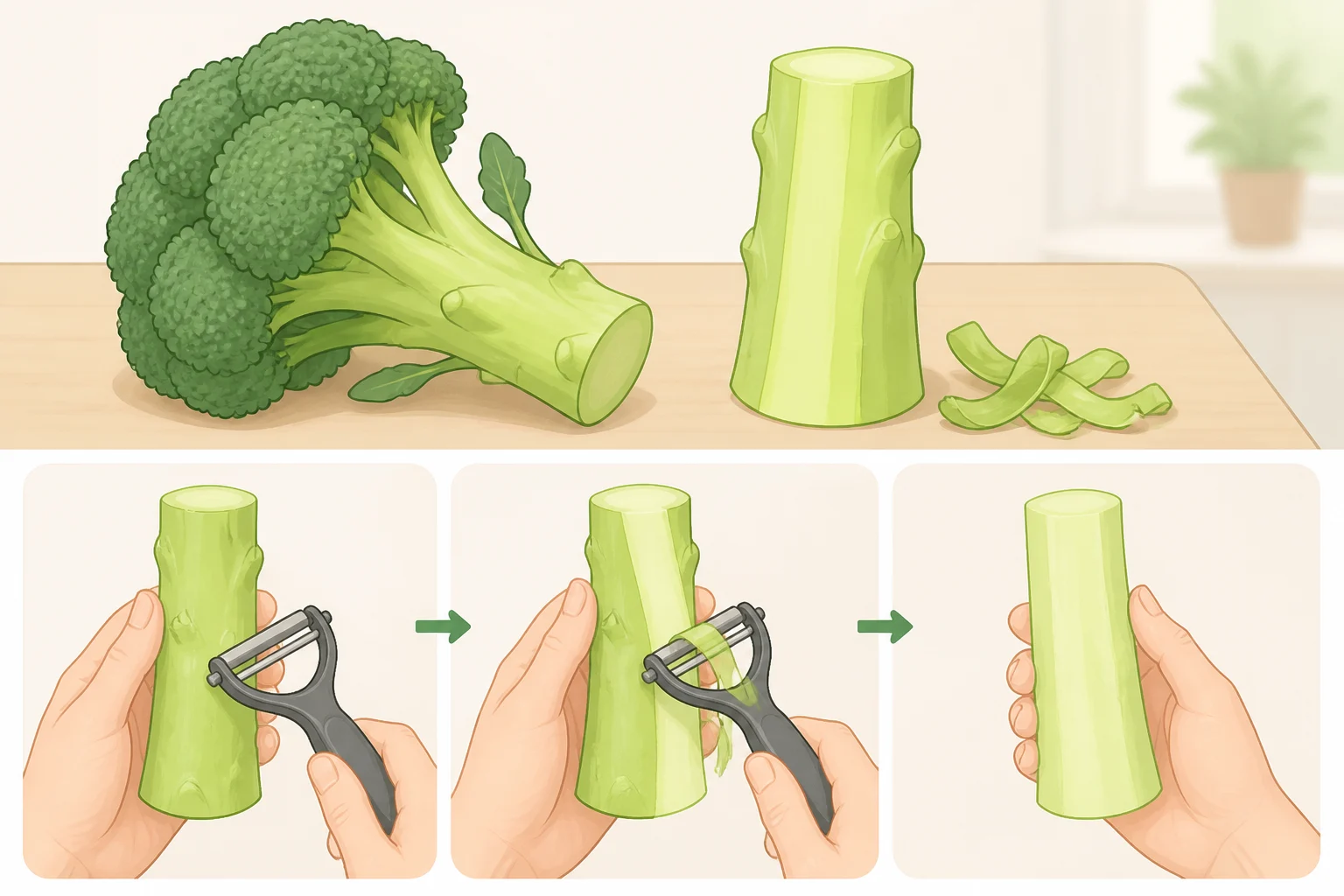
- Trim off the dry, woody base cut and discard it.
- Peel the fibrous outer layer with a vegetable peeler, going around the stem a few times until the surface looks pale green throughout with no stringy fibers visible at the edges.
- For a slaw, grate the peeled stem on a box grater, or cut it into thin matchsticks with a knife, and mix it into a vinaigrette-dressed slaw with shredded carrot or cabbage.
- For a stir-fry, slice the peeled stem into thin coins and cook alongside the florets until fork-tender rather than stringy, about 4 to 5 minutes.
If neither a slaw nor a stir-fry sounds appealing, blend the peeled stem into a soup instead; it's one of the preparation methods researchers point to for scraps that are tough to chew raw. One stem is usually enough for a slaw side for two or a stir-fry addition for a family-sized batch of florets.
A stem that's still fibrous after cooking usually means it wasn't peeled deeply enough or was sliced too thick; peel one layer further and cut thinner next time. That's a fix, not a sign the stem has gone bad. Toss a stem instead if it's slimy, discolored, or smells sour before cooking even starts. Grated or sliced stem keeps in the fridge in a sealed container for a few days, about as long as any other raw cut vegetable.
3. Sauté watermelon rind instead of eating it raw
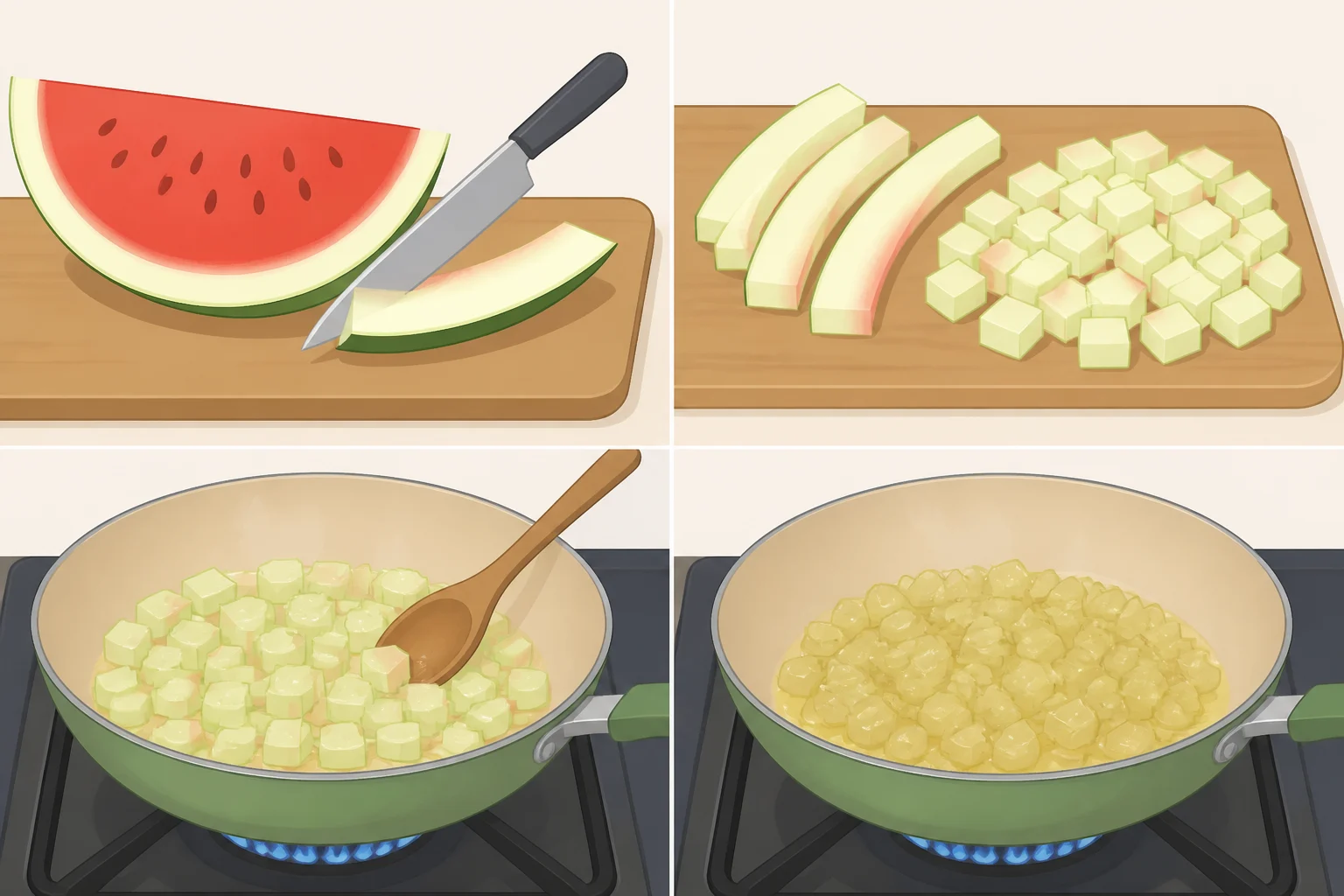
- Cut away the tough green exterior, leaving just the white rind between the skin and the red flesh.
- Dice the rind into roughly half-inch pieces.
- Sauté in a little oil over medium heat, stirring occasionally, until the pieces turn translucent and tender, about 8 to 10 minutes.
- Taste a piece before serving. It should be mild and faintly sweet, with a texture closer to cooked zucchini than raw watermelon.
The rind from about a quarter of a watermelon is usually enough for a side dish for two to three people. Serve it on its own, stir it into a vegetable stir-fry, or fold it into a grain salad once it's cooled. King's College London's canteen served a similar cut as a quick pickle rather than a sauté; either approach solves the same texture problem, but there's no tested brine ratio to pass along, so a sauté is the more straightforward route at home.
If the rind is still a little crunchy at 10 minutes, keep it over the heat a few minutes longer rather than raising the temperature, which tends to brown the outside before the inside softens. Toss a batch instead if it smells sour or feels slippery before it even hits the pan, which points to spoilage rather than a cook-time issue. Refrigerate cooked rind in a sealed container and eat it within a few days; it keeps losing texture the longer it sits, so sooner is better than later.
Across all three methods, success looks like tender, mild pieces that disappear into the dish rather than standing out as stringy or bitter. If a piece stays tough or bitter after a full cook, cut it smaller or cook it longer next time, or leave that batch out and compost it instead of forcing it down.
How much fibre this realistically adds
The study measured fibre density, grams per 100 grams of tested material, not grams gained from a finished plate. The squash comparison noted earlier shows how much more fibre-dense the skin and seeds are than the flesh; it isn't a promised gain per meal, since there's no published figure for what a typical serving adds.
For a daily reference point, a 2023 PMC review notes that US nutrition labels use a Daily Value of 28 grams of fibre for a 2,000-calorie diet, based on the definition of dietary fibre as nondigestible carbohydrates naturally occurring in plant foods. UK guidance sets a slightly higher recommended minimum of 30 grams a day; New Scientist reports that just 4% of British adults currently meet it, with the average adult eating around half that amount.
Christian Reynolds at City St George's University of London, quoted by New Scientist, called the research an "exciting investigation," but added that cutting produce waste is "part of the solution, but it's not the only thing we need to do." Scrap-cooking adds to an already fibre-rich diet; it isn't a substitute for eating more vegetables, whole grains, and legumes generally.
Finish line: start with one scrap and build from there
Start with the roasted squash; it needs no extra prep beyond skipping the peeler, and the oven does most of the work. Once that feels routine, add a second method: grated broccoli stem in a slaw, or sautéed watermelon rind alongside a stir-fry. That's one of several low-effort ways to increase fibre intake naturally, and the same approach extends to other produce the study measured, like kiwi skin or pepper stalks, once these three feel familiar.
If a new dish brings on gas or bloating, scale back the portion for a few days and build back up slowly rather than pushing through discomfort. Treat these scraps as an addition to a diet that still leans on vegetables, whole grains, and legumes, not a swap for them.
Success looks like a roasted squash cube that tastes better with the skin on than expected, a broccoli slaw that disappears from the bowl, and watermelon rind that blends into whatever dish it's in. If a batch turns out tough, bitter, or just unpleasant after a proper cook, compost it and adjust the cut size or cook time next round rather than serving the same version twice.


Comments
Be the first, drop a comment!