



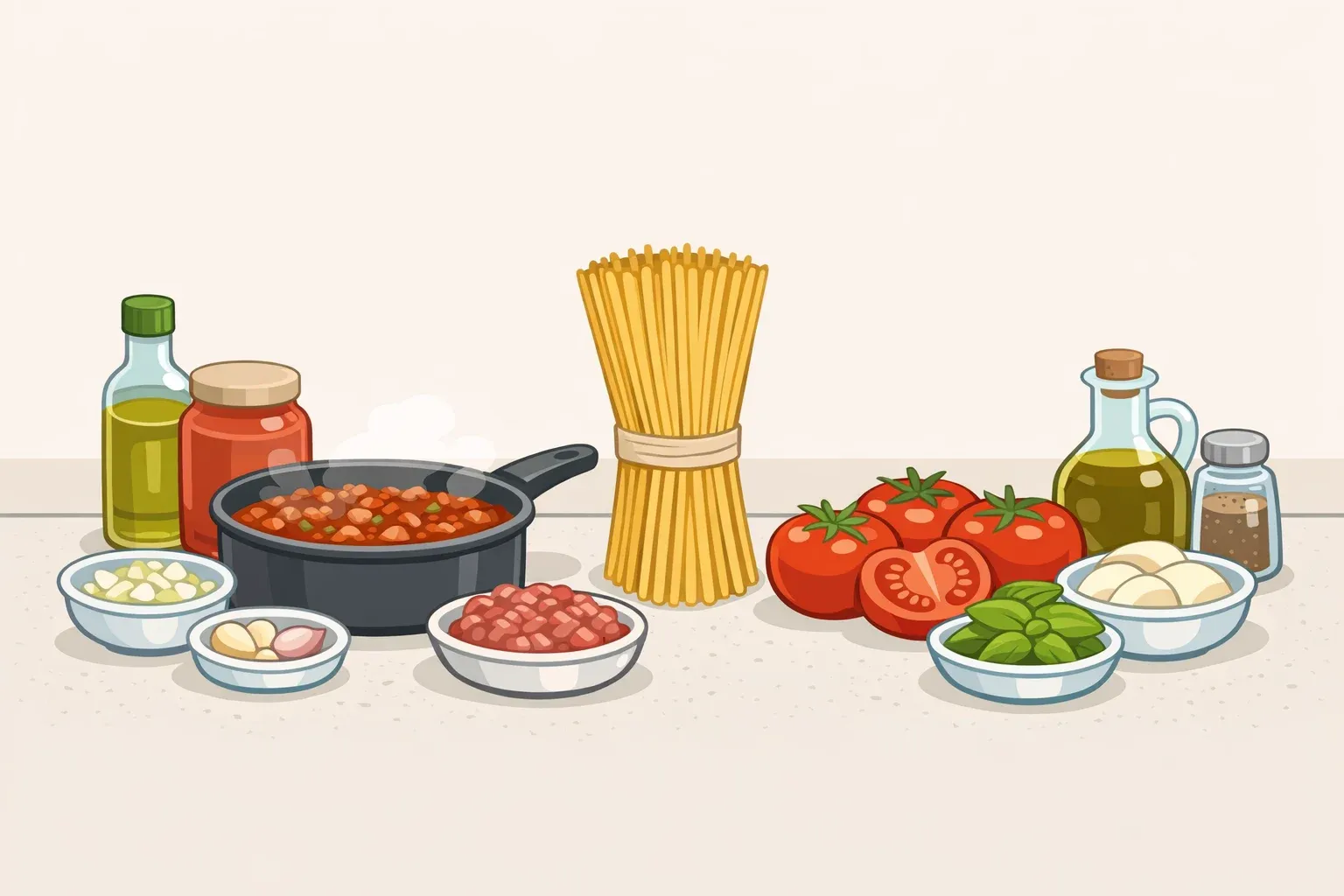
Homemade Spaghetti Sauce Recipe: Meat Sauce or Fresh Tomato
The real choice isn't which homemade spaghetti sauce recipe is better. It's what's sitting on the counter right now. A can of whole tomatoes and about an hour on the clock point toward a rich, beefy meat sauce. A few genuinely ripe tomatoes point toward something lighter and faster, ready not long after the pasta water boils. These aren't two speeds of the same dish. They're two different dishes that happen to land on the same plate of pasta.
A classic spaghetti sauce is a rich, beefy tomato sauce built with Parmesan and basil, distinct from a meatless marinara or a fresh, quick-cooked pomodoro (Delish, updated yesterday). Delish describes it as a dependable option for both weeknight dinners and dinner parties, and this version runs about 55 minutes total with 10 minutes of hands-on prep, serving 4 to 6 people (Delish, updated yesterday). A grated fresh-tomato sauce, by contrast, needs only a few minutes of actual simmering once the tomatoes are prepped, trading some of that depth for brightness (Country Living, 9 days ago).
This guide covers how to make spaghetti sauce from scratch both ways, plus a shared section on finishing either one with pasta and a short rundown of the mistakes most likely to leave a pot tasting bitter or flat. Reach for the canned-tomato method when a hearty, meaty sauce and about an hour fit the evening. Reach for the fresh version only when the tomatoes on hand are genuinely ripe, since the whole method depends on that.
Easy homemade spaghetti sauce recipe: the classic meat sauce
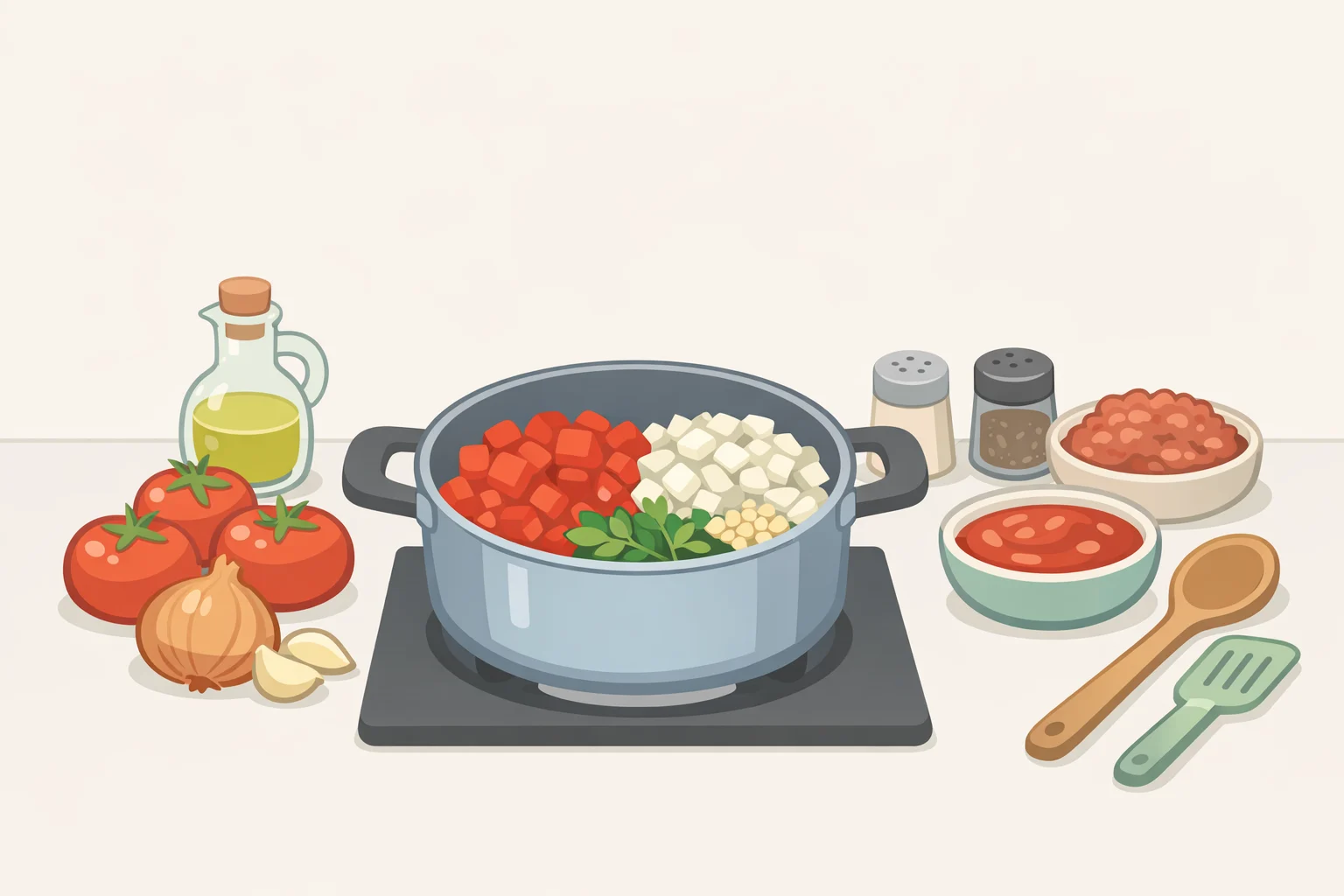
Delish draws a quick distinction worth knowing before starting: this isn't Bolognese, a longer-simmered ragù built with carrots, celery, wine, and milk, and it isn't marinara, which skips the meat for crushed tomatoes, garlic, and basil. It's a meatier middle ground that's ready in under an hour (Delish, updated yesterday).
Setup: a medium saucepan, a wooden spoon, and an apron for hand-crushing the tomatoes, since that step gets messy (Delish, updated yesterday). Yield is 4 to 6 servings, prep runs about 10 minutes, and total time is about 55 minutes (Delish, updated yesterday). It's beginner-friendly, and the heat shifts between medium and medium-low depending on the step, not a single setting held the whole time.
Delish's writeup explains what each ingredient contributes but doesn't publish exact amounts. The list below is a home-cook-scale adaptation built around that method, not the source's own measurements, so treat it as a reproducible starting point rather than a locked formula:
- 2 tablespoons olive oil
- 1 medium onion, chopped
- 3 cloves garlic, minced
- 1 teaspoon dried basil
- 1 pound ground beef, ideally 85% lean for a good mix of fat and flavor, per Delish's preference (Delish, updated yesterday)
- 1 (28-ounce) can whole peeled tomatoes
- 1 piece Parmesan rind, about 2 inches
- 2 tablespoons butter
- 1/4 cup fresh basil, torn
- Salt, to taste
-
Build the base. Cook the onion, garlic, and dried basil in the olive oil over medium heat until fragrant, with the onion softened and just starting to brown, not scorched (Delish, updated yesterday). Drop to medium-low if it's browning fast. If the onion or garlic turns black or starts smelling acrid, don't push forward. Chefitt's troubleshooting guide recommends restarting that step with a fresh batch, since a scorched flavor carries into everything added afterward and doesn't cook back out (Chefitt, three months ago).
-
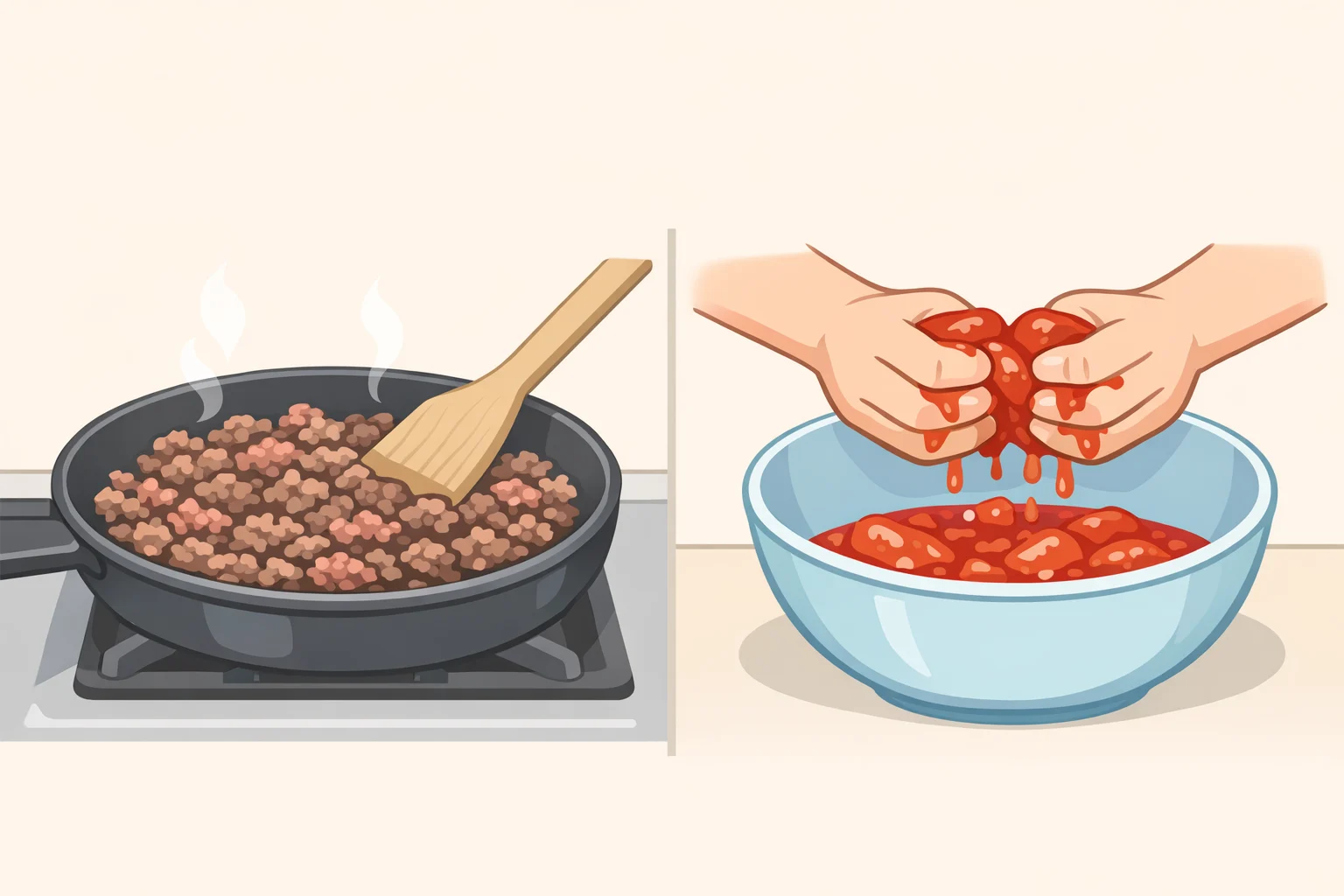
Brown the beef. Add the ground beef and cook, breaking it up, until no pink remains. While it browns, crush the canned tomatoes by hand in a bowl. If the beef on hand is leaner than 85%, a splash of extra olive oil in the pan helps keep the finished sauce from drying out.
-
Add tomatoes and reduce. Pour in the crushed tomatoes and the Parmesan rind, bring everything to a simmer while scraping up the browned bits from the bottom of the pan, and cook 25 to 30 minutes until the sauce reduces by about one-quarter and coats the back of a spoon (Delish, updated yesterday). Watch for signs of going too far: a noticeably darker color, a heavy coating on the spoon, and a sharp rather than round taste, per Chefitt's guide. If that happens, stir in liquid a tablespoon at a time per cup of sauce, then simmer briefly to bring the body back (Chefitt, three months ago). Start a pot of salted water heating around now, so it's ready when the sauce finishes reducing.
-
Finish. Fish out the Parmesan rind, then stir in the butter, fresh basil, and salt until the butter melts in and the sauce turns glossy (Delish, updated yesterday). Taste before adding more salt. No rind on hand? Extra grated Parmesan at the table makes up some of that savory depth.
The sequence, not a longer ingredient list, is what builds the flavor: dried basil early to season the oil, fresh basil late to keep it delicate, beef browned before the tomatoes go in, butter stirred in only at the very end (Delish, updated yesterday).
Quick spaghetti sauce recipe: the fast fresh-tomato version
Choose tomatoes that are ripe but still slightly firm. Roma tomatoes work well because they're meaty, but vine-ripened or garden slicer tomatoes are good choices too (Country Living, 9 days ago). Underripe or out-of-season tomatoes won't deliver the sweetness this method depends on, so lean on the canned-tomato method above instead if that's what's on hand.
Country Living's writeup covers the grating technique and general timing but doesn't publish full recipe quantities. The amounts below are a practical adaptation sized for a normal dinner, not measurements pulled from the source:
- 2 pounds ripe tomatoes
- 2 tablespoons olive oil
- 1 clove garlic, thinly sliced (optional; not part of the sourced method)
- 1/4 cup fresh basil, torn
- Salt, to taste
- 12 ounces spaghetti
This makes enough sauce for about 4 servings in a 10-inch skillet. Grating a few tomatoes takes just a couple of minutes, and the tomatoes themselves need only a few minutes of actual cooking once they're grated, which is what keeps this method fast and the flavor bright (Country Living, 9 days ago). Treat the total time as an estimate built from those two windows, not a stopwatch-tested figure.
-
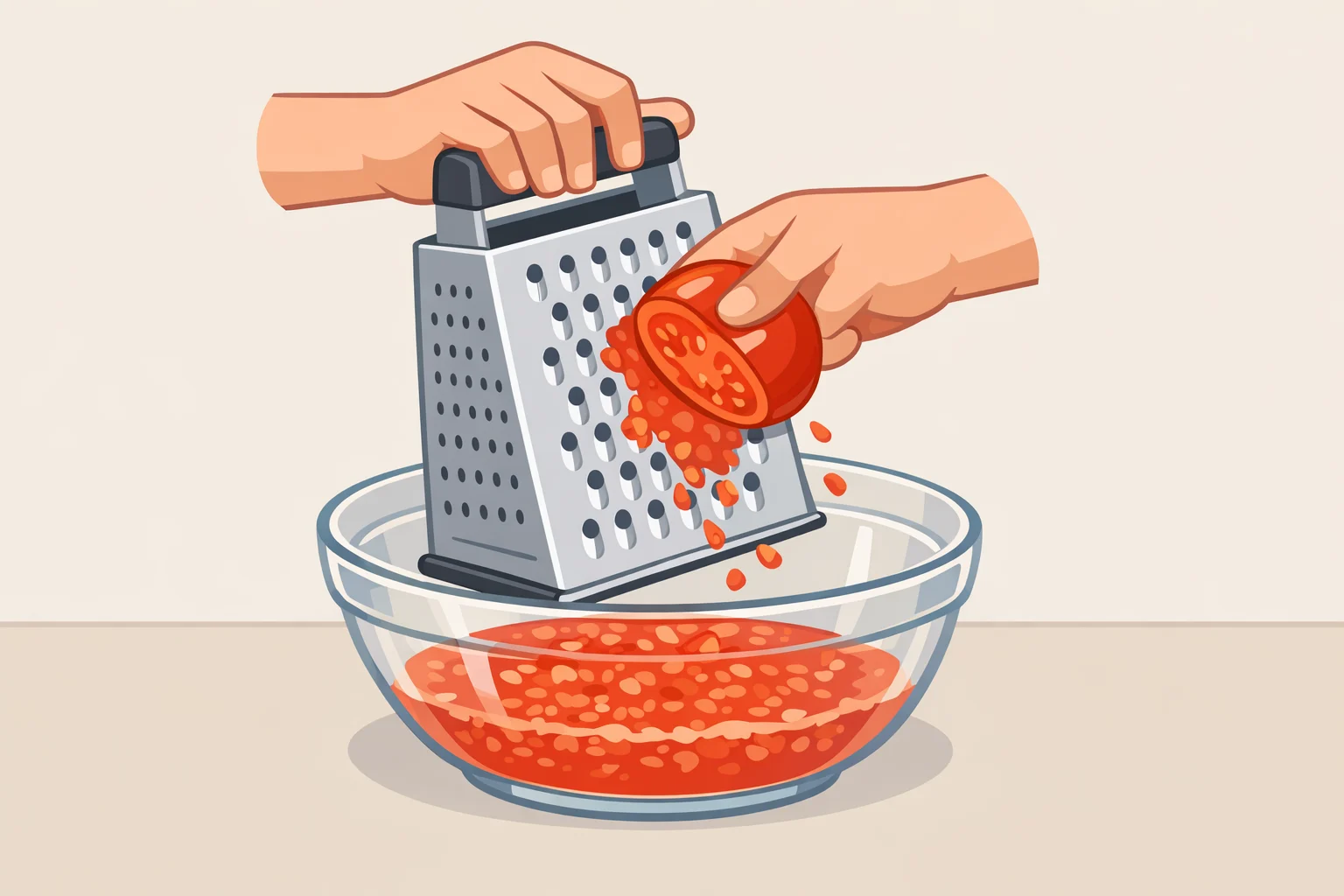
Grate the tomatoes. Slice each tomato in half across the equator so it's easier to hold. Set the box grater inside the bowl to catch the juices, which go straight into the sauce. Grate the cut side against the large holes until only the flattened skin is left in your hand, then discard the skin; no peeling needed (Country Living, 9 days ago). Keep fingertips away from the grater as the tomato gets smaller, and stop once only skin remains. Put a pot of salted water on to boil before grating, since this sauce comes together fast once the tomatoes are ready.
-
Warm the aromatics. Heat the olive oil, and garlic if using it, in the skillet over medium heat just until fragrant. Garlic can turn from fragrant to bitter quickly once it starts browning, and Chefitt's guide notes that scorched garlic doesn't cook back to sweet, so pull the pan off the heat as soon as it smells nutty rather than sharp (Chefitt, three months ago). Drop the pasta into the boiling water around now so both finish close together.
-
Add tomatoes and simmer briefly. Pour in the grated tomatoes along with their juice and simmer just a few minutes. Because the cooking time is so short, the sauce stays sweet, bright, and silky instead of developing the deeper flavor of a long-simmered sauce (Country Living, 9 days ago). It should coat the pasta lightly and still run looser than the meat sauce. Finish with the torn basil and salt to taste.
A firm Roma and a juicy heirloom slicer produce very different amounts of pulp and liquid, so judge by texture rather than a fixed ratio. If the sauce looks thin, give it another minute or two over the heat. If it looks thick, loosen it with a splash of reserved pasta water, covered next.
Timing and finishing either sauce with pasta
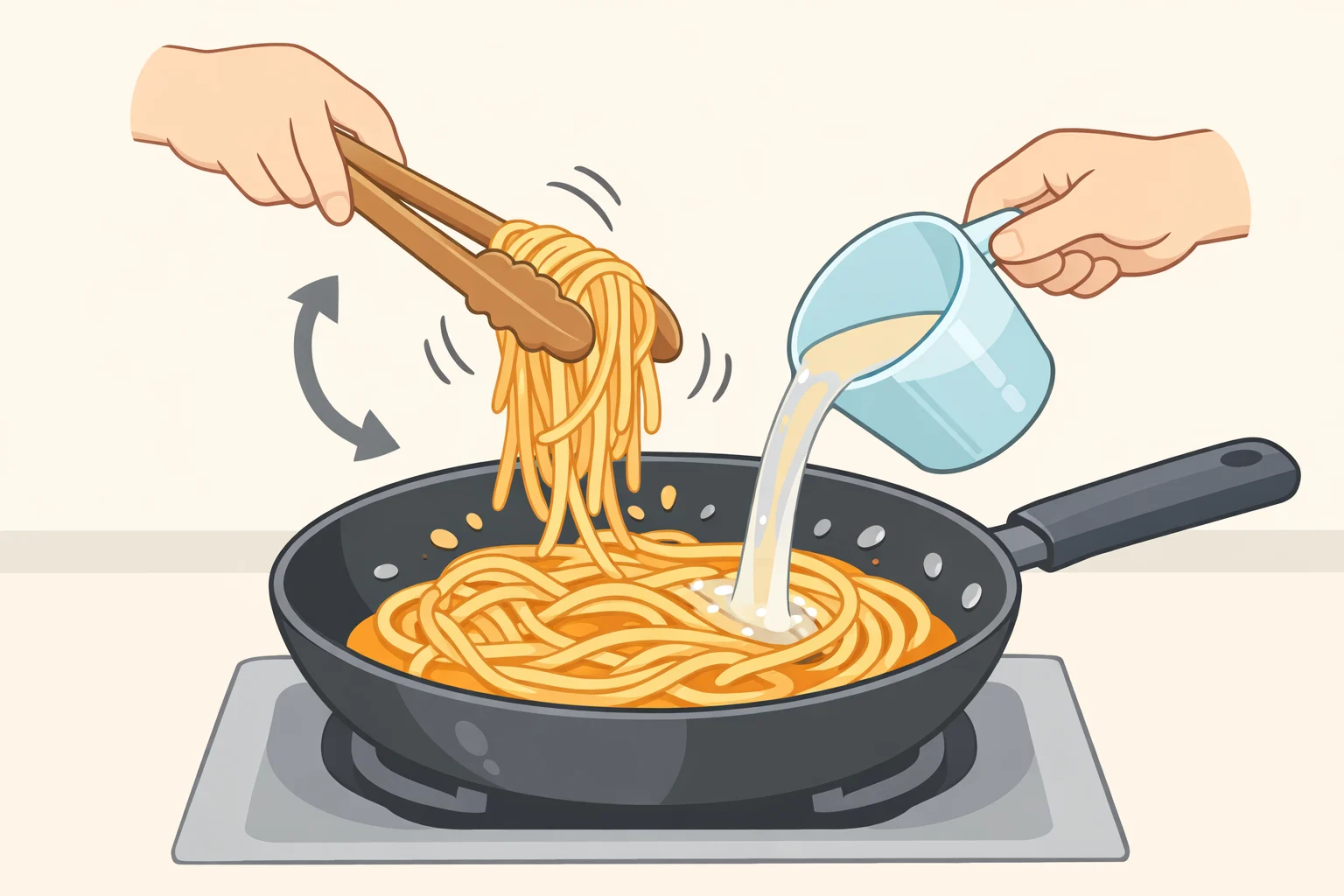
Reserve about 1/2 cup of pasta cooking water before draining, no matter which sauce is on the stove. That starchy water helps sauce and noodles cling together instead of separating into layers in the bowl.
For the classic sauce, toss the drained pasta with the sauce over low heat, adding pasta water a tablespoon at a time until it coats the noodles rather than pooling at the bottom of the bowl. For the fresh sauce, go easier on the pasta water since the sauce is already thin; add it only if the sauce looks like it's separating from the noodles rather than clinging to them.
Either way, the goal is a thin, even coating on every strand. If sauce is pooling instead of clinging, another minute over low heat with a small splash more pasta water usually fixes it.
Finishing and serving whichever sauce you make
Toss pasta and sauce together right before eating rather than letting them sit apart, especially with the fresh version, which is meant to be served immediately for its brightest flavor (Country Living, 9 days ago). A finished bowl should look glossy, not soupy, with sauce clinging to the noodles rather than sitting in a puddle underneath them.
Taste before serving and adjust with small pinches of salt rather than one big one. Chefitt's troubleshooting guide notes that salt actively suppresses the perception of bitterness, which makes it worth reaching for before herbs or extra butter (Chefitt, three months ago). If the classic sauce tastes flat after that, a little extra butter or grated Parmesan at the table is worth trying.
If either sauce tastes sharp rather than rounded, that's usually a sign something ran too far earlier in the process, either the aromatics or the reduction, not something a pinch of salt alone will mask. Note which step it was, and adjust the heat or timing there next time rather than piling fixes onto a sauce that's already past saving.




Comments
Be the first, drop a comment!