



Cut into a lasagna that looked promising in the pan, and watch it slump across the plate. The problem is almost always structural: too much water, not enough layers, pasta too thick to set properly. Knowing how to make lasagna better starts before assembly, with a single decision about the pasta, and everything else follows from there.
By the end of this guide, you'll know how to build a lasagna that holds its layers when sliced and tastes like everything you put into it.
Before you start, you'll need:
A pasta machine or stand mixer pasta attachment, or refrigerated flat fresh pasta sheets (not dried noodles with ruffled edges)
Two baking pans approximately 13×8 inches, or equivalent
A ragù cooked low and slow for at least 2 to 3 hours
A basic béchamel: equal parts butter and flour cooked together, whisked with whole milk until thick, finished with nutmeg
The Italian lasagna trick: thinner pasta, not thicker filling
Thin pasta is where to start. Every other decision, such as how long you cook the sauce, how you layer the filling, and how long you rest the dish, supports this one.
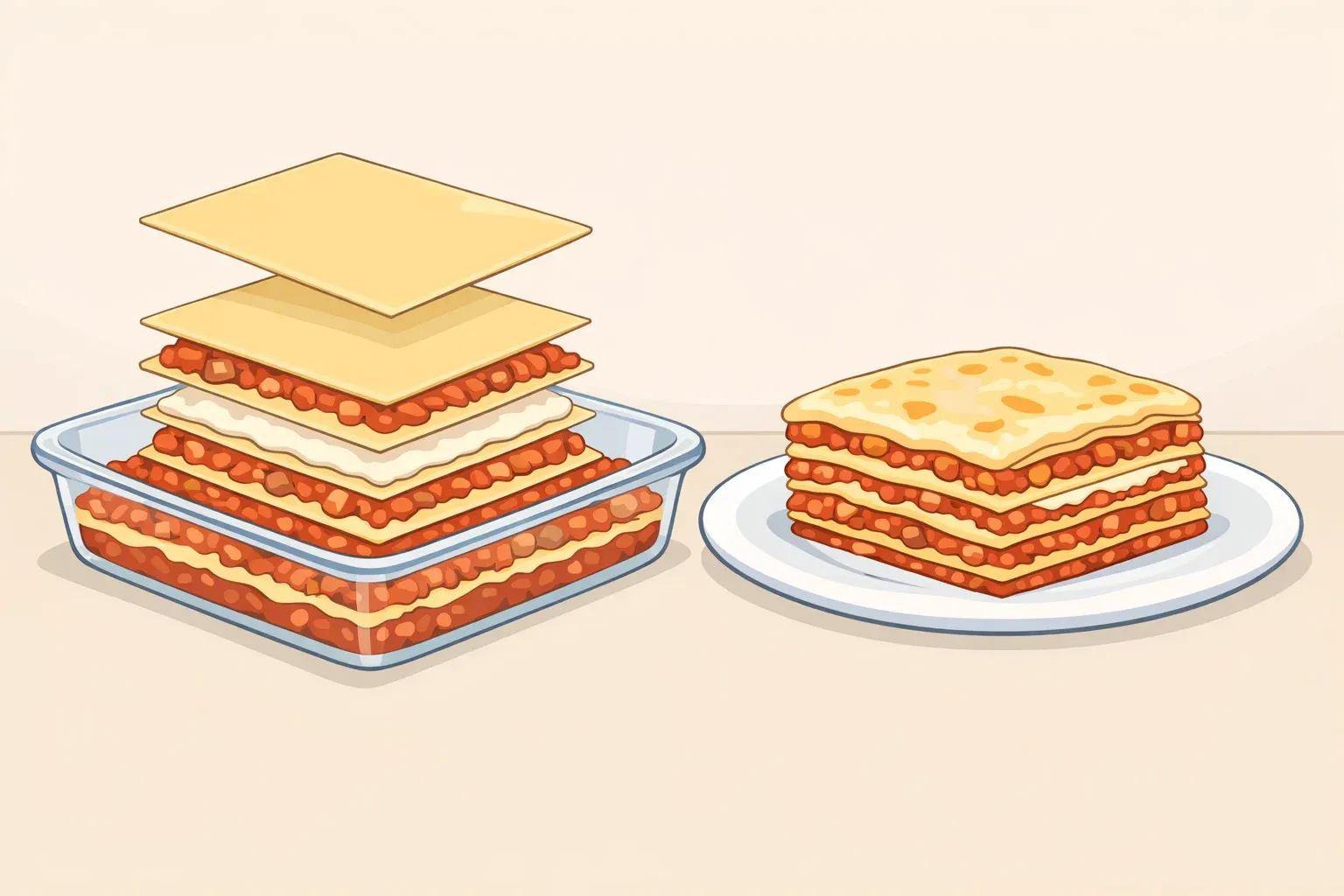
When Francesco of Ceci's restaurant was asked for his single most important lasagna tip, he went straight there. "The key to me is to create the most number of layers you can," he said. "At least six or seven layers. The pasta has to be the thinnest you can." Osteria Bottega, one of Bologna's most respected trattorias, holds the same standard: the sheet should function like a veil, thin enough to let light pass through.
This guide borrows from lasagna alla Bolognese because the logic is easiest to see there. The specific components ragù, béchamel, Parmigiano-Reggiano, and no ricotta are part of that tradition and worth understanding on their own terms. The approach transfers to any lasagna you make.
Why thick pasta is the problem and what to use instead
Thick, overcooked sheets become chunky and soggy. Dried noodles with wavy, ruffled edges are too thick to begin with. Both problems land the same way at the table, with no distinct layers, because they never had room to set.
If you're making fresh pasta from scratch: Run the dough through the machine gradually, reducing the setting in steps until you're near the lowest. Francesco's benchmark is transparency: hold the sheet up to the light and check that you can see your hand through it.
Thin doesn't mean fragile, though. Francesco describes the target texture as "medium resistance," toothsome enough to cut cleanly with a fork, not so delicate that it tears during assembly. Refrigerate the dough for 30 minutes before rolling; this builds gluten inside the dough and makes ultra-thin sheets workable rather than prone to ripping.
If you're not making pasta from scratch: Use refrigerated flat pasta sheets, smooth and straight, no ruffled edges. Francesco recommends brands like Antica Pasteria when fresh isn't an option. No-boil flat noodles work as a substitute if refrigerated sheets aren't available. Soak them in hot water for 10 minutes before assembly. Some tests found they perform surprisingly close to fresh when the sauce has enough moisture to absorb during baking. Use them soaked, not dry, or they'll pull liquid from the filling and leave the layers leathery.
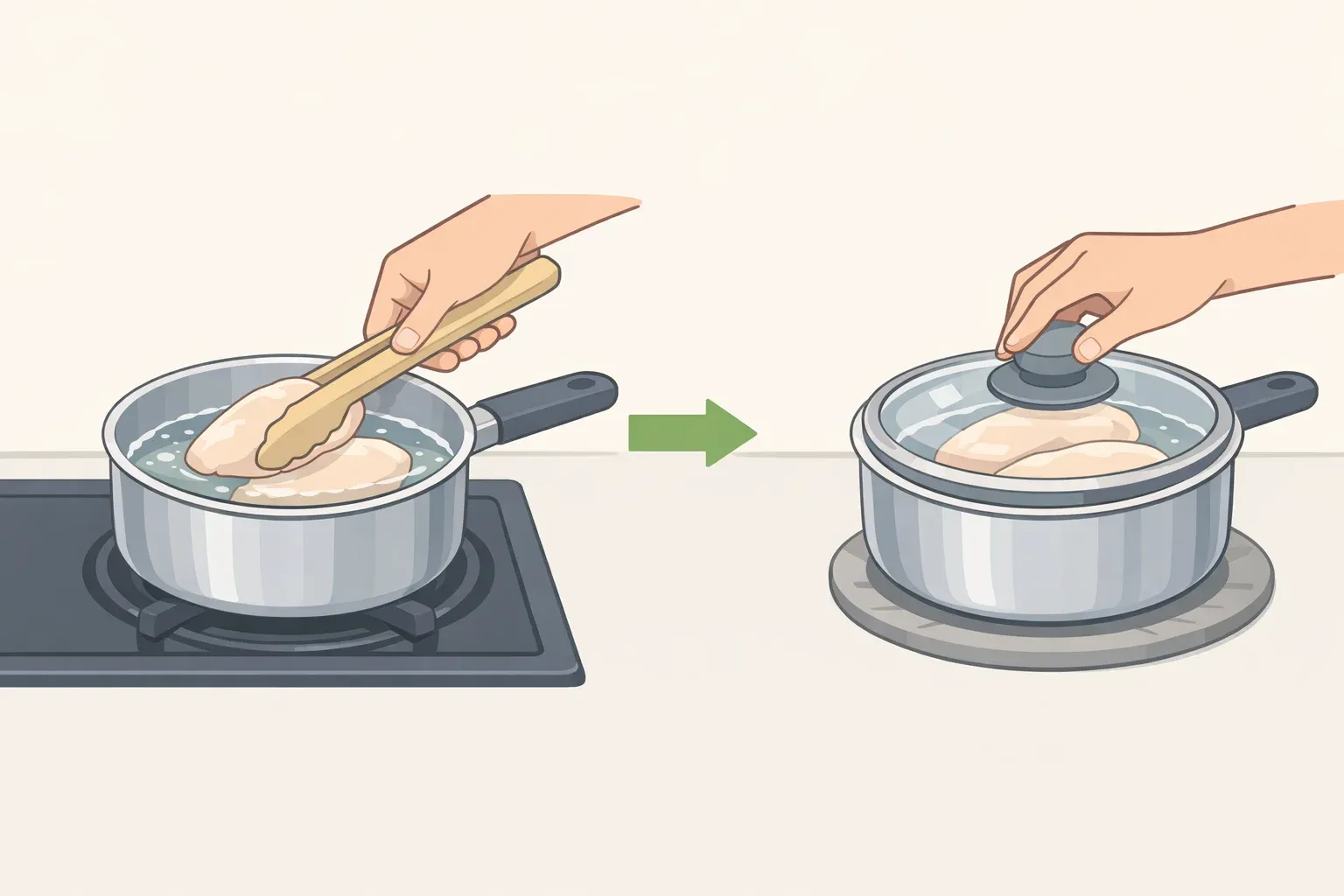
Pre-cook briefly and stop early: At Ceci's, fresh sheets go into boiling salted water for about two minutes, then straight into a cold salted water bath. This stops the cooking immediately while the salt adds a little extra flavor. Two minutes is the ceiling; the sheets continue cooking in the oven and aren't meant to be done at this stage.
⚠ The common mistake: pulling the pasta and letting it sit before assembly.
Residual heat keeps it cooking. Move directly to assembly or into the water bath.
Step 1: Build a ragù that won't waterlog the layers
Too much residual liquid in the sauce floods the layers during baking, regardless of how carefully everything else is assembled. The fix is time.
Cook the ragù low and slow until most of the liquid has cooked off. Low and slow is the key. You want it to be able to reduce and cook the majority of the moisture out of the sauce. Simmer for 2.5 to 3 hours partially covered, then continue uncovered until the liquid sits just below the level of the meat. A hurried ragù is one of the main reasons a carefully assembled lasagna still comes out wet. Budget the time accordingly.
The lasagna Bolognese secret: add milk to the sauce, then cook it down
Add a splash of whole milk to the ragù partway through cooking. Daniele Minarelli of Osteria Bottega explains that Bolognese cooks have traditionally done this originally to cut the acidity of homemade tomato preserves, and now because it rounds and softens the sauce without thinning it. Add it midway through cooking so it fully integrates. The result is a sauce that sits softer against the béchamel rather than fighting it.
On béchamel vs. ricotta: Authentic lasagna Bolognese contains nothing but ragù, Parmigiano-Reggiano, and nutmeg-scented béchamel between the pasta layers. No ricotta is added. If your preferred version uses ricotta, that's a valid regional choice, but béchamel sets during baking in a way ricotta doesn't, which is why the Bolognese approach tends to produce cleaner slices.
Step 2: Assemble with restraint more layers, less per layer
More layers is the goal. More filling per layer is the problem. They're in direct tension, and most home cooks resolve it in the wrong direction.
Overstuffed leads to a sloppy, watery slice that won't hold together. Make thin, even layers instead of piling everything on thick.
Apply each component separately: a light spread of ragù, then a generous rain of Parmigiano-Reggiano, then scattered dots of béchamel. Don't blend the components into a single combined spread. Each element should remain distinct on the layer, so every bite contains all three in their own form.
The layer sequence, repeat six to seven times:
Thin smear of ragù on the pan base
Pasta sheet, laid flat
Light, even ragù over the sheet cover the surface, don't pile it
Generous Parmigiano-Reggiano over the ragù
Scattered dots of béchamel across the surface, not spread wall to wall
For the final top layer: Cover the surface fully with béchamel, add small knobs of butter, and finish with a heavy layer of Parmigiano-Reggiano. This is what forms the crust.
Use smaller pans. Francesco bakes in 13×8-inch pans rather than a single large casserole, specifically to maximize crispy edges. "In Italy, as a kid, everyone wanted the corner," he told Dining and Cooking. More corners, more crust.
⚠ If you're adding vegetables: sauté them first to drive off moisture before they go anywhere near the assembly. Vegetables release water during baking that careful layering can't fully offset, per Simply Recipes.
Step 3: Bake covered, finish uncovered, rest before cutting
Cover the pan with foil for most of the bake. This traps steam, lets the interior cook evenly, and prevents the top from browning before the layers have set. Remove the foil for the final 10 to 15 minutes to crisp the cheese and develop color. Osteria Bottega bakes at 180–200°C (355–390°F) for 40 to 50 minutes total. Other recipes recommend the same covered-then-uncovered approach to avoid drying the interior.
Rest before cutting. Straight from the oven, the layers are still full of steam and liquid. Cut too soon, and all of it releases at once. Osteria Bottega rests for 10 minutes; some recommend 15 to 20 minutes, tented loosely with foil to hold heat. The practical target is warm rather than steaming-hot — that's when the knife goes in cleanly, and the slice holds its shape on the plate.
Where to start: best lasagna tips by problem
Not every fix here demands the same effort. Start with the one that matches what's going wrong.
If the lasagna comes out wet and collapses: Pull back on filling thickness and let the ragù cook longer. These two changes together address most structural failures. Rest the finished dish for the full 15 to 20 minutes before cutting it's the step most often skipped and one of the most consequential.
If the texture is okay, but slices won't hold their shape: Switch to thinner pasta. Dried wavy noodles stay too thick regardless of how carefully everything else is assembled. Trade them for refrigerated flat sheets, or better, fresh.
If you want to move toward a more traditional Bolognese: Add milk to the ragù midway through cooking and keep the filling components separate during assembly. Both are low-effort changes that affect how the finished dish tastes and coheres. From there, the traditional spinach dough, 350g flour, 2 eggs, 200g cooked spinach squeezed completely dry and finely chopped, is worth trying when you're ready to go further.

Comments
Be the first, drop a comment!