



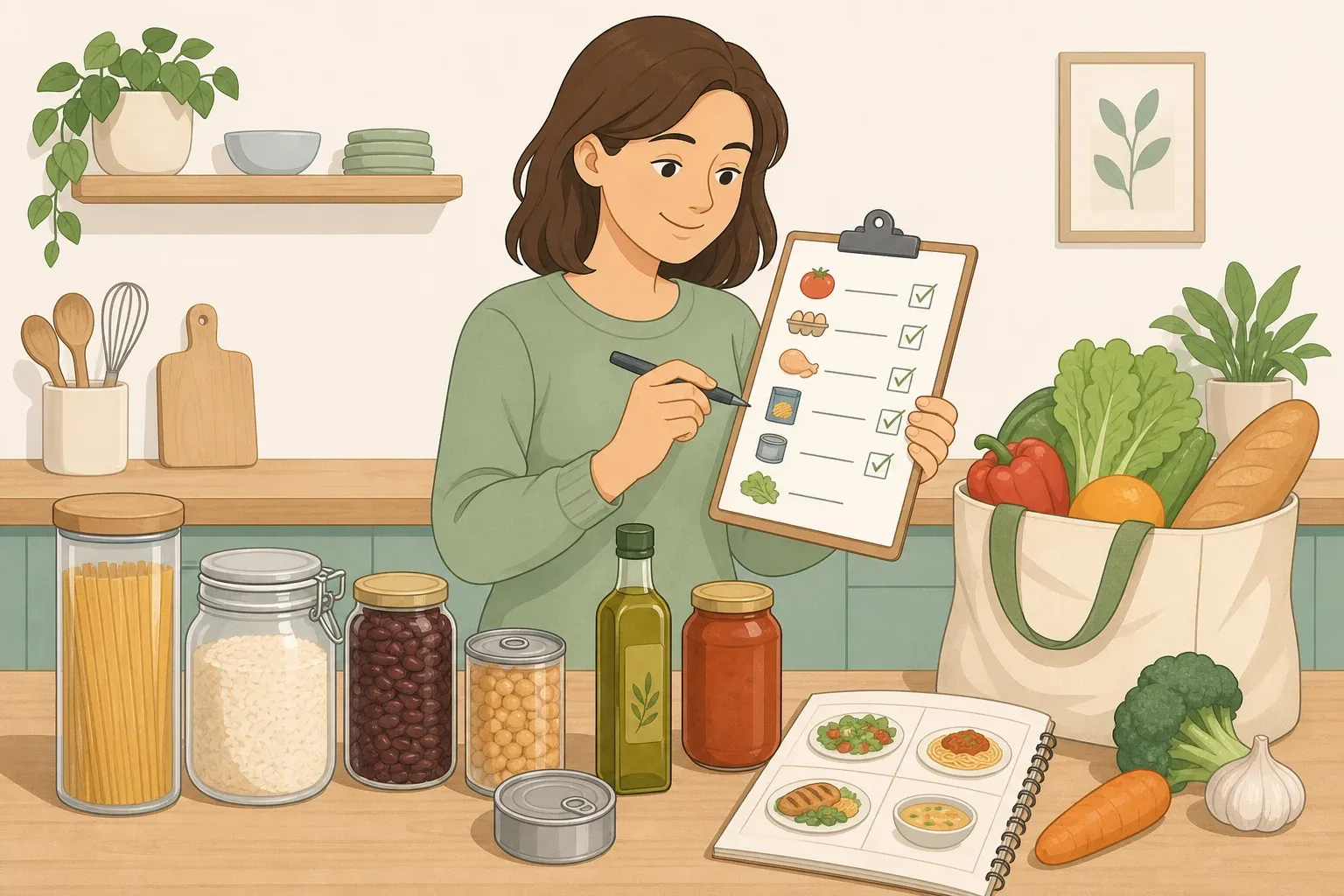
How to organize a grocery list to save money: a 4-step guide
A shopper featured on CNBC credited her low grocery bill to one habit: "I kind of think of Santa Claus, I make a list and check it twice," and she buys only what's written down. It sounds almost too simple to matter, but knowing how to organize a grocery list to save money starts with the order you build it in, not just the discipline to follow it at checkout.
This guide walks through four steps: check the kitchen, turn meals into a quantified list, sort that list by store section with a spending guardrail, then hold the line at checkout. It's a system built around cooking from what's already in your kitchen before adding anything new, not a promise of hitting a specific dollar figure on your next receipt.
What you'll need / before you start
This method requires almost nothing you don't already own.
- A notepad, phone notes app, or list app
- 10 to 15 minutes before you shop to check the fridge, freezer, and pantry
- A rough mental map of how your regular store is laid out
This is beginner-friendly. No budgeting software, spreadsheets, or special tools required.
Oklahoma State University Extension advises shoppers to build a list specifically to avoid buying extra items that may go to waste at home. That's why this method starts at the kitchen counter, not in the car on the way to the store.
Step 1: Take inventory before you plan a single meal
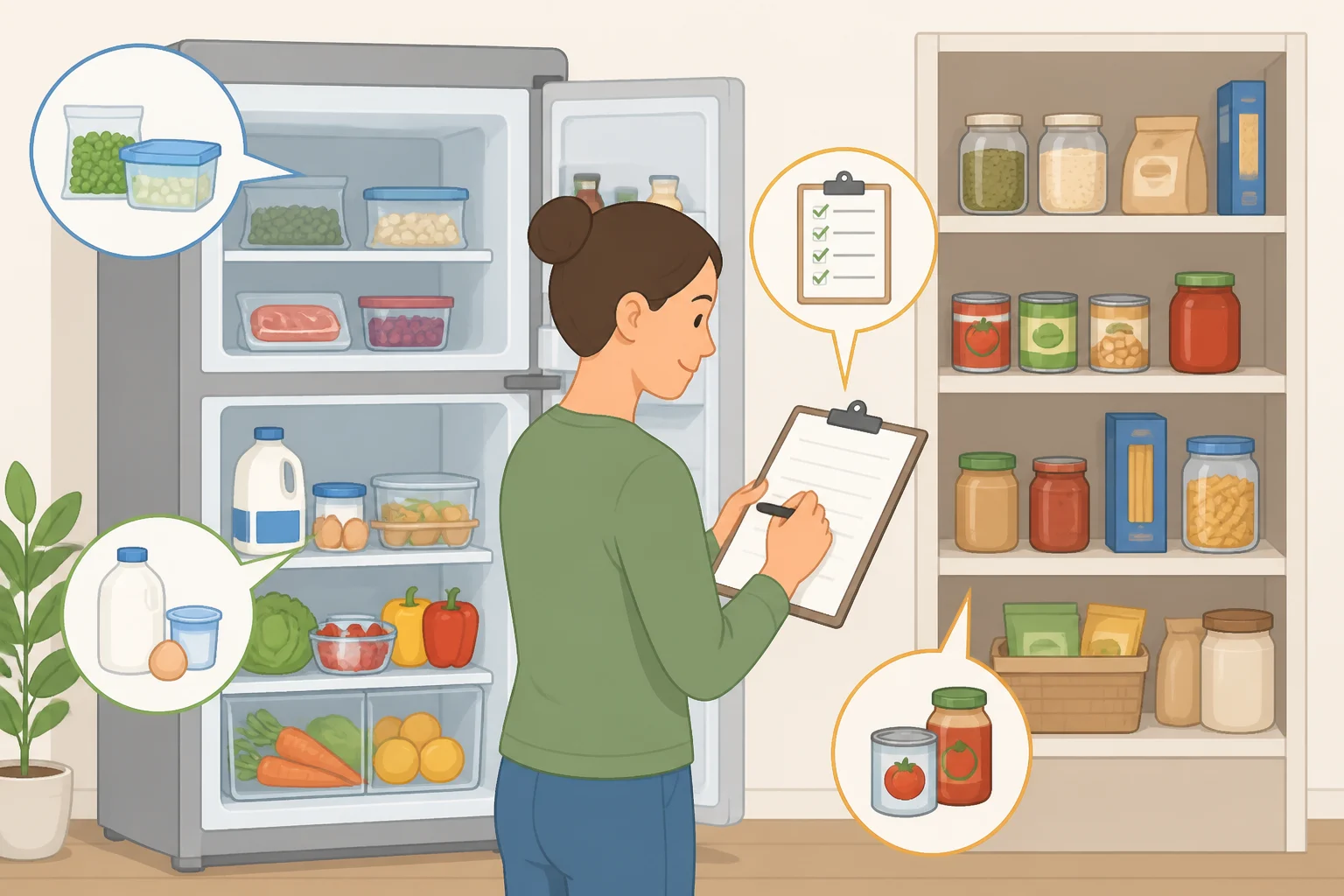
Open the fridge, freezer, and pantry and write down what's on hand and close to needing use. You're not cataloging everything, just noting what could go into a meal this week.
This step is how you build a list that reduces food waste instead of just one that gets you in and out of the store fast. The meal-planning study simulated shopping across households with different schedules and found that, in the model, waste could be minimized to roughly 3 grams per day across every uncertainty level tested, when recipes were chosen around food already in stock. That's a modeled result, not a claim about money saved, but it echoes the same habit OSU Extension ties to avoiding purchases that may go to waste: build meals from what's already home before you write anything new down.
By the time you finish this step, name three to five meals those inventory items could become before you add a single new item to the list. If you can't, look again. There's usually more sitting in the pantry than you think.
The most common mistake here is skipping straight to "what sounds good this week" instead of starting from what's already in the kitchen. That gap leads to duplicate purchases and pantry waste, since you end up buying ingredients for a recipe when a nearly identical one made from what you already own would have worked just as well.
Step 2: Turn those meals into a list with real quantities
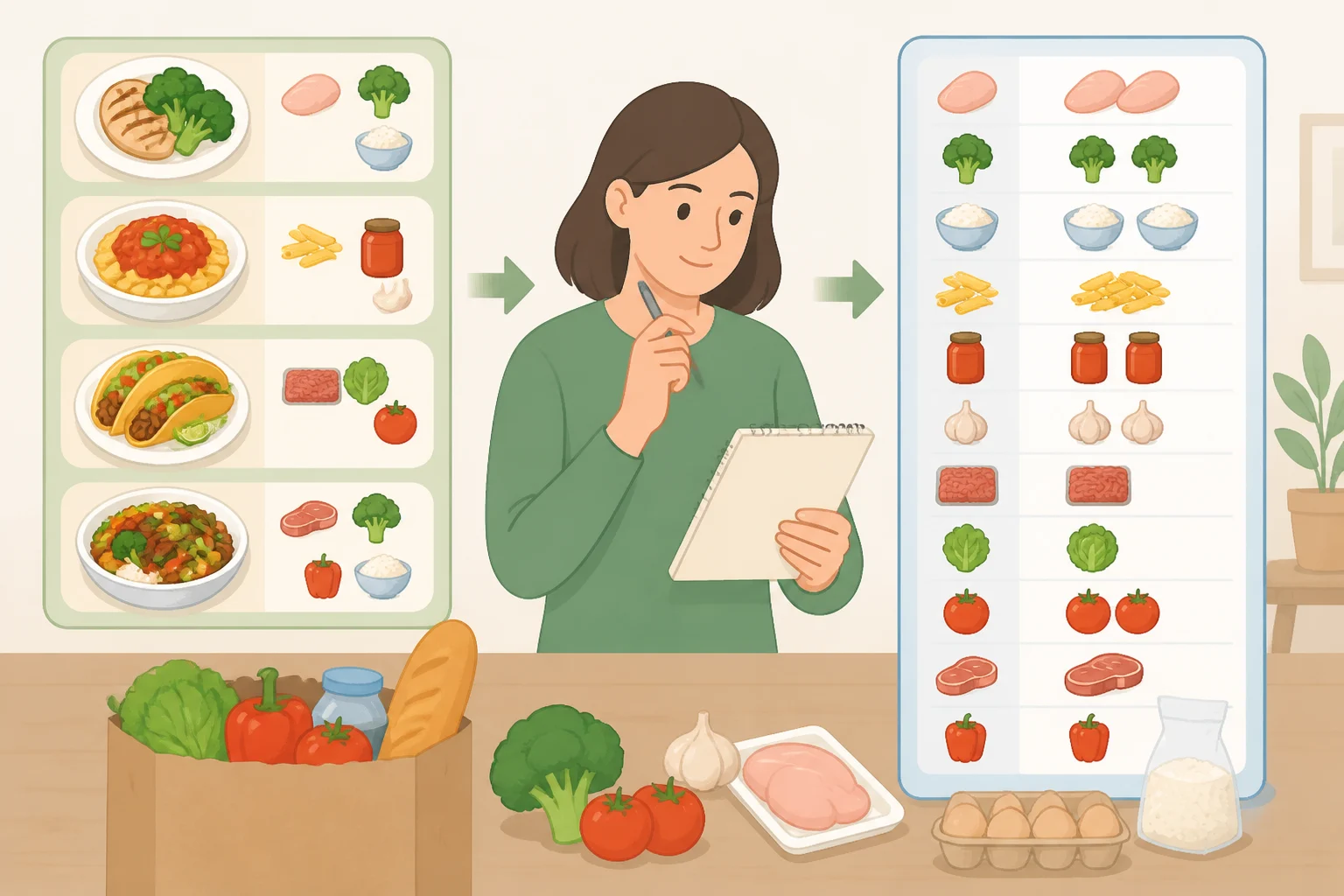
For each meal you picked in Step 1, write down exactly what's missing and how much. "2 chicken breasts," "1 bag spinach," "garlic," not vague categories like "produce" or "meat."
OSU Extension's list-based waste prevention only works if the list reflects specific needed amounts, since the goal is avoiding extra items that may go to waste, not just any item beyond what's planned. The meal-planning study built its shopping lists by matching recipe requirements against package sizes, a detail that suggests writing down amounts, not just item names, is what matters for keeping waste down.
Package sizes rarely line up neatly with what a recipe needs. If a recipe calls for half a bag of spinach or half a box of pasta, decide now where the rest goes: a second meal later in the week, a freezer portion, or a smaller package if your store carries one. Otherwise that leftover half is exactly the kind of item that ends up forgotten in the crisper drawer.
Here's what the whole step looks like in practice. Say your inventory turns up half a bag of rice, four eggs, a head of broccoli, frozen chicken, and a couple of onions. That's enough to plan chicken-and-broccoli rice bowls, egg fried rice, and pasta with vegetables using the broccoli and onions. You're out of pasta, so that goes on the list too. What to buy: 1 bag carrots, 1 jar pasta sauce, 1 box pasta. Sorted by section, that's produce (carrots), pantry (pasta sauce, pasta), with dairy and frozen needing nothing new since you're using what's already home.
Every line on that "what to buy" list should trace back to a specific meal. If you can't say which dinner an item is for, cut it, or confirm it's a genuine pantry staple you're actually running low on rather than something you're grabbing on a hunch.
Writing "vegetables" instead of naming which ones and how many is where overbuying sneaks back in even on an otherwise disciplined list. Vague entries give you permission to grab whatever looks good in the produce aisle, which defeats the point of writing the list at all.
Step 3: Build a grocery list organized by store section
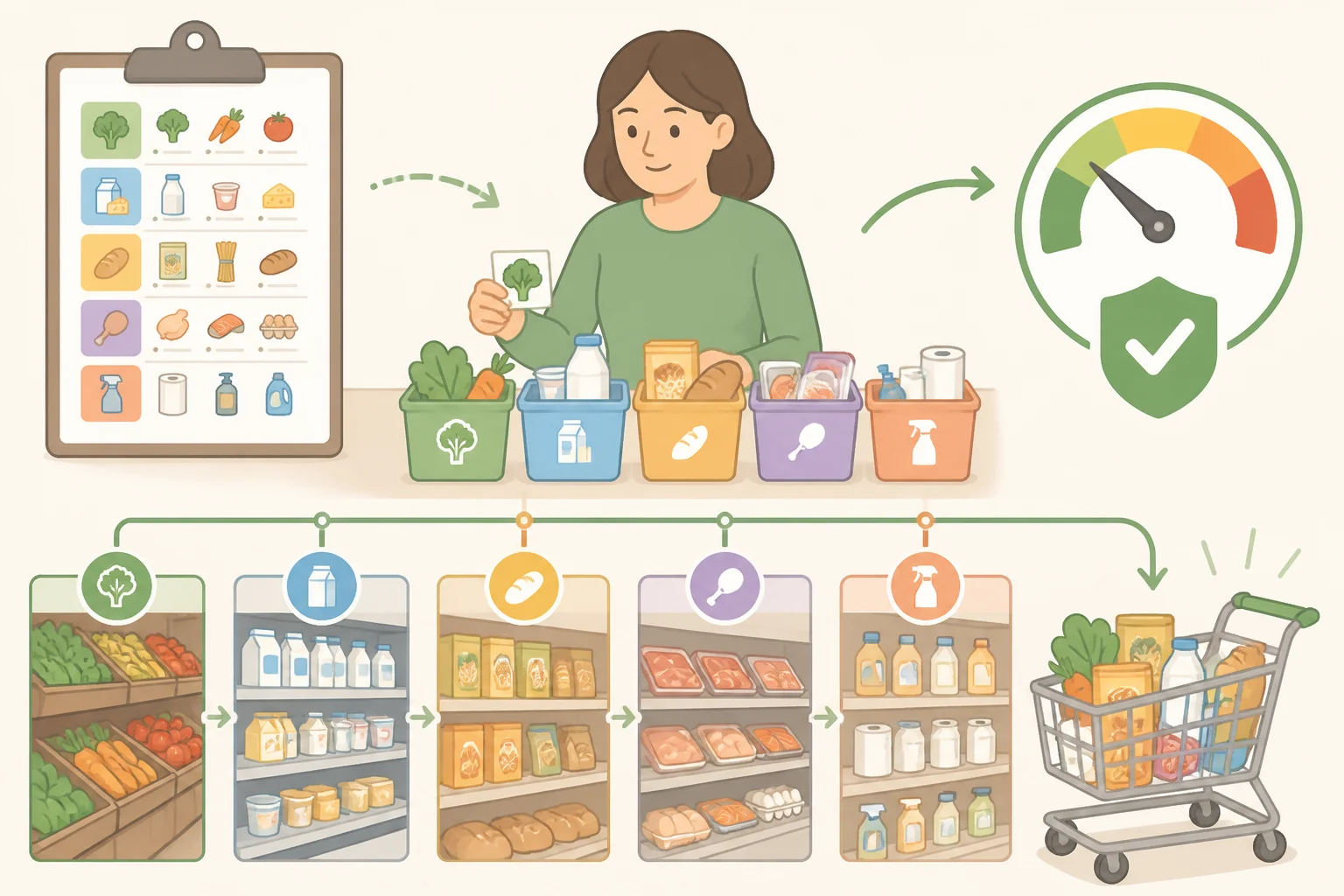
Group your quantified items into the sections your store actually uses: produce, dairy, meat, pantry, frozen, household. Then set one guardrail before you leave home, either a total spending cap or a price ceiling on your priciest planned item.
OSU Extension recommends an organized shopping list by aisle for a clear reason: it avoids backtracking through aisles where the priciest items sit at eye level. Sticking to the list itself, organized or not, is the same habit OSU Extension ties to avoiding purchases that may go to waste at home.
Neither source proves that section-sorting alone lowers total spending. A list can still be organized and expensive if every planned item is a premium brand. That's a practical limitation the research doesn't measure, which is why a cap or a quick unit-price check belongs here too, not just the order you write things down.
Your finished list should read like a route through the store. If you're walking past sections you already shopped just to grab a forgotten item, adjust the order next time to match how your store is laid out.
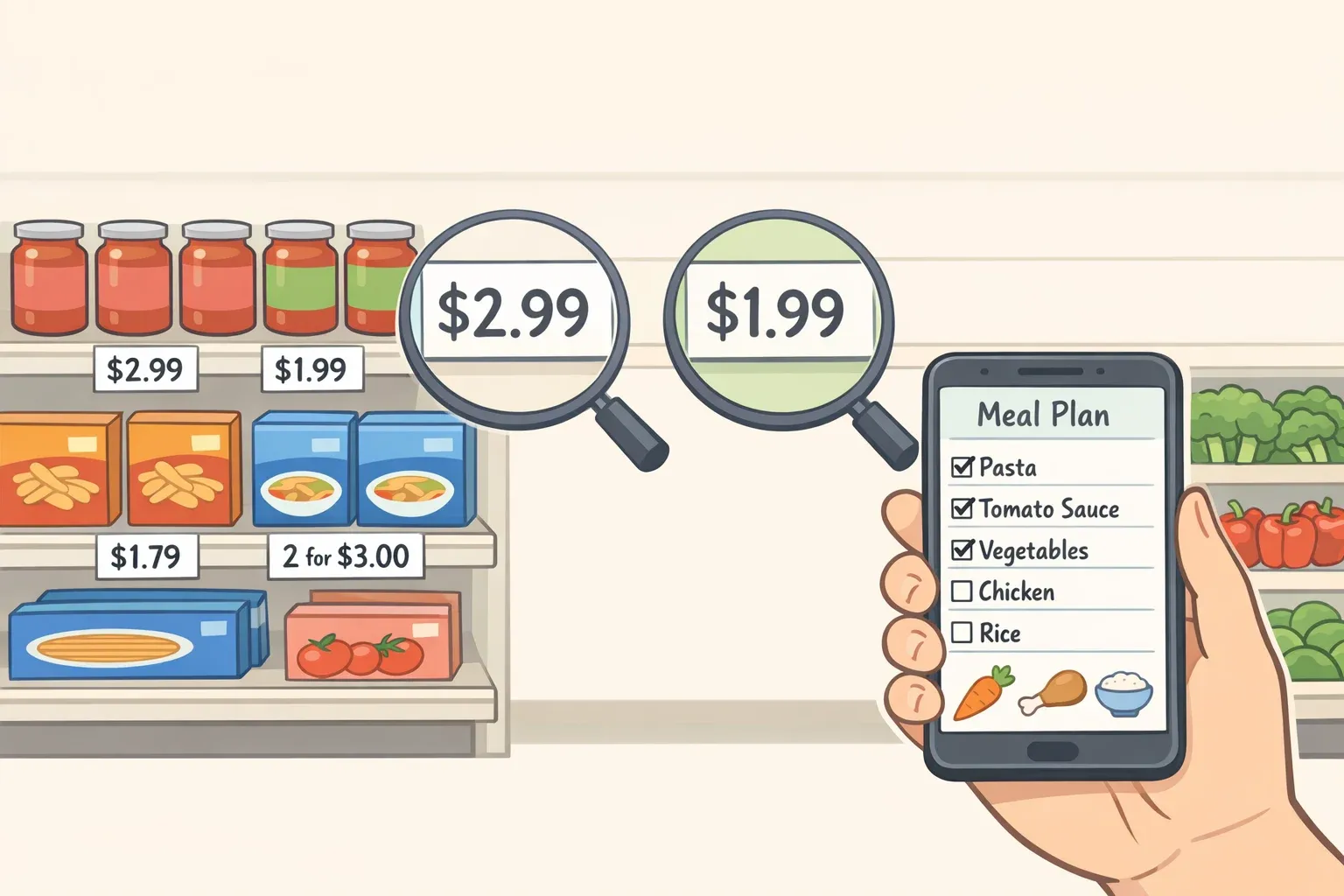
A useful rule for sale items is deciding ahead of time what a discount has to do to earn a spot in your cart. A sale item belongs on the list only if it replaces something you already planned to buy, fits the quantity you actually need, or is a shelf-stable staple you know you'll use regardless. Everything else is an unplanned category, no matter how good the price looks.
Before you leave, pre-decide your substitutions too. A different brand, a cheaper cut of the same protein, a lower unit price on a swap, whatever it is, decide it now. A pre-decided substitution is a smart swap. A new category you didn't plan for is still an impulse buy.
Step 4: Hold the line at checkout
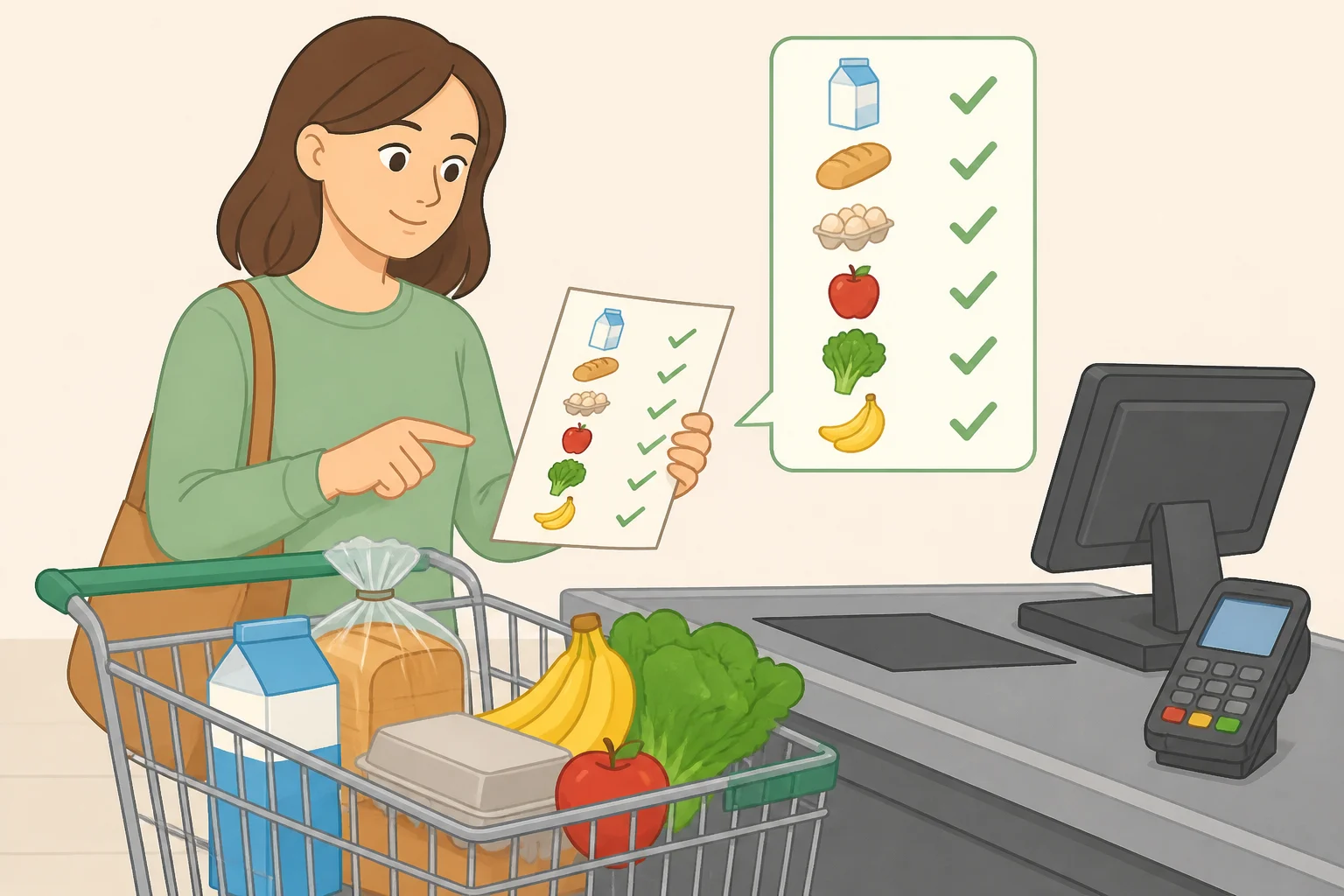
Only items from the list, or the substitutions you pre-approved in Step 3, go in the cart. Nothing else, even if the sale looks good.
This is the rule the CNBC-featured shopper credits directly for keeping her bill low: "The key is, I only buy items on the list, so this helps me avoid impulse purchases." OSU Extension ties that same discipline to avoiding purchases that may go to waste, linking impulse control and waste prevention to one underlying habit rather than treating them as separate fixes.
Don't treat her reported $124 monthly total as a target to hit. It reflects her own household size, location, and shopping habits, not a benchmark every reader can replicate. At the register, you should be able to account for every item in your cart against a specific planned meal, with no unplanned categories and no duplicates of something already sitting at home. That's a better measure of success than chasing a specific dollar total.
Adjustments: how often to shop when your week isn't predictable
If your schedule, household size, or who's actually home for dinner changes week to week, try shorter lists or an extra midweek trip rather than one large weekly haul, then compare what actually gets used against what you planned.
The meal-planning study found a real tradeoff between the flexibility of frequent shopping and the coordination benefits of buying for several days at once. In a simulation run over a 21-day horizon for a four-person household, modeled waste ranged from 0 to 52 grams for low-uncertainty households up to 50 to 900 grams for high-uncertainty households, depending on shopping frequency. Those figures are modeled results illustrating a tradeoff, not a target for your own kitchen to hit.
The four-step method holds regardless of how often you shop. What changes is how far ahead you plan meals in Step 1 and how long your list runs in Step 2. A household with a shifting dinner headcount is better served by a shorter list and a second trip midweek than by one big list built on guesses about who'll actually be home.
Finish: check what's left, then fix the next list
When you unpack groceries, note anything that doesn't fit a specific upcoming meal. That's your signal to adjust quantities or drop that item from next week's list entirely.
Proper storage keeps perishable food fresh until it's actually used, but storage only pays off if the list was quantity-accurate to begin with. Otherwise you're storing food you never needed. Unlike canned goods and other shelf-stable pantry staples, perishables shouldn't be stockpiled, so leftover produce, dairy, or meat after a shop is a reason to check whether you overbought, changed your meal plans midweek, or need a different storage approach, rather than simply writing a smaller list next time.
If food is still going unused regularly after a few cycles of this method, OSU Extension recommends checking the USDA's FoodKeeper app for realistic storage windows before assuming the list itself is the problem. It's built to help you use food at peak quality, which sometimes solves a waste problem a list alone can't.
Treat each trip as a feedback loop rather than a fresh start. If something goes unused, write down the smaller amount for next time, and if dinner attendance is unpredictable that week, shorten the planning window in Step 1 instead of guessing bigger. The format doesn't matter. Paper, a notes app, or a list-sharing app all work, as long as the list starts from your kitchen, carries real quantities, and gets followed at checkout.


Comments
Be the first, drop a comment!