



How to reduce food waste with suppliers: a restaurant guide
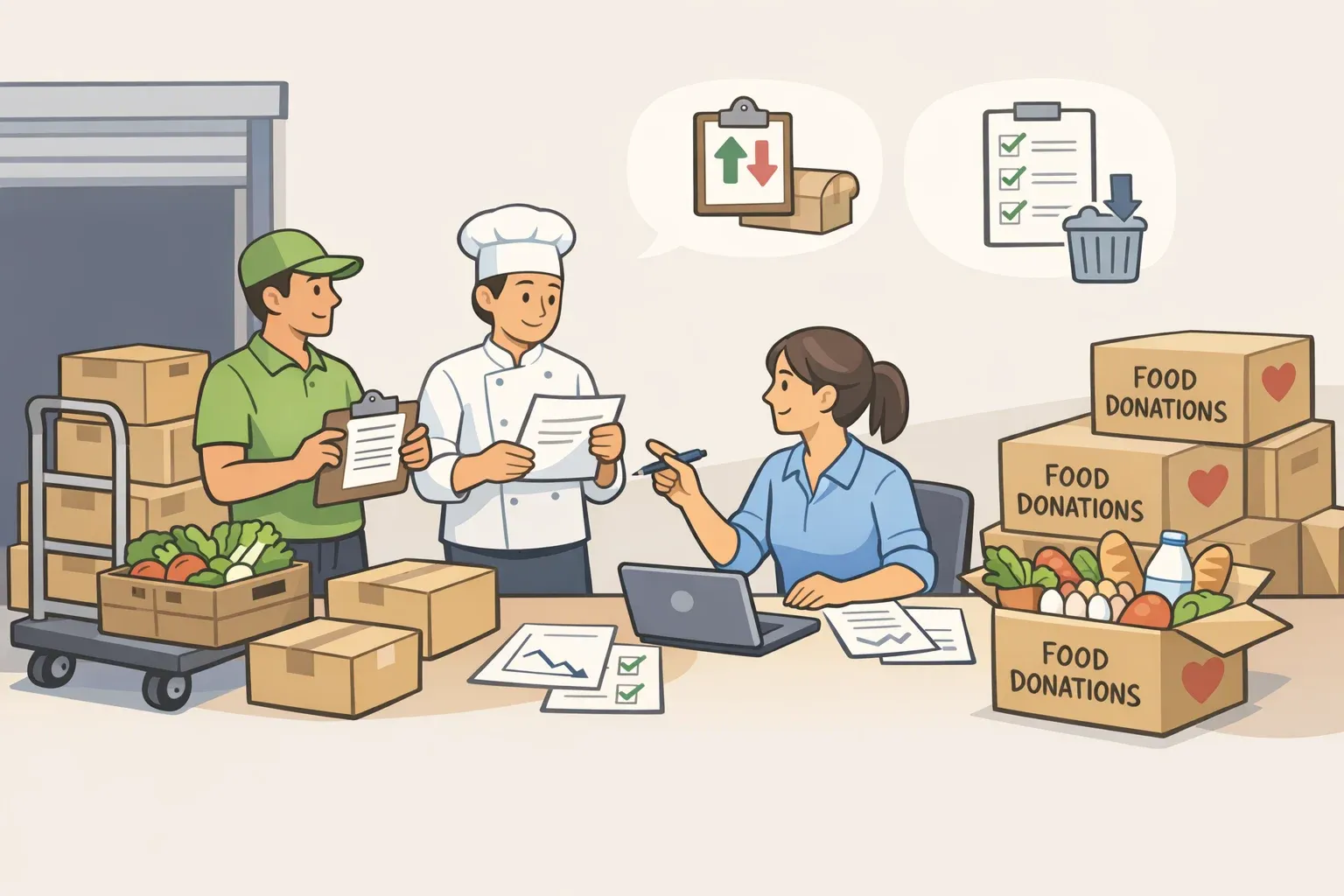
This guide walks independent restaurant operators and small chains through a four-stage workflow for cutting waste tied to purchasing: measure your surplus, diagnose whether the cause is internal or supplier-side, bring specific requests to that supplier, then build a compliant donation plan for whatever prevention doesn't catch. Learning how to reduce food waste with suppliers works best as a repeatable cycle rather than a single meeting, since each change gets piloted and measured before the next one starts. Retail grocers and institutional kitchens can run the same sequence, but their ordering systems and donation rules differ enough that notes below flag where that matters.
Federal estimates put total food waste at 30-40% of the U.S. food supply (FSIS's donation guidelines), and for a restaurant that shows up as spoiled inventory, trim loss, and markdowns tied directly to how you order. This guide follows a prevent-first order: cut waste before it happens, donate the safe surplus you can't prevent, and compost or dispose of whatever's left after that. Expect the process to run over several weeks rather than resolve in one phone call. The federal guidance behind the supplier tactics below supports raising them as negotiation topics, but it doesn't quantify what any single one saves at your restaurant. Your own log will do that math.
How to reduce food waste with suppliers: start with a waste log
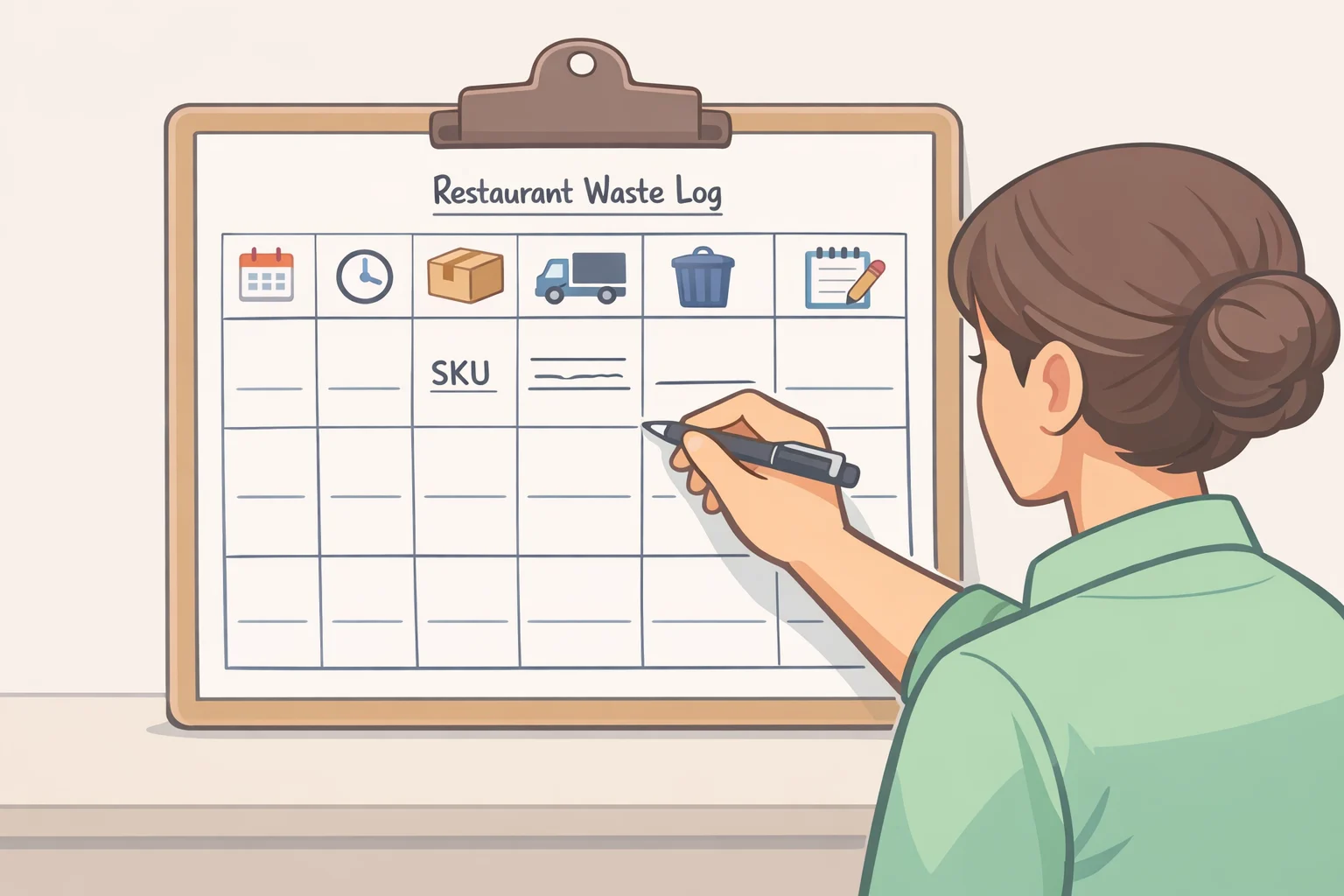
Before contacting a vendor, build a waste log and pull your order history. Skip this step and you won't know which supplier request actually matches what's happening in your kitchen.
Track these fields for every discard event, whether you use a notebook, a spreadsheet, or a waste module built into your POS:
| Field | What to record |
|---|---|
| Date | When the item was discarded |
| Item | Product name and SKU if you have one |
| Quantity | Weight or count discarded |
| Dollar value | Estimated cost, if known |
| Waste reason | Over-order, spoilage, prep trim, or returned/rejected delivery |
| Where it occurred | Storage, prep, or service |
| Supplier | Vendor who supplied the item |
Then pull 60 to 90 days of purchase orders and invoices from your point-of-sale system or vendor portal, and compare what you bought against what actually got used. Use that window as a practical starting baseline, and extend it if your menu or demand shifts seasonally.
Identify one contact per key supplier while you're at it: a sales rep or account manager who can actually approve changes to delivery frequency, order minimums, or product specs. You'll need that name later.
Most of what lands in your log isn't loss further up the supply chain, it's waste that happens after food reaches your restaurant: over-ordering, spoilage, trim, rejected deliveries. That's why internal ordering fixes and supplier conversations both belong on the same list.
Set a number before you walk into that meeting, too. Pick an internal reduction target, even an informal one, so you're bringing a figure to the table instead of a vague request to "waste less."
Diagnose whether the waste is yours or your supplier's
Once you have a few weeks of log entries, sort each item into one cause: inaccurate forecasting, supplier pack size or order minimums forcing bulk buying, delivery timing that doesn't match shelf life, product specs (size, grade, trim) that create unusable portions, storage or handling problems, or prep and service overproduction.
Use this rule to decide where to aim. If the waste happens before the item's first planned use, and it keeps happening despite proper storage, that points to a pack-size, delivery-day, receiving-quality, or yield issue worth raising with the supplier. If the waste happens after prep or service starts, look at forecasting, batch sizing, menu design, or handling internally first; that's usually where the fix lives.
Avoid walking into a supplier meeting with a general complaint. A vendor can act on "we discard about 15 pounds of romaine a week because your minimum order exceeds what we sell before it wilts." That figure is an example, not a benchmark; yours will come from your own log. A vendor can't act on "we waste too much romaine."
You're ready to move on once every item in your log has one assigned cause and a next move attached: internal fix, supplier request, or "monitor, no action yet."
Build a one-page supplier request
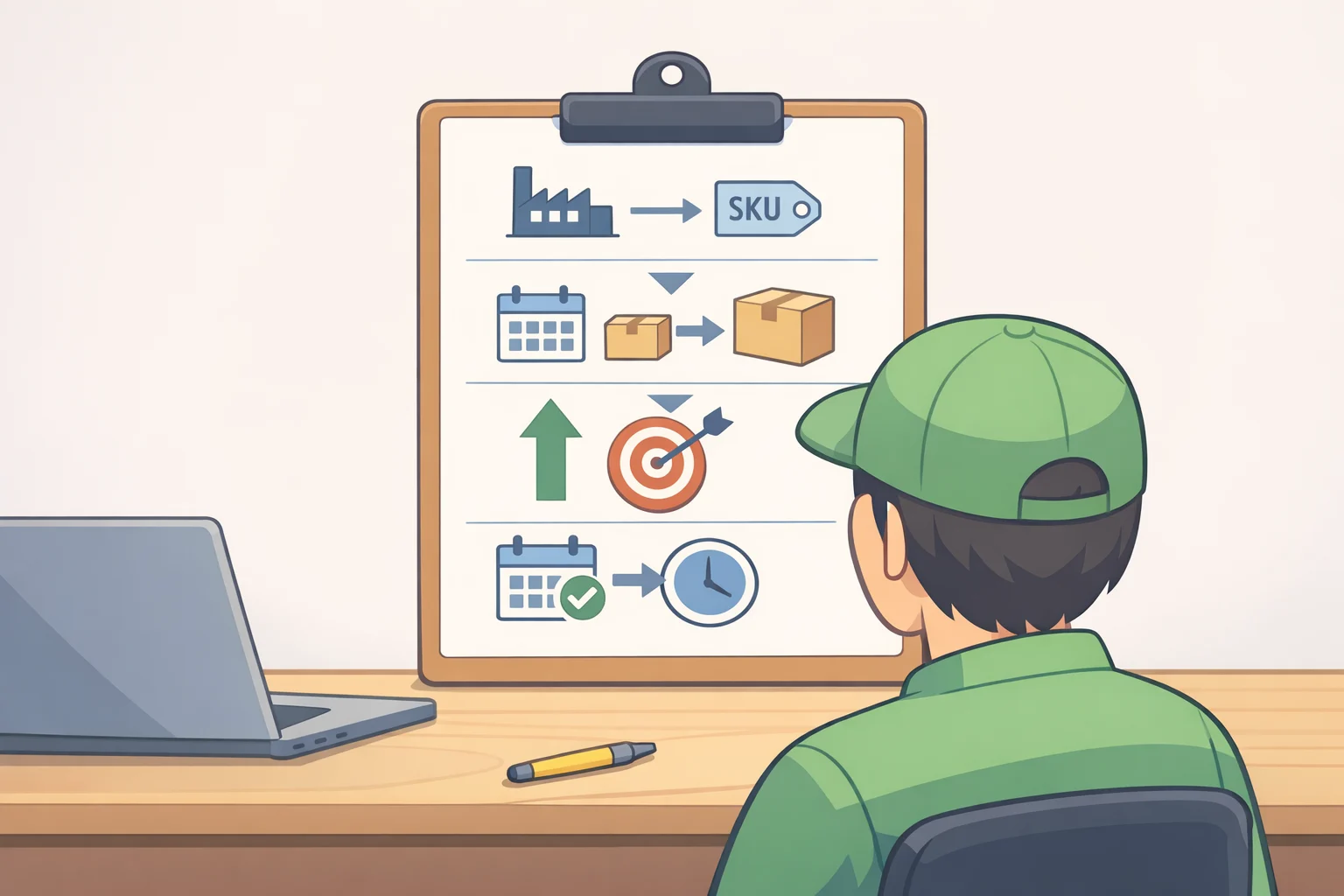
Take one page per supplier into the meeting, not a folder of grievances. List the affected SKUs, current order cadence and pack size, the specific waste pattern from your log, the change you want to test, and the open questions you need answered: minimum order flexibility, delivery fees, lead time, and contract terms.
A simple template works. Treat the numbers below as an illustrative example only, not a benchmark:
| SKU | Current pack/delivery | 4-week discard total | Cause | Requested pilot | Trade-off you'll accept | Success metric | Review date |
|---|---|---|---|---|---|---|---|
| Romaine, case | Mon/Thu, 24-ct case | 60 lbs (example) | Pack size exceeds usage | Split to twice-weekly, half case | Small delivery fee OK | Under 10 lbs/4 weeks | 60 days out |
Walk in with a script rather than a general ask:
- "Here's the SKU and the four-week discard pattern from our log."
- "We think the cause is the case minimum or the delivery schedule."
- "Can you pilot [specific change] from [start date] to [review date]?"
- "What fee, lead-time, or minimum-order trade-off would come with that?"
With that page and script in hand, consider raising requests along these lines, adjusted to what your own log shows:
- Ask about smaller or more frequent deliveries for perishables you consistently over-stock, so less inventory sits in storage between orders.
- Ask whether order quantities can flex closer to the delivery date, based on actual reservations or recent sales instead of being locked in days ahead.
- Raise cosmetic or grading specs on produce you're rejecting for minor blemishes or size, and ask whether a lower-priced "seconds" tier exists instead of the product being discarded upstream.
- Pilot one change with one supplier on one item first. Don't shift delivery cadence, specs, and order timing all at once. Change three things together and you won't know which one moved your numbers.
These are negotiation questions built from your own data, not tactics with a published savings figure attached. No source quantifies what split deliveries, flexible ordering, or a seconds program will save at any specific restaurant. Treat every one of these supplier food waste reduction strategies as something to test against your log, not a guaranteed outcome.
Institutional kitchens under fixed procurement contracts may need to route these requests through a purchasing department instead of a sales rep. Grocery retailers negotiating produce specs may deal with a category buyer rather than a delivery driver's dispatcher.
Pilot one change and run a 60-day review
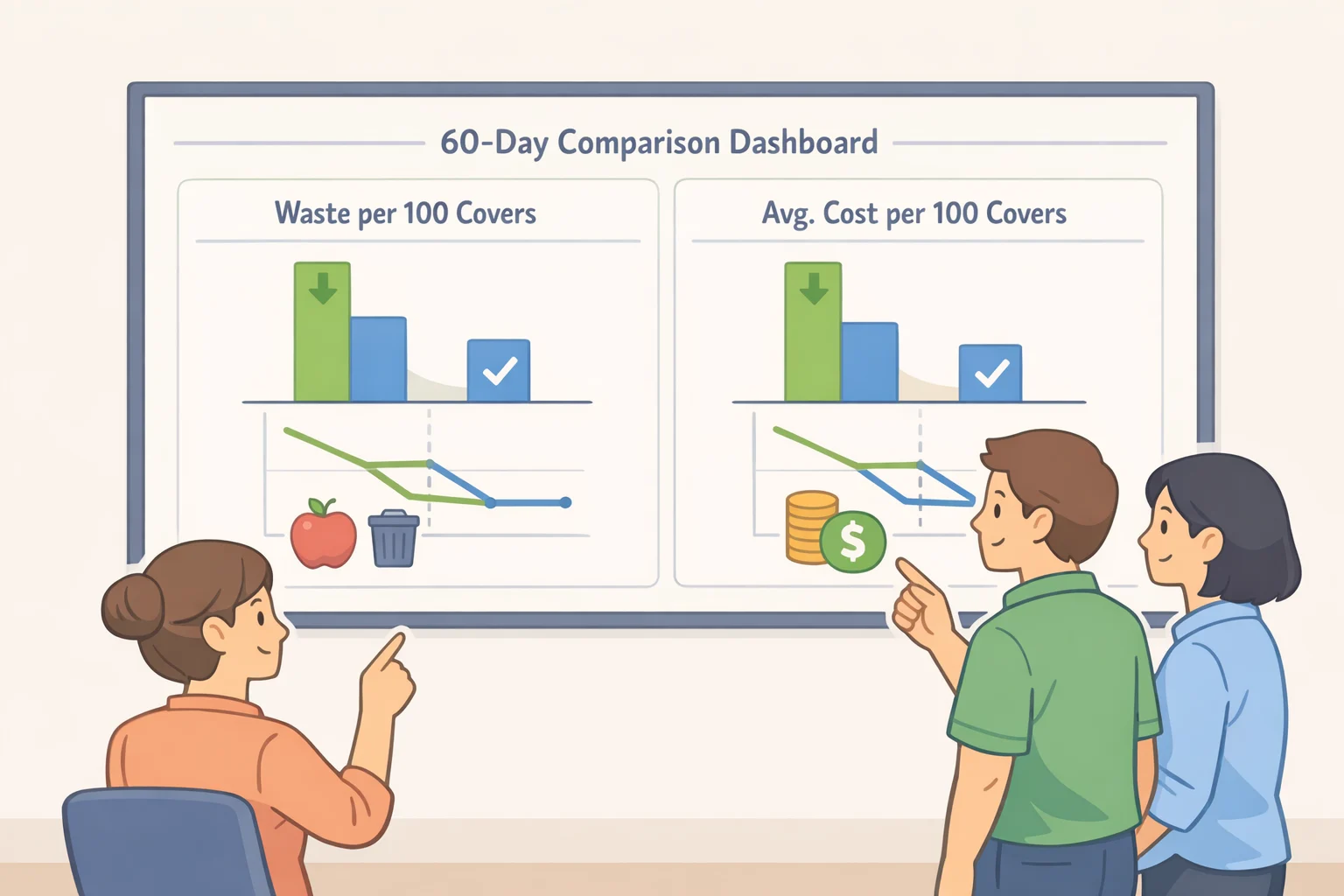
Pick a review date 60 days after the change starts, and compare results against your original baseline using the same log fields: quantity discarded, waste reason, and purchase cost for the targeted item. Use 60 days as a practical starting window and extend it if your menu or demand shifts seasonally, so one slow week doesn't skew the comparison.
Normalize the numbers before you trust them. Compare waste per 100 covers or per $1,000 in food sales rather than raw pounds, so a busier or slower stretch doesn't make the change look better or worse than it is. Add up the full cost picture too: purchase cost, any emergency-order premiums, delivery fees, and credits for rejected product. Track stockouts and service disruptions alongside the waste numbers, and keep the SKU, menu mix, and units of measurement identical between your baseline and pilot periods so you're comparing like to like.
Check for the trade-off, not just the reduction. Confirm the change didn't cause stockouts, emergency reorders, or rushed backup deliveries. A change that cuts waste but forces last-minute orders at a premium price can end up costing more than it saves.
At the 60-day mark, pick one of three outcomes: keep the change and move to the next item on your log, adjust it (different frequency, different SKU, different spec), or reverse it if waste or cost went up. Only add a second supplier change once you can attribute results from the first one. Run two changes at once and your log turns into noise you can't read.
Donate safe surplus only
Prevention won't catch everything. After prevention, route eligible safe surplus to donation, and compost or dispose of anything that cannot legally or safely be donated.
Before you arrange a single pickup, call your local health department. Donations must comply with applicable state and local health, food-safety, and food-handling laws on top of federal protections (FSIS's 2024 guidelines). Confirm this before you commit to a nonprofit partner, not after.
Donation is a safety net for safe, unavoidable surplus. It is not a workaround for food that shouldn't be served. FSIS's guidelines state plainly that unsafe or unwholesome, adulterated products may never be donated under any circumstances, and experimental products are excluded as well.
Set up a recurring handoff so this doesn't depend on someone remembering:
- Designate a staff owner who identifies eligible surplus each shift.
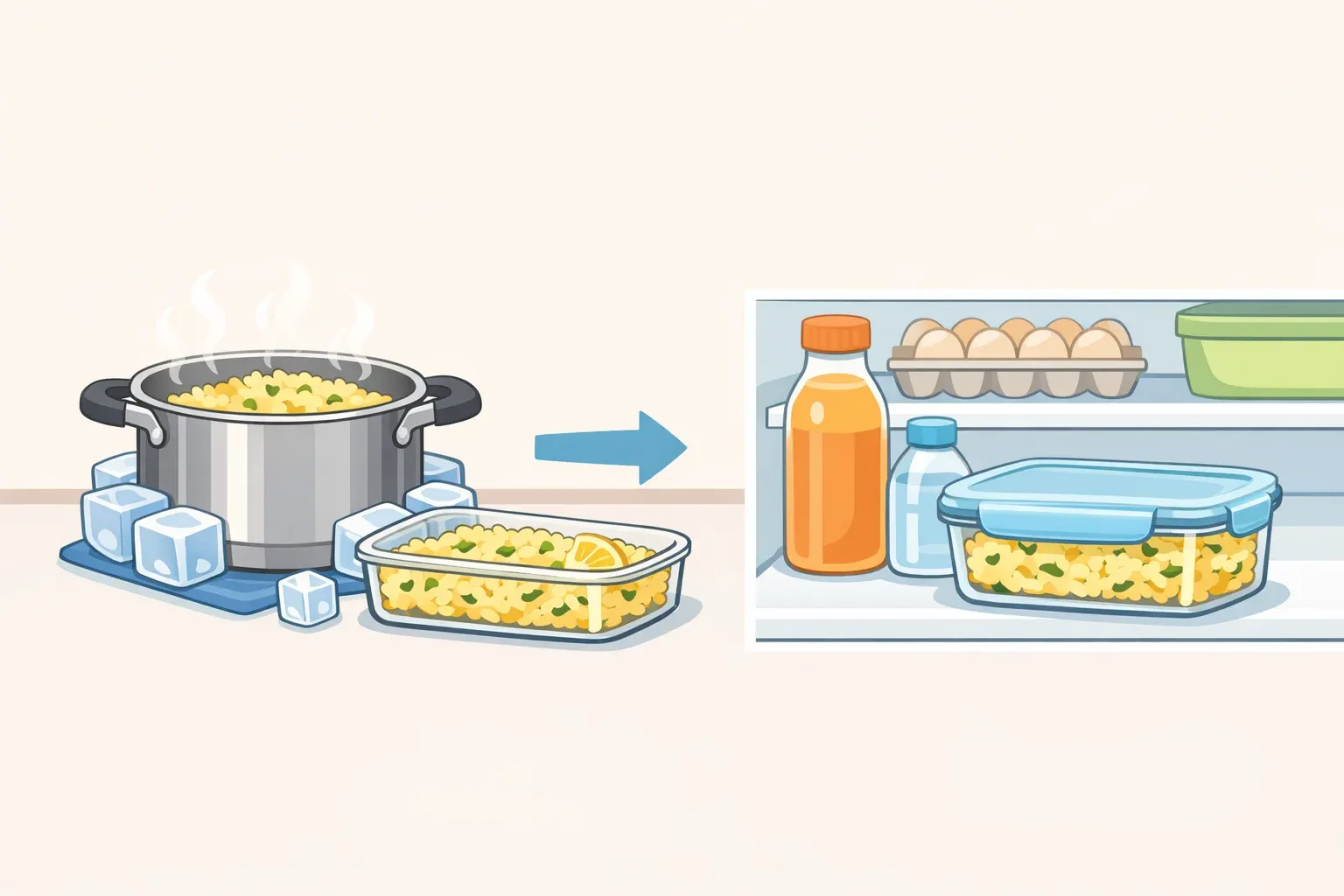
- Separate eligible surplus promptly, and log its history: when it was prepared, held, cooled, packed, and handed off. FSIS guidance recommends that recipient organizations evaluate donated products for wholesomeness before distribution, and they can't do that without a clear record. If you can't document the handling history, don't donate it.
- Confirm what your recipient nonprofit actually accepts. Capacity and food-safety requirements vary by organization, so don't assume a partner takes everything you have to offer.
- Set a standing pickup schedule so surplus isn't held indefinitely while someone tries to arrange transport.
Don't assume a "sell by" or "best by" date disqualifies food from donation. Except for infant formula, product dates aren't required by federal law, and FSIS notes that most products are still wholesome if they show no signs of spoilage. Even so, don't rely on smell or taste alone to make that call. Spoiled food typically develops an off odor, flavor, or texture, but a sensory check doesn't prove food is safe to hand off. Skip anything with signs of spoilage, temperature abuse, contamination, or an unclear handling history, and confirm eligibility with the recipient organization and your local health department when in doubt.
A narrow exception exists that most restaurants won't need. FSIS's guidelines allow federally inspected meat, poultry, or egg processors to donate an otherwise safe product with an improperly labeled ingredient of public-health concern, but only after getting temporary FSIS label approval and adding a "Not For Sale" statement plus a full ingredient list to each container. That process applies at the processor and manufacturer level, not to a restaurant donating prepared food, but it's worth knowing it exists.
Know your liability protection and its limits
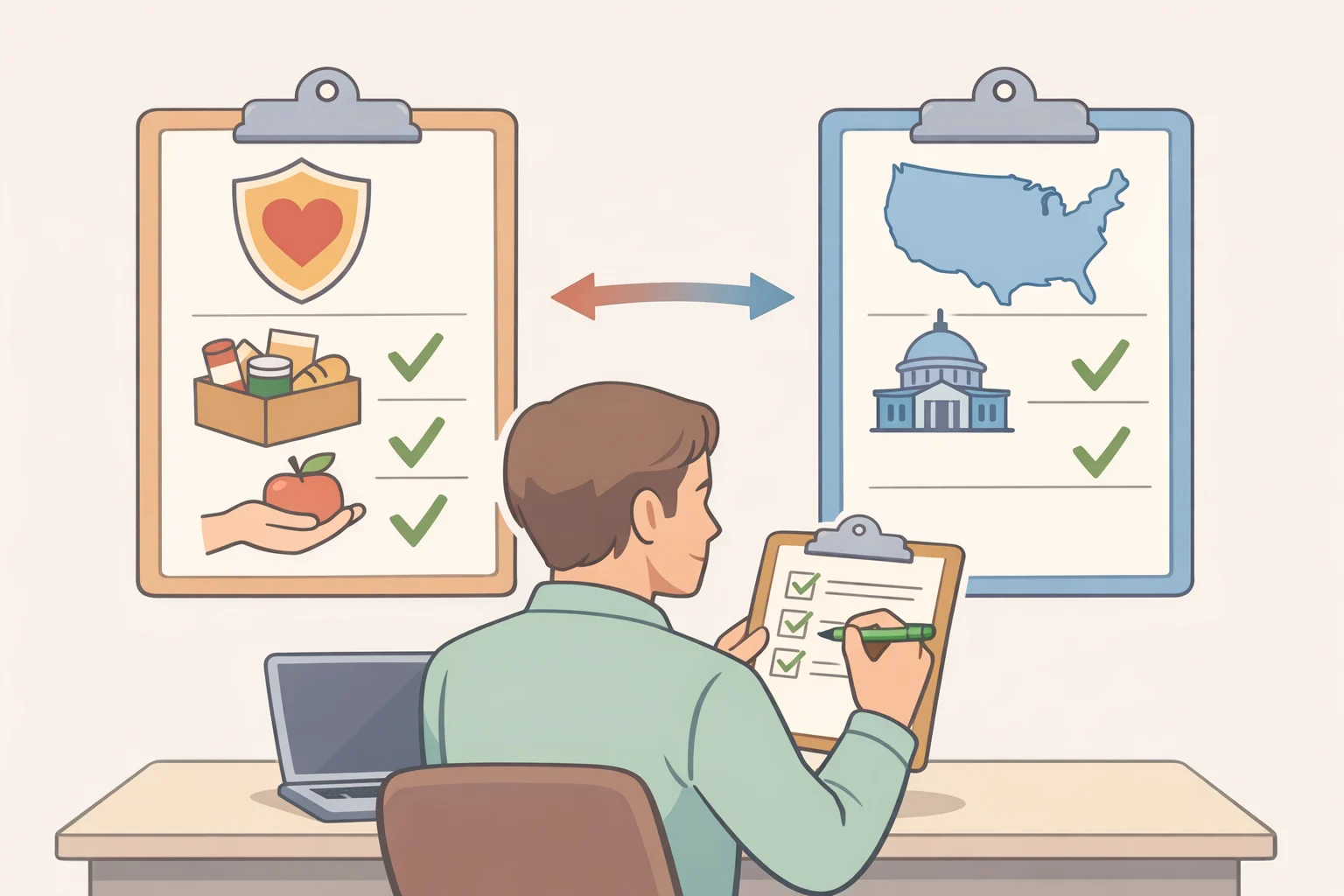
The Bill Emerson Good Samaritan Food Donation Act and the 2023 Food Donation Improvement Act protect good-faith donors from liability tied to injuries from consuming donated food. The 2023 amendments specifically name restaurants and caterers as "qualified direct donors," covered even when donating straight to people in need rather than through a nonprofit (FSIS's 2024 guidelines).
That protection covers the act of donating in good faith. It doesn't override the state and local laws you should have already confirmed with your health department before your first pickup.
After your first 60-day review
Once you've run one supplier change through a full 60-day cycle, move to the next highest-waste item on your log rather than trying to fix everything at once. Keep the same log fields running continuously so each new pilot has a real baseline to compare against, and hold onto your log entries and supplier request pages as a record in case a vendor relationship or a compliance question comes up later.
If a donation partnership stalls on a local rule you're unsure about, call your health department rather than guess your way past it; unsafe or adulterated food is never donation-eligible, no matter how well the rest of the plan is running. And if a supplier change ever produces a result you can't explain, whether that's a discard number that won't budge or a stockout you didn't expect, pause that pilot and go back to a single variable before you try anything new.










Comments
Be the first, drop a comment!