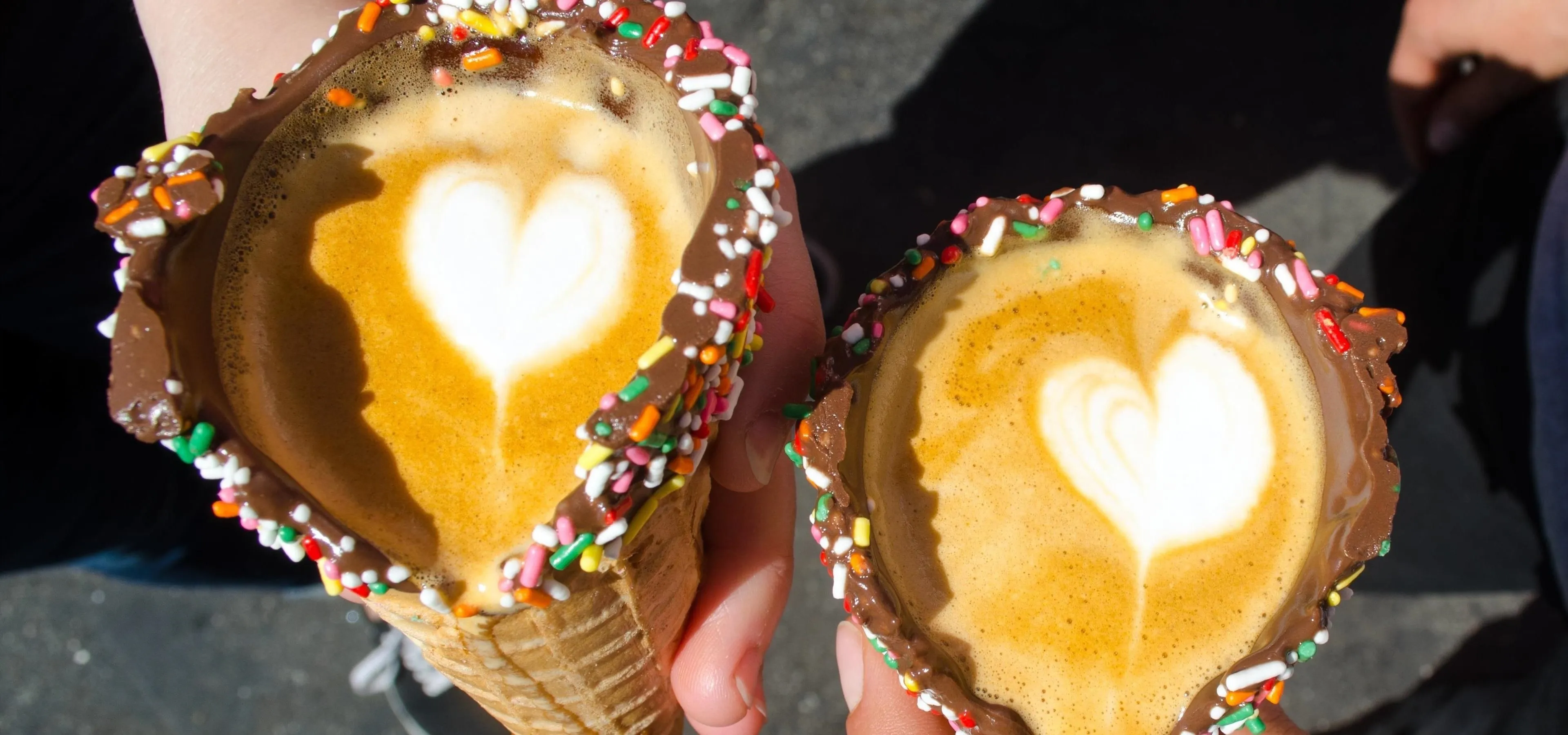



What is Dubai chocolate? Ingredients, origins, and recipe
What is Dubai chocolate? It's a thick chocolate bar filled with pistachio cream and crispy toasted kataifi, the shredded, phyllo-style pastry also sold as kunafa or knafeh, then sealed inside a tempered chocolate shell (FIX Dessert Chocolatier; CBC News). It isn't pistachio-flavored chocolate. The crunch comes from real toasted pastry folded into the pistachio filling, not a flavoring added to the chocolate itself.
You can buy the original bar, shop for a well-made copy, or build a smaller version at home with that same crisp-meets-cream texture. This guide covers all three: what actually goes into a Dubai chocolate bar, how to spot an original-style bar versus a loose copycat, and a full method for making one yourself, including the two mistakes that wreck most home attempts.
Where the Dubai chocolate bar came from
The FIX Dessert Chocolatier Dubai chocolate bar, officially called "Can't Get Knafeh Of It," was created by Sarah Hamouda in the United Arab Emirates. CBC News and AP News both reported last year that the bar traces back to 2021, while a Britannica overview instead dates FIX's first production to 2022. The exact year is disputed across sources, but that gap doesn't change how the bar is made or bought today.
The bar stayed mostly a UAE specialty until one TikTok video pushed it into global view. In December 2023, creator Maria Vehera posted a clip of herself eating the bar in her car, the sticky pistachio filling oozing out with each bite. That video has since been viewed 139.2 million times, CBC News reported last year. The clip gets much of the credit for pushing the format into the mainstream, and grocery brands, chocolatiers, and home bakers all started building their own versions soon after.
Dubai chocolate ingredients: pistachio cream, kataifi, and chocolate
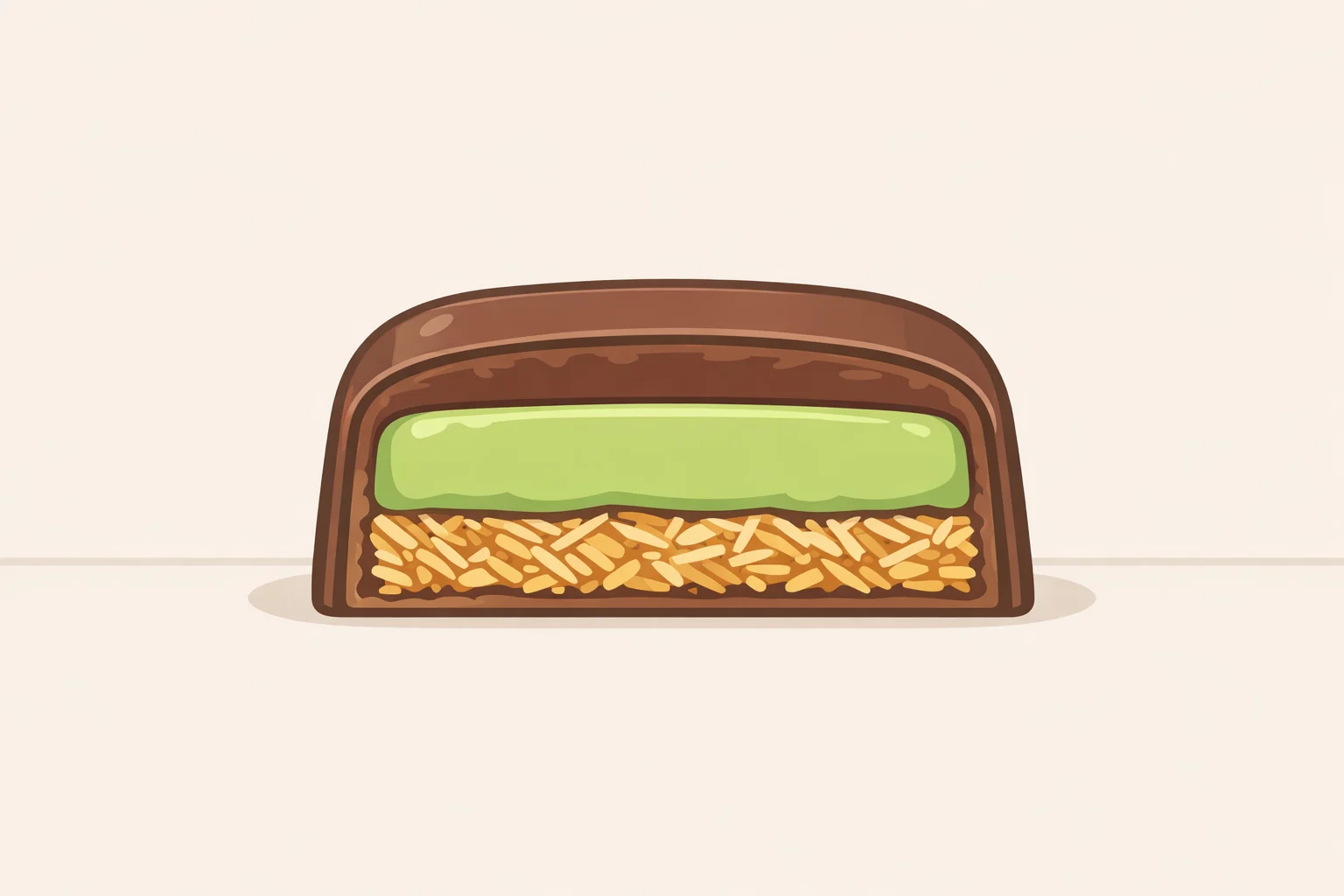
Three components define the format: a chocolate shell in milk, dark, or white chocolate, a pistachio cream filling, and toasted kataifi pastry for crunch. Tahini shows up in CBC's, AP's, and Britannica's descriptions of the filling, while FIX's own product page emphasizes pistachio cream and kunafa without naming tahini specifically. Treat tahini as a common addition rather than a required one (FIX Dessert Chocolatier; CBC News).
Kataifi, kadayif, knafeh, and kunafa are related terms you'll see on packaging and in recipes, though they don't all mean the same thing. Kunafa and knafeh usually refer to the finished Middle Eastern dessert the bar is modeled on, while kataifi or kadayif more specifically names the raw shredded pastry used inside it, according to AP News and a Britannica overview of the dessert's history. If you're shopping for the pastry itself, look for it labeled kataifi or kadayif.
The bar's flavor and crunch are borrowed directly from knafeh, translated into a candy-bar format rather than invented from scratch, CBC News reported. Chocolate type changes the sweetness and richness too: FIX describes its white chocolate edition as sweeter and creamier, and its dark edition as richer and less sweet (FIX Dessert Chocolatier).
None of that flavor variation is what the homemade version in this guide is built to reproduce. The crunch-and-cream contrast is the texture to chase, which is why the toasting and tempering steps below matter more than nailing an exact pistachio-to-tahini ratio.
The original FIX bar vs. copycats
The original is FIX Dessert Chocolatier's "Can't Get Knafeh Of It," sold in milk, dark, and white chocolate editions (FIX Dessert Chocolatier). CBC News reported last year that the UAE price was 68.25 AED, about C$26, with limited local availability tied to two daily ordering windows through Deliveroo, or in-person purchase at Dubai's airport. FIX's current product page says every edition now ships worldwide, so check the live shop before leaning on that older price or availability information.
If you're shopping for something that resembles the format rather than the original bar itself, look for pistachio cream and kataifi, kadayif, kunafa, or knafeh named specifically on the ingredient list. A bar that skips those and leans on green food coloring instead is likely pistachio-flavored chocolate, not a true filled kunafa-style bar. Major brands, including Lindt, have released their own pistachio kunafa chocolate, and grocery stores have stocked mass-market versions too (CBC News; JayArr Chocolate, four months ago). A non-FIX bar can still be a genuine Dubai-style or Dubai-inspired product; the name now covers a range of products built around one idea, not a single recipe.
What you'll need to make Dubai chocolate at home
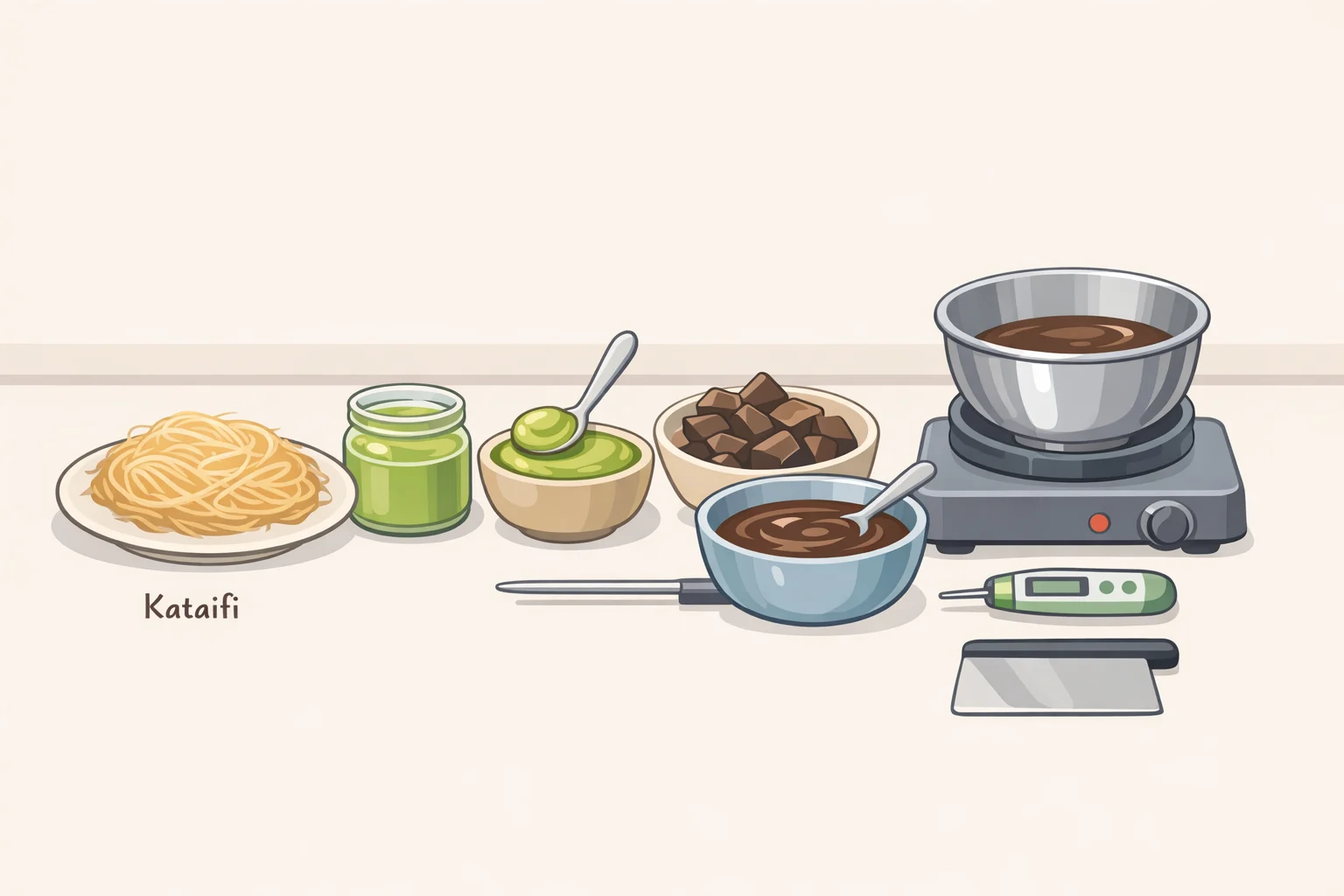
Assembly is beginner-friendly, but tempering the chocolate shell needs a digital thermometer if you want a clean snap and glossy finish. Two separate chilling stages stretch out the total project, so plan for more calendar time than active cooking time. Yield depends on your mold: a standard chocolate bar mold and a small parchment-lined loaf pan both work, but they hold different amounts. To check whether yours can handle a full batch, fill it with water, weigh the water in grams, and compare that number to the 400g of chocolate below.
This method follows a process published by JayArr Chocolate, four months ago, and it's written for milk or dark chocolate specifically. If you want a white chocolate shell like FIX's white edition, look up a separate tempering reference, since white chocolate's lower cocoa content shifts the target temperatures below what this method covers.
Ingredients (quantities from JayArr Chocolate):
- 400g good-quality milk or dark chocolate, for the shell
- 150g kataifi/kunafa pastry, usually sold frozen at Middle Eastern grocers
- 3 tablespoons melted butter or ghee, for toasting the pastry
- 200g pistachio cream or pistachio butter, plus 2 tablespoons tahini (optional) and a pinch of salt
- 2 tablespoons powdered sugar, only if you're using unsweetened pistachio butter
Pistachio cream and pistachio butter aren't quite interchangeable: the recipe calls for powdered sugar only when you're using unsweetened butter, not a pre-sweetened cream. Check your jar's label if you're unsure which one you've got.
This recipe contains tree nuts (pistachio) and, if you use tahini, sesame. Skip either ingredient if you're serving someone with those allergies, and check your pistachio cream's label for refrigeration instructions once opened, since that matters later for storage.
Equipment: a chocolate bar mold or a parchment-lined loaf pan, a digital thermometer, a kitchen scale, a spatula, parchment paper for testing the temper, and a microwave or double boiler.
If your kataifi is frozen, thaw it fully and separate the strands before tossing them with butter. Clumped or icy pastry won't toast evenly.
Two things are hard to fix once they've happened, so it helps to know about them before you start:
- Moisture. Even a single drop of water can cause melted chocolate to seize, clumping the sugar and turning a smooth mixture grainy. Every bowl, spatula, and the fully cooled toasted pastry itself needs to be dry before it touches the chocolate. If it does seize, it isn't ruined; more on rescuing it further down (Serious Eats, citing CIA chef instructor Jesse Jackson III, six months ago).
- Overheating. Milk and white chocolate scorch faster than dark chocolate because of their milk solids, so melt them in short 20 to 30 second microwave bursts, stirring between each, rather than continuous heat (Serious Eats, citing chef instructor Meg Newcomb, six months ago).
How to make a Dubai chocolate bar
-
Toast the kataifi. Preheat the oven to 175°C/350°F. Toss the shredded pastry with melted butter and bake 8 to 12 minutes, stirring halfway, until golden and crisp. Let it cool completely to room temperature before it touches the filling (JayArr Chocolate).
-
Make the filling. Stir together the pistachio cream, optional tahini, salt, and powdered sugar if you're using unsweetened pistachio butter. Fold in the cooled, crisp kataifi until it's evenly coated. Taste it here and adjust salt or sweetness now; this is the checkpoint that matters most, since there's no fixing the flavor once the bar is sealed shut (JayArr Chocolate).
-
Temper the chocolate. Melt three-quarters of the chocolate to 50°C in short bursts, then stir in the remaining quarter, the seed method, until it's fully melted and the temperature drops to 31-32°C for dark chocolate or 29-30°C for milk chocolate. Those numbers are working targets, not a guarantee; exact ranges shift slightly by brand and cocoa percentage. What you're actually chasing is a stable form of cocoa butter crystal that melts around 34°C, which is what gives the shell its snap and lets it release cleanly from the mold (JayArr Chocolate). Test by spreading a thin smear on parchment; it should set glossy and firm within 3 to 5 minutes (JayArr Chocolate).
-
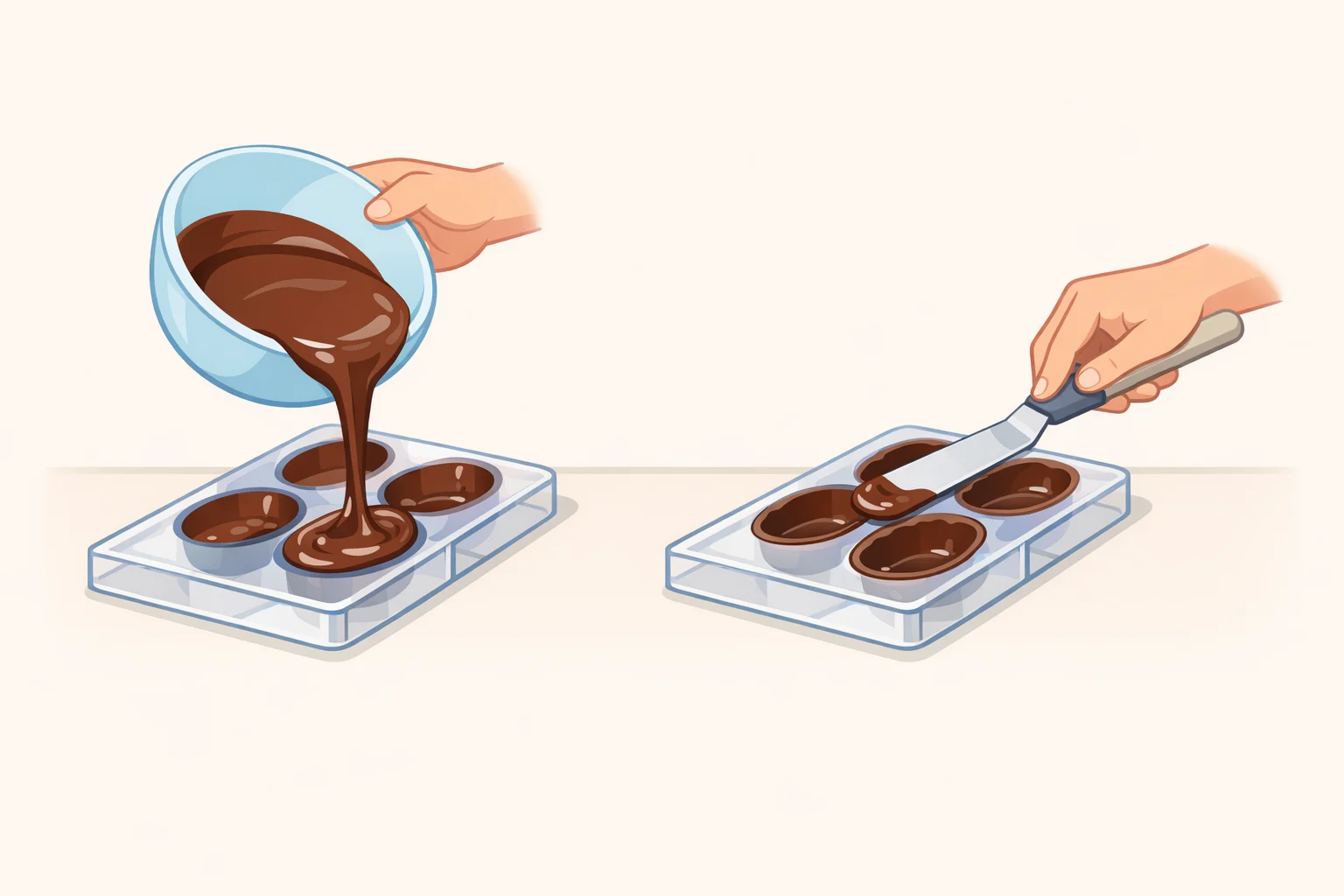
Coat the mold. Pour the tempered chocolate into the mold, tap out air bubbles, and pour off the excess so only a thin, even layer coats the base and sides. Refrigerate 3 to 5 minutes until it's just set to the touch (JayArr Chocolate).
-
Add the filling. Spread the pistachio-kataifi mixture over the set shell, leaving about 3 to 4mm of space at the top for the final layer of chocolate. If the mixture won't hold its shape on the spatula, a little more toasted kataifi usually firms it up; if it's too stiff to spread, loosen it with a bit more pistachio cream (JayArr Chocolate).
-
Seal the bar. If your remaining tempered chocolate cooled below working temperature, warm it gently. If it climbed above 33°C, the crystals you built in step 3 melt back out, so re-temper before using it; that ceiling holds for both milk and dark chocolate in this method. Pour it over the filling to seal completely, then smooth the surface (JayArr Chocolate).
-
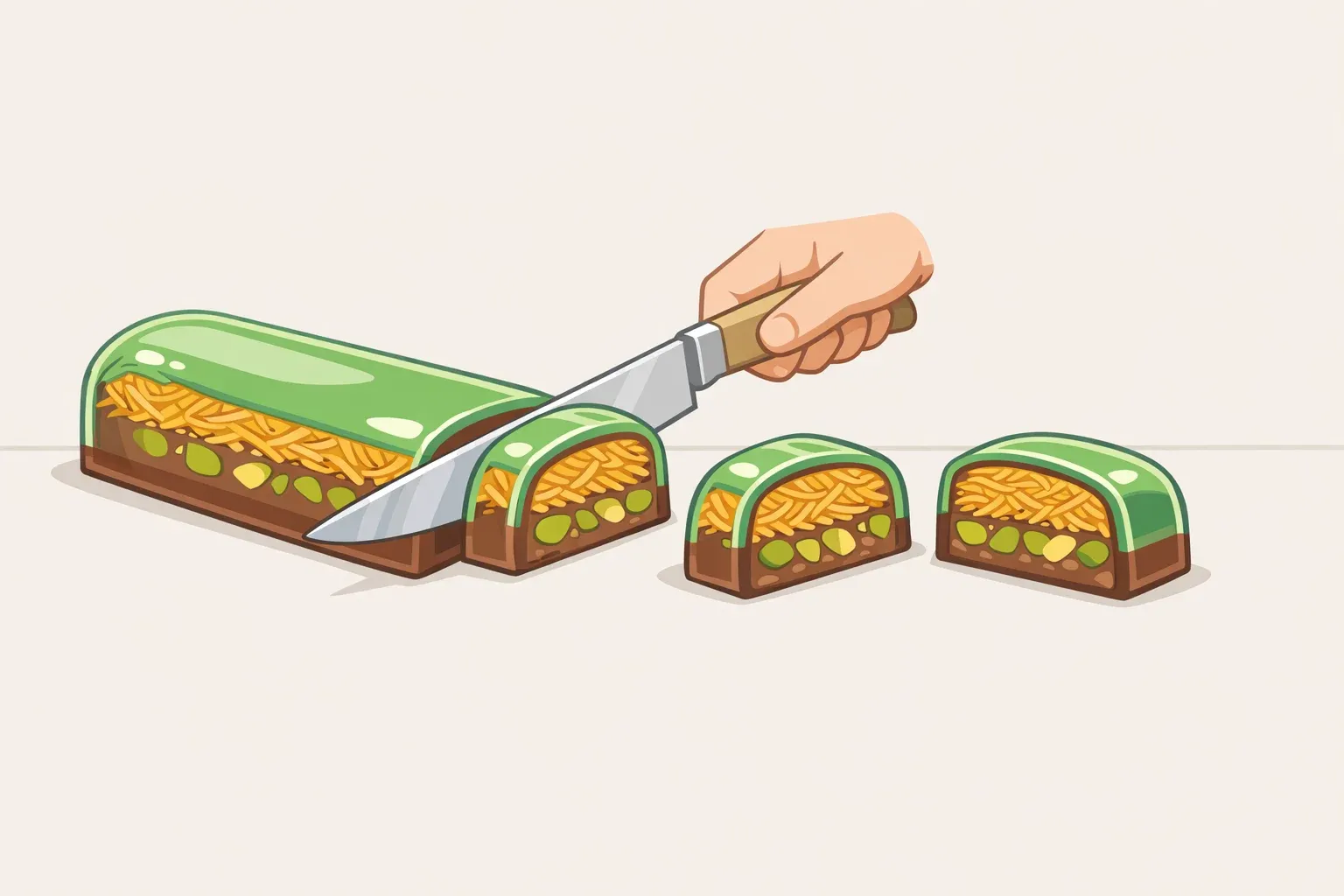
Chill and unmold. Refrigerate 20 to 30 minutes until the chocolate is fully crystallized. A properly tempered bar releases cleanly from the mold and snaps to reveal distinct layers of glossy chocolate, golden pastry, and green pistachio cream. If the bar stays soft and won't hold its shape, the chocolate was under-tempered (JayArr Chocolate).
Troubleshooting the bar
No mold on hand? A parchment-lined loaf pan works as a substitute, though you'll need to cut individual portions after unmolding rather than popping out separate bars. Skipping tempering is another option if you don't own a thermometer: melted-and-chilled chocolate will still set into a bar that tastes fine but won't snap, with a duller finish and a harder release from the pan than a properly tempered shell. Treat that as a fallback, not the standard to aim for.
If the chocolate seizes, it can't be re-tempered, but it isn't wasted. Stir in warm cream or milk a tablespoon at a time and it loosens back into a smooth ganache you can use elsewhere, or fold the cooled, chopped chocolate into brownie batter or ice cream. If it smells burnt, throw it out; burnt cocoa solids stay burnt no matter what you stir in (Serious Eats, citing chocolatier Meg Newcomb, six months ago).
If the filling tastes off once the bar is assembled, there's no fixing it after the shell is sealed. Treat the taste test in step 2 as the real checkpoint, not an optional one.
Storage and serving
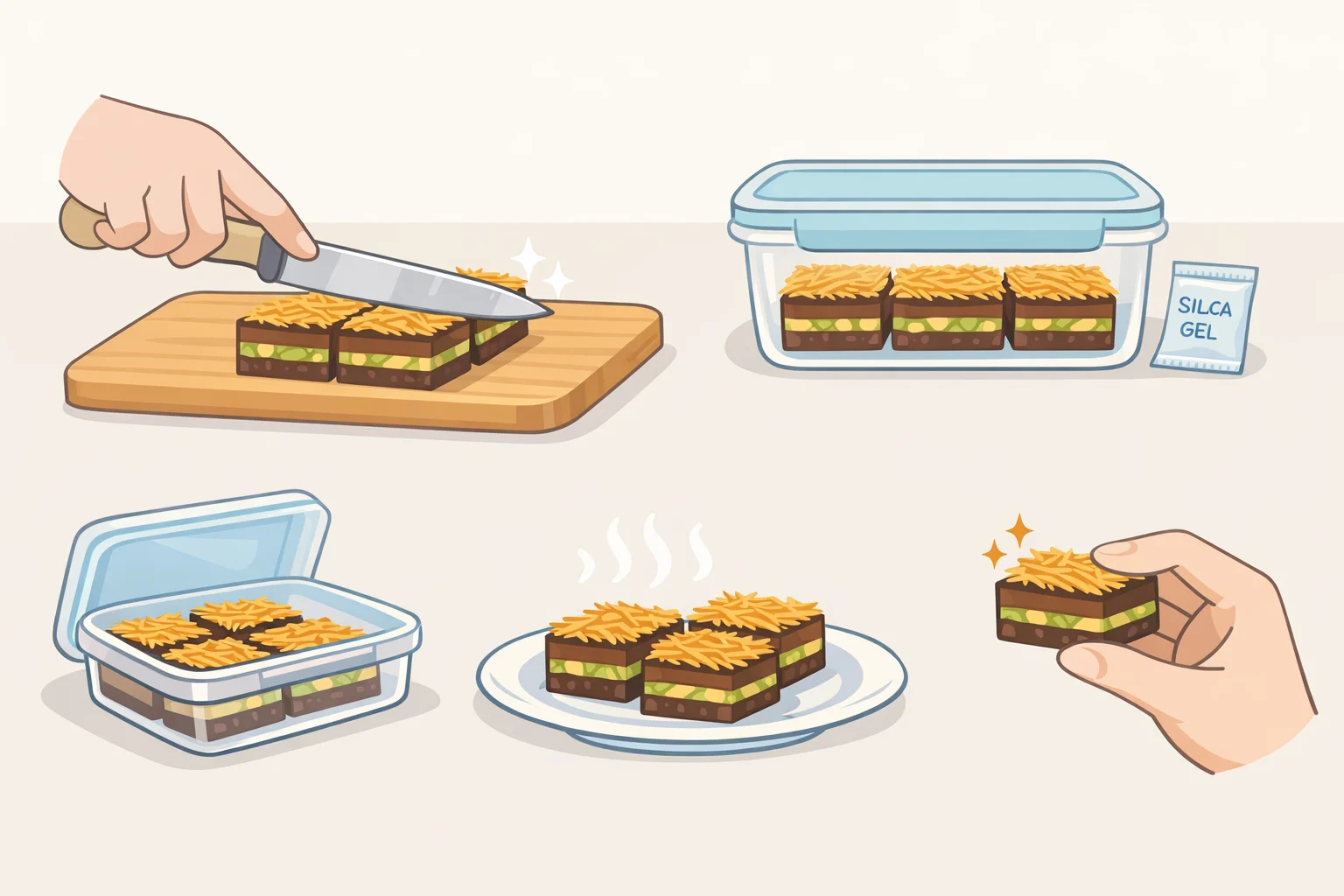
Once the shell feels fully set and cold, unmold the bar rather than leaving it in the fridge longer than needed; extra time in the cold doesn't improve the set once it's crystallized. A dry knife makes cleaner cuts through the pistachio layer, and wiping the blade between slices keeps the filling from smearing.
Check the label on your pistachio cream or butter before deciding where to keep the finished bars. If it doesn't call for refrigeration once opened, store the bars in a stable, cool, dry place below 18°C and eat them within 5 to 7 days; the kataifi gradually softens as moisture moves through the bar over that window (JayArr Chocolate). Treat that window as when the texture is at its best, not a hard food-safety cutoff.
If your pistachio spread's label does call for refrigeration, seal the bar well and keep it cold, and expect the kataifi to lose its crunch sooner than the timeline above. Either way, pick one storage spot and stick with it: moving a bar back and forth between the fridge and the counter speeds up both that softening and bloom, the dulling that shows up on chocolate stored inconsistently (JayArr Chocolate). If you're making a batch to give away, plan to hand it off within that same window rather than saving it for later; the crunch is the first thing to go, and once it's gone, no amount of chilling brings it back.
Comments
Be the first, drop a comment!