



How often to change a water filter: a model-by-model guide
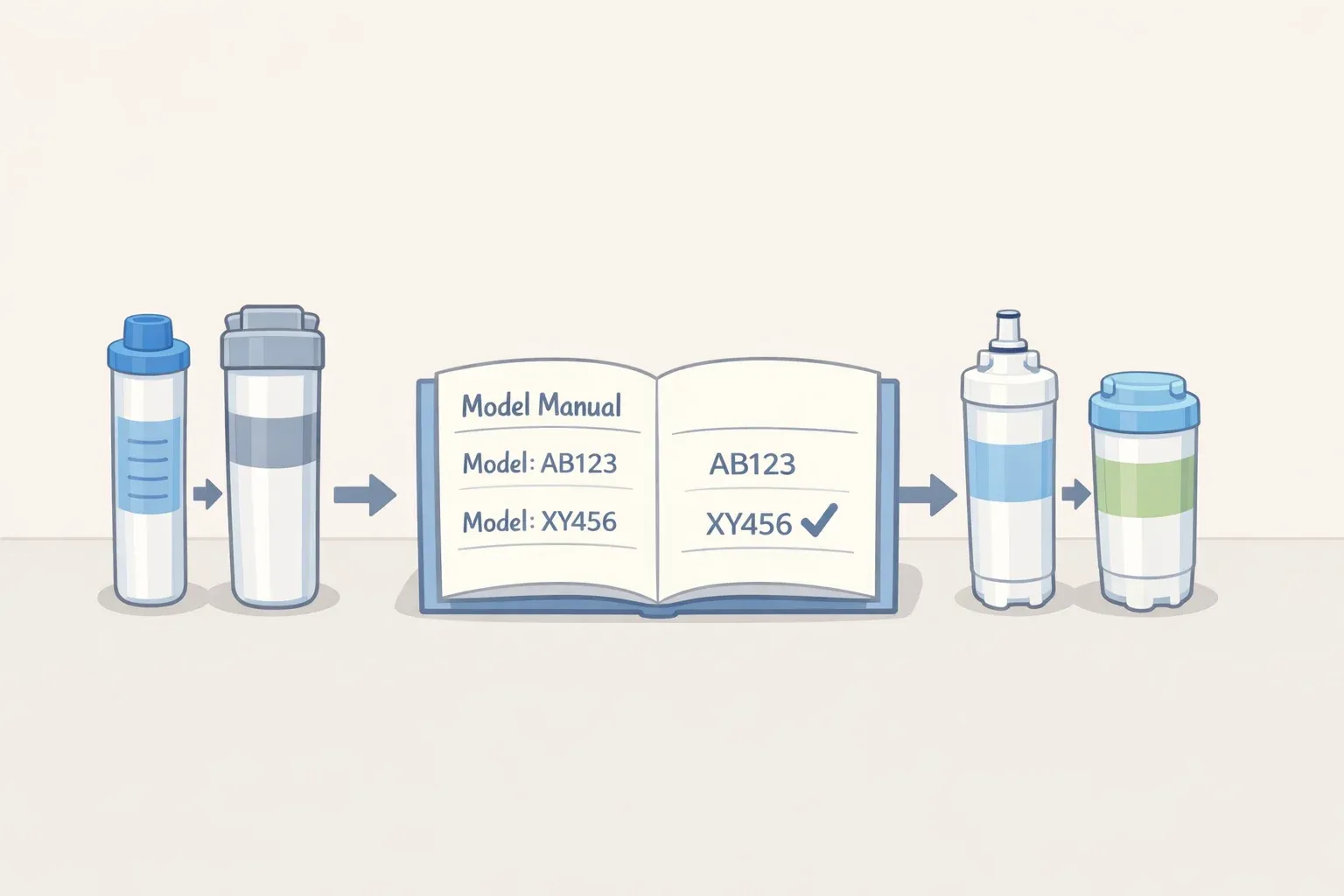
There's no single answer to how often to change a water filter, because there's no universal schedule to begin with. Check your exact model's manual for a time limit, a gallon limit, or both, and swap the cartridge according to those instructions. A refrigerator filter, a pitcher cartridge, an under-sink filter, and a reverse-osmosis (RO) system can all run on different clocks, so a number you remember from a different appliance won't help you here.
That covers timing. The second question, separate from timing, is whether the cartridge you're replacing was ever certified to remove what's actually in your water. NSF has certified water treatment products since 1972, and its consumer guidance notes that the contaminants a given filter reduces vary by product, even among cartridges that share the same certification number (NSF, 11 months ago). Get the schedule right and the certification wrong, and the filter may not be addressing the contaminant you actually care about.
What you'll need
- Your filter's model number, stamped on the cartridge or housing
- The manufacturer's manual or support page for that exact model
- Your local Consumer Confidence Report, or recent well water test results if you're on a private well
- A replacement cartridge matching your model number and the certified claim you need
- An adjustable wrench or container, if your model's manual calls for one, plus a towel for drips
- A way to log the install date, like a phone reminder or a sticker on the housing
This is a beginner-friendly task for a standard pitcher, refrigerator, or under-sink cartridge. RO systems take more attention because they usually combine several components, some on their own separate schedules. Anything involving a whole-house softener, UV system, or distillation unit calls for that system's own manual instead of this workflow.
Water filter replacement schedule: time vs. gallons
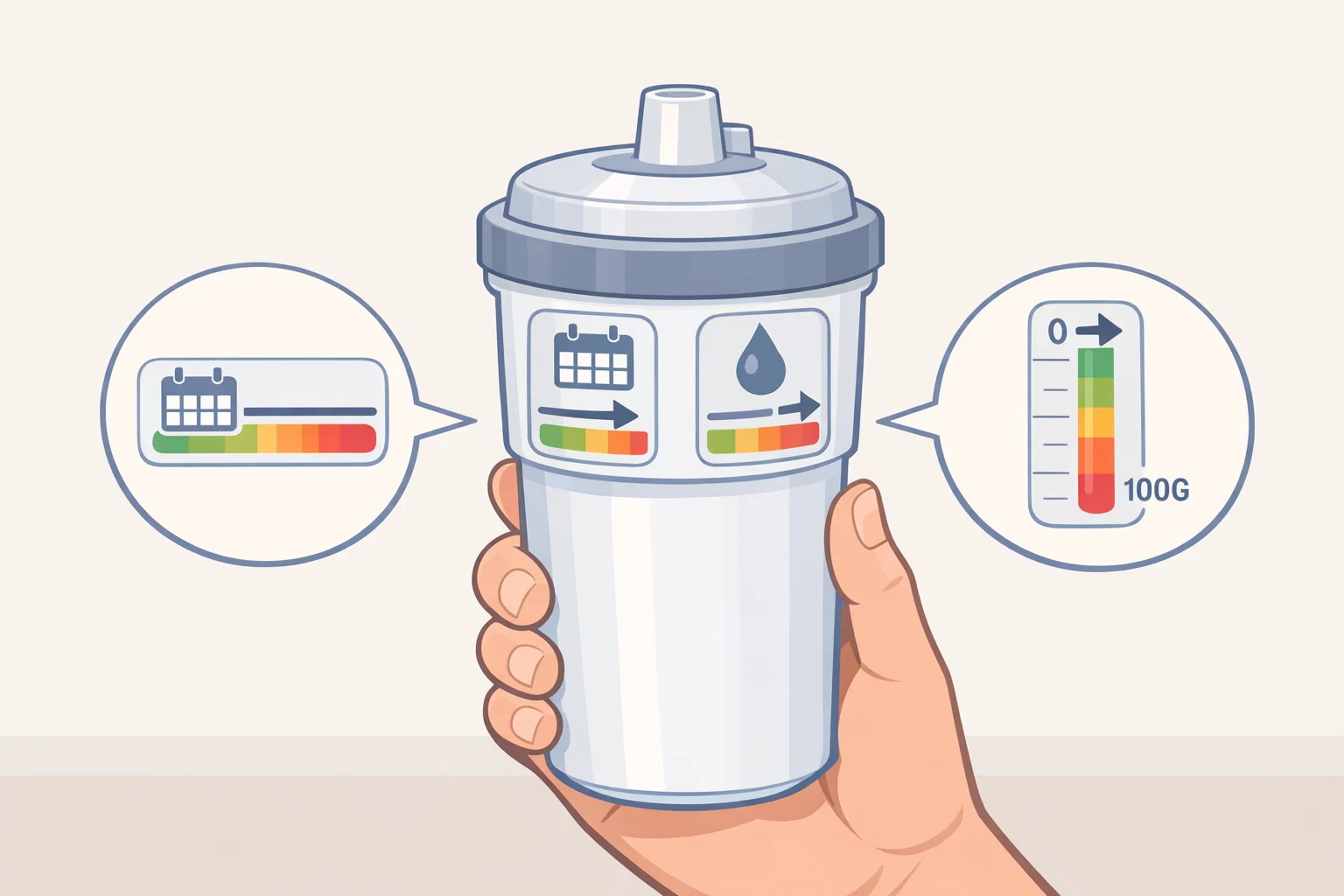
NSF's core consumer guidance is to replace cartridges according to the manufacturer's instructions for that specific product, because performance claims tested under standards like NSF/ANSI 42 and 53 are established per product rather than on a universal calendar (NSF, 11 months ago). Treat the manufacturer's interval as the point for replacement, rather than assuming the cartridge will keep performing as tested once that point has passed.
Your manual may list a time limit, a gallon limit, or both. Follow the manual's instructions when both appear; don't invent your own priority rule if the manual doesn't spell one out.
If your unit has an indicator light or a reset button, use that specific model's reset steps. Reset procedures differ by brand, so a light behaving one way on one filter doesn't tell you how it behaves on another.
RO systems add a wrinkle. Most combine a semi-permeable membrane with one or more additional pre- or post-filters (NSF, 5 years ago), and the manual may assign different replacement intervals to the membrane than to those other stages. Check the manual to see how many components you're actually tracking, rather than assuming one swap covers the whole unit.
When to replace a refrigerator water filter
Refrigerator filters run on the same model-specific logic, but the mechanics belong to the fridge itself. Pull the model number off the cartridge or the appliance manual, then follow whatever interval that manual publishes. Many fridges have a filter-status light on the dispenser panel, though how that light resets after a swap is entirely model-dependent, so check your unit's own documentation rather than guessing.
If your fridge doesn't track usage automatically, note the install date somewhere you'll actually see it. A sticker on the filter housing beats trying to remember the date months later.
Signs a water filter needs changing
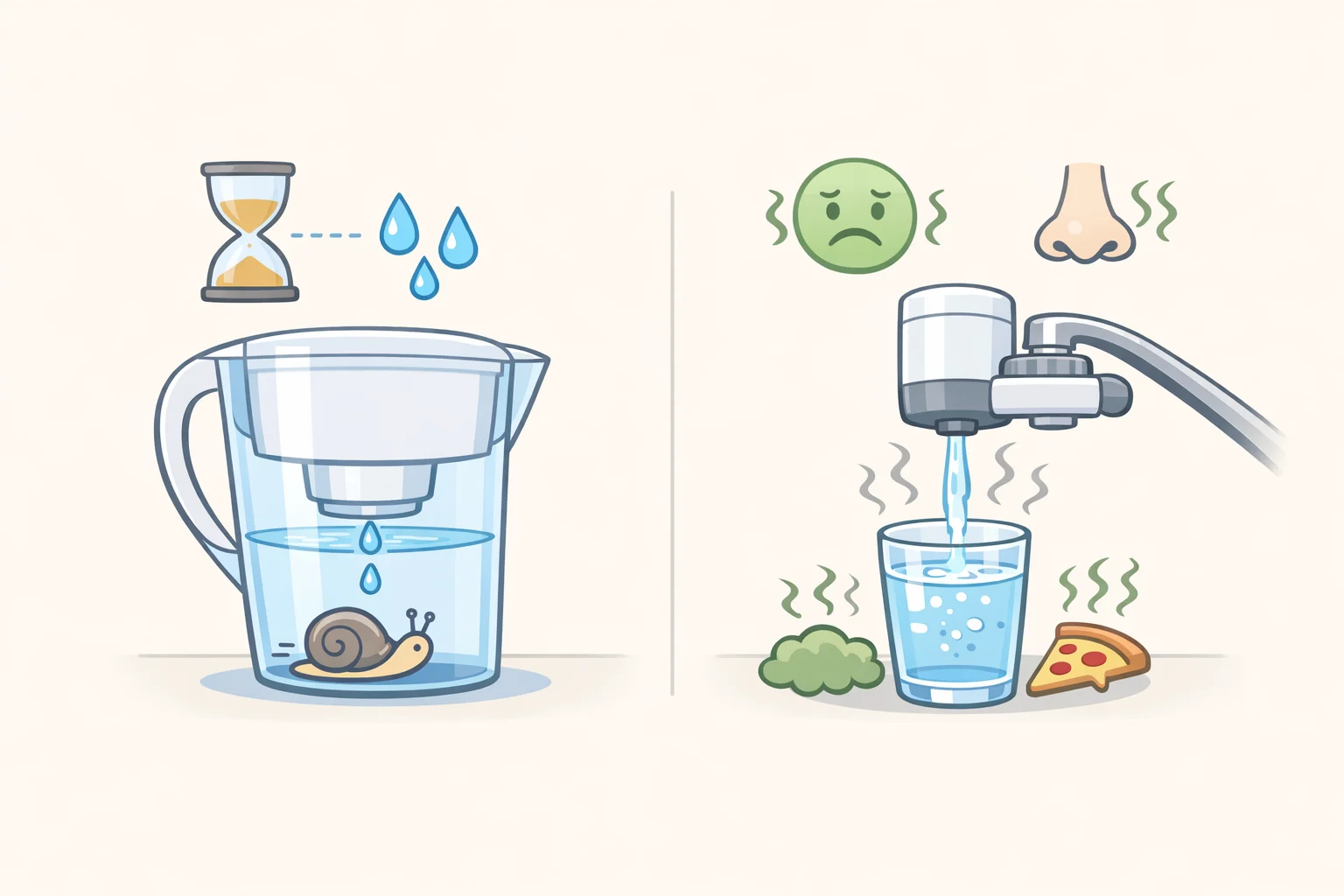
The documented time or gallon limit is the trigger that matters, and it's the one to trust over everything else. A few secondary troubleshooting signs are worth watching for too, though none of them replace the documented interval:
- You've reached or passed the documented time or gallon limit (the primary trigger)
- An indicator light has switched to the "replace" state for your model
- Water flow has noticeably slowed compared to when the cartridge was new
- A taste or odor the filter was installed to fix has come back
That last cue needs a caveat. A returning taste or smell isn't proof of exactly how much capacity is left, and it can also point to a change in your water supply or a plumbing issue that a new cartridge won't fix on its own. Treat it as a reason to check your filter sooner, not as evidence of remaining capacity, and don't assume a fresh cartridge automatically resolves it if the taste persists.
What happens if you don't change a water filter
Carbon filters used in NSF/ANSI 42 and 53 certified products work through adsorption, where contaminants stick to the surface and pores of the filter media (NSF, 5 years ago). Certification testing verifies a product's contaminant-reduction claims, material safety, and structural integrity under lab conditions, but nothing in that testing describes what happens to performance once a cartridge runs past its stated interval (NSF, 8 months ago).
So missing the window doesn't confirm your water became contaminated. It means the cartridge is no longer covered by its documented, tested performance claim. Nothing in the certification testing establishes a universal failure mode, a guaranteed contaminant release, or an exact health risk once a filter goes overdue. Until the replacement is installed, treat the cartridge's contaminant-reduction claim as unverified rather than assuming the worst or the best.
Confirm the replacement matches your water
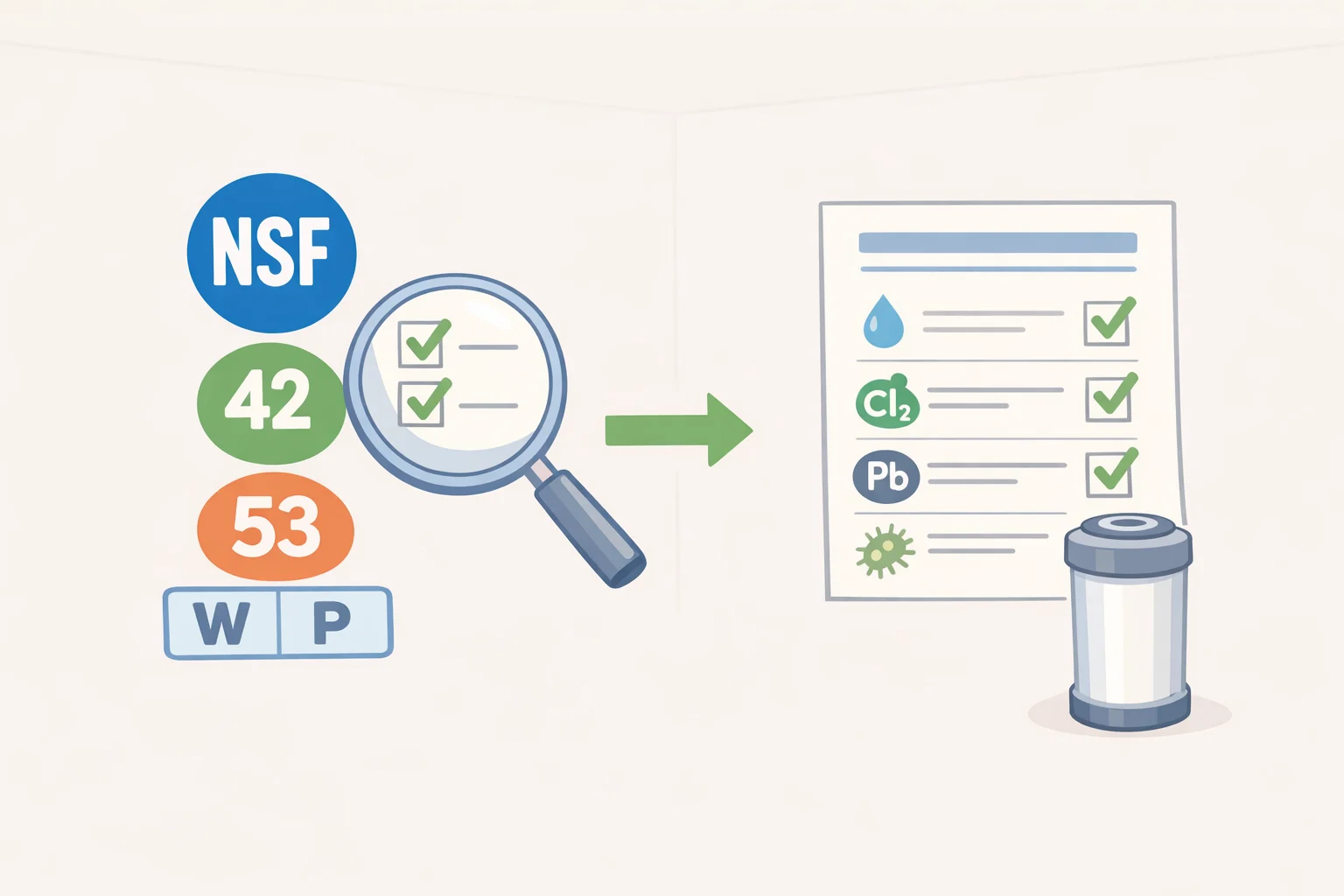
Timing solves one part of this. The bigger risk is installing a cartridge that was never certified for what actually needs removing, even if it goes in right on schedule.
The standard numbers reflect development order, not an effectiveness ranking (NSF, 5 years ago). NSF/ANSI 42 covers aesthetic issues like chlorine, taste, and odor. NSF/ANSI 53 covers specific health-related contaminants such as lead and Cryptosporidium. NSF/ANSI 401 covers up to 15 named emerging contaminants, things like trace pharmaceuticals and pesticides (NSF, 8 months ago). Certification under one doesn't carry over to the others.
PFAS is a useful example of why this matters. Not every NSF/ANSI 53- or 58-certified product reduces PFAS; only products carrying a specific PFAS reduction designation have actually been tested for that claim (NSF, 11 months ago). NSF is direct about the limits here: certification to a standard doesn't mean a filter reduces every possible contaminant, and it recommends checking the applicable standard and claim against its Products Listing page rather than assuming coverage (NSF, 5 years ago). A filter that wasn't specifically certified to reduce a given contaminant shouldn't be trusted to remove it.
Match the claim to your actual water. On a public water supply, start with your local Consumer Confidence Report, which lists the contaminants and levels detected in your area (NSF, 11 months ago). A Consumer Confidence Report doesn't exist for a private well, so well owners typically need to arrange their own water testing to find out what's actually present, then choose a certified claim based on those results rather than a guess.
Skip marketing language like "purified" or "removes toxins" when choosing a replacement. Find the model number, identify the exact standard and claim, and check it against your CCR or well-test results.
Water filter maintenance between replacements
A cartridge doesn't need attention only on replacement day. A few habits between changes make the eventual swap easier and catch problems before they turn into a bigger job.
Log the install date and, if your manual lists one, the rated gallon capacity, right when you install a new cartridge. A sticker on the housing or a note in your phone works fine; the point is having that number on hand instead of guessing months later.
Follow your model's flushing or priming instructions after installing, not as a formality but because a fresh cartridge can release manufacturing residue or trapped air that a proper flush clears before you drink from it.
If flow seems weak right after a replacement, recheck the installation before assuming the new cartridge is defective. A loose fitting, an unflushed line, or a cartridge that isn't fully seated can all mimic a filter problem.
If a leak shows up at the housing, shut off the supply line for that unit and recheck the seal or O-ring seating according to your model's manual, rather than tightening indefinitely. Overtightening a housing can crack it.
A taste or odor that returns well before the documented interval is up is worth treating as its own issue rather than a scheduling failure. It can point to a change in your water supply or a plumbing problem upstream of the filter, not necessarily a spent cartridge.
When this replacement guide doesn't apply
A few situations sit outside the ordinary schedule-and-claim workflow. NSF/ANSI 244-certified products are built for intermittent microbiological contamination of water that's otherwise considered safe, and this protection applies before a boil-water advisory is issued, not as a response to one (NSF, 5 years ago). NSF P231 covers dedicated microbiological purifiers under a separate protocol (NSF, 5 years ago). If you're under an active boil-water advisory, facing known contamination, or seeing a sudden and unexplained change in water quality, follow your local health department's guidance instead of the ordinary replacement schedule.
The same goes for UV systems, distillation units, and water softeners. Each relies on a different mechanism: UV exposure, boiling and condensation, or ion-exchange resin regeneration (NSF, 5 years ago). Their own manuals govern replacement timing, not the time-or-gallon logic used for carbon cartridges.
The NSF standards discussed throughout this guide are voluntary; no federal regulation requires any of this tracking (NSF, 5 years ago). But if you own a particular filter, purifier, or RO system, its manufacturer's maintenance instructions still govern how you should operate it. Voluntary certification doesn't make maintenance optional.
Replacing the filter, step by step
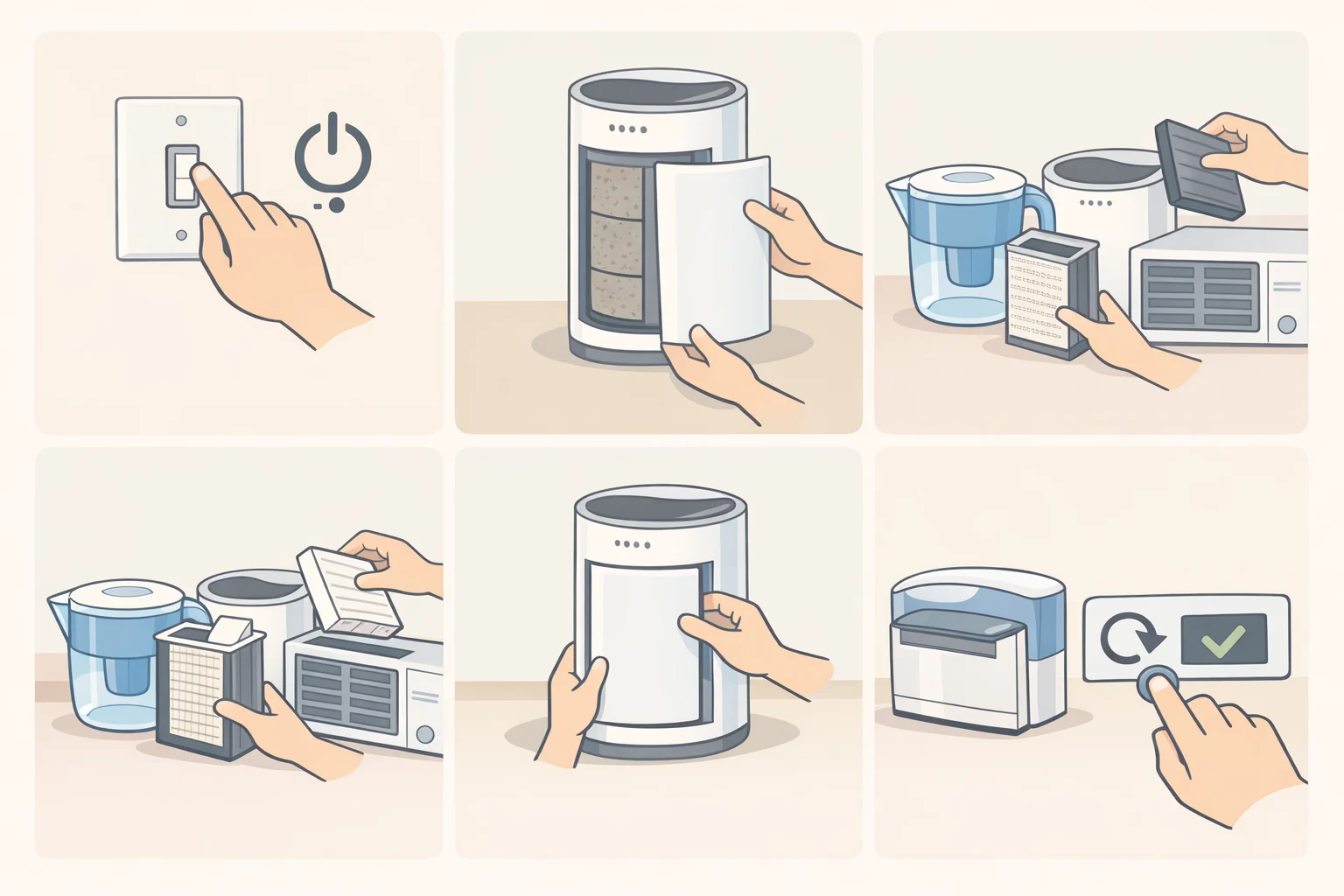
Once the model number and certified claim are confirmed, the swap itself is straightforward, though the details shift by device type:
- Pitcher filters: remove the old cartridge, rinse the reservoir if your manual calls for it, install the replacement, and discard or flush the first batch of water if directed.
- Refrigerator filters: use that model's release mechanism, whether twist or push-button, run water for whatever period the manual specifies, and check for leaks around the filter head afterward.
- Under-sink housings: shut off the supply valve first, keep a towel or container underneath, and avoid overtightening the housing when reassembling it.
- RO systems: identify every replaceable stage, not just the membrane, and follow the manual's order and any sanitizing steps before returning the system to normal use.
From there, the general sequence looks like this:
- Match the replacement to the housing and model instructions. A cartridge that physically fits may carry different contaminant-reduction claims or a different certification than the one it's replacing. Check the manufacturer's compatibility information and verify the specific claim on NSF's Products Listing page when it applies.
- Shut off the water supply if your model requires it.
- Remove the old cartridge using your manual's release mechanism.
- Install the new cartridge, seating it as the manual describes.
- Flush the system using that model's specified flush or priming steps before drawing water to drink.
- Check fittings for leaks and confirm water flow looks normal.
- Reset any indicator light using your model's reset sequence.
- Log the install date and rated capacity so you know when the next replacement is due.
Finishing up
The job is done once the correct cartridge is seated, the flush step is complete, the fittings are dry after running water, and the next replacement date is logged somewhere visible. If flow still seems slow or a smell lingers after the flush, work back through the maintenance checks above before assuming the filter itself is at fault. Otherwise, close up the housing, run the tap, and let the reminder you just set do the remembering next time.






Comments
Be the first, drop a comment!