



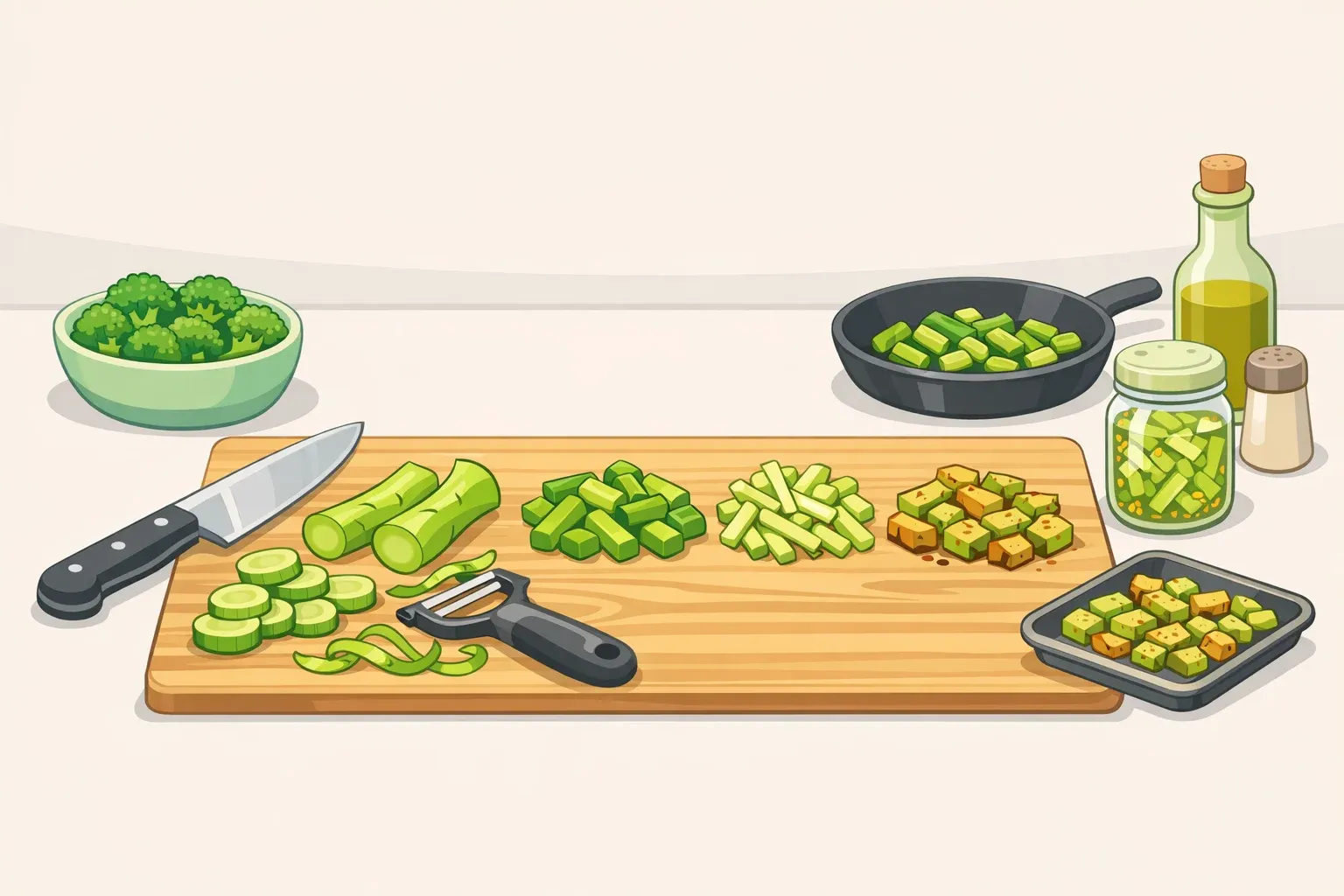
Yes, you can eat broccoli stems, and you probably should. The stalk makes up a substantial part of a broccoli head, yet many home cooks treat it like packaging for the florets. Once you know how to trim and cook it, the stem becomes one of the most useful parts of the vegetable.
This guide gives you a simple decision framework for any head of broccoli: check the stalk, peel it if needed, then use the stem raw, sautéed, pickled, or roasted.
Before you cut into the broccoli, wash it under running water, even if you plan to peel the stem. Use a clean knife and cutting board, especially if you plan to eat the stem raw.
What you'll need
One head of broccoli
A sharp knife
A vegetable peeler
A skillet, if sautéing
A sheet pan and aluminum foil, if roasting
Vinegar, salt, and a clean jar with a lid, if pickling
Step 1: Check the stalk before you cut
Before you cut anything, run your thumb firmly down the length of the stalk. That quick pressure check tells you whether the outside is tender enough to keep or fibrous enough to peel.
A fresh stalk feels smooth and gives slightly under pressure. That exterior is edible and may not need removing. An older or larger stalk feels fibrous and resists pressure; that woody layer will not soften much in a pan or oven. Peel those stalks down to the pale, dense interior. Once peeled, the core is tender enough to slice raw and sturdy enough to cook.
Discard broccoli that smells sour, feels slimy, or has visible mold. If only the cut end of the stalk looks dry, trim that portion before peeling the rest.
Now make the call:
To use the stem separately from the florets: Cut the florets close to where they branch off the main stalk, trimming only the larger outer florets if their bases are tough. Peel the stalk if the thumb test says to. Move to Step 2.
To roast the whole head together: Keep the florets attached or cut the head into planks. Peel the stalk base if it feels woody, then skip to Step 3.
For most weeknights, separate the stem, use it raw or sautéed, and roast the florets. You get two textures from one vegetable with little extra work.
Gotcha: Don't skip the peel check and eat a woody stem raw. An exterior that stays tough in a hot pan will not become pleasant at room temperature.
Step 2: Choose raw, sautéed, or pickled stems
Start with the stem if you want the fastest payoff. Once peeled, it can become a snack, a crunchy salad ingredient, a quick side, or a refrigerator pickle.
Raw broccoli stems
Slice the peeled stem into coins or cut it into batons roughly the size of a celery stick. Eat them plain, add them to a salad, or finish them with olive oil and flaky salt for a quick snack.
On a crudité platter, stem batons can be easier to dip than raw florets, which tend to crumble and trap water. Try both side by side if you usually serve only florets.
Raw is the fastest option: peel, slice, and serve.
Sautéed broccoli stems
Sautéing works best when the stalk is large enough to justify a hot pan. Cut the peeled stem into batons or thin coins so the pieces cook quickly.
Heat a skillet with a thin layer of oil until the oil shimmers, then add the stems in a single layer and leave them undisturbed for 90 seconds to two minutes. Let the cut sides brown; that's where the flavor develops. Turn once, cook another minute, then season off the heat.
Sautéing makes the most sense when you have a larger stalk or already have a hot pan on the stove.
Pickled broccoli stems
Pickling works well because peeled broccoli stems stay crunchy in brine. Use this as a refrigerator-pickle method, not a shelf-stable canning recipe.
Here's how to do it:
Peel the stems and slice them into thin coins, about 1/8 inch thick, for faster pickling; cut thicker batons if you want more crunch.
Submerge them in a quick-pickle brine: equal parts white wine vinegar and water, a pinch of salt, and a small amount of sugar if you want less sharpness.
Refrigerate for at least 30 minutes for coins; thicker batons benefit from an hour or more.
Keep the pickled stems refrigerated and use them within a few days for the best texture.
The result is a sharp, crunchy condiment that works as a side, on grain bowls, or tucked into a sandwich. Pickling is particularly useful with older stalks because the brine adds snap and flavor when the interior has lost some of its raw crispness.
Gotcha: Skipping the peel before sautéing or pickling doesn't work. The woody exterior stays fibrous, so peel it before the stem goes anywhere.
Step 3: Roast the whole head, then cover it
Broccoli roasts unevenly because the florets brown faster than the dense stalk softens. If you pull the pan too early, the stalk stays chewy; if you roast too low and slow, the florets can dry out before the stalk catches up.
The solution is a steam finish. The order matters.
Set the oven to 425–450°F on conventional bake, not convection. Convection can dry broccoli faster than the stalk can soften because the florets have so much exposed surface area. Use standard bake mode for this method.
Roast until the florets are visibly browned, roughly 15 to 20 minutes depending on cut size. High heat gives broccoli better browning before the florets dry out. Don't pull the pan early hoping carry-over heat will finish the stalk. It won't.
Pull the pan, cover it tightly with foil immediately, and wait. Leave it on the counter for 10 minutes, or slide the covered pan back into the turned-off oven for 5 minutes. The trapped steam softens the stalk while the florets keep their browned edges.
This roast-then-cover approach comes from a Serious Eats roasting test designed to fix the common problem of browned florets and tough stalks.
Why it works: The covered pan traps steam, and that moisture helps finish the dense stalk without sending the florets back into dry heat.
Critical gotcha: Do not steam before roasting for this method. Roast first for browning, then cover the pan so steam can finish softening the stalk.
How to roast only broccoli stems
If you want to roast only the stems, peel them first, cut them into small coins or cubes, toss with oil, salt, and pepper, and roast them on the same pan as the florets. Keep the pieces smaller than the florets so they soften at roughly the same pace.
For extra browning, spread the pieces out instead of piling them in the center of the pan. Crowded stems steam before they brown.
The quickest way to choose a method
Use the stalk's age and your timing to choose the method.
A fresh, firm stalk is best raw. A larger stalk works well sautéed, especially if you already have a hot pan going. Older stems need heavier peeling and usually do better with heat or acid, so sauté or pickle them. If the cut end is dry, trim it off before peeling the rest.
Short on time? Peel, slice, and eat the stem raw. Cooking dinner anyway? Sauté the stem or roast it with the florets. Saving stems from several heads of broccoli? Pickle them.
Every method starts with the same first move: check the stalk, then peel if needed.

Comments
Be the first, drop a comment!