



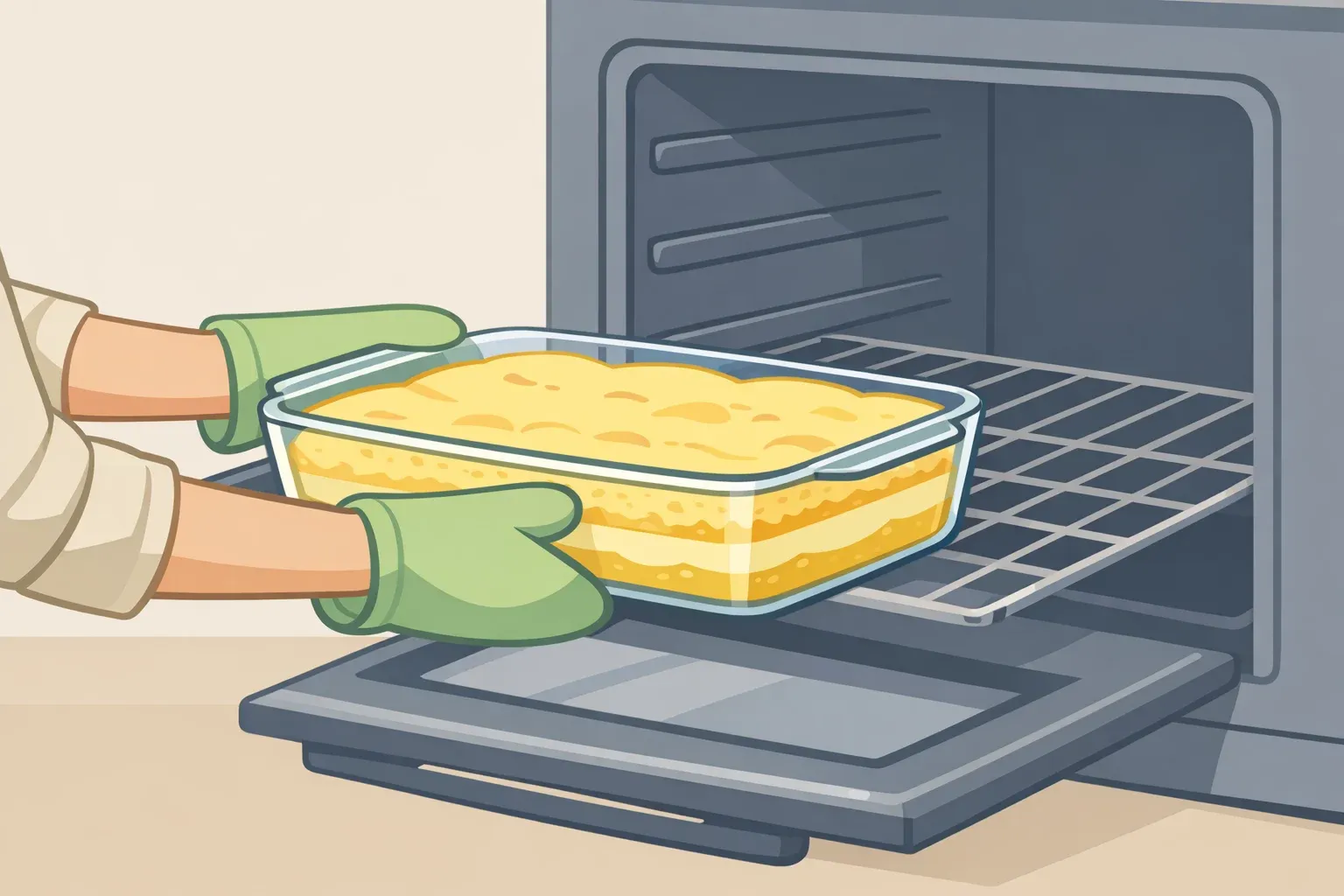
One thin batter bakes into two distinct layers: an airy lemon cake on top and a soft, custard-like pudding underneath. The method depends on properly whipped egg whites, gentle folding, and steady heat from a water bath.
The ingredient proportions come from Once Upon a Chef's lemon pudding cakes, which can be baked in six ramekins or an 8-inch square dish. Bakeware and oven temperatures vary, so use the visual doneness cues below rather than relying only on the clock.
Ingredients and equipment
Ingredients
3 large eggs, separated
1 cup granulated sugar
6 tablespoons all-purpose flour
¼ teaspoon salt
1 cup milk
6 tablespoons fresh lemon juice, from about 2 to 3 medium lemons
2 teaspoons finely grated lemon zest
2 tablespoons unsalted butter, melted
Confectioners' sugar or fresh berries for serving, optional
Equipment
8-inch square baking dish with sides at least 1½ inches high
9-by-13-inch baking or roasting pan
Large mixing bowl
Medium mixing bowl
Electric hand mixer or stand mixer
Whisk
Flexible rubber spatula
Kettle, pitcher, or large measuring cup
Allow about 20 minutes for preparation, 40 to 50 minutes for baking, and 15 to 20 minutes for resting. The recipe makes approximately six to eight servings.
Why the batter forms two layers
Lemon pudding cake contains more liquid and much less flour than an ordinary cake. The milk, egg yolks, lemon juice, sugar, and butter form a thin base, while whipped egg whites supply the air needed for the upper layer.
In the oven, the aerated portion expands and sets into a light cake. The wetter mixture below thickens more slowly into a soft lemon custard.
The water bath surrounds the baking dish with gentle, even heat, reducing the chance that the edges and bottom will overcook before the center sets. The Kitchn's lemon pudding cake method similarly uses a water bath to promote even baking.
The mixed batter will be much thinner and foamier than standard cake batter. That appearance is normal.
How to make lemon pudding cake
Step 1: Prepare the oven and pans
Arrange a rack in the center of the oven and preheat it to 350°F.
Grease an 8-inch square baking dish with butter or nonstick cooking spray. Set it inside the 9-by-13-inch pan, but do not add water yet.
You may place a folded kitchen towel beneath the smaller dish to keep it from sliding. The towel is optional and does not affect the cake's texture.
Step 2: Separate the eggs
Separate the eggs, placing the yolks in a large bowl and the whites in a clean, dry medium bowl.
Avoid getting yolk in the whites. Egg yolk and other fats can make the whites harder to whip and reduce the volume they achieve.
Cold eggs are generally easier to separate. Let the whites stand for several minutes after separating them so they lose some of their chill before whipping.
Step 3: Make the lemon base
Whisk the egg yolks, milk, lemon zest, lemon juice, melted butter, and salt until evenly combined.
Add the flour and sugar, then whisk until the mixture is smooth and no dry pockets remain. The batter should be noticeably thinner than ordinary cake batter.
Use freshly squeezed lemon juice and finely grated zest. The juice supplies tartness, while the aromatic oils in the peel deepen the lemon flavor.
Step 4: Whip the egg whites
Beat the egg whites with an electric mixer until they form soft peaks.
Lift the beaters to check their consistency. The whites should briefly hold their shape, but the tips of the peaks should bend over. They should still appear smooth and slightly glossy.
Stop mixing at this stage. Whites that are barely whipped will add little lift, while dry, grainy whites are difficult to fold evenly into the batter.
Step 5: Fold in the egg whites
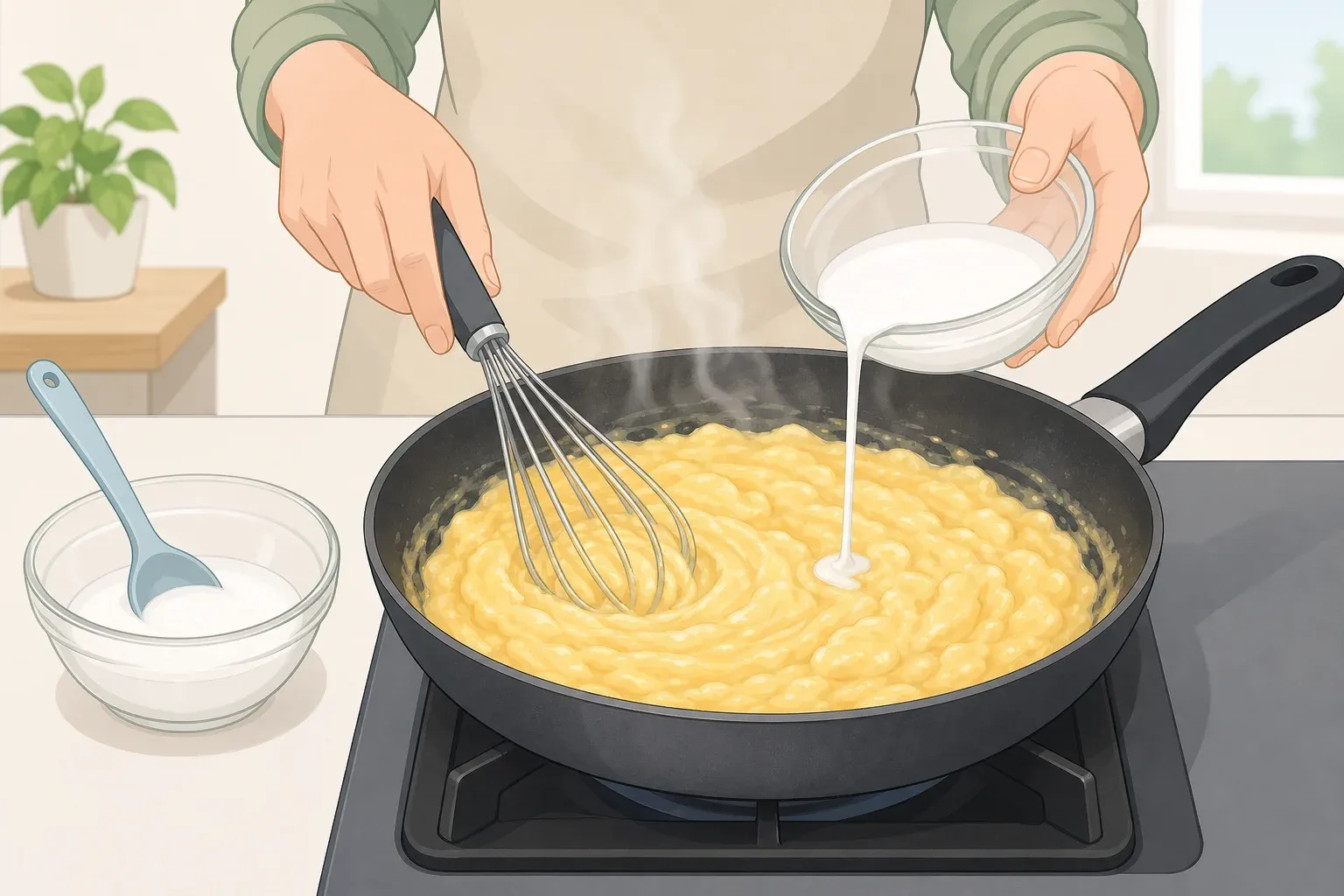
Whisk about one-quarter of the whipped whites into the lemon mixture. This loosens the base so the rest can be incorporated with less mixing.
Add the remaining whites. Using a flexible rubber spatula, cut down through the center of the mixture, sweep across the bottom, and bring the batter up over the whites. Rotate the bowl and repeat until no large white clumps remain.
Do not use an electric mixer for this step. Vigorous mixing can remove the air needed to form the cake layer.
The finished batter should be pale, loose, and lightly foamed. Stop folding as soon as the whites are evenly distributed.
Step 6: Fill the baking dish
Pour the batter into the prepared 8-inch baking dish. Smooth the surface gently if needed, but do not continue mixing it in the pan.
Leave room above the batter because the upper layer will puff during baking.
For individual portions, divide the mixture among six greased 6-ounce ramekins. Arrange the ramekins in the larger pan and use the same water-bath method. Begin checking them after about 40 minutes.
Step 7: Add the water bath
Place the nested pans on the center oven rack. Carefully pour room-temperature water into the outer pan until it reaches about halfway up the sides of the baking dish.
Pour slowly and keep the water out of the batter.
Adding the water after the pans are on the rack avoids carrying a heavy, water-filled roasting pan across the kitchen. The outer pan and water will be very hot after baking, so use dry oven mitts and move carefully.
Step 8: Bake until puffed and lightly golden
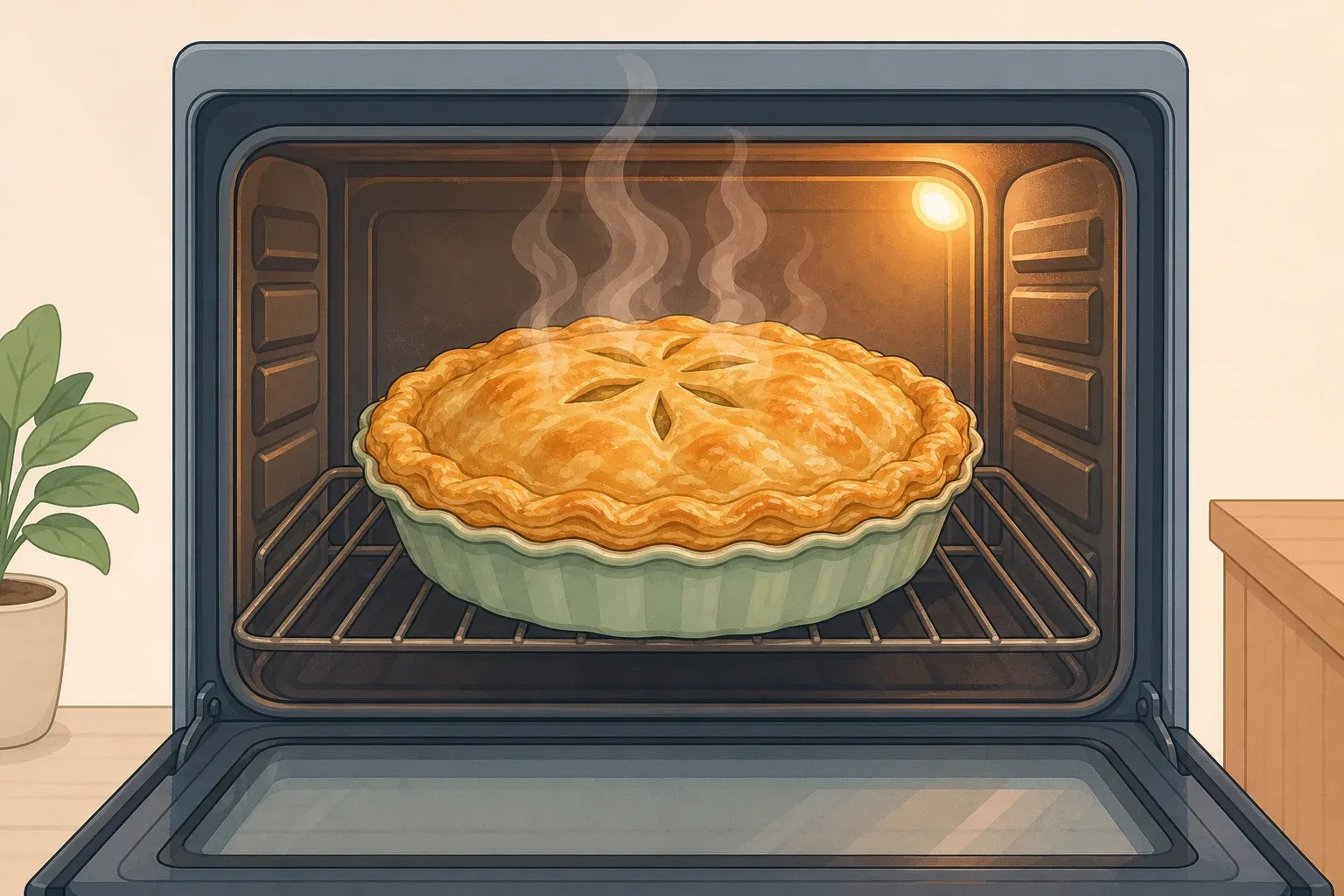
Bake for 40 to 50 minutes, beginning your checks at about 35 minutes.
The cake is ready when:
The top is puffed and lightly golden.
The edges appear set.
The center no longer looks wet.
The mixture does not slosh when the pan is gently nudged.
A slight wobble in the center is fine. The pudding underneath should remain soft, but the upper layer should look baked rather than liquid.
Glass, ceramic, and metal dishes conduct heat differently, and home ovens do not always match their temperature settings. If your oven frequently bakes too quickly or slowly, check it with an oven thermometer instead of automatically changing the recipe temperature.
Step 9: Let the cake rest
Carefully lift the smaller dish out of the water bath and place it on a heat-resistant rack.
Let the cake rest for 15 to 20 minutes. The top will settle slightly as it cools; this is normal for a cake supported by whipped egg whites.
Dust it with confectioners' sugar or add fresh berries, if desired. Spoon or cut through both layers so each serving includes cake and pudding.
Do not invert the dessert onto a plate. The custard layer is too soft to support clean unmolding.
How to serve and store lemon pudding cake
Serve lemon pudding cake warm for the strongest contrast between its airy top and creamy bottom layer.
The custard firms as the dessert cools. Refrigerated portions will be denser and less airy but can still be served chilled or warmed gently.
Because the cake contains cooked eggs and milk, it should not sit indefinitely at room temperature. The FDA's egg-safety guidance recommends refrigerating cooked egg dishes within two hours, or within one hour when temperatures are above 90°F.
Cover and refrigerate leftovers within that window. Use them within three to four days.
To reheat the cake, cover the baking dish and place it in a 300°F oven until warmed through. Individual servings can also be microwaved briefly, although the cake layer may soften.
How to fix common problems
Little or no pudding layer
The cake may have baked too long or at too high a temperature. Begin checking it sooner the next time and use an oven thermometer to confirm the temperature.
A wide, shallow dish can also cause the batter to cook faster than it would in a deeper 8-inch dish.
Dense cake layer
The egg whites may have been underwhipped, deflated while folding, or mixed too thoroughly into the base.
Beat them until they form soft peaks, then fold with a spatula only until no large clumps remain.
Dry or rubbery texture
The cake was probably overbaked. Remove it once the top is lightly golden and set and the center retains a slight wobble.
If the entire dessert is firm, the lower custard layer likely had too much time to set.
White clumps in the cake
The egg whites were not distributed evenly.
Whisk the first quarter of the whites into the lemon mixture before folding in the rest. This loosens the base and makes the remaining whites easier to incorporate.
Cake did not rise
The egg whites may not have trapped enough air, or the batter may have stood too long before baking.
Preheat the oven before mixing, whip the whites in a clean bowl, and bake the batter promptly after folding.
Weak lemon flavor
Use both fresh lemon juice and zest. Bottled juice supplies acidity but lacks much of the aroma found in freshly grated peel.
Measure the juice instead of relying on a fixed number of lemons because their size and juiciness vary.
Softly whipped egg whites, gentle folding, and careful timing create the clearest contrast between the airy cake and lemon custard.












Comments
Be the first, drop a comment!