


Orange Crush cocktail recipe: why fresh juice matters
By the end of this guide, you'll have a proper Maryland orange crush cocktail in hand and a clear understanding of why this drink lives or dies on one decision: squeezing the oranges yourself.
The recipe at a glance: 1½–2 oz vodka · 1 oz triple sec · 4 oz fresh-squeezed orange juice · 3 oz lemon-lime soda · crushed ice · orange wedge garnish. Four ingredients. One glass. No shaker. Ready in 3 minutes, per Tasting Table and MyBartender.
The drink was born one slow fall Sunday in 1995 at Harborside Bar & Grill in Ocean City, Maryland. According to Chowhound, the owners and their bartender experimented after hours with Stoli O vodka, triple sec, a freshly squeezed orange, and a splash of Sierra Mist. Harborside has sold millions of the drink since. Two states have now written it into law: Delaware named it the official state cocktail in August 2024, per Wikipedia), and Maryland followed when Governor Wes Moore signed the bill in May 2025, effective June 1, per Tasting Table.
Fresh juice is not a stylistic preference. Every primary source documenting this drink identifies it as the defining element. Bottled juice produces something orange-flavored; it does not produce this drink.
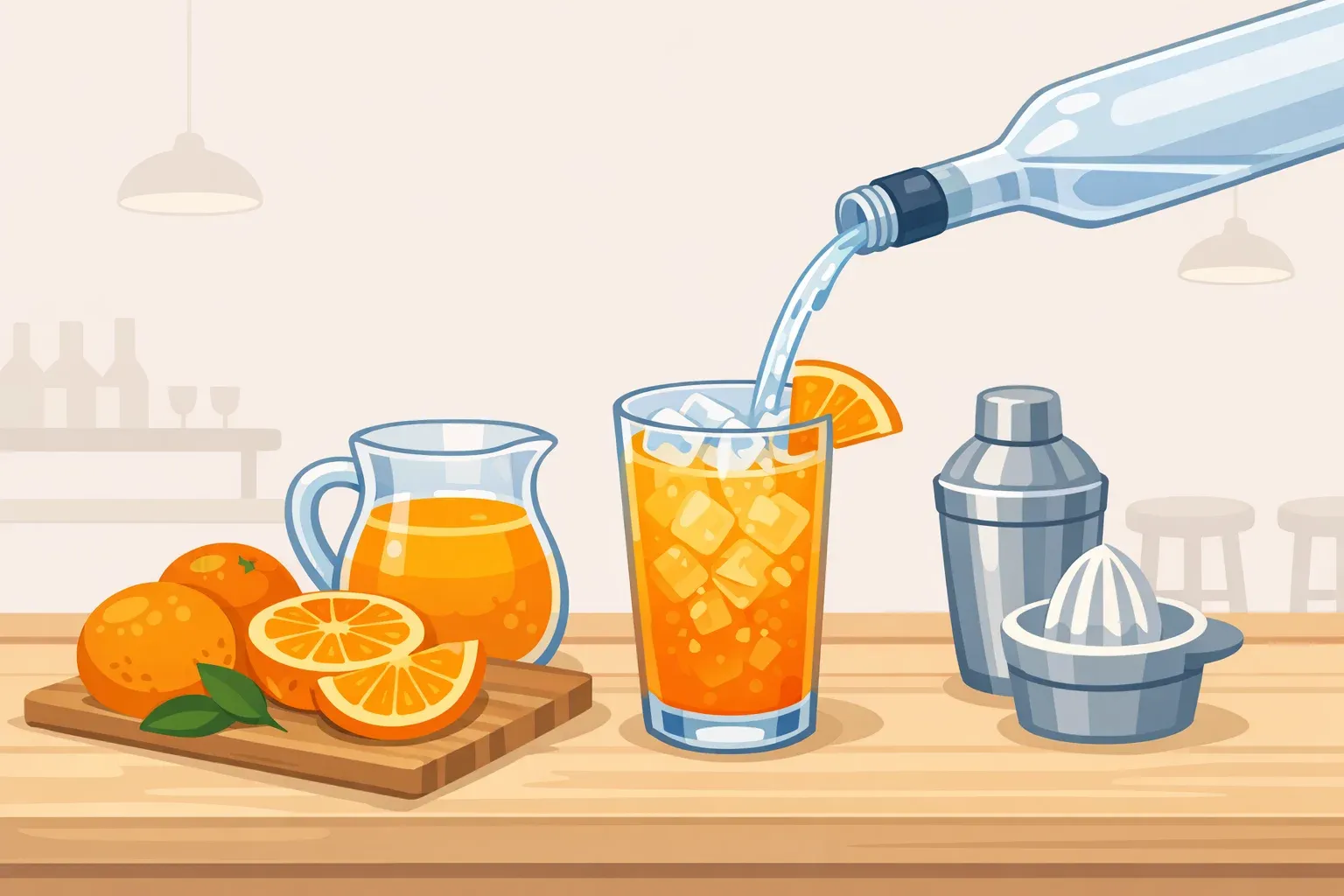
Maryland orange crush cocktail ingredients and equipment
No bartending experience required. The only piece of equipment that specifically matters is a citrus juicer — handheld is fine. Everything else is standard kitchen gear.
Ingredients:
1–2 navel or Valencia oranges (enough to yield 4 oz / roughly ½ cup fresh juice)
1½–2 oz vodka
1 oz triple sec
3 oz lemon-lime soda (Sprite, 7UP, or equivalent)
Crushed ice
Orange wedge for garnish
The four-component structure appears consistently across every major source: vodka, triple sec, fresh orange juice, lemon-lime soda. Tasting Table calls for 1½ oz vodka, 1 oz triple sec, approximately ½ cup juice, and 3 oz soda. MyBartender uses 2 oz vodka, 1 oz triple sec, 4 oz juice, and soda to top. The working spec here splits the difference and gives reliable results.
Plain vodka is traditional. Orange-flavored vodka amplifies the citrus character slightly without changing the drink's structure — it's also what the original Harborside recipe reportedly called for, per Chowhound. Either works.
For the oranges: navel and Valencia are the most-recommended varieties, per Tasting Table. Plan on squeezing 1–2 oranges depending on size and type, targeting roughly ½ cup. Any ripe orange works; variety matters less than freshness.
If fresh oranges genuinely aren't available, cold-pressed orange juice is the next-best option one Allrecipes community member notes it works fine. Standard carton juice is a last resort, not a substitute.
Equipment:
Handheld citrus juicer or press, jigger, bar spoon, pint glass or Collins glass, knife and cutting board for the garnish. MyBartender confirms the equipment list is minimal; Chowhound notes nothing more than a glass, ice, a measuring tool, and a knife is strictly required.
Before you start: juice the oranges right before mixing. Squeeze early and the flavor will be noticeably flatter by the time you build the drink. Citrus doesn't wait.
How to make an orange crush cocktail with vodka and triple sec
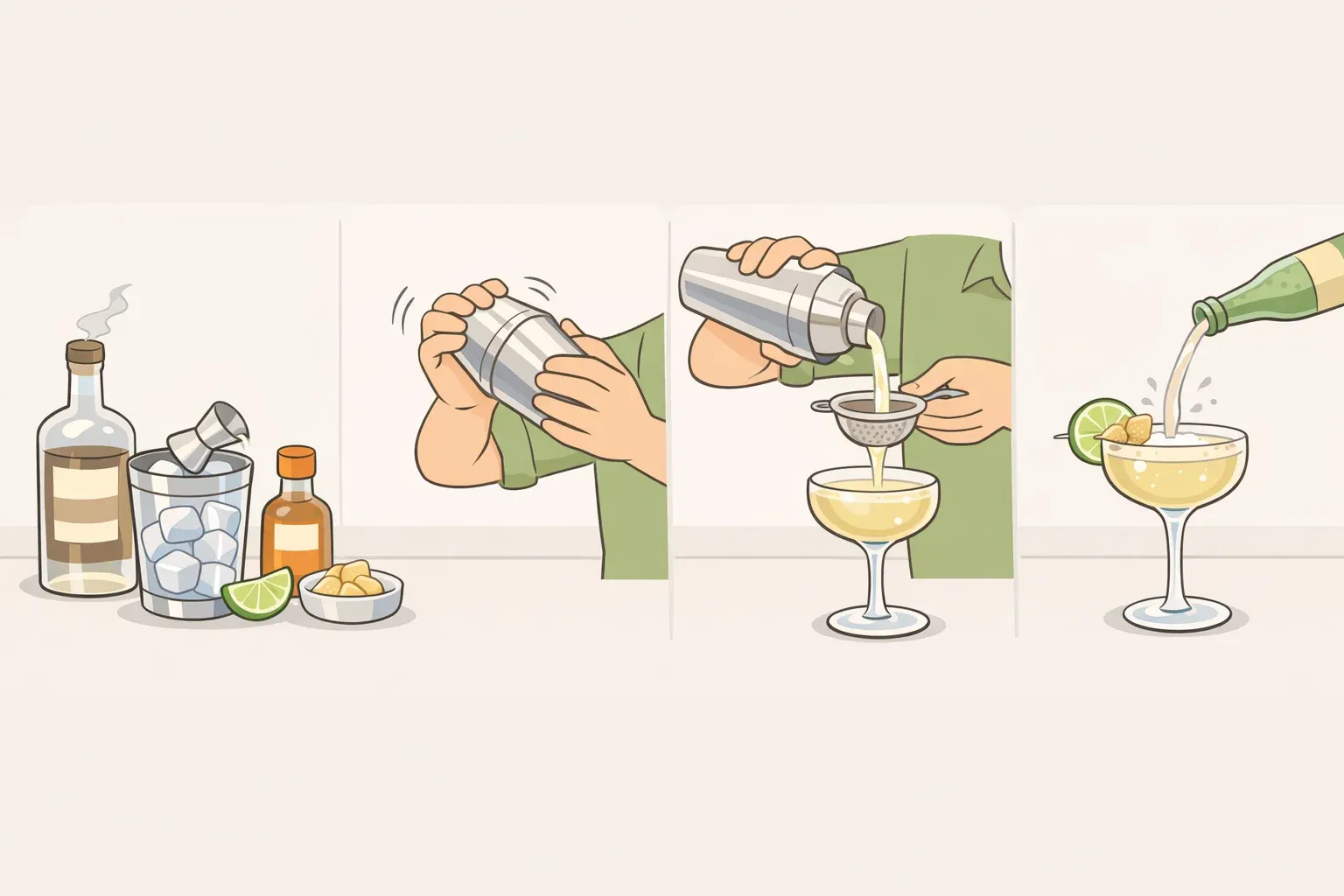
1. Juice the oranges. Squeeze 1–2 ripe oranges immediately before mixing, targeting 4 oz (roughly ½ cup) of juice. The juice should come out bright and slightly pulpy that's what you want, per Tasting Table.
2. Pack the glass with crushed ice. Fill a pint glass to the rim, per Tasting Table. Crushed chills faster and produces that frosted exterior that Allrecipes home cooks specifically call out. Cubed works if that's what you have MyBartender confirms either is acceptable.
3. Add the vodka and triple sec. Pour 1½–2 oz vodka and 1 oz triple sec over the ice. No shaker, no strainer.
4. Pour in all the fresh orange juice. Add the full 4 oz, per MyBartender. The glass should be close to three-quarters full at this point.
5. Top with lemon-lime soda. Pour 3 oz of Sprite, 7UP, or equivalent over the top, per Tasting Table. The carbonation lightens the drink and lifts the citrus without competing with it.
6. Stir gently and garnish. One or two easy turns with a bar spoon just enough to integrate the layers. Drop an orange wedge on the rim and serve immediately, per Tasting Table and MyBartender.
Don't stir aggressively after adding the soda. The fizz is part of the drink's texture; overworking it collapses the carbonation and flattens everything.
How to adjust the ratio for your taste
The standard spec 1½ oz vodka, 1 oz triple sec, 4 oz fresh juice, 3 oz soda is the right default for most people. Balanced without being timid.
The soda is the main dial. More soda lightens the whole glass and softens the sweetness; less concentrates the citrus and makes the vodka more present. Triple sec controls the orange-liqueur note and adds sweetness of its own a drier brand or a smaller pour sharpens the drink, while a sweeter one rounds it out. Keep the juice at 4 oz unless you want the drink noticeably sweeter or sharper.
Crushed ice matters more than it seems. It chills faster than cubed and produces the frosted-glass effect that Allrecipes home cooks specifically call out. It also dilutes slightly faster, softening the drink as you go. MyBartender confirms either ice type is acceptable; crushed is the traditional choice.
Troubleshooting, swaps, and one worthy variation
What's fixed and what isn't:
The non-negotiables are fresh juice and the vodka-triple sec-soda structure. Everything else has room to move: vodka brand, plain versus orange-flavored, exact proportions within the ranges above, Sprite versus 7UP. Tasting Table, MyBartender, and Chowhound all identify fresh juice as the drink's defining characteristic swap it out and you're making a different drink.
If the balance is off, adjust here first:
Too sweet: reduce or skip the soda, or use a less-sweet triple sec.
Too sharp or boozy: add a bit more soda; it softens the edges without watering down the citrus.
Flat: use colder soda straight from the fridge and stir less. Warm soda loses carbonation fast against ice.
Too pulpy: strain the fresh juice through a fine mesh before adding.
Acceptable swaps:
Triple sec → Cointreau: A recognized substitute per Chowhound. Cointreau is drier and slightly more refined; the drink stays recognizable.
Plain vodka → orange-flavored vodka: Both work. The flavored version edges the drink sweeter, and it's closer to what the original Harborside recipe reportedly used, per Chowhound.
One variation worth making:
The blood orange version blood orange vodka, fresh blood orange juice, blood orange soda keeps the drink's underlying logic intact while shifting the flavor toward something deeper and more complex, per Chowhound. Blood oranges are most commonly found in markets during their growing season from December through April, which makes this a natural winter counterpart to a summer drink. Everything about the method stays the same.
Start with the classic
The Orange Crush is a four-ingredient drink. Its quality lives almost entirely in one variable: whether you squeezed the orange or opened a carton. That Harborside has sold millions of the drink over the years, and that two states have now written it into law, reflects something straightforward a simple formula, executed correctly, is hard to improve on, per Chowhound and Tasting Table.
Get the classic right first. The substitutions and seasonal riffs follow naturally once you know what you're working with.


Comments
Be the first, drop a comment!