


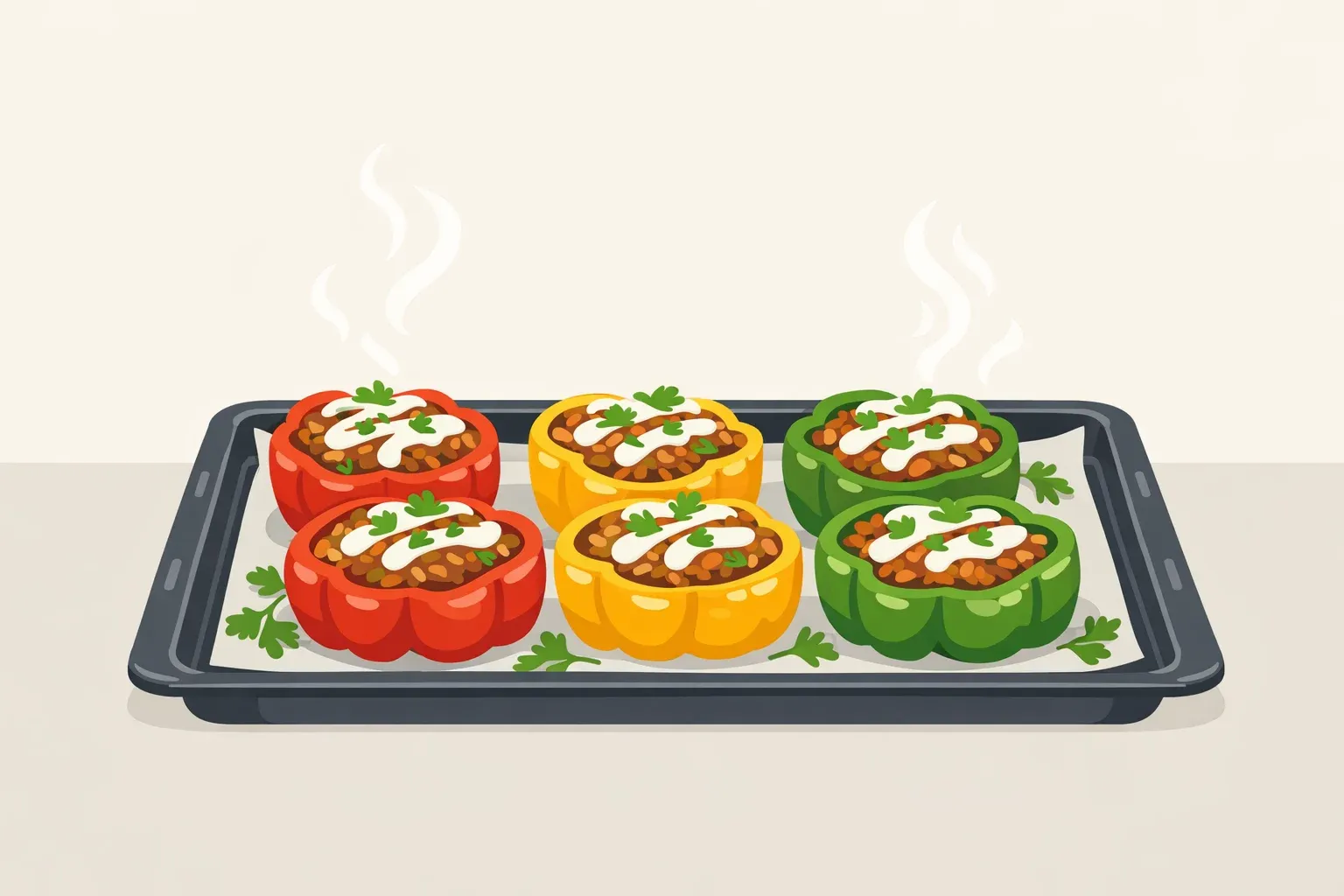
Traditional shawarma comes together on a vertical spit that turns slowly in front of charcoal, crisping the meat's edges as it cooks. This shawarma stuffed peppers recipe doesn't try to reproduce that spit or its charcoal-cooked edges. It's a baked, oven-only dish that takes shawarma's spice blend, fresh herbs, and tangy sauce and packs them into a bell pepper instead.
Delish's version of shawarma stuffed bell peppers swaps ground turkey for spit-roasted chicken or lamb, and says so directly. A similar approach from The Mediterranean Dish pairs ground chicken and bulgur with shawarma and kofta spices, finished with a minty yogurt sauce. This guide walks through the turkey-and-couscous method in full: exact amounts, the internal-temperature check that makes the filling safe to eat, and fixes for the mistakes that most often trip up this dish.
Why shawarma flavor works in a baked pepper
This recipe gets its shawarma-inspired flavor from a familiar spice mix: ground cumin, coriander, turmeric, cinnamon, and a touch of cayenne, worked into the filling along with fresh mint and parsley and sprinkled on again at the end.
In place of the tahini or yogurt that usually finishes a shawarma wrap, this version gets a lemon-garlic mayo and sour cream sauce; The Mediterranean Dish's chicken-and-bulgur take on the same idea leans on minty yogurt instead. That sauce works as the dish's creamy finish, served alongside once the peppers are topped with chopped tomato and fresh herbs, standing in for a cheesy topping.
What you'll need
The recipe below follows Delish's shawarma stuffed bell peppers method for ingredient amounts and steps. Notes on texture and timing that go beyond the original recipe are marked separately.
Peppers and filling:
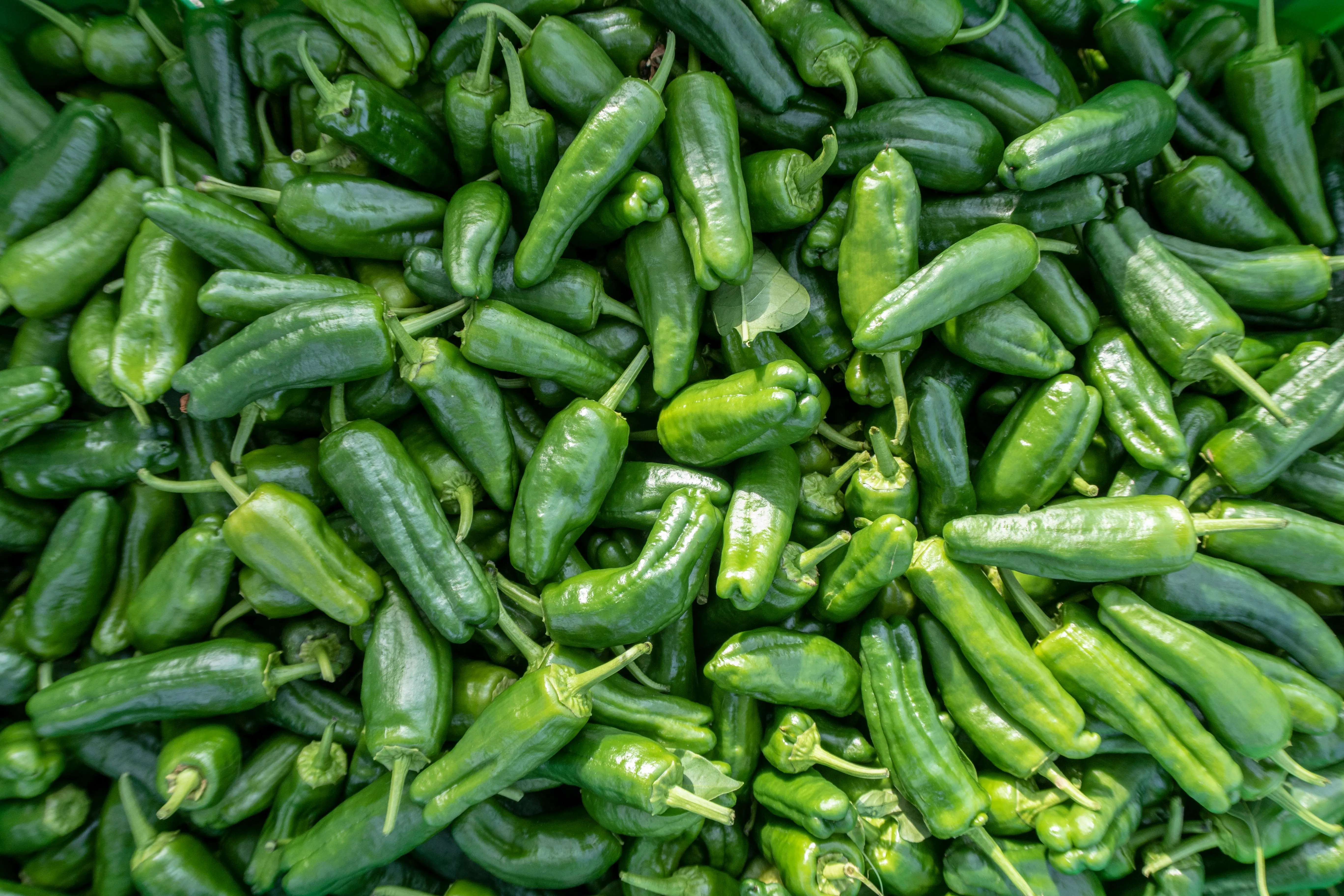
4 large bell peppers, halved into 8 pieces
2 tsp extra-virgin olive oil, divided
1 1/4 tsp kosher salt, plus more
1/2 tsp black pepper, plus more
1 large egg
1 lb ground turkey
2 scallions, thinly sliced
1/3 cup uncooked couscous
1/4 cup chopped fresh mint, plus more for serving
1/4 cup chopped fresh parsley, plus more for serving
Spice blend: 1 1/4 tsp ground coriander, 1 1/4 tsp ground cumin, 3/4 tsp ground turmeric, 1/2 tsp ground cinnamon, 1/8 tsp cayenne pepper, and 2 tsp finely chopped garlic divided between the filling and the sauce.
Sauce: 1/4 cup mayonnaise, 1/4 cup sour cream, 1 tsp fresh lemon juice, 2 tbsp water, plus the reserved garlic.
Finishing: chopped tomatoes, plus extra mint and parsley.
Equipment: a 13" x 9" baking dish, a large mixing bowl, and foil. No specialized equipment is required, but an instant-read thermometer is strongly recommended to confirm the filling is fully cooked.
A note on couscous: the recipe just calls for "couscous," without specifying fine or pearl. This guide uses standard fine couscous, since the small grains are positioned to fully hydrate from the pepper's juices during a covered bake. Pearl couscous is larger and slower to cook and hasn't been tested in this method, so stick with fine grains unless you're ready to experiment.
Before you start
Preheat the oven to 425°F with a rack placed in the center. Total time runs about 1 hour 10 minutes, with 15 minutes of active prep, and this yields 8 stuffed pepper halves, serving 4 people at two halves each. It's a beginner-friendly, one-dish oven meal, and the thermometer is really the only extra tool worth having on hand.
Decide on pepper texture before turning on the oven. Par-roasting the peppers for 12 minutes before stuffing gives a softer, easier-to-eat pepper, while skipping that step and stuffing raw halves produces a firmer, more al dente bite. Make that call now, since it's the single biggest factor in the finished texture.
Two small setup details save trouble later. If a pepper half wobbles instead of sitting flat in the dish, trim a thin sliver off the bottom or nestle a crumpled ball of foil underneath it, so it doesn't tip and spill filling as it bakes. And since bell peppers vary in size even within the same bag, check any noticeably smaller half separately with the thermometer; it may finish before the rest.
Peppers and filling can each be prepped up to a day ahead and refrigerated separately, then filled and baked fresh. Don't assemble fully stuffed raw peppers ahead of time, though. The uncooked couscous is meant to absorb liquid only during baking, so stuffing peppers a day early and refrigerating them assembled risks a soggy or unevenly hydrated filling once baked.
Ground turkey needs to reach 165°F at its thickest point before it's safe to eat. Insert the thermometer into the center of the filling in the thickest pepper half, angled so the tip doesn't touch the baking dish, which gives a falsely high reading. Wash hands, cutting boards, and utensils that touch the raw turkey before they touch the couscous, herbs, or anything else that won't be cooked again, and keep the sauce and toppings prepped on separate, clean surfaces.
How to make this shawarma stuffed peppers recipe
Par-roast the peppers (optional). Halve the peppers lengthwise, remove seeds and ribs, and set them cut-side up in the baking dish. Drizzle with 1 tsp oil, season with salt and pepper, then turn them cut-side down and roast at 425°F for about 12 minutes. Pull the dish and carefully turn the peppers back cut-side up before filling. They should be barely tender and still sturdy, not floppy.
Mix the filling. Beat the egg and season it with salt and pepper, then add the turkey, scallions, uncooked couscous, mint, parsley, the spice blend, 1 tsp garlic, and 1 tbsp water. Mix by hand. Don't pre-cook the couscous. The raw grain is what absorbs the pepper's juices as it bakes, and pre-cooked couscous turns mushy with nothing left to soak up.
Stuff and bake covered. Divide the filling as evenly as possible among the eight pepper halves; a slight mound is fine, especially in a larger half. Drizzle with 1 tbsp water and the remaining 1 tsp oil, cover the dish tightly with foil, and bake about 35 minutes. Check the filling before continuing: it should read 165°F at its thickest point. If it's under, keep the dish covered and check every few minutes again until it clears that mark. Don't uncover it early to speed things along, or the couscous will dry out before the center finishes cooking.
Uncover and brown. Baste with pan juices and bake uncovered about 5 more minutes, until the tops are lightly browned. The filling should look set, not wet or glossy, and the pepper edges should look slightly caramelized. Pull the dish as soon as you see this; extra time here dries out the filling that's already safely cooked.
Make the sauce and finish. Whisk the mayonnaise, sour cream, lemon juice, 2 tbsp water, and remaining garlic in a clean bowl, using a utensil that hasn't touched the raw filling, then season with salt and pepper. Top the peppers with chopped tomatoes, mint, and parsley, and serve with the sauce alongside. Skip this step and the peppers taste like plain stuffed peppers rather than something shawarma-inspired.
Make it your way
Toasting spices before use pulls more flavor out of them, according to Serious Eats' shawarma method. Toasting the cumin and coriander in a dry pan before mixing them into the filling is a simple way to apply that here.
That same recipe's beef shawarma spice blend also includes sumac and Aleppo pepper. Either one, stirred into the filling or sprinkled on at serving, works in place of the cayenne if you have it on hand. Chopped pickles or a spoonful of tahini alongside the mayo-sour cream sauce echo a classic shawarma wrap too.
The Mediterranean Dish's chicken version takes a different filling structure entirely: cooked bulgur instead of raw couscous, ground chicken instead of turkey, and a yogurt-mint sauce instead of mayo-sour cream.
The bulgur is cooked and its moisture reduced on the stovetop before stuffing, rather than absorbing liquid inside the pepper as it bakes. That's a different method, not a simple ingredient swap into these steps, so look it up in full if that texture sounds better to you.
Troubleshooting
Undercooked or grainy couscous: often means not enough liquid reached the center of the filling, or the foil seal wasn't tight enough to trap steam. The recipe's liquid amounts are calibrated for a fully sealed dish, so check that the foil is crimped tightly around the dish's edges before baking. A loose seal is one possible cause if steam escaped during the covered bake.
Dry filling: one common cause is extra time in the oven after the filling already hit 165°F, since ground turkey keeps losing moisture the longer it cooks past that point. Pull the peppers as soon as the thermometer clears 165°F and the tops look lightly browned, rather than baking a few extra minutes "to be safe."
Overly soft or collapsed peppers: comes down to the par-roast choice, not bake time. Skip the 12-minute par-roast next time and stuff raw pepper halves for a firmer result.
Watery pan juices at serving: spoon off excess liquid from the dish before topping with tomatoes so the peppers aren't sitting in runoff on the plate. This is a serving fix, not a sign anything went wrong during cooking.
Finishing up
Success looks like peppers that hold their shape but yield easily to a fork, with a filling that reads 165°F at the center and looks moist but not wet, topped with fresh herbs, tomato, and sauce rather than melted cheese.
Serve the peppers right away, while the sauce is cold and the herbs are still bright. Refrigerate any leftovers in an airtight container once they've cooled, and keep the sauce and fresh tomato stored separately if you can, so the peppers don't soften further sitting in the fridge.
When reheating, cover the peppers and warm them in the oven or microwave until the filling registers 165°F again, then finish with fresh sauce rather than the reheated pan liquid, which tends to taste flat.

Comments
Be the first, drop a comment!