



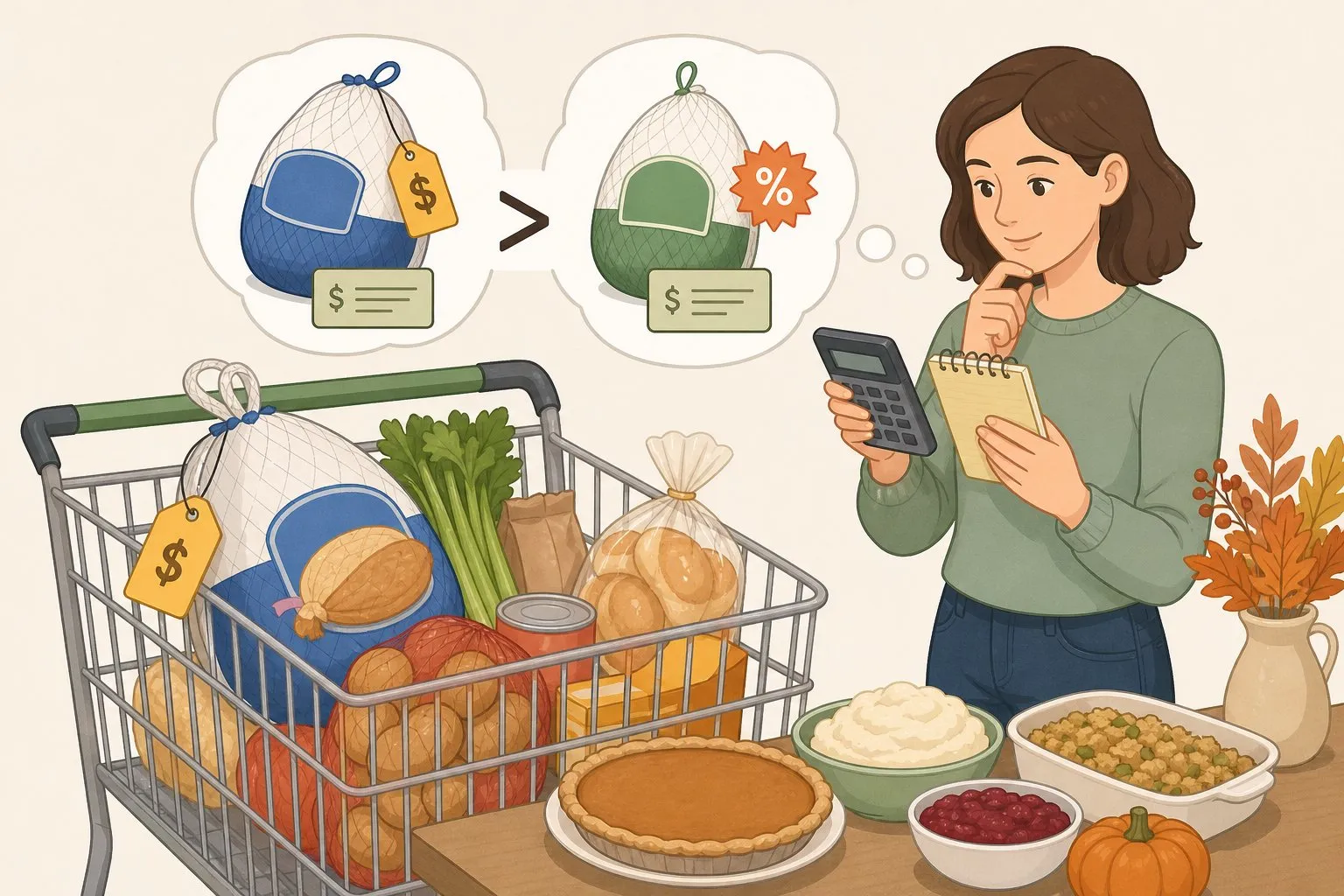
Thanksgiving on a budget: turkey deals and shared menus
A store turkey promotion can trim a noticeable cost off a Thanksgiving table, but only if the math gets done before the cart gets loaded. The discount is tied to the turkey size a guest count actually requires, not to the headcount itself, and some promotions require a minimum purchase that changes what the bird really costs. Skip either calculation and the "bargain" turkey can land at a higher price than a plain sale bird down the street.
This guide walks through sizing a turkey for a specific headcount, figuring out what a turkey promotion actually costs once its spending requirement is factored in, and splitting the rest of the meal across guests so the host isn't covering the whole bill solo. It's a budgeting and planning guide. Turkey cooking temperatures, deep-frying, and other higher-risk preparation methods aren't covered here.
A shared menu doesn't shrink the total Thanksgiving bill, but it shifts more of the cost away from the host. Instead of buying groceries for every dish solo, the host covers the turkey and whatever dish is still theirs, while everyone else handles their own assignment. The turkey is where the deal comes in: calculated correctly, it lowers that single line item directly, and the host's out-of-pocket total drops as long as guests bring what they signed up for.
What you'll need
- A final headcount for the dinner. Turkey size, deal eligibility, and menu quantities all depend on it.
- A grocery store loyalty or rewards app. Many holiday turkey promotions only show up as a digital coupon that has to be clipped ahead of time, not a discount that applies automatically at checkout, so open the app and check before assuming the deal applies on its own.
- A shared sign-up method, whether that's a group text, a shared note, or a potluck app, to assign dishes and budgets before anyone shops.
- Refrigerator space large enough to hold a raw turkey through its full thaw window, plus a plan for oven space if guests are bringing dishes that need to finish cooking on-site.
Before you start
Turkey size needs to match headcount before anything else. Most grocery stores and turkey brands post a simple sizing chart near the meat case or on their website; pull one up, plug in the headcount, and land on a rough target weight before comparing any deals. Round up a size if the group tends to go back for seconds or wants leftovers.
Promotion terms vary by retailer and region, so don't assume this year's offer works like last year's. Check the minimum purchase amount, the eligible turkey weight range, the qualifying date window, and whether fresh or only frozen birds count, against the current offer rather than memory.
Frozen turkeys need real lead time to thaw safely in the fridge, so work backward from the dinner date now to make sure purchase timing and thaw timing line up. Step 5 covers the timing.
This guide assumes a standard home kitchen and ordinary grocery shopping. It doesn't cover deep-frying or other higher-risk turkey preparation methods.
Step 1: Lock in guest count and turkey size first
Before looking at any deal, confirm how many people are actually coming and use a sizing chart or the guidance above to land on the turkey weight needed.
Check the equipment before checking the ad. Confirm the bird will fit the refrigerator for the full thaw window and the oven or roasting pan on cook day; fridge and oven capacity varies a lot by kitchen, so a deal on an 18-pound turkey isn't a deal if it doesn't fit anywhere in this one.
Write down one target weight range, something like "14 to 16 pounds for 10 guests," before opening a single weekly circular.
Step 2: Build the menu and assign dishes with budgets before shopping
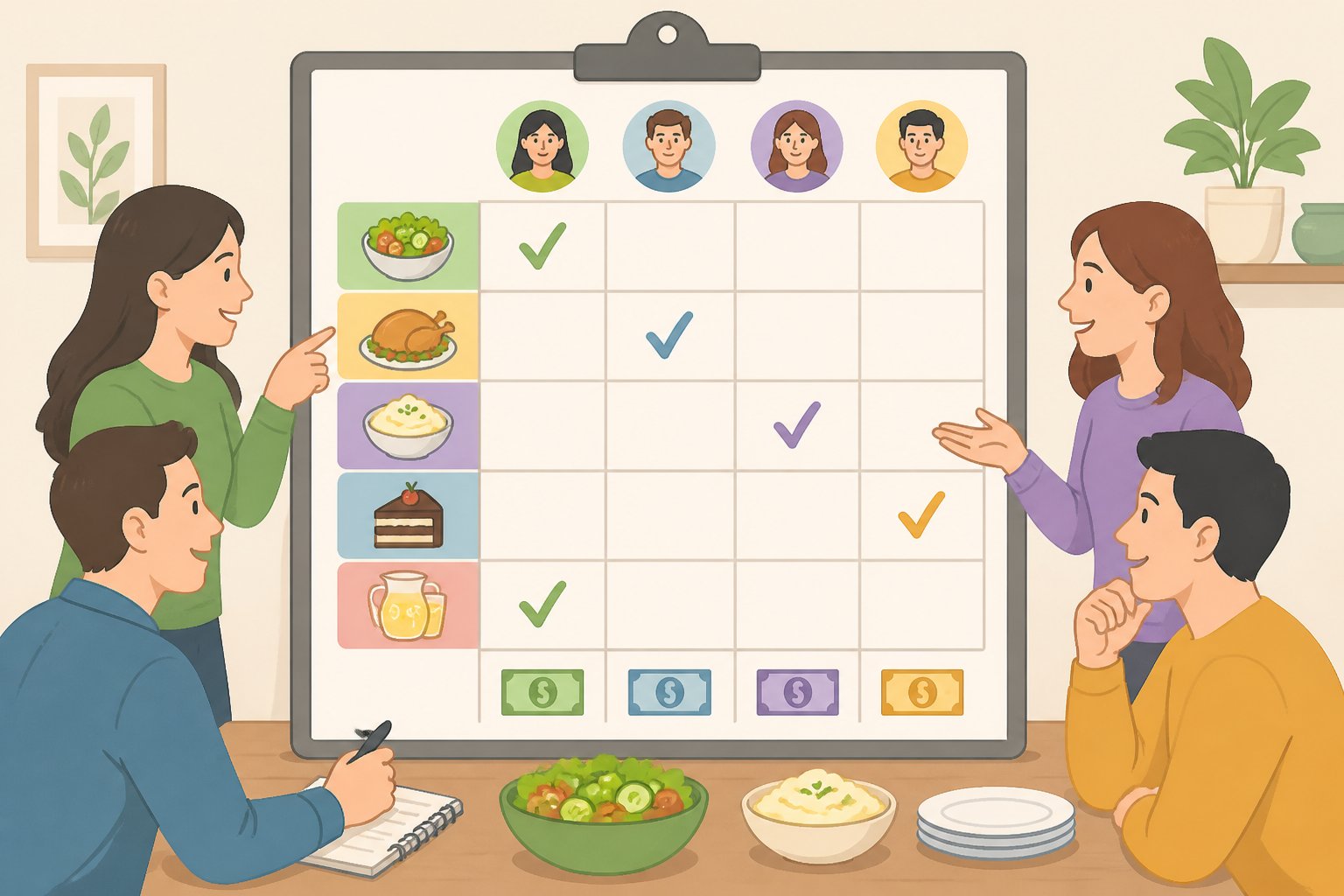
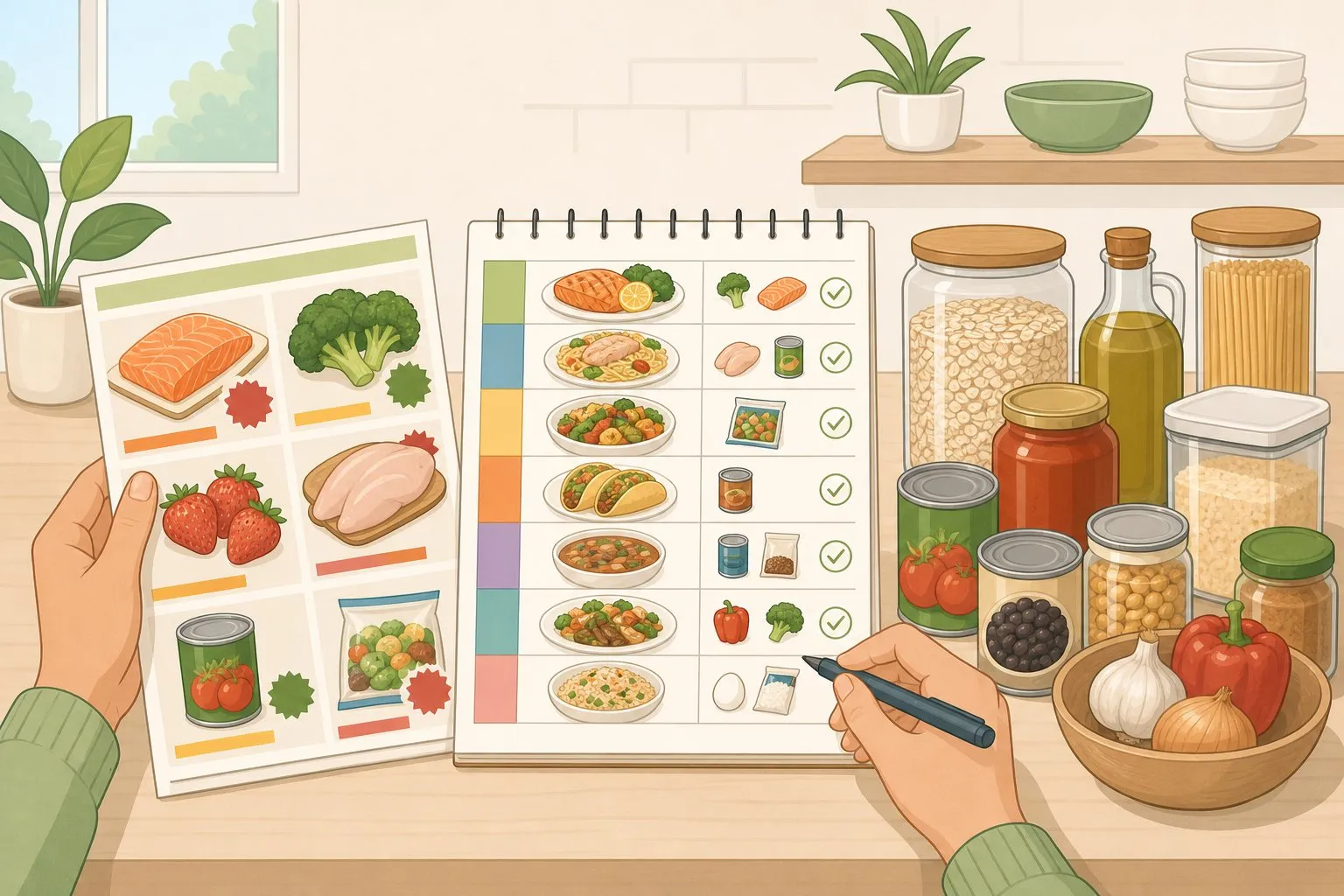
List every category the meal needs beyond turkey: starch, vegetable, bread, dessert, drinks, and anything tied to a dietary restriction. Assign each category to a guest in writing, not verbally, so nothing gets lost in a group chat scroll.
Use a simple template for each assignment so nobody has to guess what's expected:
- Guest name
- Assigned dish
- Estimated budget
- Transport or reheating needs (does it travel well, or does it need stovetop or oven time on arrival?)
- Dietary notes
Write a budget number next to each dish so everyone knows their contribution upfront, instead of comparing receipts after dinner. The simplest approach: assign a dish and an approximate budget in advance, and treat that number as the guest's contribution, skipping settling up with receipts afterward unless the group has already agreed to split actual costs.
As a hypothetical example, not a typical budget: a group of 10 estimates sides, bread, dessert, and drinks will run about $120 total. The host is already covering one vegetable side worth roughly $15, so that comes off the $120 rather than getting counted twice. The remaining $105 splits across the other nine guests, landing around $12 each before adjusting for cost or travel.
Adjust that even split for real differences. A dish built around a pricier ingredient should get a higher budget than a bag of rolls. A guest handling a dietary restriction may need specific products that cost more. A guest traveling the farthest may be better assigned something that survives a car ride instead of something needing last-minute assembly.
The turkey isn't part of this split; its cost gets handled separately in Step 3, the same way one guest's pie belongs to them. Some groups prefer to pool money toward the turkey too, which works fine, but settle on one approach before anyone shops so nobody gets an unexpected request to chip in later.
Lock the menu in before comparing turkey deals. Step 4's qualifying purchase needs to come from this list, not filler bought just to hit a number.
The menu is ready when every category is covered once, nothing's duplicated, and the budgets look reasonably even once adjustments are factored in.
Step 3: Calculate the turkey deal's real cost
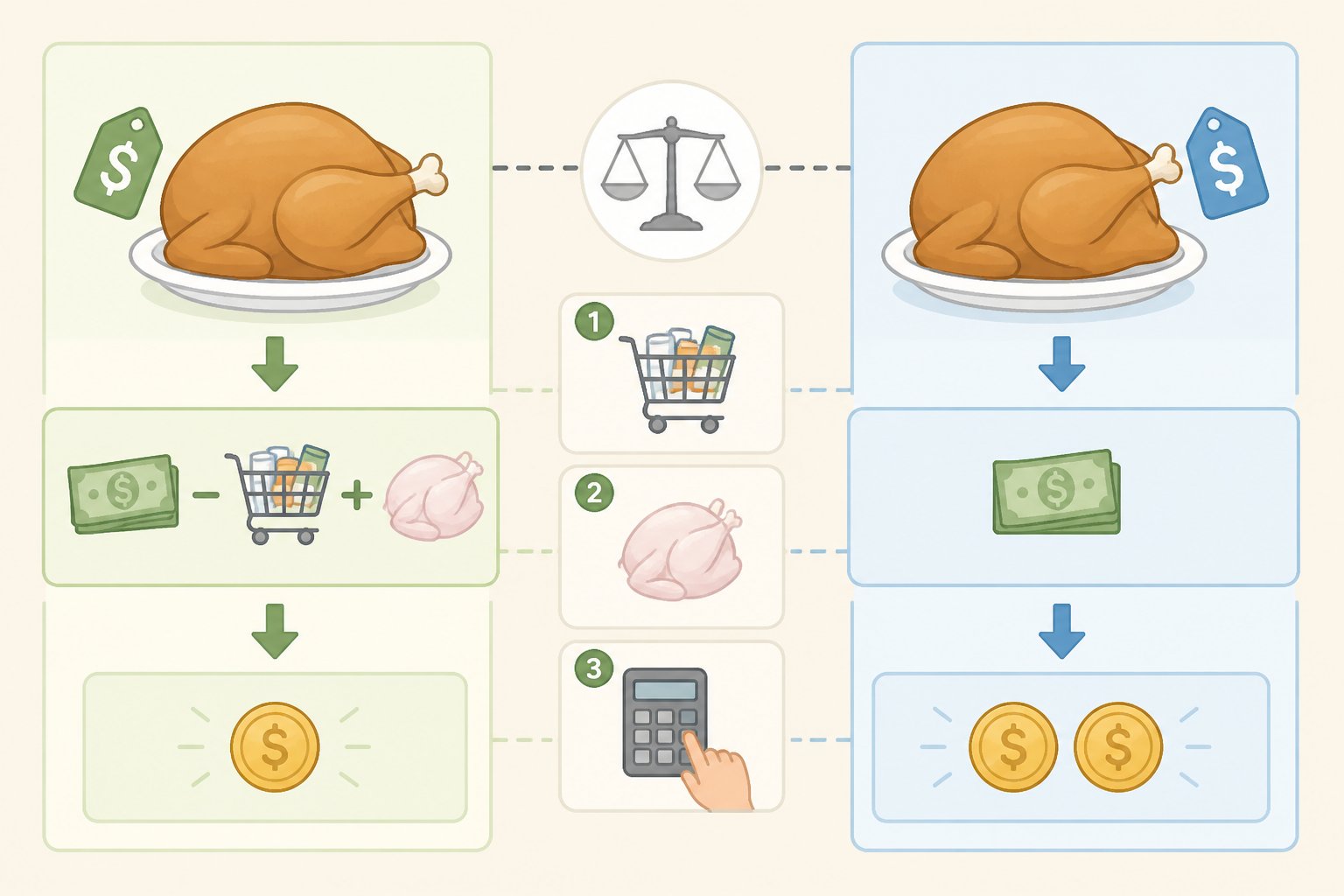
Once the target turkey weight is set, pull the actual terms of the store's promotion. A hypothetical example, not a current or typical promotion, shows how the math works:
- Promotional turkey price: 15 lbs × $0.49/lb = $7.35
- Extra spending required to reach a $30 minimum, assuming the planned grocery list only runs $15 on its own: $15
- Deal-related cost: $7.35 + $15 = $22.35
- Comparison price: the same 15-pound turkey at a plain sale price elsewhere, no minimum attached
Groceries already planned for the meal don't count as extra cost just because they help hit the minimum. If the $30 threshold matches what was already going to be spent on sides, staples, and drinks, nothing extra got spent to qualify, so the deal-related cost drops to $7.35, the promotional turkey price alone. The receipt still shows $30-plus for groceries, but only the turkey price and any genuine padding count toward what the deal actually costs.
The math changes if the usual grocery list for this meal only runs $15. Reaching a $30 minimum then means spending $15 on groceries that wouldn't otherwise be bought, so that padding gets added to the turkey price for a real deal-related cost of $22.35.
Once that number is set, check it against the comparison price: the same weight turkey at a no-minimum sale price elsewhere. Confirm the weight cap, whether the threshold applies before or after a coupon clips, and any one-per-household limit, since those terms vary by store and change year to year, before counting on the deal.
Step 4: Shop to hit the minimum using the assigned menu
Fill the qualifying purchase with items from the menu already assigned in Step 2, the dishes the host is responsible for, so the spending requirement doubles as grocery shopping already on the list instead of unplanned filler.
Scan the same week's ad for markdowns on staples already on the host's list, and work those into the qualifying purchase. Skip adding anything just because it's discounted if it wasn't already on the list; that's still extra spending, not savings.
Check whether the offer requires a clipped coupon or applies automatically at checkout, and whether it has to go through in a single transaction. Confirm the turkey price adjustment actually shows up on the receipt before leaving the store; the receipt shows what the register applied, not whether every term was honored, so flag anything that looks off to a cashier while still there.
The purchase is on track if the total hits the threshold using only items from the assigned menu, and the turkey discount shows up on the receipt.
Step 5: Thaw the turkey on a deadline
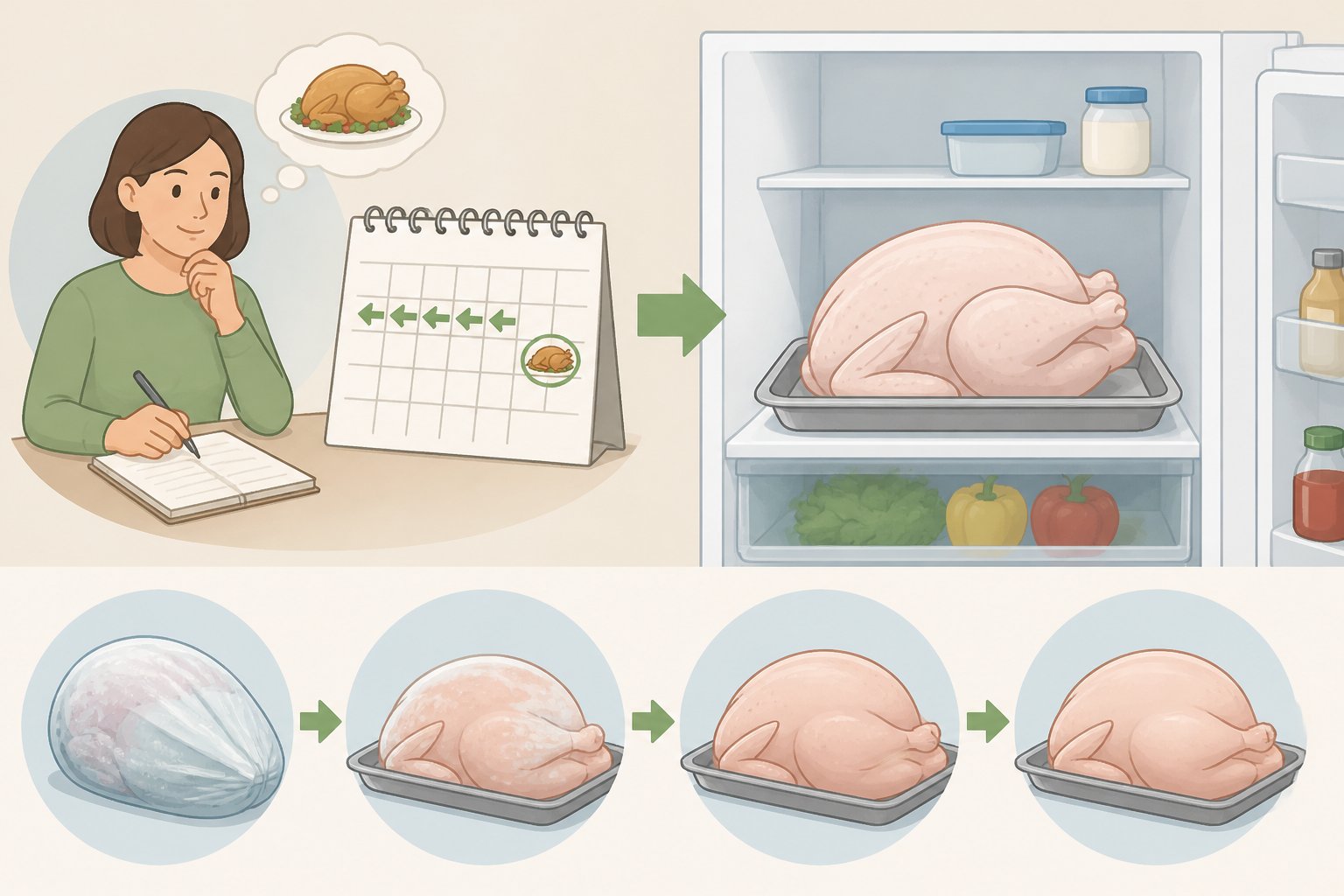
Count backward from the dinner date to find the day the bird needs to go into the fridge. A whole turkey takes several days to thaw safely this way, and bigger birds need more lead time, so start early and lean toward extra days if the schedule allows it.
Set the turkey on a tray or in a pan on the bottom shelf so drips don't land on other food, and skip thawing it on the counter. Room temperature lets the outer layers sit in an unsafe range long enough for bacteria to grow before the center finishes thawing.
Check the bird the morning it's going in the oven for leftover ice, especially around the cavity. If there's still ice, don't try to speed things up on the counter or under warm water. Switch to a cold-water thaw instead: submerge the wrapped turkey and change the water regularly until it's fully thawed, even if that means pushing dinner back a few hours.
Step 6: Confirm timing and oven needs the day before
Send guests a short reminder of arrival time and reconfirm what they're bringing, specifically asking whether any dish needs oven time, stovetop space, or last-minute assembly once it arrives.
A shared menu only works if dishes show up ready or nearly ready. Coordinating oven space ahead of time avoids a bottleneck if several guests need the oven while the turkey rests. Ask directly rather than assuming everything arrives finished.
Know exactly what needs to go in or on the stove, and when, before anyone walks through the door.
Adjustments and troubleshooting
If a guest cancels a dish at the last minute, keep a simple backup on hand. A store-bought pie or a bagged salad closes the gap without reworking the budget or the oven schedule.
If the required minimum turns out to be larger than what was already planned to buy, rerun the Step 3 math. A no-minimum sale price elsewhere might still win once that padding gets counted.
Before Thanksgiving
Run through this before loading up the cart:
- Guest count confirmed and turkey weight range written down
- Menu categories assigned in writing, with budgets set and adjustments made for cost and travel
- Turkey deal's deal-related cost calculated using the Step 3 breakdown, and compared against a no-minimum sale price elsewhere
- Offer clipped or activated as required by the store, with minimum spend, weight cap, and any one-per-household limit confirmed
- Turkey weight matched to the fridge and oven space actually available
After dinner: store or freeze leftovers
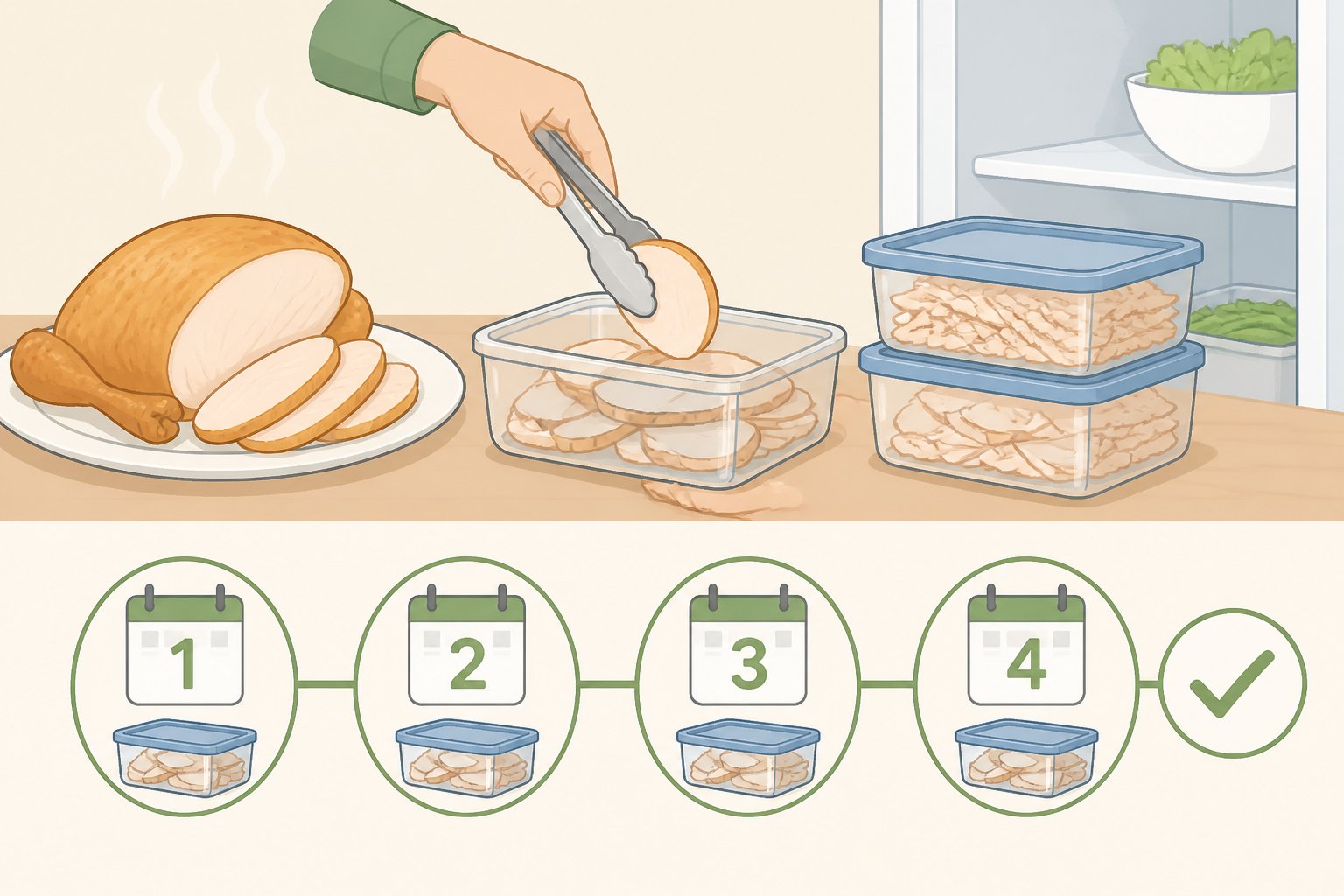
Get the turkey off the counter and into shallow containers once the meal winds down rather than letting it sit out for the rest of the evening. Cooked turkey keeps safely in the fridge for a few days, so mark the date on the container and plan to eat through it before that window closes.
If the leftovers won't get eaten in time, move them to the freezer rather than letting them sit until they're questionable. If the turkey sat out on the counter for an extended stretch after the meal instead of going into the fridge promptly, treat it as a food-safety risk and toss it rather than serving it later.
The deal worked if the effective turkey cost beat the no-minimum sale price, every menu category got covered without gaps or duplicates, and the leftovers made it into the fridge or freezer before they sat around too long. If any piece of that slipped this year, adjust the numbers for next time rather than relitigating this one.











Comments
Be the first, drop a comment!