



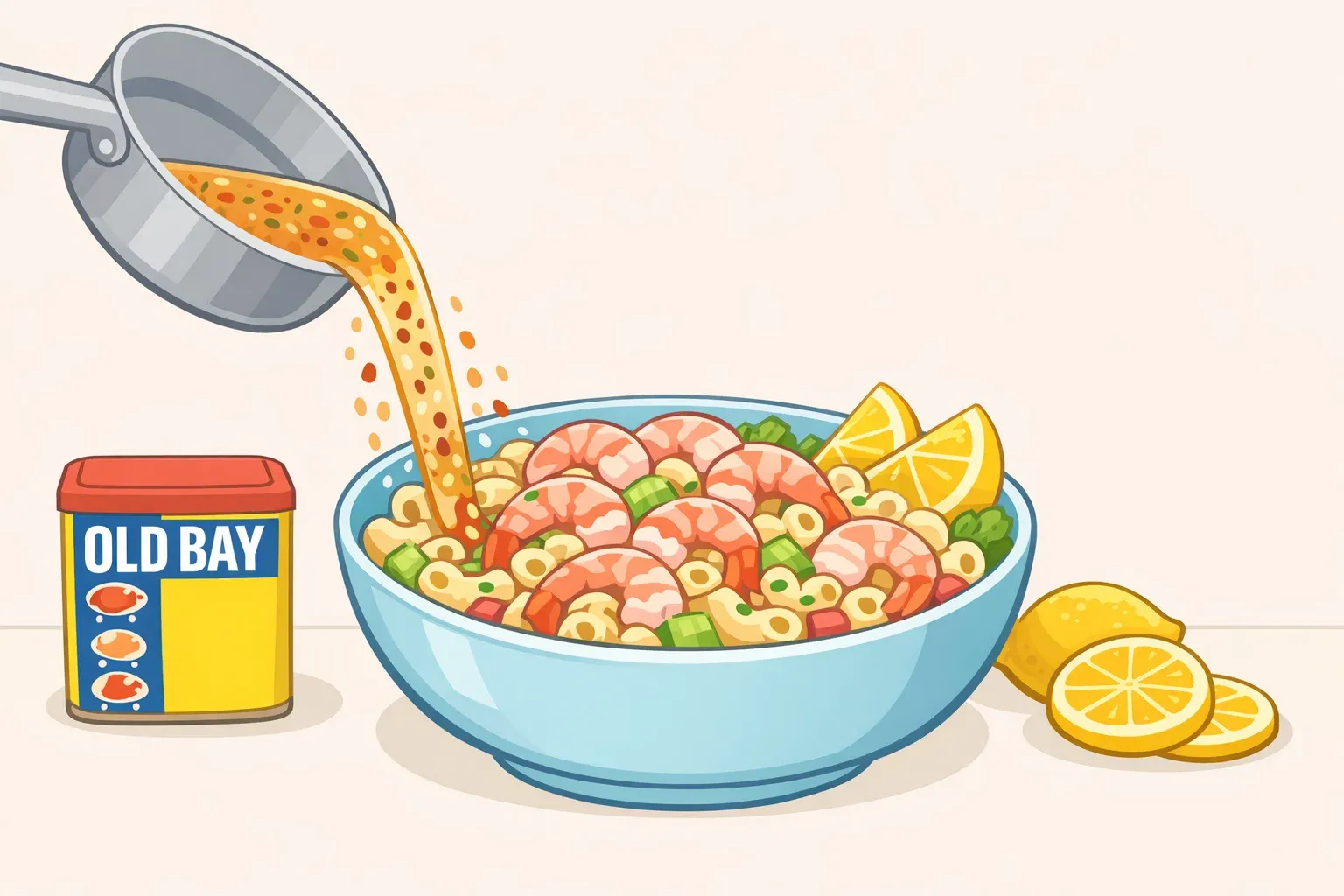
Shrimp macaroni salad recipe: the Old Bay cooking-water fix
Some shrimp macaroni salad recipes season only the dressing, leaving the pasta and shrimp to soak in whatever mayonnaise gets poured over them later, so the whole dish ends up depending on one step for nearly all its flavor. A shrimp macaroni salad recipe published this week by The Kitchn does it differently: cook both the macaroni and the shrimp in water seasoned with Old Bay, so the flavor builds in before the dressing ever touches the bowl.
NYT Cooking described the effect two summers ago as what happens "if a shrimp boil dove into a bowl of macaroni salad": lemony, peppery, glossy. The Kitchn and Weekday Pescatarian arrived at the same cooking-water method independently of each other. A third recipe, from You Say Potatoes, takes the more conventional route: plain boiling water, a cold-water rinse, and a seasoned dressing doing most of the work.
The recipe below follows The Kitchn's method start to finish, then breaks down the dressing balance and the make-ahead fix that keeps the salad from drying out in the fridge. It's an easy shrimp macaroni salad in the sense that matters most on a weeknight: one pot, frozen cooked shrimp, and no separate shrimp-prep step.
How to make this shrimp macaroni salad recipe
This version, adapted from The Kitchn's recipe, makes about 12 cups and serves 10 to 12. All ingredient amounts below follow that recipe card unless otherwise noted.
Ingredients
- 2 quarts water
- 1/3 cup Old Bay seasoning, plus more for garnish
- 1 pound dried elbow macaroni
- 1 pound small or medium frozen cooked shrimp, 26 to 30 per pound (or 1 pound raw shrimp for the substitution in step 3)
- 1 1/2 cups mayonnaise, preferably Duke's
- 1 medium red bell pepper, diced small
- 1/2 medium red onion, diced small
- 2 medium celery stalks, diced small
- 5 medium scallions, finely chopped
- 1/3 cup fresh dill, chopped
- Zest of 1 large lemon (about 2 teaspoons)
- 1/4 cup fresh lemon juice
Cooked-shrimp quantities and sizing come from The Kitchn; the raw-shrimp substitution comes from Weekday Pescatarian.
Method
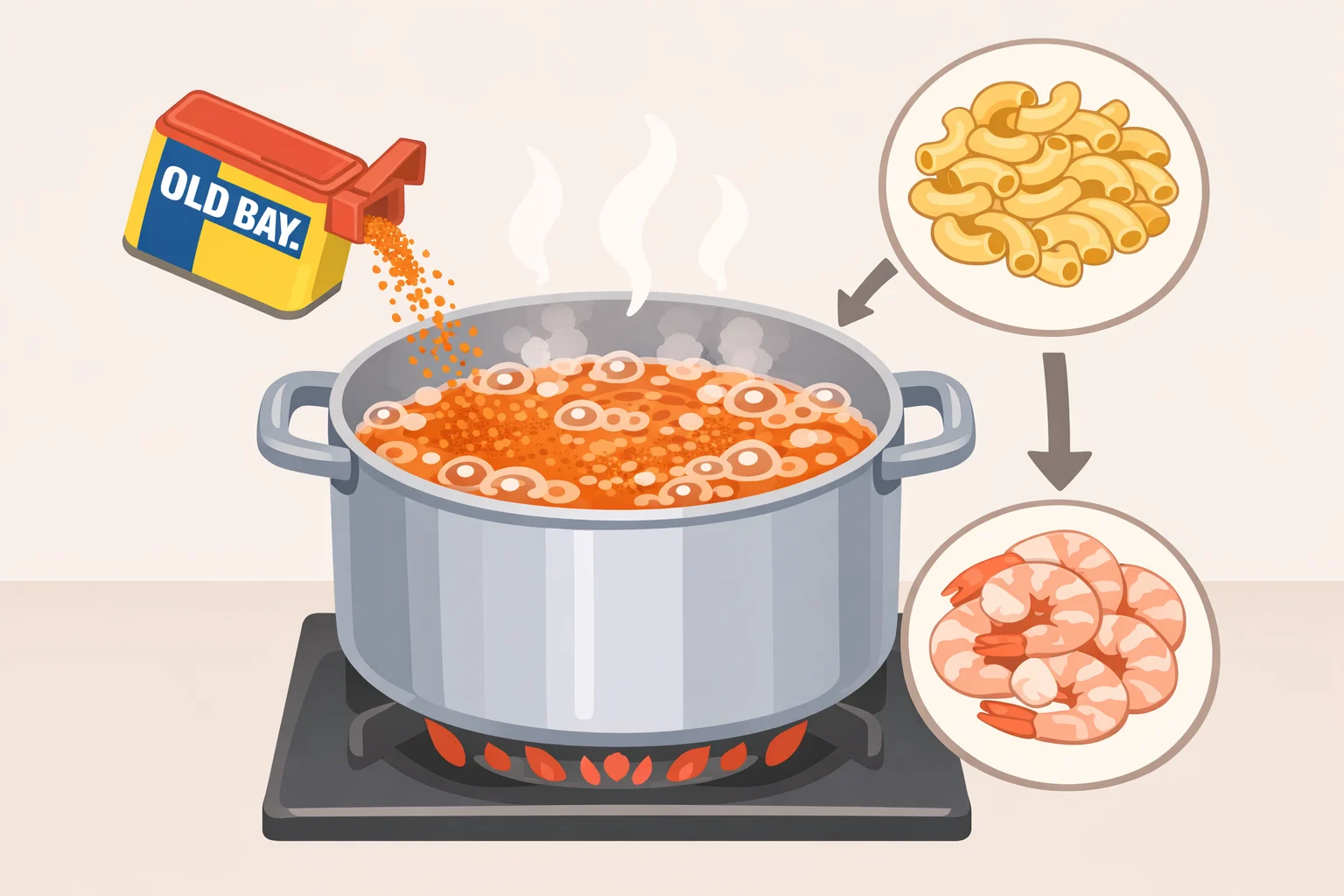
- Bring the water and Old Bay to a boil in a large pot over medium heat.
- Add the macaroni and cook according to package directions for one minute less than al dente.
- Cook the shrimp in the same pot, using whichever you're starting with:
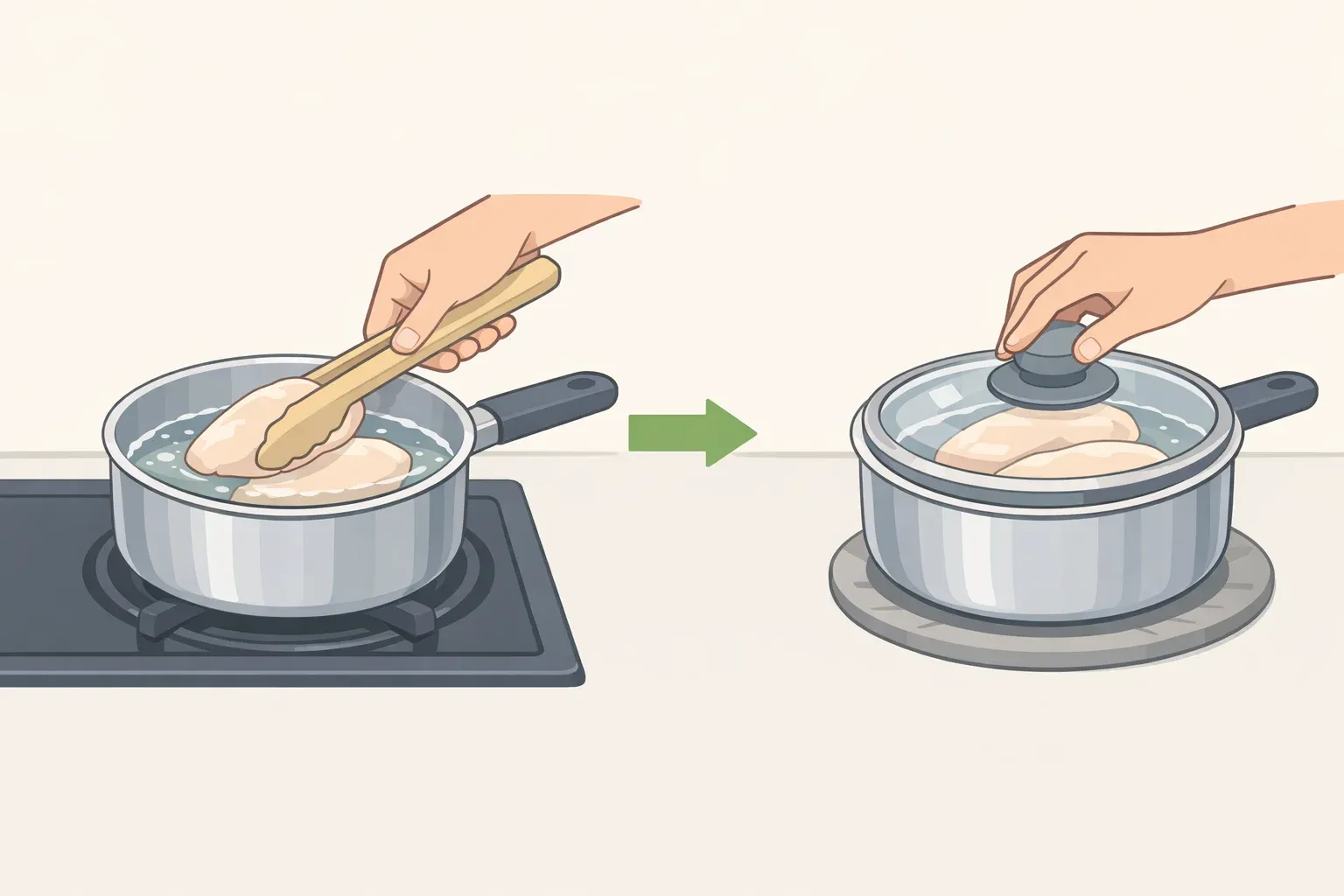
- Frozen cooked shrimp: keep the water at a gentle simmer and add the shrimp, cooking about 2 minutes, just until warmed through (The Kitchn).
- Raw shrimp: turn off the heat first, then stir until the shrimp turns pink and opaque, also about 2 minutes (Weekday Pescatarian). Check a few pieces before draining to make sure none are still translucent.
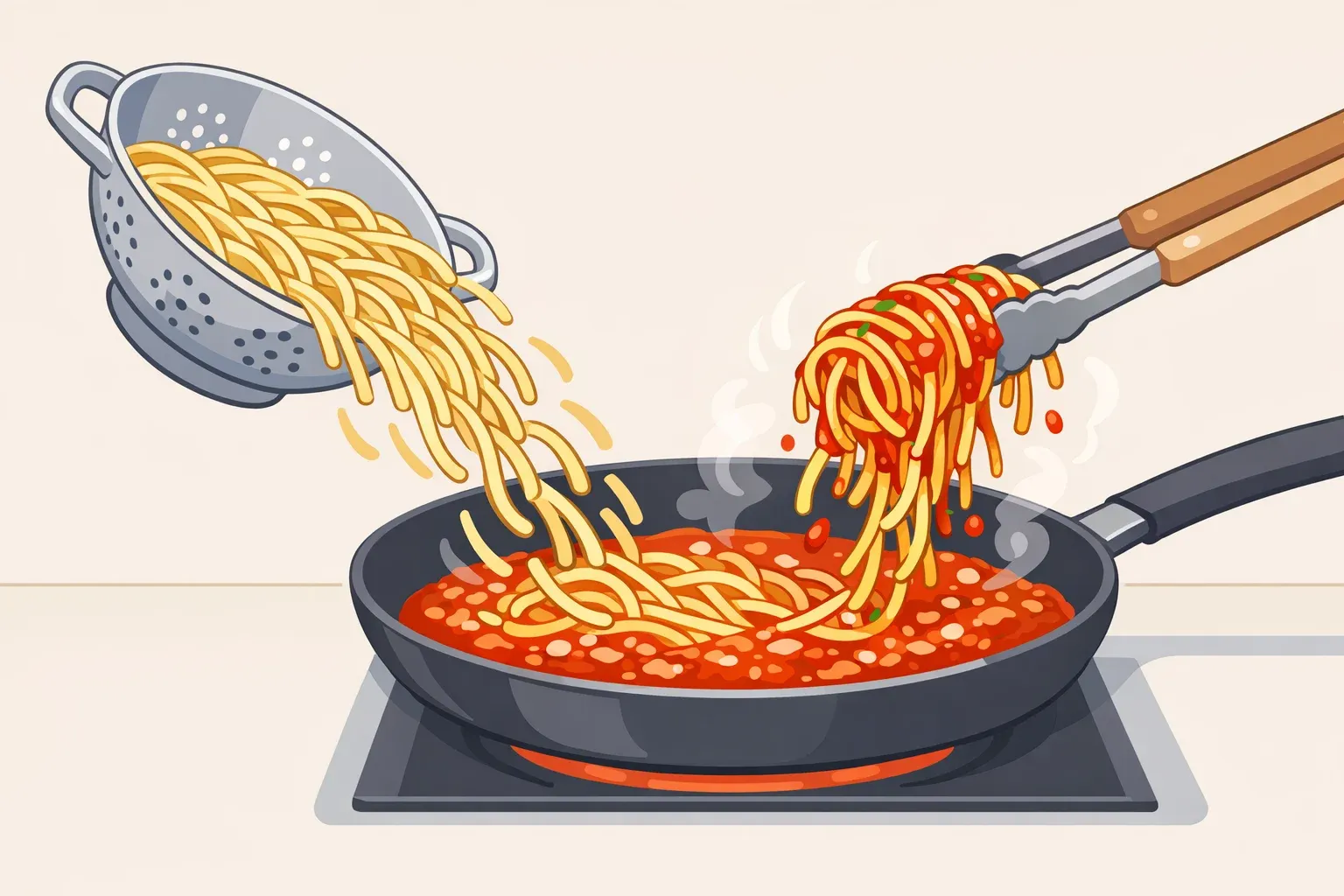
- Drain everything together without rinsing, and let it sit in the colander for 5 minutes, shaking occasionally to cool.
- In a large bowl, whisk together the mayonnaise, bell pepper, onion, celery, scallions, dill, lemon zest, and lemon juice.
- Stir in the macaroni and shrimp until evenly combined, then garnish with more Old Bay.
- Taste and season with salt as needed. If it looks dry, stir in up to 1/4 cup more mayonnaise.
For a tangier version, Weekday Pescatarian's dressing swaps in milk, grated garlic, and Dijon mustard, plus a second dose of Old Bay whisked into the mayonnaise base, roughly 2 teaspoons to 1 tablespoon depending on batch size (Weekday Pescatarian). The Kitchn's version above is the cleaner, more straightforward recipe. Weekday Pescatarian's is more seasoned and tangier, with that second round of Old Bay pushing the coastal flavor harder. Stick with the recipe above for a milder profile, or fold in the extra mustard, garlic, and Old Bay if bolder is the goal.
Start with the cooking water, not the dressing
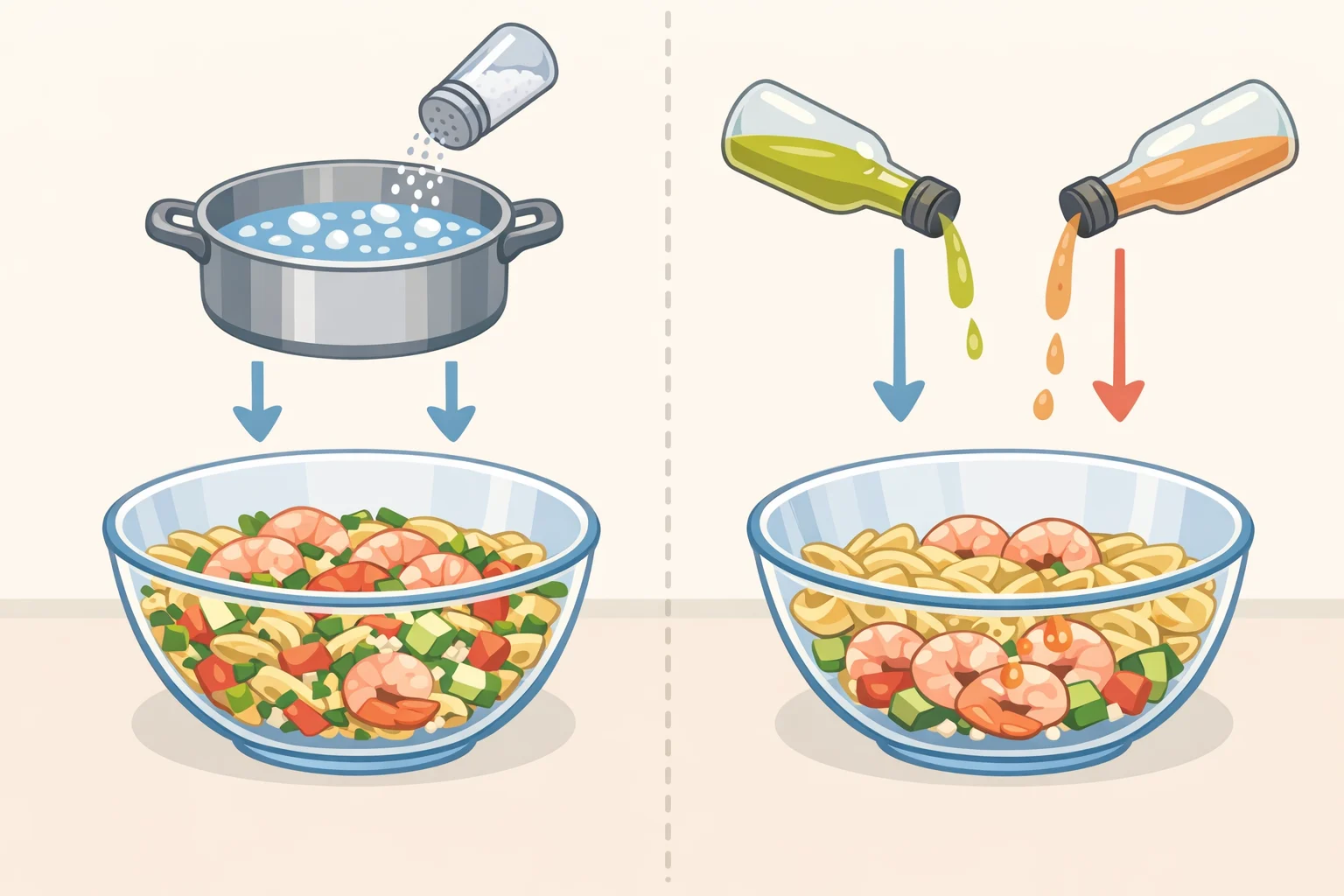
The Kitchn identifies cooking both the macaroni and shrimp in Old Bay-seasoned water as the recipe's defining move (The Kitchn). Weekday Pescatarian takes the idea a step further, seasoning the water and then seasoning the dressing again, so the Old Bay does what it calls double duty across two layers of the dish (Weekday Pescatarian).
You Say Potatoes skips the seasoned water entirely, boiling the macaroni plain and relying on the dressing alone to carry the flavor (You Say Potatoes). It's a conventional method, and it works, but it puts all the seasoning weight on one step instead of two.
The Kitchn and Weekday Pescatarian both cook the pasta about one minute short of al dente, then drain it without rinsing and let it cool in the colander for five minutes, shaking it occasionally (The Kitchn; Weekday Pescatarian). You Say Potatoes rinses under cold water instead, specifically to stop the pasta from cooking further and cool it faster (You Say Potatoes). For this Old Bay-based version, skip the rinse and use the five-minute colander-cooling method that The Kitchn and Weekday Pescatarian both rely on.
Building a dressing that's creamy without going flat
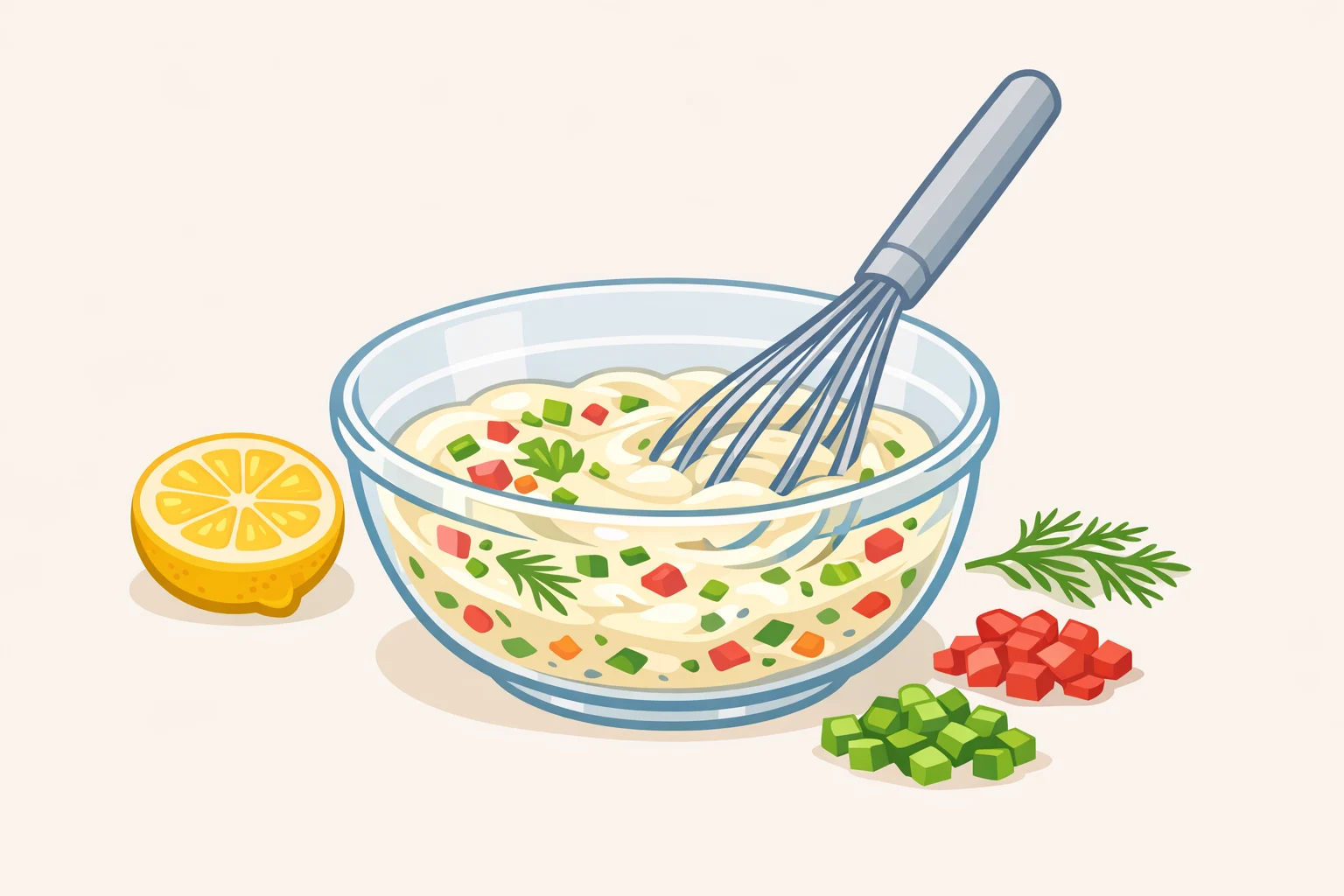
Once the pasta and shrimp carry their own seasoning, the dressing's job shifts. It's not covering for bland ingredients anymore; it's adding brightness and richness on top of what's already there. Mayonnaise is the common anchor across all three recipes, with The Kitchn calling specifically for Duke's; where they differ is in the extras, Dijon mustard, sour cream, or milk, layered in on top (The Kitchn; You Say Potatoes; Weekday Pescatarian).
Fresh dill is the defining herb in The Kitchn's and Weekday Pescatarian's versions, usually paired with scallions (The Kitchn; Weekday Pescatarian). You Say Potatoes leans on parsley instead, a milder, greener note without dill's anise-like edge (You Say Potatoes).
The crunch is structural, not decorative. Vegetables get diced smaller than the pasta itself, celery, red bell pepper, and red onion (or cucumber for something lighter), so every bite has some bite to it instead of one forkful loaded with vegetables and the next bare (The Kitchn; Weekday Pescatarian). For heat, a pinch of cayenne or a dash of hot sauce works without overwhelming the rest of the dressing, and elbow macaroni swaps easily for shells or rotini (Weekday Pescatarian; You Say Potatoes).
Keeping Old Bay shrimp macaroni salad creamy after chilling
Chilling pays off when there's time to spare. Weekday Pescatarian notes the salad is good right away but improves after about an hour in the fridge as the flavors meld, and both The Kitchn and Weekday Pescatarian allow covering and refrigerating for up to 24 hours ahead (Weekday Pescatarian; The Kitchn). You Say Potatoes recommends at least an hour, and suggests 8 to 12 hours or overnight for the best result (You Say Potatoes).
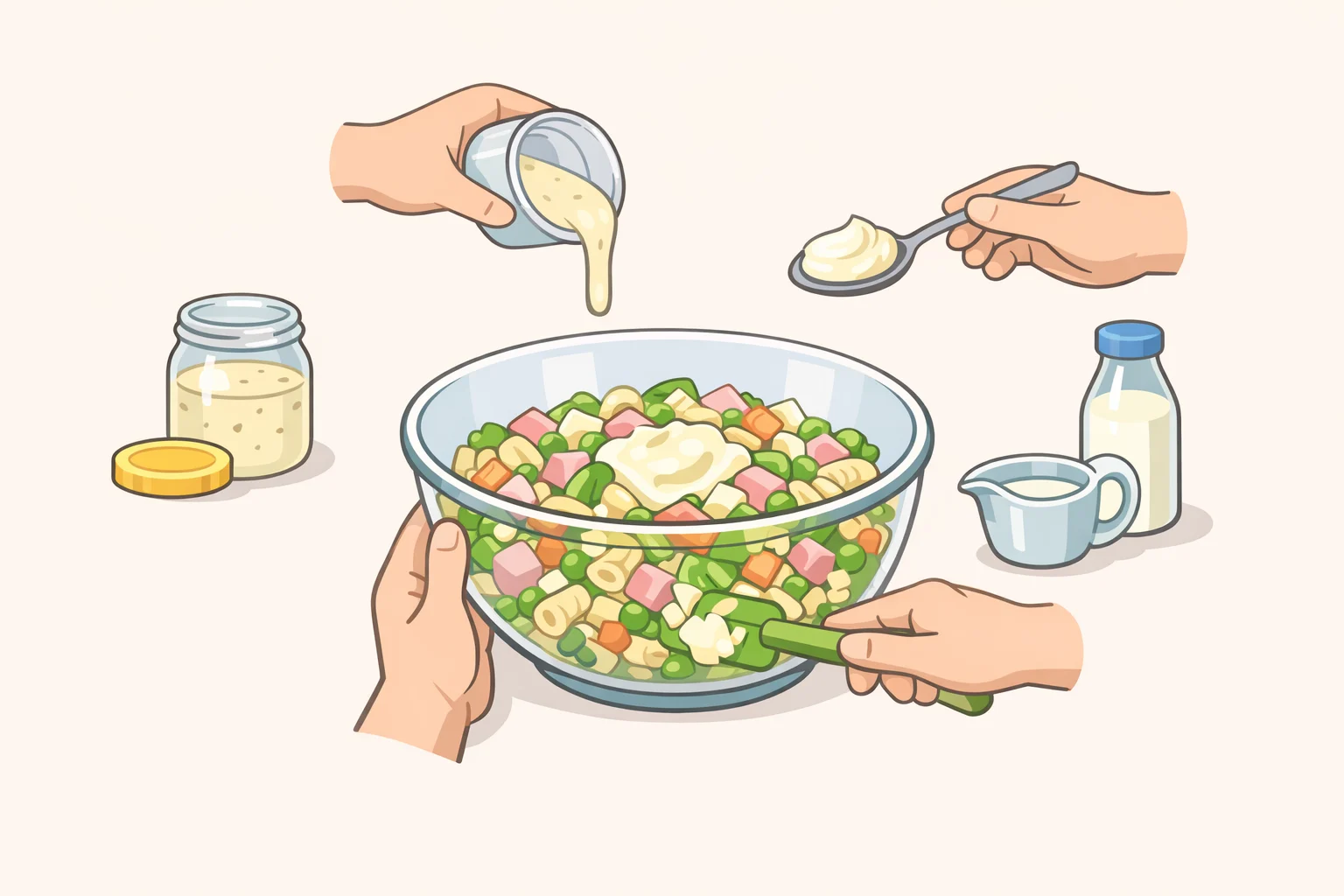
The tradeoff is that pasta keeps absorbing dressing the whole time it sits, which can leave the salad dry by serving time (Weekday Pescatarian). Two practical fixes address it, and either works depending on how far ahead the salad was made.
- Reserve extra dressing: hold back about 1/4 cup when mixing, then fold it in right before serving (Weekday Pescatarian).
- Quick refresher: whisk 2 tablespoons each of mayonnaise and milk, then fold gently into the salad to restore creaminess (Weekday Pescatarian). The Kitchn allows stirring in up to 1/4 cup more mayonnaise if the salad looks dry after chilling (The Kitchn).
Taste again before serving, too. Both Weekday Pescatarian and You Say Potatoes recommend adjusting the seasoning after chilling, whether that's a pinch of salt, a squeeze of lemon, or an extra dash of Old Bay (Weekday Pescatarian; You Say Potatoes).
How long shrimp macaroni salad lasts in the fridge
This is a mayonnaise-and-seafood salad, so storage is less forgiving than a dry pasta salad would be. The Kitchn and You Say Potatoes both recommend up to 2 days refrigerated in an airtight container; Weekday Pescatarian allows up to 3 (The Kitchn; You Say Potatoes; Weekday Pescatarian). Two days is the more conservative window to plan around given the shrimp-and-mayonnaise combination. Keep the salad refrigerated until serving time, and return any leftovers to the fridge as soon as the meal is over.
Room temperature is where the risk climbs faster. Weekday Pescatarian advises no more than 2 hours out in warm weather, or 1 hour if it's above 90°F (Weekday Pescatarian). That falls within the broader window from Oregon State University Extension, which advises against leaving perishable foods out longer than 2 to 3 hours generally, though the specific 90°F threshold comes from Weekday Pescatarian alone.
Skipping the freezer is a quality call, not a safety one. Thawed dressing tends to separate, and the vegetables lose their crunch and go soft, so freezing leftovers mostly guarantees a worse second serving rather than a dangerous one (You Say Potatoes).
This salad is meant to be eaten cold. For a slightly less chilled texture, let it sit out for about 15 minutes, then serve promptly (Weekday Pescatarian), keeping the broader room-temperature limits above in mind.
For make-ahead service, prepare the salad up to a day ahead, but hold back that reserved quarter-cup of dressing until serving time. Fold it in, taste once more, and get it back into the cold before it hits the table.




Comments
Be the first, drop a comment!