



A bowl of spaghetti alla Nerano looks like it came from a restaurant kitchen running on heavy cream. It didn't. The sauce gets its body entirely from fried zucchini, starchy pasta water, and aged cheese, a technique called mantecatura that turns a short list of pantry ingredients into something that coats a fork like velvet. No cream. No shortcuts. Just method.
This is not a fifteen-minute weeknight pasta. Frying and resting the zucchini takes time. The good news: the zucchini can be fried up to three days ahead, which shrinks the active cooking window to roughly 20 minutes on the day you eat. Plan accordingly, and it's very manageable.
The dish was born in 1952 at the Maria Grazia restaurant in the village of Nerano on Italy's Sorrento Peninsula. It reached a wider U.S. audience after Stanley Tucci featured it on Searching for Italy. Despite its higher profile, this remains unambiguously a technique-driven dish. The method is what separates a glossy, emulsified sauce from a clumpy, stringy disaster.
This guide covers the full method: how to fry and rest the zucchini, which cheese to use, what to substitute, and the single off-heat step that decides whether the sauce becomes silk or rubber.
The version this guide recommends
Before getting into the why, here are the specs this guide follows, chosen to suit home cooks working without specialty Italian ingredients:
Zucchini: 2.5 pounds per pound of pasta, sliced into quarter-inch rounds
Cheese: 3 ounces of Caciocavallo or Pecorino Romano, finely grated
Make-ahead window: Fry the zucchini up to three days ahead and refrigerate
Butter: No
On the make-ahead window: Refrigerator hold from one to three days. Either way, doing it ahead is not a compromise; the texture actually improves as the zucchini continues to soften during the rest.
What you need before you start
Zucchini quantity: The 2.5-pound figure is the practical baseline. Some cooks go higher and use up to four pounds of pasta per pound since zucchini shrinks by more than half once fried. More zucchini means a thicker, richer sauce base. Both approaches work; the higher ratio just requires more frying time.
Cheese: Provolone del Monaco is the traditional choice, a DOP cheese from the Sorrento Peninsula with a sharp, slightly piquant flavor. The chef quoted there argues that without it, the result is technically a different dish. Provolone del Monaco is hard to source in the United States. The substitution ladder: Caciocavallo first, Pecorino Romano second, Parmigiano-Reggiano alone last (nutty and good, but short on the tang this dish needs). A 50/50 Pecorino-Parmigiano blend is a well-tested Italian-American approach. Use about 3 ounces per pound of pasta — it's a structural component, not a finishing garnish.
What to leave out: No cream, which would change the dish's character entirely. No batter, flour, or pre-salting on the zucchini before frying. No acid at the finish; lemon juice or vinegar competes with the zucchini's delicate flavor.
Equipment: A deep, high-sided pan or Dutch oven for frying; a thermometer; a large, wide skillet for the final emulsification; and a ladle reserved for pasta water.
How to fry and rest the zucchini, the step most people get wrong
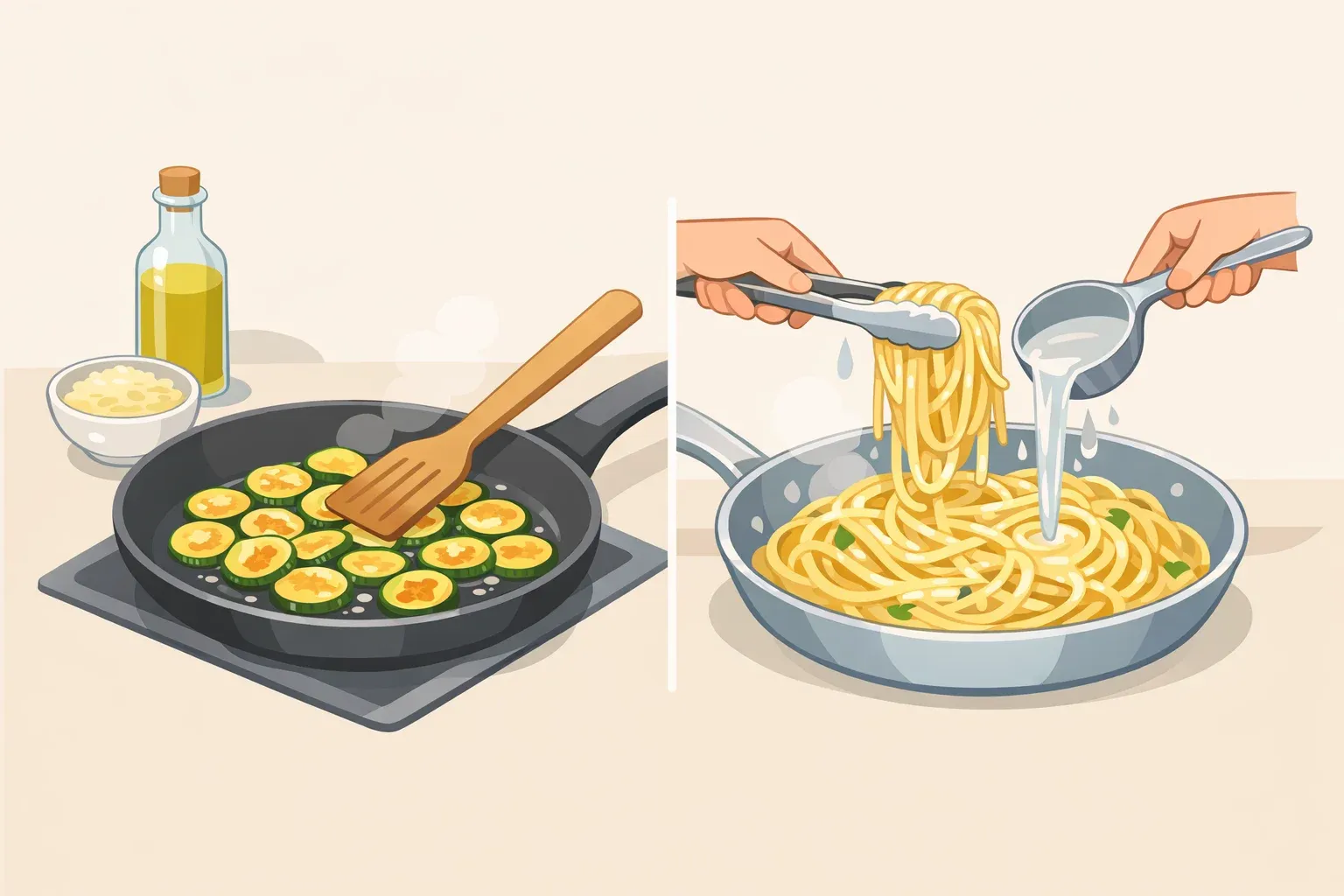
Why deep-frying: Pan-frying or baking won't develop the concentrated sweetness, caramelized edges, or soft interior the sauce depends on. Deep-frying gives you zucchini that is jammy inside, with enough structural breakdown to mash into a sauce base.
Slice thickness: Traditional Italian guidance calls for very thin rounds of around 2mm. Ultra-thin slices go fully crisp and can't be mashed into the paste the sauce requires. Rounds cut to about a quarter-inch thick kept a soft, buttery interior while still developing golden edges. For home cooks who need the zucchini to double as a sauce base, the thicker cut is the more reliable choice. Aim for a light golden-brown color.
Frying temperature and batching: Heat oil to 350°F and return it to temperature between batches, dropping lower steams rather than frying the zucchini. Plan for 6–8 minutes per batch. For frying oil, a 3:1 blend of neutral oil and regular olive oil — not necessarily extra-virgin — adds flavor the zucchini absorbs without wasting expensive oil. Salt the drained zucchini sparingly; the cheese will add plenty later.
The resting step: After frying, let the zucchini sit at room temperature for at least 30 minutes, up to two hours. During this rest, the slices continue softening, which makes them melt effortlessly when mashed. Tuck a few torn basil leaves into the resting pile; they'll infuse a subtle freshness as the zucchini cools. Refrigerate if cooking the next day, or up to three days out.
Zucchini size: Smaller zucchini under two inches in diameter have denser flesh and fewer seeds, producing a smoother, less watery sauce base. Larger ones still work; just expect a slightly less uniform result.
Spaghetti alla Nerano recipe: how to build the sauce
Step 1: Cook the pasta well short of done
Pull the spaghetti from the boiling water about 3 minutes before the package's al dente time. The exterior should be softened, but the center should still be chalky. Before draining, reserve at least 2 cups of pasta water. This starchy liquid is the emulsification engine. Don't skip the reserve.
What you should see: undercooked pasta set aside, two cups of cloudy water within easy reach.
Step 2: Build the zucchini base in a wide pan
Warm a splash of olive oil over medium heat. Add garlic and cook until fragrant but not beginning to color, about one minute. Add roughly half the fried, rested zucchini and a generous ladle of pasta water. Mash with a fork or the back of a spoon into a coarse paste; the zucchini should dissolve readily if it was properly rested. This paste is the sauce's structural base.
If the zucchini isn't mashing easily, it was likely sliced too thin and went fully crisp, or wasn't rested long enough. Add more pasta water and keep working it it will loosen.
Step 3: Add the pasta and finish cooking
Add the undercooked spaghetti directly into the zucchini base. Toss continuously over medium heat, adding pasta water a splash at a time, until the pasta reaches al dente, about 3 to 5 minutes. The sauce should be loose and moving freely at this point. It tightens once the cheese goes in.
If the sauce looks too thick before adding cheese, add pasta water. If it looks watery, keep tossing the starch, which will bind it.
Step 4: Add cheese off the heat (the one step that can't be rushed)
Remove the pan completely from the burner. Then add the finely grated cheese. Adding cheese over active heat causes it to seize. It goes stringy, clumps against the zucchini, and turns the sauce into a gummy mass. Stir rapidly with a small splash of pasta water until the sauce turns glossy and coats the strands. This is mantecatura, keep the pasta moving throughout.
Clumping cheese means the pan was still too hot. Next time, let it cool 30 seconds off the burner before adding cheese. In this batch, add pasta water a teaspoon at a time and stir hard. You can often recover it.
Step 5: Finish and serve immediately
Fold in the reserved whole zucchini rounds and fresh basil. Plate and eat at once. As the dish sits, the sauce thickens and loses its gloss. It will still taste good, but the texture peaks in the first few minutes.
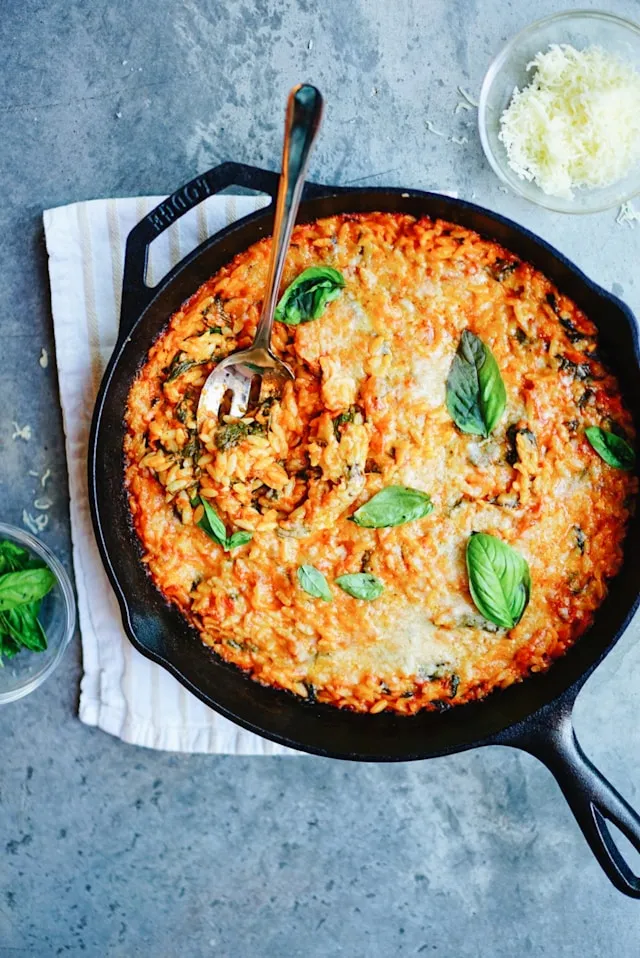
What you should see: a glossy sauce clinging to each strand, whole zucchini rounds throughout, fresh basil on top.
What mastering this dish actually gets you
Nail the technique here, and you've essentially cracked the code on a whole family of Italian pasta sauces. The same principle: starchy water, fat, and cheese combined through vigorous movement over heat drives cacio e pepe, pasta al limone, and several others. Understand why it works in this spaghetti alla Nerano recipe, and those dishes get easier too.
The ingredient list is flexible. Provolone del Monaco is traditional, but Caciocavallo or Pecorino Romano will serve most home cooks well. The technique is not flexible. Get the frying, the resting, and the off-heat cheese step right, and the dish holds wherever you cook it.
Once it's reliable, it changes how you think about cream in pasta generally. A lot of dishes that reach for the carton are really just missing the starchy-water step.


Comments
Be the first, drop a comment!