



2 ingredient BBQ sauce: fix a flat bottle in 2 minutes
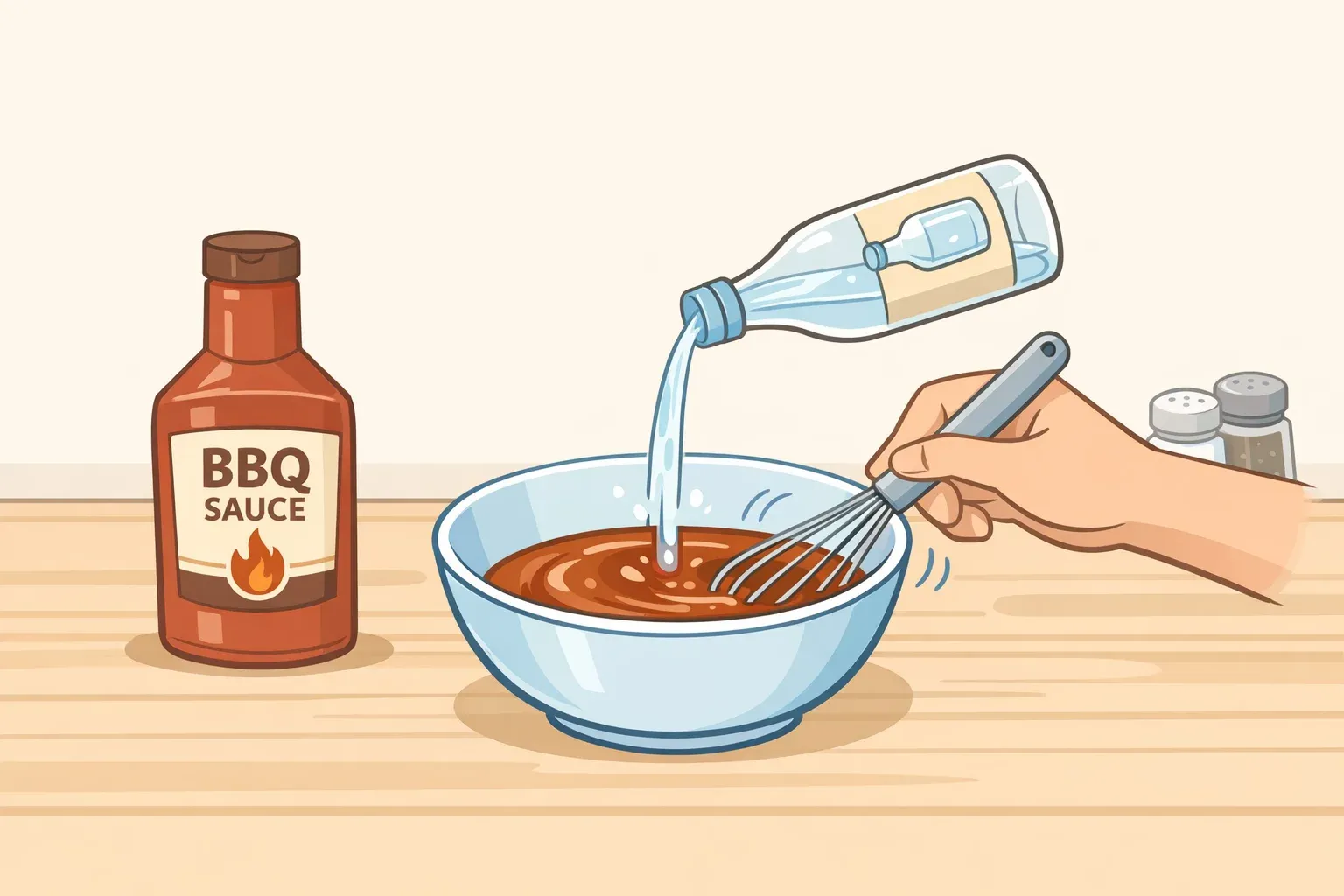
The bottle you have tastes like sweetened ketchup with no personality. The fix takes two minutes: pour your sauce into a bowl, whisk in one teaspoon of vinegar per cup, and taste. That's the 2 ingredient BBQ sauce method. Bottled sauce plus neutral vinegar, no cooking required.
This works as a quick barbecue sauce substitute when you're nearly out of a bottle, and it works just as well when a full bottle simply needs correcting. By the end of this guide, you'll know the ratio, which vinegars to use and which to avoid, how to tell when the sauce is balanced, and a few optional additions if you want to push further.
Why most bottled sauces need the help
Kansas City style dominates grocery shelves. The formula is tomato-based, sweetened with brown sugar or molasses, and thick enough to cling to ribs or brisket, per Serious Eats last August. What it often sacrifices is acidity. A well-made Kansas City sauce should have enough vinegar to provide a tangy counterpoint to the sweetness of brown sugar or molasses, as a Serious Eats blind tasting of 16 supermarket brands put it last summer. Most bottles don't get there.
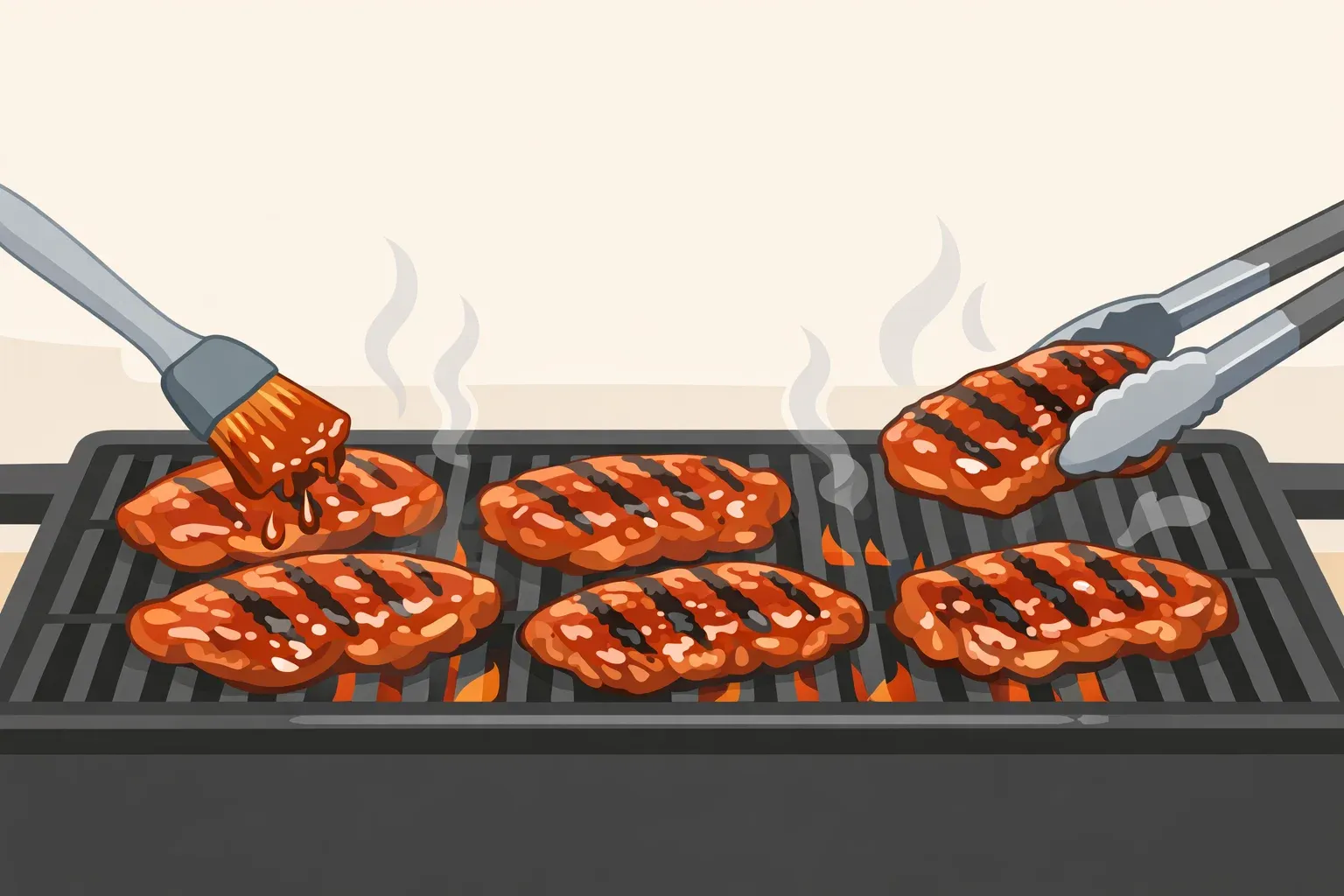
The problem compounds when the sauce hits food. Grilled and smoked meats are inherently rich and fatty. Pile a sweet, heavy sauce on top and the fat has nothing to push against. Vinegar cuts through it, brightens the overall flavor, and lets the smoke, spice rub, and meat actually register rather than getting buried under sweetness, per Serious Eats. The technique matters most with rich proteins chicken thighs, ribs, pork shoulder where the sweet-on-fat problem is most pronounced.
Texture is the other half of it. Vinegar loosens a syrupy sauce so it brushes and clings lightly instead of glooping on like a candy glaze, per Serious Eats. A sauce should be fluid enough to baste with or drizzle at the table. If yours pours slowly and sticks heavily to whatever it touches, the vinegar adjustment will make a visible difference before it even hits your tongue.
Not every bottle needs the same amount of work. That same Serious Eats tasting found real variation across brands: the top-ranked sauce, Trader Joe's Organic Kansas City Style BBQ Sauce, earned praise specifically for its pleasant, mild acidity and balanced flavor. The vinegar method matters most with sauces that don't already have that balance which is most of them.
Quick diagnostic before you start: Taste your sauce straight from the bottle. If it reads as predominantly sweet with no tangy edge and feels too thick to pour freely, proceed with the full method below. If it already has a detectable tang and flows without much resistance, start with half the recommended amount and adjust from there.
How to make BBQ sauce when you're out: the easy barbecue sauce substitute method
What you need: Bottled BBQ sauce. One of the following: apple cider vinegar, white wine vinegar, or plain distilled white vinegar. Nothing else.
On vinegar selection before you start: Use something neutral. Apple cider vinegar is the most common choice and works cleanly with tomato-and-molasses bases. White wine vinegar and plain distilled white vinegar are equally acceptable options. All three add acidity without competing with the sauce's existing flavor profile, per Serious Eats. Avoid balsamic and sherry vinegar both carry assertive, complex flavor profiles that clash with the sauce rather than supporting it.
Steps:
-
Measure your sauce. Pour the amount you need into a bowl. Work in cup increments the ratio scales cleanly that way, and it makes adjustment easier.
-
Add one teaspoon of neutral vinegar per cup of sauce. Whisk it in fully before tasting anything. One teaspoon sounds like nothing, but vinegar is potent. You can always add more; you can't take it out, per Serious Eats. Start conservative.
-
Taste it now. Three things to check: the sweetness should feel less dominant, a faint tangy edge should be present, and the sauce should pour a little more freely than before. If all three are true, you're done.
-
Add more vinegar in small increments if the sauce still tastes flat. The exact amount depends on how sweet your particular brand is, but the sauce usually needs more than that starting teaspoon, per Serious Eats. Once it hits hot, fatty meat, the sharpness softens and mellows quickly. Calibrate toward slightly more tangy than you think you want at the spoon it'll pull back on the grill.
-
Stop when the sauce tastes balanced, not sharp. The sensory target: less sticky-sweet, noticeably tangier, slightly looser in texture. If you're tasting vinegar outright rather than a clean tangy edge, you've gone past it. Stir in a small amount of plain bottled sauce to pull it back to center.
Note on brand variation: Some bottles are closer to balanced out of the container. If your sauce already has a detectable tang and flows without much resistance, treat the first teaspoon as a probe rather than a baseline. Adjust only if the sauce still reads flat after tasting.
Optional additions, if you want them
After the vinegar is in and the sauce tastes balanced, a few additions can shift it in a specific direction. None of these are necessary, per Serious Eats, but all are welcome if you want them.
- For heat: A pinch of cayenne or chile powder. Add sparingly and taste after each addition it builds faster than you expect.
- For smokiness: A small dash of smoked paprika adds a genuine barbecue note. If you're considering liquid smoke instead, a Serious Eats tasting found it often reads as glaringly artificial even in commercial sauces smoked paprika is the cleaner call.
- For savory depth: A spoonful of mustard or Worcestershire deepens complexity, per Serious Eats. Add a little, then taste before adding more.
Add these after the vinegar step, one at a time. The goal is a better sauce, not a new recipe from scratch.
What you now have
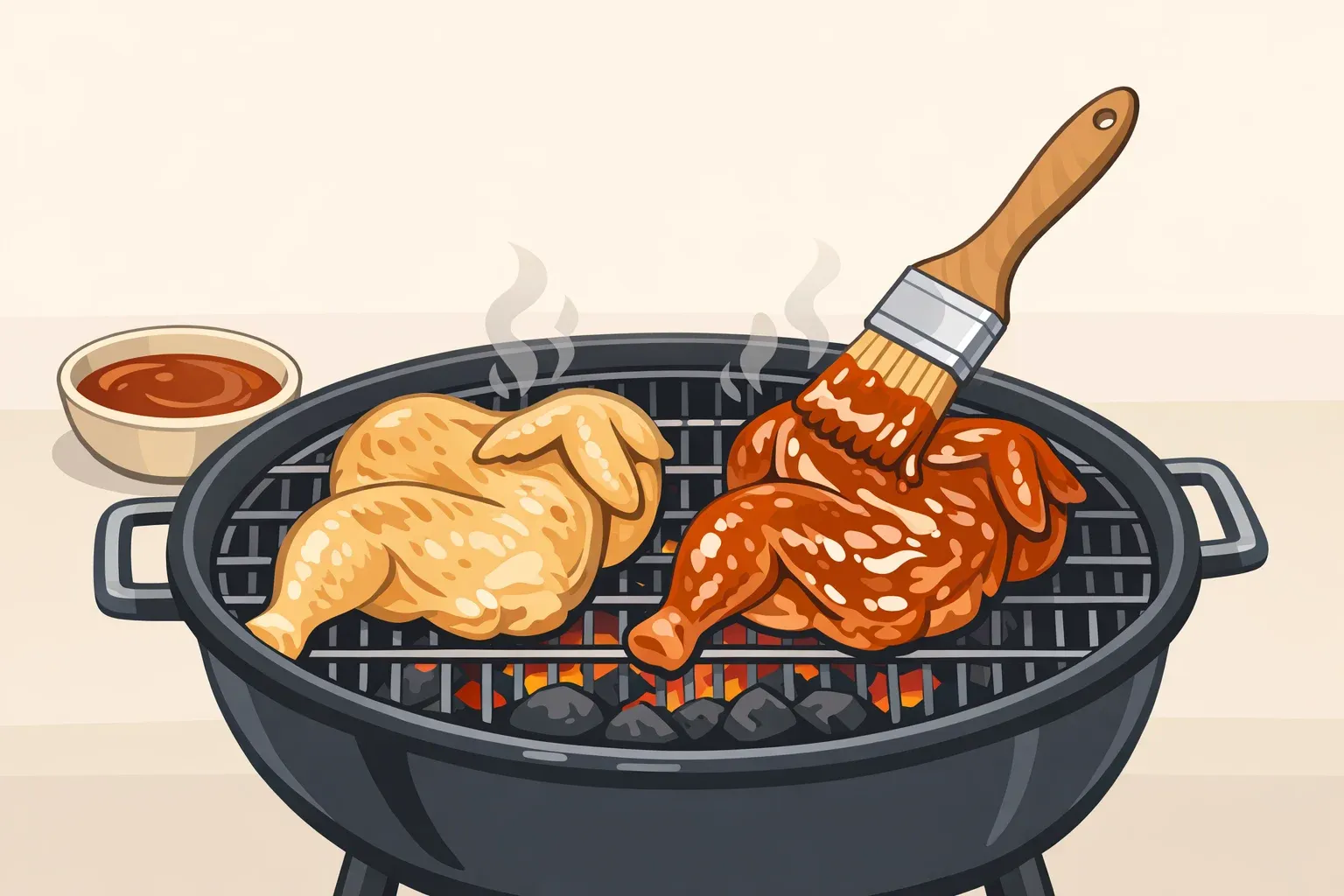
The adjusted sauce is ready to brush, spoon, or serve. No cooking, no special equipment.
The Serious Eats tasting found that the best bottled sauces land as sweet, tangy, savory, and not excessively so. That's the benchmark, and it's reachable from most bottles with a teaspoon of vinegar and two minutes of attention.
Keep a bottle of apple cider vinegar on the same shelf as the BBQ sauce. That's the whole setup.






Comments
Be the first, drop a comment!