



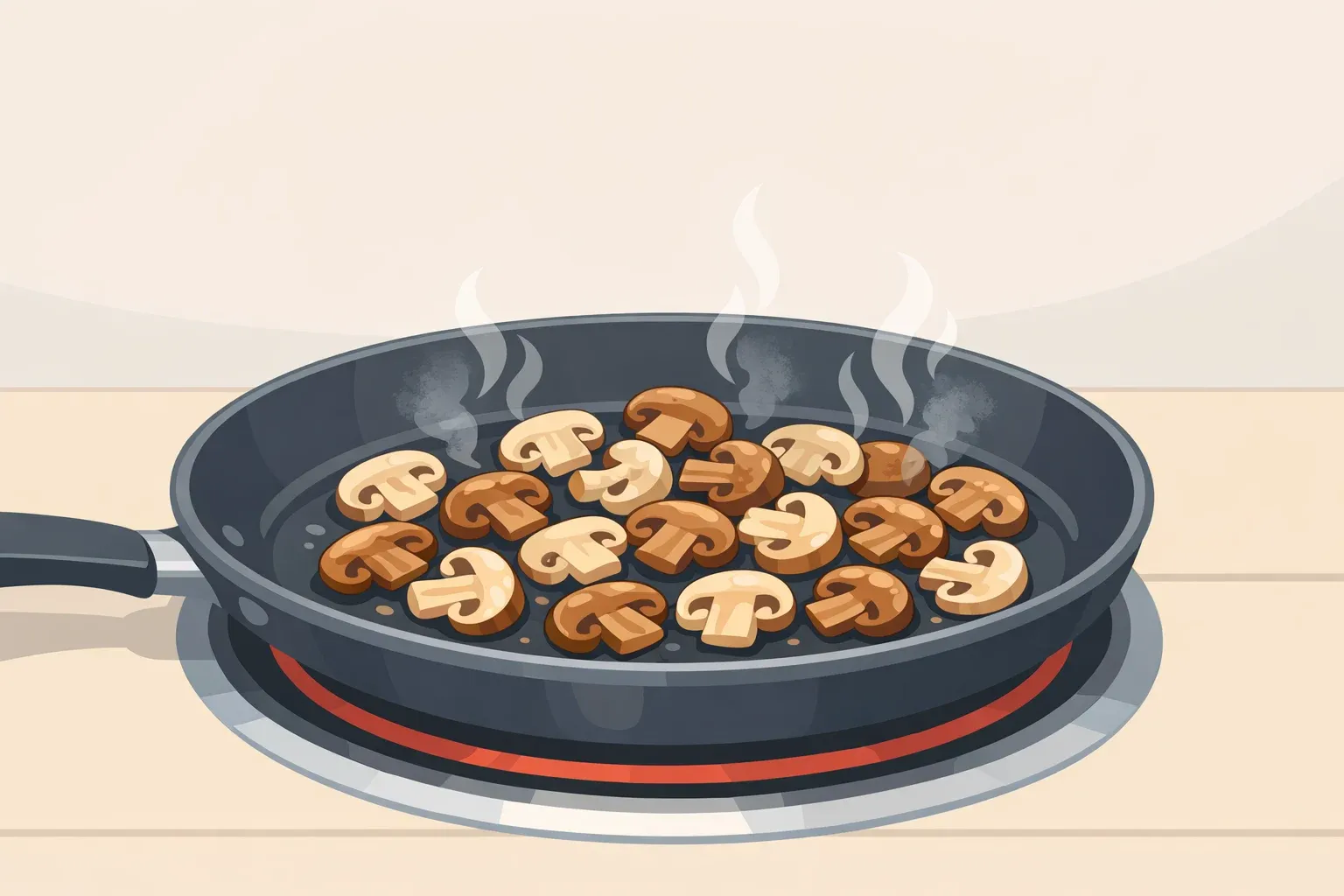
Most home cooks start mushrooms in butter or olive oil. Most home cooks end up with pale, slippery mushrooms sitting in a puddle of grease. The sequence is the problem, not the ingredients. Fixing it requires one change: drive the moisture out before the fat goes in.
This guide covers how to cook mushrooms without oil or butter during the initial phase, using the dry-pan approach. By the end, you'll be able to cook mushrooms that are properly browned, firm in texture, and not greasy. Fat goes in eventually if you want it; the point is that it goes in last, not first.
What you need before starting: A large, heavy skillet or Dutch oven, big enough that mushrooms aren't piled more than an inch or two deep. Crowded mushrooms steam rather than dry out, which defeats the whole method. Plan on a 12-inch skillet for one pound; use a Dutch oven or work in batches for two pounds. No fat until instructed.
Two things worth knowing about the ingredient itself:
Mushrooms are roughly 90% water by composition. That's why a pan that looks dry before cooking floods with liquid within minutes of heat.
When mushrooms hit fat first, their fiber pockets absorb the oil or butter before anything can brown. The natural instinct is to add more fat, which compounds the problem. Sautéing in oil first is a mistake: the oil disappears, more gets added, and the mushrooms end up oil-logged and pale instead of browned and firm.
Why moisture has to come out before fat goes in
Mushrooms are built around a network of fibers called hyphae, threaded with large air pockets that fill readily with whatever liquid they encounter first. Cold, dry mushrooms dropped into a hot oiled pan absorb the fat into those pockets before the surface gets hot enough to brown anything. The fat disappears, nothing browns, and the rest of the cooking happens in steamed moisture rather than dry heat.
Heat changes that structure. As the temperature rises, both water and trapped air are forced out of the hyphae, collapsing those pockets. A collapsed pocket can no longer absorb significant amounts of liquid. That's the state you want before fat is introduced: a mushroom that has already released its water, with a surface ready to brown rather than absorb.
The mushrooms won't fall apart while this happens. Their cell walls are made of chitin, a heat-stable compound that holds its shape through both high-heat searing and boiling. One practical rule follows: don't add fat until the pan is dry.
How to dry sauté mushrooms: the dry-pan method
This is the right starting point for most home cooks using cremini, oyster, shiitake, or a mix. Hot pan, no fat, patience.
Step 1: Heat the pan until it's genuinely hot. Set a large Dutch oven or heavy skillet over medium-high heat. Heat until a drop of water evaporates quickly on contact, before anything goes in.
Step 2: Add the mushrooms. Nothing else. No oil, no butter, no salt yet. Cook, stirring every two minutes. Within a few minutes, liquid will pool in the pan. This is normal. Keep going.
Step 3: Wait for the pan to go completely dry. This takes roughly 15 minutes for two pounds of mushrooms. Wait until the mushrooms have released their liquid and the pan is dry; that's your signal, not the clock. Don't rush it.
Common failure point: Adding fat when the pan looks almost dry. Almost doesn't count. If there's still visible moisture on the mushroom surfaces or liquid collecting at the edges, wait. Caramelization only starts on a genuinely dry surface.
Step 4: Add fat and aromatics together. Once the pan is dry, add butter, olive oil, or both, along with garlic, thyme, or whatever aromatics you're using. Season with salt now. The fat coats mushrooms that are no longer capable of drinking it up. Cook another 5 minutes, stirring occasionally, until browned in spots.
Common failure point: Stirring too often during browning. Mushrooms brown where they make sustained contact with the hot pan surface. Stir once every minute or so. Constant stirring keeps resetting the browning clock.
Step 5: Finish with a small amount of liquid. A splash of soy sauce, water, or wine picks up the browned bits on the bottom of the pan and creates a light glaze. Soy sauce (2 tablespoons for two pounds of mushrooms) amplifies umami and lifts the fond. You can also swap in Chardonnay instead to let the mushroom flavor come forward without adding salt. Both work.
What you should see: Deep brown patches on most mushrooms, firm texture, no pooled grease in the pan.
Two alternatives for specific situations
Steam-first (for large batches or a hot burner)
Same principle as the dry-pan method, but a lid forces evaporation faster. Useful when the open-pan approach risks burning before moisture releases.
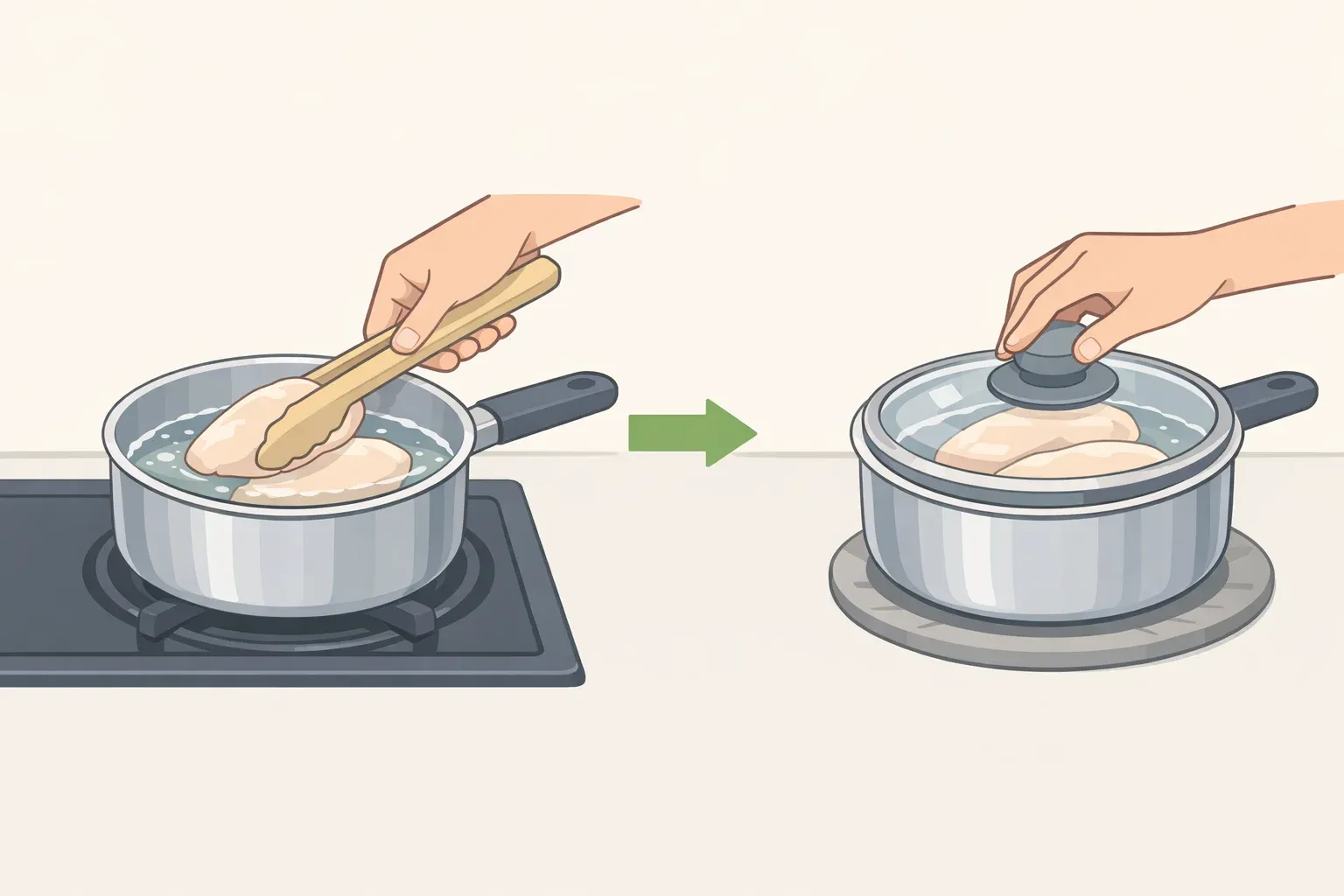
Heat a lidded Dutch oven or skillet over medium-high. Add mushrooms and cover immediately. They'll steam in their own moisture.
Cook covered, stirring occasionally, until liquid pools, about 6 to 8 minutes.
Uncover, add butter, reduce the heat to medium, and let the mushrooms sear, stirring once a minute, until browned, 7 to 9 minutes.
Deglaze with a small amount of water or wine, scraping up the fond.
When to use this instead: Your burner runs hot, and mushrooms start sticking before they've released their moisture. The covered steam phase buys time and reduces the risk of scorching.
Water-first (for thick varieties like portobello)
You can place shiitake, portobello, or oyster, in a wok or skillet and add enough water to cover them, bring them to a boil, season with salt, and cook for about 15 minutes. The goal is to saturate the mushrooms completely with water while reducing the liquid in the pan.
The water quantity matters if you're adapting this for a standard skillet. Since mushrooms carry so much of their own moisture, a quarter cup of added water is sufficient. The cover-with-water approach suits wok cooking and thicker varieties; the quarter-cup version is simpler for most home kitchens.
Once the liquid has nearly disappeared, there's a brief window while the mushrooms are still saturated to add oil. Drop it in, and the mushrooms sizzle, building the caramelized crust that the boiling phase withheld.
When to use this instead: Thicker mushrooms like portobello that take longer to release their moisture, or when you want precise control over when the browning phase begins.
Common failure point: Adding oil too late. The window between "nearly dry pan" and "pan too dry to prevent burning" is short. Watch it closely.
Finishing, troubleshooting, and storage
When the pan goes dry, browning is close. Mushrooms release moisture, reabsorb some of it, and then the pan goes dry. That's your cue across all three methods. From there, browning takes about 5 minutes with fat in the pan using the dry-pan method, and 7 to 9 minutes using the steam-first approach.
If mushrooms are browning unevenly: Lower the heat slightly and resist stirring. Uneven browning usually means heat is too high in spots, or the mushrooms are being moved before a crust can form.
If mushrooms are sticking before moisture releases: The pan is too hot or too small. Add a tablespoon of water to release them, not oil. Adding fat at this stage puts you back at the problem you started with.
Finishing options:
Soy sauce (2 tablespoons for two pounds): stirred in off the heat, it amplifies umami and lifts the pan fond. Tamari substitutes directly for gluten-free needs, per reader notes on that recipe.
Water or wine: deglazes the pan and picks up browned bits without adding salt.
Fresh herbs and Parmesan: added off heat, they finish without cooking further.
Storage: Refrigerate for up to four days or freeze for up to six months. No thawing needed before reheating.
Which method to use
Use the dry-pan method when cooking cremini, oyster, or shiitake in everyday quantities. It's the least fussy once you accept that 15 minutes of patient stirring is the cost of actually good mushrooms. The pan tells you when it's ready; you don't need to track time.
Reach for the steam-first method when the batch is large or the burner runs hot. Covering the pan during the moisture phase gives more margin before anything risks scorching. The 7-to-9-minute sear that follows still delivers properly browned, crusty mushrooms.
Save the water-first method for portobello and other thick varieties, or when you want deliberate control over the moment browning begins. It takes more attention but solves the same problem: get the moisture out first, so oil meets a surface that's ready to brown rather than absorb.
All three reach the same place. The pan goes dry, fat goes in, and browning follows quickly. Want to apply the same sequencing logic at a slower pace? Use sweating and reduction as the base of a slow-cooked preparation, same principle, different destination.


Comments
Be the first, drop a comment!