



Sugar in steak marinade: how it builds a better crust
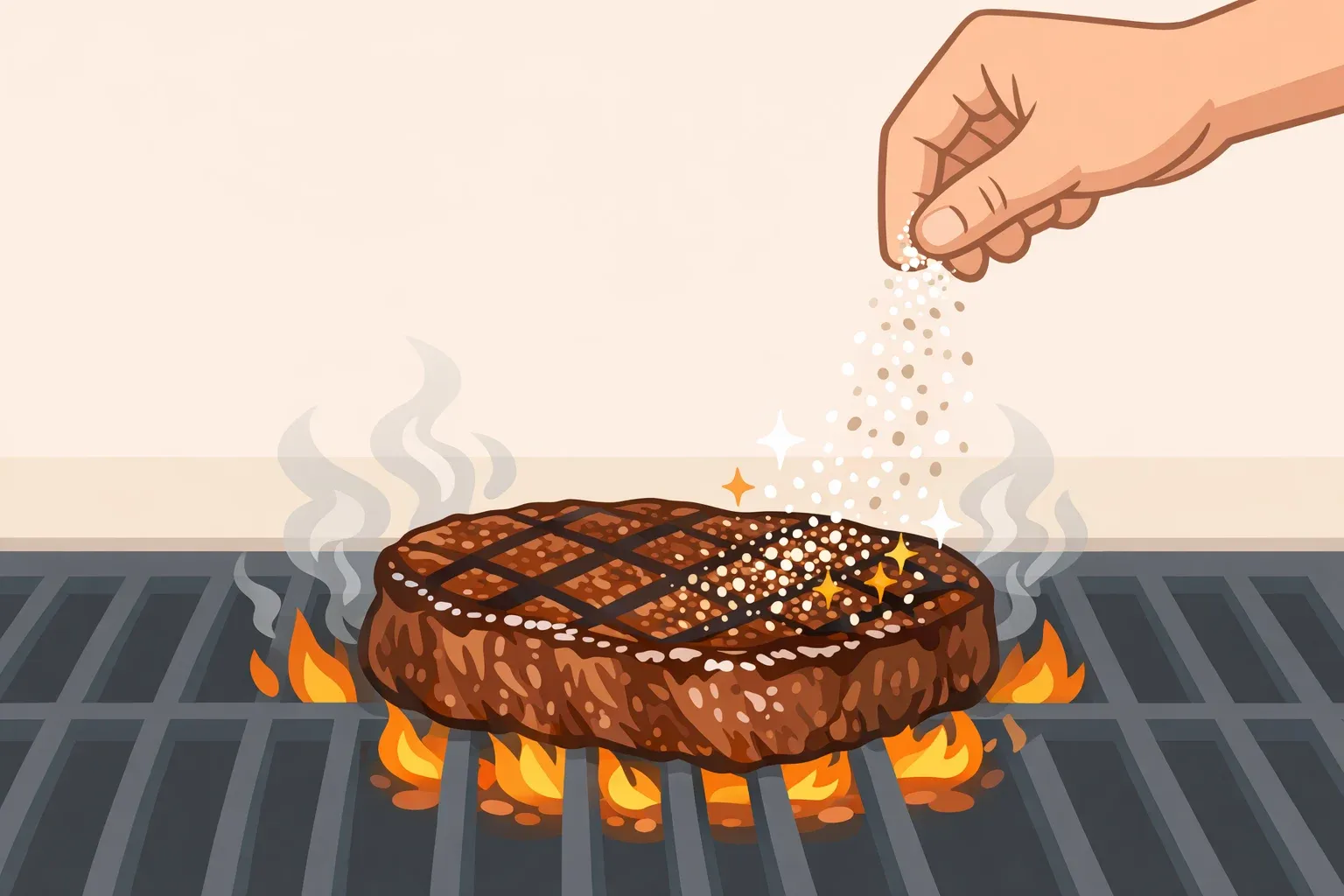
Most steaks come off the grill with dramatic char lines and pale, under-colored patches in between. A small amount of sugar in a steak marinade or dry rub fixes that: it accelerates browning across the full surface, producing a darker, more evenly developed crust before the interior overcooks. Equal parts granulated sugar and kosher salt applied before cooking doesn't make the meat taste sweet; it produces a caramelized crust that forms faster and tastes more intensely savory than a salt-only approach, per Serious Eats. That's the payoff. This guide covers why it works, the exact ratio and prep method, how to manage heat to avoid scorching, and when the same logic applies to liquid marinades.
The technique isn't new. Denver's Bastien's Restaurant has used a sugar-based steak seasoning for decades, building a devoted following specifically for the crust it produces, Serious Eats noted last month.
Why sugar speeds up browning: the surface science
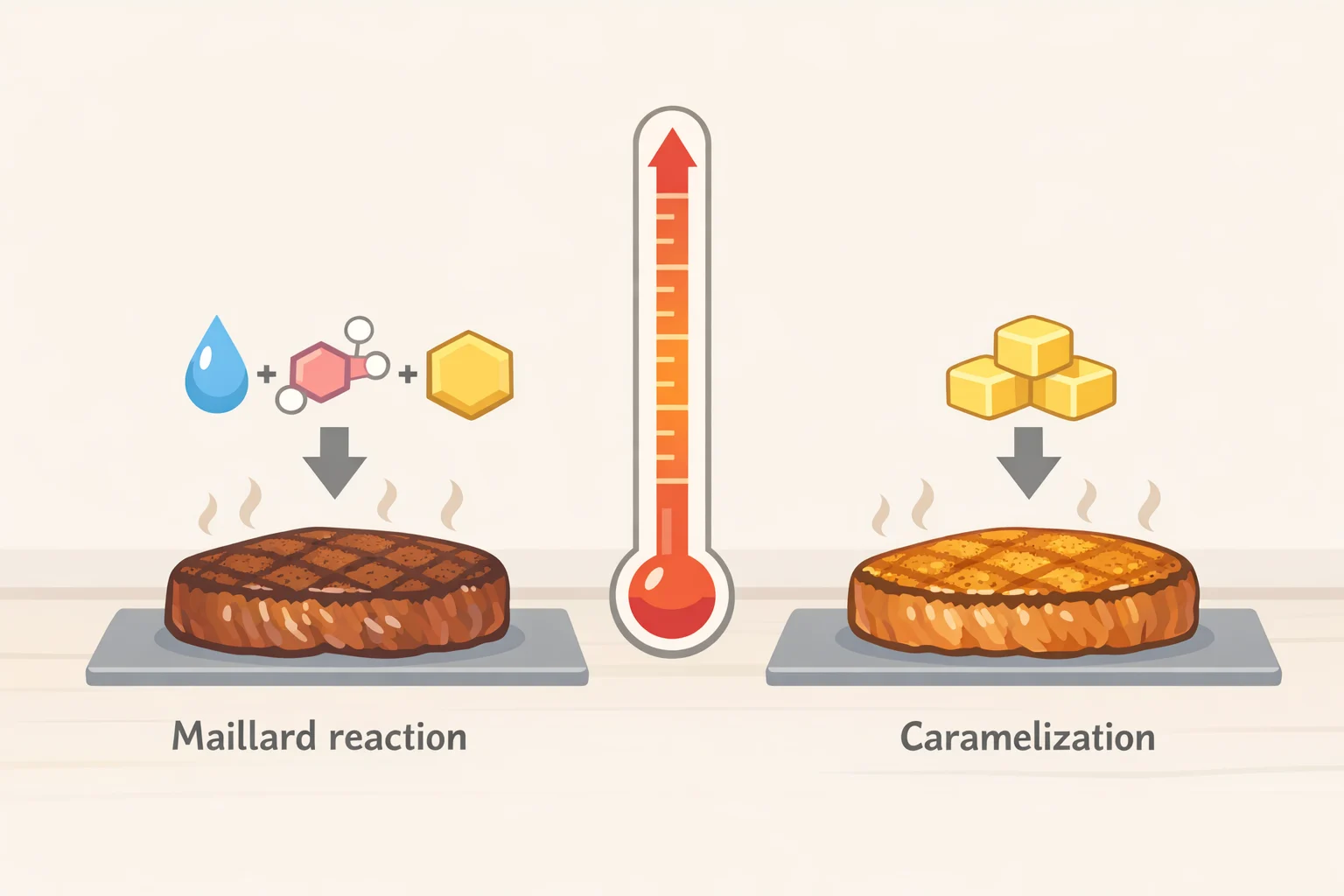
A steak's crust develops through two separate reactions. The Maillard reaction occurs when proteins and sugars interact under heat, generating hundreds of savory flavor compounds. Caramelization is different: sugars break down on their own, producing nutty, toasty, slightly bittersweet notes and rich brown color. Adding sugar to the surface gives both reactions more fuel from the start, per Serious Eats.
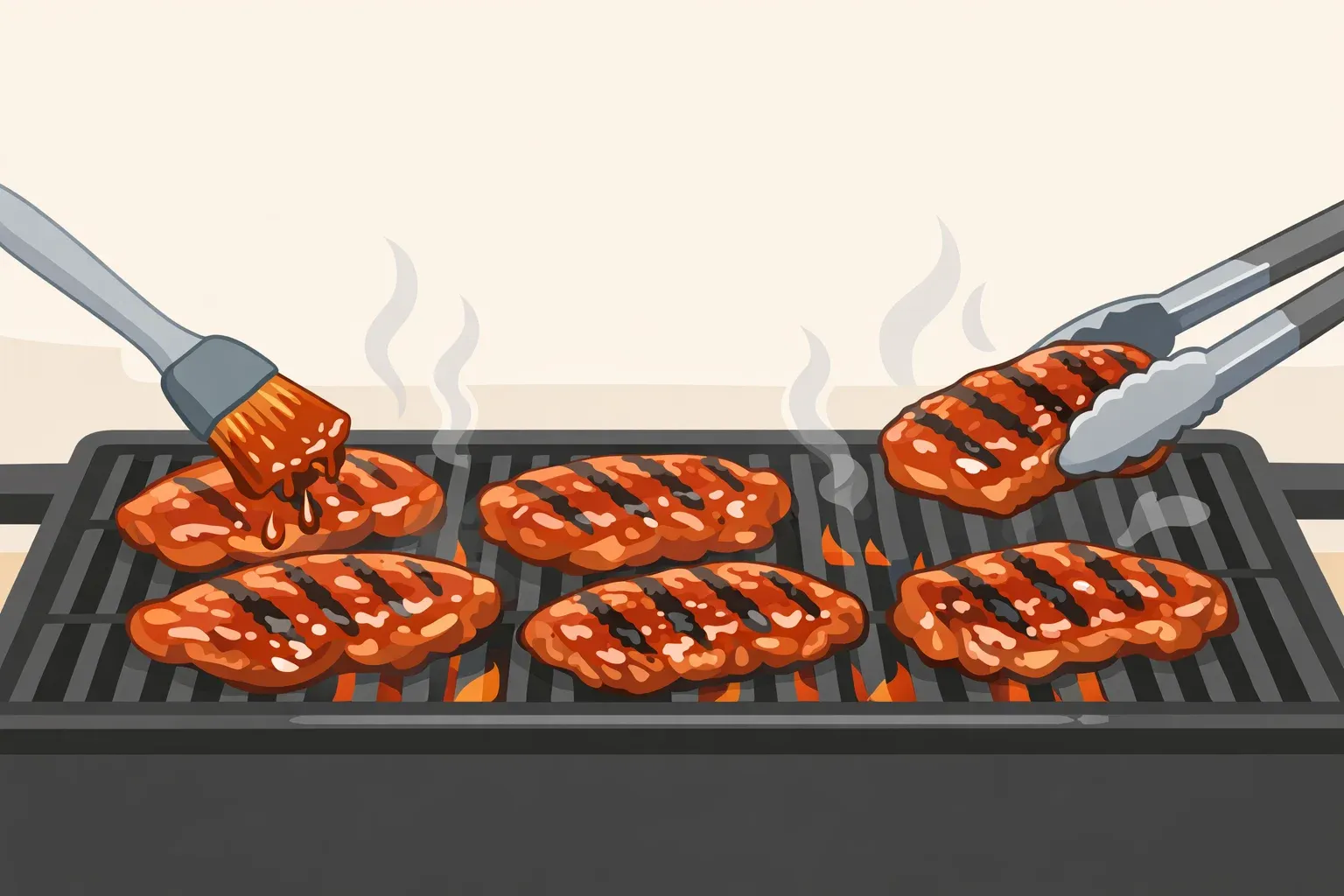
The temperature gap explains why this works particularly well at the grill. Sucrose caramelizes around 320°F and begins to burn at approximately 350°F, according to The Grilling Science. Grill grates routinely reach 450–600°F, so the sugar browns quickly as soon as the steak hits the heat, Serious Eats notes. The result is color developing faster and more evenly than grilling alone often produces, with a rich, deeply browned crust across much more of the surface rather than just along grill mark lines.
Once cooked, the sugar doesn't register as sweetness. The caramelized notes deepen the beef's existing savory character rather than pulling it sweet, Serious Eats notes. In a liquid marinade, a small sugar addition does something more: it rounds off sharp saltiness, adds gloss, and contributes to a glaze, per Asian Food Shop.
Both surface treatments and marinades work at the exterior of the meat. Penetration is shallow: even after 24 hours of soaking, most marinades reach only 1–3 mm into the surface, The Grilling Science found, while UF/Florida 4-H research puts the upper limit at roughly a quarter inch depending on acid content and time. For grilling purposes, that's exactly where sugar needs to work. The crust is the whole point.
Sugar and salt steak seasoning: the dry method versus liquid marinades
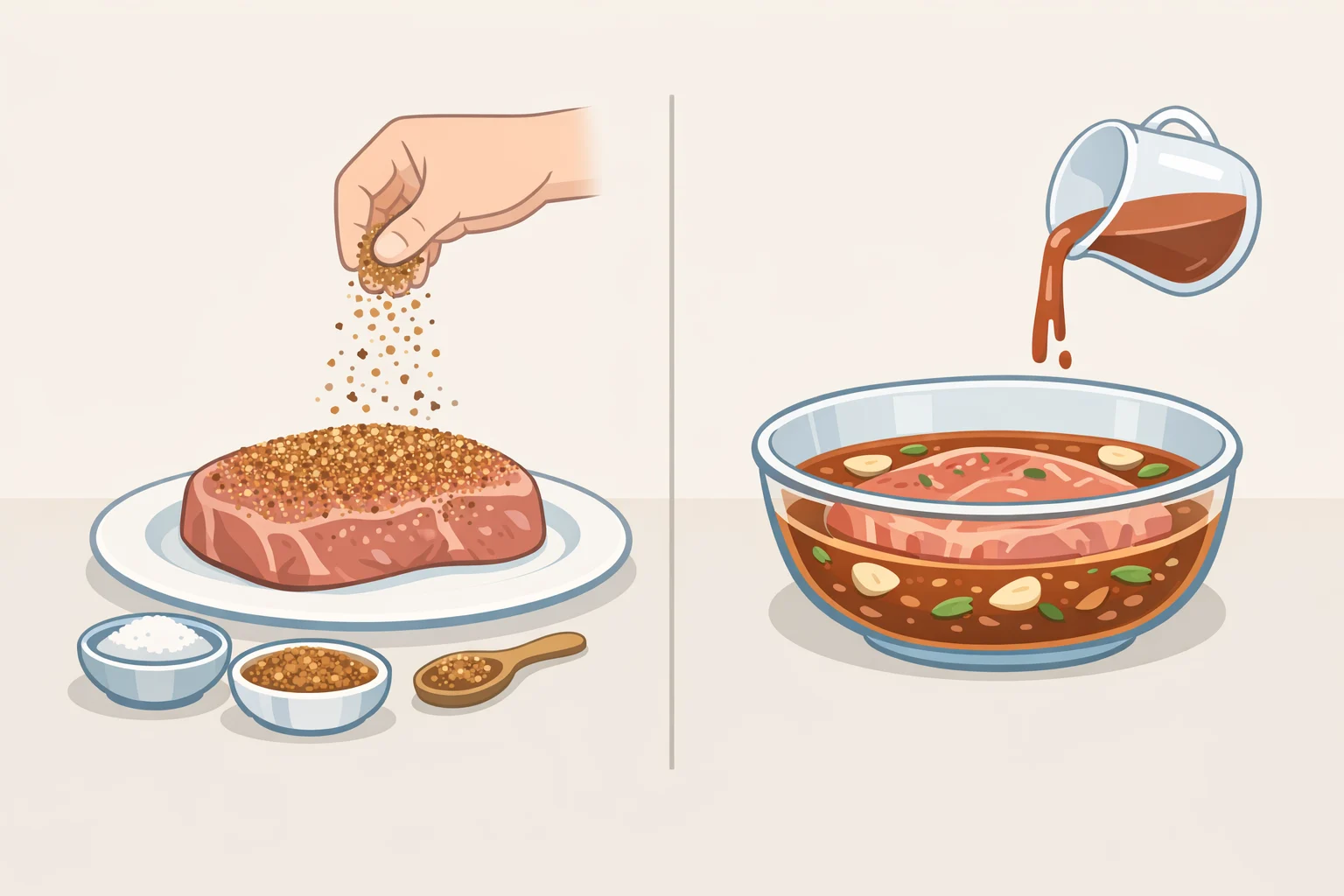
Before the steps, a format distinction worth understanding: the two approaches behave differently on the grill.
The dry treatment is equal parts granulated sugar and kosher salt applied directly to the surface and rested before cooking. For liquid marinades, The Grilling Science recommends keeping sugar between 5–10% of total marinade weight. In either format, stay toward the lower end of the range. More sugar means faster scorching, and on a hot grill the margin between caramelized and bitter is narrow, as AmazingRibs notes.
The dry method is better suited to thick steaks where the crust needs time to develop before the interior is done. Liquid marinades with sugar work well when gloss and glaze matter, or for cuts that benefit from the other marinade ingredients. For straight grilled steak, the dry treatment gives cleaner control.
What you need before you start
- Steaks at least 1 inch thick: strip, ribeye, or porterhouse
- Granulated white sugar and kosher salt in equal parts
- A wire rack set inside a rimmed baking sheet
- A grill that can be configured with two heat zones
The ratio, the rest, and the one timing mistake
Mix the seasoning. Combine equal parts granulated sugar and kosher salt. Plan on roughly 1 tablespoon of the combined mixture per 1.5 pounds of steak, per Serious Eats. Enough to coat the surface; not so much that the excess scorches.
Apply evenly. Sprinkle from a few inches above the steak, or use your fingers to distribute a light coat across all sides. Every part of the surface that contacts the grate needs coverage.
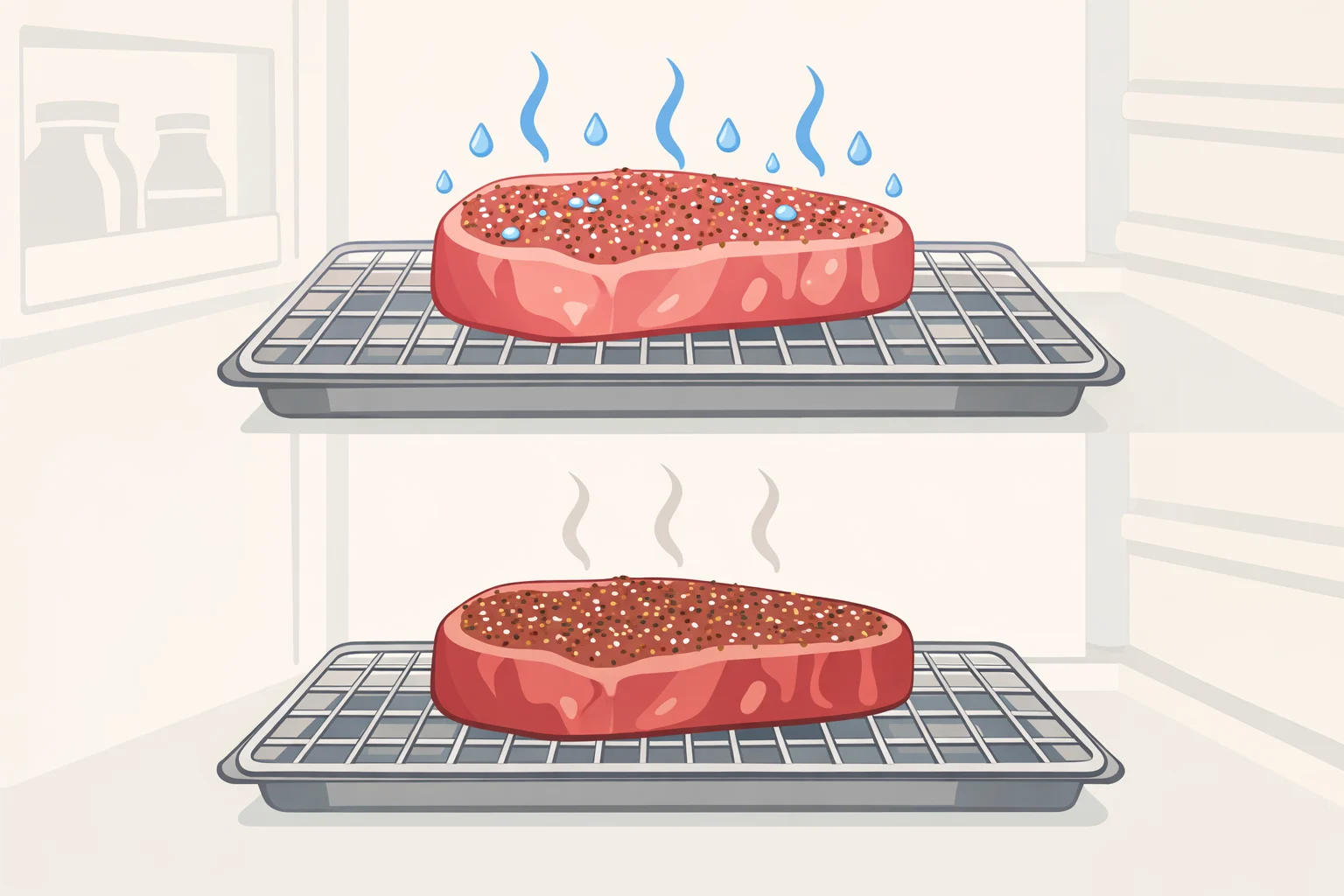
Rest uncovered in the fridge. Set the coated steak on the wire rack and refrigerate, uncovered, for at least 45 minutes and up to 24 hours, Serious Eats recommends. During that window, salt draws moisture to the surface, both the sugar and salt dissolve into it, and the surface gradually dries back out, leaving an evenly seasoned coating ready to brown the moment it hits heat. A dry surface sears; a wet one steams.
If time is short, season immediately before grilling. Don't season 15 to 45 minutes ahead and then start cooking. In that middle window, salt has pulled moisture to the surface but the exterior hasn't dried back out, Serious Eats warns. A wet steak on a hot grate slows browning and partially defeats the purpose of the technique.
How to grill it: heat management for a sugary surface
Step 1: Pat the steak dry just before it goes on the grill.
Even after the full rest, pat off any residual surface moisture with paper towels. Marinades heavy in sugar and oil can cause flare-ups when excess liquid drips into the fire, per UF/Florida 4-H. A dry surface also browns faster.
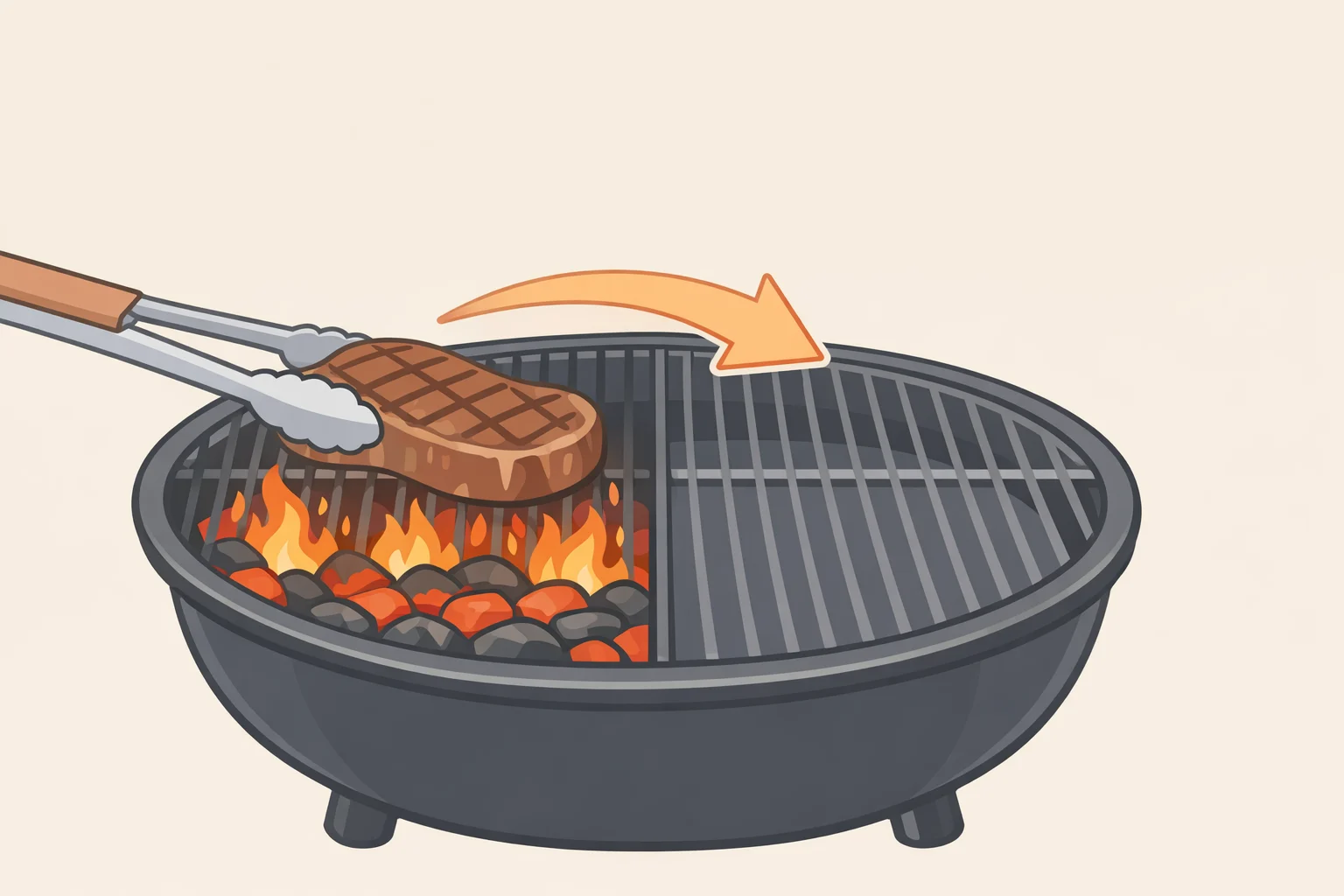
Step 2: Set up a two-zone fire.
On charcoal, push coals to one side. On gas, leave one burner off. The hot side develops the crust; the cooler side lets you control internal temperature without burning the exterior, Serious Eats explains. This setup matters because you need somewhere to move the steak quickly if the surface is darkening ahead of the interior.
Step 3: Start over direct heat and watch the surface, not the clock.
Sugar browns fast. Watch for color spreading across the full face of the steak rather than just along the grill mark lines. If any section is darkening faster than the rest, slide the whole steak toward the indirect zone immediately. Sucrose starts to burn around 350°F, far below the grate temperature, according to The Grilling Science, so the gap between caramelized and scorched is narrower than it looks. Deep brown is the target; black is the failure mode.
Step 4: Finish to temperature over indirect heat.
Once the crust is developed on both sides, move the steak to the indirect zone and let the interior come up to target doneness. The result to look for: a rich, deeply browned crust across most of the surface while the center stays at your target, per Serious Eats. That combination is what the technique is built to deliver.
Where sugar backfires
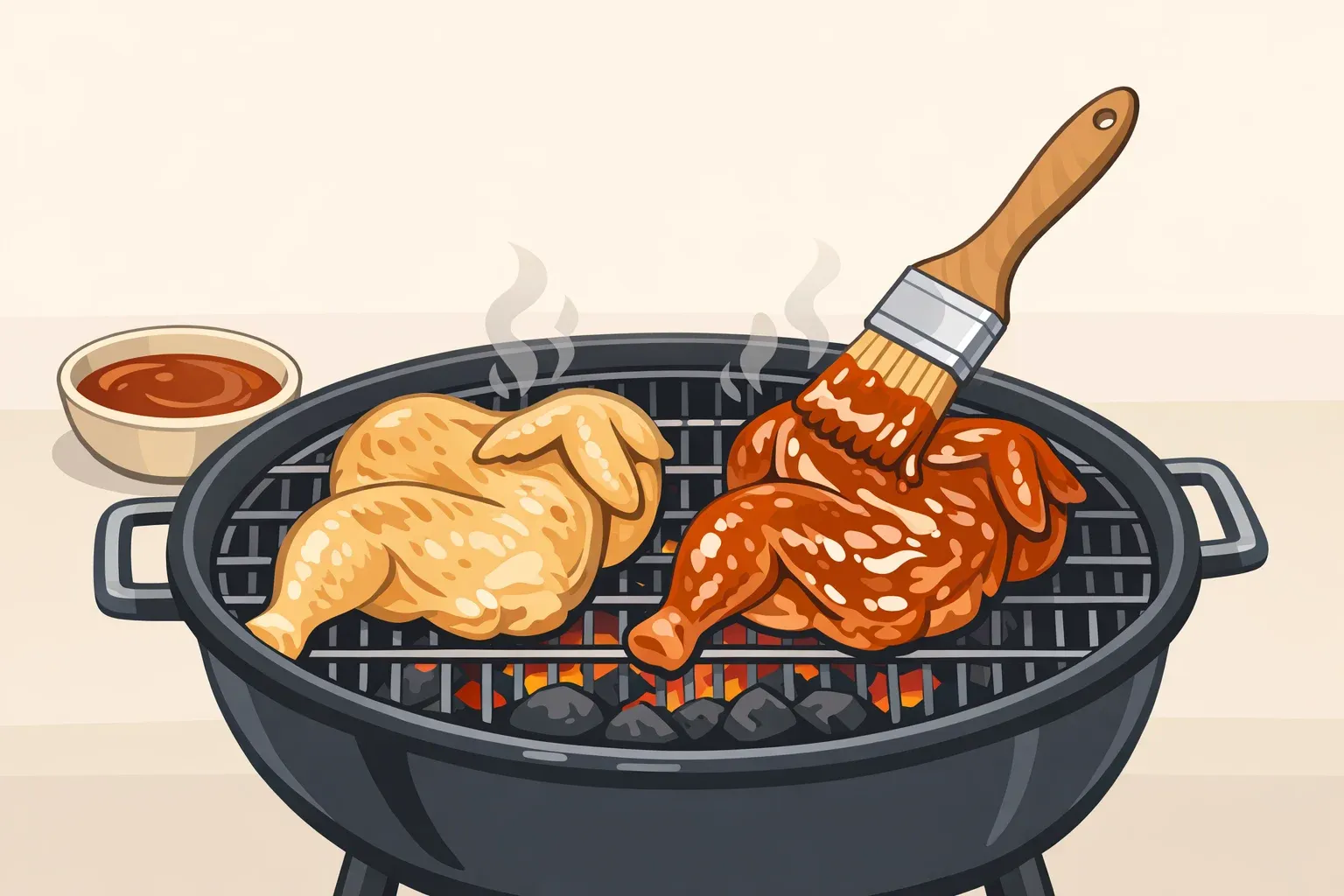
High-heat direct grilling is the riskiest context. Rubs high in sugar can char and turn bitter over intense direct heat, UF/Florida 4-H notes, so for chicken or pork cooked over sustained high heat, keep sugar toward the low end of whatever rub you're using, per AmazingRibs. Smoked or indirectly cooked poultry is a different story: sugar in a rub performs well there, helping build color and a lightly caramelized exterior without the scorching risk, AmazingRibs notes.
The steak method works because thick cuts give the crust time to develop before the interior is done, and the two-zone setup provides an exit if the surface moves faster than the center.
Calibrating from here
If steaks are coming off the grate with strong grill marks and pale color everywhere else, the equal-parts dry mix is a controlled fix. Start there, watch the surface closely, and let your grill's actual behavior tell you whether to adjust. For liquid marinades, keep sugar within 5–10% of total marinade weight and pat the meat dry before it goes on the grate, per The Grilling Science and UF/Florida 4-H.
Once the basic method is working, there's room to experiment. Hotter grills may benefit from slightly less sugar; cooler indirect setups tolerate more. The principle is consistent; the calibration is yours.


Comments
Be the first, drop a comment!