



If you've been soaking flank steak overnight in citrus juice or red wine vinegar, the problem may be the marinade itself. Acid can brighten the surface of the meat, but it is not the best tool for making a whole flank steak tender.
For tenderness, the better starting point is salt. A salt-led marinade can help season the meat, improve moisture retention, and make the finished steak taste juicier. The rest comes down to cooking technique: patting the steak dry, using high heat, letting it rest, and slicing thinly against the grain.
This guide gives you two reliable options: a soy sauce and fish sauce marinade for tenderness plus surface flavor, and a dry brine for a simpler salt-first approach. Both are better choices than a long, acidic soak.
Why salt helps more than acid
Flank steak is lean, boneless, and full of beef flavor, but it comes from a hard-working part of the animal. The Beef Checkoff's flank steak guide describes it as a lean cut that is best when marinated and grilled or sliced thin for stir-fry. It also notes that slicing against the grain is especially important for coarse cuts like flank steak.
That is the first thing to understand: no marinade fixes flank steak by itself. The cut has long, visible muscle fibers, so tenderness depends on both seasoning and how you cut it after cooking.
Salt is useful because it does more than season the surface. In Serious Eats' guide to marinade science, Tim Chin explains that marinades work partly as brines: salt penetrates meat, seasons it more fully, and helps it stay juicy after cooking. The same guide also notes that most marinade ingredients beyond salt act mainly as surface treatments.
That is where acidic marinades can disappoint. Lemon juice, lime juice, vinegar, and wine can add brightness and change the texture of the outer layer of meat, but they do not reliably tenderize a whole steak from the inside out. Used heavily or left on too long, they can make the surface soft or mealy before the center has changed much at all.
The better rule is simple: use acid for flavor, not as the main tenderizer.
The best salt-led flank steak marinade
For 1 pound of flank steak, use:
2 tablespoons soy sauce
1 tablespoon fish sauce
1 tablespoon neutral oil
1 tablespoon lime or lemon juice
1 teaspoon brown sugar or honey
1 grated garlic clove
1 teaspoon grated fresh ginger
Black pepper or chile flakes, to taste
Combine everything in a zip-top bag or shallow dish. Add the steak, turn to coat, and refrigerate.
For a whole flank steak, marinate for at least 2 hours. Four to 8 hours is a good window for deeper seasoning. Overnight can work, but use a lighter hand with extra salt if your soy sauce or fish sauce is especially salty.
For thin-sliced flank steak, 15 to 30 minutes is usually enough because the marinade has more exposed surface area to work on.
The soy sauce and fish sauce provide the salty base. They also add savory depth, which makes the steak taste fuller without needing a large amount of acid. The oil helps carry aromatics across the surface, while the small amount of sugar encourages browning during cooking.
The lime or lemon juice is there for brightness. Keep it modest. If you want a sharper citrus flavor, add more acid after cooking as a squeeze of lime, a vinaigrette, or a spoonful of chimichurri instead of soaking the raw steak in it for hours.
One more note on enzymes: pineapple, papaya, kiwi, and ginger contain enzymes that can tenderize meat. But enzyme-heavy marinades can be hard to control, especially with a whole steak. Serious Eats' meat tenderizing guide notes that plant enzymes act mainly on the surface because the protein molecules are too large to penetrate deeply. That is why this recipe uses ginger for flavor and a mild surface effect, not as the main tenderizer.
The dry-brine option
If tenderness is the priority and you do not need a wet marinade, dry brine the steak instead.
Use about 1% of the steak's weight in salt. For a 1-pound steak, that is about 4.5 grams of salt, or roughly 3/4 teaspoon of table salt. If you are using Diamond Crystal kosher salt, you may need closer to 1 1/2 teaspoons because it is less dense by volume.
Sprinkle the salt evenly over both sides of the steak. Place the steak on a rack set over a plate or small sheet pan, then refrigerate it uncovered for at least 4 hours or overnight.
A dry brine will not give you the same soy-garlic-ginger flavor as the wet marinade, but it gives salt time to work without adding extra surface moisture. Before grilling, add black pepper, garlic powder, smoked paprika, cumin, or another dry spice blend if you want more flavor on the crust.
Use the wet marinade when you want flavor plus tenderness. Use the dry brine when you want a simpler salt-first method with less prep.
How to cook flank steak after marinating
The marinade does its work in the refrigerator. The grill or pan decides whether the steak finishes tender or tough.
First, remove the steak from the marinade and let the excess drip off. Do not rinse it. Pat both sides very dry with paper towels. A dry surface browns better, while a wet surface steams before it sears.
Heat a grill, grill pan, or cast-iron skillet until hot. Flank steak does best with high heat and a relatively quick cook. Cook the steak until it reaches your preferred doneness, using an instant-read thermometer for accuracy. For food safety, FoodSafety.gov's safe minimum internal temperature chart lists 145°F for beef steaks, roasts, and chops, followed by a 3-minute rest.
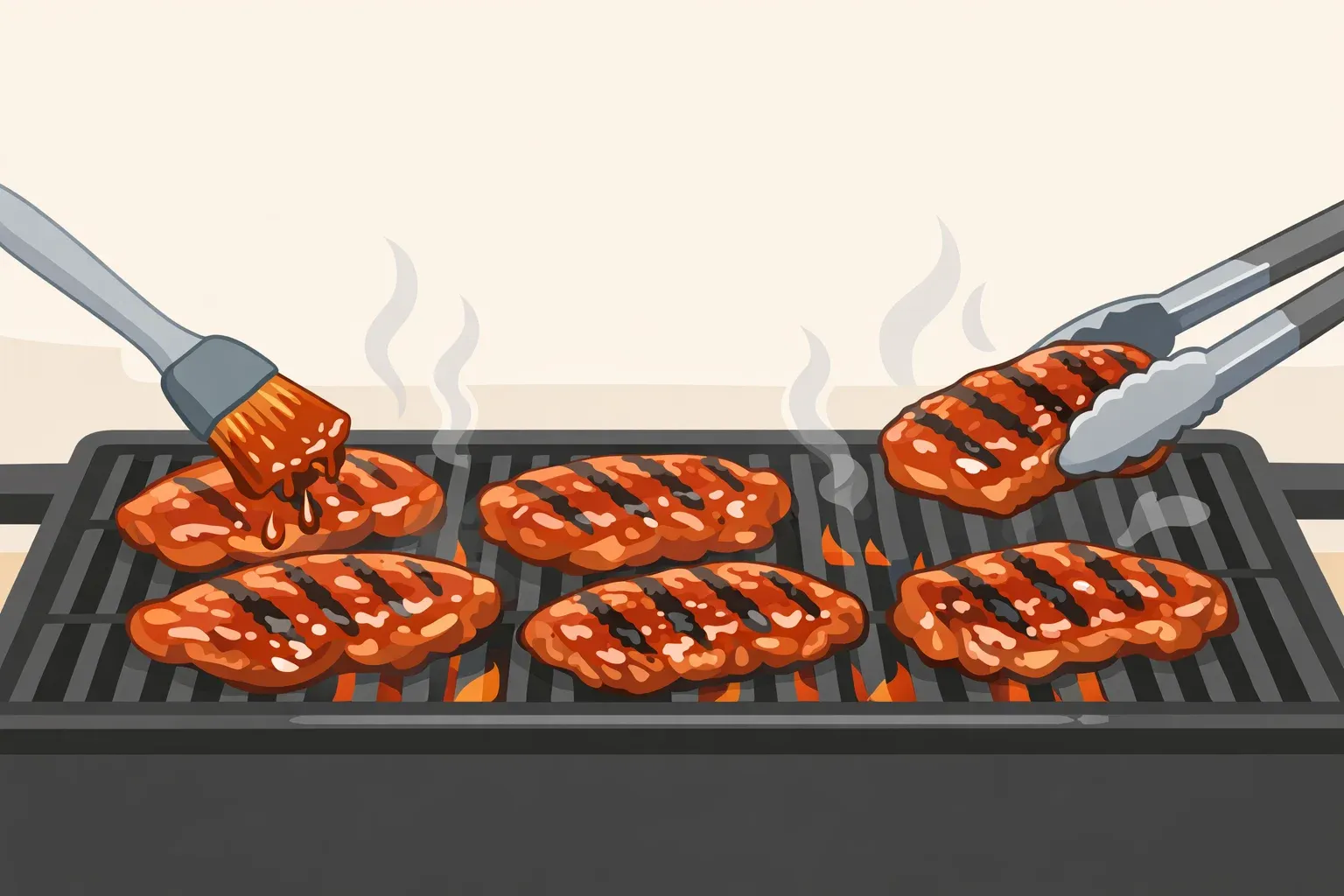
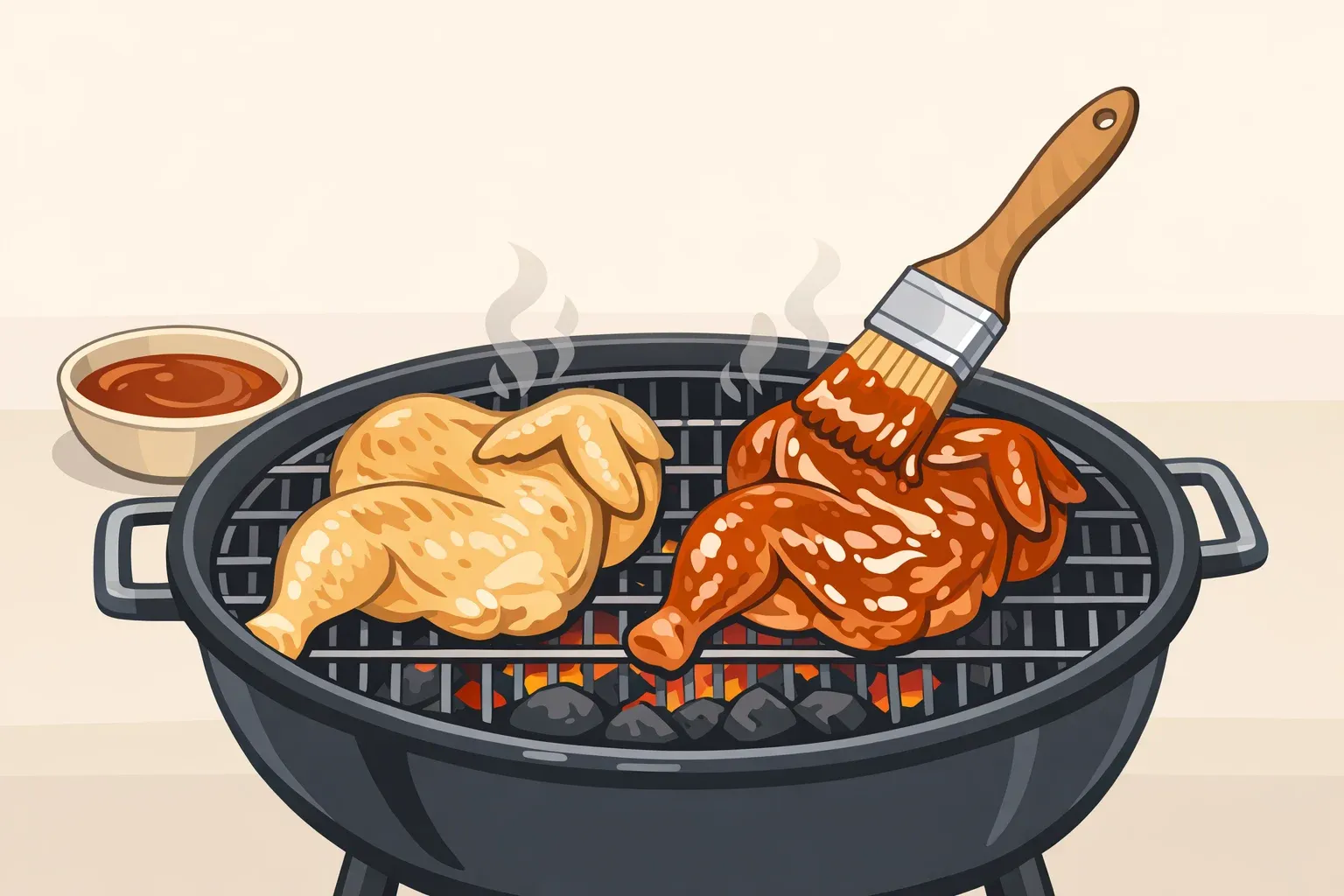
If your marinade includes sugar or honey, watch for burning. A little sugar helps browning, but too much can char over high heat. If you want a sweeter finish, brush on a fresh glaze near the end of cooking instead of relying on sugary marinade from the bag.
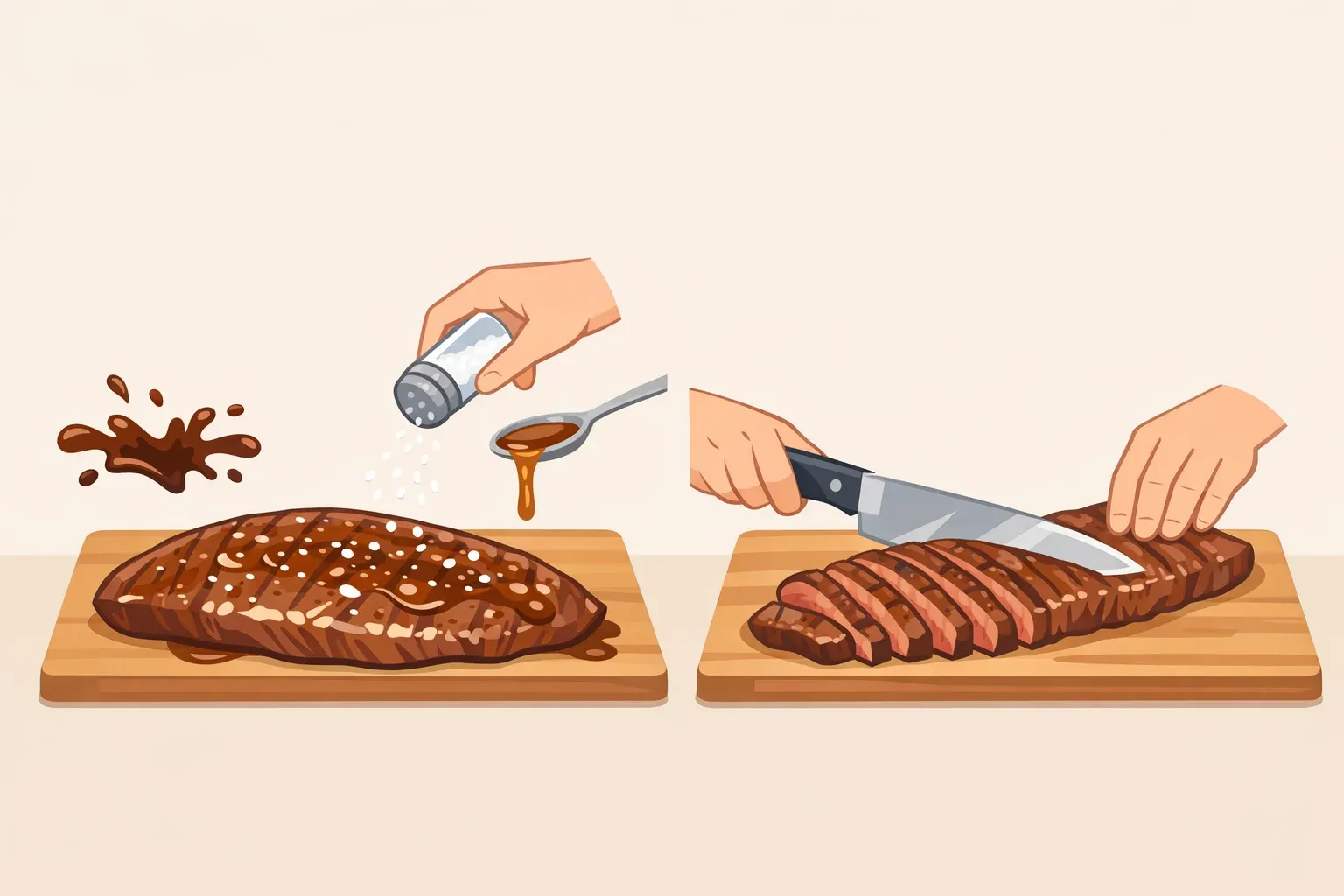
After cooking, rest the steak for at least 5 minutes. Then find the grain — the long lines running through the meat — and slice thinly across those lines. This step matters as much as the marinade. Cutting across the grain shortens the muscle fibers, which makes each bite easier to chew.
Food safety rules for marinating steak
Always marinate flank steak in the refrigerator, not on the counter. FoodSafety.gov's four steps to food safety says the safest way to marinate meat, poultry, and seafood is in the refrigerator.
Do not reuse marinade that has touched raw steak as a sauce unless you boil it first. The safer option is to set aside a small amount of clean marinade before adding the meat, then use that reserved portion as a finishing sauce or glaze.
Use a food-safe container, such as a zip-top bag, glass dish, or covered plastic container. Avoid reactive metal containers when using acidic ingredients.
Quick decision guide
Use the soy and fish sauce marinade if you want a flavorful steak for tacos, rice bowls, salads, sandwiches, or grilled dinner plates. Marinate a whole flank steak for 2 to 8 hours, or thin slices for 15 to 30 minutes.
Use the dry brine if you want the easiest route to better texture. Salt the steak, refrigerate it uncovered, and add dry spices before cooking.
Use acid sparingly. A tablespoon of citrus juice can make the steak taste brighter, but a long soak in vinegar or lime juice will not do the same job as salt.
Avoid enzyme-heavy marinades unless you are following a tested recipe with a short timing window. Pineapple, papaya, and kiwi can soften the surface quickly, but they can also turn it mushy if left too long.
Most of all, do not skip the final step. For flank steak, tenderness comes from the whole process: salt, time, high heat, rest, and a thin slice against the grain.





Comments
Be the first, drop a comment!