


Blueberry Lemon Drop Slushies Recipe: Fresh vs. Frozen
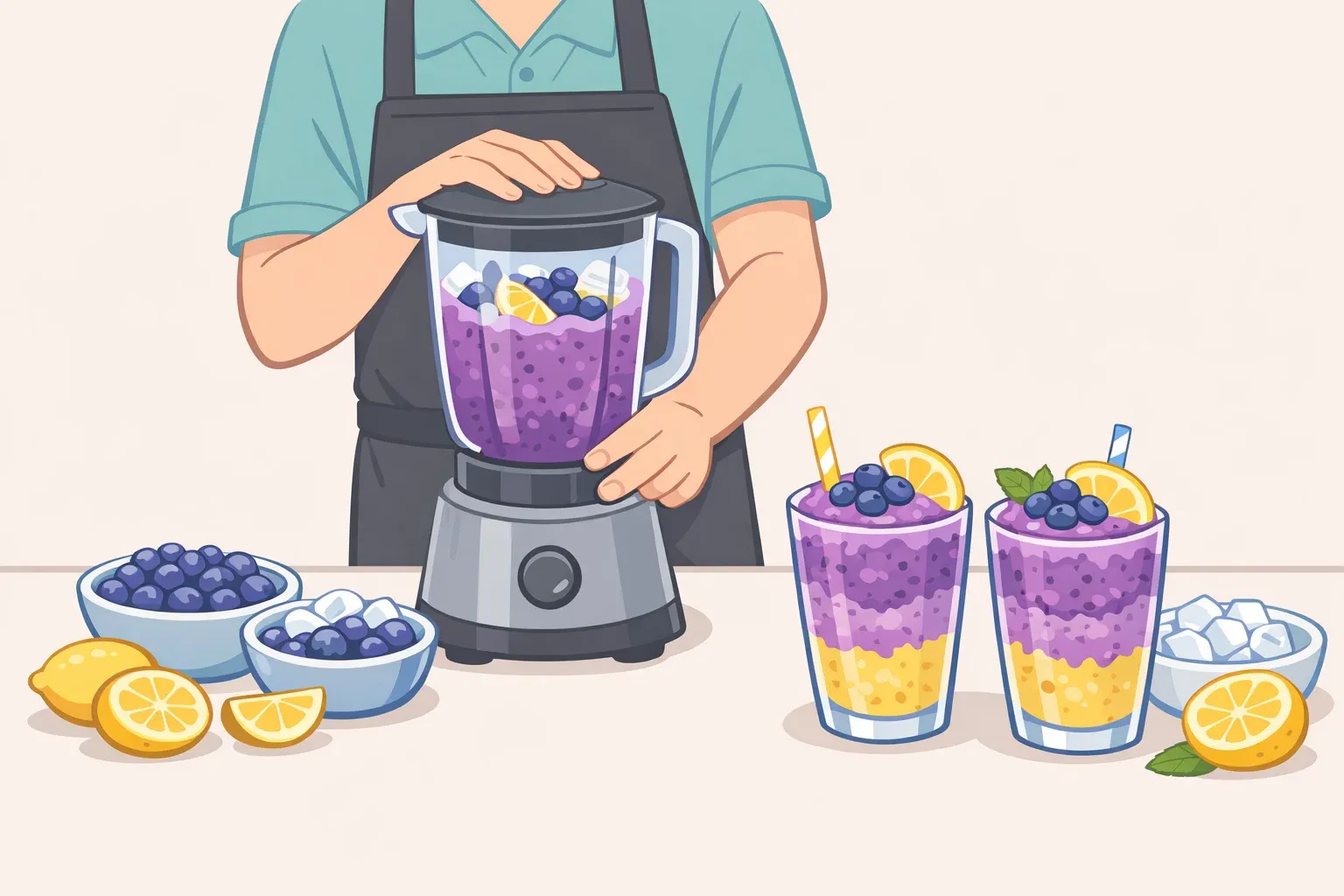
Two solid approaches to blueberry lemon drop slushies, and they produce genuinely different drinks. The fresh-fruit method gives you control over sweetness and tartness, scales to four servings, and works equally well as a mocktail or cocktail. The frozen lemonade shortcut delivers a sweeter, jammier frozen blueberry lemon cocktail with a layered presentation built in, ready in about 10 minutes. Pick the wrong method for the situation and the drink still works but you'll wish you'd made the other one.
Here's what separates them at a glance:
Fresh-fruit methodFrozen lemonade shortcutTime~15 minutes~10 minutesYield4 servings2 servingsFlavor profileBright, adjustable, fresh-berrySweeter, jammier, cocktail-likeMocktail-friendlyYes alcohol optional at the endYes, with a swap (see below)Make-ahead potentialSqueeze juice night beforeSwirl holds 2 days refrigeratedBest forPrecise flavor control, larger groupsSpeed, presentation, cocktail service
Both methods share one requirement that overrides everything else: blending technique. Three independent sources agree on the same rules use frozen fruit, start cold, and stop blending before the drink goes thin. The texture section covers this in detail, including fixes when something goes wrong.
Equipment check before you start: A high-speed blender handles frozen fruit and ice most reliably. A standard countertop blender works but may leave small chunks. Zulay Kitchen (early 2026) developed the fresh-fruit method specifically for an immersion blender, so that tool is a solid choice for that version. Keep all ingredients cold going in; MyBartender (about a year ago) recommends very cold components to keep the slushie thick through the pour.
Ingredient lists:
Fresh-fruit method: 2 cups frozen blueberries, ½ cup fresh lemon juice (3–4 lemons), ¼ cup maple syrup or honey, 1 cup ice, ½ cup cold or sparkling water, zest of 1 lemon, pinch of salt four servings (Zulay Kitchen, early 2026)
Frozen lemonade shortcut: 10 oz frozen lemonade concentrate, 4 oz vodka, 2 tbsp blueberry preserves, ½ oz fresh lemon juice two servings with a sugar rim (MyBartender, about a year ago)
Blueberry lemon drop slushies recipe: which method should you use?
Fresh-fruit = brighter and cleaner. The lemon comes through clearly, the blueberry flavor reads as fruity rather than jammy, and the drink is adjustable in both directions more tart or more sweet before and after blending. Alcohol is optional, added at the end. Best for: mocktails, larger batches, anyone who wants to dial in the balance precisely.
Frozen lemonade shortcut = sweeter, jammier, more cocktail-like. The lemonade concentrate handles most of the sweetness and icy structure, doing the heavy lifting so the build stays simple (MyBartender, about a year ago). Blueberry preserves bring a jammy richness against the tart lemon base a different character than fresh berry. The sugar rim and blueberry swirl are part of the method, so the visual polish comes built in. Best for: cocktails, two-serving situations, when speed and presentation both matter.
The third option frozen blueberries, lemonade mix, vodka, and ice blended in about three minutes (Knife and Paddle, 2021) exists if you just want something cold fast and don't care about the details. That version isn't covered step-by-step here.
Step-by-step: fresh-fruit method
Zest one lemon before cutting it. Once it's juiced, zesting is a frustrating exercise. Juice 3–4 lemons until you have ½ cup. Set both aside.
Load the blender in this order: frozen blueberries, lemon juice, maple syrup or honey, ice, water, lemon zest, and a pinch of salt. The salt sharpens the citrus and makes the sweetness land cleaner, per Zulay Kitchen (early 2026). On water: cold still water produces a denser texture; sparkling adds a slight lightness. If preserving carbonation matters, stir the sparkling water in after blending rather than including it in the blend. Either way, keep it cold.
Blend on high for 30–60 seconds in short bursts. Stop when the mixture is thick and icy. If it looks like a smoothie, it's gone too far.
Taste and adjust. Add a small amount of sweetener for more sweetness or a splash of lemon juice for more tartness. Blend briefly to incorporate, then taste again before adjusting further (Zulay Kitchen, early 2026).
Pour into chilled glasses and serve immediately. To make it a cocktail, add 1–2 oz vodka or limoncello per serving and pulse once or twice before pouring. Don't fully re-blend or the drink loses thickness (Zulay Kitchen, early 2026).
Sugar-free swap: Zulay Kitchen (early 2026) suggests replacing maple syrup or honey with monk fruit or stevia. Note that these sweeteners vary in potency start with less than the recipe calls for and adjust to taste rather than swapping volume for volume.
Step-by-step: frozen lemonade shortcut
Rim the glasses first before your hands get cold. Run a lemon wedge around the edge of each glass and dip into granulated sugar to coat evenly. Set aside (MyBartender, about a year ago).
Make the blueberry swirl. Stir 2 tbsp blueberry preserves with ½ oz fresh lemon juice until smooth and loose. Blueberry jam works if preserves aren't available. The lemon juice keeps the mixture from tasting flat against the sweetened lemonade base MyBartender (about a year ago) notes that fresh lemon juice is what sharpens the flavor here.
Blend the frozen base. Combine the frozen lemonade concentrate, vodka, and ice in the blender. The source doesn't specify an exact ice quantity start with about 1 cup and adjust up if the texture is too loose after blending. Blend in short bursts until slushy and thick. The concentrate carries most of the structural weight; don't add extra liquid unless you need to thin a correction.
Assemble with the swirl. Spoon 1 tbsp of the blueberry mixture into the bottom of each prepared glass. Pour the blended slushie over it, then spoon the rest on top. The layered look depends on not stirring (MyBartender, about a year ago).
Garnish and serve immediately. Lemon wheels and a few fresh blueberries on top. The sugar rim softens fast don't wait.
Mocktail version: Skip the vodka and stir in lemon soda after blending rather than blending it in, so the carbonation survives into the glass (MyBartender, about a year ago).
Make-ahead note: The blueberry swirl holds in the refrigerator for up to two days (MyBartender, about a year ago) prep it the night before for a group. Blend the frozen base to order. If you want a more fruit-forward result than jarred preserves give, a homemade blueberry simple syrup for slushies works as a substitute: simmer one 16-oz pint of blueberries, 1 cup sugar, and 1 cup water for about 10 minutes, then strain (MyBartender, this month). Keep the heat at a gentle simmer a hard boil pushes the flavor toward cooked rather than fresh. The syrup holds in the fridge for up to two weeks and freezes in small portions. How much to use in place of the preserves will depend on how sweet and concentrated your batch runs; start with 2 tbsp and taste before adding more.
Getting texture right and fixing it when it goes wrong
Texture failure is almost always a blending problem, not an ingredient problem. Three independent sources converge on the same core rules.
Before you blend:
Use frozen fruit. Frozen blueberries help keep the drink cold and thick without releasing excess liquid the way fresh, unfrozen fruit tends to (Zulay Kitchen, early 2026; Knife and Paddle, 2021).
Keep all ingredients cold going into the blender. MyBartender (about a year ago) recommends very cold components as the primary defense against a thin drink.
Chill your glasses. Slows melting without any extra effort.
Blending technique:
Start low or pulse a few times to break up ice and frozen fruit before ramping to high. This prevents the edges from liquefying while the center stays chunky (Knife and Paddle, 2021).
Keep runs short 20 to 60 seconds total across all bursts. The longer the blender runs, the more heat it generates. Heat melts ice. A drink that looks like a smoothie has been blended too long (MyBartender, about a year ago; Knife and Paddle, 2021).
Fixes:
Too thin: Add a handful of ice or in the shortcut version, more frozen lemonade concentrate and blend again in short bursts (MyBartender, about a year ago).
Too thick: Add a small splash of lemon juice and pulse once or twice. It loosens the texture without flattening the flavor (MyBartender, about a year ago).
Melted in the glass: Re-blend briefly with extra ice. It recovers (MyBartender, about a year ago).
Conclusion
Use the fresh-fruit method for precise control over sweetness and tartness, mocktail service, or batches of four. Use the frozen lemonade shortcut when you're making two cocktails and want a polished result without much fuss. Both are under 15 minutes, both produce a thick drink as long as the blending stays short.
Nearly everything except the final blend can be prepped ahead: the blueberry swirl keeps for two days refrigerated, and homemade blueberry simple syrup holds for two weeks (MyBartender, this month). For parties, that make-ahead window is what makes the shortcut method genuinely practical at scale.

Comments
Be the first, drop a comment!