



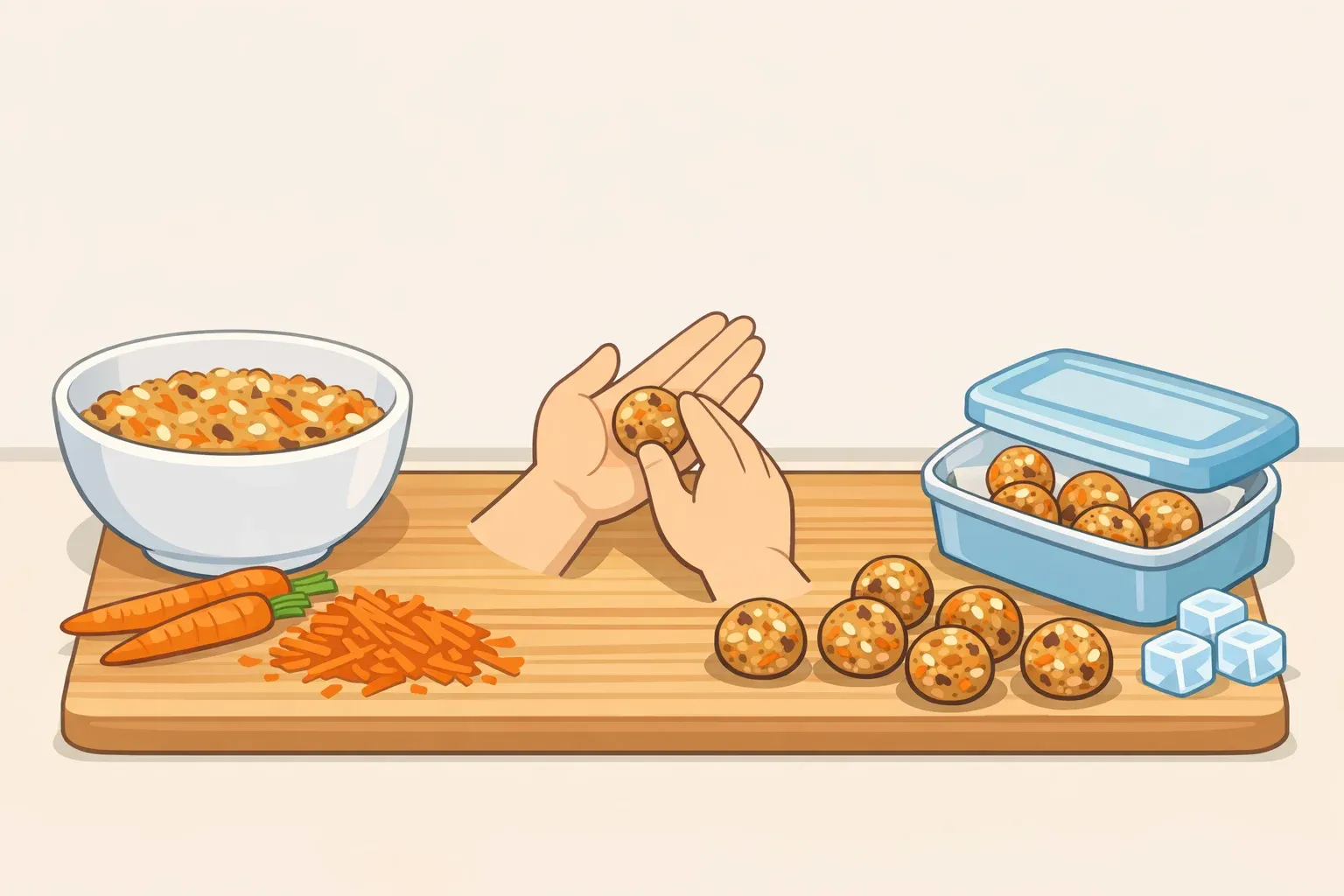
Carrot Cake Energy Bites: No-Bake Recipe Ready in 15 Minutes
No oven, no frosting, no layers. These carrot cake energy bites take 15 minutes of active work, yield 22 portions, and keep in the fridge for a week or the freezer for three months, ready to grab on the way out the door (EatingWell, updated March 2024). They solve a specific problem: you want something satisfying and snack-sized that doesn't require baking every few days and doesn't taste like it came out of a protein bar wrapper.
This guide covers the complete no-bake method, what goes in and why, how to handle the paste so it rolls cleanly, and what to do when it doesn't. A short section at the end covers two baked alternatives for readers who don't own a food processor.
What you'll need before starting:
- A food processor (required for the no-bake paste method)
- An airtight container
- 15 minutes of active time; bites are set and ready after 20 minutes in the fridge
What makes these taste like carrot cake
The warm-spiced flavor of carrot cake doesn't live in the cake structure. It lives in a specific combination of spices and mix-ins that travels easily into smaller formats. Across no-bake bites, oatmeal bars, and breakfast cookies, the same core ingredients appear: shredded carrots, rolled oats, cinnamon, ginger, vanilla, nuts (pecans or walnuts), and raisins or coconut (EatingWell, updated March 2024; EatingWell, published August 2024).
The no-bake version also includes turmeric and black pepper, small additions that round out the warm-spice register without adding heat. Rather than eggs, oil, and leavening, this format relies on pitted Medjool dates for both sweetness and binding. No sugar is added. Each bite comes in at 48 calories, 2g fiber, and 5g of naturally occurring sugar per piece (EatingWell, updated March 2024).
The flavor-building lineup:
- Warm spices: cinnamon and ginger (turmeric and black pepper optional but recommended)
- Binder and sweetener: Medjool dates, which do both jobs
- Rolled oats: structure and chew
- Nuts: pecans or walnuts
- Extras: shredded coconut, raisins, or both
- Vanilla extract: ties everything together; don't skip it
Why make these instead of buying something
Most packaged snack bars solve the portability problem but create a different one: added sugar, a long ingredients list, and a flavor that reads more like candy than food. These no-bake carrot cake bites contain no added sugar at all. The sweetness comes entirely from Medjool dates and the naturally occurring sugars in carrots, totaling 5g per bite (EatingWell, updated March 2024). The flavor is real because the ingredients are real: warm spices, shredded carrots, oats, nuts.
Portability is the other edge. One 15-minute batch produces 22 individual portions that require no refrigeration for the commute and no utensils. Tuck a few into a bag and they're ready when you are. The tradeoff worth knowing: protein is low at 1g per bite, which means these work best as a between-meal snack or a pre-workout option rather than a standalone meal. Pair two or three with something that has more staying power, almonds or a piece of fruit, and the combination holds up well. If protein is the priority, the baked oatmeal bars covered at the end of this article deliver 9g per bar (EatingWell, updated February 2024), which is a meaningful difference for post-workout use.
Are these healthy carrot cake energy bites, or just dessert?
Worth addressing directly, because the name creates expectations the nutrition doesn't always match.
Each bite has 48 calories, 8g of carbs, 2g of fat, and 1g of protein (EatingWell, updated March 2024). The protein number is the key one. These are not high-protein snacks. Searches for "carrot cake protein bites" or "carrot cake bliss balls" with a protein focus will land here, and the honest answer is: this recipe doesn't cover that. A true high-protein version would require reformulating with protein powder, which changes both texture and binding in ways this no-bake method isn't designed to absorb.
What these actually are: date-and-oat-based snacks with real carrot cake flavor, zero added sugar, and genuine portability. Two or three bites alongside something with more staying power makes a reasonable between-meal snack. Eating five in one go is roughly a 240-calorie dessert, which is also a legitimate use.
The fiber helps. Two grams per bite means a two-bite serving delivers more fiber than most packaged snack bars. The oats contribute soluble fiber, including beta-glucan, which EatingWell notes may support digestive health. The carrots add 874 IU of vitamin A per serving (EatingWell, updated March 2024). None of that makes these a meal replacement, but it does make them a better option than most of what's in the average desk drawer.
How to make no-bake carrot cake bites: step by step
The recipe yields 22 bites at one scant tablespoon each. Work through the steps in order, because the paste needs to come together properly before you can roll it.
Step 1: Prep and dry the carrots.
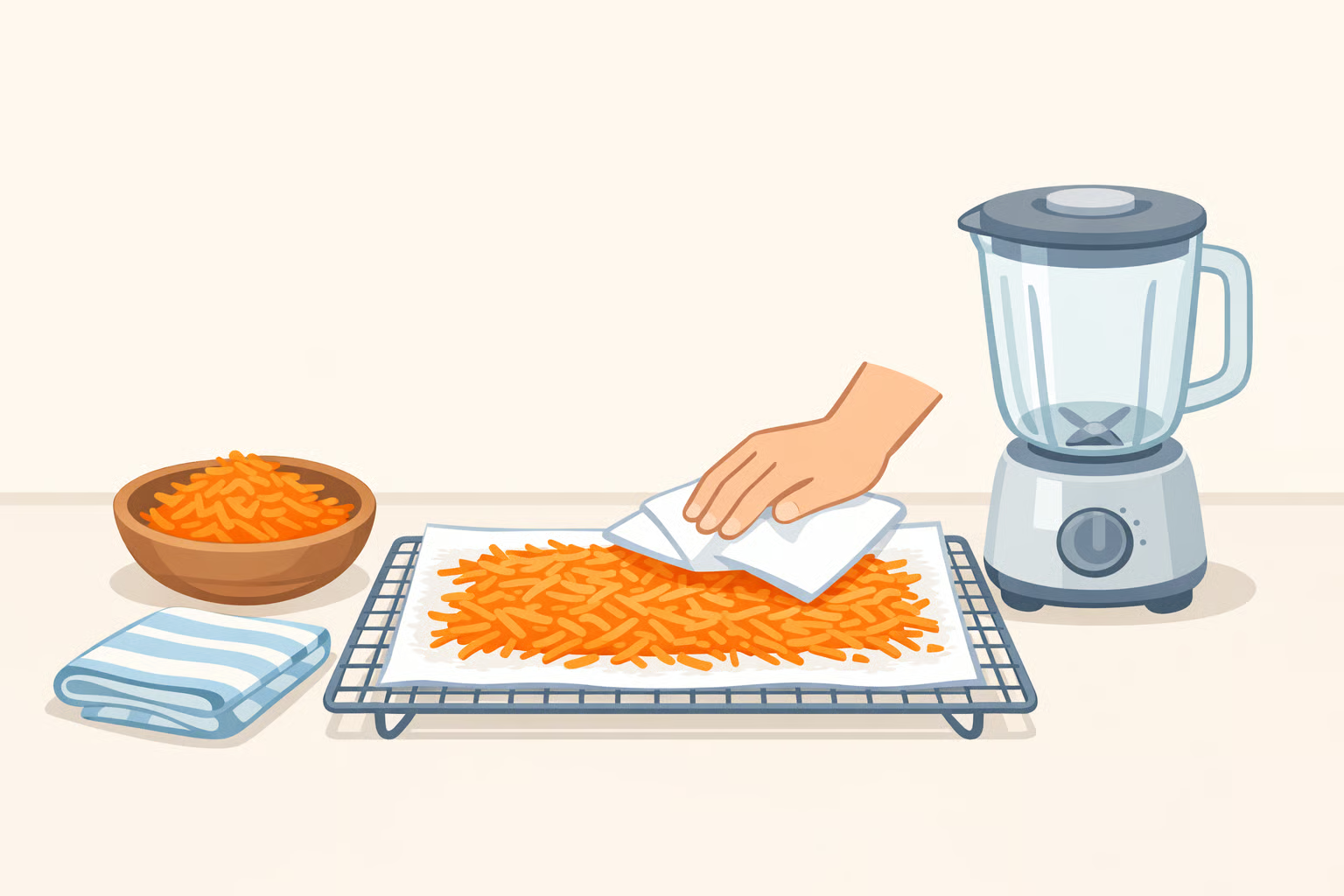
Shred fresh carrots on a box grater or with the shredding disc of your food processor. Grocery-store matchstick carrots are a reliable shortcut that eliminates the grating step entirely (EatingWell, published August 2024). Carrots can be shredded and refrigerated up to a day in advance; store them in an airtight container and pat them dry before using.
Wet carrots are the most common reason a batch won't roll cleanly. Excess moisture loosens the paste below the threshold where it holds a ball shape. Deal with this before touching the food processor.
Step 2: Pulse the dry base.
Add pitted Medjool dates, rolled oats, pecans, and chia seeds to the food processor. Pulse until the mixture is finely chopped and starting to clump. Stop before it becomes a uniform powder; visible texture is correct at this stage.
Step 3: Add carrots and spices, process to a paste.
Add the shredded carrots, vanilla extract, cinnamon, ginger, turmeric, salt, and black pepper. Process until everything comes together into a cohesive, slightly sticky paste that holds its shape when pressed between your fingers (EatingWell, updated March 2024).
If the paste is too dry and crumbles: Dates vary in moisture depending on freshness. Add one or two more dates, or a teaspoon of water, and pulse again. Dry or underripe dates won't provide enough binding to hold the paste together.
If the paste is too wet to roll: Spread it onto a plate and refrigerate for 10 minutes. Cold firms the paste without changing flavor or texture. This is the faster fix. Don't add more dry ingredients.
Step 4: Portion and roll.
Scoop approximately one scant tablespoon per bite. Roll between your palms into a ball; slightly wet hands reduce sticking. The recipe produces 22 bites at this size.
Optional: Roll finished bites in shredded coconut or finely chopped pecans before chilling. This adds texture and makes the exterior less sticky to handle.
Step 5: Chill before eating.
Transfer to an airtight container and refrigerate for at least 20 minutes. The bites are technically edible immediately, but the texture firms noticeably once cold and they hold their shape far better. Don't skip this step if you're packing them to go.
Substitutions: what moves and what doesn't
Dates are the binder, not just a sweetener. Honey or maple syrup won't provide the structural cohesion that dates do and will make the paste too wet to roll. Medjool dates are the easiest to work with because they're soft enough to process without pre-soaking. Deglet Noor dates are drier; soak them in warm water for 10 minutes, then pat dry before using.
Oats go gluten-free with no other changes. Certified gluten-free rolled oats are a direct swap, same texture, same binding behavior (EatingWell, updated February 2024).
Nuts are interchangeable. Pecans and walnuts behave identically here. For a nut-free version, sunflower seeds or pumpkin seeds hold up structurally, though the flavor shifts toward something earthier. For allergen concerns, this is the substitution to reach for.
Chia seeds are optional but useful. They contribute to binding and add a small amount of fiber. Flaxseed meal substitutes in equal measure. Omitting them entirely changes the texture only slightly.
No protein powder adjustments are covered here. The base recipe delivers 1g of protein per bite (EatingWell, updated March 2024). Adding protein powder would require testing a reformulated version, as it changes both binding and texture in ways this no-bake method isn't built for.
Storage, shelf life, and easy carrot cake snack bites for the whole week
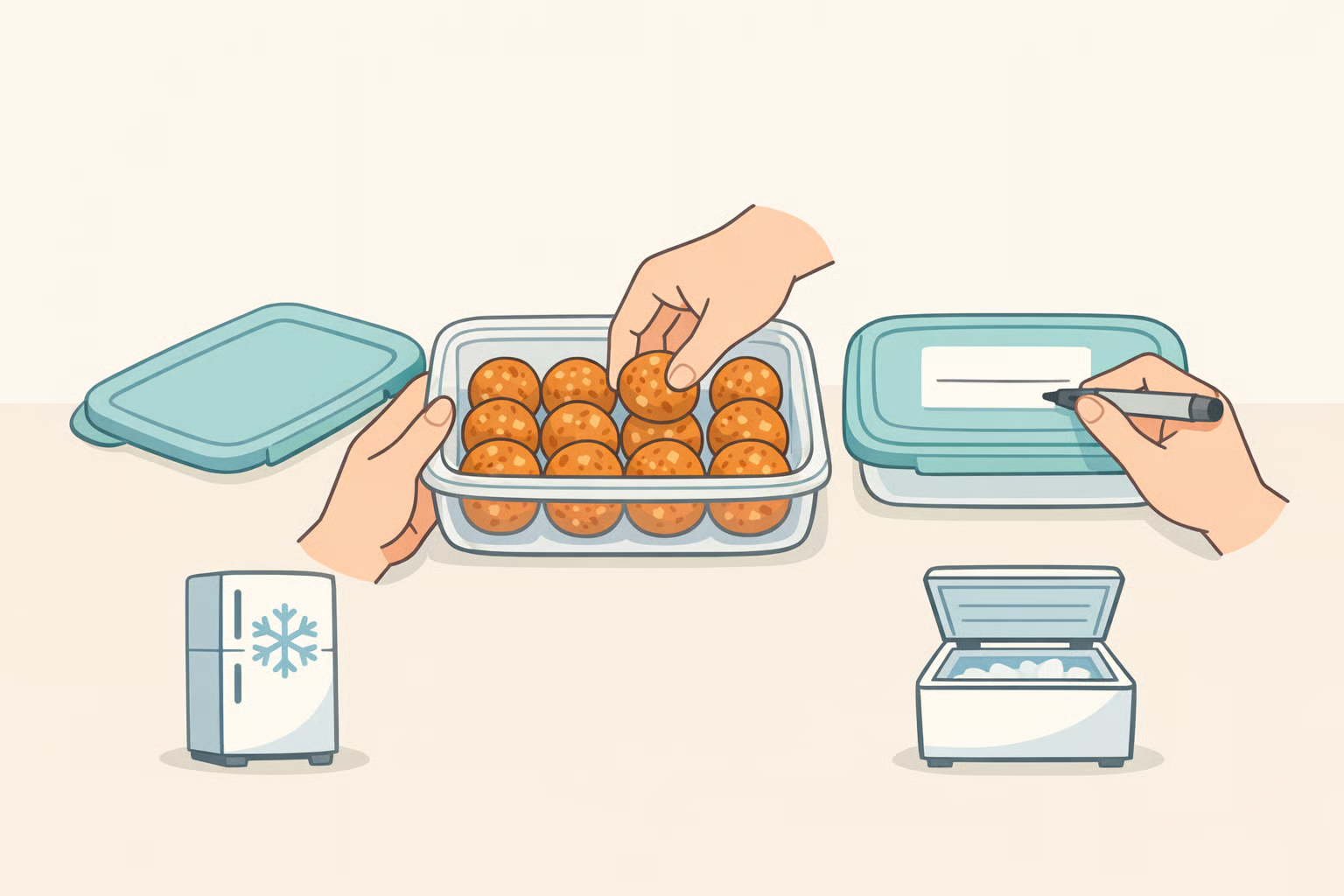
Refrigerated in an airtight container, these healthy carrot cake energy bites keep for up to one week (EatingWell, updated March 2024). One 15-minute batch, seven days of portable snacks. Frozen, they last up to three months and thaw in 5-10 minutes at room temperature without getting soggy.
These are cold snacks, not warm ones. Packed lunches, pre- or post-workout snacks, a desk alternative to packaged bars. If you want something reheatable, the baked oatmeal cake format below is the closer fit.
If you don't own a food processor: Two baked formats use the same flavor profile and require only a bowl and a muffin tin or baking pan.
- Baked oatmeal cakes (50 minutes total, 15 minutes active) come in at 152 calories each and freeze for up to three months; microwave from frozen in 30-second intervals (EatingWell, December 2022). Warm, reheatable, closer to a breakfast item than a snack.
- Oatmeal bars (roughly two hours total) deliver a firmer snack-bar texture with an optional cream cheese glaze; refrigerate for up to three days, or skip the glaze at storage time and apply it before eating to extend that window (EatingWell, updated February 2024). At 203 calories and 9g of protein per bar, these are the format to reach for when the protein gap matters.
What you end up with
Twenty-two bites. Fifteen minutes of active work, 20 minutes of chilling. One batch covers a week of grab-and-go snacking, or three months if you freeze it.
One thing to get right before everything else: dry your shredded carrots before adding them to the processor. Every other variable in this recipe is adjustable; wet carrots will sink the batch regardless. Get the moisture out, and the paste comes together cleanly on the first try. Everything after that is just rolling.





Comments
Be the first, drop a comment!