



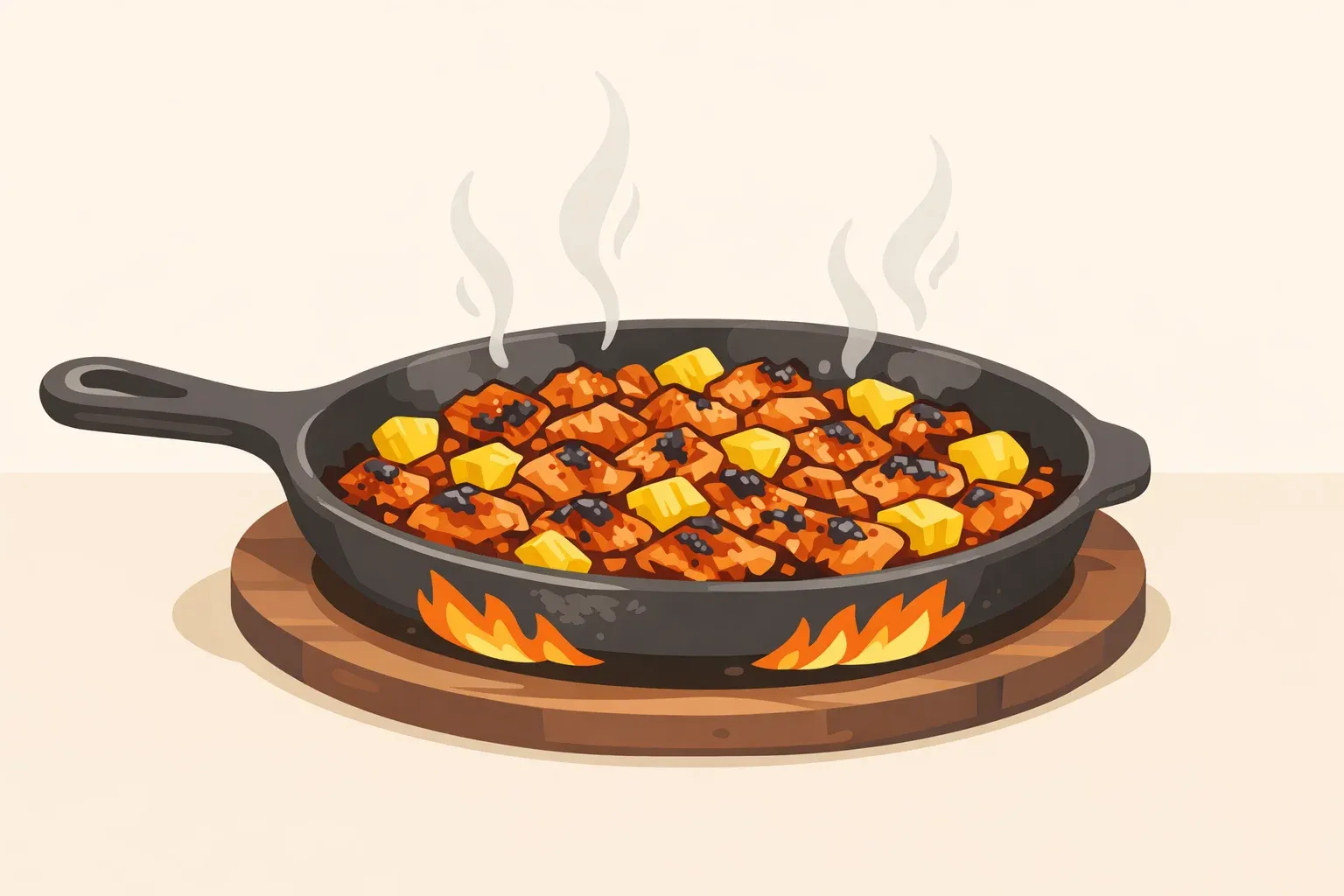
Chicken Al Pastor Recipe: Skillet Method in Under an Hour
This guide walks through a complete chicken al pastor recipe al pastor chicken marinade, skillet technique, and one finishing move that separates good from genuinely great. From prep to table in under an hour, with a 2-hour marinade window.
Bon Appétit puts the active cooking time at 45 minutes, and that holds on a weeknight once the marinade is done. No vertical spit required. The method uses boneless chicken thighs, a hot skillet, and the same flavor architecture as the original: earthy achiote, smoky dried chile, bright citrus, sweet-charred pineapple.
Al pastor traces back to Lebanese immigrants who opened restaurants in Puebla in the 1920s and 1930s, with the dish reaching its iconic trompo form in Mexico City by the 1960s, per Edible LA. That trompo a spinning vertical spit produces chile-crusted, caramelized edges and a juicy interior. That's what this method is chasing. The goal isn't to replicate the equipment; it's to replicate the result.
One technique makes the difference: chop the cooked thighs and return them to a very hot pan for two minutes. That step crisps the cut edges the way a trompo crisps its outer layer. Skip it and the dish is good. Keep it in and it becomes the thing people ask for by name.
Before you start, you'll need:
- Blender
- Heavy skillet (cast iron or stainless) or sheet pan
- 2 lbs boneless skinless chicken thighs (6 servings)
- Dried guajillo chiles, achiote paste, chipotle in adobo available at Latin grocery stores or online
- Minimum marinade time: 2 hours
Why thighs, and why the chop matters more than you'd think
This version uses boneless chicken thighs rather than pork shoulder which is what traditional al pastor calls for and the choice isn't arbitrary. Thighs have the fat content and collagen structure to survive high heat and extended acid exposure without drying out, according to The Grilling Science. Chicken breast can handle the marinade, but it turns mealy fast at skillet temperatures and lacks the richness that makes the final char worthwhile.
The pan-chop step matters more with chicken than with spit-roasted pork for a structural reason. On a trompo, fat renders continuously and bastes the outer surface as the meat spins. Chicken thighs don't have that fat reservoir. Chopping and returning the pieces to a dry, ripping-hot pan creates caramelized cut edges that compensate for what the rotation would have done and it does it in 120 seconds. The pork version earns its char over hours. This version earns it in a final pass.
What to buy and what not to fake
A few ingredients carry this dish. Cutting corners on the core three produces noticeably different results.
Achiote paste is a dense, brick-red block made from ground annatto seeds, spices, and vinegar. Look for it in the Latin foods aisle or at a Mexican grocery. Goya and El Yucateco both work well. Don't substitute achiote powder alone it lacks the oil and spice blend that give the paste its body and depth.
Guajillo chiles are dried, deep-red chiles with mild, slightly fruity heat roughly 2,500–5,000 Scoville units, similar to a mild ancho but brighter. Sold in bags at Latin grocery stores and increasingly at larger supermarkets. If unavailable, use 2 teaspoons of ancho chile powder plus a pinch of smoked paprika. The flavor shifts slightly, but the marinade holds together.
Chipotle in adobo is a canned product: smoke-dried jalapeños packed in tangy tomato-based sauce. One chipotle pepper plus 2 teaspoons of adobo sauce goes into the marinade. Omit the chipotle entirely and the dish loses a defining smoky layer, per UncomplicatedChef. To pull back the heat, use only the adobo sauce and leave out the whole pepper.
Mexican oregano is worth seeking out. It's more citrusy and less floral than Mediterranean oregano and fits this flavor profile better. If Mediterranean is all that's available, use about two-thirds the amount.
Al pastor chicken marinade: what each ingredient does
The three non-negotiables are achiote paste, rehydrated guajillo chiles, and chipotle in adobo. Achiote paste gives the marinade its brick-red color and an earthy, slightly peppery base. Guajillo chiles provide mild, fruity heat and deep color. Chipotle in adobo adds smokiness and the specific heat profile that signals al pastor to anyone who's had the real thing. These three together are the dish. Everything else is support.
Salt does more than season. It's the only marinade ingredient that actually restructures meat, causing certain proteins to reorganize in a way that creates the slightly firm, cured texture that defines good taqueria al pastor. Getting to roughly 1–2% salt by meat weight with at least a few hours of rest is what produces that texture, according to both Serious Eats and Edible LA. Treat it as foundational, not adjustable.
Acid is for brightness, not tenderizing. Orange juice and white vinegar thin the paste and add citrus lift, but they aren't doing meaningful structural work. Even after 24 hours of soaking, most marinades penetrate only 1–3 millimeters into the surface, per The Grilling Science. The separate risk with acids: leave them too long and they turn the outermost layer of meat mushy rather than tender, as America's Test Kitchen found. Use the citrus and vinegar for flavor, and keep total marinating time for thighs under 8 hours.
Fresh pineapple belongs at the end of cooking, not in the marinade. It contains bromelain, an enzyme that can reduce the surface of meat to mush in under 30 minutes, per The Grilling Science. If you want pineapple flavor in the marinade itself, use canned pineapple juice pasteurization deactivates bromelain, so it adds sweetness without the texture risk.
How to make chicken al pastor: step-by-step from marinade to tacos
Step 1: Toast and rehydrate the guajillo chiles.
Remove stems and seeds from 2–3 dried guajillo chiles. Press them flat in a dry skillet over medium-high heat for about 90 seconds per side until fragrant, puffed, and darkened in spots. Transfer to a bowl, cover with hot water, and soak 15–20 minutes until pliable, then drain.
The brief toasting wakes up the chiles' oil-soluble flavor compounds. Skipping it produces flat, papery heat, per Chili Pepper Madness.
Step 2: Build the marinade paste.
Blend the drained guajillo chiles, 2 tablespoons achiote paste, 1 chipotle pepper plus 2 teaspoons adobo sauce, ½ cup fresh orange juice, 2 tablespoons white vinegar, 3 garlic cloves, 1–1½ teaspoons kosher salt, 1 teaspoon cumin, and 1 teaspoon dried Mexican oregano until completely smooth. The paste should be deep red and assertively seasoned.
Taste it now. The interior of the chicken will never taste stronger than this paste, so season accordingly.
Step 3: Coat the chicken and marinate.
Use 2 pounds boneless skinless chicken thighs, left whole. Pat dry, then coat every surface thoroughly with the marinade. Seal and refrigerate for at least 2 hours; overnight is fine. Thighs have enough fat and collagen to handle extended acid exposure without turning soft, per The Grilling Science.
Always marinate in the refrigerator. At room temperature, chicken enters the bacterial danger zone within 2 hours.
Short on time: 2 hours works. Because marinades work primarily on the surface rather than penetrating deep into the meat, a 2-hour soak captures nearly everything a longer one delivers, as America's Test Kitchen has found.
Step 4: Prep the pineapple.
Cut fresh pineapple into bite-sized cubes and set aside separately. Do not add to the marinade.
Step 5: Cook the chicken hot.
Pull the thighs from the marinade and shake off the excess don't cook them dripping wet. A wet surface traps steam and delays browning; the Maillard reaction doesn't accelerate meaningfully until the surface exceeds 280°F, and water has to evaporate before that temperature is reachable, per The Grilling Science.
Heat a cast iron or heavy stainless skillet over medium-high until very hot, add a thin layer of neutral oil, and cook the thighs 5–7 minutes per side without moving them, until deeply browned and charred at the edges. Internal temperature should reach 165°F.
Sheet pan alternative for six or more: Roast at 425°F for 20–25 minutes, then broil on the top rack 2–4 minutes until the edges char. High ambient heat cooks through; intense direct heat finishes the surface. Natalie Cooks uses this approach for good reason it closely mirrors what the trompo does.
Step 6: Add pineapple for the last 2 minutes.
Scatter fresh pineapple cubes into the pan around the chicken for the final 2 minutes of cooking. High heat caramelizes the sugars fast. Pull everything off heat and rest 5 minutes.
Step 7: Chop, then return to the pan.
Chop the rested thighs into small, taco-ready pieces. Return them to the hot pan no additional oil and cook without stirring for 2 minutes. This final pass crisps the freshly cut edges and creates the caramelized bits that al pastor is actually about. The trompo achieves this through slow rotation and direct heat; the skillet replicates it in 120 seconds. Omit this step and the dish tastes fine but lacks the char that makes it memorable.
Step 8: Build the chicken al pastor tacos.
Warm corn tortillas over an open flame or in a dry pan. Layer the chicken and caramelized pineapple, then top with diced white onion, fresh cilantro, salsa verde, and a squeeze of lime.
Storing, reheating, and making weeknight chicken al pastor actually weeknight-ready
The al pastor chicken marinade takes about 10 minutes to build and can be made up to 3 days ahead. Better yet: raw chicken thighs can be frozen directly in the marinade for up to 2 months and cooked straight from a refrigerator thaw. That's the move that turns this into a genuine pantry staple, per UncomplicatedChef.
Cooked chicken keeps for up to 3 days in an airtight container in the refrigerator. Store the pineapple separately it softens and muddies the chicken if combined. To reheat, use a hot dry skillet for 2–3 minutes. A microwave steams the edges flat and loses the char entirely.
On heat level: the guajillo-chipotle base is moderately spiced. Add a dried chile de árbol to the blender for genuine heat; to pull it back, use only the adobo sauce and omit the whole chipotle. The flavor profile adjusts cleanly in either direction. The two things that don't adjust cleanly: skipping the achiote paste or the dried chiles. Those carry the dish's identity. Everything else is tunable.
The reason this easy chicken al pastor earns a permanent slot in regular rotation is the same reason the trompo became iconic: the combination of chile-achiote marinade, high heat, and caramelized edges produces a result bold enough to be interesting and fast enough to be realistic on a Tuesday. The science supports the method. The method is what gets it on the table and back on it the following week.



Comments
Be the first, drop a comment!