



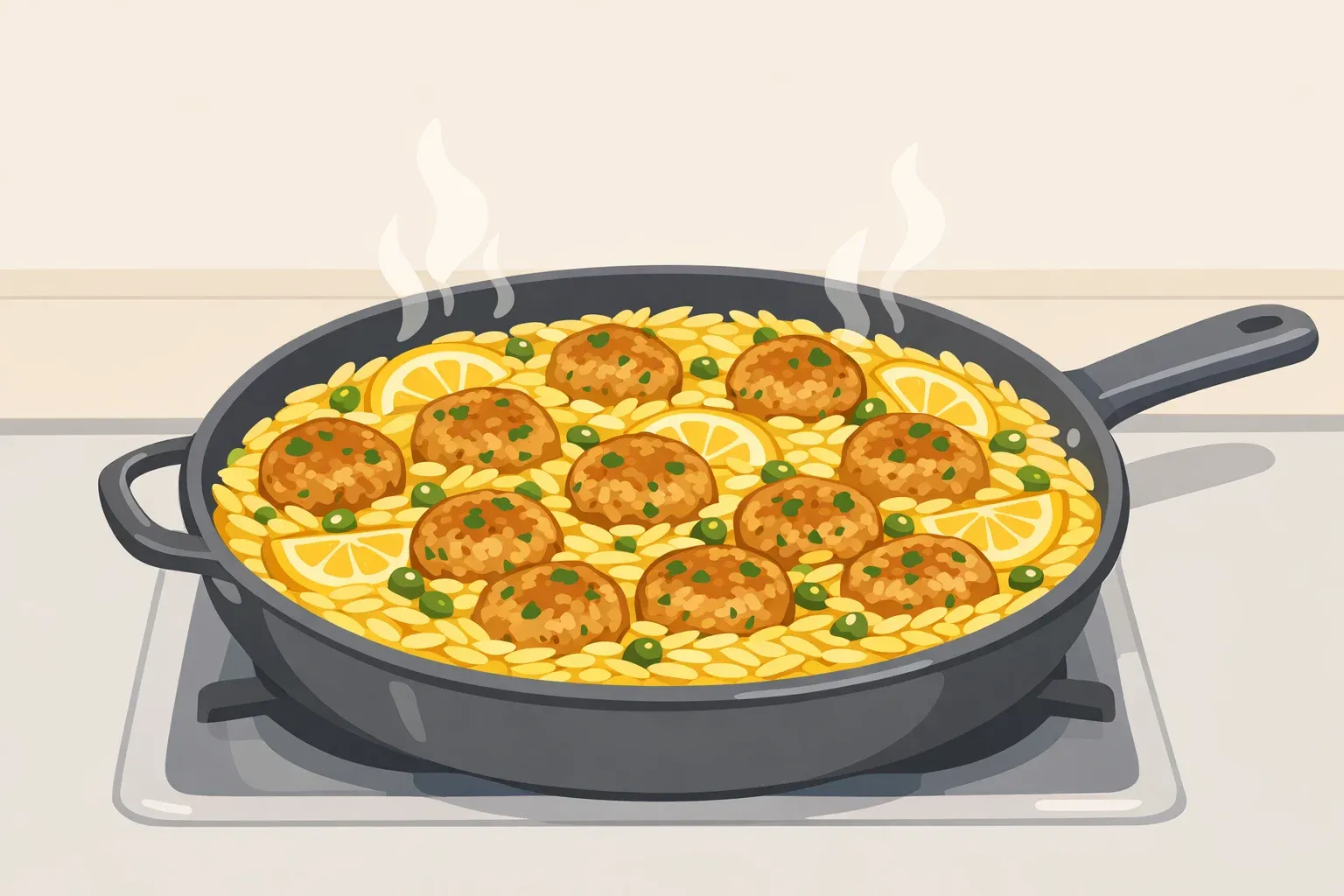
Brown the meatballs first. That's the move everything else depends on. The fond left on the pan bottom becomes the flavor base for the sauce, the sauce becomes the cooking liquid for the orzo, and the orzo absorbs it all, so what arrives at the table is a cohesive skillet dinner rather than a protein sitting in a puddle. One pan, four servings, about 45–50 minutes start to finish.
Classic piccata gives you a seared cutlet in a bright, acidic sauce. The structural problem: the sauce runs off the thin meat, and the plate needs something else. Meatballs finish cooking gently in the braising liquid, staying juicy in a way that thin cutlets rarely manage. The best part of chicken piccata is the lemon, butter, and caper sauce, so adding a starch is the logical move to capture it.
The version built here is a moderately creamy, broth-forward skillet. Richer and lighter variants are noted where relevant.
What you need before starting: A large, high-sided skillet or sauté pan. A large high-rimmed sauté pan or skillet gives the meatballs room to brown and the orzo enough liquid depth to cook evenly. A lid or foil for the orzo simmer. A meat thermometer is not optional with ground poultry.
The ingredient formula: what's fixed and what's flexible
Before mixing anything, understand which ingredients are structural and which are adjustable. This prevents mid-cook second-guessing.
The sauce has four consistent anchors. Lemon juice, lemon zest, capers, and butter appear in each version. Use both juice and zest: the juice provides acidity, the zest a cleaner aromatic note. Add most of the juice during cooking, then taste before serving and squeeze in more if needed, since lemon mellows as it simmers. Capers come from jarred brine; drain but don't rinse them. Two tablespoons is the baseline.
The meatball binders are load-bearing. Some recipes use 93% lean ground chicken, which is leaner than the beef-pork blends in traditional meatball recipes, so breadcrumbs and egg have to work harder here to keep things tender rather than dense. Other recipes use ½ cup breadcrumbs, ¼ cup grated Parmesan, and 1 egg per pound of ground chicken, which is a reliable starting point.
The liquid ratio sets up everything that follows. Plan on 1½ cups dry orzo for four servings, which needs roughly 2½ to 3 cups of combined cooking liquid. You can use 3 cups of chicken broth plus ½ cup white wine with no cream; some use 2 cups of broth plus 1 cup heavy cream, producing a noticeably richer result at around 763 calories per serving versus the alternative's 627. The recommended middle ground: 2 cups broth, ½ cup dry white wine, and ¼ cup heavy cream, enough to round out the acidity without tipping into heavy. No wine? Substitute an equal amount of additional broth.
Step-by-step: building the chicken piccata meatballs and orzo skillet
Step 1: Make the meatball mixture.
Combine 1 pound of ground chicken with ½ cup of plain breadcrumbs, ¼ cup of finely grated Parmesan, 1 egg, 2 minced garlic cloves, ½ teaspoon of dried oregano, ¾ teaspoon of salt, and a few grinds of black pepper. Mix until just combined. Stop when there are no dry streaks. Overworking compacts the proteins and produces dense, rubbery meatballs.
Portion into balls about 1 to 1½ inches in diameter, which yields roughly 24 pieces at about 1 tablespoon each. Wet your hands lightly before rolling; ground chicken is sticky and won't release cleanly from dry palms. Uniform size matters: one undersized meatball will be overcooked by the time a large one finishes.
Step 2: Brown the meatballs.
Heat 1 tablespoon of olive oil in the skillet over medium-high heat until shimmering. Add the meatballs in a single layer, with space between them. Work in two batches if needed. Crowding drops the pan temperature and produces steaming rather than browning.Cook them 5–6 minutes per side; the target is a confident golden-brown crust, not full cook-through. Transfer to a plate.
Don't skip this step or cut it short. The browned fond on the pan bottom is the flavor base for the sauce and the orzo it gets scraped up in the next step, but only if it's actually there.
If the meatballs are sticking: Let them sit. A properly seared meatball releases on its own when a crust forms. Forcing it early tears the crust and leaves half the meatball on the pan.
Step 3: Toast the orzo, then build the sauce.
Reduce the heat to medium. Add 1 tablespoon of butter and 3 minced garlic cloves; cook about 30 seconds until fragrant. Add 1½ cups of dry orzo and stir to coat in the fat. Toast for 1–2 minutes, stirring, until the orzo smells slightly nutty and a few pieces show faint color. This step deepens flavor and helps the orzo hold texture as it absorbs liquid rather than going immediately soft.
Pour in ½ cup of dry white wine and scrape up all the browned bits from the pan bottom. Let it reduce by roughly half, about 1 minute. Add 2 cups of chicken broth, ¼ cup of fresh lemon juice, the zest of 1 lemon, 2 tablespoons of drained capers, and ¼ cup of heavy cream. Stir to combine and bring to a gentle simmer.
Liquid management note: The liquid should visibly cover most of the orzo when first added. If it doesn't, add broth in ¼-cup increments before the simmer starts running low; mid-cook is harder to fix than starting with a little more.
Step 4: Cook the orzo and return the meatballs.
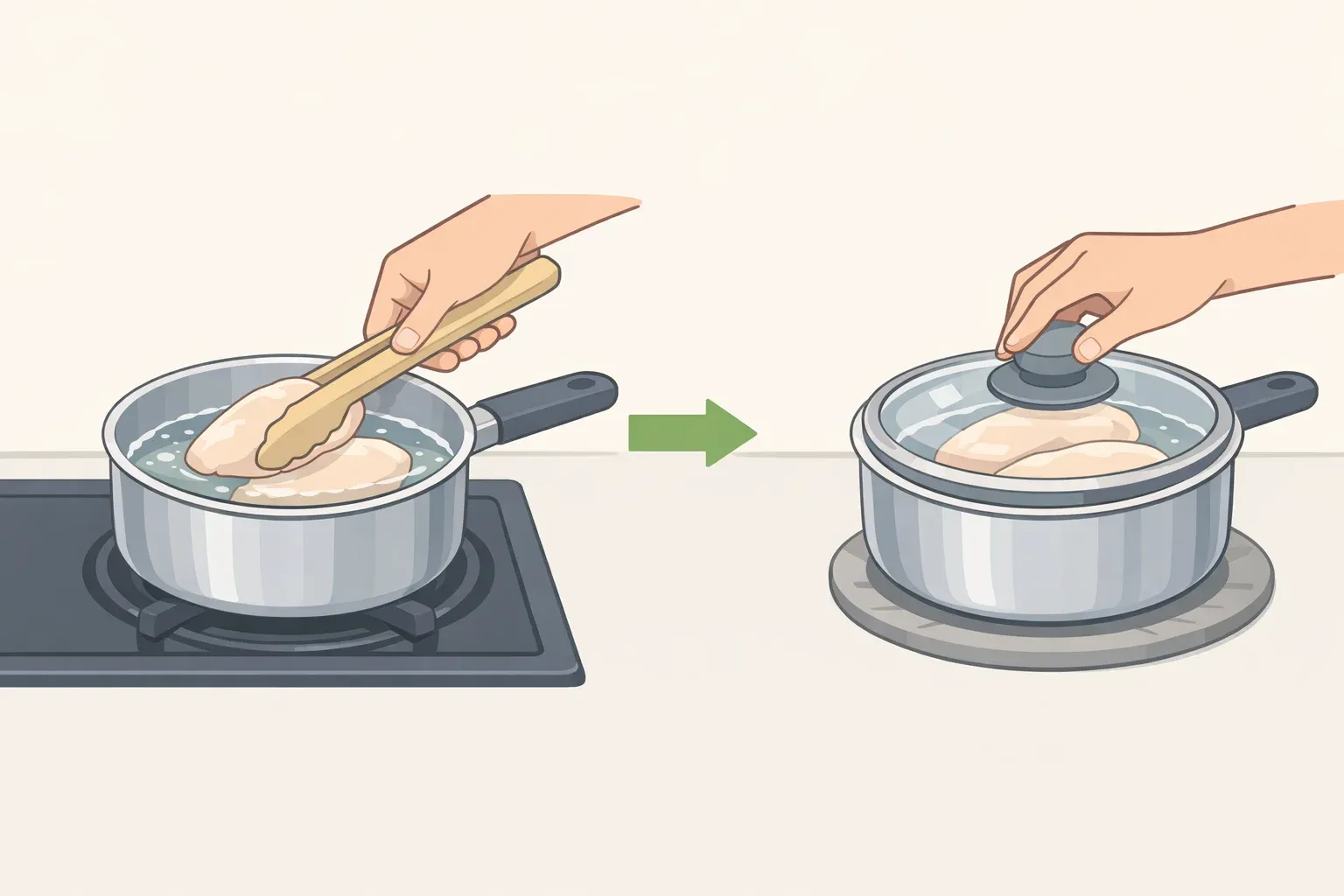
Once simmering, nestle the browned meatballs into the orzo, pressing them in lightly. They should sit at or just below the liquid surface. Cover loosely with a lid or foil.
Cook, stirring the orzo occasionally around the meatballs, for 8–12 minutes until the orzo is just al dente and most of the liquid is absorbed. It takes roughly 10–15 minutes for its broth-only version. Don't go by the clock alone, the right visual cue is orzo that looks creamy and sauce-coated with no excess liquid pooling, but hasn't yet turned stodgy. If it looks dry before it's tender, add broth ¼ cup at a time.
The meatballs are done when they register 160°F on an instant-read thermometer. Probe the largest one.
Step 5: Finish the sauce.
Pull the pan off the heat. Add 2 tablespoons of cold unsalted butter, cut into small cubes, stirring them in a few pieces at a time until the sauce looks glossy and cohesive. Some use the same off-heat technique for piccata pasta, incorporating cold butter gradually keeps the emulsion intact. Hot butter added all at once can leave the sauce greasy.
If you're adding Parmesan, do it now, off heat, stirring gradually. Cheese stirred into a hot pan clumps rather than melts into the sauce.
Taste. Add a fresh squeeze of lemon if the sauce needs more brightness. Scatter chopped fresh parsley over the top and serve directly from the skillet.
Troubleshooting and practical notes
Meatballs falling apart in the pan: The mixture may be undermixed or too warm. If the meatballs feel very soft before searing, refrigerate them for 15 minutes to firm up. The pan and oil should be fully hot before anything goes in; a cold pan produces sticking rather than a clean sear.
Orzo sticking or seizing before it's done: The liquid ran too low. Add ¼ cup of hot broth, stir once to loosen the bottom, and continue. This is recoverable. Orzo absorbs liquid fast and unevenly, so stirring every 2–3 minutes helps.
Sauce too sharp after cooking: Another pat of butter will soften the edge without flattening the brightness. Some use a small amount of honey or sugar alongside the lemon in their version, which serves the same purpose; either is worth trying if butter alone doesn't quite get there.
Sauce too thin at the finish: Simmer uncovered for 2–3 minutes before the butter finish. The orzo keeps absorbing liquid as the dish sits, so a slightly loose sauce at serving often tightens on its own within a few minutes.
Leftovers: Store in an airtight container in the refrigerator for up to 3 days. The orzo will absorb the remaining sauce overnight and firm up considerably. Reheat in a skillet over medium-low with a splash of chicken broth stirred in, or microwave in 30-second intervals with the same addition of liquid; gentle heat keeps both components from drying out.
From here
One skillet, four servings, approximately 45–50 minutes from start to finish. This moderate-cream version comes in at roughly 520 calories per serving, a self-calculated estimate, useful for rough planning.
Two variations worth knowing about: Stir two cups of baby spinach into the finished orzo just before serving, letting it wilt in the residual heat. For a sharper, brothier result, pull the cream entirely and use the all-broth ratio instead. The skillet technique stays the same either way.




Comments
Be the first, drop a comment!