



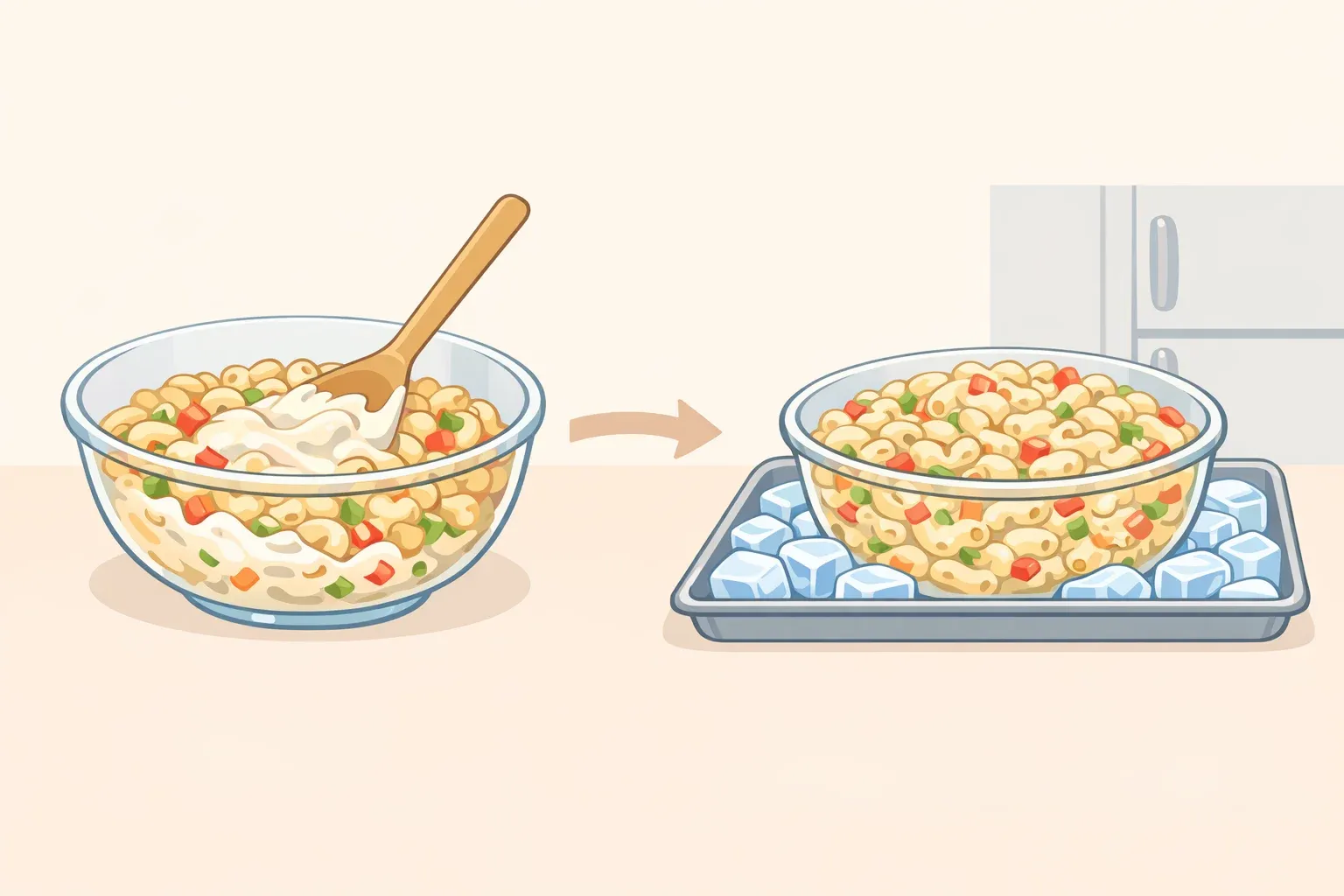
Classic Macaroni Salad Recipe That Actually Stays Creamy
Most classic macaroni salad recipes fail before the dressing ever gets made. The noodles come out of the fridge rubbery, the dressing pools at the bottom of the bowl, and the whole thing tastes flat. None of that is a seasoning problem. It's a pasta problem, and it has a straightforward fix.
This guide walks through a four-step method for a creamy macaroni salad recipe that produces tender noodles, a coating that clings rather than pools, and flavor that holds through chilling: cook past al dente, dress while warm, cool on a sheet pan, then assemble and chill. Each step solves a specific failure point.
Before starting, gather elbow macaroni, a rimmed sheet pan, and your dressing ingredients. The classic mix-ins are celery, finely diced onion, shredded carrot, relish or chopped pickle, and hard-boiled egg if you want it. No special equipment. Factor in at least one hour of chilling after assembly before the salad is ready to serve.
Step 1: Cook past al dente, deliberately
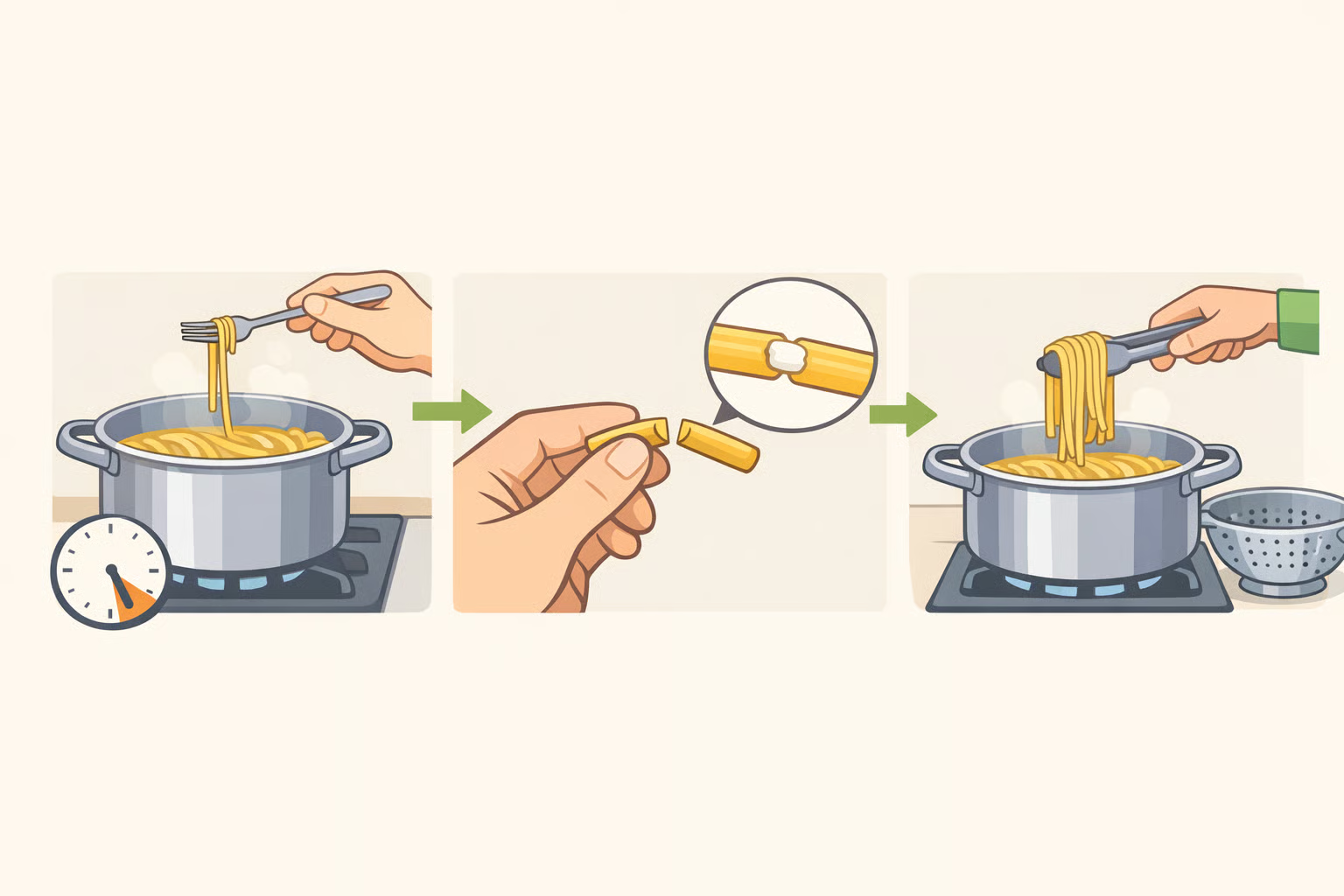
Problem this solves: rubbery, dense noodles after chilling.
The target is roughly two minutes beyond whatever the package calls al dente. The noodle should be soft all the way through with no chalky center, but not splitting or falling apart. It will feel overdone pulling it from the pot. That's correct.
Here's why. As cooked pasta cools, its starch molecules reorganize into a denser crystalline structure the same staling process that makes bread go firm overnight, a phenomenon called retrogradation (Serious Eats noted this in 2023). Pasta that starts at al dente ends up noticeably rubbery after an hour in the refrigerator. Cook it two minutes further and it firms back down to al dente once chilled, which is exactly where you want it (Serious Eats confirmed this last summer). NYT Cooking arrives at the same instruction independently, calling for noodles cooked a little past al dente.
Salt the pasta water well. This is the one stage where seasoning penetrates the pasta rather than coating its surface, so don't skip it.
Taste a piece every 30 seconds once you pass the package time. Pull it when there's no chalky bite left and the noodle gives easily under your teeth. If it's splitting at the seam, you've gone too far. The window is narrow but forgiving enough to catch.
Step 2: Drain, spread, dress warm, then cool in that order
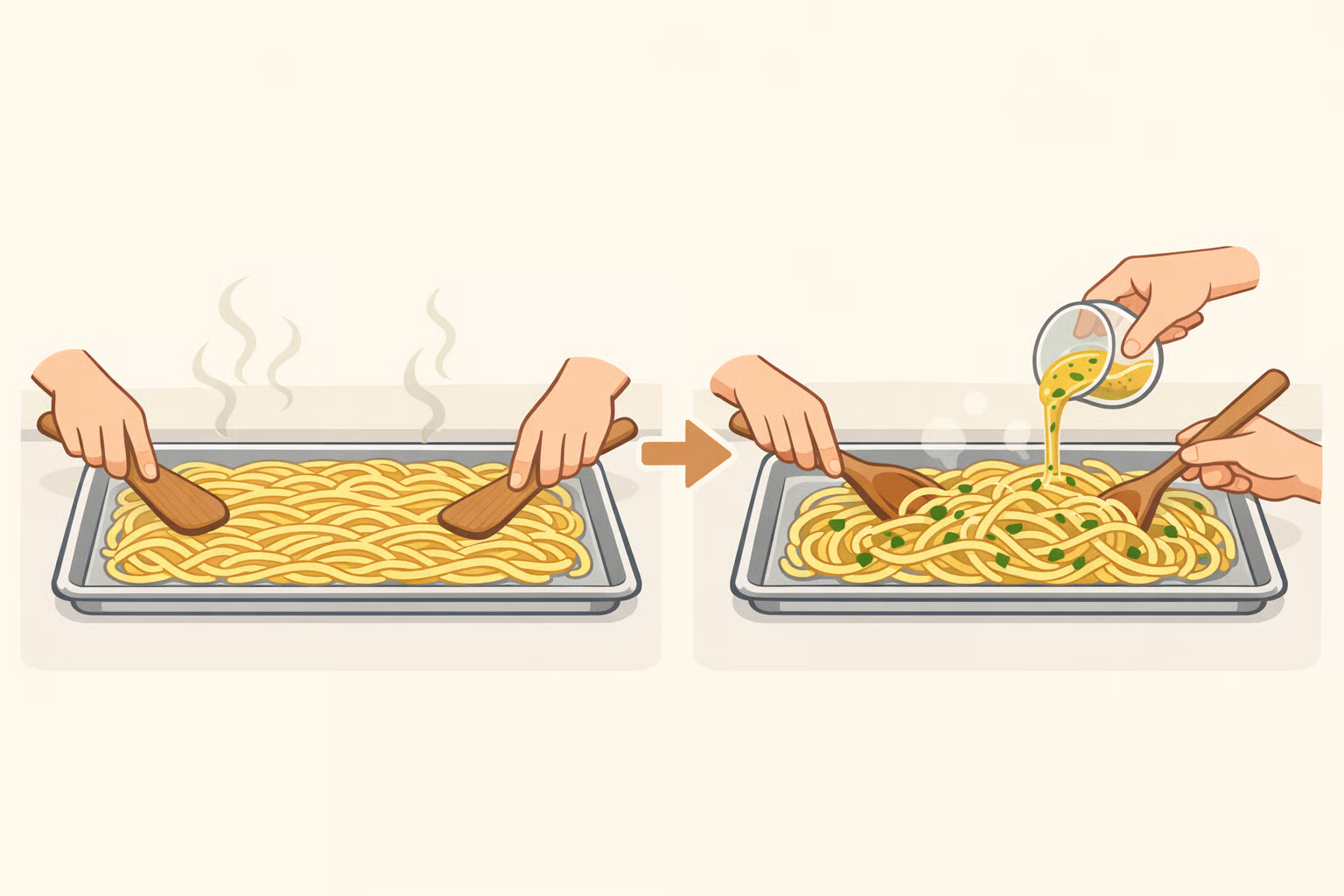
Problem this solves: watery salad, clumped noodles, and dressing that sits on the surface rather than absorbing.
The sequence matters more than any individual step. Drain the pasta, then spread it immediately in a single even layer on a rimmed sheet pan. Toss with about one-third of the finished dressing while the pasta is still warm. Let it cool until it's warm to the touch but no longer steaming, roughly 15 minutes (Serious Eats).
Spreading on a sheet pan instead of dumping into a bowl allows excess steam and moisture to evaporate rather than condensing back into the noodles. That condensation is the direct cause of a watery finished salad. Pasta cooling in a bowl steams itself, sticks together, and arrives at assembly already partially clumped (Serious Eats). The sheet pan fixes all three problems at once.
Coating warm pasta with a portion of the dressing helps it absorb flavors throughout and prevents the noodles from sticking together, which is why this step makes rinsing unnecessary (Serious Eats). That matters for a mayo-based salad specifically, because rinsing strips the surface starch that helps a creamy dressing cling. NYT Cooking's recipe calls for rinsing under cold water; for this method, skipping it is the better fit.
One timing note: don't rush the sheet pan into the refrigerator while the pasta is still steaming. The condensation that forms in a cold, sealed container is exactly the wateriness this step is designed to prevent. Wait the full 15 minutes.
Step 3: Build the dressing, then assemble
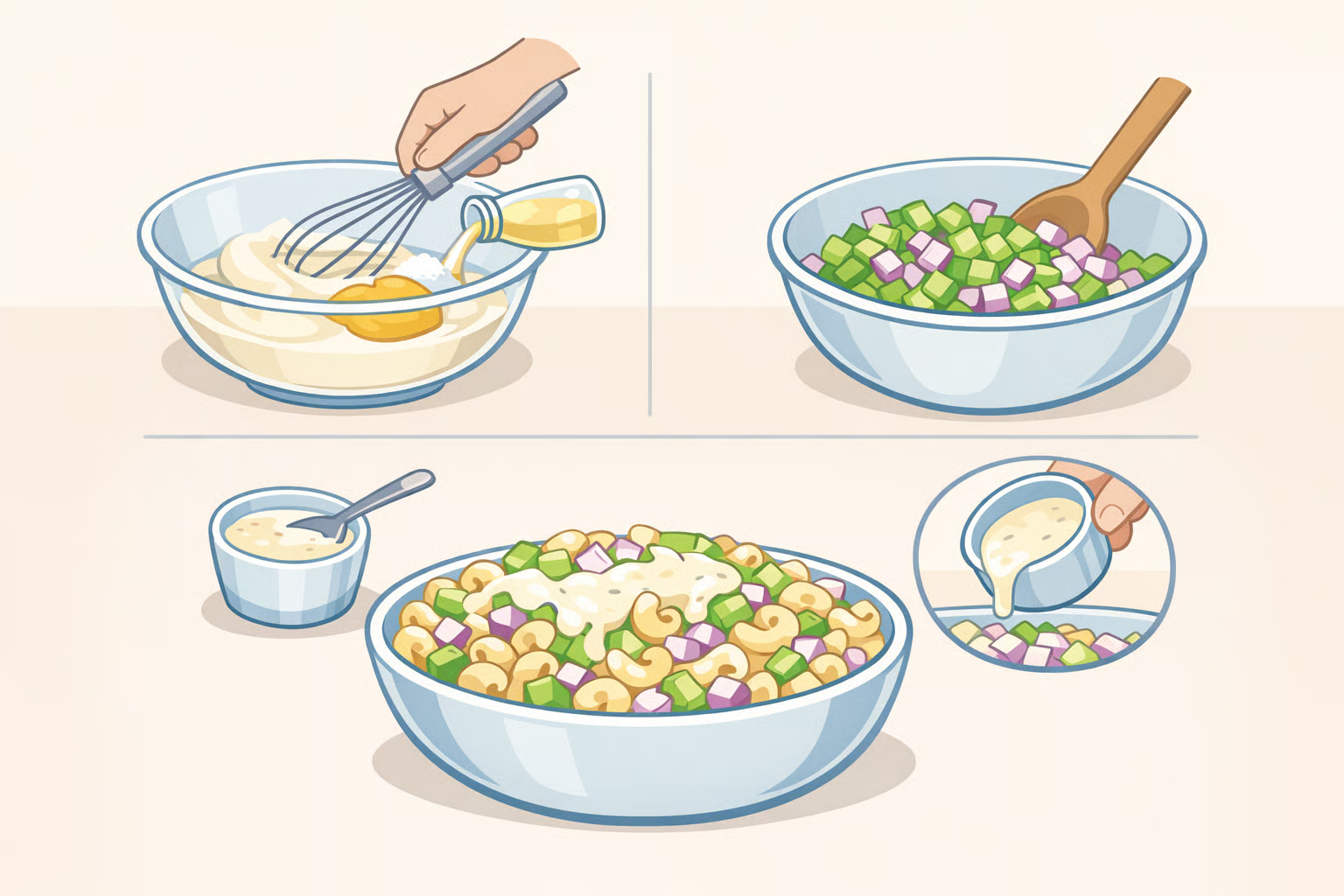
Problem this solves: dressing that smothers or separates, and a finished salad that's overdressed in spots and dry in others.
The dressing for an old fashioned macaroni salad is simple in ingredient terms: mayonnaise, sour cream, vinegar, sugar, mustard, salt, and pepper, whisked together in a separate bowl (NYT Cooking). Taste it before it touches the pasta. It should read as slightly over-seasoned on its own, because the noodles will absorb and dilute it.
Mayo choice matters here. Because sweetness already comes from shredded carrots and a small amount of sugar in the mix, use a savory-leaning mayo rather than a sweet one (NYT Cooking). A sweeter mayo pushes the dressing out of balance in a way that's hard to correct after the fact.
Use enough dressing that the pasta looks glossy rather than buried. NYT Cooking's Alexa Weibel puts the target well: aim for noodles that are "more glossy than gloopy" each piece lightly coated, not swimming. The split-application method is what makes this achievable. The one-third applied in Step 2 absorbs into the pasta and acts as a base; the finishing portion at assembly coats evenly rather than pooling at the bottom.
For assembly: add the mix-ins to the cooled pasta first, folding in celery, finely diced onion, shredded carrot, relish or chopped pickle, and hard-boiled egg if using. Cut everything small enough that no single bite is dominated by one ingredient. Then pour the remaining dressing over the top and fold to combine.
Add the reserved dressing in two passes, not all at once. After the first pass, let it sit for two minutes and look at the texture. The pasta may absorb more than expected. Add the remainder gradually until the salad reads glossy and evenly coated. Overdressing is hard to pull back from once done.
Step 4: Chill, then taste again before serving
Problem this solves: flat flavor after refrigeration, and the question of serving temperature.
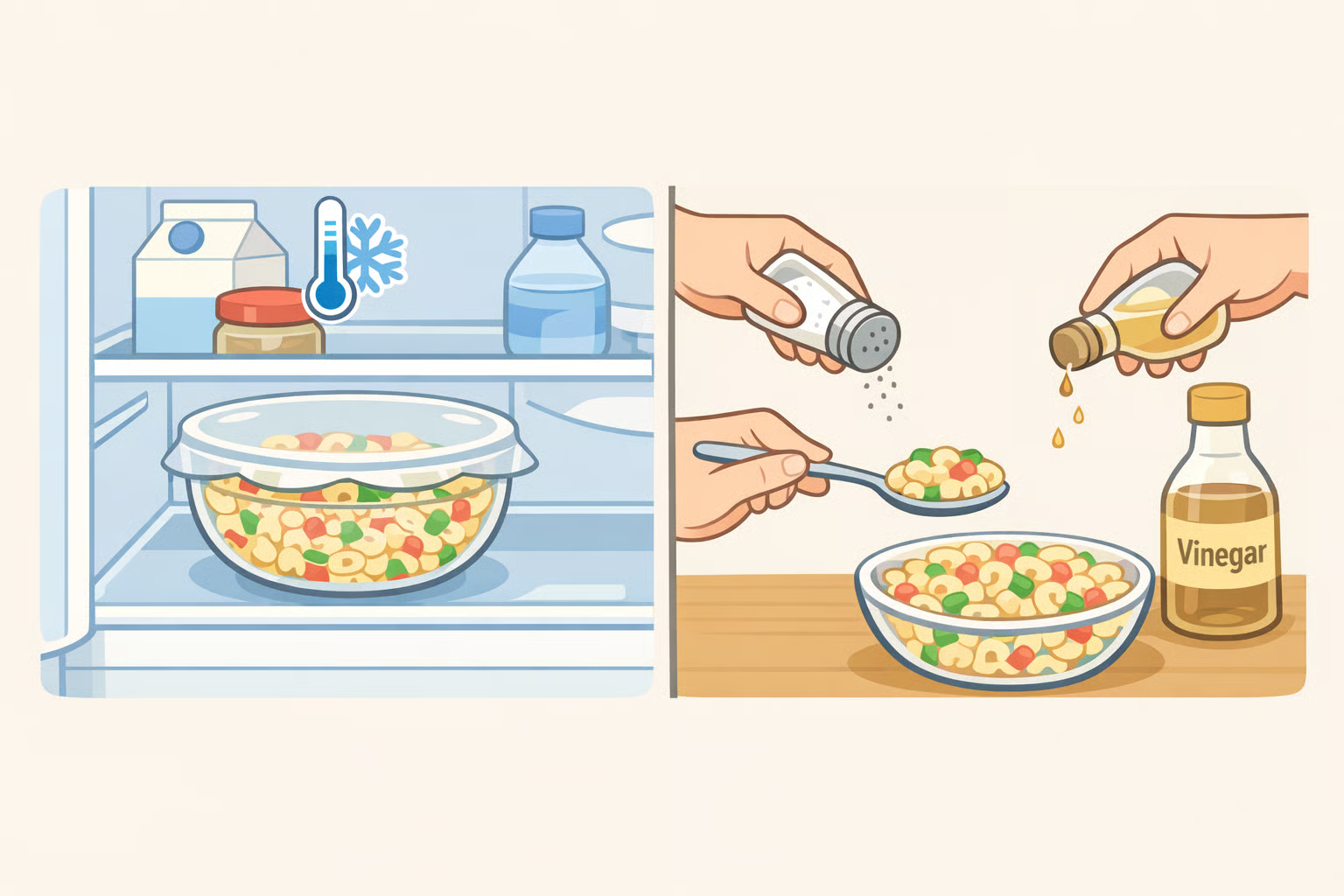
Refrigerate covered for at least one hour after assembly. The pasta continues absorbing dressing as it chills and the flavors pull together (NYT Cooking). This isn't optional. An hour in, it's a meaningfully different dish.
Always taste and re-season immediately before serving. What tasted balanced at assembly will often need a small pinch of salt and a few drops of vinegar after a full chill. Cold mutes those notes, and adjusting at the end is easy. Skipping it is the most common way a well-made salad ends up tasting flat on the table.
On serving temperature, the two main sources land in different places. NYT Cooking says serve cold, straight from the fridge, and notes the salad keeps up to three days refrigerated. Serious Eats, writing about pasta salad broadly, argues that cold pasta has muted flavor and a firmer texture, and recommends letting it come to room temperature before serving, with a two-hour hard cap for food safety. For a mayo-based salad at a cookout, a practical middle ground: pull it from the fridge about 20 minutes before it goes on the table. The flavor opens up without pushing into the food safety window.
If something went wrong: quick fixes and make-ahead notes
Salad is watery: this almost always traces back to pasta that went into the refrigerator while still hot, or that cooled in a bowl instead of on a sheet pan. It can't be fully reversed, but draining off visible liquid and folding in a small amount of fresh dressing can help.
Noodles are rubbery: the pasta didn't cook long enough before chilling. Retrogradation firms up pasta that wasn't cooked far enough past al dente to compensate (Serious Eats). Letting the salad sit at room temperature for 20 minutes softens the texture slightly; it won't fully recover, but it helps.
Flavor is flat: taste first. A small pinch of salt and a few drops of vinegar added just before serving fixes most cases. If the dressing itself tastes thin, a spoonful of additional mayo or sour cream folded in can bring it back.
Making it ahead: the salad holds well. If preparing the day before, hold back a few tablespoons of dressing and stir them in just before serving along with a quick re-seasoning check. The pasta absorbs dressing overnight, and the reserved portion refreshes the coating so it reads glossy rather than dry.
The method in brief: (1) Cook past al dente by about two minutes; (2) Drain, spread on a sheet pan, toss with one-third of the dressing while warm, cool 15 minutes; (3) Add mix-ins, fold in remaining dressing in two passes; (4) Chill at least one hour, taste and re-season before serving. That's the whole thing.


Comments
Be the first, drop a comment!