



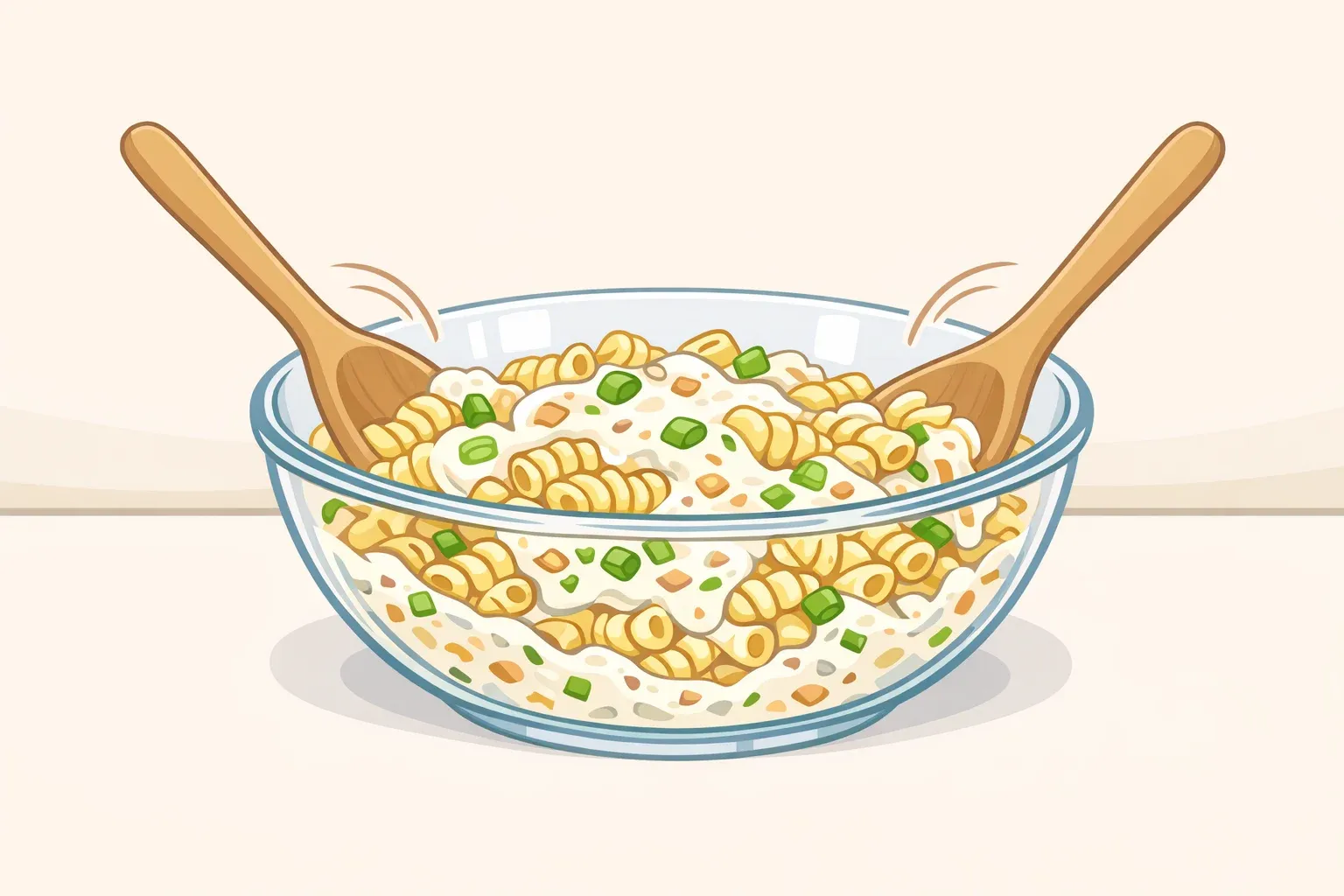
Most cold pasta salads fail in exactly the same two ways: flat flavor and chalky texture after an hour in the fridge. This French onion dip pasta recipe fixes both problems: a packet-based dressing shortcut handles the flavor, and a specific pasta-handling technique handles the texture. The result is about 12 cups of creamy, tangy salad that serves 6 as a main or 10 to 12 as a potluck side, built in roughly 30 minutes of active work.
Two distinct problems, two distinct solutions:
The flavor shortcut: The Kitchn developed a dressing built from Greek yogurt, mayo, onion soup mix, lemon juice, and a small amount of brown sugar, the brown sugar chosen specifically to approximate the caramel depth of slow-cooked onions, using the molasses content that white sugar lacks.
The texture problem the shortcut doesn't solve: Serious Eats puts it plainly: pasta cooked to al dente and served hot is fine, but that same pasta served cold is a different, unpleasant thing entirely. Cook it about two minutes past al dente, then dress it while still warm so it absorbs dressing rather than just getting coated by it.
The Kitchn's original recipe rinses the pasta cold and dresses everything at once. This guide diverges at two points: it borrows the warm-toss and sheet-pan cooling method from Serious Eats, and it splits the dressing so the pasta doesn't dry out between assembly and table. Neither change is complicated.
Ingredients, yield, and timing
Before you start:
Yield: approximately 12 cups; serves 6 as a main, 10 to 12 as a side
Active time: about 30 minutes, plus 15 minutes hands-off for the pasta to cool on the sheet pan
Make-ahead window: fully assembled a few hours ahead; leftovers keep up to 4 days refrigerated
The dressing pick one before you shop:
The choice affects salt level, thickness, and intensity. These options aren't interchangeable once you're mid-recipe.
Option A: Onion soup mix + yogurt + mayo (recommended): Combine ¾ cup full-fat Greek yogurt, ¼ cup mayo, one 1-oz envelope of onion soup mix, 2 tablespoons lemon juice, 2 tablespoons water, and ¾ teaspoon packed brown sugar. The yogurt keeps it tangy and light. The packet is already seasoned. Some put the finished dish at 337mg of sodium per serving, so hold off on adding salt until the final taste.
Option B Store-bought French onion dip (fastest): Substitute about 1 cup of creamy dip directly for the mixed dressing. It works, but sodium varies by brand. Taste before adding anything.
Option C Leftover homemade French onion dip: The Kitchn treats about 1 cup of homemade dip as a direct swap for the packet-based dressing. Only practical if you already have the dip on hand; it's not worth making from scratch when Option A produces a reliable result.
Pasta and vegetables:
12 oz dried short pasta: farfalle, rotini, campanelle, penne, or rigatoni. The Kitchn favors farfalle and campanelle for dressing distribution; rigatoni holds its structure without going mushy. Long pasta clumps cold, skip it.
1 cup frozen peas, 1 small red onion, 2 large celery stalks, 2 cups cherry tomatoes, fresh chives for finishing
Equipment: large pot, colander, sheet pan, large mixing bowl
How to make French onion dip pasta salad: step by step
Step 1: Make and split the dressing
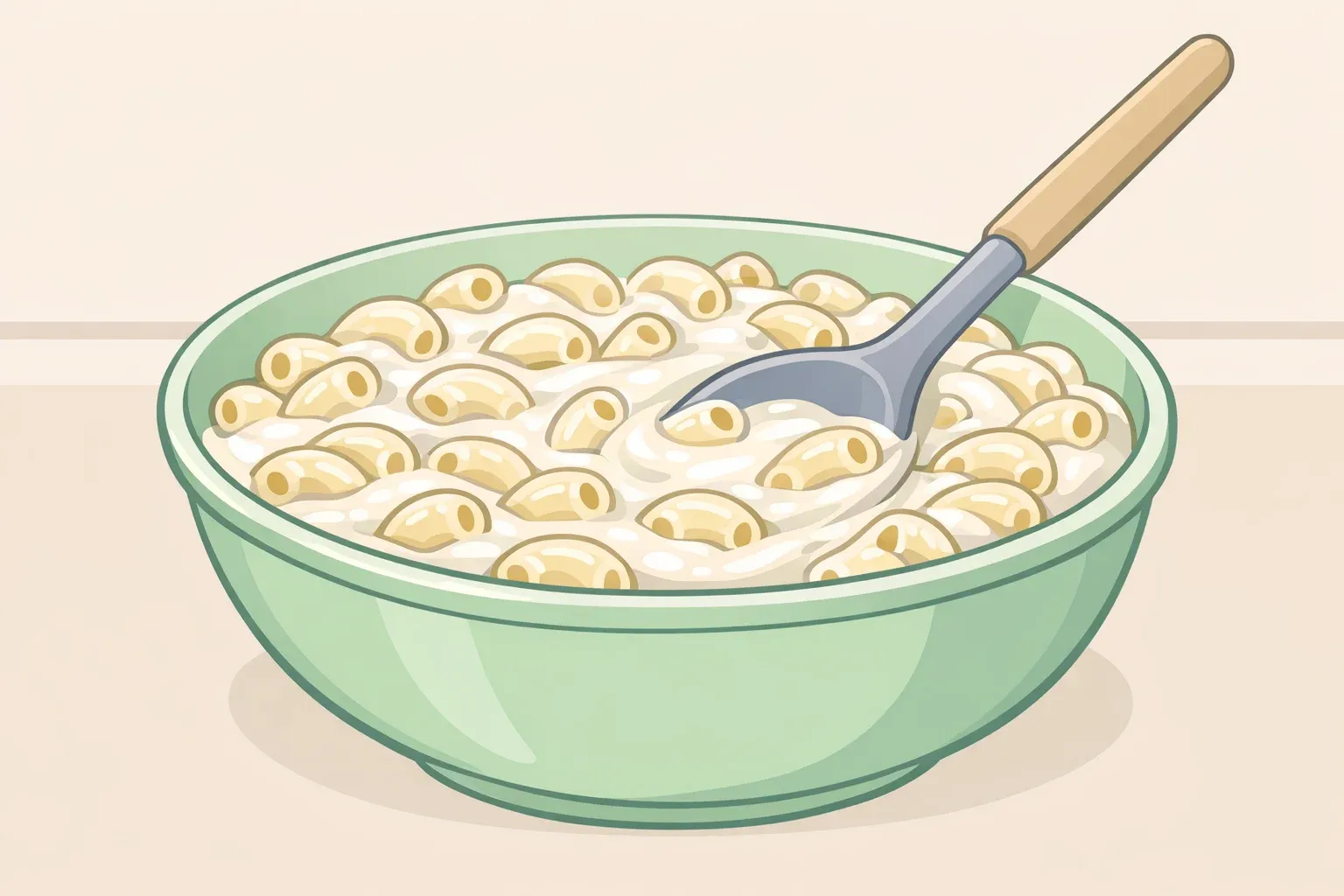
Combine all dressing ingredients in a large bowl and stir until smooth. If using Option A, that's the yogurt, mayo, soup mix packet, lemon juice, water, and brown sugar. The result will be a thick, pale dressing with visible dried onion flakes, correct. It loosens once the pasta goes in.
Set aside exactly half the dressing in a separate small bowl. You'll use the rest now; the reserved half goes in right before serving.
The Kitchn recommends this split for any make-ahead version. It applies even if you're eating within the hour — pasta pulls dressing out of suspension quickly, and you want something left to stir in at the table.
Step 2: Cook the pasta past al dente, then dress it warm
Bring a large pot of heavily salted water to a boil. Cook the pasta about two minutes beyond the package's al dente instructions, until fully tender throughout. Al dente pasta served cold is unpleasant; those extra two minutes are what keep it tender once chilled.
Place 1 cup of frozen peas in the colander before draining. The hot pasta water thaws them as it passes through. Spread the pasta and peas in a single layer on a sheet pan. Don't rinse with cold water; you want the pasta warm for the next step.
While the pasta is still warm (not hot, but not yet room temperature), add about a third of the total dressing, half of what remains in your main bowl, and toss to coat. Let it sit on the sheet pan for about 15 minutes. The dressing will seem to disappear into the pasta. Good. That's absorption, not loss.
Step 3: Prep and dress the vegetables
While the pasta cools, dice the red onion (about ½ cup), slice the celery stalks, and halve the cherry tomatoes. Add them directly to the dressing remaining in your main bowl and stir to combine.
Crunch from celery, brightness from tomato, bite from raw red onion, this is The Kitchn's formula. Reasonable swaps include bell pepper, cucumber, or zucchini. Avoid anything that weeps heavily once salted.
Step 4: Combine, taste, and finish
Add the cooled pasta and peas to the bowl. Pour in the reserved half of the dressing. Toss everything together thoroughly.
Taste now — this is the only point to add salt and pepper. The soup mix is already seasoned, and many versions will need nothing. If the dressing feels too thick, add water one tablespoon at a time. The Kitchn uses this same adjustment after refrigeration; the principle holds at assembly, too.
Finish with sliced fresh chives across the top.
What goes wrong and how to fix it
Three failure modes account for most bad pasta salads.
Dry salad after chilling: The split-dressing method in Step 1 prevents this. Hold back half and stir it in before serving. If you've already combined everything and the salad has dried out anyway, loosen it with water one tablespoon at a time. The Kitchn notes that leftovers stored up to four days need this treatment before serving.
Dressing that tastes flat: Usually a brown sugar omission or too little acid. The brown sugar is doing real work; The Kitchn includes it specifically to mimic the caramel depth of slow-cooked onions. Don't skip it, and don't swap in white sugar; it's the molasses content that creates the depth.
Salad that's too salty: Onion soup mix, seasoned dip, and salted pasta water stack sodium fast. Sodium overload is a real risk when high-salt ingredients combine; the same applies in the cold version. Salt only at the final taste in Step 4, never before. If you've already gone too far, extra pasta or a spoonful more yogurt can absorb some of it.
Pasta with a firm, chalky center when cold: Didn't cook it long enough. Err softer, not firmer, for any cold pasta application, two extra minutes beyond al dente is the target, per Serious Eats.
Choosing the right dressing for your situation
All three dressing options work. Which one makes sense depends on what you're optimizing for.
Option A (soup mix + yogurt + mayo) gives the most control. The sodium is known, the thickness is adjustable with a tablespoon of water, and the brown sugar addition gives the flavor genuine depth. For most situations, potlucks, make-ahead lunches, feeding people who've never had this before, this is the one to make.
Option B (store-bought dip) earns its place when speed is the priority. The trade-off is that sodium levels vary significantly by brand. What reads as balanced from one label can tip into excess from another. Taste the dip before combining it with anything, and hold all additional salt until Step 4.
Option C (homemade dip) is a convenience move, not an upgrade. The Kitchn lists it as a direct swap for the packet-based dressing, roughly 1 cup in either case. It's the right call if you already have dip in the fridge. Making it from scratch for this purpose adds time without a proportional payoff.
On timing: The Kitchn recommends assembling up to a few hours ahead with the reserved dressing stirred in just before serving. The dehydrated onion flakes in the soup mix soften as they hydrate into the yogurt worth factoring in if you're planning for a specific occasion and want the dressing at its most cohesive.
Storage: Airtight container, up to four days. Stir in water one tablespoon at a time before serving to restore the creamy consistency. It often tastes better the next day once the soup mix has fully hydrated into the dressing.
For a warmer version of the same flavor profile, the pantry logic transfers directly to the stovetop. Look My Recipes covers the hot version with a 30-minute timeline, same shortcut logic, built for a different occasion.

Comments
Be the first, drop a comment!