



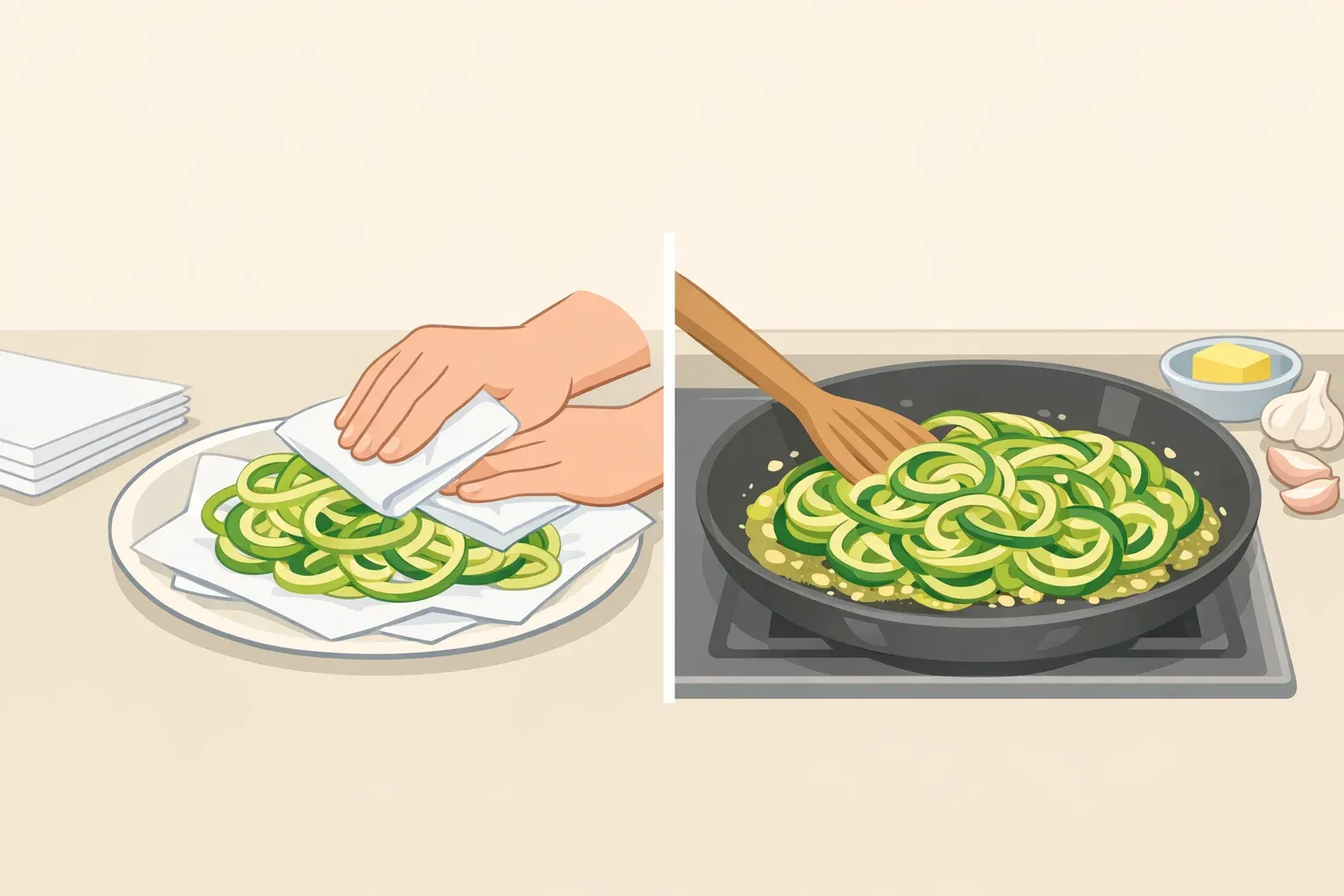
Garlic Butter Zucchini Noodles Recipe: Stop Soggy Zoodles
Zucchini is about 95% water by weight, according to USDA data cited by Alibaba Life Tips. That single fact explains why most garlic butter zucchini noodles attempts go wrong: skip the prep and that water hits a hot pan faster than it can evaporate, turning what should be a quick weeknight dish into a pale, steamed tangle sitting in a puddle of watery butter.
Salt the noodles first. Let them rest. Pat them dry. Get that right and the actual cooking garlic, butter, zoodles, Parmesan runs under 10 minutes, per Blueberry & Basil. Every other decision in this guide exists to protect that foundation.
What you need before starting:
- Spiralizer or julienne peeler
- Colander
- Paper towels or a clean cotton kitchen towel
- Medium skillet (10 to 12 inch)
Base recipe ingredients (serves 2):
- 2 medium zucchini (about 6 to 8 oz each), spiralized
- 2 tablespoons unsalted butter
- 1 teaspoon olive oil
- 2 to 3 cloves garlic, finely minced
- ¼ cup freshly grated Parmesan
- Juice of half a lemon
- Red pepper flakes, chopped parsley, salt, and black pepper to taste
- Kosher salt for the resting step (1 teaspoon per pound of zucchini, per Alibaba Life Tips)
How to keep zucchini noodles from getting soggy: salt first
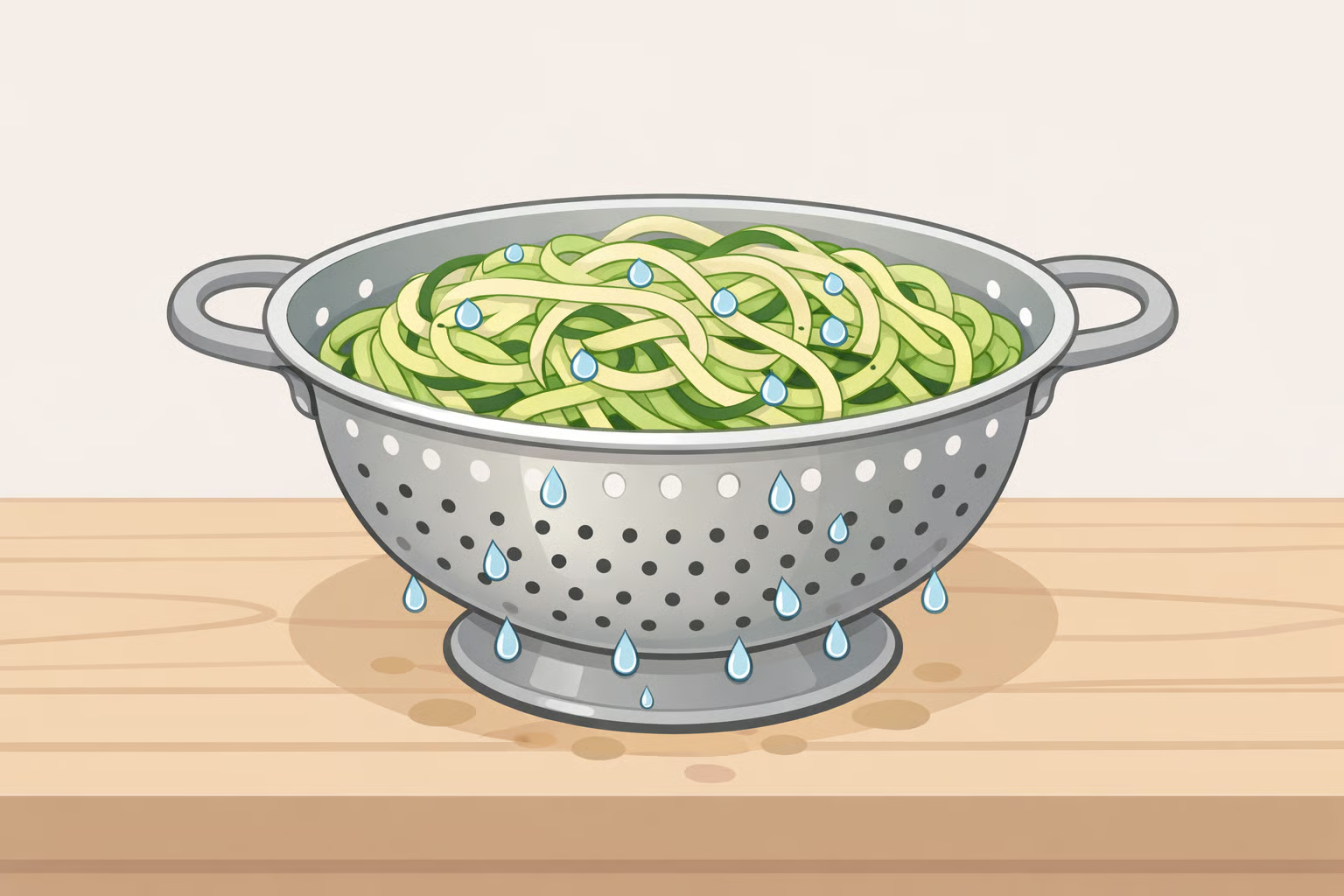
Browning requires a dry surface. Because zucchini is mostly water, it tends to steam itself in the pan rather than sear the surface moisture has to evaporate before the heat can do anything useful, and there's enough of it to outlast your patience. Salting before cooking draws that water out so the pan doesn't have to deal with it, per Alibaba Life Tips.
The approach is consistent across Alibaba Life Tips, EasyCleanCook, and Blueberry & Basil: salt, rest, pat dry, then cook. Earlier this year, Alibaba Life Tips reported a 68 to 73 percent reduction in surface moisture across 42 trials using this method. Treat that figure as illustrative of the mechanism rather than a precise benchmark, but the underlying result is well-supported across multiple independent sources.
Step 1: Spiralize the zucchini. Spiralize 2 medium zucchini directly into a colander set over a bowl or the sink.
Step 2: Salt and rest. Toss the noodles with 1 teaspoon of kosher salt per pound of zucchini, per Alibaba Life Tips. Spread them loosely in the colander and let them sit for 10 to 15 minutes. Beads of water will form on the strands and collect in the bowl below. That's exactly what's supposed to happen. Sources vary on timing: Alibaba Life Tips identifies around 12 minutes as optimal at room temperature; EasyCleanCook suggests 15 to 20 minutes. Spiralized noodles have more surface area relative to their thickness, so 10 to 15 minutes is a reasonable window for this cut.
Step 3: Pat dry. Do not rinse. Transfer the noodles to paper towels or a clean cotton towel and press firmly. The surface should look visibly matte not slick, not glistening. Press a handful between two towels; if they stay mostly dry, you're there.
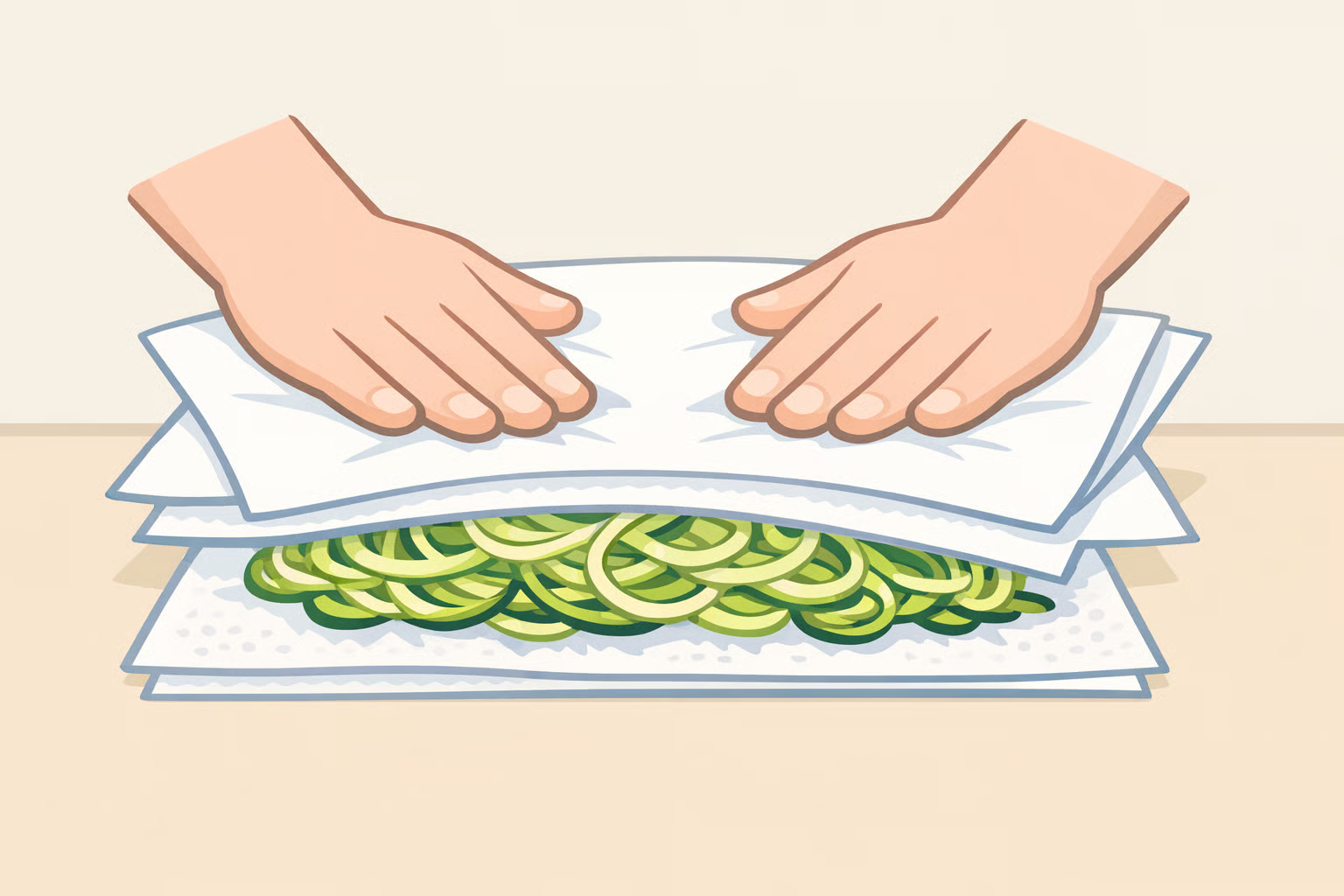
Alibaba Life Tips flags rinsing after salting as counterproductive: it reintroduces the water you just spent 15 minutes removing. Worth noting that I Eat Keto does suggest rinsing in their version, so there's a dissenting view; the culinary logic and the majority of sources support skipping it.
Timing tip: Start the salt-and-rest while you preheat the pan and prep the garlic. By the time the butter is melted and shimmering, the noodles will be ready.
Timing warning: Once dried, cook within about 30 minutes, per Alibaba Life Tips. Left longer, the salt keeps pulling moisture and the noodles start going soft before they ever hit the pan.
Cook fast: garlic timing and the two-minute ceiling
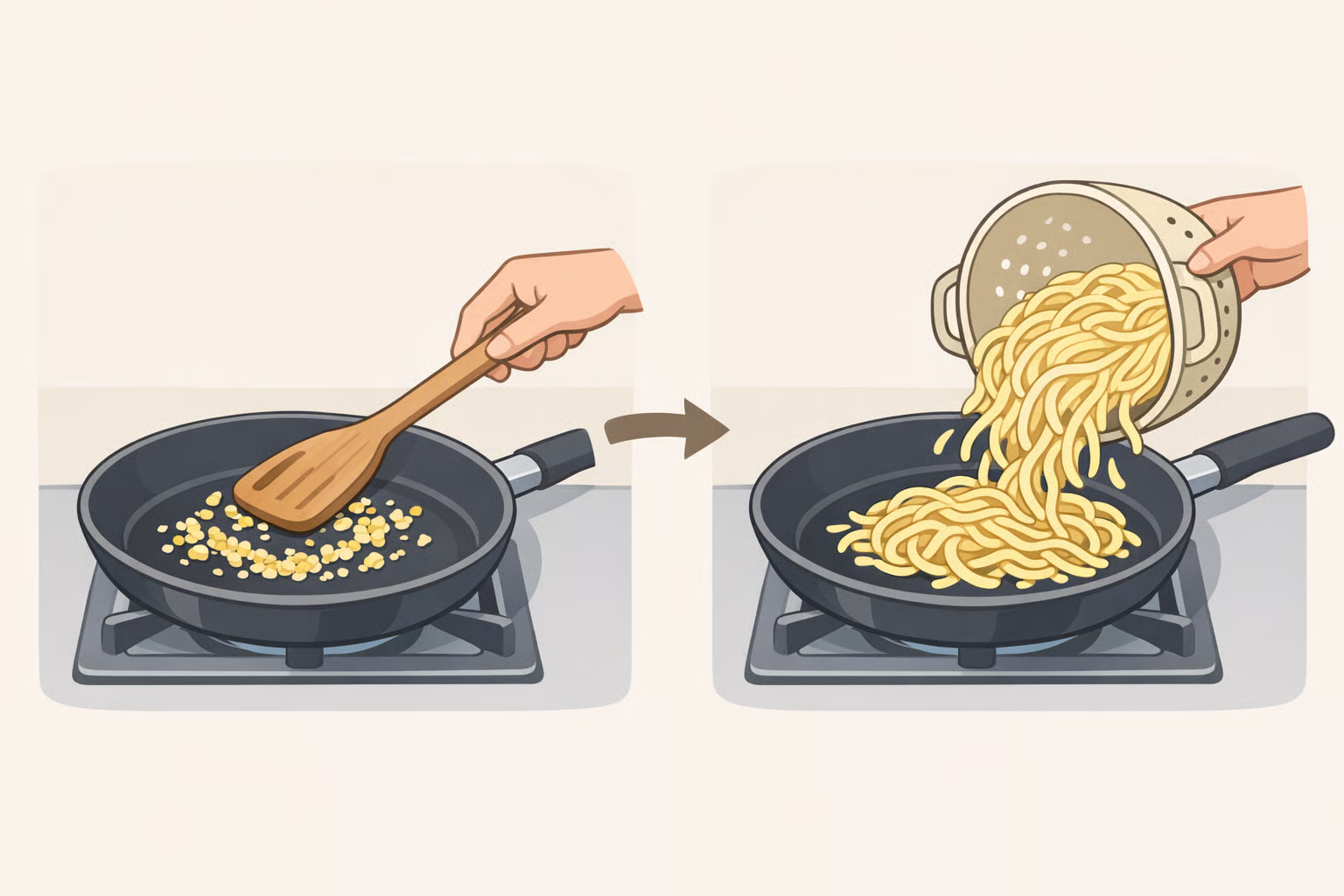
Dry noodles into a hot pan with controlled garlic. Two things can go wrong here, and both happen faster than expected.
Step 4: Heat the pan and fat. Set a medium skillet over medium heat. Add 2 tablespoons of unsalted butter and 1 teaspoon of olive oil. Once the butter is melted and the fat shimmers, you're ready for the garlic.
Step 5: Cook the garlic 30 to 45 seconds, no more. Add the minced garlic and stir continuously. The moment it smells fragrant and turns just pale gold, move immediately to the noodles. Blueberry & Basil is unambiguous: garlic that goes past fragrant turns bitter, and there's no recovering the dish after that. Have the noodles within arm's reach before the garlic goes in.
Step 6: Add the noodles. Cook 1 to 2 minutes; no more than 3. Toss the dried garlic butter zoodles into the pan and stir to coat them. I Eat Keto puts the target at 1 to 2 minutes for noodles that still have bite; Blueberry & Basil sets the outer limit at 2 to 3 minutes before they start going limp. Pull them when they've just lost their raw stiffness slightly translucent at the edges, just yielding when pressed with a spoon, pan still mostly dry.
Stop before you think you need to. Zucchini carries heat and keeps softening after the pan comes off the burner.
Don't crowd the pan. Overcrowding traps steam and prevents browning: the noodles end up cooking each other rather than cooking against the hot pan surface, per Alibaba Life Tips. For 4 servings, use two pans or cook in batches.
If the pan goes wet: Even well-dried noodles release some moisture. If liquid starts pooling, tilt the skillet and spoon it out, per Blueberry & Basil. Waiting for it to evaporate means overcooked noodles.
Finish off the heat, plus one variation worth making
Step 7: Pull the pan. Add Parmesan. Take the skillet off the burner before adding the cheese. Blueberry & Basil notes that Parmesan added off the heat melts smoothly and coats evenly; over direct heat, it tends to seize and clump. Use freshly grated from a wedge rather than pre-shredded the same source recommends buying a wedge and grating it right before adding.
Step 8: Finish with lemon and herbs. Squeeze in lemon juice, add a pinch of red pepper flakes and a handful of chopped parsley, crack some black pepper, and taste for salt. The lemon isn't decorative it cuts through the butter and makes the garlic pop. Lemon, parsley, and chile appear across Blueberry & Basil and I Eat Keto as the standard finishing layer for this flavor profile.
Shrimp variation: After the garlic step, cook ½ lb of peeled raw shrimp in the same pan, stirring, until pink I Eat Keto puts this at about 2 to 3 minutes total. Set aside, proceed with the noodles, then return the shrimp off the heat alongside the Parmesan and a pinch of lemon zest. The same source lists 15 minutes total time for their shrimp-and-zoodles version, though their recipe uses a few additional components; this adapted version lands close to that. No additional seasoning needed the garlic butter handles both components.
Make-ahead note: Cooked zoodles degrade quickly Blueberry & Basil puts the usable window at about two days. The garlic butter sauce keeps in the fridge for four to five days, per the same source. On a busy night, make the sauce ahead and spiralize fresh noodles at cook time; once the pan is hot and the sauce is ready, the active cooking is under 10 minutes.
Troubleshooting
Noodles taste too salty after resting: Too much salt or too long in the colander. Next time, use 1 teaspoon per pound, per Alibaba Life Tips, and set a timer for 10 to 15 minutes. This batch can still be helped by pressing extra-thoroughly the salt is mostly on the surface, so aggressive drying pulls some of it off with the moisture.
Still watery in the pan: The pat-dry step didn't go far enough, or the pan was overcrowded. Before they hit the fat, the noodles should feel close to dry not damp to the touch. Press harder, use more towel, or dry in smaller batches.
Garlic burned before the noodles finished: The garlic went in too early or the heat was too high. Per Blueberry & Basil, garlic needs only about 30 seconds of moderate heat to turn fragrant add the noodles immediately after. If it burns, start over. Bitter garlic won't be fixed by anything added later.
Pan released a rush of liquid immediately: The noodles may have gone in cold from the fridge, or the salt step was skipped. A cold addition drops pan temperature fast and triggers steaming rather than browning. Let dried noodles sit at room temperature for a few minutes before cooking, and always salt first.
The one-minute check before the pan
Two decisions determine whether easy zucchini noodles with garlic butter succeed or turn into a wet tangle. Run through them before the butter hits the skillet.
1. Are the noodles actually dry? Press a handful between two towels. If the towel comes away damp, keep pressing. Matte surface, no slickness. Alibaba Life Tips found that salting and patting cut surface moisture by 68 to 73 percent across 42 trials that reduction is what makes browning possible. Skipping or rushing this step is the single most common reason the dish fails.
2. Is the garlic already in? If yes, the noodles go in now. Not in 20 seconds now. Garlic at this stage needs only about 30 seconds of heat before it turns bitter, per Blueberry & Basil. The noodles should be within arm's reach before the garlic ever touches the pan.
Get those two right and the rest takes care of itself. Two minutes of cooking, Parmesan off the heat, lemon at the end. The dish works because the prep did its job.


Comments
Be the first, drop a comment!