



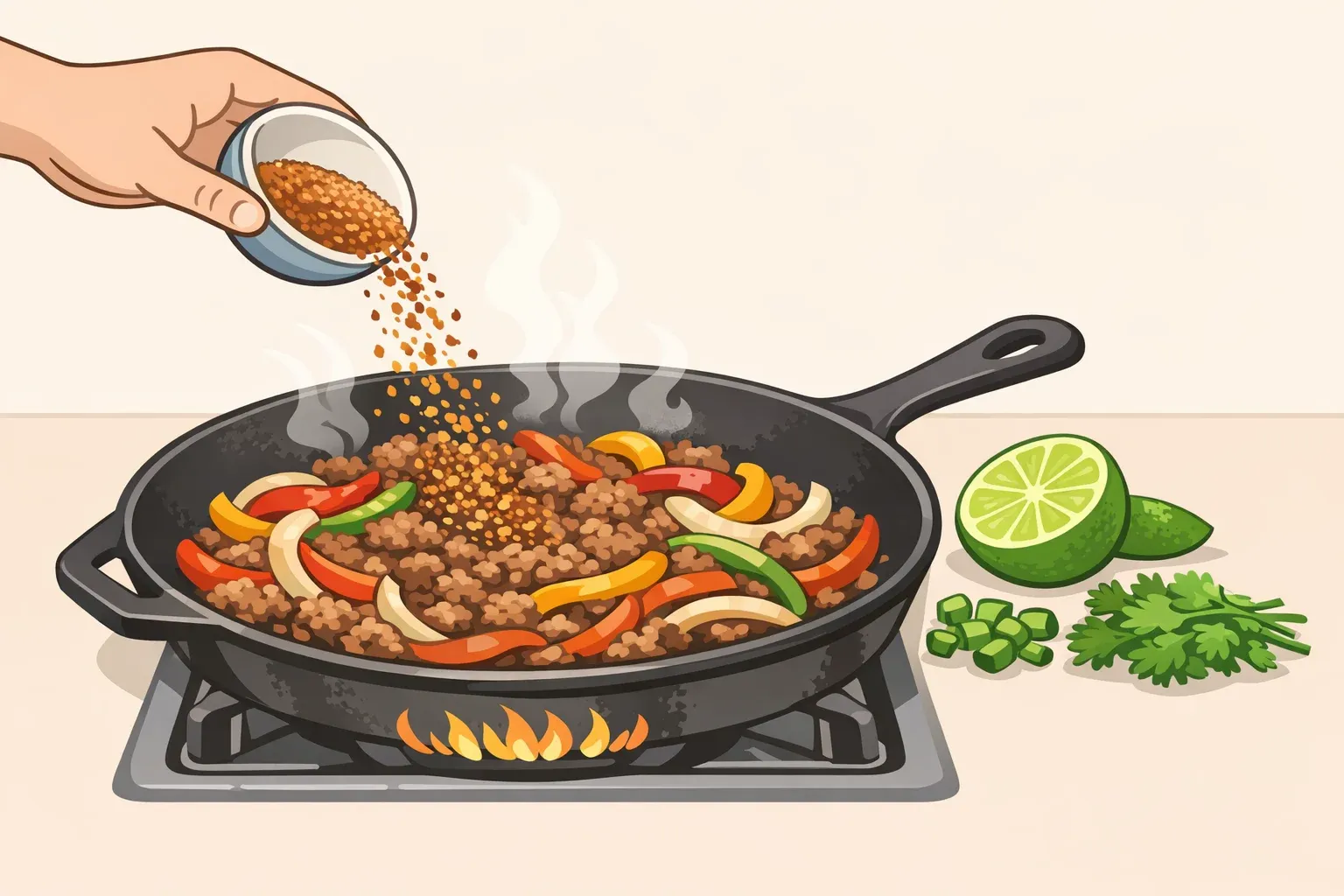
This ground beef fajita skillet brings together peppers, onions, bloomed spices, and a lime finish in about 35 minutes, with a homemade seasoning blend that can replace a store-bought fajita packet.
The method takes four steps, but the quick spice bloom is what gives the skillet its deeper, toasted flavor.
What you'll need before you start
1 lb. lean ground beef
1 large onion, halved and sliced thin
2 to 3 bell peppers, sliced into strips
1 batch homemade fajita seasoning
¼ cup water or broth
1 tablespoon cooking oil, if needed
1 lime
Fresh cilantro and sliced green onions, for finishing
Warm flour tortillas, rice, or another serving base
A 12-inch skillet and an instant-read thermometer
Step 1: Mix the fajita seasoning
Mix the seasoning before heating the skillet. It keeps the cooking process smoother once the beef, peppers, and onions are in the pan.
The blend: 2 tsp chili powder, 2 tsp ground cumin, 1 tsp smoked paprika, 1 tsp garlic powder, 1 tsp salt, and ½ tsp black pepper. Stir until fully combined.
This makes about 2½ tablespoons, enough to season 1 lb. of beef. Budget Bytes' ground beef fajitas recipe prices the same seasoning blend at about $0.71 using pantry spices and lists the recipe as 4 servings, or 2 fajitas each.
Many store-bought fajita seasoning packets are about 1 to 1.25 oz., so this homemade blend works as a practical swap for 1 lb. of meat.
To reduce sodium, cut the salt to ½ tsp or leave it out, then season the finished skillet to taste after cooking. To increase heat, stir ½ to 1 tsp cayenne into the blend before using.
For storage, keep the blend in an airtight container away from heat and light for up to six months. If the cumin smells flat, the smoked paprika has faded, or the garlic powder has clumped, make a fresh batch.
Step 2: Brown the beef safely
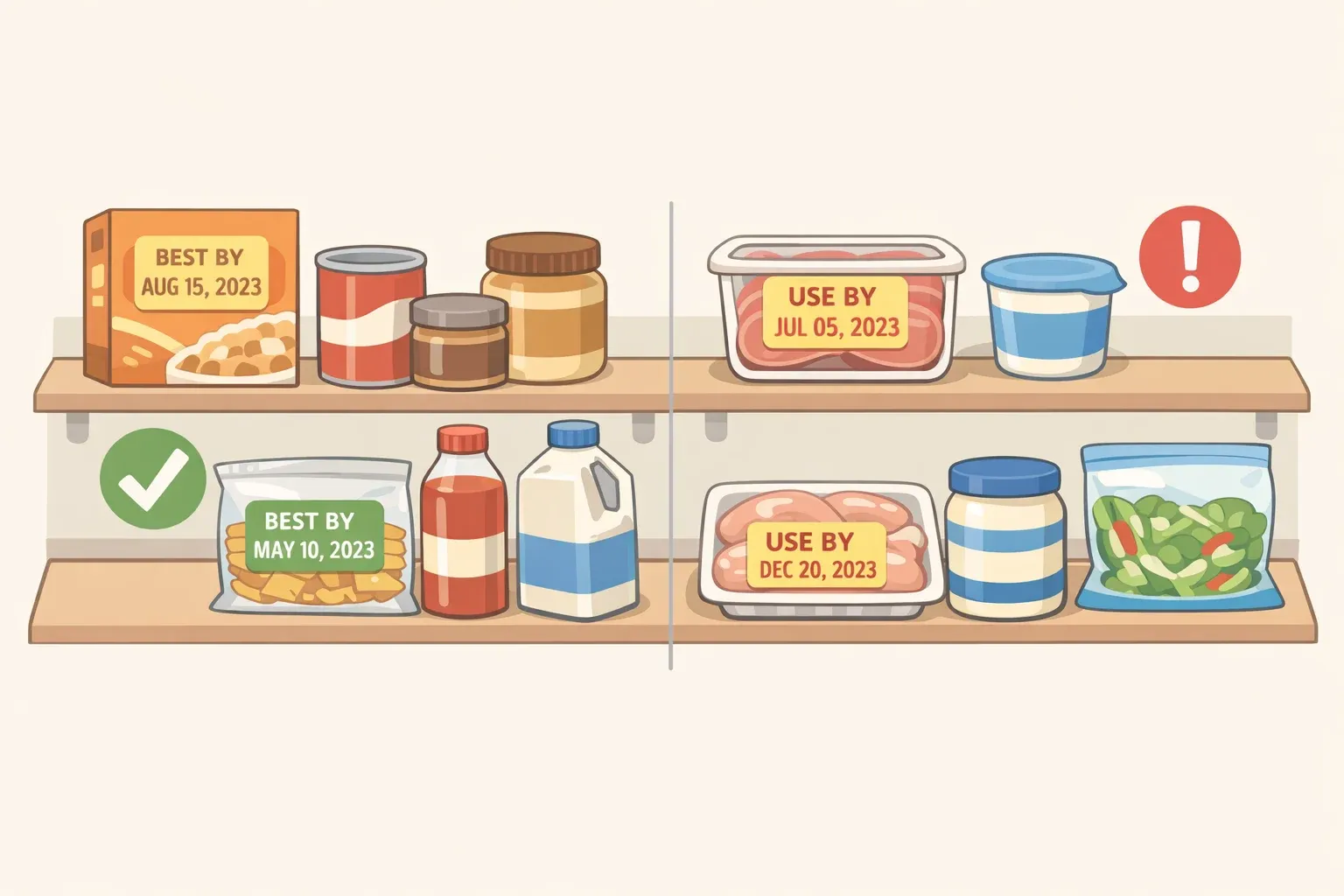
If you bought the beef ahead of time, use refrigerated raw ground beef within 1 to 2 days or freeze it, according to FoodSafety.gov's cold storage chart.
Heat the skillet over medium-high. Add the ground beef and break it into smaller crumbles across the surface of the pan.
Color is not a reliable doneness test for ground beef. FoodSafety.gov's safe temperature chart says to cook ground meat to 160°F. Usean instant-read thermometer in the thickest cluster of meat to check it.
Wash your hands, cutting board, knife, and thermometer probe after they touch raw beef, and do not reuse a plate or bowl that held raw meat.
Once the beef reaches 160°F, transfer it to a bowl and set it aside. Leave a thin layer of rendered fat in the pan.
With lean beef, there may be little to drain. With fattier blends, drain most of the excess but leave a visible slick. A completely dry pan will scorch the spices in the next step rather than bloom them. If the pan looks dry, add 1 tablespoon of cooking oil before adding the seasoning.
Step 3: Cook the peppers, onions, and spices
This sequence keeps the skillet from tasting like plain seasoned beef.
In the same pan over medium-high heat, add the sliced onions and peppers. Cook for 2 to 3 minutes, stirring occasionally. The edges should turn slightly golden, but the vegetables should still have some bite.
Push the vegetables to the outer edge of the pan. Check the center: it should look hot, with either visible fat or a dry, slightly shimmery surface. If it looks wet or steamy, give it 30 seconds. A wet center means the spices will steam rather than bloom; you'll still get seasoning, but not the same toasted flavor.
Add the full seasoning blend to the cleared center of the pan. Stir it into the fat for 30 to 60 seconds. The spices should smell warm and toasty, not dusty. If the pan is too cool, let the spices go another 15 to 20 seconds. If they start to darken too fast or smell acrid, get the beef back in immediately. Burnt spices do not recover.
Add the beef back in and stir everything together, coating the meat and vegetables in the bloomed spices.
Pour in ¼ cup water or broth. Stir and let it simmer for 3 to 5 minutes, until the liquid mostly absorbs and the mixture looks cohesive and saucy. If the pan runs dry too early, add another splash, 1 tablespoon at a time. If it still looks soupy after 5 minutes, let it cook another minute uncovered.
Broth gives the finished skillet a slightly deeper base. Water works fine and keeps the spice flavor cleaner. The simmer is not just about reducing liquid; it pulls the bloomed seasoning into the beef and vegetables rather than leaving it as a surface coating.
Step 4: Finish with lime and serve
Pull the pan from the heat. Squeeze half a lime over the skillet and stir it in. Lime added at the end cuts through the richness of the beef and keeps the flavor bright.
Top with fresh cilantro and sliced green onions.
Serve in warm flour tortillas for a handheld fajita-style dinner, or spoon the filling over rice for a bowl. To warm tortillas, heat them in a dry skillet for a few seconds per side or microwave them wrapped in a damp towel.
If the skillet comes out saucier, rice will soak up the extra liquid better than tortillas. If it is drier and more compact, it works well in tortillas, lettuce cups, quesadillas, or anything with structure. Add salsa, sour cream, guacamole, jalapeños, or shredded cheese at the table.
One batch of seasoning covers 1 lb. of beef and makes about 4 servings, or about 8 small fajitas. For 2 lb. of beef, double the seasoning and use a larger pan or cook in two batches. Crowding the pan traps steam and prevents browning.
Store and reheat leftovers safely
Refrigerate leftover beef and vegetable filling in an airtight container within 2 hours. Keep cooked leftovers for 3 to 4 days.
Reheat only the portion you plan to eat until it reaches 165°F. Add a splash of water or broth while reheating if the filling looks dry.
Try these easy variations
For a spicier skillet, add ½ to 1 tsp cayenne to the seasoning at the mixing stage. For a different kind of heat, stir in a small amount of diced green chiles with the liquid.
The same seasoning blend also works with chicken or shrimp, though the cooking method changes. Chicken should reach 165°F before serving. For shrimp, sear them first, remove them, bloom the spices in a little oil, then return the shrimp with the liquid just long enough to coat and heat through.
How to double the skillet without steaming it
To double the recipe, double the seasoning and use a 14-inch pan, Dutch oven, or two batches. Two pounds of beef plus peppers and onions will steam in a 12-inch skillet, which keeps the vegetables from browning and softens their texture. Bloom one seasoning batch per pound of beef.
Make a double or triple batch of the seasoning, store it sealed, and the next skillet starts with the spices already measured.


Comments
Be the first, drop a comment!