



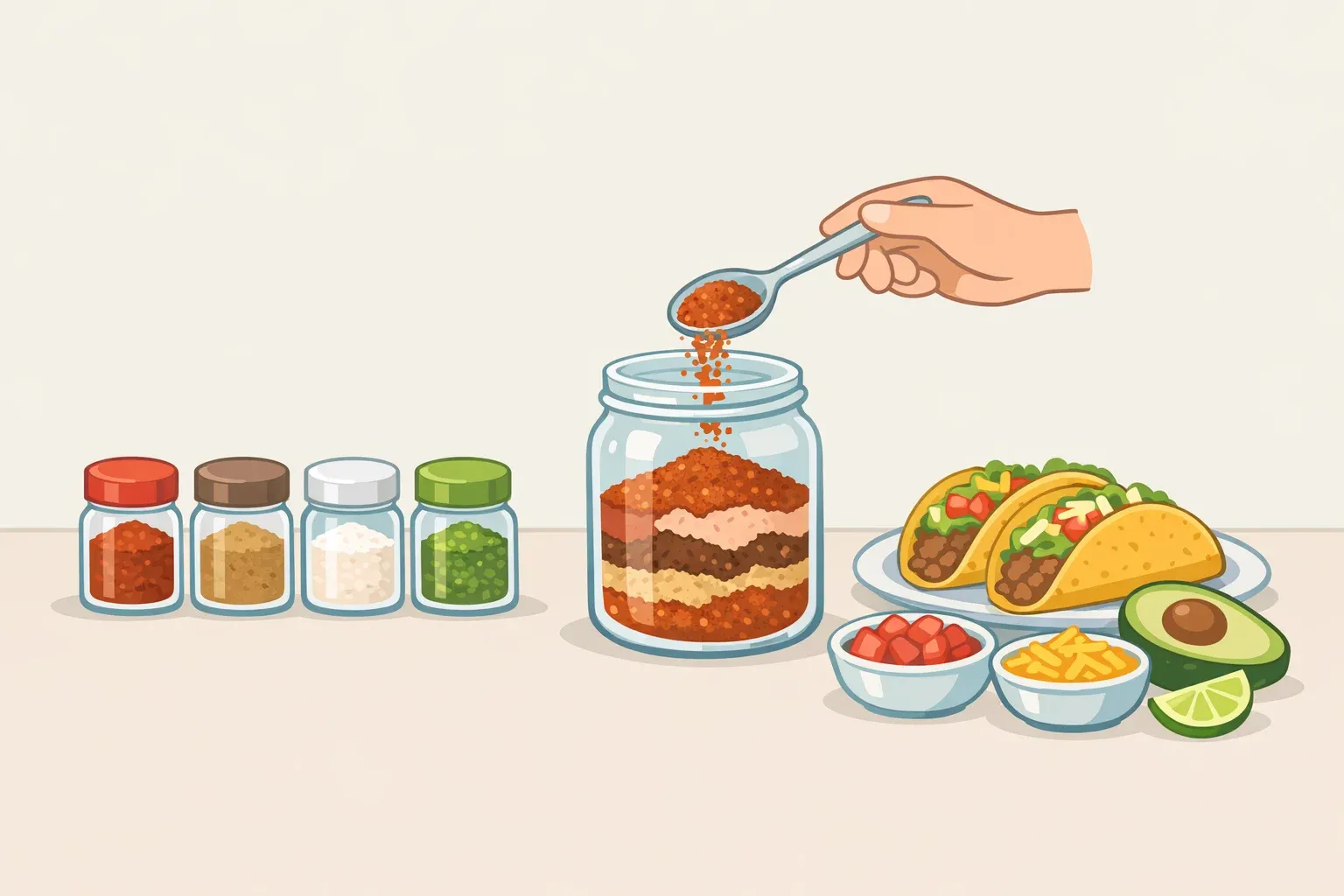
This homemade taco seasoning recipe makes one packet's worth in about five minutes. By the end of this guide, you'll have that base formula, a bulk-batch version to keep a jar stocked for weeks, and a clear map for adjusting salt, heat, and texture to match how you cook.
The blend is eight spices: chili powder, cumin, paprika, garlic powder, onion powder, dried oregano, black pepper, and salt, with cayenne and cornstarch as optional additions. It yields roughly 2–3 tablespoons, which can replace one standard seasoning packet in tacos, soups, casseroles, and other Mexican-inspired dishes, per MakerFarm earlier this year. Use 3 tablespoons per pound of browned meat, consistent with guidance from UC Master Food Preservers.
Making your own seasoning gives you more control over salt, heat, texture, and ingredients. Commercial packets can contain thickeners, anti-caking agents, added sodium, or — in some varieties — gluten-containing ingredients, so anyone avoiding gluten should check the specific label, per guidance from the FDA. Scratch-made can replace a packet and, with cornstarch, get closer to that familiar saucy finish, with a shorter, readable ingredient list. That's the trade-off worth understanding before measuring anything.
Prerequisites: Measuring spoons, a small mixing bowl, and an airtight jar or spice container.
What goes into homemade taco seasoning
Chili powder anchors the blend. In this single-batch version, chili powder takes the lead at 1½ tablespoons, roughly three times more than any other ingredient, because chili powder is itself a blend of dried chilies, garlic, oregano, and other spices that establishes the recognizable base flavor. Cumin adds the earthy, slightly smoky note that separates taco seasoning from generic chili spice.
The supporting players all have distinct jobs. Paprika contributes color and mild sweetness; smoked paprika deepens both. Garlic powder and onion powder add savory roundness. Dried oregano brings a faint herbal bite. Black pepper delivers back-end heat without the forward burn of cayenne.
Recipes differ on one ratio: cumin versus chili powder. Some homemade blends lean heavier on chili powder, while others use proportionally more cumin. Neither is wrong. This is where personal preference begins, and the customization section addresses it directly.
Thickeners are optional but change the outcome significantly. Store-bought packets use maltodextrin or cornstarch to create a saucy, coating texture when water is added. Adding 2 teaspoons of cornstarch to the homemade blend replicates this effect; skipping it produces a spice-forward result that coats the meat differently. If mimicking store-bought taco meat is the goal, include the cornstarch and add ¼ teaspoon of sugar per pound of meat to approximate the flavor maltodextrin contributes. If a cleaner spice blend is the goal, skip both.
One thing worth understanding upfront: packet equivalence varies. Volume changes with settling, grind size, and whether thickeners are included. This guide standardizes on 3 tablespoons per pound of meat as the working measure and treats that as an adjustable starting point, not a fixed rule.
How to make one batch or a bulk jar
Step 1: Choose a single batch or bulk batch
A single batch yields roughly 2–3 tablespoons, one packet equivalent. A bulk batch multiplies those ratios to produce about a cup, enough for six to eight taco nights without mixing again. Start with the single batch to dial in the flavor before committing to a full jar.
Step 2: Measure and mix
The base ratio below is adapted from MakerFarm's single-packet version, with optional cornstarch for a packet-style texture.
Single batch:
1½ tablespoons chili powder
¾ teaspoon cumin
1 teaspoon paprika (smoked adds depth)
½ teaspoon garlic powder
½ teaspoon onion powder
¼ teaspoon dried oregano
¼ teaspoon black pepper
¼ teaspoon salt (optional)
⅛ teaspoon cayenne (optional, for heat)
2 teaspoons cornstarch (optional, for packet-style thickness)
Bulk batch (yields approximately 1 cup / eight single-use portions):
¾ cup chili powder
2 tablespoons cumin
3 tablespoons paprika
1½ tablespoons garlic powder
1½ tablespoons onion powder
2 teaspoons dried oregano
2 teaspoons black pepper
2 teaspoons salt (optional)
1–2 teaspoons cayenne (optional)
6 tablespoons cornstarch (optional)
Stir or whisk until no streaks of individual spices remain.
Step 3: Use it or store it
Shake the jar before each use; spices settle and distribute unevenly over time, per MakerFarm. To season meat, add 3 tablespoons to 1 pound of browned ground beef or turkey, stir in ½ to ⅔ cup water, then simmer until the liquid reduces and coats the meat," per UC Master Food Preservers. The same measure works in soups, casseroles, and other Mexican-inspired dishes wherever a recipe calls for a seasoning packet. If you are using the blend with ground beef or turkey, cook the meat to 160°F — per USDA/FSIS guidelines — as measured with a food thermometer before serving.
How to adjust the flavor
Four variables are worth understanding independently. Adjust one at a time so you know what changed.
Salt. Leave it out entirely and season the finished dish to taste. Omitting the salt add-in is the most direct way to manage sodium, and the spice blend carries enough flavor to hold up without it, per MakerFarm. Start salt-free, then salt at the table.
Heat. The base recipe is mild. Add ⅛–¼ teaspoon cayenne for direct, building heat. Red pepper flakes, used in both the UC and USU recipes, deliver a slightly coarser texture and a different burn pattern compared to cayenne, per UC Master Food Preservers and USU Extension. Pick whichever suits the dish.
Texture. Cornstarch creates that saucy, thickened coating on the meat. Skip it and the seasoning blooms into the fat and liquid without thickening. Both results are good; they're just different. Flour can also thicken the mixture, but use cornstarch or a clearly labeled gluten-free flour blend if you need the seasoning to stay gluten-free.
Spice balance. More cumin shifts the blend earthier and more pungent. More chili powder pushes it brighter and more complex. Try swapping in half smoked paprika, half regular; it changes the whole character of the meat without touching any other variable.
Gluten-free note: The base ingredient list does not require wheat, rye, barley, or other gluten-containing grains, but people with celiac disease or strict gluten avoidance should use spices and thickeners labeled gluten-free.
Troubleshooting:
Too salty: Pull back on or eliminate the added salt.
Too bland: The spices are likely old. Rub a pinch between your fingers and smell it. If the aroma is faint, the flavor will be too. Fresh spices fix bland blends faster than adding more of everything.
Too mild: Add cayenne in ⅛ teaspoon increments after cooking to control the final heat level precisely.
Watery, not coating the meat: Add cornstarch to the blend, or let the simmer run longer with the lid off.
How to store homemade taco seasoning
As suggested by Texas A&M AgriLife, store the blend in a tightly covered container in a cool, dark, dry place, away from the stove, dishwasher, microwave, refrigerator, sink, or heating vent. For the best flavor, label the jar with the mix date and use the earliest expiration date from the individual spice jars as the blend's freshness guide.
Avoid shaking the jar directly over a steaming pot, because moisture can get trapped inside and shorten the blend's shelf life. Use a dry spoon instead, and discard the blend if you see mold, dampness, or an off smell, as recommended by University of Maine Cooperative Extension. Use a dry spoon, step away from the stove before opening the jar, and the problem doesn't arise.
Discard the blend if it looks damp, smells off, shows mold, or has clumps that do not break apart easily.
Once the base ratio tastes right, make the bulk version and label the jar. Use 3 tablespoons whenever a recipe calls for a packet, then adjust future batches with more cumin, smoked paprika, cayenne, or no added salt.





Comments
Be the first, drop a comment!