



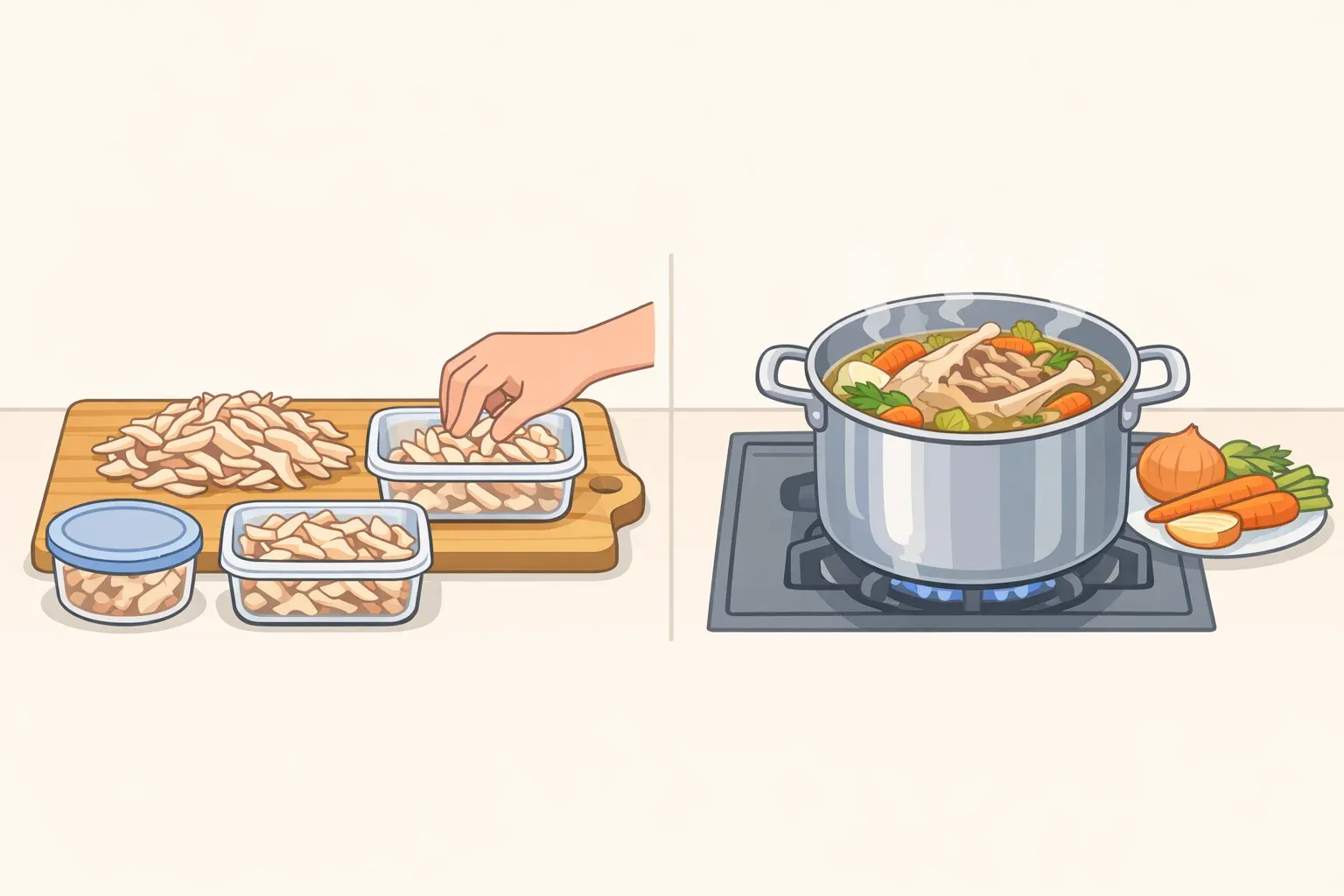
Here's how to turn one rotisserie chicken into dinner, two leftover meals, and broth. The system works because of what you do in the first ten minutes after opening the container before the chicken cools, before the carcass hits the trash, and before the week gets away from you.
Depending on the size of the bird and the portions you serve, one rotisserie chicken can feed two to four people at dinner and still leave useful portions for two more meals. The bones, usually discarded, are the raw material for broth that costs very little beyond basic pantry staples. What you need is a plan and a refrigerator.
A few things to know upfront:
Store-bought rotisserie chicken can taste flatter after refrigeration, so leftovers often benefit from bright, savory additions such as lemon juice, fresh herbs, mustard, or grated cheese. Taste before adding salt, since many rotisserie chickens are already well-seasoned or high in sodium.
Cooked chicken can be refrigerated for three to four days when chilled promptly, according to FoodSafety.gov guidance for cooked poultry.
Freezing the carcass right after stripping it means the broth step doesn't have to happen this week; it keeps the whole system flexible.
Start on night one
The first meal is real: carved or pulled chicken served however you want. The few minutes after dinner are what determine whether the rest of the week works.
Strip and portion the chicken while it's still warm. Don't leave it sitting out: USDA food-safety guidance says leftovers should be refrigerated within two hours, or within one hour if the temperature is above 90°F. Miss that window and you're not just losing flavor; you may be creating a food-safety risk. If the chicken has already been left out beyond that window, do not save it for later.
Step 1: Strip the carcass completely. Pull all remaining meat off the bones. Don't leave anything on for later; you want a clean separation while the meat is warm and pliable. Reserve enough shredded meat for one hot meal and one cold meal. Label the containers if that helps.
Step 2: Divide and store. About a cup of shredded meat goes toward a hot dish on day two, such as pasta, tacos, or a quick soup. A smaller portion of pulled pieces goes toward a cold dish on day three, such as chicken salad, a grain bowl, or a sandwich. Use separate airtight containers in the fridge.
Step 3: Deal with the carcass now. Place the bones, any cartilage, rendered juices, and skin scraps into a zip-top bag. If you plan to make broth within two days, refrigerate it. Otherwise, freeze it and come back to it later.
Step 4: Refrigerate the containers promptly. The three-to-four-day clock starts here.
One common failure point: people wait until the chicken is fully cold before dealing with it. Warm meat pulls cleanly off the bone; once it's chilled it tears and sticks. The five minutes you spend now are the five minutes that make the rest of the week work.
Make one hot meal and one cold meal
Day two: Chicken and greens pasta
One easy second use for shredded rotisserie chicken is pasta with greens: about a cup of leftover meat stretched with pasta and vegetables. Build it on onions and garlic, add chopped kale, chard, spinach, or escarole, and finish with lemon juice and grated Parmesan. Taste before serving; cold chicken often needs more brightness than freshly carved meat.
Other solid options in the same format: chicken tacos with lime and fresh cilantro, or a quick soup using store-bought broth or frozen carcass broth later on.
Day three: Chicken salad
Cold shredded chicken dressed with mayonnaise, mustard, a little lemon juice or white wine vinegar, and whatever aromatics are on hand — celery, herbs, or scallions — requires no reheating and works for lunch or a light dinner. You skip the reheating step altogether, which makes day three practically effortless.
Plan the cold meal for day three specifically, not "sometime this week." Three to four days is the recommended refrigerator window for cooked poultry, and flavor often starts sliding before then.
Reheat leftovers safely
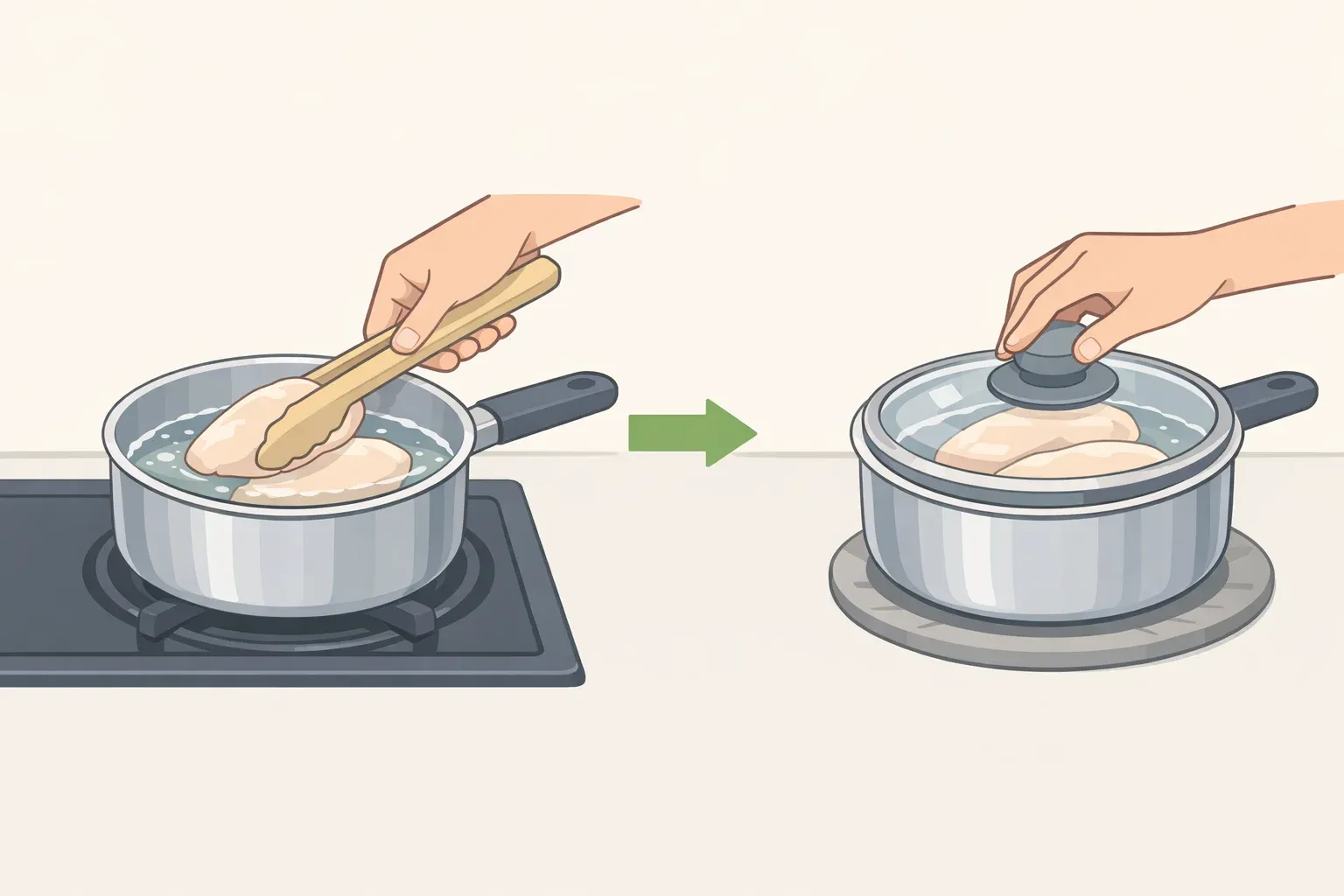
For boneless chicken without skin: place it in an oven-safe dish with a shallow pool of broth or water, cover tightly with foil, and heat at 375°F until warmed through and the thickest portion reaches 165°F; 15 to 20 minutes is a common range, but timing will vary by portion size. For chicken pieces with skin: an air fryer at 350°F for three minutes per side restores crispness far more effectively than an oven. Microwaves can dry out or toughen chicken if it overheats, so use short intervals and add a splash of broth or water when speed matters most.
Turn the carcass into broth
The carcass, bones, and rendered juices are the starting material for a batch of broth that takes little more than basic aromatics and time. If you do not want to make broth right away, freeze the bones and simmer them later.
If making broth this week feels like too much, freeze the carcass now and come back to it later. The steps below work whether you start tonight or later; for best quality, label the frozen carcass and use it within a few months.
Step 1: Build the pot. Place the carcass in a large pot or slow cooker. Add a halved onion, two or three garlic cloves, a carrot, a celery stalk, a bay leaf, a teaspoon of whole peppercorns, and a splash of apple cider vinegar. Cover with cold water. Do not add salt yet; rotisserie chicken bones, skin, and juices can already be salty. Taste after straining and season only if needed.
Step 2: Simmer, don't boil. Bring to a gentle boil, skim any foam from the surface, then reduce to a low simmer — small bubbles at the surface, not a rolling boil. On the stovetop, two to three hours is enough. In a slow cooker, six to eight hours. The liquid will turn golden and smell deeply savory. Keep the heat low throughout; a vigorous boil works against you.
Step 3: Strain and store. Pour through a fine-mesh strainer into a bowl and discard the solids. Let the broth cool slightly, then divide it into shallow containers so it chills faster; refrigerate what you will use within three to four days and freeze the rest in one-cup portions. One-cup portions are easy to thaw for soup, grains, sauces, or the next time you need a splash of broth for reheating chicken.
Watch the water level during a long simmer. If the bones start to surface, add cold water to keep them submerged.
Use the same system with a roasted chicken
This method also works with a home-roasted chicken. Eat some for dinner, strip and portion the leftovers while the meat is still easy to pull, and freeze the carcass for broth.
What one chicken can produce
Done in full, one chicken can become dinner for two to four people, a hot leftover meal, a cold leftover meal, and frozen broth for soups, grains, or reheating.
The simplest way to make this repeatable: decide what you're making before the containers go into the fridge, not after. That decision — pasta on Tuesday, chicken salad on Wednesday — is what keeps the three-to-four-day window manageable.

Comments
Be the first, drop a comment!